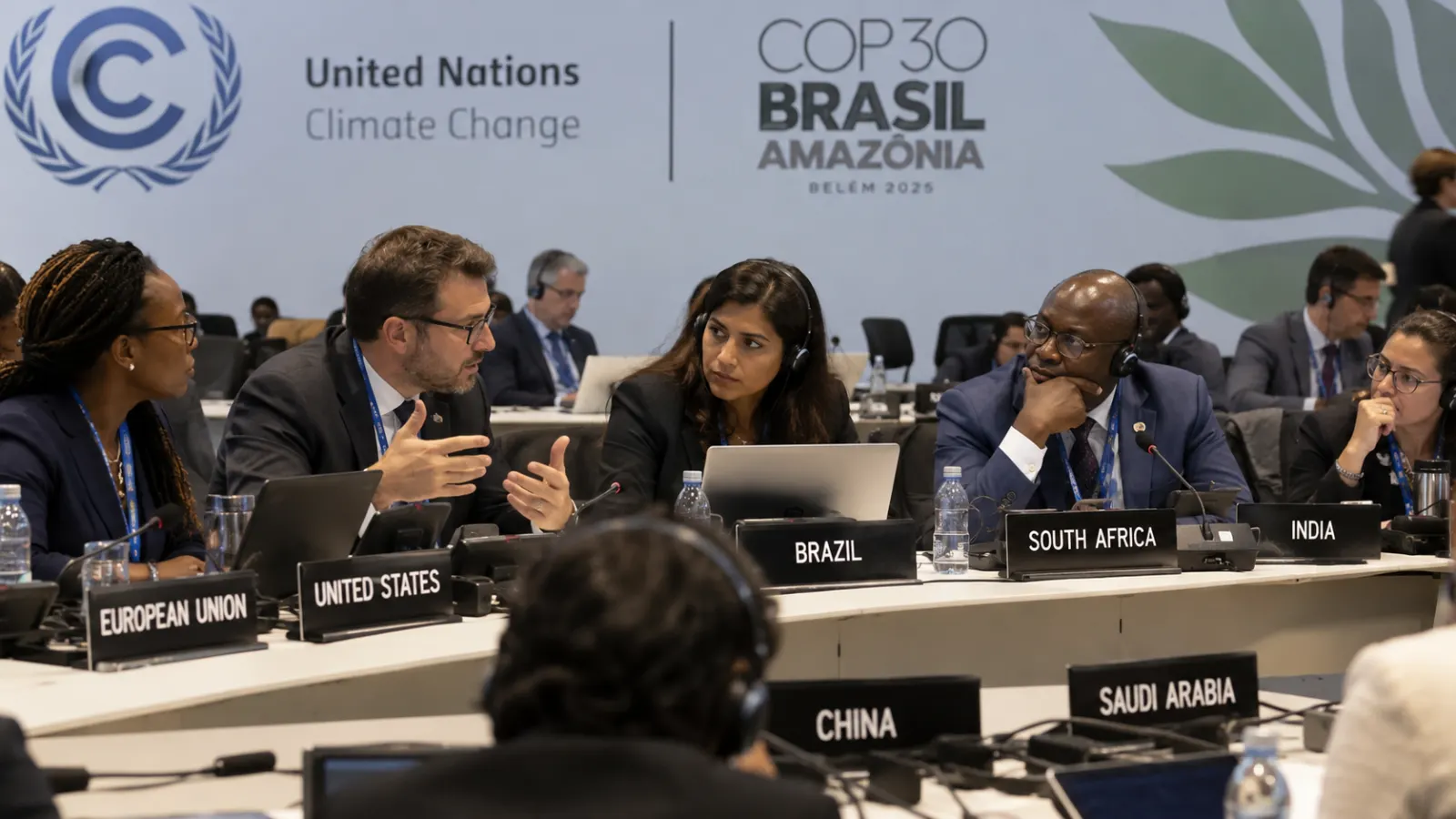
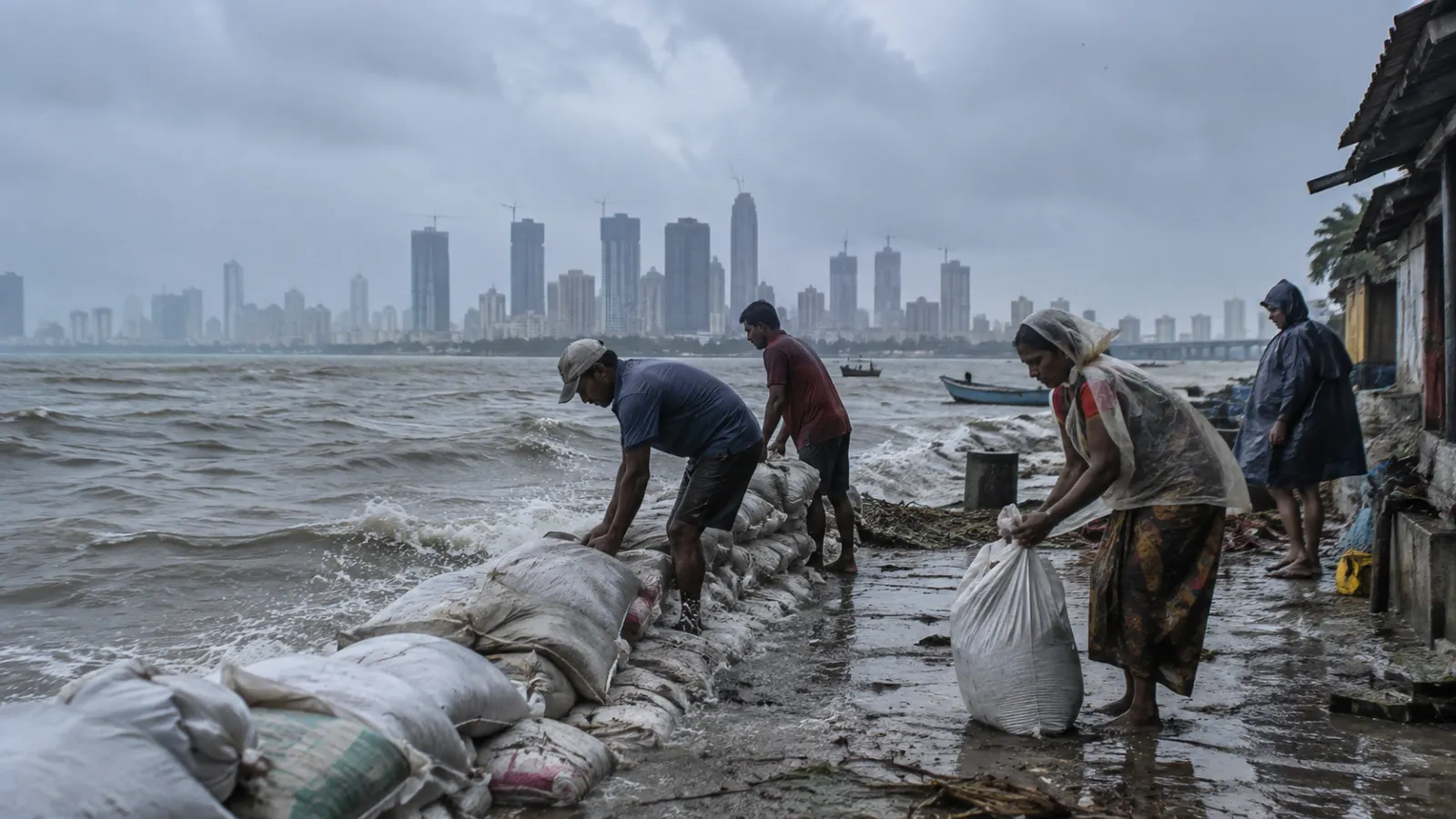
Climate diplomacy often speaks the language of targets. The loss and damage debate speaks the language of loss: homes swallowed by floods, crops destroyed by drought, coastlines eaten by rising seas, and cultures forced to migrate from land they did not destroy. That is why the Loss and Damage Fund is more than a financial mechanism. It is a moral test of whether climate diplomacy can recognise harm after prevention has failed.
Why It Matters Now
The fund matters because vulnerable countries have spent years arguing that adaptation finance is not enough. Adaptation helps prepare for future damage; loss and damage responds to destruction that has already happened or cannot be avoided. The UNFCCC describes the fund as focused on assisting developing countries particularly vulnerable to adverse climate effects, including extreme events and slow-onset processes. The question now is no longer whether the concept exists. The question is whether money will arrive at the scale, speed and fairness required.
Historical Context
For a long time, developed countries resisted the loss and damage agenda because it sounded close to liability and compensation. Vulnerable countries argued that historical emitters had built wealth through carbon-intensive growth while poorer countries suffered disproportionate climate impacts. The eventual creation of the fund was therefore a diplomatic breakthrough. But breakthroughs can become symbolic victories if they are not followed by predictable finance, transparent governance and direct access for communities.
The First Strategic Dimension: Scale
The most obvious problem is scale. Climate-related losses run into hundreds of billions of dollars over time, while fund pledges have been modest compared with the need. This gap creates a credibility crisis. When vulnerable countries hear large speeches and receive small cheques, trust erodes. Climate negotiations then become less about cooperation and more about grievance management.
The Second Dimension: Access
Even when climate finance exists, accessing it can be difficult. Small island states and least developed countries often face complex application procedures, documentation burdens and slow disbursement. If the Loss and Damage Fund repeats these problems, it will fail the people it is meant to serve. Speed matters because disaster recovery cannot wait for diplomatic paperwork. A fund designed for loss must understand urgency.
The Third Dimension: Responsibility Without Paralysis
The politics of responsibility is delicate. Developing countries want recognition of historical emissions and unequal vulnerability. Developed countries fear unlimited legal liability. A workable fund must navigate this tension. It should not erase responsibility, but it also cannot become so legally contested that money never reaches victims. The moral challenge is to convert accountability into action.
India Angle
India occupies a complex position. It is a large developing country, a major current emitter in aggregate terms, a low per-capita emitter compared with advanced economies, and a country deeply exposed to climate impacts. India has consistently defended the principle of equity and common but differentiated responsibilities. At the same time, India must strengthen its own domestic adaptation, disaster finance and state capacity because climate losses will increasingly affect agriculture, cities, coasts, health and infrastructure.
Global Implications
The fund could reshape the politics of climate negotiations. If it works, it can rebuild trust between developed and developing countries. If it fails, it will strengthen the perception that climate diplomacy asks poorer countries to accept green rules without fair support. That matters for wider cooperation on mitigation, carbon markets, technology transfer and trade measures such as carbon border adjustments.
Counter-view and Complexity
Critics ask whether loss and damage finance risks becoming an open-ended demand without clear measurement. They also ask how to distinguish climate-driven loss from poor planning, corruption or normal development risk. These are fair administrative questions. But they cannot become excuses for inaction. The answer is better methodology, not moral evasion.
What Happens Next
The next test is implementation. Watch how the fund defines eligibility, how quickly money is disbursed, whether grants dominate over loans, how local communities access support, and whether pledges rise beyond symbolic levels. Also watch the relationship between the fund and the broader climate finance goal agreed at COP29. The loss and damage debate will become sharper as extreme weather events intensify.
Editorial Insight
The Loss and Damage Fund tests the morality of climate diplomacy because it asks a simple question: when vulnerable people lose what cannot be adapted to, does the world respond with solidarity or legal caution? A fund that is underfinanced and inaccessible will deepen cynicism. A fund that is fair, fast and serious can turn climate justice from slogan into institution.
Implementation Risks
The Loss and Damage Fund faces three implementation risks. The first is underfunding: pledges that look meaningful in press releases but are tiny compared with actual losses. The second is bureaucracy: complicated access rules that delay help until communities have already sold assets, migrated or fallen into debt. The third is political capture: funds routed through elites rather than local institutions. A fund built to address injustice must be designed to avoid reproducing injustice.
Economic and Non-Economic Loss
Loss and damage is not only about destroyed bridges or damaged crops. It also includes non-economic loss: cultural heritage, sacred sites, mental health, biodiversity, language communities and ancestral land. These losses are difficult to price, but ignoring them makes climate finance morally incomplete. A coastal community losing burial grounds or a mountain village losing its traditional livelihood is not merely suffering an economic setback. It is losing identity.
India's Domestic Lessons
India should use the global debate to improve domestic climate-risk finance. States facing floods, heat waves, cyclones and glacial risks need stronger insurance, disaster funds, resilient infrastructure and local adaptation planning. The international demand for climate justice will be stronger if India demonstrates high-quality domestic governance. Moral authority abroad begins with competence at home.
The Trust Deficit
Climate negotiations suffer from a trust deficit because old promises have often been delayed, diluted or reclassified. Developing countries worry that loans will be counted as support, private finance will be overstated, and existing aid will be relabelled as climate money. The Loss and Damage Fund must therefore have transparent accounting. New and additional finance is not a technical phrase; it is the foundation of trust.
Strategic Consequences
If the fund fails, vulnerable countries may become less willing to cooperate on mitigation and trade-linked climate rules. They may argue that rich countries want carbon discipline without paying for historical damage. That would make the climate regime more fragmented. A working fund, by contrast, can create political space for harder climate commitments by showing that the system recognises unequal suffering.
Future Scenarios
The best scenario is a fund with predictable grants, simplified access and strong local accountability. The middle scenario is a symbolic fund that helps some countries but falls far short of need. The worst scenario is disillusionment: vulnerable states conclude that climate diplomacy produces words, not protection. The moral stakes are therefore inseparable from geopolitical stakes.
Extended Analysis: Why the Fund Is Politically Explosive
Loss and damage is politically explosive because it touches responsibility. Mitigation asks countries to reduce future emissions. Adaptation asks them to prepare for future impacts. Loss and damage asks who helps when harm has already occurred. That question points backward to historical emissions and forward to future solidarity. Developed countries fear that acknowledging responsibility may open unlimited claims. Vulnerable countries fear that avoiding responsibility will leave them alone with disasters they did little to cause. The fund exists inside this tension.
Extended Analysis: Grants Versus Loans
The form of finance matters. If loss and damage support arrives mainly as loans, vulnerable countries may be forced to borrow after disasters caused by a climate crisis they did not create. That would deepen debt stress and violate the moral purpose of the fund. Grants, rapid-disbursing windows and community-level access are more appropriate for irreversible loss. Loans may have a role in reconstruction, but they cannot become the main answer to climate harm. Justice financed through debt is not justice.
Extended Analysis: Measuring Loss
Measurement will be difficult but necessary. Economic losses such as damaged roads and crops can be estimated. Non-economic losses such as culture, trauma, biodiversity and displacement are harder. The fund must avoid two extremes: vague claims without accountability and rigid metrics that ignore lived reality. It should combine scientific attribution, local testimony, disaster assessments and transparent review. The goal is not perfect measurement; it is fair and usable measurement.
Extended Analysis: Direct Access
Climate finance often fails because money moves through layers of institutions before reaching affected people. The Loss and Damage Fund should design direct-access channels for local governments, community organisations and credible national systems. This does not mean abandoning safeguards. It means simplifying procedures so that urgency is respected. After a cyclone, flood or drought, delayed money can become meaningless money. Speed is part of justice.
Extended Analysis: India's Negotiating Position
India's negotiating position should combine equity with constructive design. It can argue that historical emitters must provide predictable finance while also supporting practical mechanisms that deliver results. India should also recognise the concerns of smaller vulnerable countries. As a large developing country, India must avoid appearing to crowd out the voices of least developed and island states. Solidarity within the Global South requires listening as well as leading.
Extended Analysis: Link With Carbon Border Measures
The loss and damage debate is connected to trade. If developed economies impose carbon border measures while failing to provide adequate climate finance, developing countries will see hypocrisy. They will argue that rich countries are using climate rules to protect industry while avoiding responsibility for climate damage. A credible fund can reduce this mistrust. Without it, climate-linked trade rules may become another source of geopolitical friction.
Extended Analysis: Domestic Accountability
Recipient countries also have responsibilities. Funds must not disappear into corruption, patronage or poorly designed projects. Vulnerable communities need transparency on how money is allocated. Civil society, local media and audit institutions should be part of accountability. Climate justice requires responsible use of finance, not only responsible provision of finance. If funds are misused, opponents of climate finance will gain arguments.
Closing Expansion
The Loss and Damage Fund is a test because it asks whether global climate politics can move from sympathy to obligation. The world has enough language on vulnerability. It needs institutions that pay, rebuild and protect. If the fund succeeds, it can restore some trust in multilateralism. If it fails, climate diplomacy will carry a permanent moral deficit. The poorest will remember who spoke and who paid.
Deeper Editorial Lens
The deeper importance of Loss and Damage Fund Tests the Morality of Climate Diplomacy is that it shows how modern power no longer operates through one channel. Military choices, economic exposure, technology systems, climate stress, public opinion and institutional trust now overlap. A reader looking only for a headline will miss this complexity. The real story is not merely that loss and damage fund is important; it is that it links separate policy worlds that governments previously managed in isolation. This is why the issue belongs in a serious editorial section rather than a short news brief.
Why the Issue Cannot Be Treated as Temporary
It is tempting to treat loss and damage fund as a temporary crisis that will fade when the immediate trigger passes. That would be a mistake. The underlying drivers are structural: unequal power, fragile institutions, concentrated supply chains, climate pressure, technological dependence and geopolitical competition. Even if the current news cycle moves on, the conditions that produced the issue will remain. This means policy must move from reaction to preparedness. Governments, businesses and citizens should assume that similar shocks will recur in new forms.
The Institutional Test
Every major strategic issue eventually becomes an institutional test. Speeches can identify danger, but institutions decide whether a country can respond. In the case of loss and damage fund, the relevant institutions include ministries, regulators, intelligence agencies, scientific bodies, local administrations, courts, businesses and international organisations. If these institutions do not share information, the response becomes fragmented. If they do not trust each other, the response becomes slow. If they lack expertise, the response becomes symbolic. The quality of institutions is therefore part of national power.
The Public Communication Challenge
Public communication around loss and damage fund must avoid both complacency and panic. Complacency allows risk to grow quietly. Panic creates pressure for hasty decisions and exaggerated claims. A mature public conversation should explain what is known, what is uncertain, what is being monitored and what choices are available. This matters because strategic issues can be distorted by misinformation, partisan framing or emotional outrage. Citizens do not need to be frightened; they need to be informed well enough to understand trade-offs.
The India Lens
For India, the question is never only external. Every global issue eventually becomes domestic through prices, security planning, trade exposure, technology access, federal governance, public finance or citizen safety. The India angle in Loss and Damage Fund Tests the Morality of Climate Diplomacy should therefore be developed with specificity. What does it mean for Indian households, Indian firms, Indian farmers, Indian soldiers, Indian diplomats and Indian states? A strong article should connect the global map to Indian consequences without reducing the entire issue to nationalism.
The Global South Lens
The Global South often experiences strategic crises differently from powerful states. Wealthy countries may discuss principles, alliances and markets; poorer countries feel the same crisis through debt, inflation, food prices, migration, insecurity and aid cuts. loss and damage fund should be analysed through this unequal exposure. A serious editorial must ask who pays the cost when global systems fail. Very often, the people least responsible for a crisis are the first to lose livelihoods, homes or political stability.
The Business and Market Lens
Markets respond quickly to risk, but they do not always distribute risk fairly. A crisis linked to loss and damage fund can raise insurance costs, delay investment, change commodity prices, disrupt logistics, alter corporate strategy or create sudden winners and losers. Businesses may adapt by diversifying suppliers, building inventories, changing contracts or shifting production. But small firms and poorer consumers usually have fewer buffers. This is why economic resilience cannot be left only to private adjustment. Public policy must create shock absorbers.
The Ethical Dimension
There is also an ethical dimension. Strategy often speaks the language of interest, but public life also requires judgement about harm, responsibility and dignity. In climate, energy and resources, the people most affected are often not the people with the most power over decisions. A persuasive editorial should therefore ask not only what states want, but what their choices do to civilians, workers, future generations and vulnerable communities. Ethics does not weaken analysis; it makes analysis complete.
Final Reader Takeaway
The final takeaway is that Loss and Damage Fund Tests the Morality of Climate Diplomacy should be read as a warning about the kind of world now emerging. It is a world where geography still matters, but data matters too; where military power matters, but supply chains and finance also decide outcomes; where climate and conflict increasingly interact; and where India must build resilience before shocks arrive. The issue is not simply about today's crisis. It is about whether states can govern complexity without losing sight of human consequences.
Editorial Framing for Publication
For publication, Loss and Damage Fund Tests the Morality of Climate Diplomacy should be framed as a long-form explainer with an argument, not as a collection of facts. The argument should be clear from the beginning: loss and damage fund is important because it reveals a structural change in global affairs, not merely a passing controversy. The article should move the reader from immediate trigger to historical background, from background to strategic dimensions, from strategic dimensions to India's stakes, and from India's stakes to future scenarios. This flow matters because serious readers need both clarity and depth. They should finish the piece understanding not only what happened, but why it matters, who is affected, what choices exist and what consequences may follow if leaders fail to act.
Final Strategic Warning
The final warning is that the world is entering an era in which crises compound rather than remain separate. A security issue can become a trade issue; a climate issue can become a migration issue; a technology issue can become a sovereignty issue. Loss and Damage Fund Tests the Morality of Climate Diplomacy belongs to this new pattern. India cannot afford a narrow reading of such developments. It must build knowledge systems, policy coordination, economic buffers and diplomatic options before pressure peaks. The countries that prepare early will shape outcomes. The countries that wait for certainty will respond only after the costs have already arrived.