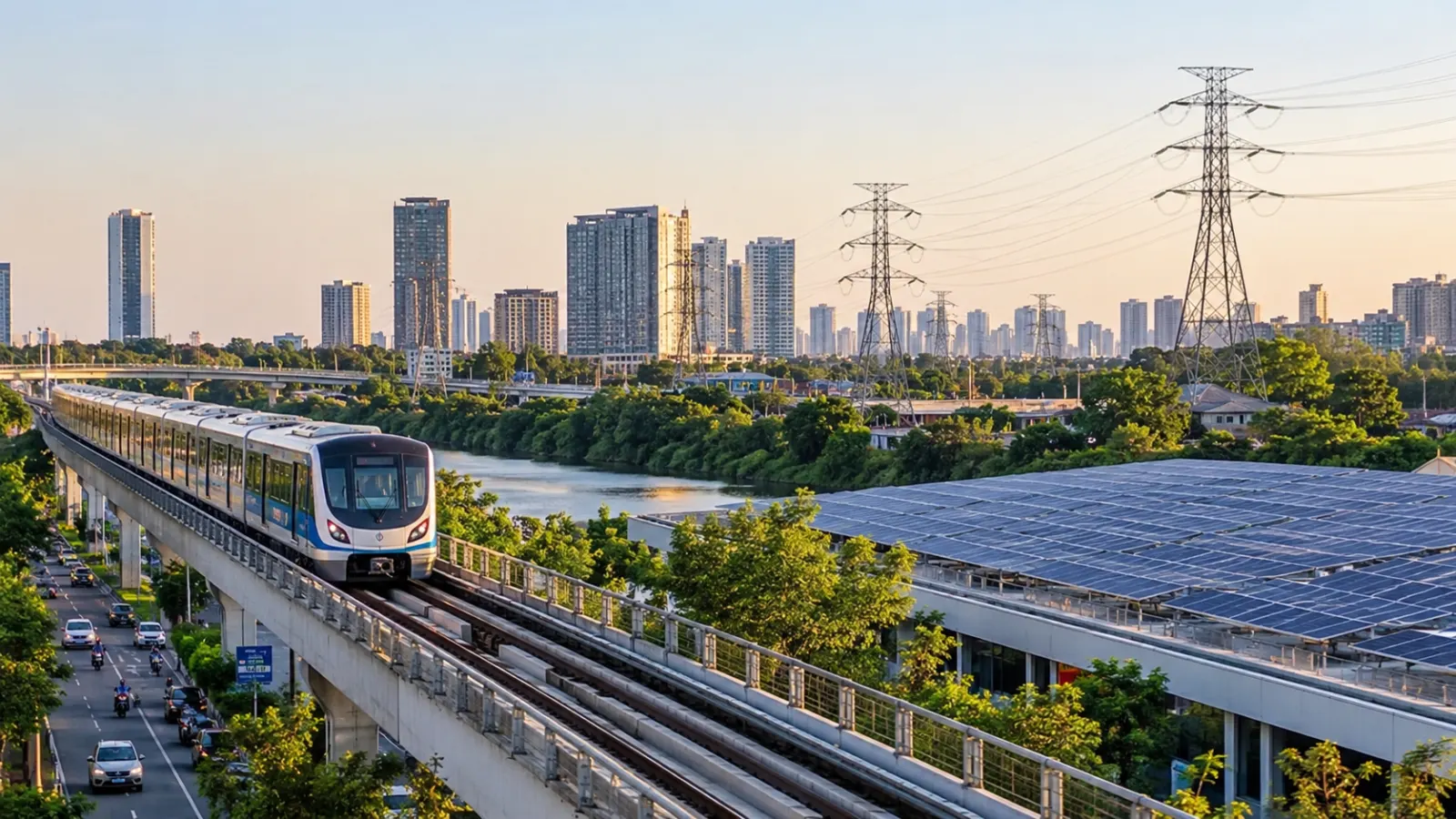
Making Invisible Emissions Visible
A carbon footprint is a way of asking a simple but powerful question: how much climate-warming pollution is connected to a person, product, organization, event or activity? The phrase is familiar, but it is often used loosely. Some people treat it as a moral score. Some use it as a marketing label. Some dismiss it because fossil-fuel companies helped popularize individual footprint language. A more useful approach is to treat the carbon footprint as an accounting tool. It is not the whole climate story, but it helps make invisible emissions visible.
Strictly understood, a carbon footprint measures the total greenhouse gas emissions associated with something. Despite the word carbon, it usually includes more than carbon dioxide. Methane, nitrous oxide and other greenhouse gases may also be counted and converted into carbon dioxide equivalent, or CO2e. This conversion allows different gases to be compared using a common unit based on their warming effect. A carbon footprint can therefore be reported as kilograms or tonnes of CO2e per year, per product, per kilometre, per meal, per company, per building or per event.
The word footprint is useful because emissions are often indirect. When a car burns petrol, the emissions come out of the exhaust directly. But when a person buys a shirt, the emissions may be spread across cotton farming, textile manufacturing, dyeing, transport, packaging, retail and washing. When a household uses electricity, the emissions may occur far away at a power plant. A carbon footprint traces these connections. It says: climate impact is not limited to what happens in front of us.
Individual, Product and Organizational Footprints
There are three broad ways to think about a carbon footprint: individual, product and organizational. An individual carbon footprint estimates emissions linked to a person’s lifestyle, including housing, electricity, transport, food, shopping, services and waste. A product footprint estimates emissions over a product’s lifecycle, from raw materials to manufacturing, transport, use and disposal. An organizational footprint estimates emissions from a company, institution, city or government agency. Each type answers a different question.
For individuals, the largest categories usually include transport, home energy, food and consumption of goods and services. The exact pattern depends heavily on income, location, infrastructure and lifestyle. A person living in a dense city with public transport may have lower transport emissions than someone forced to drive long distances. A household using coal-heavy electricity has a different footprint from one using renewable electricity. A diet high in emissions-intensive foods has a different footprint from a more plant-rich diet. The footprint is therefore partly personal and partly structural.
For products, the key idea is lifecycle assessment. A product’s climate impact does not begin when the buyer sees it in a shop. It begins with extraction or cultivation of raw materials. It continues through processing, manufacturing, packaging, storage and transport. It may continue during use, as with appliances, vehicles and electronics. It ends with repair, reuse, recycling, landfill or disposal. A low purchase price can hide a high environmental cost if the product is energy-intensive, short-lived or difficult to recycle.
For organizations, carbon accounting is often divided into scopes. Scope 1 emissions are direct emissions from sources the organization owns or controls, such as fuel burned in company vehicles, boilers or factories. Scope 2 emissions are indirect emissions from purchased electricity, heating or cooling. Scope 3 emissions include wider value-chain emissions, such as purchased goods, business travel, employee commuting, product use, waste and supplier activity. Scope 3 is often the largest and hardest to measure because it extends beyond the organization’s immediate boundary.
The carbon footprint concept became popular because climate change is large and abstract. Global emissions are counted in billions of tonnes. Such numbers are too vast for everyday understanding. A footprint translates the global problem into decisions people recognize: commuting, electricity bills, air-conditioning, food waste, flights, online shopping, construction materials, packaging and investment choices. It gives households, companies and governments a starting point for reduction.
Limits and Misuse of the Concept
But the concept has limitations. First, carbon footprint estimates depend on assumptions. How is electricity counted? Which emissions factor is used? Are imports included? Is the calculation based on average data or supplier-specific data? Are land-use changes included? What lifetime is assumed for a product? Different calculators can produce different numbers because they define boundaries differently. A footprint should therefore be treated as an informed estimate, not a perfect measurement.
Second, the individual footprint can be misused to shift responsibility away from systems and corporations. A person can reduce waste, save energy and choose cleaner transport, but many high-emission choices are shaped by infrastructure. If a city lacks public transport, citizens drive. If electricity comes mainly from coal, every electric appliance carries that background footprint. If buildings are poorly designed, households need more cooling. Individual action matters, but it cannot substitute for policy, clean energy investment, urban planning and industrial transformation.
Third, carbon is not the only environmental issue. A product with a lower carbon footprint may still have water, toxicity, land, biodiversity or labour concerns. For example, some low-carbon technologies require minerals whose mining must be responsibly managed. A narrow carbon-only view may miss broader sustainability. The carbon footprint is a climate metric, not a complete ethical or environmental audit.
Even with these limits, the concept remains useful when used carefully. It helps identify hotspots. A company may discover that most emissions are not from its office lights but from raw materials. A household may discover that frequent flights dominate its footprint. A city may discover that buildings and transport require the biggest interventions. Once the hotspots are visible, action becomes more strategic. The best footprint analysis does not end in guilt; it leads to prioritization.
A carbon footprint also helps compare options. Public transport usually has lower per-person emissions than private car travel, especially when vehicles carry many passengers. Energy-efficient appliances generally reduce emissions over time, especially where electricity is fossil-fuel heavy. Repairing or using products longer can reduce emissions from replacement. Reducing food waste avoids emissions from producing food that is never eaten. But comparisons must be based on context. A poorly used bus, a coal-powered electric vehicle or an imported product with high shipping and production emissions may complicate simple claims.
CO2e, Equity and Business Relevance
CO2e is central to these comparisons. Since greenhouse gases differ in warming strength, scientists use global warming potential to express them in CO2-equivalent terms. This allows methane from livestock, nitrous oxide from fertilizer and carbon dioxide from fuel burning to be added together. But the timescale matters. Methane is especially powerful over shorter periods but breaks down faster than CO2. For long-term accounting, 100-year global warming potential is common, but some debates also use 20-year values to emphasize near-term warming.
The carbon footprint of a person is closely tied to income and consumption. Globally, wealthier individuals generally have larger footprints because they travel more, consume more goods and services, live in larger homes and use more energy. This does not mean poverty is environmentally ideal; it means development must be designed differently. People need electricity, mobility, housing, nutrition, healthcare and opportunity. The goal is not to freeze living standards. The goal is to provide well-being with far lower emissions through clean energy, efficient systems and sustainable consumption.
A meaningful footprint conversation should also separate necessity from luxury. Cooking fuel, basic electricity, school transport and essential healthcare are not the same as frequent luxury flights or disposable fast-fashion consumption. Climate policy becomes unjust if it treats survival emissions and luxury emissions as morally identical. The fairest reductions focus first on waste, inefficiency and high-consumption patterns while expanding clean options for everyone.
For businesses, carbon footprint measurement is becoming increasingly important. Investors, regulators, customers and supply-chain partners are asking companies to disclose emissions and climate risks. Exporters may face carbon-related trade rules. Large companies may require suppliers to provide emissions data. Banks may assess climate exposure. A credible organizational footprint can therefore be a strategic business tool, not merely a public relations exercise. It can reveal cost savings through efficiency, risk reduction through cleaner suppliers and innovation opportunities in low-carbon products.
However, carbon-footprint claims can also become greenwashing. A company may advertise a carbon-neutral product while relying heavily on questionable offsets. It may count only direct emissions and ignore supply chains. It may highlight a small recycling initiative while its core business remains highly polluting. This is why transparent boundaries, verified data and reduction before offsetting are essential. The hierarchy should be: measure honestly, reduce deeply, switch to cleaner systems, and only then use high-quality removals or offsets for residual emissions.
How a Footprint Becomes a Map for Action
Carbon offsets deserve caution. In theory, an offset allows one party to compensate for emissions by funding reductions or removals elsewhere. In practice, offset quality varies widely. A good offset must be additional, measurable, durable, independently verified and not harmful to local communities or ecosystems. Planting trees that later burn, protecting a forest that was not actually at risk, or double-counting credits can undermine credibility. Offsets cannot replace emissions cuts at source.
The practical value of calculating a carbon footprint is strongest when it leads to decisions. A household can identify whether to focus on electricity, cooling, transport, food or purchases. A company can identify high-emission suppliers or processes. A school can reduce energy waste and teach students through real data. A city can plan transit, buildings and waste systems. Footprints turn climate action from vague intention into a management process.
For a reader, the best first step is not to obsess over a perfect number. It is to understand the major categories. How do you travel? How is your home powered and cooled? What food do you waste? How often do you buy things you do not use for long? Which services and systems shape your choices? The answer will not be identical for everyone, but the pattern will show where effort matters most.
A carbon footprint is therefore both a mirror and a map. As a mirror, it reflects the emissions hidden inside modern life. As a map, it points toward the largest opportunities for change. It should not be used to shame individuals while ignoring systems. It should not be used by companies as a branding trick. Used honestly, it helps society ask a better question: how can we deliver comfort, mobility, prosperity and dignity with far less damage to the atmosphere?
In short, the carbon footprint is not the destination. It is the measurement that helps choose the route. Once the route is visible, households, firms and governments can move from vague climate concern to targeted climate action.
A good carbon footprint exercise should therefore begin with a boundary statement. If it is a personal footprint, does it include only household energy and travel, or does it include food, clothing, healthcare, education, digital services and public infrastructure? If it is a product footprint, does it stop at the factory gate, at the retail shelf, or at end-of-life disposal? If it is a business footprint, are supplier emissions included or excluded? The answer can change the result dramatically. This is why serious reporting does not simply publish a number; it explains what the number covers.
The concept is also useful for editors, educators and policy communicators because it connects climate science with everyday economics. A carbon footprint is not only about pollution. It is also about energy dependence, supply-chain design, wasteful production, inefficient buildings and patterns of consumption. When explained well, it helps readers see that emissions are embedded in systems rather than floating separately above life. It can turn an abstract global issue into a set of practical questions: where does my electricity come from, how far do goods travel, how long do products last, and which choices are locked in by infrastructure?
The strongest use of the idea is diagnostic. Like a financial audit, it is valuable only when it leads to better decisions. A family budget identifies where money leaks. A carbon footprint identifies where emissions leak. The result should not be shame, but redesign: better homes, better transport, better food systems, better procurement and better public policy.
Key Takeaways
A carbon footprint measures direct and indirect greenhouse gas emissions connected to an activity, product, person or organization.
CO2e allows different gases to be counted in a common unit.
The concept is useful for identifying hotspots but should not be used to shift all responsibility onto individuals.
A credible footprint must define its boundary, data source and assumptions clearly.