Jawaharlal Nehru occupies a distinctive place in the making of modern India because his legacy is not confined to a single movement, law, institution, or slogan. He was both a freedom fighter and a state-builder, both an intellectual and an administrator, both a romantic internationalist and a practical leader forced to govern a wounded country after Partition. If Mahatma Gandhi gave the Indian freedom struggle much of its moral grammar, Nehru gave independent India a vocabulary of democratic modernity. He imagined India not as a narrow civilisational enclosure but as a plural, scientific, parliamentary, developmental, and globally engaged republic.
Nehru’s vision cannot be understood only by listing policies. It was a worldview. He believed that political freedom had to be joined with economic transformation, social reform, scientific temper, secular citizenship, and international dignity. He inherited a country marked by poverty, Partition violence, illiteracy, refugee crisis, princely integration, food shortages, weak industrial capacity, and deep social divisions. Under such conditions, democracy itself was a gamble. Many observers doubted whether a poor, diverse, newly independent country could sustain universal adult franchise, constitutional government, and peaceful transfer of power. Nehru’s achievement was to treat democracy not as a luxury to be postponed but as the foundation of the republic.
Jawaharlal Nehru was born on 14 November 1889 in Allahabad into a wealthy and politically prominent family. His father, Motilal Nehru, was a successful lawyer and a major figure in the Indian National Congress. His mother, Swarup Rani, belonged to a Kashmiri Brahmin family. Nehru’s childhood was privileged, protected, and intellectually rich. He received private education at home before going to England, where he studied at Harrow and then at Trinity College, Cambridge. He later trained in law at the Inner Temple. This education exposed him to liberal thought, science, European history, nationalism, socialism, and the contradictions of imperial power. He returned to India in 1912 with the polish of an English-educated barrister but soon discovered that India’s political reality demanded more than professional comfort.
The early Nehru was not immediately the mass leader he would become. He attended Congress sessions, observed nationalist politics, and gradually moved toward more radical positions. His encounter with Gandhi at the Lucknow Congress in 1916 marked a turning point, though their relationship evolved over time. Gandhi brought mass mobilisation, ethical politics, and rootedness in Indian society. Nehru brought international awareness, impatience with imperial compromise, and a vision of complete independence. The two men differed in temperament, economics, religion, and attitude toward modern civilisation, yet they became central partners in India’s freedom struggle. Gandhi saw in Nehru the future; Nehru saw in Gandhi the capacity to awaken India.
The Jallianwala Bagh massacre, the Rowlatt Acts, and the wave of post-war repression pushed Nehru deeper into nationalist politics. During the Non-Cooperation Movement, he worked in the United Provinces and experienced imprisonment. Jail became a recurring institution in Nehru’s life. Over the decades, he spent long periods in prison, using confinement not only as sacrifice but also as intellectual labour. Some of his major writings emerged from prison: letters to his daughter, reflections on world history, autobiography, and The Discovery of India. These works reveal that Nehru’s nationalism was never provincial. He placed India within world history, anti-colonial struggles, scientific progress, and human civilisation.
Nehru’s demand for complete independence distinguished him from more cautious constitutional politics. By the late 1920s, he represented a younger, impatient wing of Congress that was dissatisfied with dominion status. At the Lahore session of the Congress in 1929, under Nehru’s presidency, the demand for Purna Swaraj became central. The declaration of complete independence gave the freedom movement a sharper objective. Nehru’s role here was symbolic and strategic. He embodied a generational shift from petitioning empire to demanding full sovereignty. He also connected Indian nationalism with global anti-imperial currents, including struggles in Asia, Africa, and Europe.
Nehru’s ideological development was shaped by socialism, but he was not a doctrinaire Marxist. He was attracted to the idea that economic inequality could not be left to charity or market forces. Colonialism had distorted India’s economy, weakened industry, deepened rural poverty, and tied production to imperial interests. Nehru believed that political independence without economic planning would leave India formally free but materially weak. His visits to the Soviet Union and his reading of socialist thought influenced his admiration for planning, public sector development, and state-led industrialisation. Yet he remained committed to parliamentary democracy, civil liberties, and open debate, even when these slowed decision-making.
As independent India’s first prime minister, Nehru faced the enormous task of converting nationalist aspiration into durable institutions. He served from 1947 until his death in 1964, a period that shaped the republic’s early personality. He did not govern alone. Patel, Ambedkar, Rajendra Prasad, Maulana Azad, C Rajagopalachari, and many others contributed to the founding moment. But Nehru’s long tenure, national stature, and control of the prime ministerial office gave his ideas exceptional influence. He supported the Constitution, parliamentary government, an independent judiciary, competitive elections, and a free press, even when criticism was uncomfortable. In a region where many postcolonial states moved quickly toward military rule or authoritarianism, India’s democratic continuity owed much to these early choices.
Nehru’s secularism was not merely a slogan. Partition had left India with terrible wounds. Millions were displaced; communal violence had torn Punjab, Bengal, Delhi, and other regions. In such a climate, defining India as a Hindu state would have deepened insecurity and perhaps prolonged fragmentation. Nehru insisted that citizenship must not depend on religion. The Indian republic would belong equally to all communities. This did not mean hostility to religion. Nehru personally leaned toward rationalism and was often impatient with ritualism, but his political secularism was primarily about equal citizenship, state neutrality, and protection of minorities. In this sense, secularism was not an imported decorative idea; it was a practical necessity for India’s survival as a diverse democracy.
Nehru’s vision of modernity placed science at the centre of nation-building. He repeatedly argued for the development of scientific temper: a habit of inquiry, evidence, scepticism, and openness to correction. For him, science was not only laboratory research; it was a way of thinking necessary for a society emerging from poverty and superstition. This vision led to investment in institutions of higher education, engineering, atomic energy, space research foundations, scientific laboratories, dams, steel plants, and technical training. Nehru called large development projects the temples of modern India, a phrase that reveals both the ambition and the limitations of his imagination. He wanted modern institutions to carry emotional legitimacy in a society deeply shaped by sacred symbols.
Economic planning became one of the most visible features of Nehru’s India. The Planning Commission, Five-Year Plans, public sector enterprises, heavy industry, and infrastructure development aimed to build national capacity. Nehru believed that a poor country could not depend entirely on private capital to create the industrial base required for sovereignty. Steel, power, machine tools, transport, and scientific education were not merely economic sectors; they were instruments of independence. This strategy helped India create industrial and technical capacity, but it also produced bureaucracy, licensing, inefficiency, and constraints on entrepreneurship. A balanced assessment must recognise both sides. Nehru’s model built foundations in a capital-scarce country, yet it also contributed to a controlled economy that later required reform.
Nehru’s education policy reflected his faith in long-term transformation. He understood that democracy without education would remain fragile. His government supported universities, research institutes, technical institutions, and cultural bodies. The Indian Institutes of Technology, scientific councils, and national academies became part of this institutional vision. However, mass primary education did not advance as rapidly as it should have. India’s early republic invested in elite technical capacity more successfully than universal school quality. This imbalance remains an important criticism. Nehru saw education as essential, but the state’s administrative reach and fiscal capacity were limited, and political priorities often favoured visible industrial projects over basic schooling.
In foreign policy, Nehru sought strategic autonomy before the phrase became common. The Cold War divided the world into American and Soviet blocs. Newly independent countries faced pressure to align with one side. Nehru believed India should avoid becoming a camp follower. Non-alignment was not neutrality in the sense of indifference. It was an assertion that countries emerging from colonialism had their own interests, histories, and moral voice. India supported decolonisation, anti-apartheid struggles, peaceful coexistence, and the United Nations, while trying to preserve freedom of judgement. Critics argued that non-alignment sometimes became moral posturing and that India’s defence preparedness suffered. Supporters argue that it gave India diplomatic space, leadership among postcolonial nations, and dignity in a bipolar world.
The China question remains the greatest wound in Nehru’s legacy. Nehru hoped for Asian solidarity and peaceful coexistence with the People’s Republic of China. The slogan of Hindi-Chini bhai-bhai captured the optimism of the 1950s. But border disputes, Tibet, strategic misreading, and military weakness culminated in the 1962 Sino-Indian War, a devastating defeat for India and a personal blow to Nehru. This episode exposed the limits of idealism in foreign policy. A mature judgement must avoid both simplistic condemnation and uncritical defence. Nehru was not naive in every respect, but he underestimated the severity of the border problem and overestimated the stabilising power of goodwill. The war forced India to rethink defence and remains a cautionary chapter in the relationship between vision and power.
Nehru’s relationship with Gandhi shaped his moral and political identity, but he did not become a Gandhian in the full sense. Gandhi distrusted large-scale industrial civilisation; Nehru embraced industry and science. Gandhi placed the village at the centre; Nehru feared that romanticising the village could preserve backwardness and hierarchy. Gandhi’s language was spiritual; Nehru’s was rational and historical. Yet Nehru absorbed from Gandhi a commitment to mass politics, anti-communalism, sacrifice, and ethical seriousness. Their partnership allowed the freedom movement to contain multiple idioms: moral protest and modern statecraft, village India and global India, tradition and science. Nehru’s India was not Gandhi’s ideal India, but it was shaped by the legitimacy Gandhi helped create.
Nehru’s relationship with Sardar Patel was equally important. The two differed in style and priorities. Patel was organisationally hard-headed, administratively decisive, and deeply focused on unity and order. Nehru was more internationalist, ideological, and institutionally expansive. Their tensions over Kashmir, Hyderabad, party affairs, and policy are well known. Yet independent India needed both. Patel’s integration of princely states and administrative consolidation provided territorial stability; Nehru’s democratic and international vision shaped the republic’s direction. The tendency to turn them into political opposites often obscures their shared commitment to India’s unity and freedom. They represented different strengths of the founding generation.
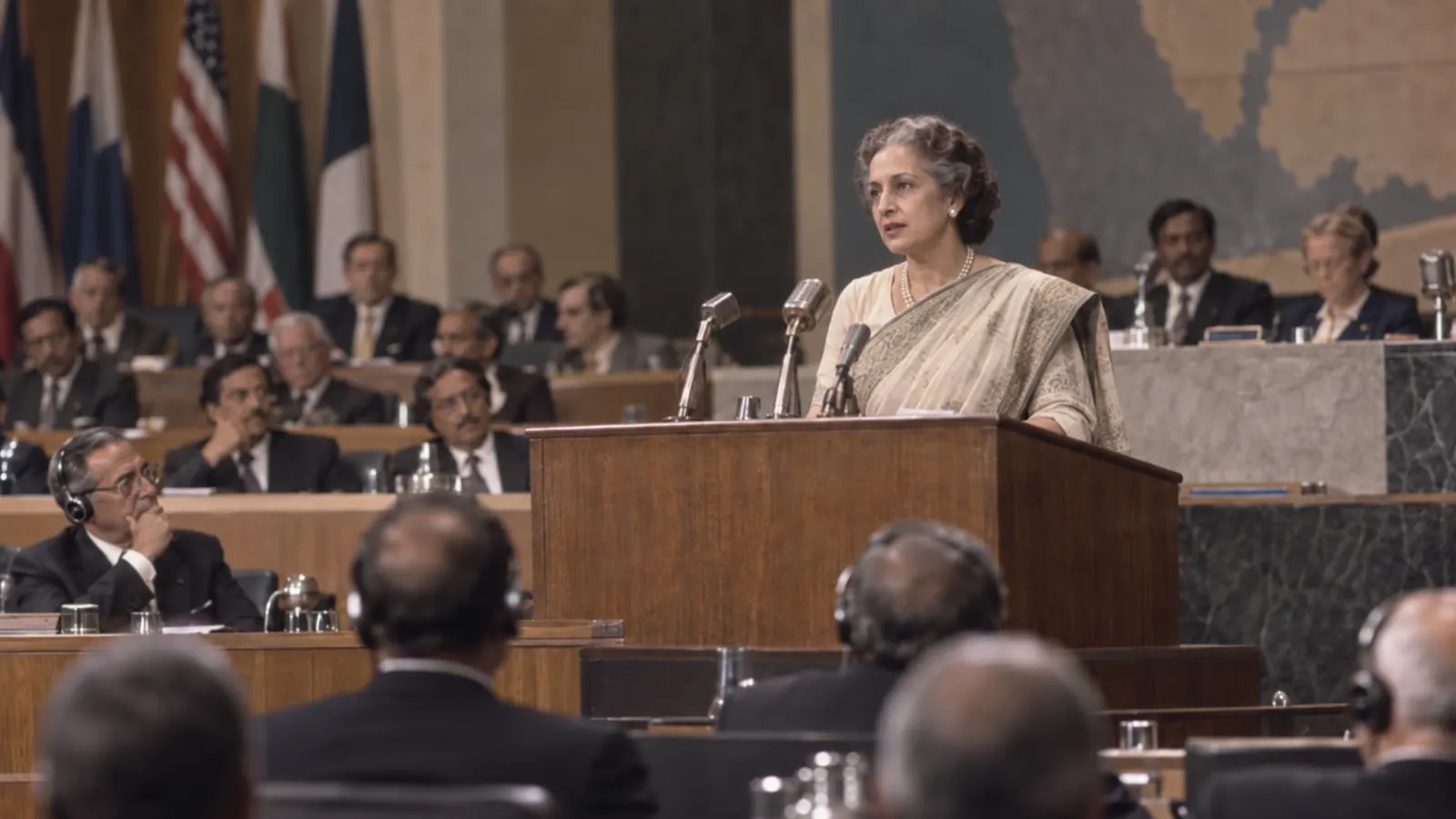
Nehru also carried contradictions of class and culture. He was an aristocratic democrat, an English-educated nationalist, a socialist with elite habits, a rationalist leading a deeply religious society. These contradictions made him vulnerable to criticism, but they also helped him mediate between worlds. He could speak to peasants in mass meetings and to world leaders at international conferences. He could write history for children and negotiate diplomacy at the United Nations. His emotional bond with India was not narrow ethnic belonging but civilisational curiosity. In The Discovery of India, he explored India as a layered, plural, argumentative civilisation. This idea of India as unity-in-diversity became central to the republic’s self-understanding.
Criticism of Nehru has grown sharply in contemporary politics. Some blame him for Kashmir, China, excessive central planning, weak primary education, dynastic politics, and an elite vision disconnected from grassroots realities. Some criticisms are serious and deserve engagement. Nehru made mistakes. His economic framework became rigid. His foreign policy faced harsh realities. His party’s dominance created habits that later contributed to centralisation. Yet many attacks on Nehru are less historical than ideological. They judge the founding moment without acknowledging the constraints of Partition, poverty, Cold War pressure, institutional fragility, and social diversity. To understand Nehru is not to worship him; it is to assess how difficult state-building was in the first decades of freedom.
Nehru’s democratic temperament may be his most enduring contribution. He possessed enormous popularity and could have concentrated power more aggressively. Instead, he repeatedly legitimised Parliament, elections, debate, and dissent. He campaigned vigorously but accepted the need for opposition. He wrote to chief ministers, explained policy, addressed citizens, and treated public reasoning as part of governance. His speeches often carried a pedagogic tone because he believed the state had to educate democratic citizenship. This style can appear paternalistic, but it also reflected a belief that democracy required conversation between government and people.
His death on 27 May 1964 marked the end of the first era of independent India. By then, India had held general elections, built constitutional institutions, created planning structures, established a foreign policy identity, and survived early crises. Much remained unfinished. Poverty persisted. Caste inequality continued. Communal tensions did not disappear. Economic growth was slow. Defence weaknesses had been exposed. Yet the republic had not collapsed. It had acquired habits of constitutional life. That achievement should not be underestimated.
Jawaharlal Nehru’s vision matters today because India still debates the questions he placed at the centre of national life. What kind of modernity should India pursue? Can religious diversity be protected through equal citizenship? How should the state balance growth and justice? What is the role of science in public culture? How can India remain globally independent without becoming isolated? How should memory treat civilisational pride without turning it into exclusion? These are not dead questions. They are alive in every argument about the Indian republic.
The vision of Nehru was ultimately a wager on India’s capacity to be democratic, plural, scientific, and modern without losing its historical depth. He did not fully realise that vision, and parts of it require correction. But he gave India a framework within which disagreement could occur without destroying the republic. His legacy is not a finished monument; it is an unfinished constitutional conversation. To read Nehru seriously is to encounter the ambition and anxiety of a new nation trying to become free not only from empire but also from poverty, fear, ignorance, and narrowness. That is why Nehru remains central: because the India he imagined is still being argued over.
Nehru’s cultural vision was also important to the republic. He did not understand Indian civilisation as a single, pure, unchanging tradition. He saw it as a long conversation shaped by migration, conflict, synthesis, argument, conquest, reform, and creativity. This view mattered politically because it allowed national identity to be inclusive rather than exclusionary. India, in Nehru’s imagination, could draw from the Vedas, Buddhism, Bhakti, Sufism, regional cultures, modern science, anti-colonial struggle, and global humanism without reducing itself to one source. His idea of unity was historical and layered. It asked Indians to be proud without becoming narrow, rooted without becoming closed.
Nehru’s style of public speech helped build this civic imagination. His speeches often moved between poetry and policy. “Tryst with Destiny” is remembered not merely because it marked independence, but because it turned freedom into responsibility. He spoke of service, ending poverty, fighting disease, and redeeming a pledge to the people. This was not the language of revenge after empire; it was the language of construction. Nehru wanted citizens to see independence as the beginning of work, not the end of struggle. His speeches and letters repeatedly tried to educate the public in the habits of democratic citizenship: patience, tolerance, curiosity, and awareness of the wider world.
His commitment to institutions extended to culture as well as administration. Bodies such as the Sahitya Akademi, Lalit Kala Akademi, Sangeet Natak Akademi, national museums, scientific institutions, and universities reflected the idea that a new nation needed intellectual and cultural infrastructure. Nehru did not want India to become merely a political state. He wanted it to become a civilisation consciously renewing itself. That required archives, research, literature, art, public debate, and a state willing to support knowledge without demanding complete obedience from it. The results were uneven, but the institutional ambition was unmistakable.
The democratic value of Nehru’s leadership becomes clearer when compared with the pressures of his age. The 1940s and 1950s were not gentle decades. The world had witnessed fascism, war, genocide, nuclear weapons, ideological polarisation, and colonial violence. Many new states treated emergency as justification for permanent authoritarianism. India had enough insecurity to make dictatorship plausible: Partition, poverty, communal tension, linguistic demands, and border disputes. Nehru’s insistence on elections, legislatures, courts, and civil liberties therefore required political choice. Democracy survived not because it was easy but because early leaders made it a habit.
Yet Nehru’s vision should not be turned into a frozen doctrine. Some of his assumptions require revision in the twenty-first century. State-led industrialisation cannot alone answer questions of innovation, employment, and environmental limits. Secularism must be renewed through social trust, not only constitutional language. Scientific temper must now confront misinformation, digital echo chambers, and pseudo-science in new forms. Non-alignment has evolved into multi-alignment in a more complex world. The point is not to repeat Nehru mechanically. It is to understand the spirit of his project: India must think independently, build institutions patiently, and resist the temptation to solve deep problems through hatred or simplification.
Nehru also matters because he gave postcolonial ambition a language of dignity. He did not want India to imitate the West slavishly, but neither did he want it to retreat into wounded nostalgia. He wanted Indians to learn from the world while judging the world independently. This confidence was psychologically important after colonial rule, which had repeatedly taught Indians to see themselves as backward subjects needing imperial guidance. Nehru’s speeches, books, and institutions told citizens that India could think, build, discover, argue, and lead. The emotional effect of that message should not be underestimated.
His weaknesses, therefore, must be studied alongside the confidence he created. A nation can outgrow parts of a founder’s policy while still owing something to the horizon that founder opened. Nehru’s horizon was wide: democracy in a poor society, pluralism after Partition, science amid superstition, planning amid scarcity, independence amid Cold War pressure, and humanism amid ideological violence. Few leaders have had to hold so many tensions at once. His vision remains unfinished because India itself remains unfinished.