Power is usually imagined in hard forms.
Armies. Missiles. Borders. Markets. Sanctions. Technology. Alliances. Naval fleets. Energy routes. Trade leverage. Intelligence networks. These are visible instruments of statecraft. They shape behaviour through force, fear, dependency or strategic calculation.
But India’s oldest foreign policy asset has never been only hard power.
It has been attraction.
Long before India became a modern republic, the Indian civilisational world had already travelled beyond political borders. Buddhism moved across Asia. Sanskritic ideas shaped intellectual traditions. Indian Ocean trade carried merchants, language, food, textiles and religious practices. Yoga, Ayurveda, philosophy, epics, temple architecture, mathematics and spiritual traditions created a civilisational presence far beyond the subcontinent.
This influence did not move like an army.
It moved like memory.
That is why soft power remains India’s oldest foreign policy asset. It is older than the Ministry of External Affairs, older than independent India, older than modern diplomacy itself. It comes from a simple fact: India has historically influenced the world not only by ruling territories, but by shaping imagination.
In the twenty-first century, this old asset has become newly important. The global order is more competitive, more fragmented and more suspicious. Countries are not judged only by economic growth or military strength. They are also judged by trust, credibility, culture, values, technology, humanitarian conduct and the stories they tell about themselves.
India wants to be seen not merely as a rising power, but as a civilisational state, a democratic voice, a development partner, a technology provider, a cultural force and a bridge between the Global South and the developed world.
Soft power is central to that ambition.
What Soft Power Means
Soft power is the ability to influence others through attraction rather than coercion. It works when people admire a country’s culture, respect its values, trust its institutions, consume its creative products, study in its universities, follow its ideas, appreciate its diplomacy or feel connected to its people.
Hard power says: do this, or there will be consequences.
Soft power says: come closer, because there is something here worth engaging with.
India’s soft power does not come from one source. It comes from many overlapping layers: civilisation, democracy, diaspora, yoga, cinema, cuisine, spirituality, education, development cooperation, medical care, digital public infrastructure, festivals, literature, cricket, constitutionalism, pluralism and moral language around the Global South.
This diversity is India’s advantage. India does not have one soft power brand. It has many.
But that is also the challenge. A country with too many stories must learn to organise them into a coherent global narrative.
Civilisation as a Foreign Policy Resource
India’s civilisational depth gives it a kind of soft power that many modern states cannot easily manufacture.
Some countries build soft power through recent economic success. Some build it through entertainment. Some build it through universities or technology brands. India has all of these in varying degrees, but its deeper advantage is civilisational continuity.
India can speak of Buddhism in Asia, yoga across the world, Ayurveda and wellness, Sanskritic and Pali traditions, temple networks, ancient universities such as Nalanda, maritime trade with Southeast Asia, shared cultural memory with the Indian Ocean world, and philosophical traditions that still resonate globally.
This gives India a foreign policy language that is not purely transactional.
When India engages Southeast Asia through Buddhism and Ramayana traditions, it is not inventing an artificial connection. When it speaks of Nalanda, it is invoking a historical memory of knowledge exchange. When it uses yoga as a global health language, it draws from a practice that has already moved across cultures. When it supports heritage restoration abroad, it connects diplomacy with civilisation.
The power of civilisational diplomacy lies in familiarity. It allows India to say: our relationship is older than today’s politics.
That matters in a world where many diplomatic relationships feel temporary, transactional and interest-driven.
Yoga: India’s Most Successful Global Cultural Export
If one has to identify India’s most visible modern soft power success, yoga would be near the top.
Yoga works because it is personal, portable and universal. It does not require knowledge of Indian politics. It does not require fluency in an Indian language. It does not require migration, wealth or ideology. A person can encounter India through breath, posture, discipline and wellness.
The International Day of Yoga is one of India’s major diplomatic achievements. The UN General Assembly adopted the India-led resolution on 11 December 2014, declaring 21 June as the International Day of Yoga; the resolution had 175 co-sponsors, described by Indian diplomatic sources as the highest number for any resolution in the 193-member UN General Assembly at that time.
This matters because the success of the resolution showed that yoga had already crossed political boundaries. It was not seen only as an Indian religious or cultural practice. It was accepted as a global wellness language.
The strength of yoga diplomacy lies in its non-threatening character. It does not demand strategic alignment. It creates goodwill through health, discipline and inner balance. In a tense world, that kind of soft power is rare.
But India must handle yoga carefully. The more global yoga becomes, the more diverse its meanings become. Some people approach it spiritually. Some approach it medically. Some approach it as fitness. Some see it as mental health support. India’s role should not be to police every interpretation, but to preserve authenticity while allowing global adaptation.
The best soft power travels without becoming insecure.
Diaspora: India’s Human Bridge to the World
India’s diaspora is one of its greatest soft power assets.
The diaspora does not function like a government campaign. It works through families, workplaces, universities, businesses, politics, technology, medicine, law, culture, food, festivals and community life. Overseas Indians often become informal ambassadors of India simply by being visible, successful and rooted in two worlds.
The Ministry of External Affairs maintains a country-wise population table of overseas Indians, with large communities listed in countries such as the United States and the UAE; for example, the MEA table lists more than 5.4 million overseas Indians in the United States and about 3.57 million in the UAE.
This diaspora matters in multiple ways.
It strengthens India’s image in global business and technology. Indian-origin CEOs, doctors, professors, engineers, entrepreneurs, public officials and students help shape perceptions of Indian talent. It creates political influence in countries where Indian-origin communities are electorally significant. It supports remittances, investment, philanthropy and educational exchange. It keeps Indian festivals, food, language and identity alive abroad.
But the diaspora is not a simple instrument of the Indian state. It is diverse, independent and shaped by local contexts. Overseas Indians do not all think alike. They do not all share the same political views. They are citizens or residents of other countries with their own obligations and identities.
India’s diaspora diplomacy must therefore be respectful, not possessive. The diaspora is strongest as a bridge when it is not reduced to a tool.
Culture Travels Where Policy Cannot
Culture often enters spaces where formal diplomacy struggles.
A Bollywood song may be remembered in places where Indian policy is not closely followed. Indian food may create affection before political alignment exists. Cricket may connect publics even when governments disagree. Festivals such as Diwali and Holi create visibility in global cities. Indian classical dance and music communicate aesthetic depth. Literature and philosophy create intellectual respect.
This is why cultural diplomacy matters.
India’s institutional cultural diplomacy is supported through the Indian Council for Cultural Relations. ICCR’s official website states that there are 37 ICCR cultural centres globally. These centres help project Indian culture through language, performances, exhibitions, scholarships, academic engagement and cultural exchange.
But India’s cultural power is not only institutional. Much of it is organic.
Indian cinema is a good example. Films travel through emotion, not policy papers. They create familiarity with Indian language, family structures, music, fashion, cities, humour, romance and aspiration. The Government of India has itself recognised cinema’s role in nation branding; a 2022 PIB release on a seminar titled “Indian Cinema and Soft Power” said cinema can play a major role in nation branding and described India’s potential as a “content sub-continent of the world.”
This is where India has enormous room for growth. South Korea turned culture into a strategic national brand through music, drama, food, beauty and technology. India has larger cultural depth, but often less strategic packaging. Its content industries are vast, but fragmented by language, region and market.
That fragmentation is also a strength. India should not try to reduce its culture to one national aesthetic. Its power lies in plurality.
Heritage as Global Memory
Heritage is another pillar of Indian soft power.
India’s monuments, temples, mosques, forts, stepwells, Buddhist sites, cities, caves, landscapes and sacred geographies communicate historical depth. They remind the world that India is not a newly visible country, but an old civilisational force returning to global prominence.
As of March 2026, the Government of India stated that India had 44 World Heritage Properties: 36 cultural, 7 natural and 1 mixed.
These heritage sites are not only tourism assets. They are diplomatic assets.
Nalanda connects India with Buddhist Asia and the history of knowledge. Bodh Gaya connects India with global Buddhism. Hampi, Khajuraho, Konark, Mahabalipuram and Chola temples speak to architecture, power and art. Ahmedabad and Jaipur represent urban heritage. Kaziranga, Western Ghats and Sundarbans connect India’s image with ecological richness.
Heritage diplomacy is powerful because it works through respect. A country that preserves and interprets its heritage well appears confident. A country that neglects its heritage weakens its own civilisational claim.
India cannot speak of civilisational leadership while allowing heritage to decay under pollution, encroachment, poor tourism management or political misuse.
Soft power requires preservation.
Democracy as Soft Power
India’s democracy is one of its most important soft power claims.
India is not merely a large country. It is a vast, multilingual, multi-religious, federal democracy that has sustained elections, constitutional institutions, political competition and mass participation at extraordinary scale. That matters because the world watches how India manages diversity.
India’s democratic identity gives it a distinctive voice. It allows India to speak differently from authoritarian powers. It allows India to argue that development, diversity and democracy can coexist. It gives India legitimacy in conversations about the Global South because it has experienced poverty, colonialism, development constraints and electoral politics together.
But democracy as soft power is also demanding.
It cannot rest only on the fact that elections are held. It depends on institutional credibility, civil liberties, minority confidence, free debate, judicial independence, media trust, federal balance and the everyday dignity of citizens.
This is where soft power becomes uncomfortable. A country’s image abroad is shaped not only by what it says, but by what it does at home.
If India wants democracy to remain a soft power asset, it must protect the quality of democracy, not only its scale.
Development Partnership as Soft Power
India’s soft power also comes from development cooperation.
Unlike traditional Western aid models, India often frames its development partnerships through South-South cooperation, capacity building, training, concessional finance, technology sharing and respect for sovereignty. This appeals to many countries that do not want patronising assistance or conditionality-heavy aid.
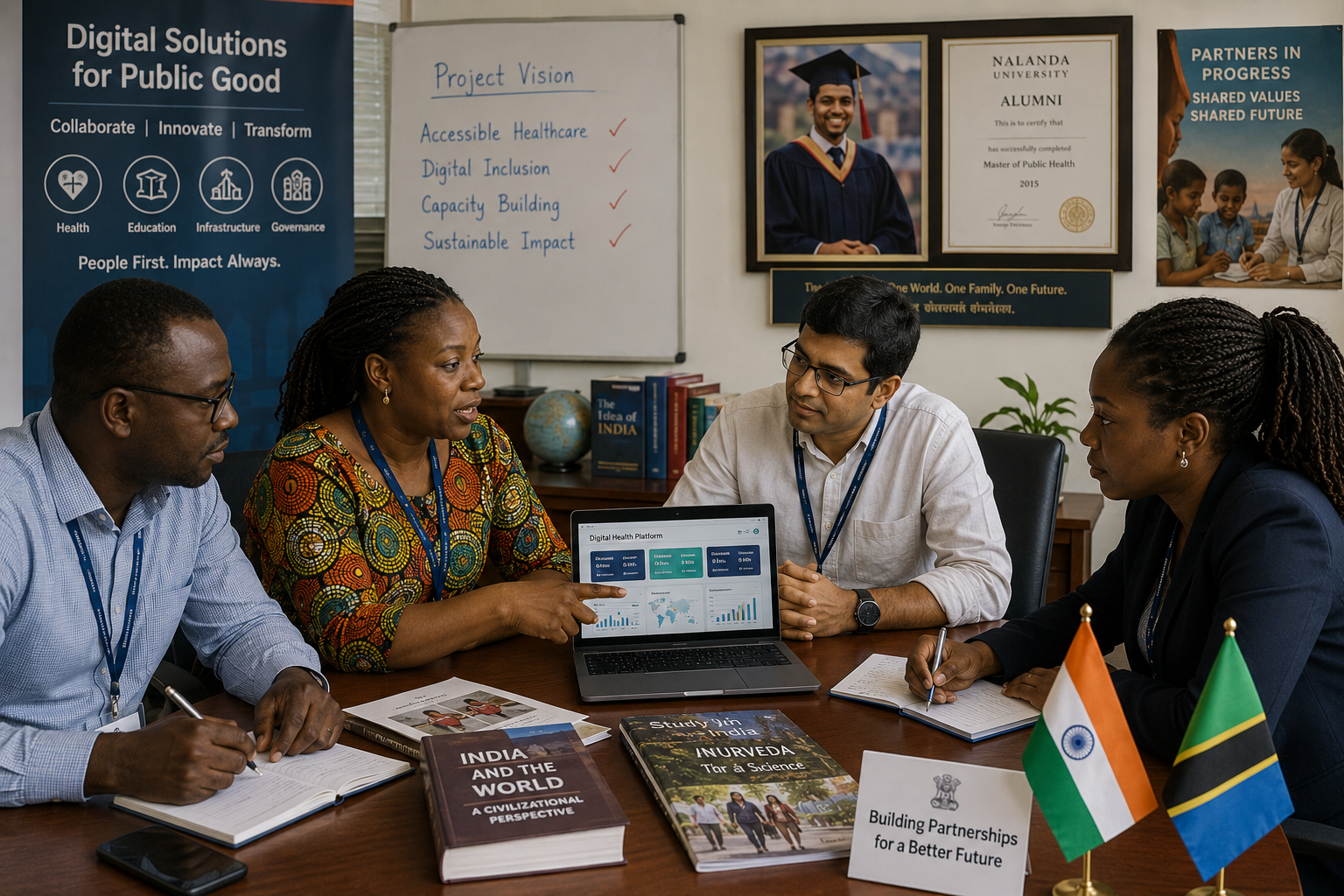
The Indian Technical and Economic Cooperation programme is one of the key instruments. An Indian Embassy page describes ITEC as having five components: training in India, project-related activities, deputation of Indian experts abroad, study tours and aid for disaster relief. It also states that training is provided through more than 300 courses in over 120 participating institutes.
This kind of cooperation builds long-term goodwill. A civil servant trained in India, an engineer exposed to Indian institutions, a diplomat who studied through an Indian programme, or a professional who attends a capacity-building course may carry positive memories for decades.
Training is a quiet form of diplomacy.
It does not produce dramatic headlines, but it creates networks of familiarity. In international relations, familiarity often matters more than propaganda.
India’s Global South Appeal
India’s soft power is especially important in the Global South.
Many developing countries see India as a country that understands scale, poverty, colonial history, development trade-offs and institutional complexity. India is not viewed only as a wealthy donor or a distant power. It is seen as a country that has faced similar challenges and built certain solutions under pressure.
This gives India credibility in areas such as affordable medicines, digital public infrastructure, capacity building, democratic development, agriculture, education, disaster response and space cooperation.
India’s soft power in the Global South is strongest when it appears practical rather than preachy.
A vaccine supplied during crisis, a digital payment system shared as public infrastructure, a training scholarship, a solar partnership, a disaster relief mission, a low-cost medicine, or a telemedicine model often creates more goodwill than a speech about civilisational greatness.
The Global South respects culture, but it also respects usefulness.
India’s challenge is to combine both.
The Limits of Soft Power
Soft power is valuable, but it is not magic.
A country cannot win strategic disputes with yoga alone. It cannot protect borders with cinema. It cannot overcome trade deficits with cuisine. It cannot compensate for weak military capacity through spiritual language. It cannot build semiconductor supply chains through civilisational pride.
Soft power supports hard power. It does not replace it.
This is especially important for India. India faces serious security challenges: China’s rise, Pakistan-backed terrorism, maritime competition, border disputes, technological dependency, supply-chain vulnerabilities and regional instability. In such a world, soft power must be part of a broader strategic toolkit.
The danger is romanticising soft power as if goodwill alone can secure national interests.
It cannot.
But the opposite mistake is equally dangerous: treating soft power as decorative. Culture, diaspora, education, medicine, technology, democracy and development cooperation shape international trust. Trust affects partnerships. Partnerships affect trade, security, investment, votes in multilateral institutions and crisis cooperation.
Soft power is not sentimental. It is strategic.
India’s Soft Power Gap
India has enormous soft power resources, but it does not always convert them into organised influence.
This is India’s soft power gap.
The raw material is immense: civilisation, culture, diaspora, cinema, yoga, cuisine, democracy, English-speaking talent, technology professionals, religious diversity, spiritual traditions, classical arts, textiles, festivals, cricket and development experience.
But the packaging is uneven.
India often relies on organic appeal rather than strategic cultural policy. Its universities have not yet become global magnets at the level of top Western institutions. Its tourism infrastructure still underperforms relative to its heritage. Its public diplomacy is sometimes too government-centric. Its cultural exports are powerful but fragmented. Its global media presence is not proportionate to its size. Its scholarship networks can be expanded. Its foreign-language content strategy remains underdeveloped.
Brand Finance’s 2025 Global Soft Power Index placed India 30th overall, while also noting stronger performance in areas such as culture and heritage, arts and entertainment, future growth potential, space exploration and scientific advancement. The same report stated that the index is based on responses from more than 170,000 participants across over 100 countries and assesses all 193 UN member states across 55 metrics.
This shows both strength and underperformance. India is globally familiar, culturally influential and increasingly recognised for growth and science. But for a country of India’s civilisational depth and demographic scale, the overall rank also suggests untapped potential.
India does not lack soft power.
It lacks full-spectrum soft power strategy.
The Credibility Problem
Soft power depends on credibility.
A country cannot claim tolerance abroad while appearing intolerant at home. It cannot promote heritage while neglecting monuments. It cannot speak of knowledge traditions while underfunding universities. It cannot celebrate diaspora success while making domestic institutions difficult for young people. It cannot promote wellness while public health remains unequal. It cannot speak for the Global South while acting arrogantly toward smaller neighbours.
The world notices contradictions.
This does not mean India must be perfect before projecting itself. No country is perfect. The United States promotes democracy despite domestic polarisation. China promotes development despite authoritarianism. France promotes culture despite social tensions. Every soft power story contains contradictions.
But the stronger the contradiction, the weaker the attraction.
India’s soft power will be strongest when its domestic reality supports its international narrative. That means pluralism, constitutionalism, institutional trust, economic opportunity, cultural confidence, social peace and credible governance.
Soft power begins at home.
Neighbourhood First Needs Soft Power
India’s soft power is most tested in its neighbourhood.
It is easier to be admired from far away. It is harder to be trusted by neighbours who experience one’s power directly.
South Asia has deep cultural links with India, but also political anxieties. Nepal, Bangladesh, Sri Lanka, Maldives, Bhutan and other neighbours interact with India through history, migration, trade, media, religion, rivers, borders, labour, security and domestic politics. India’s cultural presence is strong, but proximity can create resentment if not managed carefully.
This is where soft power must be paired with sensitivity.
A big country cannot assume affection. It must earn comfort.
India’s films, music, education, medical care, pilgrimage circuits, scholarships and markets create goodwill in the region. But border frictions, visa issues, trade imbalances, domestic political rhetoric and perceptions of interference can weaken that goodwill.
The neighbourhood is where India’s soft power must become less performative and more empathetic.
A neighbour does not want only civilisational speeches. It wants respect, reliability and restraint.
The Role of Education
Education is one of the most underdeveloped areas of Indian soft power.
Historically, India was a knowledge destination. Nalanda, Takshashila and other centres became symbols of learning and intellectual exchange. In the modern period, India has strong institutions in engineering, medicine, management, law, social sciences and public administration. But India has not yet become a global education hub at the scale its history and population suggest.
This is a major missed opportunity.
Students who study in a country often develop lifelong connections with it. They learn its language, understand its society, build friendships and later enter government, business, academia or civil society. Education creates elite networks that outlast diplomatic cycles.
The United States, United Kingdom, Australia, France and Germany have all benefited from education-based soft power. China has invested significantly in scholarships and language institutes. India has potential, but it needs better internationalisation of universities, more scholarships, easier student visas, stronger global rankings, better campus infrastructure and foreign-language outreach.
India should not think of education only as a domestic development sector.
It is also foreign policy infrastructure.
Technology and Digital Public Infrastructure
India’s newer soft power is emerging from technology.
UPI, Aadhaar-like identity architecture, DigiLocker, CoWIN, digital health systems and other digital public infrastructure platforms have created global curiosity. India is trying to present itself as a country that can build population-scale technology for development, not only profit.
This is different from Silicon Valley’s private-platform model and China’s state-driven technology export model. India’s pitch is that digital public infrastructure can be open, scalable, inclusive and adaptable for developing countries.
If executed responsibly, this can become a major soft power asset.
But digital soft power also requires trust. Countries will ask questions about privacy, surveillance, cybersecurity, exclusion, consent and state capacity. India’s digital model will attract others only if it is seen as empowering citizens rather than monitoring them.
Technology soft power depends on democratic technology governance.
Spirituality Without Escapism
India’s spiritual traditions remain globally attractive.
Meditation, Vedanta, Buddhism, yoga, Ayurveda, mindfulness, non-violence, plural philosophical traditions and ideas of inner discipline give India a distinct place in global imagination. In a world marked by anxiety, loneliness, consumerism and mental health stress, India’s spiritual vocabulary has renewed relevance.
But spirituality must not become escapism.
India’s global message should not imply that ancient wisdom alone can solve modern problems. Climate change, inequality, war, artificial intelligence, pandemics and economic insecurity require institutions, science, policy and justice. Spiritual traditions can offer ethical orientation, but they cannot substitute for governance.
The strongest Indian soft power combines wisdom with modernity.
India should not present itself as a museum of ancient civilisation. It should present itself as a living civilisation capable of applying old insights to new problems.
Cricket and Everyday Affection
Cricket is another major Indian soft power asset.
In South Asia, the Caribbean, Australia, England, South Africa and beyond, cricket creates intense emotional connection. India’s cricket economy, fan base, players, leagues and media power have made the country central to the global sport.
The Indian Premier League is not only a sports tournament. It is a cultural and commercial platform watched globally. It brings foreign players into Indian cities, creates entertainment value, exports Indian brand power and reinforces India’s role as the centre of cricket’s modern economy.
Sports soft power matters because it creates emotion without diplomacy. People may disagree with India politically and still admire Indian cricketers. They may know Indian cities through cricket teams. They may encounter Indian brands and culture through the sport.
But sports soft power also requires responsibility. Commercial power should not become arrogance. India’s dominance in cricket administration and markets should be exercised with sensitivity toward smaller cricketing nations.
Soft power is strongest when leadership feels generous.
Cuisine, Festivals and Everyday Culture
Not all soft power is grand.
Some of it is everyday.
Indian restaurants in global cities, Diwali lights in public squares, Holi festivals on university campuses, Indian weddings in destination markets, chai culture, spices, textiles, henna, classical music, dance, handicrafts and street food all contribute to India’s global presence.
These may seem small compared with strategic partnerships, but they create familiarity. Familiarity reduces distance. Distance reduction matters in diplomacy because people fear less what they understand more.
Indian cuisine is especially powerful because food creates sensory memory. A person may not understand Indian politics, but may love dosa, biryani, butter chicken, samosa, dal, chai or masala flavours. Food turns culture into experience.
The challenge is to support this organic cultural spread with quality, branding and storytelling. India’s food diplomacy remains underdeveloped compared with its potential.
Soft Power and Hard Power Must Work Together
India’s future influence will depend on the combination of soft and hard power.
Soft power can make India more attractive as a partner. Hard power can make India more credible as a security actor. Economic power can make India more useful. Technological power can make India more relevant. Institutional power can make India more trusted.
These cannot be separated.
A country admired but weak may be liked but ignored.
A country strong but unattractive may be feared but resisted.
A country useful, trusted, capable and culturally attractive becomes influential.
That is the balance India should seek.
India’s soft power should support its strategic goals: stronger Global South leadership, better neighbourhood relations, deeper Indo-Pacific partnerships, larger educational influence, stronger tourism, increased investment appeal, wider acceptance of digital public infrastructure, and more credibility in multilateral reform debates.
Soft power must not remain cultural decoration. It must become strategic architecture.
The Counter-View: Is India Overestimating Its Soft Power?
There is a serious counter-argument. India may be overestimating its soft power because it often confuses civilisational pride with global attraction.
Having an ancient civilisation does not automatically produce modern influence. Having yoga does not guarantee diplomatic support. Having a large diaspora does not mean foreign governments will align with India. Having cinema does not solve strategic distrust. Having democracy does not automatically convince the world if institutions are questioned. Having heritage does not help if tourism infrastructure is weak.
This criticism is valid.
Soft power must be measured not by how much Indians admire India, but by how others perceive India.
A domestic audience may enjoy civilisational rhetoric. A foreign audience may ask different questions: Is India reliable? Is it open? Is it easy to do business with? Are its cities liveable? Are its universities globally competitive? Is its society tolerant? Are its institutions predictable? Does it treat smaller countries respectfully? Does it protect foreign students and tourists? Does it communicate clearly?
Soft power is not self-praise.
It is externally validated attraction.
India must therefore avoid complacency. Its soft power is real, but not automatic. It must be cultivated, protected and modernised.
What India Should Do Next
India needs a more disciplined soft power strategy.
First, it should strengthen global cultural institutions such as ICCR and make them more modern, multilingual and youth-oriented.
Second, it should invest heavily in international education, scholarships and university partnerships.
Third, it should turn tourism into a serious strategic sector with better infrastructure, safety, interpretation, cleanliness and heritage management.
Fourth, it should support Indian cinema and digital content in global languages, including Spanish, Arabic, French, Portuguese and Southeast Asian languages.
Fifth, it should use the diaspora as a bridge without politically overburdening it.
Sixth, it should make yoga and Ayurveda credible through quality standards, research and responsible global promotion.
Seventh, it should align soft power with development cooperation, digital public infrastructure and health diplomacy.
Eighth, it should protect domestic pluralism because that remains central to India’s global attraction.
Ninth, it should improve public diplomacy storytelling. India must explain itself better to the world, not only to Indians.
Tenth, it should act with humility in the neighbourhood. The closest countries often judge soft power most critically.
The Larger Editorial Point
India’s ideas travelled before its modern state existed.
Its religions travelled without empire.
Its merchants travelled with culture.
Its stories travelled through memory.
Its food travelled through migration.
Its cinema travelled through emotion.
Its yoga travelled through the body.
Its diaspora travelled through ambition.
Its democracy travelled as an experiment in managing diversity at scale.
This is India’s advantage.
But the future will not reward soft power that remains nostalgic. Civilisational memory must be converted into modern credibility. Culture must be supported by institutions. Diaspora pride must be matched by domestic opportunity. Yoga must be promoted with authenticity. Heritage must be preserved. Democracy must be protected. Education must be globalised. Technology must be trusted. Development partnerships must remain respectful.
India’s soft power is old, but its test is new.
The world is not asking whether India has a great past. That is already known.
The world is asking whether India can turn that past into a generous, credible and attractive vision of the future.
If India succeeds, soft power will not remain a decorative part of foreign policy.