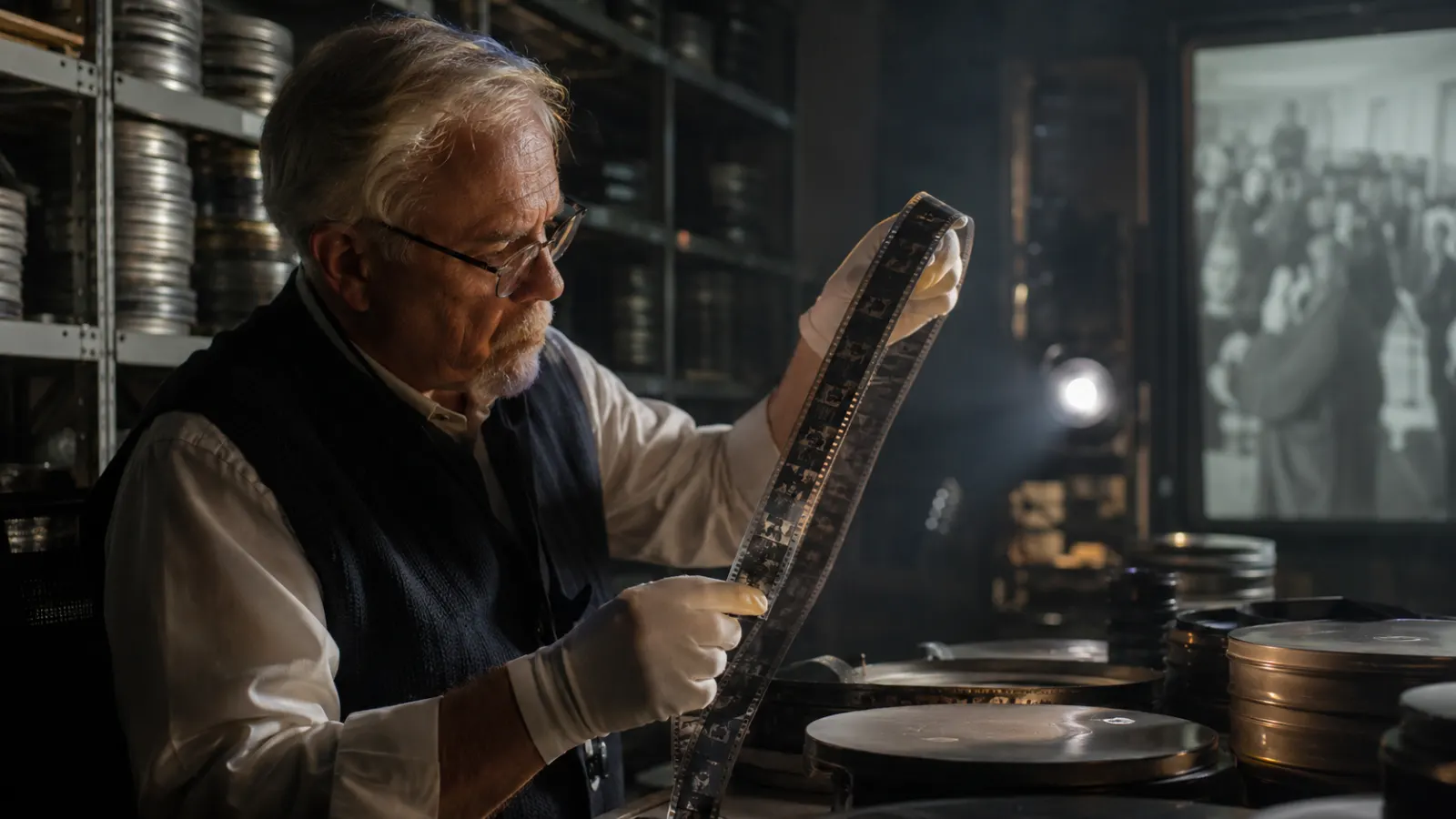
How Films Reflect Culture: Cinema as Historical Evidence
A film does not simply record the society around it.
It selects from that society.
Someone decides which characters appear, what they wear, how they speak, where they live, what problems matter, who becomes admirable, what behaviour becomes shameful and how the story should end. A director chooses what enters the frame. A writer decides what characters say. Producers influence budgets and audiences. Censors may determine what cannot be shown. Editors decide which moments survive into the finished film.
Even a documentary involves selection.
That makes the familiar claim that films “mirror society” useful only up to a point.
A mirror passively reflects what stands before it. Cinema transforms.
Yet this transformation is exactly why films can be extraordinarily valuable to historians and cultural researchers.
A romantic comedy may reveal expectations about courtship. A crime film may expose fears about disorder. Science fiction can turn contemporary anxieties about technology into imagined futures. A family drama may show assumptions about gender, authority and respectability that its creators never intended to document historically.
Films preserve clothes, accents, architecture, streets, consumer products, gestures, workplace arrangements, humour, music and ideas about success. They also preserve stereotypes, silences, censorship and fantasies.
The historian therefore should not ask only:
“Is this film an accurate picture of society?”
A more useful question is:
“What did this film make visible, what did it hide, what did it assume its audience already understood, and what cultural pressures shaped those choices?”
That question turns cinema from entertainment into historical evidence without pretending that fiction is straightforward documentation.
A Film Is a Cultural Product Before It Becomes a Historical Source
Every film is produced at a particular moment.
It belongs to an economy, political system, technological environment and artistic tradition. It depends on available cameras, studios, actors, labour, financing and distribution systems. It is also made for an imagined audience.
A major commercial production designed for mass theatrical release operates under different pressures from a student film, underground political documentary, state-funded production or independently financed art film.
Those circumstances affect what becomes possible.
A large studio may avoid a politically controversial subject because investors fear commercial consequences. A state-funded production may promote national ideals. An independent filmmaker may challenge mainstream conventions but face limited distribution. A censored industry may develop indirect visual language for subjects that cannot be stated openly.
Understanding the production context therefore comes before interpreting the film as representative of society.
The question is not simply what appears on screen.
It is why this particular image could be produced at this particular moment.
Why the “Mirror of Society” Metaphor Is Too Simple
Movies are frequently described as reflections of culture.
That statement is not entirely wrong.
The problem is that it suggests passivity.
Film is more like a selective reconstruction.
Consider a city represented in a movie.
The filmmaker might choose wealthy neighbourhoods because they appear glamorous. Another director might focus almost exclusively on slums because inequality is central to the story. A romantic film may turn the city into an attractive backdrop. A crime thriller may make the same streets feel dangerous.
All these films are technically representing the same place.
None is simply reproducing it.
The cultural historian therefore needs to study both what is represented and the process of representation.
Selection itself is evidence.
Genre Changes What a Film Can Tell Us
A horror movie should not be read the same way as a documentary.
Neither should a melodrama be evaluated as though it were a statistical survey.
Genres operate through conventions that audiences recognise.
Romantic comedies intensify courtship problems. Action films simplify conflict and exaggerate physical danger. Family melodramas heighten domestic tensions. Science fiction transforms present concerns into future possibilities. Horror gives cultural anxiety monsters, ghosts, disease, invasion or bodily threat.
These exaggerations are not obstacles to cultural analysis.
They can be part of the evidence.
If films repeatedly imagine artificial intelligence as threatening, the relevant question is not whether robots are actually plotting against society. The question is why technological autonomy has become a persuasive form through which audiences understand fear.
Genre reveals the cultural language available for imagining problems.
Everyday Background Can Reveal More Than the Plot
Historians sometimes learn the most from things filmmakers barely intended audiences to notice.
A fictional movie may deliberately invent its characters and central conflict while preserving ordinary material culture almost accidentally.
Look at the streets.
How are people travelling?
Look at the interior of the home.
What appliances are visible? How are rooms arranged? Which family members appear to have privacy?
Look at an office.
Where does the manager sit? How are workers dressed? Are typewriters, paper files, desktop computers or mobile devices visible?
These details can become enormously valuable decades later.
The building may disappear.
The transport system may change.
The furniture may go out of production.
A product that once seemed too ordinary to document deliberately may survive because it happened to appear behind an actor in a scene.
Cinema therefore preserves both intended storytelling and unintended historical evidence.
Film Preserves Ways of Speaking
Written documents can record dialogue.
They cannot fully record a voice.
Moving-image archives preserve accent, pacing, volume, hesitation, pronunciation, slang and bodily gesture.
Those details matter culturally.
Language changes across generations. Expressions that seem ordinary at one moment can disappear rapidly. Regional accents may become more or less prominent in mainstream media. Forms of politeness can change. Young people may adopt speech patterns that older generations consider rebellious.
Actors are not neutral speakers, of course.
Dialogue is written and performances are shaped.
But even stylised speech reveals what filmmakers believed audiences would understand, admire, laugh at or identify as belonging to a particular social group.
Clothing Functions as Social Language
Costume is never only about fashion.
Clothing can communicate class, gender, age, occupation, respectability, rebellion, religion and aspiration before a character speaks.
A film may signal wealth through tailoring, professional authority through uniforms or generational rebellion through hairstyle and dress.
Costume designers sometimes exaggerate these signals.
That exaggeration is useful historically because it reveals which visual codes filmmakers expected audiences to recognise.
If a certain style instantly tells audiences that a character is “modern,” conservative, rural, wealthy or dangerous, then the film is using cultural assumptions already circulating beyond the screen.
Domestic Space Reveals Social Hierarchy
Homes in films are often read as backgrounds.
They can also be social diagrams.
Who has a bedroom of their own?
Who sleeps in shared space?
Who occupies the kitchen?
Where are guests received?
Does the household include domestic workers?
Who controls the television?
Which family member sits at the head of the table?
Architecture and staging can reveal assumptions about family hierarchy and class without those assumptions ever being stated explicitly.
Changes across decades can be especially revealing.
The representation of a middle-class home in one era may emphasise collective family space, while later films may give characters greater privacy and individual rooms.
Such differences can reflect changes in housing, wealth, family structure and cultural ideas about individuality.
Workplaces Reveal Economic Imagination
Cinema does not merely show jobs.
It tells stories about what kinds of work are respectable, exploitative, glamorous or morally suspicious.
One era may celebrate the industrial worker.
Another may glorify the entrepreneur.
The bureaucrat may appear as a symbol of stability in one period and corruption in another.
Corporate offices may represent aspiration, alienation or power depending on the film.
Repeated occupational stereotypes reveal more than employment statistics could.
They show how society imagined economic life.
Gender Becomes More Visible Through Patterns Than Individual Characters
One film cannot establish how an entire culture understood gender.
Patterns across many films can reveal far more.
Who is allowed ambition?
Who controls money?
Who initiates romance?
Whose career is treated seriously?
Who becomes comic relief?
Who is permitted sexual desire?
Who sacrifices their own goals for the family?
A single unconventional character may represent experimentation rather than widespread cultural change.
But when similar transformations appear repeatedly across films, genres and decades, historians can begin to identify broader shifts in cultural expectation.
The same method applies to representations of masculinity.
The ideal male character may shift from restrained provider to rebellious outsider, wealthy entrepreneur, sensitive partner or physically dominant action hero.
Those changes can reveal changing expectations about men as well as women.
Presence and Absence Both Matter
Film history is also a history of who appears.
Caste, race, ethnicity, class, disability, religion and regional identities may be represented unevenly.
Some groups may appear frequently but only through stereotypes.
Others may be almost completely absent.
Absence can be meaningful.
But researchers need to interpret it carefully.
A missing community does not automatically prove deliberate exclusion by a particular filmmaker. The cause may lie in industry structure, audience assumptions, censorship, financing or historical patterns of who had access to filmmaking institutions.
The useful question is not simply:
“Who is missing?”
It is:
“What conditions might explain why this group is difficult to see in the surviving film record?”
Villains Can Reveal Cultural Fear
Popular cinema often converts abstract anxieties into identifiable enemies.
At different moments, villains may be foreign agents, organised criminals, corrupt politicians, rebellious youth, industrialists, terrorists, machines, scientists, immigrants or mysterious technological systems.
The villain gives cultural fear a face.
That does not mean audiences literally believe the fictional enemy exists exactly as portrayed.
It means the character must draw upon fears that feel recognisable enough to make the story work.
Comparing villains across decades can therefore reveal changing sources of insecurity.
Heroes Reveal Cultural Ideals
Villains show what a culture fears.
Heroes often show what it wants to admire.
A hero may represent obedience, sacrifice, nationalism, independence, wealth, family loyalty, physical courage or moral purity.
These qualities change.
One generation may admire the person who accepts duty.
Another celebrates the person who rejects authority.
A society experiencing rapid economic change may increasingly associate heroism with entrepreneurship and individual success.
Changing heroic types can therefore reveal transformations in cultural ideals.
Comedy Can Expose Social Boundaries
Humour depends heavily on shared assumptions.
An audience must understand why something is embarrassing, inappropriate or absurd for the joke to work.
That makes comedy valuable cultural evidence.
Who becomes the punchline?
Which accents are mocked?
Which professions are treated as ridiculous?
Is an unmarried woman funny because she violates expectations?
Is a strict father comic because his authority is increasingly outdated?
Jokes reveal social boundaries because humour often works by crossing them.
The problem for historians is that humour can be difficult to reconstruct once those boundaries change.
A joke that was obvious to audiences in 1960 may require considerable cultural explanation today.
That difference itself is historically valuable.
Science Fiction Often Describes the Present Through the Future
Science fiction appears to be about worlds that do not yet exist.
Its fears usually come from the present.
Robots may represent anxiety about automation.
Artificial intelligence can express fear about human control.
Environmental collapse can transform contemporary ecological concern into imagined catastrophe.
Surveillance states can exaggerate existing political technologies.
Space exploration may represent optimism about technological progress or fear about imperial expansion.
Science fiction therefore does not need to predict the future accurately to be historically useful.
It records what one society imagined the future might become.
Propaganda Requires a Different Type of Reading
Propaganda is obviously biased.
That does not make it useless historical evidence.
Its bias is the evidence.
A state propaganda film can reveal how authorities wanted the nation to be understood.
Who appears heroic?
Which achievements receive emphasis?
What problems disappear?
Which enemies threaten society?
What emotions are audiences encouraged to feel?
The wrong historical question is:
“Does this propaganda film provide a neutral account?”
Of course it does not.
A more productive question is:
“What version of reality did political power want audiences to accept?”
Propaganda can therefore be extremely revealing about ideology even when it is unreliable as a factual description.
Censorship Produces Negative Evidence
Historians usually examine what survives on the screen.
Sometimes what could not appear is equally important.
Censorship rules can restrict sexuality, political criticism, religion, violence, language and other subjects.
Filmmakers then adapt.
A sexual relationship may be implied rather than shown.
Political criticism may be displaced into historical allegory.
A forbidden subject may appear through humour, metaphor or coded dialogue.
These conventions become part of film language.
Studying censorship records alongside films can therefore reveal both what authorities considered dangerous and how filmmakers learned to communicate around restrictions.
Popularity Does Not Mean Agreement
A commercially successful movie clearly reached a substantial audience.
That does not mean every viewer accepted its politics or values.
People watch films for many reasons.
They may go for a star, music, spectacle, comedy, fashion or simply because their friends are going.
A politically conservative viewer may enjoy a progressive film.
A socially progressive viewer may enjoy a film containing older stereotypes.
Box-office success is therefore evidence of attention and commercial reception, not automatic ideological agreement.
Understanding audience response requires additional evidence such as reviews, fan publications, letters, surveys, interviews and contemporary debate.
Box Office and Cultural Importance Are Different
Some movies dominate their release year and then largely disappear from collective memory.
Others fail commercially and later become canonical.
Commercial success measures revenue within a particular market and moment.
Cultural significance can develop over decades.
Television reruns, streaming, academic criticism, fan communities and later filmmakers can all transform a film's reputation.
That means historians need to distinguish initial reception from long-term cultural memory.
Reviews Become Historical Evidence
Film criticism can reveal how contemporary audiences interpreted a movie.
What did reviewers praise?
What offended them?
Which themes seemed controversial?
Which aspects were barely mentioned?
Later criticism can produce a second layer of evidence.
A movie once praised as progressive may later be criticised for stereotypes that contemporary reviewers largely ignored.
This does not necessarily mean the later interpretation is correct and the earlier one wrong.
The difference shows that cultural standards changed.
The history of a film's interpretation can therefore become as revealing as the film itself.
Audience Memory Continues to Change a Film
Movies do not stop participating in culture when their theatrical release ends.
They are shown on television.
Songs survive independently.
Scenes become memes.
Characters become references.
Families rewatch movies across generations.
Anniversaries trigger reassessment.
A film that contemporary critics remembered for its political message may later survive mainly because one song became iconic.
Another may be rediscovered decades later because a new generation finds its depiction of gender unusually relevant.
Cultural meaning therefore accumulates after release.
Remakes Create Natural Historical Comparisons
Few forms of cultural evidence are more revealing than remakes.
The central story may remain recognisable while many surrounding assumptions change.
A remake may alter the heroine's independence.
A father may become less authoritarian.
An ending considered morally necessary in the original may disappear.
Sexual behaviour may be represented differently.
Religion, class or family obligation may change.
When filmmakers deliberately update an old story for a new audience, their changes reveal what they believe no longer works culturally.
Comparing original and remake therefore gives historians a controlled way to examine change.
Adaptations Reveal Similar Choices
Film adaptations of novels, plays and historical events also involve selection.
What disappears?
Which character becomes more important?
Does the ending change?
Is political conflict simplified?
Is sexuality intensified?
Are social attitudes modernised?
An adaptation tells historians something about both the original material and the culture performing the adaptation.
The distance between source and film is often historically revealing.
Historical Films Tell Two Historical Stories
A film set in the eighteenth century may look like evidence about the eighteenth century.
For historians, it is often more reliable as evidence about the period in which it was produced.
A historical movie made in the 1950s tells at least two stories.
The first concerns the historical world it attempts to depict.
The second concerns how people in the 1950s imagined that historical world.
Costume, romance, gender, religion, nationalism and morality may all be filtered through contemporary expectations.
Historical cinema should therefore never be confused with direct historical documentation simply because the costumes look old.
International Cinema Shapes Perceptions of Other Societies
Many people's impressions of foreign countries come partly from films.
Someone may encounter New York, Mumbai, Tokyo, Paris or rural Africa on screen years before visiting any of those places.
Cinema therefore participates in cultural diplomacy.
It can create curiosity and familiarity.
It can also create stereotypes.
A national film industry may export an attractive image of modernity, romance or tradition.
Foreign productions may repeatedly reduce another society to crime, poverty, exotic landscape or political conflict.
Film can therefore influence how cultures imagine one another.
Subtitles and Dubbing Transform Cultural Meaning
International viewers do not always encounter the same film domestic audiences heard.
Translation intervenes.
Jokes may have no direct equivalent.
Forms of politeness can disappear.
Regional accents may become standardised.
Profanity may be softened.
A culturally specific insult may be replaced with a more general one.
Dubbing changes voice performance entirely.
Subtitling compresses dialogue because reading speed is limited.
Translated film is therefore mediated culture.
The original remains present, but another layer of interpretation has entered between film and audience.
Music Directs Interpretation
Images do not carry meaning alone.
Consider the same procession accompanied by triumphant orchestral music, silence or ominous sound.
The visual footage is unchanged.
Its emotional meaning changes dramatically.
Songs can also locate a film within a particular generation or political mood.
Popular music can connect cinema to youth culture, nationalism, protest, religion or romance.
Soundtracks therefore help reveal how filmmakers wanted audiences to interpret images.
Film Technology Is Historical Evidence Too
Cinema changes because its technology changes.
Silent film required particular forms of acting and editing.
Synchronous sound transformed dialogue and performance.
Colour changed visual design.
Lightweight cameras made different kinds of location filming possible.
Digital effects expanded the kinds of worlds filmmakers could represent.
Smartphones lowered barriers to recording moving images.
Technological adoption can reveal industrial resources and audience expectations.
A society's film technology is therefore part of its cultural history, not merely a technical background.
Marketing Materials Reveal How Films Were Sold
The film itself is only one historical object.
Posters, trailers, advertisements and press material show how distributors believed audiences could be attracted.
A complex political film may be marketed primarily through romance.
A drama may be sold through the celebrity of one actor.
An international release may emphasise exotic scenery that domestic marketing barely mentioned.
Marketing therefore reveals the cultural assumptions surrounding consumption.
The question becomes:
What did distributors think audiences wanted to see?
Credits Reveal the Industry Behind the Image
Stars dominate popular memory.
Films are made by much larger labour networks.
Credits preserve names of cinematographers, editors, costume designers, composers, technicians, assistants, studios and production companies.
For historians of labour and industry, these records can be extremely valuable.
They allow researchers to reconstruct professional networks and track movement between companies and productions.
Cinema history is therefore not only a history of directors and actors.
It is also a history of organised labour behind the screen.
Archives Determine Which Cinema Historians Can Study
The surviving film record is incomplete.
Film materials deteriorate.
Early nitrate film could decay or burn.
Studios discarded prints that appeared commercially useless.
Political change destroyed archives.
Rights disputes complicated preservation.
Technological formats became obsolete.
UNESCO has recognised moving images as an important form of documentary heritage and has long advocated preservation because audiovisual records can be lost through physical deterioration and technological obsolescence. The preservation problem is central to the source you provided.
This creates an important historical bias.
Researchers study what survived.
Survival is not random.
Missing Films Can Distort Cultural History
Suppose films made by one regional industry were carefully archived while another industry's work was largely lost.
Future historians may mistakenly conclude that the first industry was more active or culturally important simply because more material survives.
The same problem can affect filmmakers from marginalised communities whose work institutions historically valued less.
Archival absence should therefore never be confused automatically with historical absence.
Sometimes the missing record is itself evidence of inequality in preservation.
Home Movies Expand Film History Beyond Studios
Commercial cinema does not represent all moving-image culture.
Families have also filmed weddings, holidays, migration, neighbourhoods, festivals and daily life.
Amateur footage can preserve worlds mainstream cinema ignored.
A home movie may contain little conventional artistic ambition.
Historically, that can be an advantage.
The camera may record kitchens, streets, clothing, domestic rituals and ordinary relationships without the deliberate visual polish of commercial filmmaking.
Personal archives can therefore complicate official cinema history.
Documentary Film Requires Critical Reading Too
Documentaries often appear more authoritative because they present themselves as nonfiction.
They still select.
A filmmaker chooses whom to interview.
Hours of footage may become ninety minutes.
Music shapes emotion.
Questions influence responses.
Editing establishes relationships between events.
Archive footage can be removed from its original context.
Documentaries can be exceptionally important historical sources.
They should not be mistaken for unmediated reality.
The same critical questions still apply:
who produced this account, using what evidence, for which audience and with what purpose?
One Film Cannot Represent an Entire Culture
This is one of the most important methodological rules.
A single blockbuster cannot tell us what an entire society believed.
Neither can one independent film.
A movie may represent a minority perspective, an elite fantasy, a commercial formula or deliberate rebellion against mainstream values.
Stronger cultural analysis compares multiple films.
Patterns become more meaningful when they appear across genres, studios, directors or decades.
Researchers should also combine cinema with other evidence.
Newspapers, censorship records, advertisements, oral histories, government documents, demographic data and production archives can show whether the cultural assumptions visible in films were widespread, contested or marginal.
How Should Historians Read Films?
The most useful approach begins with context.
Who made the film? Who financed it? What audience was expected? What genre conventions shaped it? What censorship or commercial pressures existed?
Then examine representation.
Which characters receive attention? Who has power? What kinds of behaviour are rewarded? What becomes ridiculous or threatening? What does the film treat as ordinary enough that it requires no explanation?
Next examine the background.
Architecture, furniture, transport, clothing, language and consumer products may preserve information beyond the deliberate themes.
Finally, compare the film with other evidence.
The film becomes strongest historically when it forms part of a wider evidence chain rather than being forced to represent society alone.
Films Do Not Only Reflect Culture — They Change It
Cinema participates in the culture it represents.
A hairstyle introduced by a popular actor can become fashionable.
A song can enter everyday language.
Films can popularise slang.
Romantic behaviour shown on screen can influence expectations about relationships.
National myths can become stronger through repetition.
Stereotypes can be reinforced.
Norms can also be challenged.
This makes the relationship between film and culture circular.
Culture provides material to cinema.
Cinema transforms that material.
Audiences consume the transformation.
Parts of it return to everyday culture.
Later filmmakers then work inside the changed environment.
The film is both evidence and intervention.
Frequently Asked Questions
How do films reflect culture?
Films reflect culture through language, clothing, architecture, relationships, workplaces, social roles, humour, music, political assumptions and ideas about desirable or unacceptable behaviour. They do this selectively rather than neutrally.
Are movies reliable historical sources?
They can be valuable historical sources, but they should not be treated as literal records of society. Researchers need to consider genre, production context, censorship, financing, intended audience and creative choices.
Why are films useful to historians?
Films preserve audiovisual evidence including speech, gesture, clothing, streets, buildings, domestic interiors, technology, music and cultural assumptions that may not survive in written records.
Can fictional films be historical sources?
Yes. Fiction can reveal what filmmakers and audiences considered believable, desirable, frightening or socially recognisable at the time.
What can old movies tell us about society?
They can provide evidence about gender expectations, family structure, class, work, technology, language, fashion, political attitudes, stereotypes, consumer culture and social anxieties.
Does a popular movie represent what everyone believed?
No. Popularity shows that many people encountered or paid to see a film. It does not prove that audiences agreed with every message.
Why is genre important when analysing film historically?
Genre shapes representation. Horror exaggerates fear, romantic comedy intensifies courtship and science fiction transforms contemporary concerns into imagined futures.
How can censorship become historical evidence?
Restrictions reveal what authorities considered unacceptable or dangerous. They also produce indirect storytelling strategies through which filmmakers imply subjects they cannot show openly.
Can propaganda be useful to historians?
Yes. Propaganda can reveal the version of society, politics or national identity that authorities wanted audiences to accept even when it is unreliable as neutral factual evidence.
Why are remakes useful for cultural analysis?
Because the same basic narrative can be compared across different periods. Changes in characters, endings and morality can reveal shifting cultural expectations.
Why are film posters historically useful?
Posters and trailers reveal what distributors believed audiences would find attractive, such as stars, romance, nationalism, glamour or action.
Why does film preservation matter?
Moving-image materials deteriorate and formats become obsolete. Without preservation, films and the cultural information they contain can disappear.
Can missing films create historical bias?
Yes. Historians can study only material that survives or can be reconstructed. Uneven preservation can make some regions, genres or communities appear less important than they actually were.
Are documentaries objective?
Not automatically. Documentary filmmakers still choose subjects, interviews, footage, editing and narrative structure.
Are historical movies evidence about the period they depict?
They can contain useful historical research, but they are also evidence about the period in which they were produced and how that period imagined the past.
How should a student analyse a film as a historical source?
Begin with production context, genre and intended audience. Examine representation and incidental background details, then compare the film with contemporary reviews, records and other historical evidence.
The Best Historical Question Is Not “Is the Movie Accurate?”
Historical accuracy matters when a film claims to represent real events.
But it is not the only useful question.
A wildly inaccurate historical movie can still be extremely important cultural evidence.
Its inaccuracies may reveal how one generation preferred to imagine the past.
A propaganda film may tell historians little about how society actually functioned while providing excellent evidence about what a government wanted citizens to believe.
A romantic comedy may exaggerate relationships while revealing expectations about marriage and gender.
The better question is therefore:
What cultural work is this film doing?
What does it normalise?
What does it challenge?
What does it omit?
What does it expect audiences to recognise immediately?
Those questions allow film to remain art while also becoming evidence.
The Central Idea
Films reflect culture precisely because they do not reflect it neutrally.
Every movie is constructed.
Someone chooses the characters.
Someone frames the image.
Someone writes the dialogue.
Someone decides which scene stays and which disappears.
Financing shapes possibilities.
Censorship establishes boundaries.
Genre provides conventions.
Technology limits or expands what can be represented.
Marketing frames how audiences first encounter the finished work.
Those forces transform reality.
They also belong to reality.
That is why transformation itself becomes evidence.
A hero can reveal cultural ideals.
A villain can embody social anxiety.
A comedy can expose social boundaries.
Science fiction can preserve contemporary fears in imagined futures.
Domestic interiors can reveal assumptions about wealth and family hierarchy.
Speech and gesture can preserve cultural information that written records cannot reproduce.
Censorship can make absences historically meaningful.
Remakes can reveal changes across generations.
Archives can determine which parts of screen culture survive at all.
The source you provided captures this particularly well in its conclusion: cinema is not outside society looking inward. Films participate in culture by repeating stereotypes, popularising language and styles, challenging norms and producing images that later films and audiences inherit.
That makes film a peculiar historical source.
It documents culture while simultaneously changing it.
The camera is never simply a mirror.
But historians do not need it to be.
The better task is to understand what the filmmakers selected, what their audience was expected to understand, what pressures shaped those selections and what later generations did with the resulting images.
Read this way, cinema becomes more than entertainment and more than documentation.
It becomes a record of how societies imagined themselves.