Habitat is more than a patch of land
A habitat is the physical and biological setting in which an organism can survive and reproduce. It includes obvious features such as vegetation, water and shelter, but also less visible conditions: temperature, soil chemistry, nesting sites, food, seasonal timing, relationships with other species and the ability to move across a landscape. A mangrove creek, grassland, coral reef, forest canopy, cave and city wetland can each be habitat for very different communities of life.
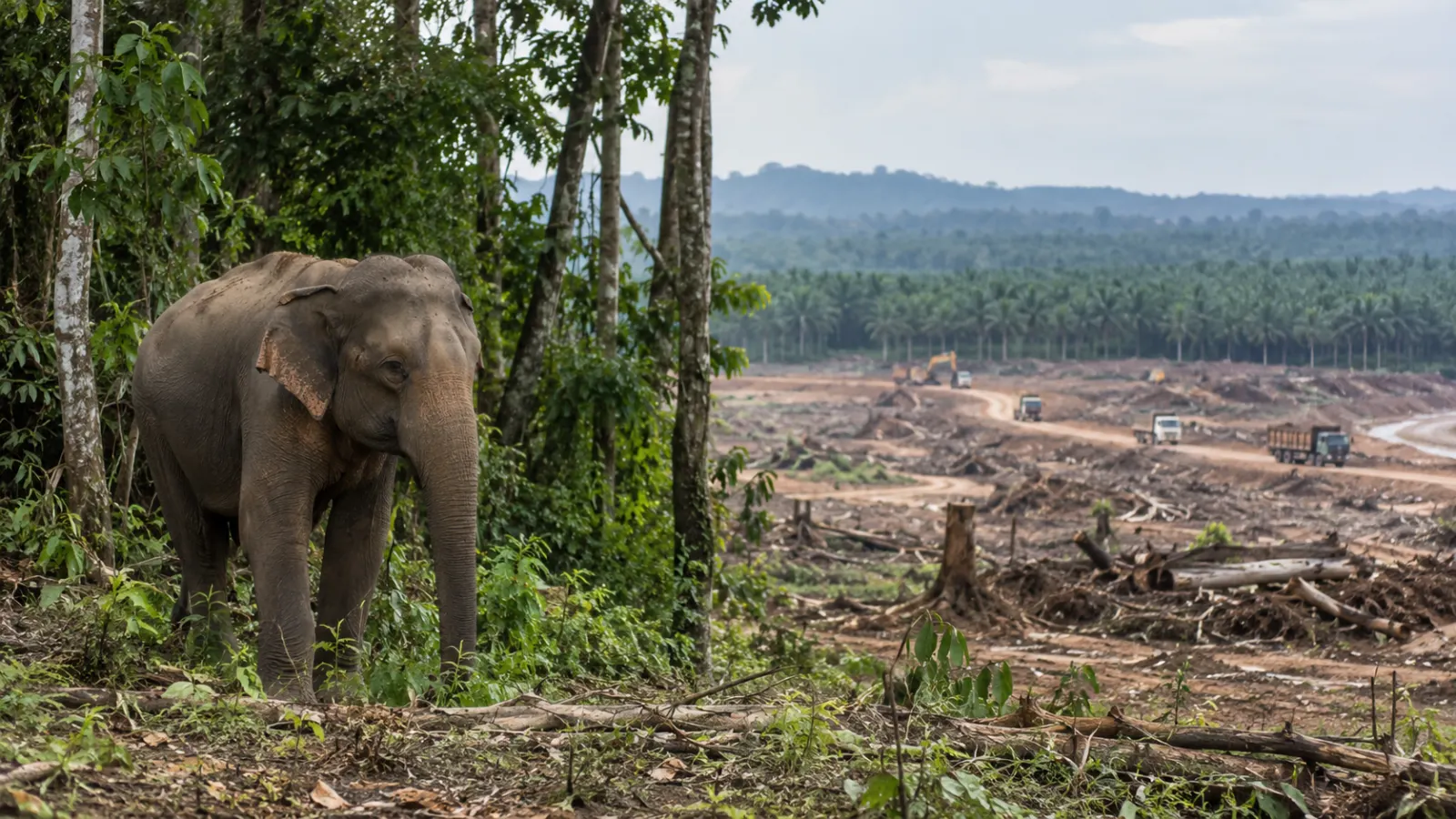
This is why habitat destruction is broader than bulldozing a landscape. The Convention on Biological Diversity describes habitat loss through transformation, together with declines in the suitability of remaining habitat through degradation, as leading causes of biodiversity loss. A place can remain visibly green and still cease to function as suitable habitat for many of the species that once lived there.
Loss, degradation and fragmentation are related but different
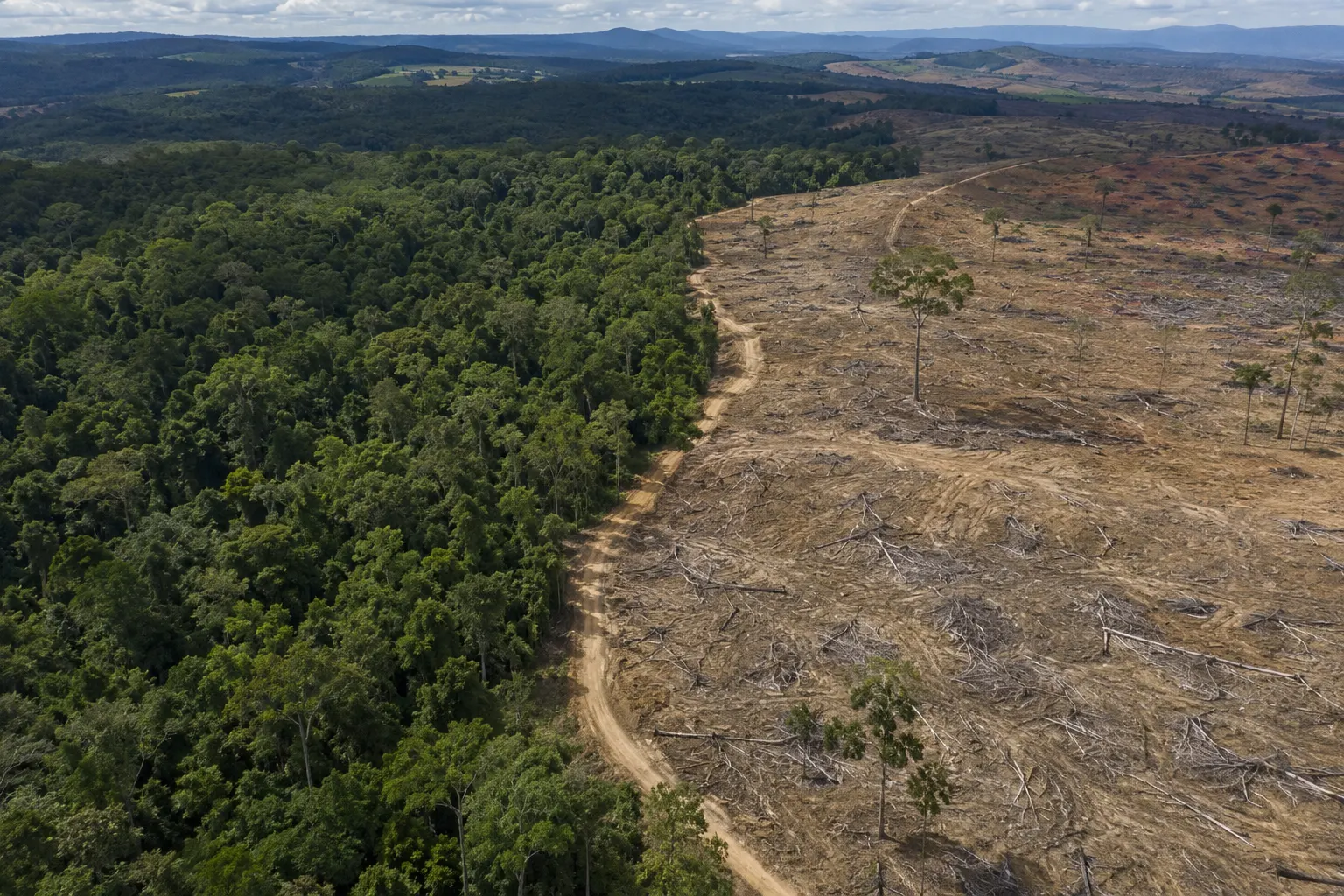
Outright habitat loss occurs when an ecosystem is converted to another land or water use: a forest becomes cropland, a wetland is drained for construction, a seagrass bed is buried, or a river floodplain is permanently built over. The original habitat largely disappears.
Degradation is subtler. The habitat remains, but its quality declines. Selective logging may remove old trees and nesting cavities. Pollution may alter water chemistry. Repeated fires may change forest structure. Overgrazing can simplify grasslands. Dams may leave a river channel physically present while changing flow, sediment and temperature enough to transform the ecological community.
Fragmentation occurs when a once-connected habitat is divided into smaller pieces by roads, farms, settlements, fences, reservoirs or other barriers. The total area lost may appear modest, yet the ecological effects can be large because the remaining patches become isolated.
Why fragmentation can be damaging even when habitat remains
Species do not experience habitat as a map statistic. They experience distance, barriers and edges. A small animal may be unable to cross a highway. A forest bird adapted to cool, shaded interiors may avoid exposed edges. A large mammal may need a territory far bigger than an isolated reserve can provide.
Fragmentation also increases “edge effects”. Conditions near a forest edge are often hotter, drier, windier and more disturbed than conditions deep inside. Predators, invasive species and people may penetrate more easily. Smaller populations can become cut off from one another, reducing movement and gene flow. If a local population disappears, recolonisation becomes harder when the nearest suitable patch is too far away.
Connectivity therefore matters alongside total habitat area. Wildlife corridors, river continuity and linked protected areas are attempts to preserve movement across landscapes rather than protecting islands of nature in isolation.
What drives habitat destruction?
The drivers vary by ecosystem and region, but land-use change is central. Expansion of cropland and grazing into natural areas, unsustainable agricultural and forestry practices, urban growth, roads and other infrastructure, mining and extractive industries can all remove or degrade habitat. The Convention on Biological Diversity identifies the expansion of crop and grazing lands into natural areas as a major direct driver of land degradation, while coastal development, pollution and other pressures affect marine habitats as well.
Water management can be equally transformative. Draining wetlands removes shallow-water habitat. Dams fragment rivers and alter flow regimes. Groundwater depletion can dry springs and wetlands. Along coasts, dredging, reclamation and poorly planned construction can damage mangroves, tidal flats and coral-associated habitats.
The immediate driver is often easy to see; the underlying cause may be harder. Commodity demand, land-tenure systems, transport networks, subsidies, poverty, weak enforcement and planning decisions can determine where and why habitat conversion occurs.
Some species cope better than others
Habitat change does not affect every species equally. Generalists can use many foods or environments and may survive in farms, suburbs or disturbed forests. Specialists depend on narrow conditions and are often more vulnerable. A species that nests only in old hollow trees, breeds only in seasonal pools or feeds on one plant may decline quickly when that feature disappears.
Body size and mobility matter too. Wide-ranging animals require large connected areas. Species restricted to islands, mountaintops or isolated freshwater systems may have nowhere to move. Slow-reproducing species recover less easily from losses. The result is often ecological filtering: a diverse community is replaced by a smaller set of disturbance-tolerant species.
This helps explain why a landscape can still contain plenty of visible life while losing much of its original biodiversity.
Habitat destruction changes ecological relationships
The loss of a species is not the only consequence. Habitats hold networks of relationships: predators and prey, pollinators and plants, fungi and roots, seed dispersers and trees, decomposers and soil. When habitat becomes too small or too simplified, those interactions can weaken before species disappear completely.
A plant may remain present but produce fewer seeds because its pollinator has declined. A forest may retain trees but lose large seed-dispersing animals, changing which plants regenerate. A stream may still contain fish while losing shaded banks that once kept the water cool enough for sensitive species.
Habitat quality therefore affects ecosystem function, not simply the number of species recorded at a site.
People lose ecosystem services too
Habitat conversion can reduce benefits that ecosystems provide to people. Forests and wetlands influence water quality and flow. Mangroves can reduce coastal erosion and storm impacts. Diverse soils support nutrient cycling. Natural vegetation stores carbon and can moderate local temperatures.
These services are not automatically destroyed by every land-use change, and human landscapes can be managed to retain ecological functions. But the more a system is simplified, fragmented or polluted, the more difficult it can become to provide the same combination of services and resilience.
This makes habitat destruction an economic and public-policy issue as well as a conservation issue. The cost may appear later as flood damage, soil erosion, water-treatment needs, fisheries decline or the loss of natural resources on which communities depend.
Protection must focus on quality and connectivity, not only hectares
Conservation policy often counts hectares protected or restored. Area matters, but it is not enough. A protected area that is isolated, heavily degraded or poorly managed may conserve less biodiversity than its size suggests. Likewise, planting trees does not automatically recreate an old forest with its soils, species interactions and structural complexity.
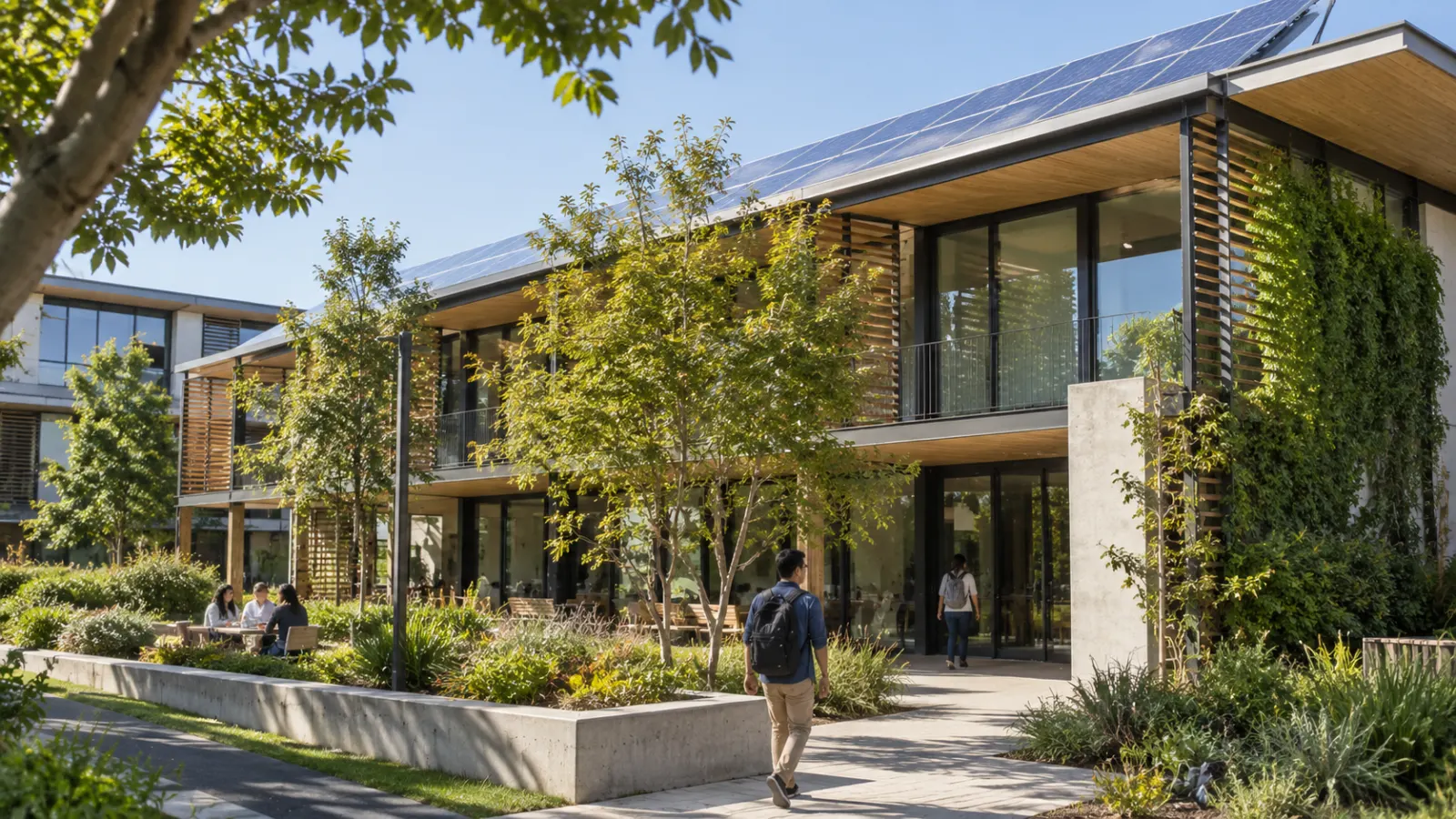
Effective habitat conservation therefore combines several approaches: preventing conversion of high-value natural areas, improving management of working landscapes, reconnecting habitat fragments, controlling pollution and invasive species, restoring degraded ecosystems and reducing the pressures that created the damage.
The Kunming-Montreal Global Biodiversity Framework reflects this broader view by linking conservation with restoration and sustainable use rather than treating protected areas as the only tool.
Habitat destruction also happens underwater
Habitat loss is sometimes discussed as if it were mainly a terrestrial problem. Marine and freshwater habitats can be transformed just as profoundly. Coral reefs may be damaged by destructive fishing, coastal development, pollution and repeated heat stress. Seagrass meadows can be buried by sediment or dredging. River habitats can be fragmented by dams and altered by changes in flow. Estuaries and tidal flats can disappear under reclamation.
The difficulty is that underwater change is less visible to the public. A paved wetland or cleared forest is obvious from a road; a degraded seabed may be noticed only through fisheries decline or ecological surveys. Conservation therefore needs habitat mapping and monitoring across land, rivers and seas, not only protection of landscapes that are easy to photograph.
Restoration can help, but prevention retains what restoration cannot quickly rebuild
Restoration can reconnect rivers, replant native vegetation, remove invasive species and rebuild ecological structure. In many landscapes it produces substantial gains. But restoration is not an instant substitute for avoiding loss. Old trees, complex soils, specialised species and long-established ecological relationships may take decades or centuries to return. Conservation planning therefore has to distinguish habitats that can be restored relatively quickly from those whose destruction would remove features that are effectively irreplaceable on human timescales.
The central question is whether a place still works as habitat
Habitat destruction is easiest to recognise when an ecosystem disappears completely. The more difficult cases are those in which the landscape remains but its ecological function has been hollowed out.
A forest can stand without supporting its former wildlife. A river can flow while migration routes are blocked. A wetland can remain on a map while pollution changes its community. That is why habitat assessment must ask more than “how much area is left?” It must also ask whether the remaining habitat is connected, sufficiently large, structurally intact and able to sustain the ecological processes species require.
Protecting biodiversity ultimately means protecting places that still work as living systems.