Masked Man Attacks Student During Online Class at Faridabad Home
A 19-year-old college student was attending an online class alone at her home in Faridabad when an unidentified masked man allegedly entered the house and attacked her with a blade before fleeing. The student suffered multiple cuts to her neck and forehead and is receiving treatment in hospital, while police are examining CCTV footage in an attempt to identify the attacker.
The incident occurred at around 1.30 pm on Monday in Budhana village in Faridabad’s Sector 86. The young woman is a third-year Bachelor of Computer Applications student at a college in the city and had reportedly moved to Faridabad about three months ago to continue her studies while living with her father.
What makes the case particularly alarming is the setting. This was not an attack on an isolated road late at night. Police say the student was inside her own home, in the middle of the afternoon, attending an online class when the masked man entered.
The motive remains unknown, and investigators have not yet established whether the attacker knew the student, had been watching the house, intended robbery or entered for another reason. Until police identify and question the suspect, any claim about why she was targeted would be speculation.
What happened inside the Faridabad home?
According to police, the student was alone when a man with his face covered entered the house. He allegedly attacked her suddenly with a sharp blade, leaving her little opportunity to defend herself.
She sustained three cuts to her neck and two to her forehead. Despite her injuries, she was able to contact her father by phone. He rushed home and took her to hospital.
The attacker had already fled.
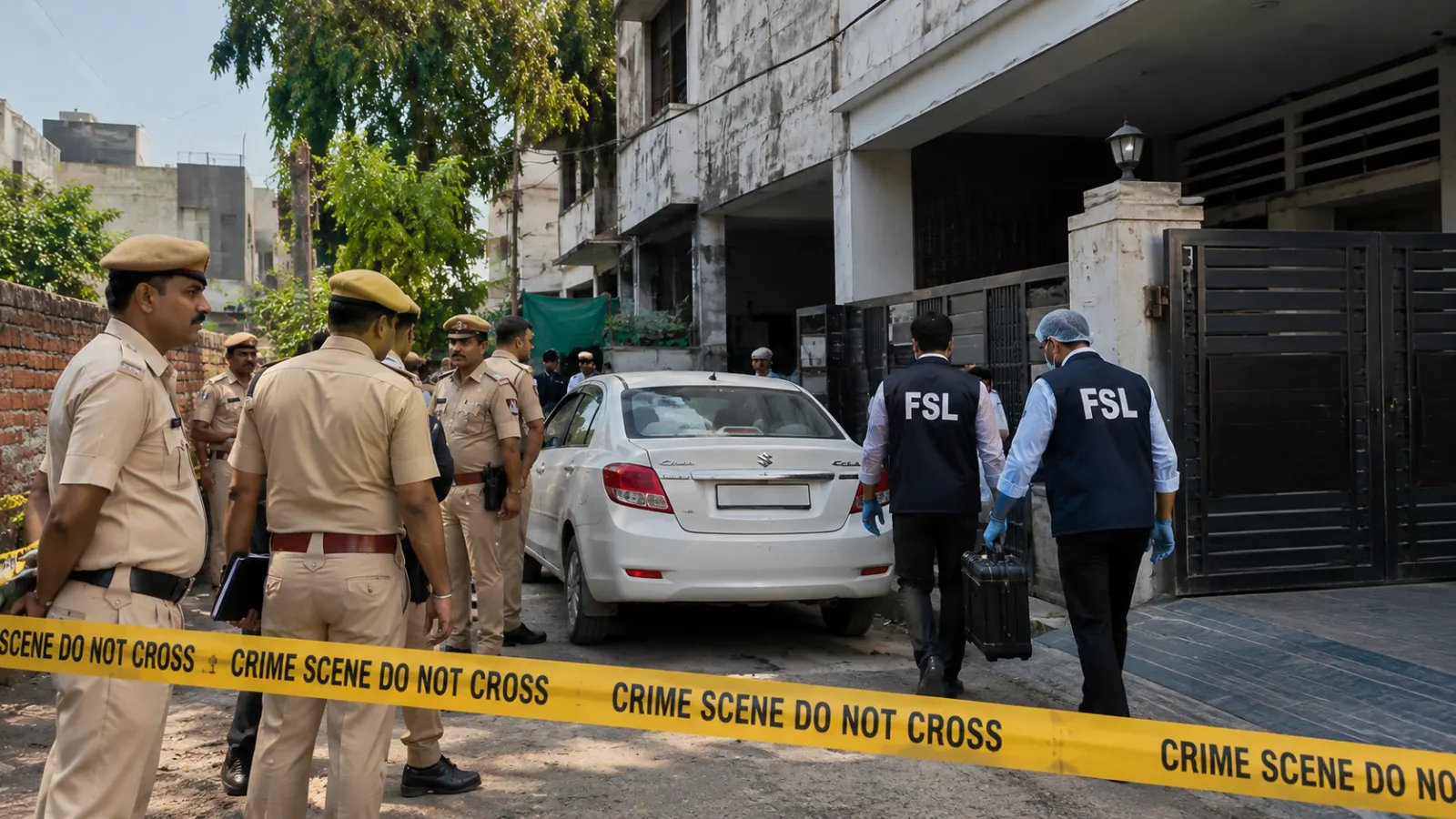
A complaint has since been filed against an unidentified person at Kheri Pul police station. Police teams are reviewing CCTV footage from the surrounding area to trace the suspect’s movements before and after the attack.
The student’s condition and account of what happened will also be important to the investigation. If she saw or heard anything that could identify the attacker—his voice, clothing, height, route of escape or anything he said during the assault—it could help police narrow the search.
But the most important unanswered question remains straightforward: why did a masked man enter this particular house?
Was the student specifically targeted?
At present, police have not announced a motive.
That means several possibilities remain open, and none should be treated as established.
The attacker may have known where the student lived. He may have followed her previously. He may have entered expecting to find someone else. Investigators may also examine robbery, personal disputes or other possible motives.
The fact that his face was covered will inevitably raise questions about whether the attack was planned. But wearing a mask alone is not enough to prove that the student was deliberately selected in advance.
Investigators will need to establish whether the suspect arrived directly at the house, spent time in the neighbourhood beforehand or appeared to search for an opportunity.
CCTV footage could be decisive.
A camera showing the attacker approaching from a particular street, arriving on a motorcycle or walking directly towards the house could reveal significantly more than footage showing him simply passing through the area.
Police may also examine nearby mobile-phone activity and speak to neighbours, shopkeepers, delivery workers and security guards who may have noticed an unfamiliar person.
The attack challenges a common idea about women’s safety
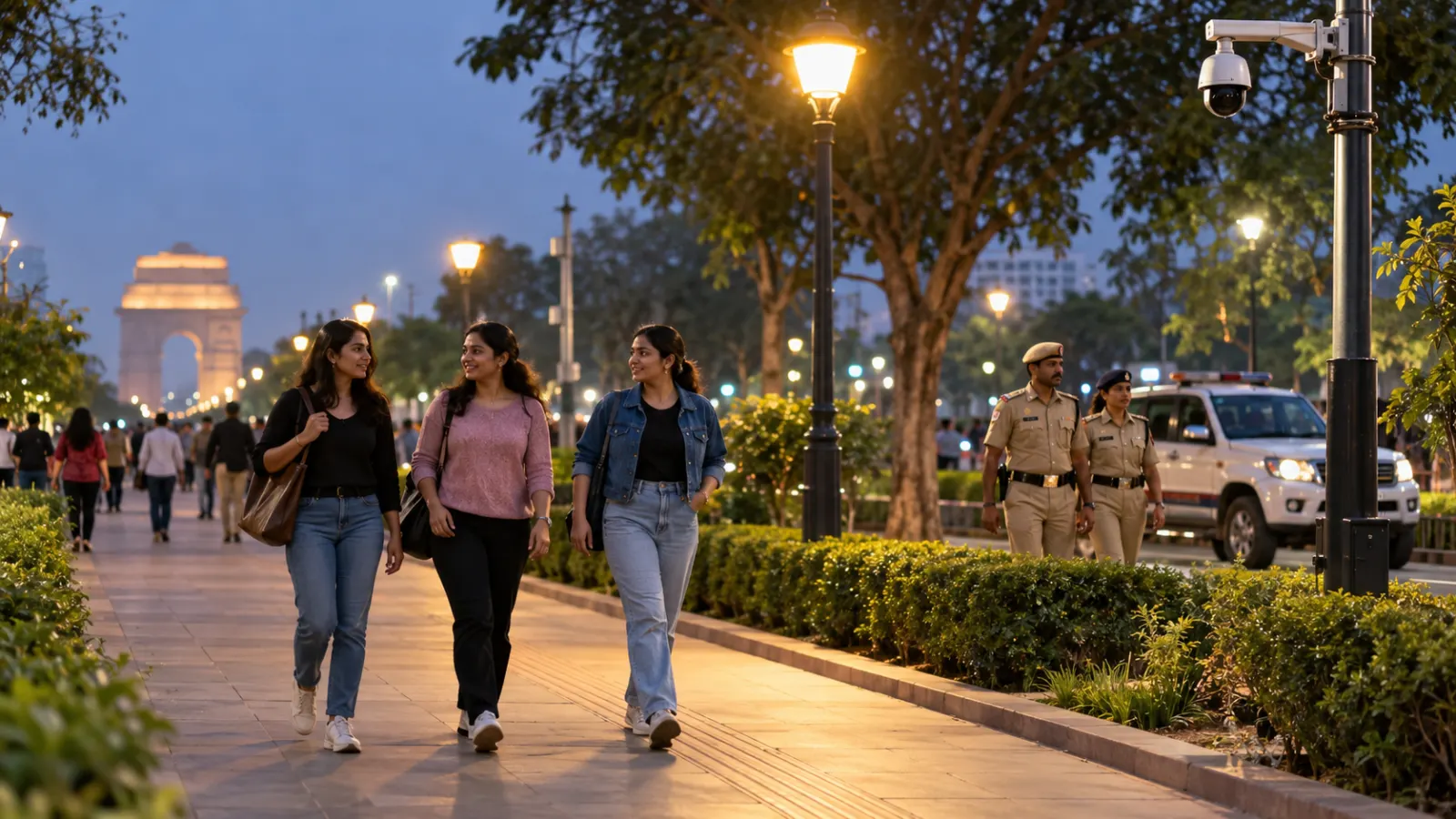
Public discussion about women’s safety frequently focuses on avoiding deserted roads, travelling with companions, returning home early or remaining in crowded places.
Cases such as the Faridabad attack expose the limits of that advice.
The student was reportedly at home during the afternoon and engaged in one of the most ordinary activities possible: attending class.
Home is generally considered the place where a person should be safest. When violence enters that space, traditional advice such as “do not go out alone at night” becomes largely irrelevant.
That does not mean home attacks are common or that students should become fearful of being alone. It means safety discussions need to address more than individual behaviour.
Secure entrances, functional locks, neighbourhood surveillance, controlled access to residential buildings and quick emergency communication can matter just as much as personal precautions.
More importantly, responsibility for an assault belongs to the attacker, not to the victim for being alone.
Why CCTV could determine whether the case is solved quickly
For police, the immediate investigation is likely to depend heavily on cameras around Sector 86.
Residential CCTV has become one of the most useful tools in tracing offenders who attempt to conceal their identity. Even when a camera does not capture a face, it can reveal clothing, footwear, physical build, a vehicle, registration numbers, direction of travel and the time someone entered or left an area.
Investigators can sometimes build a route by connecting footage from multiple cameras.
A suspect may cover his face near the victim’s home but appear without a mask several streets away. A motorcycle that cannot be identified in one recording may become readable in another. The time between cameras can also show whether someone walked, ran or used a vehicle.
This is why police generally seek footage quickly. Many residential and commercial CCTV systems automatically overwrite recordings after a limited period.
Residents in the surrounding area who have cameras facing roads, lanes or building entrances may therefore possess evidence without realising it.
The online class itself could contain evidence
There is another unusual element in this case: the student was reportedly attending an online class when the attack occurred.
Investigators may need to determine whether the session captured anything.
Depending on the platform and whether her camera or microphone was active, classmates or teachers could potentially have heard a disturbance, seen someone enter the room or noticed when the student abruptly disappeared from the session.
The class may not have been recorded, and there is no indication so far that it contains useful evidence. But the digital circumstances surrounding the attack create investigative possibilities that would not exist in an ordinary home assault.
Her laptop or phone could also establish a precise timeline: when the class began, when she stopped participating and when she contacted her father.
Digital evidence of this kind may help investigators reconstruct the incident minute by minute.
Why the attacker covering his face matters
Masks and face coverings complicate identification, but they do not make someone invisible.
Police can still use height, body shape, clothing, gait and vehicle information when comparing footage. Investigators may also identify where the person obtained or discarded clothing.
A covered face can nevertheless suggest an intention to reduce the likelihood of recognition.
That becomes particularly significant if investigators later establish that the attacker knew the student or lived nearby.
If the suspect were a complete stranger committing an opportunistic offence, investigators would examine one set of possibilities. If the attacker deliberately concealed his identity because the victim would otherwise have recognised him, the investigation could move in a very different direction.
That is why identifying the suspect must come before strong conclusions about motive.
The location of the injuries makes the attack particularly serious
Police have said the student suffered three cuts to her neck and two to her forehead.
Injuries around the neck can be extremely dangerous because the area contains major blood vessels, the airway and other vital structures. Even a relatively small sharp weapon can cause life-threatening injuries depending on depth and location.
The fact that the student was able to call her father does not mean the assault was minor.
Her medical records will help police assess the nature and severity of the wounds. Those findings can influence which criminal provisions are ultimately applied because Indian law distinguishes between different levels of bodily injury and the apparent intention behind an attack.
Investigators will therefore consider not only that a blade was allegedly used but also where the student was struck, how many times she was attacked and whether the injuries indicate an intention to cause particularly serious harm.
Those questions should be determined from medical and investigative evidence rather than from dramatic descriptions on social media.
Faridabad’s rapid urban growth creates its own security challenges
Greater Faridabad has expanded rapidly over the past two decades. New residential sectors, high-rise societies, independent houses, construction sites and older villages now exist alongside each other.
This mixed urban landscape can create security gaps.
Large gated societies often have guards and visitor-management systems, while smaller residential lanes or village-linked neighbourhoods may depend more heavily on individual locks, neighbours and scattered CCTV cameras.
Rapid development also means residents frequently move into areas where they have relatively limited social connections.
The victim’s family reportedly moved to Faridabad after the pandemic, while the student herself came to stay with her father only around three months before the attack.
There is currently no evidence that this had anything to do with what happened. But the case highlights why urban safety cannot be considered only at the level of individual homes.
Street lighting, camera coverage, police response times, neighbourhood awareness and controlled building access all contribute to whether an offender believes entering a residence carries a high risk of being caught.
Students living away from their families can be especially vulnerable
Cities such as Faridabad, Gurugram, Delhi, Noida and Greater Noida attract large numbers of students who move away from their hometowns for college, coaching or employment.
Many live with relatives, in paying-guest accommodation or in rented houses.
For young adults, living independently is a normal part of education and should not be treated as inherently unsafe. But unfamiliar neighbourhoods can make it harder to recognise unusual behaviour or know which local contacts to call during an emergency.
Simple precautions can help: knowing immediate neighbours, keeping emergency contacts easily accessible, ensuring entrances can be secured from inside, avoiding opening the door to unidentified visitors and knowing the nearest police station.
None of these measures guarantees safety, and failure to follow them never makes a victim responsible for an attack.
The larger responsibility rests with law enforcement and urban institutions to ensure that people can live, study and work without needing constant fear-based restrictions.
What police need to establish next
The case now depends on identifying the masked attacker.
Investigators will likely reconstruct his approach to the house, determine how he entered, examine whether there were signs of forced entry and establish whether anything was stolen or disturbed.
The student’s statement will be crucial once her medical condition allows a detailed account.
Police may ask whether she had seen the attacker before, whether she had received threatening calls or messages, whether anyone had recently followed her and whether she recognised his voice or mannerisms.
Her phone and social-media communications could also become relevant if investigators find evidence suggesting a targeted attack. But digital examination should be conducted for investigative reasons rather than turning the victim’s private life into public speculation.
Neighbours may help establish whether anyone had been watching the house.
The CCTV search then needs to extend beyond the immediate street. If the suspect used a vehicle, cameras at major junctions could potentially trace his route across Sector 86.
Most importantly, police need to locate the attacker quickly before evidence disappears or another person is endangered.
What this case should not become
Cases involving attacks on young women often generate rumours within hours.
Social media users begin proposing rejected relationships, stalking, robbery, revenge or personal disputes without evidence. Photographs of unrelated people may be circulated as suspects. Victims themselves can be subjected to invasive questions.
None of that helps an investigation.
At the time of reporting, police have said the attacker is unidentified and the motive remains unknown.
Those are not gaps that journalists or social-media users should fill with speculation.
The responsible approach is to report what investigators know and clearly distinguish it from what has not yet been established.
That is particularly important when the victim is a young student who is recovering from a violent attack.
The most unsettling detail is also the simplest
There is no complicated setting required to understand why this incident has attracted attention.
A 19-year-old student was reportedly sitting inside her home in broad daylight attending an online class.
A masked man allegedly entered.
Within moments she had suffered multiple blade injuries, and the attacker had disappeared.
That sequence challenges one of the most basic assumptions people make about personal safety: that closing the front door separates the risks outside from the security of home.
For the student and her family, the priority is her recovery.
For Faridabad Police, the immediate challenge is identifying the masked man visible somewhere in the city’s network of cameras and establishing why he entered that particular house.
Until the suspect is caught, the most important question in the Faridabad student attack remains unanswered:
Was this a random intrusion—or had someone specifically come looking for her?