Delhi Cop Seeks Promotion Hold Amid Journalist Harassment Probe
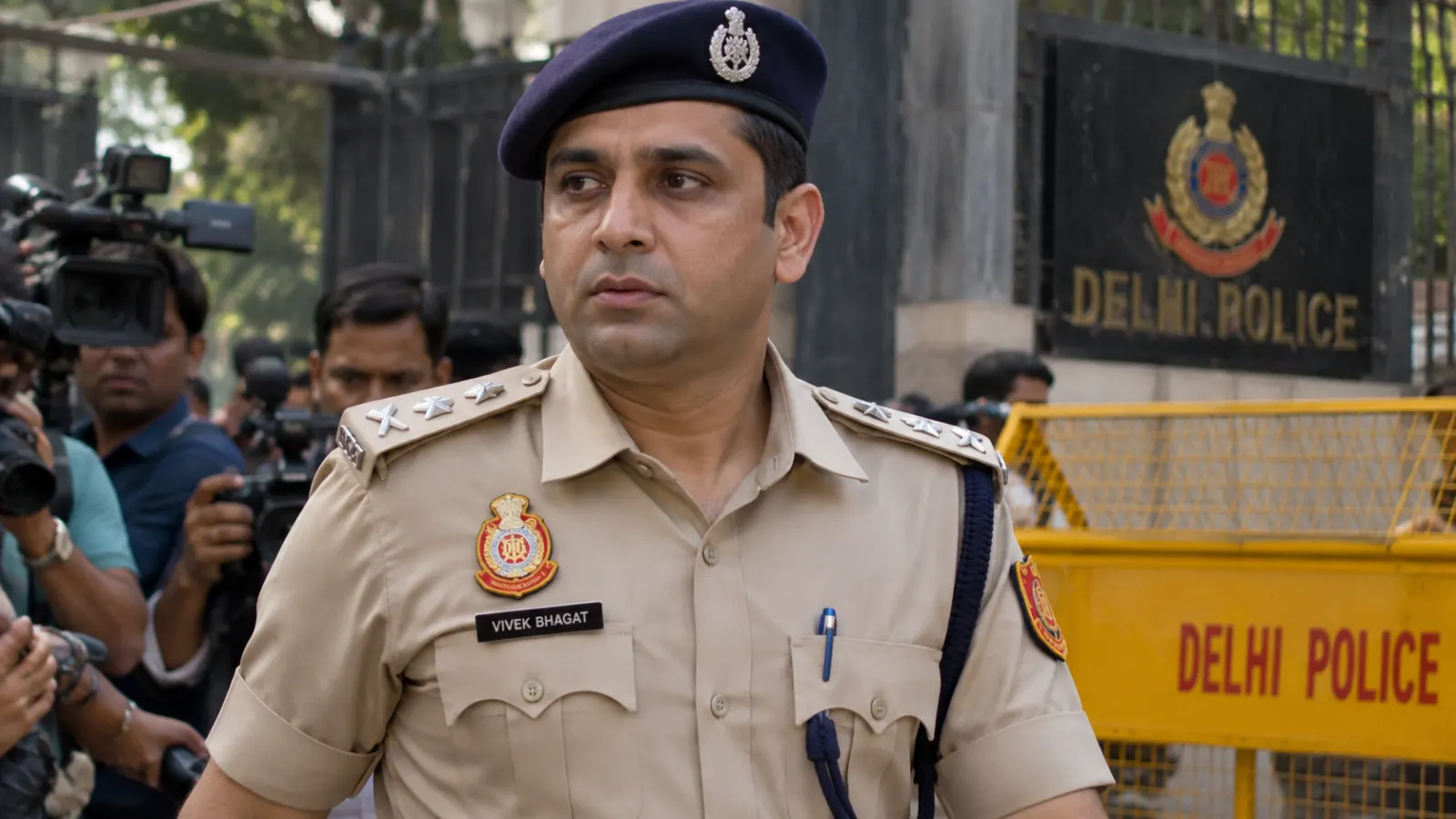
A Delhi Police officer has asked that his elevation to Additional Deputy Commissioner of Police be kept on hold while the Crime Branch examines allegations of sexual harassment made in connection with a protest near Jantar Mantar. Assistant Commissioner of Police Vivek Bhagat was among 12 officers given the current duty charge of Additional DCP in an administrative order issued on October 5, but the timing immediately attracted criticism because a woman journalist had accused him of inappropriate touching while she was covering a protest two days earlier.
Bhagat has now written to the Delhi Police Commissioner asking that the order concerning him be kept in abeyance until the inquiry is completed. Delhi authorities have said the arrangement will be modified accordingly. The allegations against Bhagat have not been established, no court has found him guilty of misconduct, and the complaints remain under investigation.
The episode has nevertheless developed into a larger debate about how institutions should deal with promotions when serious complaints are pending against an officer, particularly when the allegations involve the conduct of police personnel towards journalists and women covering a public demonstration.
What happened at the Jantar Mantar protest?
The controversy originated during protests near Jantar Mantar over demands concerning Chief Election Commissioner Gyanesh Kumar. Journalists were covering police action against demonstrators when several women reporters alleged that they had been subjected to sexual harassment or inappropriate physical contact by police personnel.
One journalist specifically accused Bhagat of touching her inappropriately while she was recording the detention of a protester. She later submitted a complaint at Parliament Street police station. Other women journalists also made allegations concerning the conduct of police personnel during the demonstrations.
Delhi Police subsequently transferred three complaints involving allegations of sexual harassment and manhandling to the Crime Branch, saying the move was intended to ensure a fair and impartial inquiry. At the time of the latest developments, no FIR had been registered on the journalist’s complaint against Bhagat.
That distinction is important. A complaint and an investigation require serious examination, but they are not equivalent to a finding that the allegation is true. Equally, the absence of an FIR does not itself establish that the complaint lacks substance. The purpose of the inquiry is to determine what happened from statements, video, CCTV footage and other available evidence.
Why did the promotion create such a strong reaction?
The controversy intensified when Bhagat’s name appeared among 12 officers assigned the current duty charge of Additional DCP on October 5.
The order was described by officials as part of a routine administrative process that had been initiated before the Jantar Mantar incident. In other words, police officials say the elevation was not granted as a response to, or despite a consideration of, the allegations that had only recently emerged.
But administrative timing and public perception do not always move together.
To members of the public reading the two developments side by side, the sequence appeared stark: a woman journalist accuses a police officer of sexual harassment, an inquiry begins, and shortly afterwards the same officer receives a higher charge.
That perception led political organisations, journalists and activists to question whether the system was treating the allegations with sufficient seriousness. Some demanded Bhagat’s suspension and registration of an FIR.
The criticism also illustrates a recurring institutional problem. Promotion processes can take months and may already be close to completion when a fresh allegation appears. Administrations then have to decide whether an unproven complaint should immediately interrupt a career decision or whether the process should continue unless misconduct is established.
There is no easy answer because both approaches carry risks.
Automatically cancelling a promotion whenever an allegation is made could punish someone before any finding of wrongdoing. Ignoring a serious complaint and proceeding as though nothing happened can undermine public confidence, particularly when the employee holds a position of authority.
Bhagat’s request to pause the order effectively places the promotion question on hold while the factual dispute is examined.
Why Bhagat asked for his own elevation to be paused
In his communication to the Police Commissioner, Bhagat referred to the Crime Branch inquiry and consented to the order concerning him being kept on hold.
That is an unusual element of the case.
The immediate administrative question is no longer whether the government should independently cancel his elevation despite his objections. Bhagat himself has asked not to take up the higher charge while the inquiry remains pending.
This does not amount to an admission of wrongdoing. Nor does voluntarily stepping aside resolve the allegations.
What it does is reduce one source of controversy while the investigation continues. If the inquiry clears him, the government can consider the service matter in light of those findings. If investigators find evidence supporting the complaint, disciplinary or criminal questions could become more serious.
The more important issue is therefore whether the investigation is credible, timely and transparent enough to produce confidence in whichever conclusion it reaches.
The case is also about power between police and journalists
Allegations involving police conduct during protests carry additional significance because the relationship is inherently unequal.
Police personnel have legal authority to control crowds, restrict movement in certain circumstances, detain individuals and use proportionate force where law permits. Journalists covering protests, meanwhile, often need to move close to confrontations in order to document what authorities and demonstrators are doing.
That combination can produce tense situations, but it also creates a particular responsibility for police.
A journalist recording an arrest or crowd-control operation does not lose protection from inappropriate physical conduct simply because the environment is chaotic. At the same time, video clips from crowded protests can sometimes show only fragments of a complicated encounter, which is why allegations need evidence-based investigation rather than instant conclusions from social media.
The allegations at Jantar Mantar are serious precisely because women journalists say the conduct went beyond ordinary crowd management.
An impartial investigation therefore needs to determine whether contact was accidental, operationally necessary, excessive, inappropriate or deliberately sexual. Those distinctions matter both legally and institutionally.
The AI-generated video controversy complicates the story
Another development has made the information environment around the case more difficult.
Delhi Police says it arrested a person accused of creating or circulating fabricated AI-generated footage related to the allegations against Bhagat. Police allege that the content was designed to portray the officer negatively and inflame public sentiment.
This creates two separate issues that should not be confused.
The authenticity of a particular viral video does not automatically determine whether the journalist’s original complaint is true or false. A genuine allegation can coexist with fake supporting material circulated by someone else. Likewise, fabricated digital evidence can seriously damage the credibility of public discussion and potentially prejudice an investigation.
The rise of generative AI makes this problem increasingly important for breaking news.
Audiences may encounter videos that appear to confirm an allegation before investigators have authenticated the footage. Once such content spreads widely, correcting the record becomes extremely difficult.
Responsible reporting therefore requires separating the actual complaint, verified footage, police statements and independently authenticated evidence from material simply circulating online.
In this case, the Crime Branch inquiry into the journalists’ complaints and the separate police action over allegedly fabricated AI content should be treated as distinct matters.
Should an officer facing an allegation be promoted?
The controversy raises a broader question that applies far beyond Delhi Police.
What should happen when an employee is due for promotion while facing a serious but unresolved complaint?
One approach is to presume that normal service processes should continue until misconduct is proven. This protects employees from punishment based solely on allegations.
Another approach is to temporarily defer sensitive appointments where the allegation directly concerns the responsibilities associated with the position. A higher police charge involves greater authority, making public trust especially important.
Temporary deferral can sometimes balance both principles. It does not permanently punish the officer or presume guilt, but it avoids creating the impression that serious complaints have no institutional consequences while they are being investigated.
The usefulness of that approach depends heavily on the speed of the inquiry. Putting a promotion on hold indefinitely without completing an investigation can itself become unfair.
If institutions use temporary holds, they also need clear procedures and reasonable timelines.
Otherwise, an administrative safeguard can turn into punishment by delay.
Why the absence of an FIR has become controversial
The journalists and groups supporting them have also questioned why an FIR was not immediately registered.
Under Indian criminal procedure, the legal requirements surrounding registration depend on the nature of the information provided and the alleged offence. Courts have repeatedly examined when police must register an FIR and when preliminary inquiry may be permissible in specific categories of cases.
For the public, however, the issue is simpler: when a woman alleges sexual harassment by a police officer, can the same police institution investigate the complaint impartially?
That concern helps explain why the complaints were transferred to the Crime Branch.
But merely changing the investigating unit does not automatically resolve questions about independence. Confidence will depend on how evidence is collected, whether complainants are treated appropriately, whether relevant officers are questioned, and whether the final findings are explained according to law.
The standard must be consistent in both directions.
The journalist deserves a serious investigation without intimidation or dismissal of her complaint.
Bhagat deserves an investigation that does not presume guilt before examining the evidence.
Institutional fairness requires both.
The promotion controversy is bigger than one officer
The story has attracted attention because it combines several issues that already carry low public trust: police accountability, treatment of women, press freedom, protest management and the internal handling of complaints against officials.
An institution is judged not only by whether misconduct occurs within it. No large organisation can guarantee that every employee will always behave properly. It is also judged by what happens when credible allegations arise.
Are complaints recorded?
Is evidence preserved?
Can a person complain against someone in authority without fear?
Does the accused receive a fair opportunity to respond?
Does the investigation move quickly?
Are administrative decisions adjusted when necessary?
And are conclusions based on evidence rather than political or social-media pressure?
Those questions matter more than whether one promotion order generated outrage for a few days.
What happens next?
The Crime Branch inquiry is now central to the case. Investigators will need to examine the woman journalist’s complaint, statements from witnesses, available video and CCTV material, police deployment records and the circumstances surrounding the alleged physical contact.
The other complaints involving journalists at the protest also need to be examined on their own evidence rather than treated as automatically proving or disproving one another.
Bhagat’s higher charge is meanwhile being kept on hold at his request. That removes the immediate controversy over him assuming the new position while the inquiry is unresolved, but it does not settle the underlying case.
If investigators find insufficient evidence to substantiate the allegation, that finding should be communicated clearly and the officer’s service position can be reconsidered accordingly. If credible evidence supports the allegation, the question moves beyond promotion into potential disciplinary and legal consequences.
For journalists and the public, the real test will be whether the process produces an evidence-based answer rather than allowing the issue to disappear once the immediate controversy fades.
The most important part of this story is therefore not that an officer was promoted and then asked for the promotion to be paused.
It is whether a system in which the accused and the investigators belong to the same police force can demonstrate that complaints against people in authority are examined with the same seriousness expected when the accused is an ordinary citizen.