Bageshwar Dham Rape Case: DNA Twist Forces Fresh SIT Probe
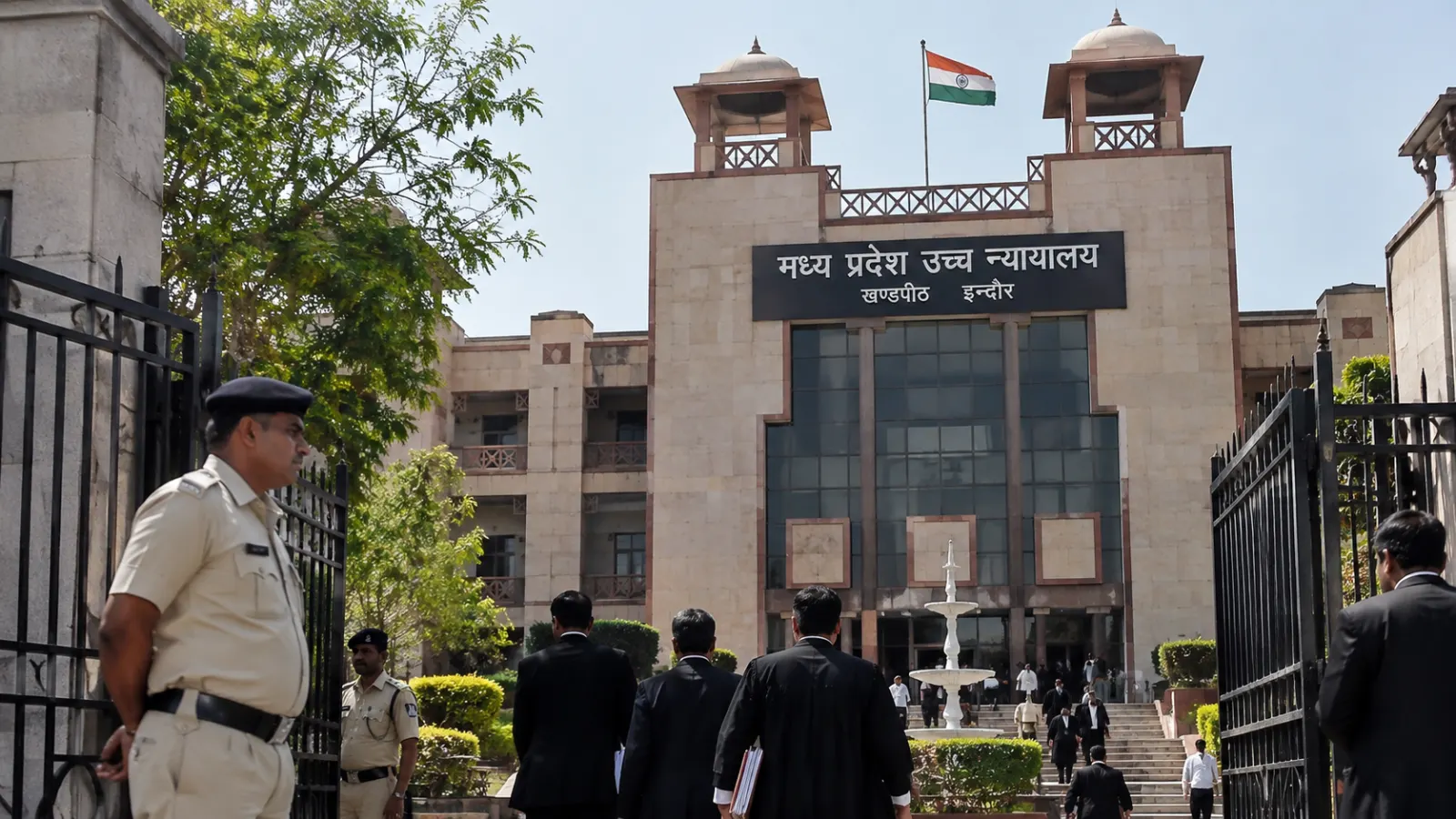
A rape case involving a 16-year-old girl at Bageshwar Dham in Madhya Pradesh has taken a dramatic turn after forensic testing found that the man arrested in the case is not the biological father of the foetus. The girl had initially accused Raju Jatav of sexually assaulting her, but during the trial she did not support the prosecution’s rape allegation against him. Faced with the DNA mismatch and contradictory statements, the Madhya Pradesh High Court has now ordered a fresh Special Investigation Team probe to determine what actually happened and, crucially, identify the biological father of the pregnancy.
The development does not mean the court has concluded that Jatav committed no offence. In fact, his second bail application was rejected. Instead, the High Court concluded that the evidence has created unanswered questions serious enough to require a wider investigation. The SIT has been directed to reconstruct the sequence of events, investigate the alleged sexual assault and establish who fathered the foetus.
That distinction is critical. A DNA result showing that one accused is not the biological father can fundamentally alter an investigation, but it does not automatically establish that no sexual assault occurred. Nor does a witness changing her testimony automatically prove that her original allegation was false. The case has therefore moved from what initially appeared to be a relatively straightforward prosecution into a complicated investigation involving forensic evidence, inconsistent testimony and an unidentified person whose role may be central to understanding what happened to a minor girl.
How the Bageshwar Dham case began
According to the prosecution case, the teenager left her home on March 15 following an argument with her mother and travelled to Bageshwar Dham in Chhatarpur district. She allegedly came into contact with Raju Jatav around two days later.
Her initial account to investigators alleged that Jatav sexually assaulted her near the Bageshwar Dham area. The prosecution further alleged that she remained with him for a period before eventually being located with the involvement of his wife.
The girl was medically examined after being recovered. Doctors found that she was approximately two months pregnant. Her pregnancy was subsequently terminated, and samples from the foetus and placenta were preserved for forensic testing.
Those preserved samples would later become one of the most important pieces of evidence in the entire case.
The girl initially gave statements to police and before a magistrate in which she accused Jatav of rape. Those statements formed an important part of the prosecution case against him.
But when proceedings reached the trial stage, her account changed.
During cross-examination, the teenager did not support the prosecution’s allegation that Jatav had raped her. That created a significant contradiction between what she had reportedly said earlier and what she later told the court.
Then came the DNA result.
DNA test creates a major unanswered question
Forensic testing of the foetal material found that Jatav was not the biological father of the foetus.
That finding is scientifically important because it establishes that someone other than Jatav fathered the pregnancy. But it does not, by itself, answer whether Jatav committed the alleged assault.
This is one of the most important points in understanding the case.
Suppose a victim had sexual contact with more than one person during the relevant period. A pregnancy could have resulted from one individual even if another individual separately committed a sexual offence. Therefore, excluding one accused as the biological father does not automatically exclude every possible allegation against him.
At the same time, the DNA result creates an obvious investigative problem: if Jatav was not the father, who was?
Because the girl was a minor, identifying that person is not merely about determining paternity. It could be directly relevant to establishing whether another sexual offence occurred and whether investigators originally failed to identify another person involved in the case.
That is why the High Court did not treat the DNA mismatch as the end of the matter.
It treated it as a reason to investigate further.
Why the High Court ordered an SIT
When Jatav approached the Madhya Pradesh High Court seeking bail, his lawyers relied on both the DNA report and the fact that the teenager had not supported the prosecution case during trial.
Those are substantial developments.
Yet the court did not simply grant bail and close the larger question. Instead, it rejected his second bail application and directed the Chhatarpur Superintendent of Police to constitute a Special Investigation Team.
The SIT has been asked to establish the complete circumstances surrounding the alleged sexual assault and identify the biological father of the foetus. The investigation is expected to be completed within two months.
This effectively acknowledges that the existing evidence leaves major gaps.
The investigation now has to answer at least two different questions.
First, what happened between the teenager and Jatav?
Second, with whom did the teenager become pregnant?
Those answers could potentially involve the same incident, different incidents or additional individuals who were not adequately examined during the original investigation.
The SIT therefore cannot simply retest one piece of evidence. It may need to reconstruct the girl’s movements, examine people she encountered, review statements, digital records, travel information and other available evidence from the period when she was away from home.
Why changing testimony does not automatically solve the case
The teenager’s changed statement is another reason the case requires careful handling.
In her earlier statements, she reportedly accused Jatav of sexual assault. During the trial, however, she did not support that allegation.
Such contradictions matter greatly in criminal proceedings, but there are many possible reasons a witness may change an account. Some allegations can turn out to have been incorrect. In other cases, witnesses may be frightened, pressured, influenced, confused or unwilling to repeat traumatic experiences publicly.
None of those possibilities should simply be assumed here.
Investigators and the court have to determine what happened based on evidence.
Because the complainant is a minor, particular care is required. The legal system is supposed to reduce repeated trauma for children involved in sexual-offence cases while still ensuring that an accused person receives a fair trial.
The contradiction between her earlier and later statements therefore cannot simply be dismissed, but neither should one version automatically be selected because it better fits a preferred narrative.
The job of the SIT is to find corroborating evidence wherever possible.
That can include medical records, forensic material, communications, travel records, witness testimony and information concerning the people with whom the girl stayed or interacted.
The biological father of the foetus may become one of the most important leads.
DNA evidence is powerful, but it answers specific questions
High-profile criminal cases often produce misleading conclusions once DNA evidence appears.
People may hear “DNA did not match” and immediately interpret that as “the accused has been proved innocent.”
DNA does not work that way.
A DNA test answers a defined scientific question. In this case, the result reportedly indicates that Jatav was not the biological father of the foetus.
That is extremely significant evidence regarding paternity.
It does not necessarily establish where the teenager was on every relevant date, who she encountered, whether she experienced another sexual assault or whether some other alleged conduct occurred.
The reverse is also true. Investigators should not minimise the DNA mismatch simply because it complicates the prosecution case. If the original investigation proceeded on an assumption that the pregnancy resulted from the alleged assault by Jatav, scientific evidence has now challenged that assumption.
A credible investigation has to follow the evidence even when it points away from the original theory.
That is precisely why forensic science can be so important in criminal justice. It can support an allegation, contradict it or reveal that investigators were asking the wrong question.
Here, the DNA evidence has created a new question the original case apparently did not answer.
The mystery of the biological father is now central
The pregnancy means there was another sexual encounter involving the minor during the relevant period.
The identity and circumstances of that person now need to be investigated urgently.
Because the girl was 16, consent has a very different legal meaning than it does in cases involving adults. Under Indian child-protection law, sexual activity involving a person below 18 can constitute an offence irrespective of claims that the relationship was consensual.
This makes identifying the biological father legally significant.
If another adult or older individual had sexual relations with the girl, investigators must establish who that person was, when the contact occurred and whether it had any connection to her journey to Bageshwar Dham.
Investigators must also examine whether the person was known to her before she arrived there.
The DNA finding could therefore expand the case beyond the originally accused person.
If investigators obtain DNA samples from other persons of interest, comparison with the foetal sample could potentially identify or exclude them.
But even DNA identification would not answer every question. Investigators would still need to reconstruct the circumstances in which the pregnancy occurred and determine whether other offences took place.
Why the location has drawn additional public attention
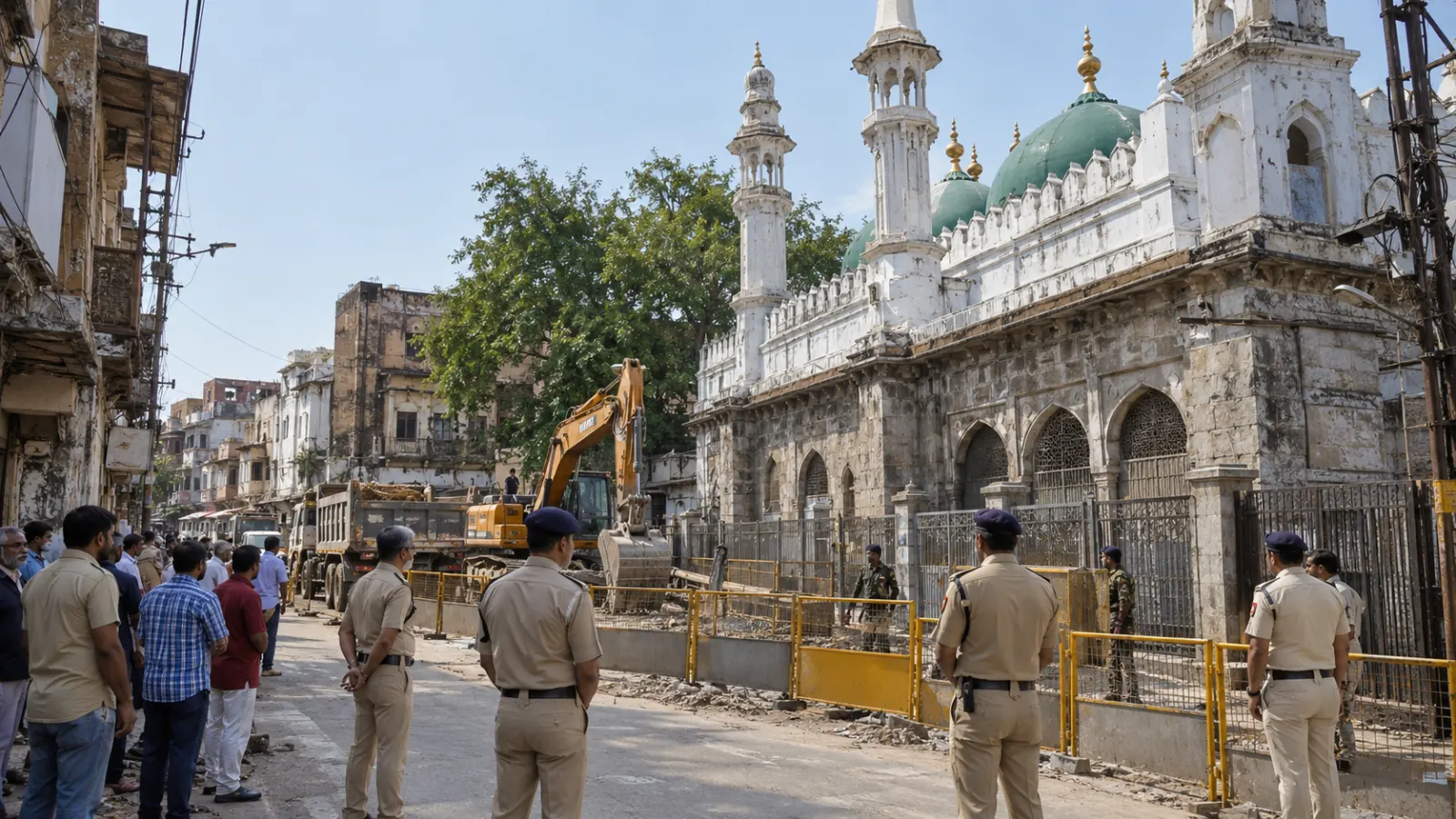
The case has attracted national attention partly because it is connected geographically with Bageshwar Dham, a major religious destination in Madhya Pradesh visited by large numbers of devotees.
That requires careful wording.
The allegation concerns events said to have occurred in connection with the girl’s presence in the Bageshwar Dham area. It would be inaccurate to treat the allegation against an individual as proof of wrongdoing by the religious institution itself unless evidence establishes such a connection.
Following concerns over women’s safety, the management recently advised women and girls not to visit alone, not to trust unfamiliar individuals or self-described sevadars without verification, and to avoid unnecessarily prolonged stays without companions.
Such advice can provide an immediate precaution, but it also raises a broader question about public safety at large religious destinations.
Major pilgrimage sites can attract enormous floating populations: devotees, volunteers, vendors, transport operators, temporary workers and people offering accommodation or assistance. Visitors may have no way of immediately knowing which individuals are officially associated with the institution and which are simply operating nearby.
That makes reliable identification systems, lighting, surveillance, accommodation records, help desks, women’s assistance points and rapid police access particularly important.
Safety cannot depend only on telling women not to travel alone.
Why “women should not come alone” is not enough
Whenever a case involving violence against a woman or girl occurs at a public or religious place, the immediate response often focuses on restrictions for women: do not travel alone, do not stay late, do not trust strangers and remain with family members.
Those precautions may reduce some risks, but they cannot substitute for institutional safeguards.
Women and girls have legitimate reasons to travel, study, work and visit religious places independently. A safety system built mainly around limiting their freedom places much of the burden on potential victims rather than on those responsible for creating secure environments.
A more comprehensive response would include verified accommodation providers, clearly identifiable authorised workers, accessible complaint systems, CCTV coverage of appropriate public areas, better coordination with police and rapid mechanisms for tracing vulnerable or missing visitors.
The Bageshwar Dham case is still under investigation, so it should not be used to make unsupported claims about the safety of an entire pilgrimage destination.
But it does show why institutions receiving large numbers of visitors need safeguards that work even when someone arrives alone, distressed or otherwise vulnerable.
The accused also has rights that cannot be ignored
The seriousness of an allegation involving a minor can create intense public pressure, but criminal law still requires evidence against the individual accused.
Jatav has been in custody while the case proceeds. The DNA report now excludes him as the biological father of the foetus, and the complainant did not support the rape allegation against him during trial.
Those facts are highly relevant to his defence.
The court nevertheless rejected his second bail plea while ordering further investigation.
Whatever the eventual outcome, authorities must ensure that the fresh probe examines evidence both for and against Jatav rather than being designed merely to preserve the original prosecution theory.
An SIT investigation is valuable only if it is genuinely willing to reach a different conclusion.
If evidence ultimately demonstrates that Jatav committed an offence, the case against him should proceed accordingly.
If evidence does not support the accusations against him, investigators and prosecutors must be equally willing to acknowledge that.
The purpose of criminal investigation is not to defend the first arrest. It is to determine what happened.
The case exposes the danger of building a story before all the evidence arrives
Public discussion around criminal cases often develops faster than forensic science.
An allegation emerges. A suspect is arrested. A dramatic narrative spreads across television and social media. People begin treating the accused as guilty or the complainant as dishonest before a trial has examined the evidence.
Then weeks or months later, laboratory results arrive.
In the Bageshwar Dham case, the DNA report does not provide a neat conclusion. Instead, it makes the story more complicated.
The accused is not the biological father.
The girl earlier accused him but later did not support the rape allegation.
The biological father remains unidentified.
The High Court still declined to release the accused on bail.
And an entirely new investigation has now been ordered.
That complexity is exactly why criminal cases should not be reduced to viral verdicts.
A person accused of a horrific offence remains entitled to the presumption of innocence. A child reporting sexual abuse deserves protection and an investigation that takes her account seriously. Scientific evidence must be followed whether it supports or undermines an existing theory.
All three principles can exist at the same time.
What the SIT must establish now
The fresh investigation has a relatively clear objective but a difficult task.
Investigators need to reconstruct the teenager’s movements after she left home, establish everyone she stayed with or travelled alongside, determine when the pregnancy likely began and identify possible individuals whose DNA can lawfully be compared with the preserved forensic sample.
The SIT will also need to examine why the girl’s testimony changed.
Any possibility of pressure, inducement or intimidation must be investigated rather than assumed. Equally, if her earlier statement was inaccurate, investigators need to determine how and why it entered the prosecution case.
The original investigation also deserves review. If another person may have been responsible for the pregnancy, were sufficient efforts previously made to identify that person? Did investigators become too focused on the first accused after the girl named him? Were alternative possibilities adequately examined?
These are uncomfortable questions, but asking them is essential.
A fresh investigation should not merely produce another charge sheet. It should explain contradictions the original investigation could not resolve.
The DNA result is a twist, not a verdict
The most tempting headline in this case is also the most dangerous conclusion: DNA does not match, therefore the case was false.
That has not been established.
The DNA report establishes an important fact: Raju Jatav is reportedly not the biological father of the foetus.
The teenager's changed testimony creates additional doubt about parts of the prosecution case.
But there remains an unanswered question about how a 16-year-old became pregnant, who was responsible and what exactly happened during the period she was away from home.
That is why the High Court has ordered an SIT instead of treating the DNA mismatch as the final answer.
The next two months may therefore be more important than everything that has happened in the investigation so far.
If the SIT identifies the biological father, reconstructs the girl’s movements and explains the contradictory testimony, the case could finally move closer to an evidence-based conclusion.
Until then, neither the accused nor the complainant should be subjected to a social-media verdict.
The biggest development in the Bageshwar Dham rape case is not simply that one DNA sample failed to match.
It is that the scientific evidence has forced investigators to ask a question that should now be impossible to avoid:
If the arrested accused is not the biological father, who is—and what actually happened to the 16-year-old girl?