The Global South is no longer satisfied with being pitied.
For decades, developing countries were treated as recipients of generosity: recipients of aid, loans, expertise, technical assistance, climate promises, food relief, development projects and moral advice. Rich nations spoke of helping the poor. International institutions spoke of capacity building. Donor conferences spoke of commitments. Summits spoke of partnership.
But the deeper question remained unanswered: who decides?
Who designs the rules of finance? Who controls voting power in global institutions? Who decides the terms of debt restructuring? Who defines climate responsibility? Who sets trade rules? Who controls technology standards? Who decides when a conflict matters and when it can be ignored?
That is why the Global South’s demand has shifted from charity to representation.
The demand is not merely for more money. It is for a fairer distribution of power. Developing countries are saying that they do not want to remain objects of global policy. They want to be authors of it.
Charity keeps hierarchy intact
Charity can save lives. Humanitarian aid matters. Disaster relief matters. Concessional finance matters. Vaccines, food assistance, medicines and emergency support can be essential in moments of crisis.
But charity is not justice.
Charity usually flows from the powerful to the weak. Representation changes who sits at the table. Charity asks what the poor need. Representation asks why the poor were excluded from decision-making in the first place. Charity may soften suffering. Representation challenges the structure that produces suffering.
This is the central political shift in Global South diplomacy.
Developing countries are not simply asking developed countries to be kinder. They are asking global institutions to be more democratic, financial systems to be more equitable, climate responsibility to be more honest, and security institutions to reflect the world as it exists today.
A world order cannot remain legitimate if most of humanity experiences it as a lecture hall where a few speak and the rest listen.
The current order still reflects old power
The United Nations was born after the Second World War. The Bretton Woods institutions were built in the same era. The permanent structure of the UN Security Council reflects the victors and power realities of 1945, not the demographic, economic and political realities of the twenty-first century.
The UN Security Council has 15 members, but only five permanent members hold veto power: China, France, Russia, the United Kingdom and the United States. The rest of the world rotates through non-permanent seats with limited influence. Africa, Latin America and the Caribbean have no permanent seat despite being central to many issues debated by the Council.
This is not a procedural inconvenience. It is a legitimacy problem.
A continent can be the subject of repeated peacekeeping mandates, sanctions debates and conflict resolutions while lacking permanent representation at the highest table of international security. That is not representation. That is paternalism with diplomatic language.
At the UN General Assembly’s 80th session in 2025, leaders again pressed for reform of the United Nations and fairer representation for the “global majority,” reflecting the growing impatience with institutions that remain structurally unequal.
Africa’s exclusion exposes the contradiction
Africa is the clearest moral test of global representation.
The continent has 54 countries. It has major demographic weight, vast natural resources, strategic maritime geography, climate vulnerability, peace and security challenges, and growing diplomatic importance. Yet it still does not have a permanent seat on the UN Security Council.
This contradiction has become increasingly indefensible. It is not enough for global leaders to speak about Africa’s future while denying Africa full voice in institutions that shape that future.
The inclusion of the African Union as a permanent member of the G20 during India’s 2023 presidency showed what representational correction can look like. The African Union was inducted as a permanent G20 member at the New Delhi Summit in September 2023, a move later confirmed by India’s Ministry of External Affairs in Parliament.
That moment mattered because it was not charity. It did not give Africa another aid package. It gave Africa a seat.
That is the difference.
A cheque may help temporarily. A seat changes the structure.
The Global South wants voting power, not sympathetic speeches
The demand for representation is also visible in global finance.
The International Monetary Fund’s quota system affects voting power, financial contributions and access to IMF resources. The IMF’s Board of Governors concluded the 16th General Review of Quotas in December 2023 and approved a 50 percent quota increase. But the broader debate over quota realignment and the voice of developing countries remains unresolved.
This is why IMF reform remains central to Global South diplomacy. Developing countries do not only want more emergency lending. They want greater voice in the institution that often determines the terms of economic adjustment, debt sustainability and crisis response.
BRICS finance ministers made a unified proposal in 2025 calling for IMF quota and voting-power changes to better reflect the weight of developing countries while protecting the voice of poorer members.
This matters because global finance is not neutral. Voting power shapes policy. Policy shapes conditions. Conditions shape budgets. Budgets shape whether a country can fund schools, hospitals, energy systems and climate adaptation.
When developing countries demand IMF reform, they are not asking for symbolic prestige. They are asking for influence over decisions that affect the lives of their citizens.
Debt proves that charity is not enough
The debt crisis has made the representation issue urgent.
UN Trade and Development reported that developing countries’ net interest payments on public debt reached $921 billion in 2024, up 10 percent from the previous year. It also said a record 61 developing economies allocated at least 10 percent of government revenues to interest payments.
The same UNCTAD work warns that 3.4 billion people live in countries spending more on interest payments than on health or education.
This is not only a debt problem. It is a power problem.
If countries must spend more on creditors than on children, the issue is not solved by occasional aid announcements. The issue is solved by changing debt architecture, restructuring mechanisms, credit-rating practices, lending terms, private creditor participation and representation in financial governance.
Charity may fund a school. Representation helps change the financial conditions that prevent thousands of schools from being funded.
The Global South understands this difference clearly.
Climate finance is also about power
Climate negotiations reveal the same pattern.
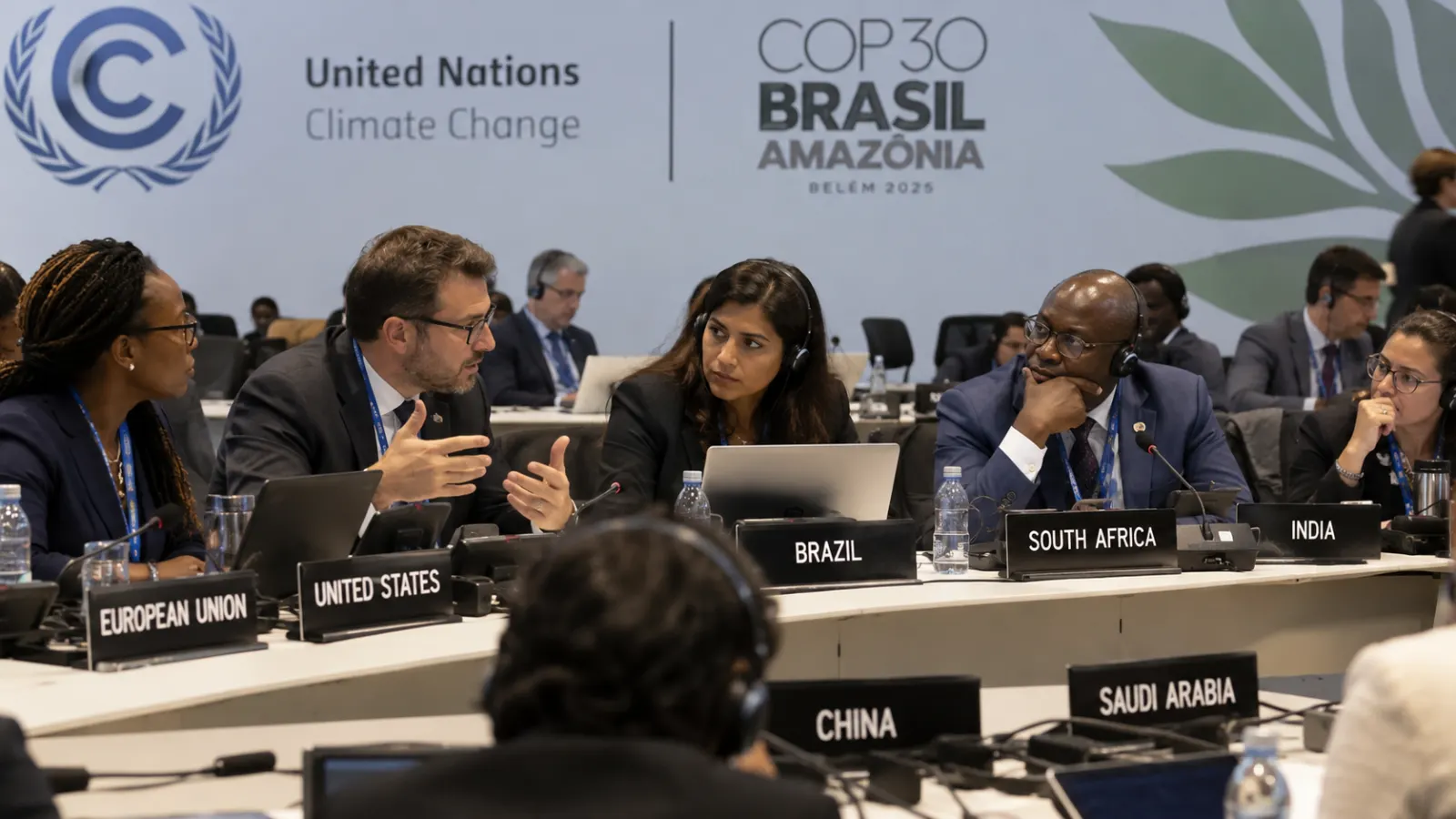
At COP29 in Baku, governments agreed that developed countries would lead efforts to mobilise at least $300 billion annually by 2035 for developing countries, while all actors would work toward scaling finance to $1.3 trillion annually by 2035.
This was presented as progress, but many developing countries considered it inadequate compared with the scale of need. The problem was not only the number. It was the structure of the promise: how much would be grants, how much would be loans, how much would be public, how much would depend on private finance, and how easily vulnerable countries could access it.
Climate finance is often described as assistance. But for the Global South, it is also accountability.
Countries that contributed least to historical emissions are now paying for floods, droughts, heatwaves, cyclones and sea-level rise. If the response is framed only as aid, the moral logic is weakened. The issue is not generosity from polluters. It is responsibility.
Climate justice therefore requires representation in climate decision-making, not just climate funding after the terms are already set.
The Global South is tired of being consulted after decisions are made
One of the deepest frustrations of developing countries is performative consultation.
They are invited to speak, but not to decide.They are asked for input, but not given voting power.They are praised for resilience, but not given finance on fair terms.They are included in declarations, but excluded from agenda-setting.They are told to implement rules they did not meaningfully write.
This is why the language of partnership often rings hollow.
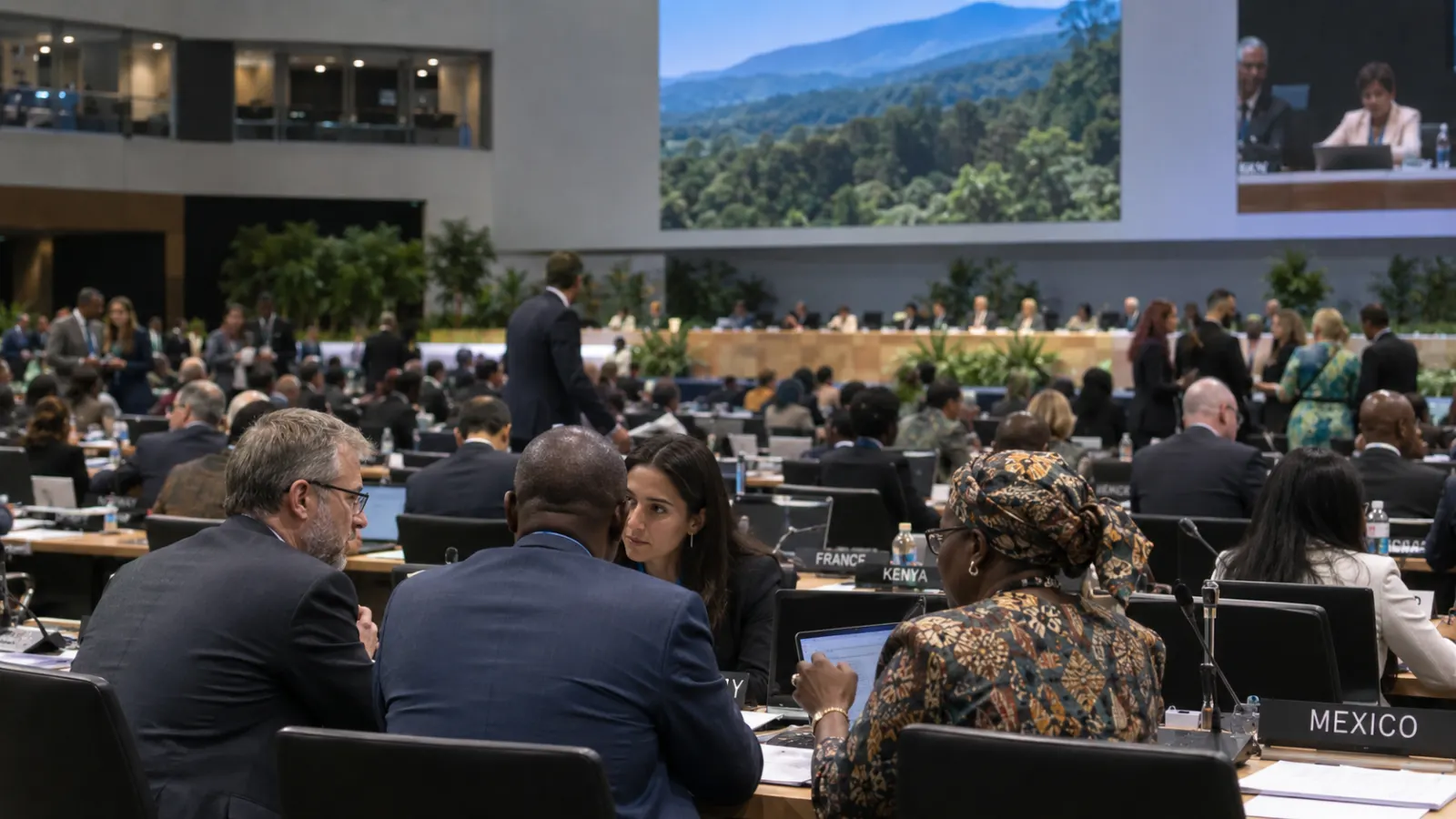
Real partnership requires co-authorship. It means developing countries must be involved when global tax rules are written, when debt frameworks are designed, when climate finance goals are negotiated, when technology governance standards are created, when trade rules are revised, and when peace and security mandates are shaped.
Representation is not ceremonial presence. It is decision-making power.
India has tried to convert voice into platform
India’s recent Global South diplomacy reflects this representational mood.
In January 2023, India hosted the first Voice of Global South Summit, bringing together leaders and ministers from 125 countries to focus international attention on the priorities and concerns of the developing world.
The third Voice of Global South Summit in August 2024 saw participation from 173 dignitaries from 123 countries, including 21 heads of state or government and 118 ministers or vice-ministers.
These summits matter because they create a platform outside traditional Western-led agenda-setting spaces. They allow developing countries to speak to each other before speaking to the world.
But India must be careful. Convening the Global South is not the same as owning its voice. The Global South is too diverse to be represented by one capital. India’s role is strongest when it amplifies, organises and carries shared concerns into global forums without claiming exclusive authority.
A good convenor creates space. A bad convenor appropriates it.
Representation is also about dignity
The demand for representation is not only institutional. It is psychological.
For many developing countries, the old global order produced a constant hierarchy of tone. Rich countries advised; poor countries received advice. Rich countries designed standards; poor countries adjusted. Rich countries made exceptions for themselves; poor countries were told to follow discipline. Rich countries caused crises; poor countries were asked to show resilience.
This hierarchy has produced resentment.
Representation corrects not only outcomes but also dignity. It tells countries that they are not merely problems to be managed. They are political communities with agency, memory, experience and intelligence.
The Global South does not want to be described endlessly as vulnerable. It wants to be treated as capable.
That shift in language matters because language shapes policy. A “vulnerable country” receives help. A represented country negotiates terms.
The BRICS signal
The expansion of BRICS also reflects the search for representation.
The 2025 Rio de Janeiro Declaration said BRICS was committed to a more just, equitable, agile, effective, responsive, representative, legitimate, democratic and accountable international and multilateral system.
This language captures why many developing countries are interested in BRICS, even if BRICS itself is internally divided. They want forums that give them bargaining space outside Western-dominated institutions.
BRICS is not a perfect answer. Its members have different political systems, rivalries and strategic interests. India and China disagree on major security questions. Russia’s confrontation with the West creates complications. New members bring their own regional rivalries.
But BRICS expansion shows that the Global South is looking for platforms where it is not treated as a junior audience.
Even imperfect platforms become attractive when existing institutions feel closed.
The West should not misread the demand
Western countries often interpret Global South assertiveness as anti-Western. Sometimes it is. But often it is better understood as anti-hierarchy.
Many developing countries still want Western investment, technology, markets, education, security cooperation and institutional support. They are not necessarily rejecting the West. They are rejecting a structure in which Western preferences dominate the rules.
This distinction matters.
If the West treats every demand for reform as hostility, it will push more countries toward alternative platforms. If it treats representation as a threat, it will weaken the legitimacy of the institutions it wants to preserve.
The wiser response is reform.
A system that shares power can survive. A system that hoards power while preaching rules will face resistance.
Representation without accountability is incomplete
A serious argument must also recognise the weakness within the Global South’s case.
Representation at the global level does not automatically produce justice at home. Some governments that demand fairness internationally deny fairness domestically. Some leaders speak of sovereignty while suppressing dissent. Some demand development finance while misusing public funds. Some criticise global inequality while protecting domestic elites.
This cannot be ignored.
The Global South’s moral case is strongest when it links external representation with internal accountability. Citizens should not be told that global injustice explains everything. Corruption, authoritarianism, weak institutions, poor tax systems, bad planning and elite capture also damage development.
Representation must therefore be democratic in spirit, not merely geopolitical. It should empower societies, not only governments.
A seat at the global table is valuable only if it ultimately improves the lives of citizens.
The Global South is not one voice
Another important qualification is that the Global South is not a single unified bloc.
India, China, Brazil, Indonesia, South Africa, Saudi Arabia, Nigeria, Egypt, Vietnam, Kenya, Bangladesh, Mexico and small island states do not always share the same interests. Energy exporters and energy importers differ. Least developed countries and large emerging economies differ. Democracies and authoritarian states differ. Climate-vulnerable islands and fossil-fuel producers differ.
Therefore, “representation” cannot mean one country or one grouping speaks for everyone.
It must mean plural representation: more seats, more voting power, more regional balance, more issue-based coalitions and more space for vulnerable countries, not only large emerging powers.
The Global South does not need one master voice. It needs a more democratic chorus.
What real representation would require
First, the UN Security Council must be reformed. Africa, Latin America and major developing countries cannot remain permanently outside the highest decision-making structure on international peace and security.
Second, IMF quota reform must move beyond capital increases and address voting power. The global economy has changed; representation must change with it.
Third, the World Bank and other multilateral development banks must give developing countries greater voice in governance, lending priorities and development strategy.
Fourth, climate negotiations must treat developing countries as co-designers of climate finance, not as recipients of externally designed mechanisms.
Fifth, debt restructuring frameworks must include debtor-country realities, not only creditor comfort. Development needs, climate vulnerability and social spending must be part of sustainability assessments.
Sixth, global tax cooperation must better represent developing countries, especially because illicit financial flows and profit shifting reduce their fiscal space.
Seventh, technology governance must include the Global South before standards are locked in by a few powerful states and corporations.
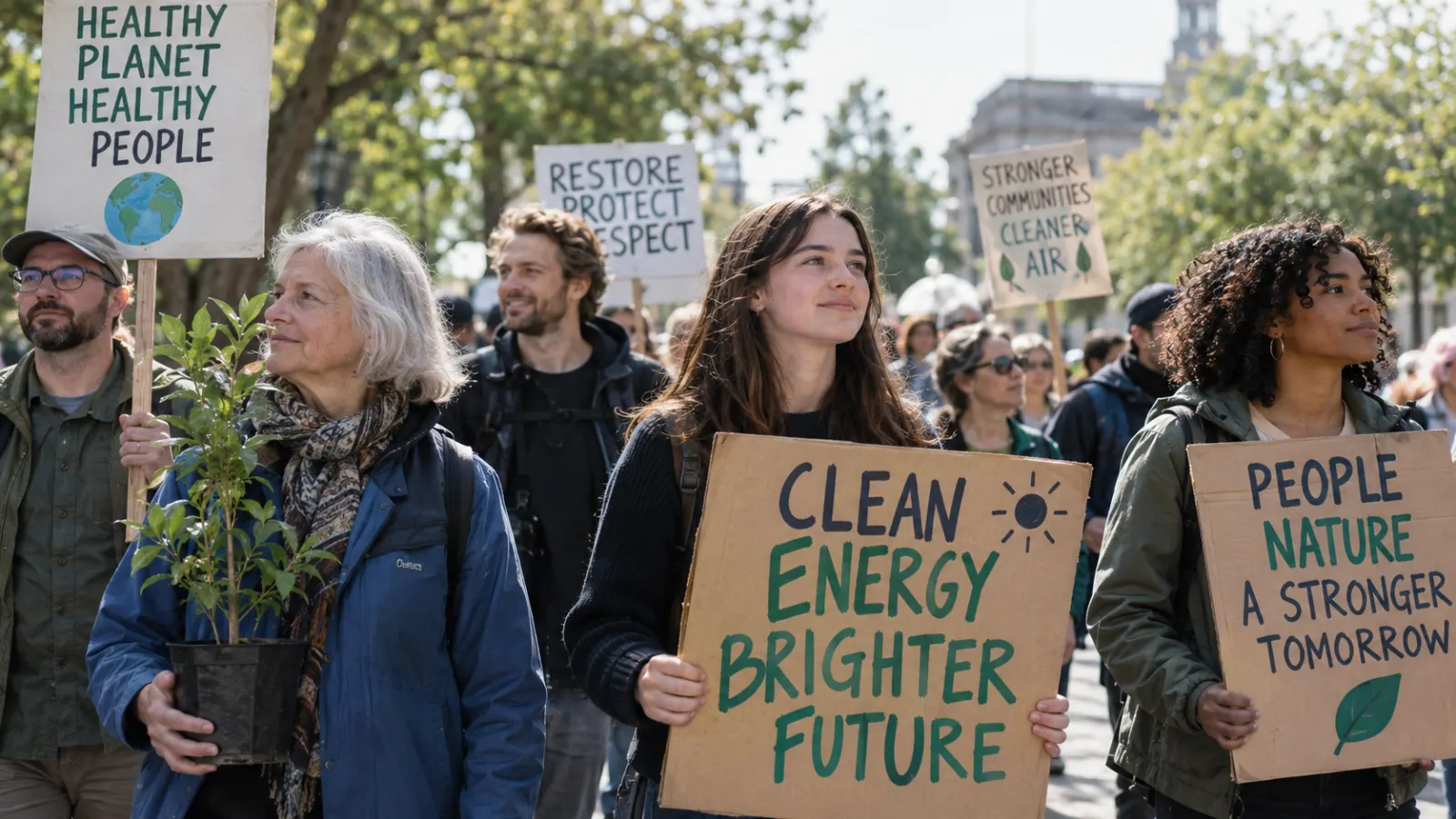
Finally, representation must extend beyond states. Civil society, local communities, indigenous groups, youth, women, workers and vulnerable populations must also have voice, because governments do not always represent their people well.
Charity may remain necessary, but it cannot be the model
There will always be moments when aid is necessary. A country hit by an earthquake needs relief. A famine-hit population needs food. A war zone needs medicine. A climate disaster requires emergency finance.
But emergency support cannot become the permanent structure of global politics.
A fair world cannot be built on the idea that the powerful will occasionally rescue the weak. It must be built on rules that prevent weakness from being reproduced.
That is why the Global South is changing the vocabulary of international relations. It is no longer enough to ask how much aid was given. The better questions are:
Who wrote the rules?Who holds the votes?Who pays the interest?Who gets the technology?Who bears the climate cost?Who controls the agenda?Who has veto power?Who is invited only after decisions are made?
These are questions of power, not charity.
The India angle
For India, this article’s argument is especially important.
India wants to be seen as a voice of the Global South. Its strongest claim comes from actions that expand representation, such as the African Union’s G20 membership and the Voice of Global South summits. But India’s credibility will depend on whether it continues to push for representational justice beyond symbolic moments.
India should support UNSC reform not only for itself, but also for Africa and Latin America. It should push IMF and World Bank reform not only for emerging powers, but also for poorer and vulnerable states. It should ensure development finance conversations include small island states, least developed countries and debt-stressed economies. It should make digital public infrastructure cooperation inclusive, rights-aware and affordable.
Most importantly, India should avoid turning Global South leadership into self-promotion. The Global South does not need another hierarchy with a different centre. It needs more distributed power.
India’s best role is to be a bridge, not a boss.
The larger lesson
The Global South wants representation, not charity, because charity leaves the structure intact.
Representation changes the structure.
It changes who speaks.It changes who votes.It changes who designs rules.It changes who sets priorities.It changes who defines fairness.It changes who carries responsibility.It changes who is seen as a subject of history rather than an object of assistance.
This is the next great debate in international politics.
The world can continue offering aid while preserving unequal power, or it can reform institutions so that the majority of humanity has real voice in decisions that shape its future.
The first path produces resentment.The second path produces legitimacy.
The Global South has made its position clear: it does not want to wait outside the room while others decide what is good for it.
It wants the door opened.It wants the table expanded.It wants the rules rewritten.It wants dignity converted into power.
That is not charity.
That is justice.