The Global South’s demand for development finance reform is no longer a technical debate hidden inside ministries, multilateral banks and economic forums. It has become one of the central political demands of the twenty-first century.
The reason is simple: without finance, development becomes a slogan.
A country may have a climate plan, but without affordable capital it cannot build resilient infrastructure. It may have an education strategy, but without fiscal space it cannot hire teachers. It may have a health mission, but without budget capacity it cannot build clinics. It may want to industrialise, but without long-term investment it cannot build power, transport, manufacturing capacity or digital systems.
For decades, developing countries were told that the global order offered them a path to prosperity if they liberalised, borrowed, reformed and integrated into world markets. But the current financial architecture often makes development more expensive for the countries that need development finance the most.
This is why development finance reform has become a core Global South demand. It is not merely about getting more aid. It is about changing the rules through which capital moves, debt is priced, climate costs are shared, institutions are governed and development priorities are financed.
The Global South is asking a difficult but unavoidable question: how can the world speak of sustainable development while keeping a financial system that structurally underfunds it?
The development finance problem is now systemic
The financing challenge facing developing countries is not small. It is not temporary. It is not limited to a handful of badly managed economies.
The UN’s 2025 Sustainable Development Goals report warned that many countries face record debt-servicing costs while a $4 trillion annual financing gap continues to constrain development progress. The same report noted that debt-service costs for low- and middle-income countries reached a record $1.4 trillion in 2023.
This is the heart of the crisis. Developing countries are being asked to finance poverty reduction, climate adaptation, industrial transformation, digital inclusion, public health, food security and energy transition at the same time that their debt payments are rising.
A rich country can borrow in its own currency, deploy fiscal stimulus, subsidise green industry, support banks, fund research and attract cheap capital. A poorer country often borrows in foreign currency, faces volatile exchange rates, pays higher interest, receives lower credit ratings and must convince external creditors before investing in its own people.
The result is an unequal development race. Some countries run with subsidised shoes. Others run while carrying debt on their backs.
Debt has become the most visible symptom
The demand for development finance reform begins with debt because debt is where global inequality becomes measurable.
The World Bank’s International Debt Report 2025 said the combined external debt of low- and middle-income countries reached a record $8.9 trillion in 2024, while the 78 countries eligible for the World Bank’s International Development Association owed a record $1.2 trillion. The report also noted that average interest rates on newly contracted official debt reached a 24-year high, while rates paid to private creditors reached a 17-year high.
UN Trade and Development reported that global public debt surpassed $100 trillion in 2024, with developing countries carrying about $31 trillion of that burden. It also stated that developing countries paid a record $921 billion in net interest on public debt in 2024.
These numbers are not just macroeconomic indicators. They are political facts. Every rupee, dollar or franc spent on excessive interest payments is money not spent on schools, hospitals, climate adaptation, nutrition, roads, public transport or clean energy.
Debt is no longer only a repayment issue. It has become a development allocation issue.
The real problem is the cost of capital
The Global South is not demanding finance reform only because it wants more money. It is demanding reform because the cost of money is unequal.
A country that is already vulnerable pays more because markets price it as risky. But the high cost of borrowing then makes the country more vulnerable. It reduces public investment, worsens debt ratios, weakens growth and increases the probability of future distress.
This creates a vicious cycle: vulnerability raises borrowing costs, high borrowing costs deepen vulnerability, and deeper vulnerability raises borrowing costs again.
This is why many developing countries argue that the current system does not simply reflect risk; it amplifies risk. Credit ratings, global interest rates, exchange-rate movements, investor panic and creditor behaviour can turn manageable pressure into crisis.
Development finance reform therefore must focus not only on how much money is available, but also on what terms it is available.
A loan at commercial rates is not the same as concessional finance. A short-term private bond is not the same as long-term public development finance. A climate loan after a disaster is not the same as a grant before the disaster. The structure of finance matters as much as the amount.
The Sevilla Commitment shows the issue has reached the global agenda
The Fourth International Conference on Financing for Development, held in Sevilla, Spain, from June 30 to July 3, 2025, was important because it placed development finance reform at the centre of global diplomacy. The Sevilla Commitment, adopted by consensus at the start of the conference, laid out a path to close the $4 trillion annual SDG financing gap in developing countries.
The official FFD4 outcome material described the commitment as a renewed global framework intended to unlock additional and innovative financial resources, support reform of the international financial architecture and close the financing gap with urgency.
This matters because the Global South’s finance complaint is no longer marginal. It has entered the formal vocabulary of global governance.
But the real test is implementation. Global conferences often produce strong language and weak delivery. Developing countries have heard promises before: aid targets, climate finance commitments, debt relief mechanisms, technology transfer assurances and development partnership pledges. The credibility gap is wide because many earlier promises were delayed, diluted or underfunded.
The Global South does not need another declaration that describes the problem elegantly. It needs mechanisms that move money faster, cheaper and more fairly.
Multilateral development banks must become bigger, better and faster
At the centre of development finance reform are multilateral development banks: the World Bank, regional development banks and other public financial institutions designed to finance development.
These banks are essential because they can provide long-term capital, reduce risk, support infrastructure, mobilise private investment and finance projects that commercial markets may avoid. But many developing countries argue that MDBs remain too cautious, too slow and too undercapitalised for the scale of the crisis.
During India’s G20 presidency, an Independent Expert Group was created to recommend reforms for strengthening multilateral development banks. The group’s “Triple Agenda” called for MDBs to become better, bigger and bolder, including by expanding their mandate, increasing sustainable lending levels and developing new funding mechanisms.
That agenda is now central to the Global South’s demand. Countries do not want MDBs to become ordinary commercial banks with development branding. They want institutions that can finance transformation at scale.
A reformed MDB system should be able to finance climate adaptation, clean energy, resilient cities, healthcare, education, digital public infrastructure, industrial capacity and food security without pushing countries into unsustainable debt.
The World Bank’s evolution is necessary but incomplete
The World Bank has itself recognised that development challenges have changed. Its Evolution Roadmap was designed to help the institution better address poverty, inequality and cross-border challenges such as climate change, pandemics and fragility.
This is an important shift because old development finance models were not built for today’s overlapping crises. A country now needs finance not only for national development but also for global public goods: climate stability, pandemic preparedness, biodiversity protection, migration management, disaster resilience and digital security.
But the Global South’s concern is that expanded mandates must not come without expanded resources.
If the World Bank and other MDBs are asked to finance climate, health, fragility and global public goods without receiving enough new capital, they may simply reallocate money away from traditional poverty and infrastructure priorities. That would create a false choice between development and climate, when developing countries need both.
MDB reform must therefore include capital increases, balance-sheet optimisation, faster disbursement, local currency financing, stronger risk-sharing and more concessional windows for vulnerable countries.
Climate finance cannot be separated from development finance
Climate finance is now one of the most contested parts of development finance reform.
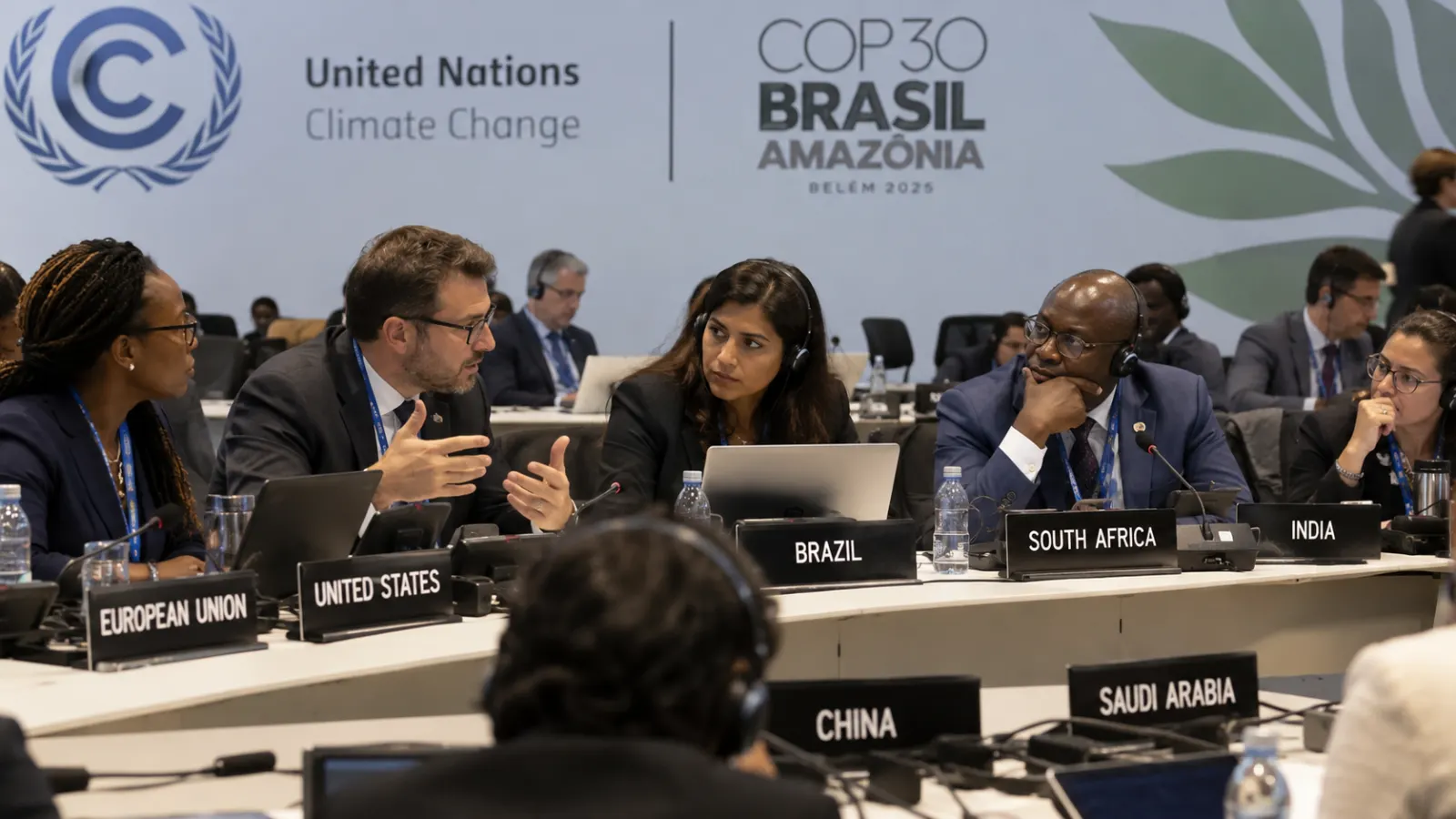
At COP29 in Baku, countries agreed that developed countries would lead efforts to mobilise at least $300 billion annually by 2035 for developing countries, while all actors would work to scale finance from public and private sources to $1.3 trillion per year by 2035.
This was a step forward, but many developing countries considered it inadequate relative to need. Their criticism is not only about the headline amount. It is also about the quality of finance.
Climate finance that arrives as expensive loans can worsen debt. Climate finance that comes too late cannot prevent damage. Climate finance that depends excessively on private capital may ignore adaptation projects that are socially essential but commercially unattractive. Climate finance that is difficult to access burdens weak administrative systems.
For the Global South, climate finance reform means predictable public finance, concessional capital, grant-based support for vulnerable countries, strong adaptation funding, loss-and-damage resources and technology access.
The climate crisis has made development finance reform more urgent because poor countries are being asked to pay for a crisis they did not create while still financing basic development.
Private capital is useful but cannot replace public responsibility
A major idea in development finance reform is to mobilise private capital. This is necessary. Public budgets alone cannot close the financing gap. Pension funds, sovereign wealth funds, insurance companies, banks and institutional investors hold enormous pools of capital.
But the Global South is right to be cautious. Private capital is not neutral. It seeks return. It prefers bankable projects. It may avoid fragile states, poor countries, adaptation investments and public goods where revenue streams are uncertain.
A solar park with a power-purchase agreement may attract investors. A flood-resilience system for a poor coastal community may not. A toll road may be bankable. A rural health network may not. A digital identity system may create social value but not immediate commercial returns.
This is why public finance remains essential. MDBs and governments can reduce risk, provide guarantees, offer concessional tranches and create blended finance structures. But private finance must not become an excuse for rich countries to avoid public commitments.
Development finance reform should mobilise private capital where appropriate, but it must not privatise responsibility for global development.
Special Drawing Rights remain underused
Special Drawing Rights, or SDRs, became an important part of the development finance debate after the pandemic. SDRs are international reserve assets issued by the IMF. The problem is that SDR allocations are distributed according to IMF quotas, which means richer countries receive a large share even when poorer countries need liquidity more urgently.
Rechanneling SDRs from countries that do not need them to vulnerable countries has therefore become a major Global South demand.
The IMF Board approved a 50 percent quota increase under the 16th General Review of Quotas in December 2023, raising total quotas to SDR 715.7 billion, or about $960 billion. But the quota increase did not itself solve the representation and liquidity concerns of developing countries.
Reuters reported in 2024 that the IMF Executive Board approved the use of SDRs to purchase hybrid capital instruments issued by multilateral development banks, a move that could help unlock additional MDB lending.
This kind of innovation matters. If reserve assets sitting unused in advanced economies can be safely leveraged to expand development lending, the global system becomes more rational. But the mechanism must be scaled, simplified and made accessible.
The Global South’s point is straightforward: global liquidity should not remain concentrated where it is least urgently needed.
IMF reform is about resources and representation
Development finance reform also requires IMF reform.
The IMF remains central to crisis lending, macroeconomic surveillance and balance-of-payments support. But many developing countries believe its governance structure still gives disproportionate influence to advanced economies. Quota shares affect voting power, access to finance and institutional legitimacy.
The IMF’s 16th quota review increased total quotas by 50 percent, but it did not significantly redistribute voting power toward developing countries. That is why the debate continues.
In July 2025, Reuters reported that BRICS finance ministers made a unified proposal for IMF reforms, calling for quota and voting-power changes to better reflect the global economic weight of developing countries while protecting the voice of the poorest members.
For the Global South, IMF reform is not only about symbolism. It affects the rules of crisis response. Countries want an institution that is adequately resourced, faster in emergencies, more representative in governance, and more sensitive to development and climate needs when designing programmes.
A crisis lender that lacks legitimacy will always face political resistance.
Debt restructuring must become faster and fairer
Development finance reform is incomplete without sovereign debt reform.
When countries enter debt distress, restructuring is often slow and painful. Negotiations involve multiple creditors: private bondholders, China, Paris Club countries, Gulf lenders, multilateral institutions and domestic lenders. Each has different incentives. Delays can deepen economic collapse.
The OECD has noted that sovereign debt restructuring has become more complex because the creditor base is more diverse, with private creditors, China and Gulf states playing increasingly important roles.
The Global South wants a system where unsustainable debt is resolved quickly, transparently and fairly. That means private creditors must participate meaningfully. It means comparable treatment must apply across creditor groups. It means debt sustainability assessments should include climate vulnerability and development spending needs. It means countries should not wait years for relief while poverty deepens.
The Sevilla Commitment’s outcome material also referred to improving debt data transparency and encouraging the IMF and World Bank to refine debt sustainability assessments so they better account for development priorities, climate and nature-related spending needs, multidimensional vulnerabilities and the distinction between liquidity and solvency.
That is a critical reform direction. A country should not be judged “sustainable” merely because it can keep paying creditors while underfunding its children.
Credit rating reform must enter the debate
Credit rating agencies play a powerful role in development finance because their assessments affect borrowing costs. A downgrade can raise interest rates, reduce investor appetite and trigger market panic.
Developing countries often argue that ratings can be pro-cyclical: they worsen precisely when a country needs breathing space. They may also underweight long-term development potential, climate resilience investments or the difference between temporary liquidity pressure and true insolvency.
This does not mean ratings should be politicised or softened artificially. Investors need credible information. But the methodology, transparency and consequences of ratings deserve scrutiny.
A fairer system would improve data quality, reduce over-reliance on a few private agencies, strengthen regional rating capacity and ensure that climate vulnerability does not automatically translate into punitive borrowing costs without corresponding concessional support.
If a country becomes more vulnerable because of climate shocks it did not cause, global finance should reduce that burden, not price it into deeper distress.
Domestic resource mobilisation is necessary but not enough
Developed countries often tell poorer nations to raise more domestic revenue. That advice is not wrong. Developing countries need stronger tax systems, better customs administration, reduced corruption, wider tax bases and more efficient public expenditure.
But domestic resource mobilisation cannot become a way to shift responsibility entirely onto poor countries.
Many developing economies have narrow tax bases because large informal sectors, low incomes and administrative constraints limit revenue collection. Others lose money through illicit financial flows, profit shifting, tax avoidance and weak international tax cooperation. Some face social instability when taxes rise without visible public services.
The Sevilla Commitment and wider financing-for-development agenda recognise domestic public resources as important, but also link them with international cooperation, tax reform, debt sustainability, private finance, trade and systemic reform.
The correct answer is not domestic reform or global reform. It is both.
Developing countries must tax better and spend better. The international system must make tax cooperation fairer, reduce illicit outflows, reform debt rules and provide affordable capital.
Official development assistance is still politically important
Official development assistance, or ODA, is no longer sufficient to solve development finance needs. The financing gap is too large. But ODA remains crucial for least developed countries, fragile states, humanitarian crises, adaptation, health, education and public goods that do not attract private capital.
The FFD4 outcome material reaffirmed the long-standing commitment by many developed countries to provide 0.7 percent of gross national income as ODA to developing countries, and 0.15 to 0.2 percent to least developed countries. It also emphasised the need to preserve the concessional character of ODA flows.
This point matters because development finance reform cannot become a clever accounting exercise where old aid is relabelled, loans are counted generously, and private finance projections replace public obligations.
For the poorest countries, grants and concessional finance are not optional. They are the difference between investment and austerity.
The Global South wants voice, not only money
Development finance reform is also about governance.
Who decides which projects are funded? Who sets lending conditions? Who designs debt sustainability frameworks? Who controls voting shares? Who writes tax rules? Who defines climate finance? Who determines whether a country is “risky”?
These questions are political.
The Global South’s demand is not merely for larger financial flows. It is for greater representation in the institutions that shape those flows. That includes IMF quota reform, World Bank governance reform, more voice for Africa, fairer representation for emerging economies, and stronger participation for small island and least developed states.
Without governance reform, more money can still reproduce old hierarchies.
A development finance system that lends to the poor while being governed mainly by the rich will always face a legitimacy problem.
India’s role is unusually important
India has a distinctive role in development finance reform because it sits at the intersection of several identities.
It is a developing country, but also a major economy. It is a borrower in some contexts and a development partner in others. It seeks more voice in global institutions while also offering Lines of Credit, grants, capacity building and digital public infrastructure to other Global South countries. It is not part of the Western donor club, but it is also not aligned with China’s development finance model.
India’s G20 presidency helped push MDB reform onto the global agenda. Under India’s presidency, the G20 Expert Group on strengthening multilateral development banks was constituted, with objectives including a roadmap for an updated MDB ecosystem suited to twenty-first-century challenges.
This gives India credibility, but also responsibility.
If India wants to speak for development finance reform, it must ensure that its own development partnerships are transparent, demand-driven, sustainable and timely. It must push for cheaper capital, fairer climate finance, debt reform, SDR rechanneling and MDB expansion without turning Global South diplomacy into a slogan.
India’s strongest contribution may be to connect three agendas: development finance, digital public infrastructure and climate resilience.
China’s role complicates reform politics
China is central to development finance reform because it has become a major lender to developing countries, especially through infrastructure finance.
Some Western narratives reduce the Global South debt crisis to China’s lending. That is too simplistic. Many countries owe large amounts to private bondholders, multilateral institutions, domestic lenders, Paris Club creditors and Chinese entities. The debt problem is systemic.
But China’s rise as a creditor has changed the reform landscape. Debt restructuring now requires coordination across old and new lenders. Transparency is harder when contracts vary. Creditor politics becomes more complex when geopolitical rivalry enters restructuring talks.
The Global South’s interest is not served by turning debt reform into an anti-China campaign or an anti-West campaign. It needs all creditors — Western, Chinese, private, multilateral and regional — to follow transparent, comparable and timely restructuring principles.
A fairer system must discipline all lenders, not only the politically convenient ones.
The counter-view: finance reform cannot excuse domestic failure
A serious article must acknowledge the counterargument. Not every development finance problem is caused by global injustice.
Some developing-country governments borrow badly, spend poorly, hide liabilities, tolerate corruption, choose vanity projects, weaken tax systems or politicise public investment. Some elites use the language of global reform to avoid domestic accountability.
Development finance reform cannot become a shield for bad governance.
Countries that demand fairer finance must also strengthen transparency, parliamentary oversight, procurement systems, anti-corruption agencies, tax administration and project evaluation. Citizens should know what their governments borrow, from whom, on what terms, and for which projects.
The Global South’s moral case becomes stronger when it combines external justice with internal accountability.
A fairer global system and better domestic governance are not rivals. They are complements.
What real reform would look like
Real development finance reform would begin with a larger and more effective MDB system. Multilateral development banks should lend more, lend faster and lend on terms that fit development needs.
Second, climate finance must be integrated into development finance. Adaptation, loss and damage, clean energy, resilient infrastructure and disaster preparedness require predictable concessional support.
Third, debt restructuring must become faster. Private creditors must not be allowed to delay relief while public services collapse.
Fourth, IMF governance reform must continue. Quota shares and voting power should better reflect the contemporary world economy while protecting the poorest countries.
Fifth, SDRs should be rechannelled more effectively toward vulnerable countries and MDB lending mechanisms.
Sixth, credit rating systems need transparency and reform to prevent excessive penalties on climate-vulnerable and low-income countries.
Seventh, ODA commitments must be honoured, especially for least developed countries, fragile states and public goods.
Eighth, global tax cooperation must reduce illicit financial flows and profit shifting.
Ninth, development finance must support local currency lending where possible, because foreign-currency debt exposes poor countries to exchange-rate shocks.
Finally, finance must be judged by development outcomes, not only by disbursement volumes. The question should be: did the money build resilience, productivity, health, education, jobs and sovereignty?
The larger lesson
Development finance reform has become a core Global South demand because the present system no longer matches the scale of the crisis.
The world cannot ask developing countries to meet the Sustainable Development Goals, adapt to climate change, reduce emissions, build infrastructure, manage debt, digitise governance, protect health and create jobs while denying them affordable, predictable and fair finance.
The issue is not whether finance matters. The issue is who gets it, at what cost, under whose rules and with whose voice.
A fairer world order will not be built only through speeches at the United Nations or declarations at summits. It will be built through interest rates, credit lines, debt clauses, MDB capital, climate funds, tax rules, SDR allocations, voting shares and project pipelines.
Development finance is where global justice becomes practical.
If the Global South cannot finance its future, the promise of a fairer world order will remain unfinished.
And that is why reforming development finance is no longer a specialist demand. It is now one of the defining political battles of our time.