Climate change is no longer only an environmental issue. For the Global South, it has become the strongest political argument against an unequal world order.
The reason is simple: those who did the least to create the climate crisis are often paying the highest price for it.
A farmer in Africa facing crop failure, a fisher family in South Asia losing coastal livelihood, a small island community watching the sea rise, a city in the Global South suffering extreme heat, or a flood-hit household forced to rebuild again and again did not drive the Industrial Revolution. They did not accumulate wealth through two centuries of carbon-intensive growth. They did not consume the largest share of the global carbon budget. Yet they are being asked to adapt, decarbonise, borrow, rebuild and remain patient.
That is why climate justice has become more powerful than ordinary climate diplomacy.
It connects history with economics, morality with development, and emissions with power. It asks a question the world can no longer avoid: can countries that became rich through high emissions now ask poorer countries to limit their development without providing finance, technology and fair transition support?
The Global South’s answer is clear: climate action is necessary, but it cannot become a new language of inequality.
What Climate Justice Really Means
Climate justice is often misunderstood as emotional rhetoric. It is not. It is a structured political argument.
It says that climate responsibility must consider three things: who emitted historically, who has the capacity to pay, and who is suffering the most from climate impacts.
The IPCC’s Sixth Assessment Synthesis Report states clearly that equity and climate justice are important enablers of climate action and that finance, technology and international cooperation are critical for accelerating mitigation and adaptation, especially in developing countries.
This matters because climate change is not a normal policy problem. It has a long memory. Carbon dioxide remains in the atmosphere for a long time, so historical emissions still shape today’s warming. A country’s current annual emissions matter, but so do the cumulative emissions that built its industrial wealth.
Carbon Brief’s historical emissions analysis shows why this debate is so politically charged: cumulative emissions since the industrial era have already consumed most of the carbon budget consistent with limiting warming to 1.5°C, and responsibility is heavily concentrated among major industrial powers.
This is the foundation of climate justice: the atmosphere was used unequally, and the consequences are being distributed unequally.
The Global South’s Core Complaint
The Global South does not deny the climate crisis. In fact, many developing countries face it more directly than rich countries.
The complaint is different.
Developing countries argue that rich countries want the world to decarbonise, but are not providing finance at the scale required. They want poorer countries to shift to clean energy, but do not always transfer technology affordably. They want climate commitments from the Global South, but continue to protect their own industries through subsidies, green industrial policies and trade barriers. They speak of net zero, but delay compensation for loss and damage.
This is why climate negotiations have become tense. They are not only about temperature targets. They are about fairness in the global economy.
For a poor country, climate action is not simply installing solar panels. It means transforming power systems, transport, agriculture, housing, industry, water systems, disaster management and urban planning. That requires money. If the money comes as expensive debt, climate action can deepen the debt crisis. If finance is too slow, countries remain exposed to climate disasters. If technology is too costly, the green transition becomes another dependency.
Climate justice is therefore the Global South’s strongest argument because it links climate action to development rights.
COP29 Showed the Finance Gap
The most visible battleground is climate finance.
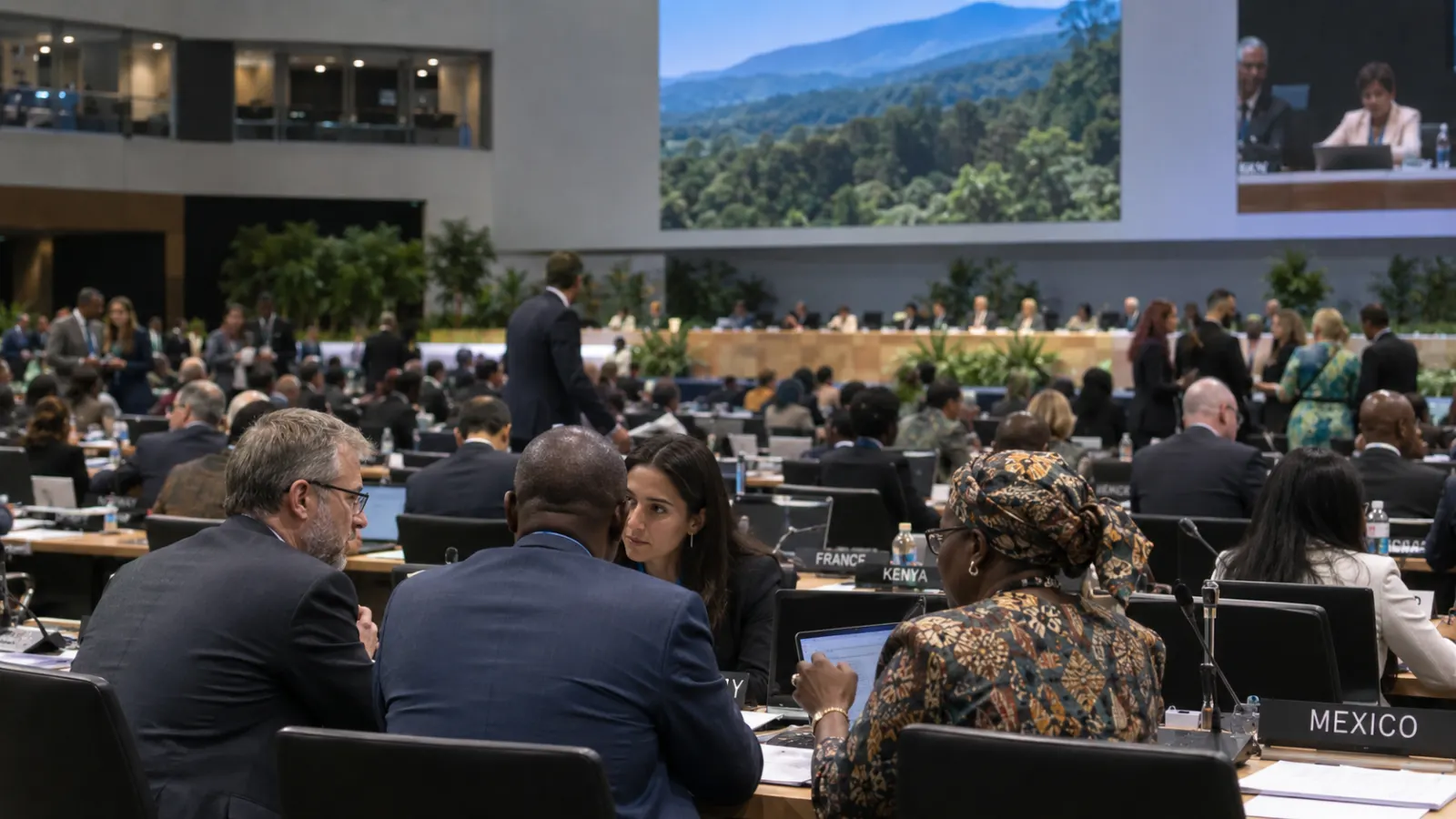
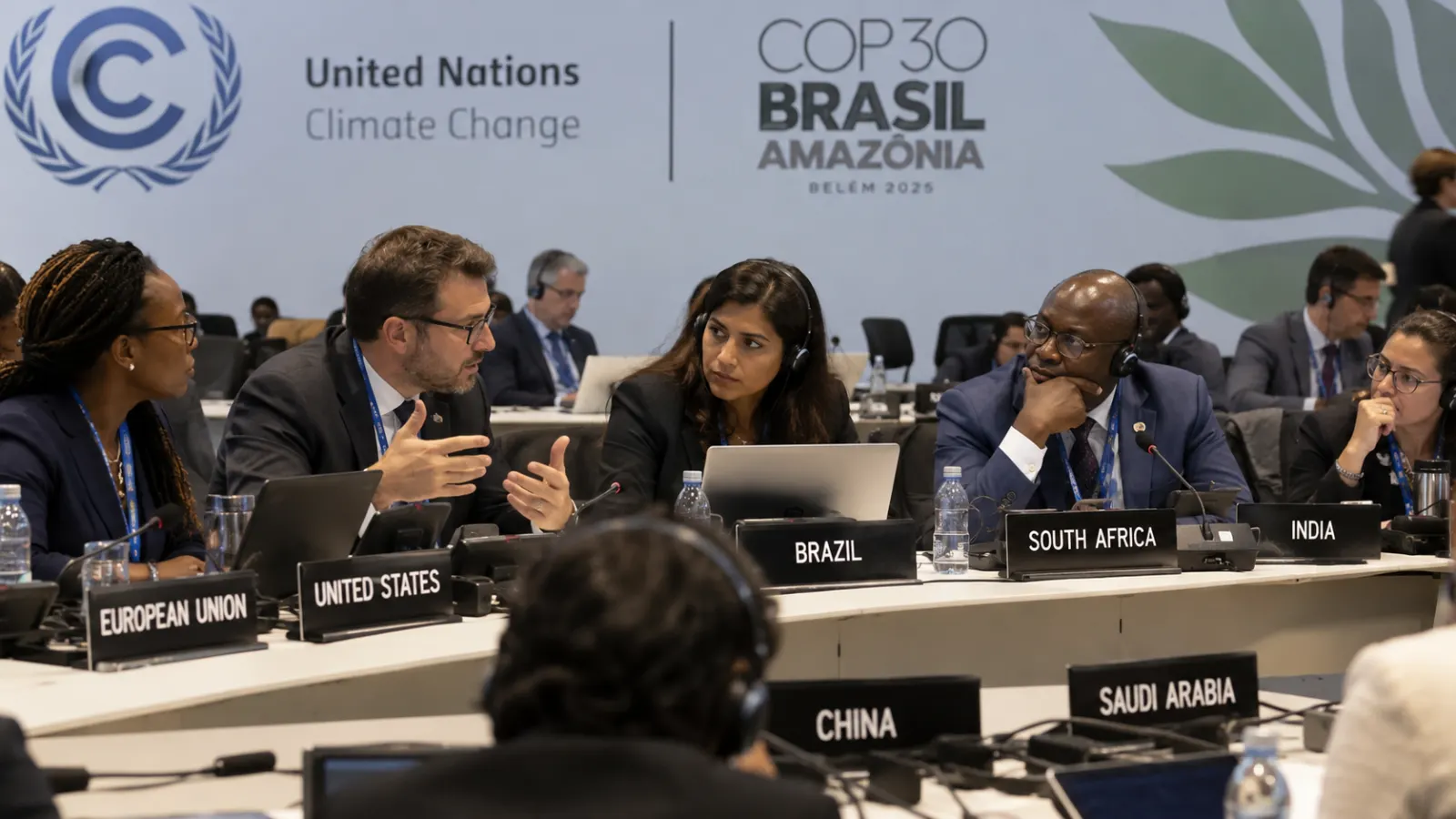
At COP29 in Baku, countries agreed to triple climate finance for developing countries from the previous goal of $100 billion per year to $300 billion annually by 2035. The agreement also called for efforts to scale up finance from all public and private sources to $1.3 trillion per year by 2035.
This was presented as a breakthrough, but many developing countries saw it as inadequate. The reason is not difficult to understand. A $300 billion annual goal by 2035 is far below what many developing countries argue is needed for mitigation, adaptation and loss and damage together. It is also delayed. Climate disasters are happening now, not only in 2035.
The gap becomes clearer when adaptation is considered. UNEP’s Adaptation Gap Report 2025 estimates developing-country adaptation finance needs at $310 billion per year by 2035 based on modelled costs, and $365 billion per year based on needs expressed in national plans. International public adaptation finance flows to developing countries were only $26 billion in 2023, down from $28 billion in 2022.
This is the central contradiction. The world is asking developing countries to become climate-resilient, but the money available for adaptation is only a fraction of the estimated need.
Adaptation Is the Most Neglected Part of Climate Action
Climate policy discussions often focus on mitigation: reducing emissions, building renewable energy, electrifying transport and phasing down fossil fuels. These are essential. But for the Global South, adaptation is equally urgent.
Adaptation means building flood defences, heat-resilient cities, drought-resistant agriculture, stronger early-warning systems, climate-resilient roads, water security systems, cyclone shelters, public health preparedness and disaster-resilient housing.
For rich countries, adaptation is expensive. For poor countries, it can be existential.
A small island state cannot treat sea-level rise as a future academic concern. A drought-prone African country cannot separate climate adaptation from food security. A South Asian country facing floods and heatwaves cannot treat climate resilience as an optional environmental project. Adaptation is development under climate stress.
Yet adaptation finance receives far less attention than mitigation finance. One reason is that adaptation projects often do not generate easy commercial returns. A solar park can produce revenue. A flood wall, public cooling centre or climate-resilient drainage system may save lives but not attract investors in the same way.
This is why public finance matters. Private capital cannot be expected to solve adaptation gaps alone.
Loss and Damage Changed the Moral Language
The creation of the Fund for responding to Loss and Damage marked a major victory for climate justice advocates. The fund was operationalised at COP28 to assist developing countries that are particularly vulnerable to the adverse effects of climate change.
The idea of loss and damage is politically powerful because it goes beyond mitigation and adaptation.
Mitigation asks: how do we reduce future emissions?
Adaptation asks: how do we live with climate impacts?
Loss and damage asks: who pays when impacts can no longer be adapted to?
This is the hardest question. When a community loses land to the sea, when a cyclone destroys homes, when drought kills livestock, when cultural heritage disappears, when people are displaced permanently, adaptation is no longer enough. There is loss. There is damage. There is injustice.
UNFCCC’s COP28 summary described the establishment of the fund, with commitments totalling $661 million at that stage, as an important symbol of global solidarity and international climate justice.
But symbolism is not the same as scale. Hundreds of millions of dollars are tiny compared with the scale of climate damage facing vulnerable countries. The Global South’s concern is that loss and damage may become another fund with noble language but insufficient money.
Historical Responsibility Cannot Be Ignored
Developed countries often argue that current emissions matter more than historical emissions because countries such as China and India now emit large amounts annually. There is some truth in this. The climate crisis cannot be solved without action from today’s major emitters.
But historical responsibility cannot be erased.
The climate system responds to cumulative emissions. The carbon already emitted by industrialised economies helped build their infrastructure, military strength, technology, transport systems, factories, wealth and living standards. Developing countries are now being asked to grow under a much tighter carbon constraint.
That is the justice problem.
A rich country that used fossil fuels freely for 150 years cannot tell a poor country to decarbonise without helping finance the transition. A country whose wealth was built under high-carbon industrialisation cannot impose green rules that block the industrialisation of others. A global system that allowed some countries to become rich through emissions must create space for others to develop differently.
This is why the principle of common but differentiated responsibilities and respective capabilities remains central to climate diplomacy. It recognises that all countries have responsibilities, but not the same responsibilities, because their historical contributions and capacities differ.
India has consistently emphasised this approach. During COP29, India argued that climate finance must be substantial, equitable and accessible, and that developed countries must meet long-pending commitments to provide financial resources to developing nations.
Climate Finance Must Not Become Debt
One of the Global South’s sharpest criticisms is that much climate finance comes as loans rather than grants.
This matters because many developing countries are already facing debt stress. If climate finance increases debt burdens, it does not solve climate injustice. It deepens it.
A flood-hit country borrowing to rebuild is not receiving justice. It is being forced to pay for survival. A small island state taking loans for sea walls is not being compensated. It is being pushed further into debt for a crisis it did little to create.
This is why the structure of finance matters as much as the headline number. $300 billion in climate finance is not the same if it comes mostly as concessional grants, expensive loans, private investment, guarantees or repackaged development assistance.
For the Global South, climate finance should meet five tests: it should be new, additional, predictable, accessible and largely concessional. Finance that is merely relabelled aid does not build trust. Finance that is too bureaucratic to access does not help vulnerable countries. Finance that arrives as debt does not create justice.
Green Trade Barriers Are Becoming a New Fear
Climate justice is also moving into trade policy.
Developing countries fear that green regulations in rich economies may become new trade barriers. Carbon border taxes, sustainability reporting rules, deforestation regulations and green product standards may have environmental logic, but they can also hurt exporters from poorer countries if introduced without finance, transition support and recognition of development differences.
This is especially important for sectors such as steel, cement, agriculture, textiles, chemicals and manufacturing. If developing countries face stricter green standards without access to affordable technology, their exports may become less competitive. The green transition could then reproduce old trade hierarchies.
The Global South’s argument is not that environmental standards should be abandoned. The argument is that they must not become disguised protectionism.
A fair green trade system would provide transition finance, technology support, capacity building, longer timelines for poorer countries, and space for industrialisation. A punitive green trade system would impose costs without support.
Climate justice therefore demands that decarbonisation should not become deindustrialisation for the Global South.
Energy Access Remains a Development Right
The Global South also argues that climate policy must respect energy access.
Millions of people still lack reliable electricity, clean cooking, affordable transport and modern energy services. For them, energy transition cannot mean energy denial. A poor household needs clean energy, but it also needs energy that is reliable and affordable. A developing economy needs renewable power, but it also needs grids, storage, industrial energy, transport systems and manufacturing capacity.
The International Energy Agency’s World Energy Outlook 2025 notes that energy market dynamics are increasingly shaped by emerging economies, led by India and Southeast Asia, and by countries in the Middle East, Africa and Latin America. The IEA also states that global energy investment is set to reach an all-time high, with around two-thirds going to clean energy technologies such as renewables, grids, battery storage and electric vehicles.
This shows the transition is happening, but it also raises a justice question: who will finance clean energy infrastructure in poorer countries?
Rich countries already built their grids, highways, ports, factories and cities during a fossil-fuel era. Developing countries must now build equivalent systems under climate constraints. That is possible, but only if finance and technology are available at scale.
Energy transition must be a pathway to development, not a barrier to it.
India’s Climate Justice Position
India’s climate diplomacy is built around a difficult balance.
On one side, India is one of the world’s major economies and current emitters. It cannot avoid responsibility for climate action. It has major renewable energy ambitions, solar expansion, green hydrogen plans, electric mobility goals and international initiatives such as the International Solar Alliance.
On the other side, India remains a developing country with large energy needs, industrialisation goals, urbanisation pressures, employment challenges and per capita emissions far below many developed economies. India argues that the global climate debate must distinguish between luxury emissions and survival emissions.
This is why India’s climate position combines action with equity.
India wants to expand clean energy, but it does not want the Global South to lose development space. It supports climate action, but insists that developed countries deliver finance and technology. It accepts that the world must move toward low-carbon growth, but argues that the transition must be just.
This position resonates with many developing countries because they face the same dilemma: how to grow without repeating the high-carbon path of the West, while not being punished for poverty.
The Global South’s Strongest Argument Against Hypocrisy
Climate justice is powerful because it exposes hypocrisy.
Rich countries ask developing countries to reduce emissions, but continue fossil fuel production when energy security is at stake. They promote free markets, but subsidise their green industries. They demand climate ambition, but delay finance. They speak of global responsibility, but protect domestic political interests first.
This does not mean developing countries are free from responsibility. It means the rules must be honest.
The Global South sees a world where rich countries used protectionism when they were industrialising, but now preach open markets. They used fossil fuels when they were growing, but now demand rapid decarbonisation. They built wealth first, and now ask others to sacrifice growth for global stability.
Climate justice turns this contradiction into diplomatic leverage.
It says: we will act, but not under unequal rules.
The Counter-View: Emerging Economies Must Also Do More
There is a serious counter-view. Developed countries argue that climate change cannot be solved by focusing only on historical emissions. Today’s large emerging economies also produce major emissions, and their future emissions will shape the climate outcome. If China, India, Brazil, Indonesia, South Africa and others do not decarbonise, the world cannot meet its climate goals.
This argument is valid.
Climate justice cannot become a shield against all responsibility. A developing country cannot say forever that history excuses present inaction. Large emerging economies must invest in clean energy, reduce pollution, protect forests, improve energy efficiency, build climate-resilient infrastructure and avoid locking themselves into high-carbon systems.
But this counter-view does not weaken climate justice. It makes it more precise.
The real principle should be differentiated acceleration. All countries must act, but richer and historically higher-emitting countries must move faster and support others. Emerging economies must decarbonise, but they need finance, technology and policy space. Poorer countries must adapt, but they need grants and concessional support. Small island states must survive, but they need loss and damage finance.
Responsibility must be shared, but not equalised falsely.
Climate Justice Is Also Domestic Justice
The Global South must also look inward.
Climate justice is not only a demand made to rich countries. It must also apply within developing countries.
In many countries, the poorest communities suffer the worst climate impacts. Urban elites have air conditioning, insurance, savings and mobility. Rural poor, informal workers, coastal communities, tribal communities, small farmers and slum dwellers face greater vulnerability. If climate policy ignores them, injustice continues domestically.
A just transition must protect workers in fossil-fuel sectors. It must support farmers affected by climate stress. It must ensure that green infrastructure does not displace vulnerable communities without compensation. It must make clean energy affordable, not only profitable. It must ensure that adaptation funds reach local communities rather than being captured by elites.
Developing countries cannot demand justice globally while allowing injustice internally.
Climate justice must travel from international negotiations to local governance.
Why Climate Justice Is Becoming Geopolitical
Climate justice is now reshaping geopolitics.
Countries are forming coalitions around climate finance, critical minerals, green hydrogen, solar supply chains, carbon markets, adaptation, loss and damage, and resilient infrastructure. Climate policy is influencing trade agreements, industrial policy, diplomacy and security planning.
For the Global South, this creates both risk and opportunity.
The risk is a new green dependency. Developing countries may supply critical minerals while richer countries capture manufacturing and technology value. They may host renewable projects without building domestic industry. They may accept carbon markets that serve foreign offsets more than local development. They may borrow for climate infrastructure while creditors profit.
The opportunity is different: climate transition could become a path to new industrialisation. Countries with solar potential, critical minerals, green hydrogen capacity, biodiversity assets and young workforces can build new industries if they secure technology, finance and value addition.
Climate justice therefore must move beyond compensation. It must demand structural transformation.
What a Fair Climate Order Should Look Like
A fair climate order should include five elements.
First, developed countries must deliver climate finance at scale, with clear responsibility and predictable flows. The $300 billion by 2035 goal is not enough unless it becomes a floor, not a ceiling.
Second, adaptation finance must increase sharply. Countries already facing climate impacts cannot wait for mitigation benefits decades later.
Third, loss and damage finance must become real, accessible and adequately funded. Vulnerable countries need support for irreversible harms, not only future resilience.
Fourth, technology transfer must become practical. Clean energy, storage, green hydrogen, resilient agriculture, early-warning systems, water technology and climate data tools should be affordable and accessible.
Fifth, green trade rules must be fair. Climate standards should not become protectionist barriers against developing-country exports.
These reforms are not charity. They are the minimum price of a stable climate order.
The Real Lesson
Climate justice has become the Global South’s strongest argument because it is difficult to dismiss.
It is rooted in history. It is supported by economics. It is visible in disasters. It is morally clear. It exposes the gap between climate promises and climate finance. It shows that the climate crisis is not only about emissions, but about power.
The Global South is not saying climate action should wait. It is saying climate action must be fair.
Poor countries cannot be asked to choose between development and survival. Climate-vulnerable countries cannot be asked to borrow endlessly for damage they did not create. Emerging economies cannot be asked to decarbonise without technology and finance. Small island states cannot be asked to negotiate patiently while their land disappears.
The world needs climate action. But if climate action is built on inequality, it will fail politically even if it is scientifically necessary.
Climate justice is therefore not a slogan. It is the foundation of any climate deal that can last.
The Global South’s message is simple: save the planet, but do not sacrifice the poor to do it.