Fibre and Gut Health: What Happens After Fibre Reaches the Intestine
Most nutrients become less visible as digestion proceeds. Fibre is interesting partly because much of it survives the early stages of that process.
Dietary fibre includes carbohydrate components that resist digestion and absorption in the small intestine. Some travel onwards largely intact; others become substrates for microorganisms living in the large intestine.
This gives fibre two related but distinct roles: it can influence the physical behaviour of material moving through the bowel, and some fibres can alter microbial metabolism.
That is why “fibre is good for digestion” is true but incomplete.
Fibre is not one substance
Calling fibre a single nutrient can be misleading. Fibre encompasses structurally and functionally different compounds.
You will often hear fibre divided into soluble and insoluble categories. That distinction is useful, but modern fibre science also considers properties such as viscosity, fermentability and water-holding capacity.
Some fibres absorb water and contribute to stool consistency. Some increase bulk. Some are readily fermented by intestinal microorganisms. Others are fermented much less.
The effect therefore depends partly on the particular fibre and food source rather than merely the number of grams printed on a label.
Why fibre helps bowel function
One of fibre’s most familiar roles is supporting normal bowel function.
Fibre can increase stool bulk and, depending on its physical properties, help retain water. This can make stool easier to pass. NHS guidance therefore recommends fibre-rich foods as an important part of preventing constipation.
But abruptly adding large quantities can also cause bloating or gas in some people. Increasing intake gradually and maintaining adequate fluid intake is often more comfortable than changing from a very-low-fibre diet to a high-fibre diet overnight. Clinical trials of fibre interventions have similarly reported that gastrointestinal responses can differ by fibre type and individual.
The microbiome changes the story
The colon contains a large microbial ecosystem. Human digestive enzymes cannot break down all the carbohydrates that reach it, but microbial enzymes can process some of them.
When particular fibres are fermented, microorganisms produce metabolites including short-chain fatty acids, commonly acetate, propionate and butyrate.
This is one reason fibre has become central to microbiome research: the relationship is not simply “eat bacteria.” It is also about supplying substrates that particular microbial communities can use.
Experimental and human research shows that changing fibre intake can alter microbial composition and metabolism, although responses are not identical between individuals.
Does more fibre automatically mean a “better microbiome”?
That claim goes further than current evidence permits.
The gut microbiome varies substantially among healthy individuals. Researchers do not have one simple universal microbial profile that everyone should attempt to reproduce.
Different fibres can also favour different microbial populations.
A 2025 randomised controlled trial examining fibre supplementation found changes in gut microbiota and bowel-related outcomes, while other interventions have shown fibre-specific microbial responses. This supports the idea that fibre affects the microbiome, but it does not justify promising that one powder will “reset,” “cleanse” or permanently optimise the gut.
Fibre from foods versus isolated fibre
Supplements such as psyllium can be useful in particular situations, and individual fibres have evidence for specific effects.
But a high-fibre food often supplies more than isolated fibre. Beans provide protein and micronutrients; oats supply nutrients alongside beta-glucans; vegetables and fruit contribute vitamins and plant compounds; nuts and seeds provide fats, minerals and other components.
WHO therefore frames fibre recommendations around naturally occurring dietary fibre from foods and recommends that carbohydrate intake come primarily from whole grains, vegetables, fruits and pulses.
How much fibre?
International recommendations are not numerically identical because authorities use different evidence frameworks and definitions.
WHO’s current guidance recommends that people older than 10 years aim for at least 25 g of naturally occurring dietary fibre per day.
UK guidance sets a population recommendation of 30 g per day for adults. Recent national survey data show that most people surveyed in the UK still failed to meet the recommendation.
The important editorial point is therefore not to present 25 g and 30 g as contradictory “correct” and “incorrect” numbers. They come from different public-health frameworks.
Where to get it
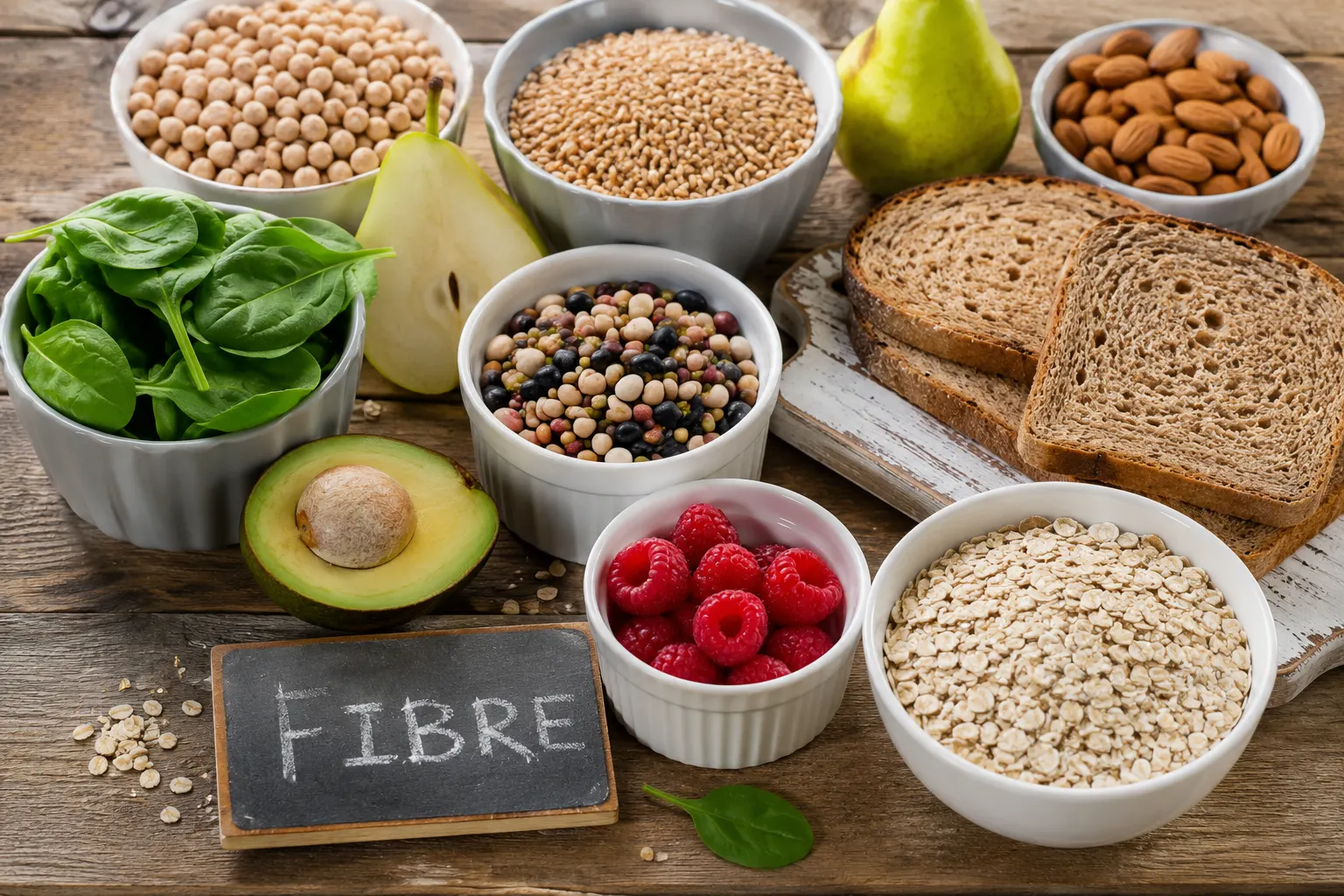
Fibre-rich foods include:
Beans, lentils, chickpeas and other pulses.
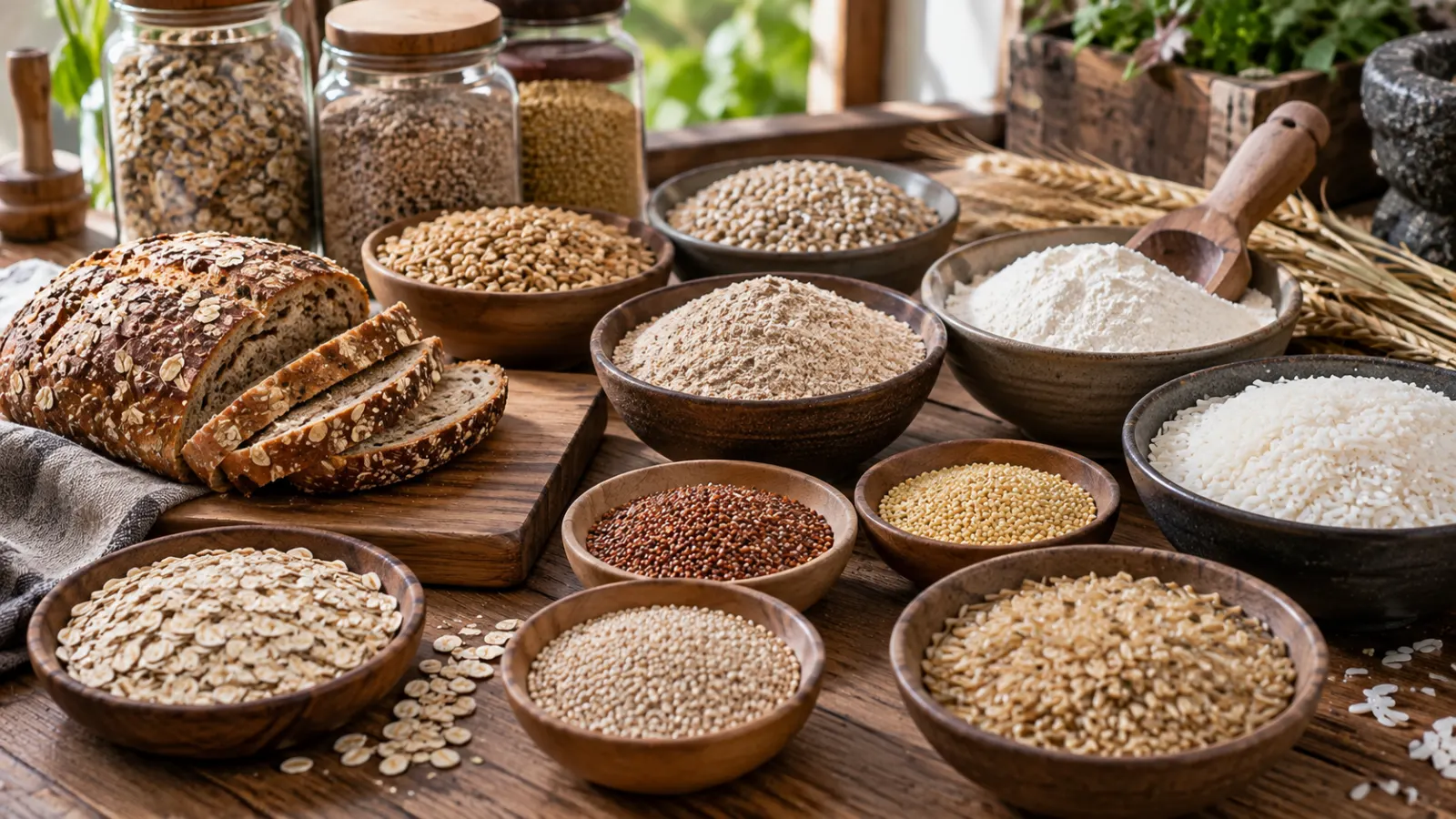
Oats, barley and other whole grains.
Vegetables.
Fruit.
Nuts.
Seeds.
Variety matters because these foods supply different fibre structures and other nutrients.
WHO’s broader recommendation is for carbohydrates to come predominantly from whole grains, vegetables, fruits and pulses rather than heavily refined sources.
What about prebiotics?
A prebiotic is not simply another word for fibre.
Certain substrates are selectively used by host microorganisms in ways associated with a health benefit; some fibres qualify as prebiotics, but not all dietary fibre should be casually relabelled that way.
Likewise, probiotics are live microorganisms intended to confer health benefits and are a different concept altogether.
This distinction matters because the commercial language of “gut health” often collapses fibre, fermented foods, probiotics and prebiotics into one category even though the underlying science differs.
NCCIH notes that probiotics have evidence for some specific uses but that substantial questions remain about their effectiveness and safety for many conditions.
Fibre is bigger than the microbiome
The current fascination with gut bacteria can make fibre sound as though its only purpose is feeding microorganisms.
It is not.
Higher-fibre dietary patterns have long been investigated in relation to bowel function and chronic disease. UK guidance notes associations between fibre-rich diets and lower risks of heart disease, stroke, type 2 diabetes and bowel cancer.
These outcomes do not prove that every effect is caused by the microbiome. Fibre-rich foods also differ from low-fibre foods in many other respects.
That distinction is essential when translating microbiome science for the public.
The practical conclusion
For most healthy adults, improving fibre intake does not require buying a microbiome test or an expensive “gut-health” product.
A more evidence-based starting point is ordinary food: more pulses, whole grains, vegetables, fruit, nuts and seeds, introduced gradually if current fibre intake is low.
Fibre then does what fibre has always done - affecting stool, transit, digestion and microbial metabolism simultaneously.
The microbiome has made that story more scientifically interesting. It has not made good nutrition mysterious.
Medical note: People with bowel obstruction, active inflammatory gastrointestinal disease, severe digestive symptoms or medical conditions requiring fibre restriction should obtain individual clinical advice rather than deliberately increasing fibre intake.