“Endangered” is both an ordinary word and a technical category
In everyday language, an endangered species is simply one that seems likely to disappear. Conservation science needs a more consistent system. The IUCN Red List of Threatened Species classifies extinction risk using standard categories and quantitative criteria so that species can be compared across regions and taxonomic groups. Under that system, Endangered is a specific category - more severe than Vulnerable but less severe than Critically Endangered.
The IUCN Red List is an extinction-risk assessment
The Red List is not a global law and does not itself ban hunting, trade or development. It is a scientific assessment system. Species are evaluated using evidence about population size and trend, geographic range, fragmentation, restriction and, where available, quantitative estimates of extinction probability. Governments, conservation organisations, researchers and planners then use those assessments to guide priorities and decisions.
The main categories
The global Red List categories run from Extinct and Extinct in the Wild through Critically Endangered, Endangered, Vulnerable, Near Threatened and Least Concern, with Data Deficient and Not Evaluated used when assessment status differs. IUCN collectively refers to species classified as Vulnerable, Endangered or Critically Endangered as “threatened”. The categories are intended to represent increasing proximity to extinction rather than moral importance or popularity.
Why population decline matters
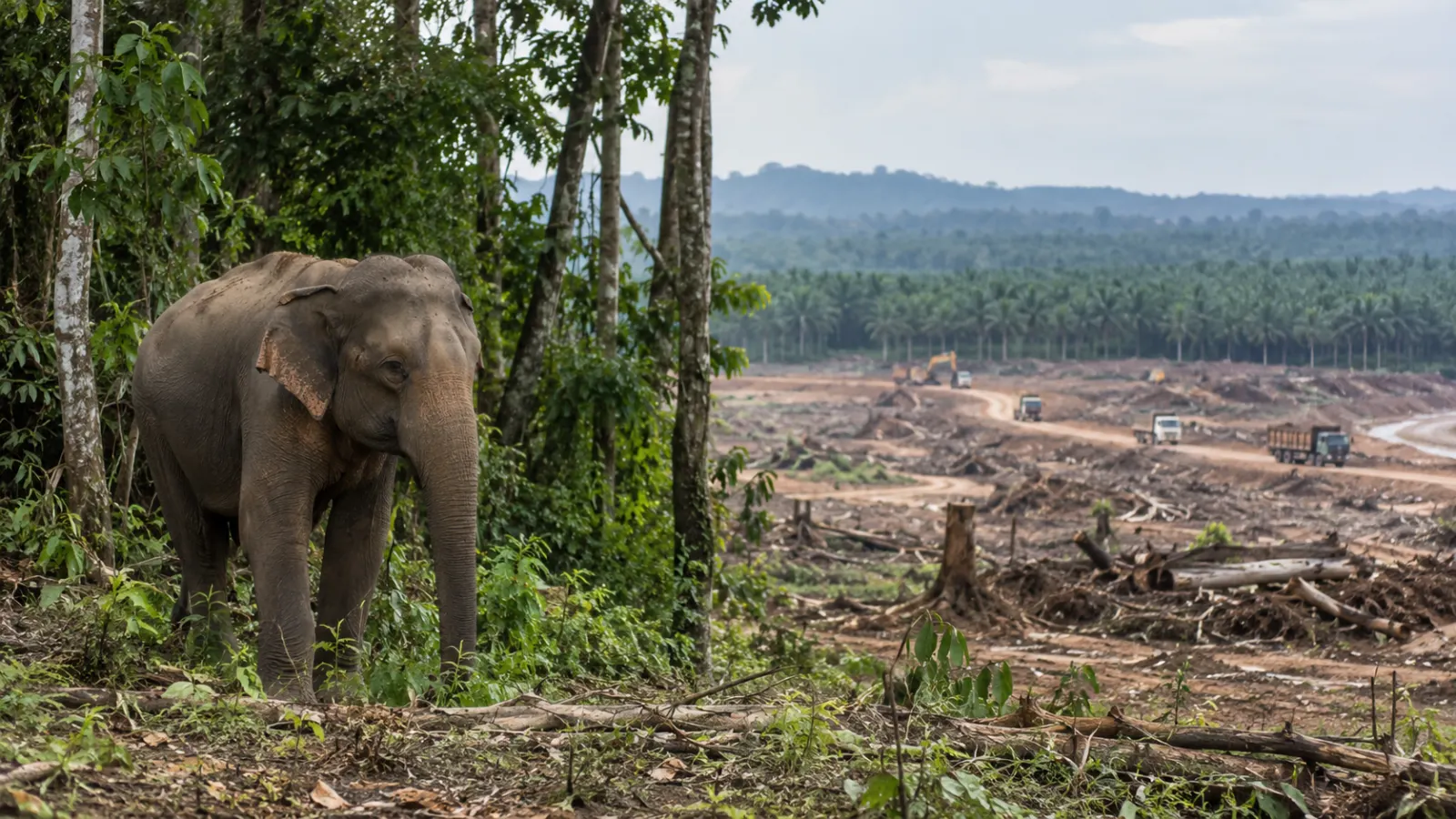
A species can be endangered even if many individuals remain. What matters is the trajectory as well as the count. A once-abundant species that has undergone a very rapid decline across much of its range may face high extinction risk even before its total population becomes tiny. Conversely, a naturally uncommon species may remain relatively secure if its population and habitat are stable. This is why conservation status cannot be inferred from a single population number without context.
Geographic range can create vulnerability
A species restricted to one island, valley, lake or mountain system can face high risk even if its local population is not collapsing. A single cyclone, wildfire, disease outbreak, pollution event or invasive predator could affect most of the global population at once. IUCN criteria therefore consider both the extent of a species' overall geographic range and the area it actually occupies, together with fragmentation, decline and extreme fluctuations.
Very small populations carry their own risk
Small populations are vulnerable to random demographic events, loss of genetic variation and local catastrophes. The IUCN criteria include pathways for species with very small or restricted populations even when long-term trend data are limited. Quantitative population-viability analyses can also be used where adequate data exist to estimate the probability of extinction over a specified time horizon.
Data Deficient does not mean safe
One of the most misunderstood categories is Data Deficient. It does not mean the species is doing well. It means the available evidence is insufficient to make a reliable assessment against the criteria. A poorly known deep-sea organism, insect or rare plant could eventually prove secure or highly threatened. Treating Data Deficient species as if they were Least Concern can therefore hide genuine risk.
How many species are currently threatened?
The Red List is continuously updated, so any total needs a version and date. In IUCN Red List version 2026-1, more than 49,500 assessed species were listed as threatened with extinction. IUCN reports that this represents about 28% of assessed species, but it repeatedly warns against treating that figure as the proportion of all species on Earth because many taxonomic groups are still incompletely assessed and assessment effort is uneven.
Threat levels differ greatly among groups
For groups that have been comprehensively assessed, the Red List shows very different levels of risk. IUCN's 2026-1 summary estimates that about 41% of amphibians, 26% of mammals and roughly 11.5% of birds are threatened, while cycads and reef-forming corals show much higher proportions. These comparisons are useful because the groups are relatively well assessed; they should not be extrapolated mechanically to all life.
IUCN status and legal protection are not the same
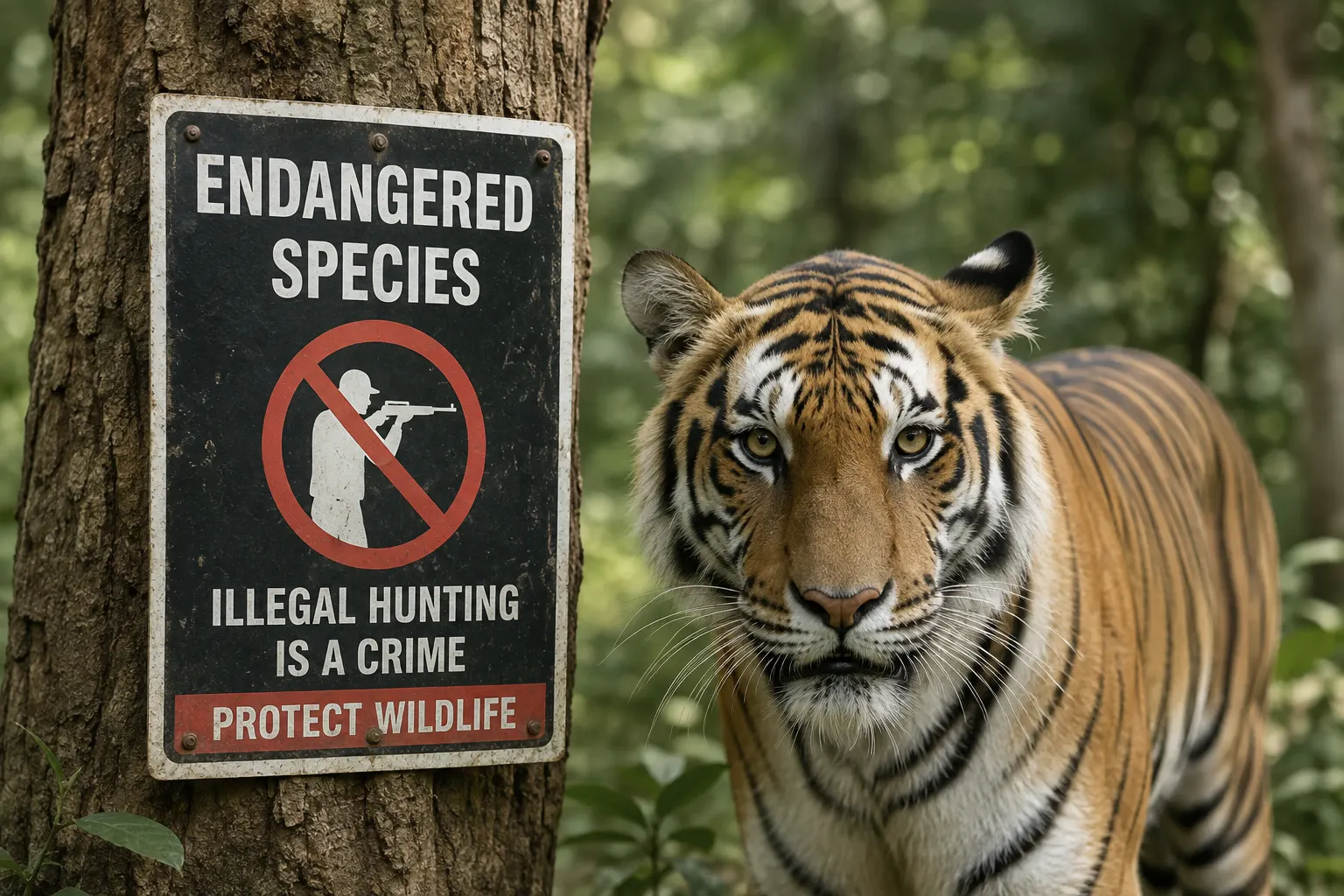
A species can be Endangered on the IUCN Red List without being legally listed as endangered in every country where it occurs. National legislation uses its own statutory definitions and decision processes. In the United States, for example, the Endangered Species Act defines an endangered species as one in danger of extinction throughout all or a significant portion of its range, while “threatened” has a separate legal meaning. State laws may add further categories. Scientific assessment and legal designation therefore overlap but are not interchangeable.
Why statuses can change
A species can move between Red List categories for several reasons. Its genuine condition may improve or deteriorate; new surveys may reveal a larger or smaller population; taxonomic knowledge may change; or a revised assessment may use better information. IUCN maintains records of the reasons for category changes so that genuine biological trends can be distinguished from changes caused by improved knowledge or methodology.
A higher-risk category is not a prediction of inevitable extinction
Critically Endangered does not mean doomed, and Endangered does not mean a species will certainly disappear. The categories represent risk under specified criteria. Conservation can change that risk. Habitat protection, removal of invasive predators, hunting controls, captive breeding, disease management or restoration can stabilise and sometimes recover populations. A species moving to a lower-risk category because of genuine improvement is evidence that the assessment system can track recovery as well as decline.
Why the label matters
A credible risk category turns a vague warning into something that can be monitored. It helps identify which species are declining fastest, which threats are most important and where conservation resources may have the greatest effect. But the label is only the beginning. Effective conservation still requires understanding why the species is in trouble, what habitat and ecological relationships it needs, and whether interventions address the causes rather than merely the symptoms.
The five IUCN criteria in plain language
The IUCN system contains five main routes by which a species can qualify for a threatened category. Criterion A asks whether the population has declined substantially. Criterion B examines a restricted geographic range combined with fragmentation, decline or extreme fluctuation. Criterion C concerns small population size together with continuing decline. Criterion D focuses on very small or very restricted populations. Criterion E uses quantitative analysis to estimate extinction probability. A species needs to meet only one criterion at the relevant threshold to qualify, though assessors evaluate all applicable evidence. This design allows very different biological warning signs to be translated into a common risk framework.
Assessment is evidence-based but not uncertainty-free
Red List assessments depend on the best available information, and that information varies dramatically among species. Well-studied mammals or birds may have decades of population surveys; obscure fungi, insects or deep-sea organisms may be known from few records. Assessors document assumptions, data quality, trends, threats and uncertainty, and assessments are reviewed before publication. The system is rigorous, but it does not eliminate imperfect knowledge. That is why category changes sometimes reflect new information rather than a real biological improvement or deterioration. Good interpretation asks not only what category a species occupies, but how strong the underlying evidence is.
Why “rare” and “endangered” are not synonyms
Rarity is a biological characteristic; endangered status is a judgement about extinction risk. Some species have always occupied small ranges or existed at low density yet persisted for long periods because their habitats were stable and threats were limited. Others were once extremely common but became endangered after rapid decline. Conservation therefore avoids assuming that every rare organism is endangered or that every abundant organism is secure. A widespread species can move quickly toward danger if its population collapses across a large range, while a naturally restricted species may remain stable until a new threat suddenly changes its risk.
How Red List information is used
Governments and conservation organisations use Red List assessments to identify priorities, design protected areas, evaluate development impacts, plan species recovery and track biodiversity trends. Researchers also aggregate genuine category changes into the Red List Index, an indicator designed to show whether overall extinction risk is improving or worsening within assessed groups. The Red List is therefore more than a catalogue of rare species. It is an infrastructure for translating scattered biological evidence into comparable information, while still leaving policy choices to governments and institutions rather than pretending that one scientific category automatically dictates one legal response.
Endangered is a risk diagnosis
The most useful way to think about “Endangered” is as a diagnosis of extinction risk, not a description of how rare or charismatic an organism appears. The diagnosis combines evidence about decline, range, population size and future probability. It can inform law and policy, but it is not identical to them. And because risk can increase or decrease, conservation status is not a permanent identity. It is a scientific judgement about a species' current position on the path between persistence and extinction.