Sovereignty in the age of manipulation
Sovereignty once meant control over borders, armies, currencies and law. In the digital age, it also means control over the integrity of public choice. A state can protect its territory and still find its political will distorted by foreign money, covert influence operations, hacked data, deepfakes, bot networks, targeted propaganda and algorithmic amplification. Election interference has become a new threat to sovereignty because it attacks the point where citizens convert opinion into authority.
The danger is not limited to one ideology or one great power. Russia, China, Iran, private consultants, diaspora networks, criminal groups and domestic actors using foreign infrastructure can all shape information environments. The methods vary: disinformation, cyber intrusions, illegal financing, fake local media sites, influence through religious or ethnic networks, and AI-generated audio or video designed to create last-minute confusion. The battlefield is the voter's mind, and the weapon is plausible doubt.
Why the threat has grown
Election interference has grown because the cost of manipulation has fallen. A state once needed expensive broadcast networks or covert political funding to shape opinion abroad. Today, a small team can generate thousands of messages, imitate local voices, target emotional fault lines and use AI to create realistic but false content. The speed of circulation defeats traditional fact-checking. By the time an election commission, platform or court responds, the damage may already be done.
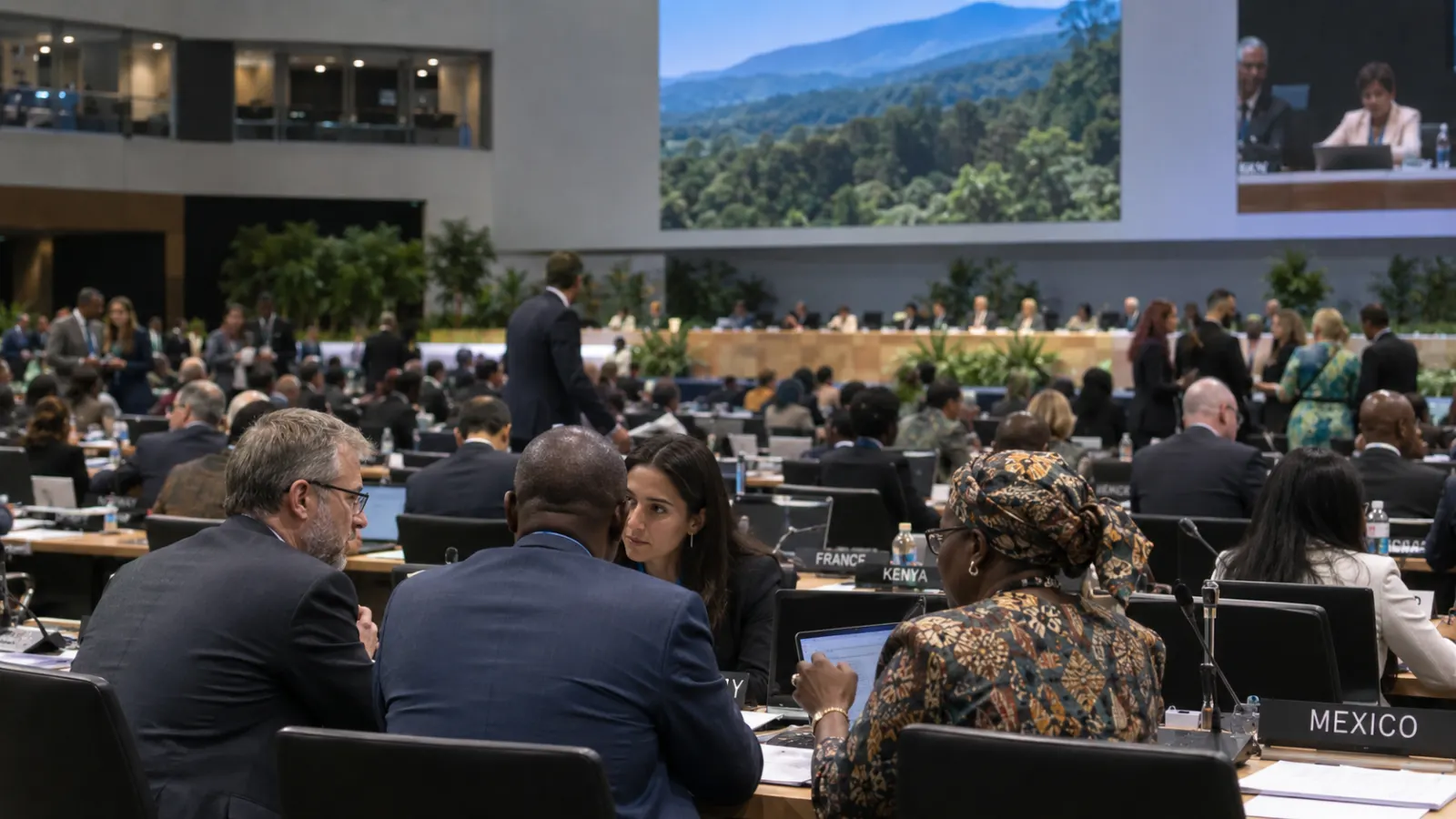
The 2024 global election cycle made this risk more visible. Many countries faced high-stakes elections amid polarisation, distrust of institutions and rapid advances in generative AI. Freedom House warned before that cycle that digital threats could loom over elections. Since then, governments have begun treating foreign interference not as a public relations problem but as a constitutional and national-security issue. Mexico's 2026 move to add foreign interference as a possible ground for annulling elections shows how legal systems are beginning to adapt, even as they risk overreach if definitions are too broad.
Old interference, new tools
Foreign interference is not new. States have long funded parties, backed coups, spread propaganda and influenced media abroad. What is new is the combination of speed, scale and deniability. Digital platforms allow interference to be micro-targeted and laundered through apparently domestic voices. Hack-and-leak operations can turn stolen information into political drama. Deepfakes can exploit the silence period before voting. AI translation can make foreign propaganda sound local. The modern interference operation often does not need to persuade voters of one truth; it only needs to convince them that no truth is reliable.
This is why election interference is more than misinformation. It is institutional sabotage. It weakens trust in election bodies, courts, media and political parties. It makes losers less willing to accept defeat and winners less able to claim legitimacy. A democracy can survive fierce disagreement; it struggles when citizens stop believing the rules were fair.
The legal dilemma
The legal challenge is difficult because democracies must protect elections without criminalising ordinary speech. Foreign journalists, international observers, diaspora communities and human-rights groups all comment on elections. If the definition of interference becomes too broad, governments can use it to silence criticism by labelling dissent as foreign influence. If the definition is too narrow, covert manipulation escapes regulation.
A useful approach distinguishes between open persuasion and covert manipulation. It is legitimate for outsiders to express opinions. It is illegitimate to secretly fund campaigns, hack political actors, impersonate domestic citizens, use bots deceptively, spread forged materials or coordinate with candidates in violation of law. The focus should be on transparency, provenance and accountability rather than censorship of unpopular viewpoints.
India angle: scale, diversity and digital vulnerability
India has special exposure because of the scale of its elections, the intensity of its political debate and the linguistic diversity of its information ecosystem. A national election in India is not one conversation; it is hundreds of overlapping conversations across regions, castes, religions, languages and platforms. This makes democratic participation rich, but it also makes monitoring difficult. Manipulation in a local language or regional context can escape national attention while still affecting outcomes.
India also has strategic reasons to treat election integrity as national security. Foreign adversaries may seek to inflame communal tensions, shape debates on defence partnerships, influence border narratives, target diaspora-linked issues or undermine trust in institutions. But India's response must be carefully designed. Heavy-handed regulation can damage free expression. The better route is layered resilience: platform transparency, campaign-finance scrutiny, cyber protection for parties, rapid deepfake authentication, public media literacy, stronger data-protection rules and clear election-commission protocols.
Global implications
Election interference will increasingly shape diplomacy. States accused of manipulation may face sanctions, cyber retaliation or diplomatic expulsions. Alliances may build shared threat-intelligence systems. Technology companies will be pressured to disclose political ad buyers, label synthetic media and preserve evidence. International law may gradually develop norms against covert electoral manipulation, though enforcement will remain difficult.
The Global South has a particular stake. Many developing democracies have young institutions, high social-media penetration and limited regulatory capacity. If electoral systems become vulnerable to external manipulation, sovereignty will be weakened without a single soldier crossing a border. This is why election integrity must be treated as part of digital sovereignty, not merely domestic administration.
Counter-view: the danger of exaggeration
There is a real counter-view: governments may exaggerate foreign interference to avoid accountability for domestic failures. Polarisation, corruption, inequality and weak parties are often home-grown problems. Blaming outsiders can become a convenient escape. It can also feed nationalist paranoia and justify restrictions on NGOs, media and opposition voices.
This warning is valid. Foreign interference should never become a universal explanation for democratic dysfunction. But the risk of misuse does not make the threat imaginary. The answer is evidentiary discipline. Governments should publish evidence where possible, subject emergency measures to judicial oversight and ensure that anti-interference laws protect democratic competition rather than incumbents.
What happens next
The next frontier will be authentication. Democracies will need systems that can quickly verify whether a video, voice note, document leak or campaign account is genuine. They will also need pre-election agreements between parties not to use hacked or synthetic materials. Platforms will face pressure to retain data for investigations. Election bodies will require technical teams, not just administrative staff.
Election interference is a threat to sovereignty because it colonises choice before power is formally transferred. In the twenty-first century, defending democracy means defending the invisible infrastructure of trust that allows citizens to believe that their vote is their own.
How interference actually works
The most effective interference does not always look foreign. It hides inside domestic grievances. It amplifies existing anger rather than inventing new anger. It pushes communities toward suspicion, frames institutions as captured and turns every correction into alleged censorship. The aim is often not to elect a particular candidate but to weaken the legitimacy of whoever wins.
A second method is time compression. False claims are released close to polling day, when verification is slow and emotion is high. Deepfake audio, forged documents or fake exit polls can create temporary confusion. Even if debunked later, they may influence turnout, trigger violence or provide losers with a narrative of fraud.
Institutional safeguards
Election commissions need permanent cyber and information-integrity units, not temporary election-season teams. Political parties need basic cybersecurity standards. Candidates need rapid channels to report forged content. Courts need fast procedures for urgent election-related digital disputes. Platforms need local-language capacity, transparent archives of political advertising and clear rules on synthetic media.
Public resilience is equally important. Citizens should be taught to question sensational last-minute claims, verify source origins and understand how manipulation works. Media literacy cannot be a one-week campaign; it must become part of democratic education. The strongest defence against interference is a public that refuses to outsource judgement to outrage.
India-specific vulnerabilities and strengths
India's strengths are significant: a deeply rooted election culture, experienced election machinery, competitive media, active courts and high public participation. But its vulnerabilities are also large: encrypted messaging networks, linguistic fragmentation, communal fault lines, political polarisation and massive data-driven campaigning. A false message in one district can spread fast enough to matter before national media notices it.
The Indian response should be transparent because secrecy can itself damage trust. When agencies detect foreign manipulation, they should disclose as much evidence as national security allows. Anti-interference rules should apply to all parties equally. The goal should be to protect voters, not to protect incumbents from criticism.
Editorial judgement
Election interference is dangerous because it makes sovereignty psychological. A captured territory is visible; a manipulated electorate is not. A state may still fly its flag, hold elections and count votes while its public sphere is quietly polluted by foreign or covert influence.
The democratic answer cannot be censorship disguised as security. It must be transparency, institutional speed and civic intelligence. The vote is sovereign only when the voter is not unknowingly engineered.
The sovereignty paradox
The paradox of election interference is that open societies are more vulnerable precisely because they are open. Free media, competitive politics, protest rights and digital debate create entry points for manipulation. Authoritarian states can restrict information more easily, but at the cost of freedom. Democracies must therefore defend themselves without becoming the closed systems they oppose.
This balance is hard. Every anti-interference law must be tested against a simple question: does it protect the voter or protect the ruler? Rules that expose covert foreign funding and synthetic media strengthen democracy. Rules that criminalise criticism weaken it.
Campaign finance and foreign money
Foreign interference is not only digital. Money remains a classic route of influence. Donations through shell organisations, consultancy payments, think-tank networks, issue campaigns and advertising intermediaries can shape politics without clear disclosure. Democracies need transparent beneficial ownership rules, real-time campaign-finance reporting and penalties that are strong enough to deter covert funding.
The challenge is especially serious where political finance is already opaque. Foreign money enters most easily where domestic money is hidden. Cleaning election finance is therefore a national-security reform as much as a democratic reform.
Platforms as political infrastructure
Social-media platforms are no longer neutral communication spaces. During elections, they function as political infrastructure. Their algorithms decide visibility, their moderation teams shape debate, their ad systems distribute persuasion and their data systems allow targeting. Yet they are often governed by private policies rather than democratic accountability.
States should require transparency without taking direct control over content. Independent audits, public ad libraries, researcher access, synthetic-media labelling and election-period response protocols can help. Platform governance must be open enough to avoid censorship and strong enough to prevent manipulation.
Final editorial line
A foreign power does not need to change every vote to damage sovereignty. It only needs to make citizens doubt whether their collective decision was real. Protecting elections now means protecting trust before, during and after polling day.