A subsidy is one of the most familiar but least understood instruments of economic policy. Everyone has an opinion on it. Farmers may see subsidies as survival support. Consumers may see them as price relief. Economists may see them as incentives or distortions. Governments may see them as welfare, politics, stabilisation or industrial policy. Taxpayers may see them as a burden.
All these views can be partly correct.
In simple terms, a subsidy is financial support given by the government to reduce the cost of a good, service, input, activity or sector. It may be paid directly to consumers, producers or service providers. It may appear as a lower price, a cash transfer, interest support, tax concession, free service, guaranteed purchase, cheap credit, compensation or budgetary support.
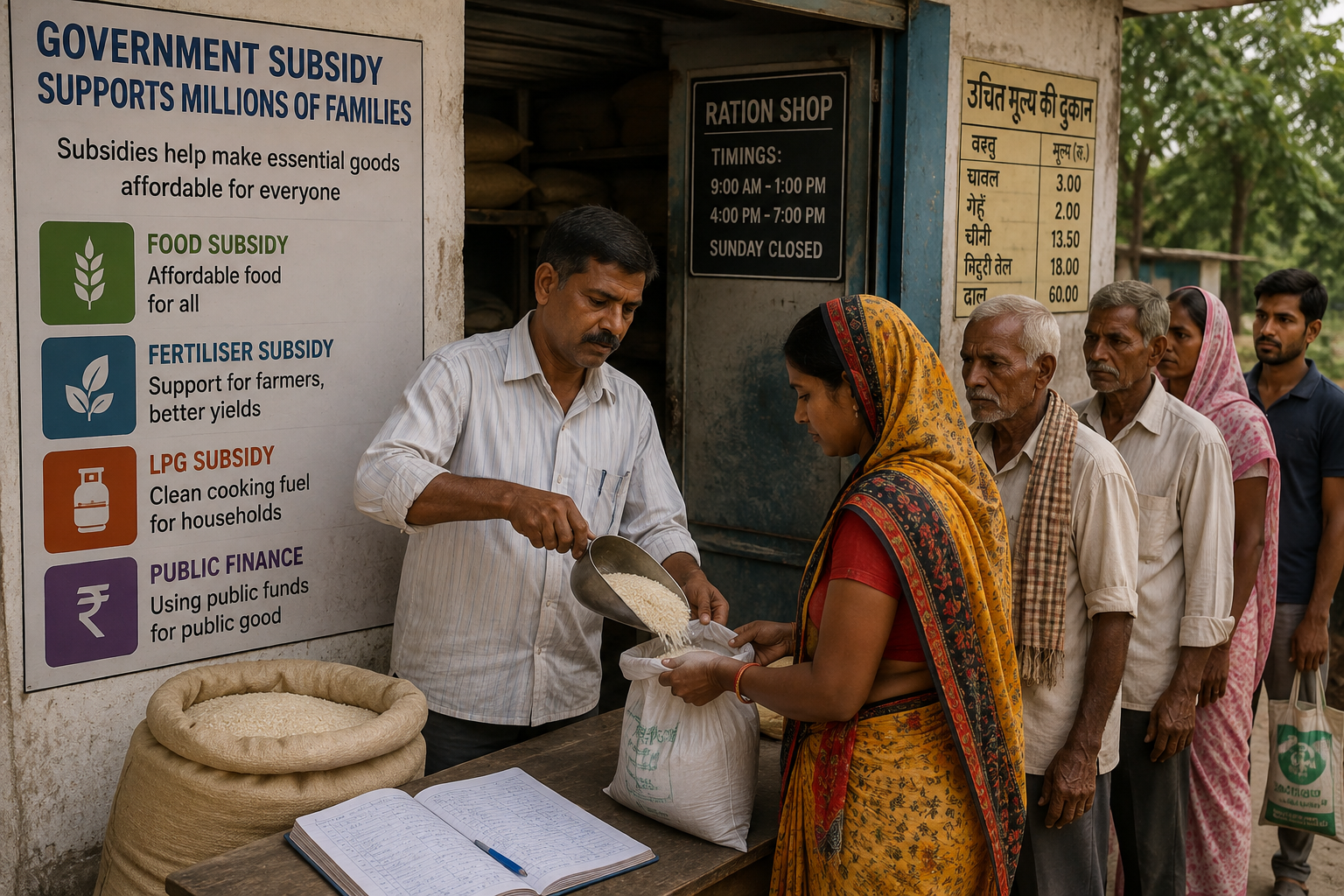
The purpose is usually to make something more affordable, encourage its use, protect a group, stabilise prices, support production, correct market failure or achieve a social objective. Food subsidies make essential grain affordable. Fertiliser subsidies reduce input costs for farmers. LPG support can help households access cleaner cooking fuel. Education and health subsidies expand human capital. Renewable-energy subsidies encourage transition. Industrial subsidies can build strategic sectors.
The basic economic logic is straightforward. Markets allocate resources based on purchasing power and prices. But market outcomes are not always socially desirable. A poor household may need food but lack income. A farmer may need fertiliser but face volatile input costs. A student may benefit from education but be unable to pay full fees. A new technology may have long-term social benefits but high early costs. A subsidy intervenes to change the effective price or income position.
Subsidies are therefore not automatically bad. Without them, many essential goods and services would remain inaccessible to low-income citizens. In a country with large poverty, rural distress and uneven public infrastructure, some subsidies can protect basic welfare and social stability. The question is not whether subsidies should exist. The question is whether they are justified, affordable, targeted, transparent and effective.
A good subsidy solves a real problem at reasonable cost. A bad subsidy hides the cost, benefits the wrong people, distorts behaviour, weakens public finances or survives long after its original purpose has disappeared.
Food subsidy offers a useful example. When the government procures grain, stores it and distributes it at subsidised prices, it is not merely lowering food cost. It is supporting food security, farmer procurement and price stability. During crises, such a system can prevent hunger and social unrest. But it also involves storage cost, procurement policy, leakages, fiscal burden and questions about nutrition diversity. The economic issue is not only the subsidy amount; it is the design of the entire food system.
Fertiliser subsidy is another complex case. It helps farmers by reducing the cost of crop nutrients. This can support agricultural output and food prices. But if subsidy design favours one nutrient too heavily, farmers may overuse it and damage soil balance. If prices are kept artificially low without efficient targeting, the government may carry a large bill while usage patterns become distorted. The subsidy then protects farmers in the short term but may create agronomic and fiscal problems in the long term.
Energy subsidies are even more contested. Cheap electricity, LPG, petrol, diesel or other fuels can protect households and businesses from price shocks. But energy subsidies can encourage overconsumption, hurt distribution companies, increase fiscal stress and weaken climate goals. A subsidy that helps poor households cook safely may be socially valuable. A broad subsidy that also benefits high-consumption households may be inefficient.
This is why economists distinguish between targeted and universal subsidies. A universal subsidy reduces price for everyone. It is simple and politically popular. But it gives benefits even to people who can afford market prices. A targeted subsidy focuses support on eligible groups. It can save money but requires identification, verification and administrative capacity. Targeting can produce exclusion errors, where deserving people are left out, and inclusion errors, where undeserving people receive benefits.
Direct Benefit Transfer has changed the subsidy debate in India. Instead of lowering prices for everyone through the supply chain, the government can transfer money directly to eligible beneficiaries. This can reduce leakage and make spending more transparent. But DBT also depends on bank access, identification accuracy, account activity, grievance systems and timely payment. A delayed transfer can be painful for a poor household.
The fiscal cost of subsidies matters because government money has competing uses. Every large subsidy competes with roads, railways, hospitals, schools, defence, courts, police, sanitation, climate adaptation and debt servicing. If subsidies rise faster than revenue, they can widen the fiscal deficit or crowd out capital expenditure. If they are hidden through off-budget borrowing or delayed payments, the real cost may appear later.
But cutting subsidies blindly can also be damaging. If food support is reduced without income growth, hunger may rise. If fertiliser support is suddenly removed during high global input prices, farmers may suffer. If energy prices are liberalised without protecting poor households, inflation and social stress may increase. Subsidy reform must therefore be gradual, credible and accompanied by compensation where needed.
The political economy is powerful. Subsidies create beneficiaries, and beneficiaries become political constituencies. Once a subsidy begins, removing it becomes difficult. Producers may lobby for continuation. Consumers may treat subsidised prices as normal. State governments may use subsidies to signal welfare commitment. Election promises often expand subsidy commitments without explaining financing.
This does not mean voters are irrational. Many households genuinely depend on public support. The problem is that political debate often hides trade-offs. A promise of free electricity, cheaper fuel, loan waiver or cash support should be accompanied by budgetary explanation: who pays, what is reduced elsewhere, how long will it continue, and what outcome will be measured?
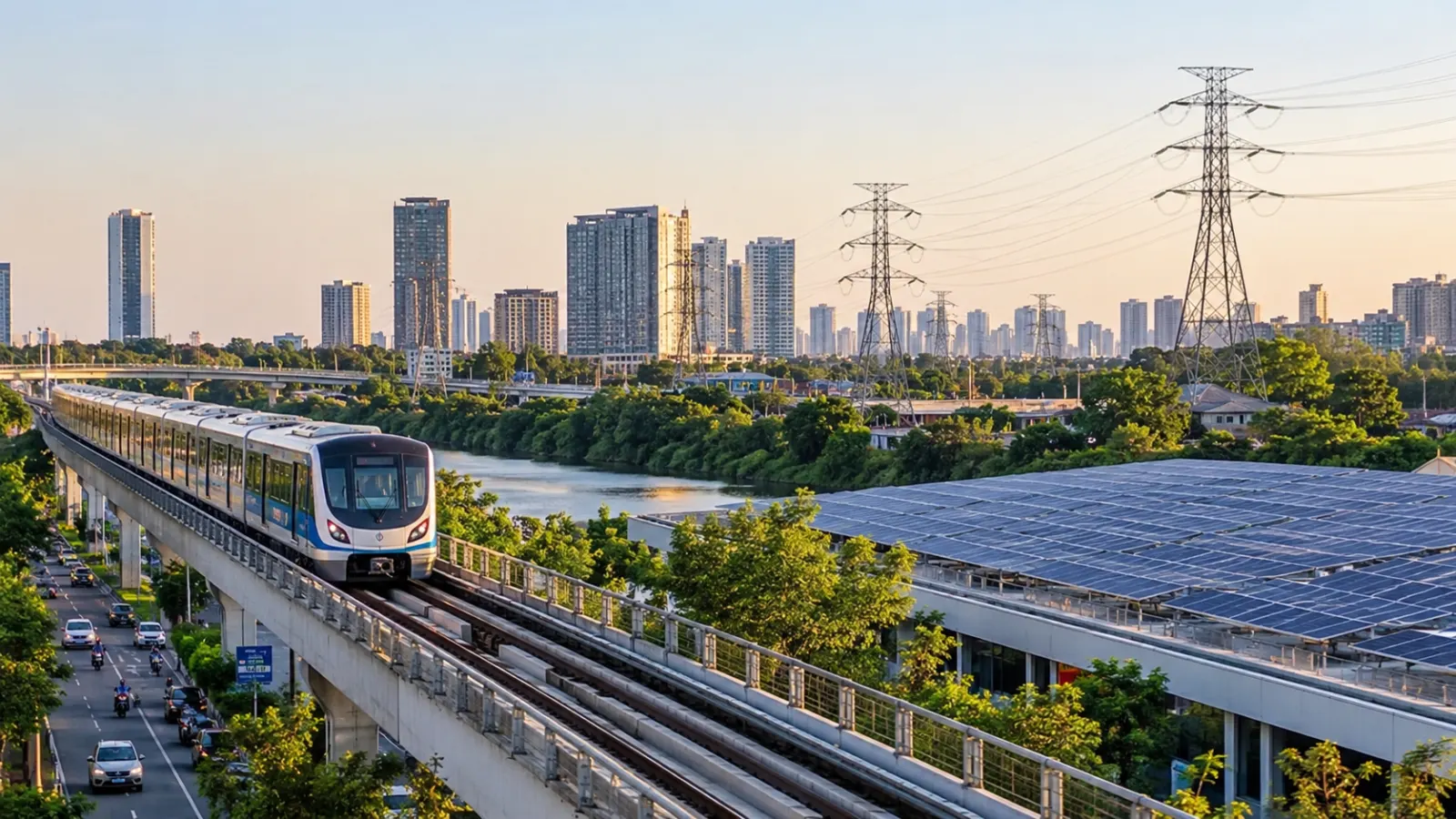
Subsidies can also be used for industrial policy. Governments may support semiconductors, electric vehicles, batteries, green hydrogen, solar manufacturing or exports. The goal is not immediate welfare but future competitiveness. Such subsidies can be justified when markets underinvest in strategic sectors, learning curves are steep or global competitors receive state support. But industrial subsidies carry risks of cronyism, rent-seeking and inefficient protection. They must be time-bound, performance-linked and transparent.
A strong subsidy policy follows certain principles. First, the objective must be clear. Is the subsidy for poverty relief, price stability, environmental transition, food security, farmer income, export promotion or strategic capability? A vague subsidy is hard to evaluate.
Second, the beneficiary must be defined. Is the support for consumers, producers, firms, farmers, students, households, regions or sectors? If the beneficiary is unclear, leakage and lobbying grow.
Third, the cost must be visible in the budget. Hidden subsidies are dangerous because they reduce democratic accountability. Citizens should know how much is spent and why.
Fourth, the subsidy should be reviewed periodically. A policy that made sense during a crisis may become inefficient later. A subsidy designed for a scarce good may be unnecessary after supply improves. Sunset clauses and outcome reviews prevent permanent dependence.
Fifth, the distributional effect must be studied. Does the subsidy help the poor more than the rich? Does it reach women? Does it support backward regions? Does it benefit small farmers or mainly large users? The answer may differ from the political claim.
Sixth, the environmental impact matters. A subsidy can promote clean energy or lock the economy into polluting behaviour. Public finance should not ignore ecological cost.
The economics of subsidies is therefore the economics of trade-offs. Subsidies can correct markets, but they can also corrupt markets. They can protect the poor, but they can also enrich the already powerful. They can stabilise prices, but they can also hide real costs. They can build future industries, but they can also preserve inefficient ones.
For citizens, the right question is not simply, "Am I getting a benefit?" The better question is, "Is this benefit reaching the right people, producing the right result and remaining affordable?" For policymakers, the right question is not, "Can we announce support?" The better question is, "Can we fund it honestly and measure its impact?"
A subsidy is not charity from the government. It is public money routed through policy. That money ultimately comes from taxes, borrowing, public resources or future obligations. Because it is public money, it deserves public scrutiny.
The mature position is not to worship subsidies or condemn them. The mature position is to design them well. A good economy needs welfare, incentives and fiscal discipline at the same time. Subsidies sit at the intersection of all three.
When subsidies are transparent, targeted where possible, universal where necessary, time-bound when appropriate and backed by clear outcomes, they can strengthen development. When they are hidden, open-ended and politically careless, they become a burden passed to the future.
The real economics of subsidies is therefore not about free goods. It is about choices. Who receives support? Who pays for it? What behaviour does it encourage? What public goal does it serve? What alternative use of money is being sacrificed? These questions decide whether a subsidy is a tool of development or a habit of fiscal avoidance.
Disclaimer
This article is for general educational and editorial use. It is not tax, legal, investment or policy advice. Subsidy numbers change across budgets, revised estimates and supplementary demands. Editors should verify all fiscal figures from official budget documents before publication.