Delhi High Court Questions Police Over Activist Nadeem Khan’s Alleged Home Confinement
The Delhi High Court on Monday questioned the Delhi Police over allegations that civil-rights activist Nadeem Khan was confined to his home and office without a formal order to prevent him from joining a protest at Jantar Mantar.
A bench of Acting Chief Justice Nitin Wasudeo Sambre and Justice Sanjay Sharma sought a status report from the police and questioned the legal basis for entering Khan’s premises and restricting his movement when no detention order had been shown to him.
Court asks: how can police enter his house?
Khan, who is associated with the Association for Protection of Civil Rights, alleged that police officers arrived at his residence and office in Abul Fazal Enclave on September 29 and remained there for several hours.
According to his petition, he was effectively prevented from leaving the premises between around 9:30 AM and 5:30 PM even though he had not been formally arrested or served with a written detention order.
During Monday’s hearing, the High Court questioned how police could enter his house and restrict him in this manner merely because permission for a protest had been denied.
The bench also asked police to explain the legal authority under which Khan’s movement was allegedly restricted.
Police deny formal detention
Delhi Police disputed the allegation that Khan had been detained.
Police counsel told the court that officers had gone to Khan’s premises after receiving information that he intended to participate in a protest at Jantar Mantar despite permission for the demonstration having been denied.
The police maintained that officers were present only to monitor and restrict his movement and that Khan had not been formally detained.
That explanation itself drew scrutiny from the court, which asked police to show the legal basis for restricting a person’s movement without a detention order.
Khan alleges continued surveillance and harassment
Khan’s lawyer told the court that police surveillance did not end with the September 29 incident.
The petition alleges that Khan subsequently received calls asking about his movements and that officers continued monitoring him.
He also alleged that he was informed on October 8 that he could be detained and placed under house arrest during the October 9–10 protest period.
His counsel argued that repeated surveillance and intervention by police amounted to harassment and interfered with his ability to participate in peaceful political activity.
Court records police assurance
During the hearing, Delhi Police told the court that there was currently no restriction on Khan’s movement.
The police also gave an assurance that officers would no longer make calls to him concerning his movements.
The High Court recorded that assurance and directed police to file a status report within two weeks explaining the circumstances surrounding the alleged confinement.
The court did not make a final finding on whether Khan had been illegally detained, meaning the central allegation remains contested.
Case linked to anti-SIR protests
Khan’s case arose from planned demonstrations against the Special Intensive Revision of electoral rolls.
He had sought to participate in a protest at Jantar Mantar raising concerns about voter-list revisions and other civil-rights issues.
Police had denied permission for the protest and later said they received information that Khan might still attempt to attend.
The dispute therefore raises a broader question about how far police can go in preventing participation in a demonstration after permission for that gathering has been refused.
Preventive policing faces legal scrutiny
Indian law allows authorities to impose reasonable restrictions on public gatherings when there are genuine concerns about public order or security.
But restrictions on an individual’s movement generally require a clear legal basis and must satisfy constitutional standards of necessity and proportionality.
The High Court’s questions focused on this distinction: denying permission for a protest is one issue, while physically restricting an individual inside their home or office without a written order is another.
Khan’s petition argues that the alleged confinement violated his rights to personal liberty, free movement, freedom of expression and peaceful assembly.
Wider debate over Delhi protest restrictions
The case comes amid increasing judicial scrutiny of security measures imposed during recent demonstrations in Delhi.
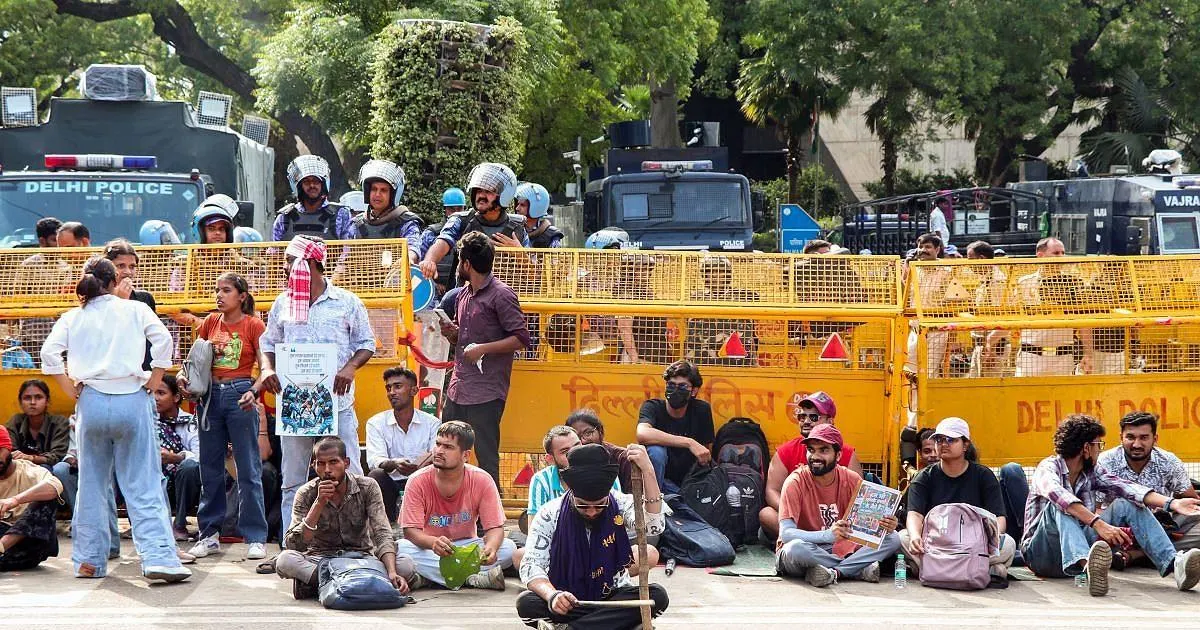
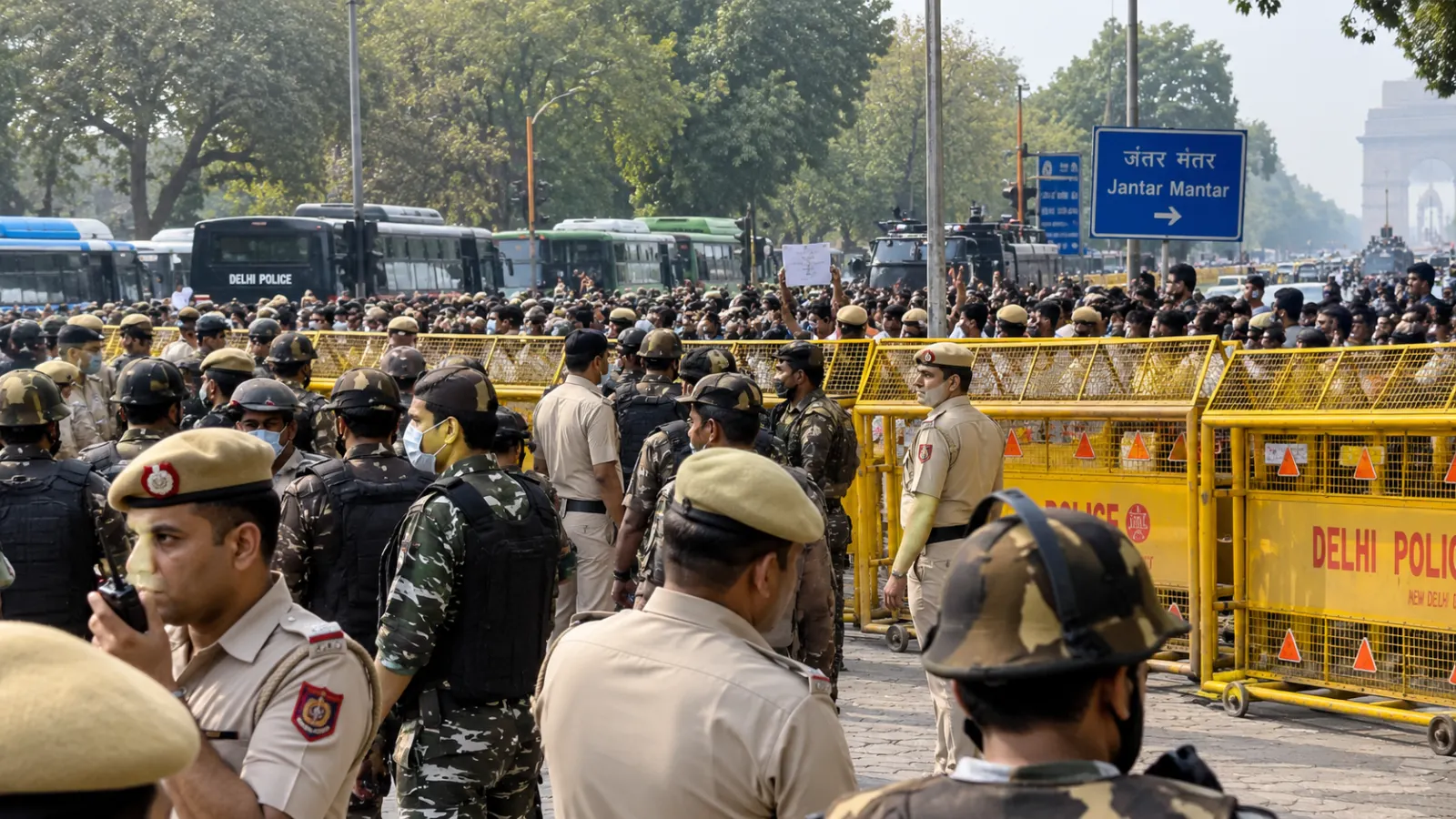
Authorities have used barricades, preventive detentions, Metro restrictions and transport controls in response to a series of protests.
The Supreme Court has separately emphasised that security measures should remain proportionate and should not unnecessarily restrict the movement of ordinary citizens or peaceful demonstrators.
The Nadeem Khan case now places the legality of individual preventive restrictions directly before the Delhi High Court.
What happens next
Delhi Police has been directed to submit its status report within two weeks.
That response is expected to explain why officers were deployed at Khan’s premises, what legal powers were relied upon and whether his movement was formally restricted.
The court will then have to determine whether the police action amounted to lawful preventive policing or an unauthorised restriction on personal liberty.
For now, the High Court’s intervention has put a basic legal question at the centre of the case: if a protest has been denied permission, does that by itself allow police to confine a person who may intend to participate?