Cultural Homogenisation Explained: Are Global Cultures Becoming More Alike?
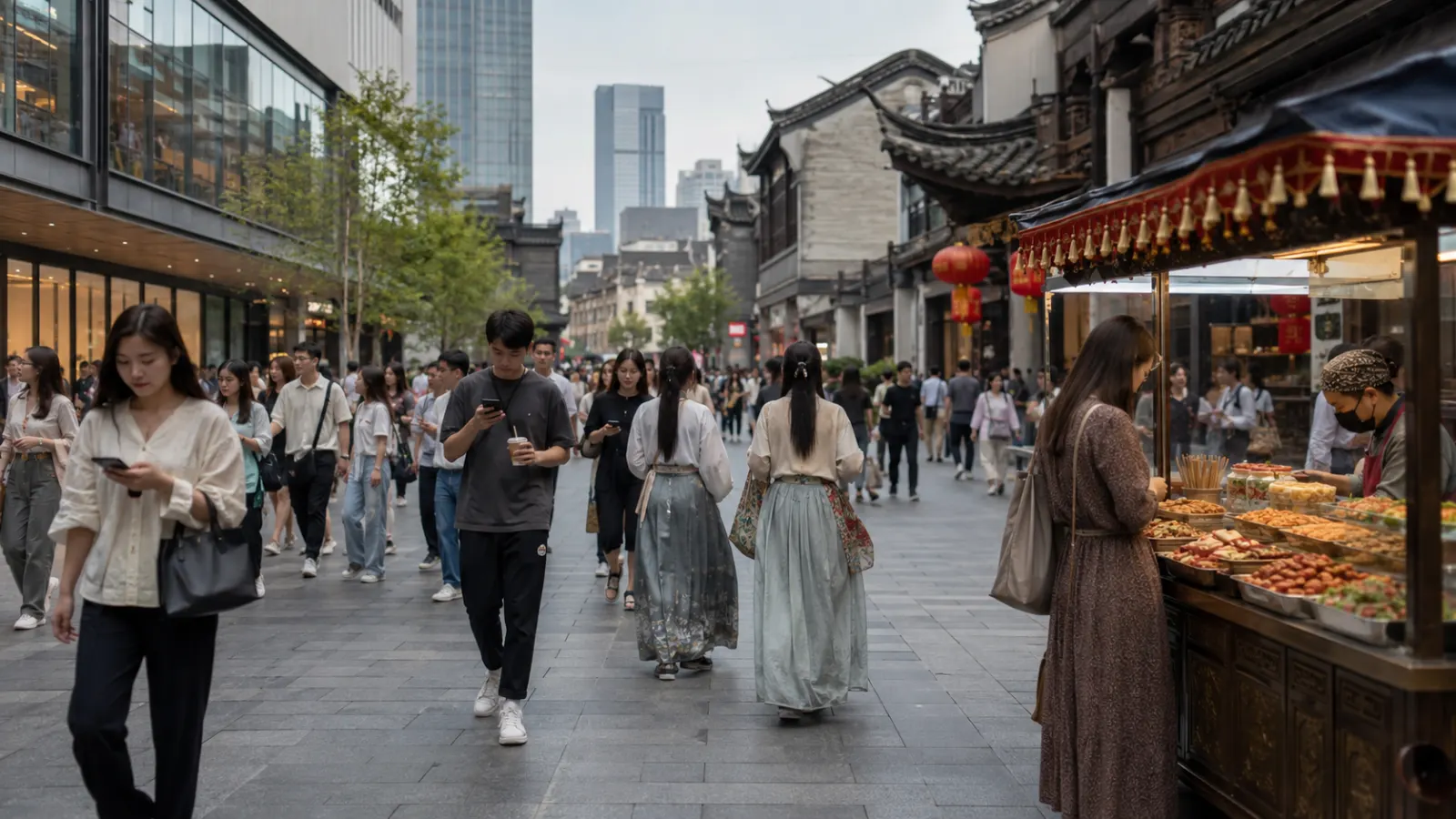
Walk through airports, shopping districts or digital platforms in different countries and a striking pattern appears: the same coffee chains, fashion brands, smartphones, streaming formats and architectural styles recur across very different places. This visual repetition feeds the idea of cultural homogenisation—the process through which cultural differences can become less visible or less viable as products, media, languages, lifestyles and institutions converge. Yet the concept is often overstated. Globalisation does not automatically make cultures identical, and similar commercial environments do not prove that people share the same beliefs, family structures, languages or identities. Cultural homogenisation is better understood as a pressure toward sameness in particular cultural domains, not as the complete disappearance of difference.
That distinction matters because global cultural exchange can produce several outcomes at once. Some forms become standardised, while others become hybrid. Local traditions may weaken, but communities can also revive languages, adapt global genres or use digital platforms to reach audiences previously unavailable to them. The real question is therefore not whether cultures influence one another—they always have—but whether economic, technological and institutional systems reduce the practical ability of communities to continue creating, transmitting and discovering meaningful alternatives.
Cultural Homogenisation Is Not the Same as Globalisation
Globalisation refers broadly to increasing connections across borders through trade, migration, media, finance, technology and communication. Cultural homogenisation is only one possible consequence of those connections.
When globalisation spreads the same brands, entertainment formats or consumer habits across many countries, cultural differences can become less visible. But the same process can also create hybrid forms. A global music genre performed in a regional language can combine international structure with local identity. A foreign restaurant chain may adapt menus to local tastes. Migrants may preserve traditions more deliberately after moving abroad.
Globalisation therefore describes the connection. Homogenisation describes one possible direction of cultural change.
Treating the two terms as synonyms obscures the fact that global contact can produce sameness, difference and reinvention simultaneously.
Standardised Products Make Places Look More Similar
Global companies often rely on recognisable branding, store layouts, service models and products. Customers travelling between cities can encounter familiar logos, menus and retail environments thousands of kilometres apart.
This standardisation has obvious benefits. Predictability reduces uncertainty. A traveller can understand how a familiar service works without learning an entirely new system. Large-scale production can also lower costs.
The cultural effect is more complicated. Independent cafés, neighbourhood shops, local signage and regionally distinctive commercial environments may face greater competition. As the same corporate formats occupy prominent urban spaces, places can become visually similar even when the people living within them remain culturally distinct.
This is one reason cultural homogenisation is often easiest to notice at the surface level.
The same shopping street does not necessarily mean the same culture.
Material Convergence Is Not the Same as Cultural Identity
Two people can own the same smartphone, watch the same streaming platform and drink the same soft drink while holding very different religious beliefs, speaking different languages and organising family life in completely different ways.
This is one of the most important limits of the homogenisation argument.
Consumer products are culturally meaningful, but they do not represent the whole of culture. Religion, kinship, political identity, memory, language, ritual, humour and moral expectations may remain highly distinctive even where material consumption converges.
A society can therefore become strongly homogenised in consumer technology while remaining highly differentiated in other areas.
Cultural homogenisation should be analysed domain by domain rather than treating culture as one indivisible object.
Media Concentration Can Narrow What Becomes Visible
Large film studios, broadcasters, music companies and digital platforms can distribute content at scales that smaller cultural producers cannot easily match. When a limited number of organisations control large audiences, familiar genres and formats can receive disproportionate investment and promotion.
This does not mean local production disappears. A country may continue producing regional music, films and literature while global entertainment dominates advertising, recommendation systems and mainstream attention.
The issue is therefore partly one of visibility.
If audiences repeatedly encounter the same high-budget productions, global genres or celebrity systems, cultural attention can converge even though thousands of alternatives technically remain available.
A diverse cultural supply is not enough when much of it is difficult to discover.
Market Concentration Can Shape Cultural Choice
Cultural markets often reward scale. A film, music catalogue or publishing company distributing globally can spread production and marketing costs across enormous audiences. Smaller local producers usually operate with much smaller budgets.
This affects more than profitability. Marketing determines what people notice, what retailers stock, which artists receive media coverage and what platforms recommend.
When a small number of firms dominate cultural distribution, fewer institutions effectively decide which cultural products receive large-scale visibility.
Market concentration does not prove that audiences all want the same thing. It can, however, narrow the choices that are easiest to encounter.
The distinction between available culture and visible culture is crucial.
Digital Platforms Standardise Cultural Form
One of the less obvious forms of homogenisation occurs not at the level of content but at the level of format.
A short-video platform may host creators speaking hundreds of languages and representing very different societies, yet all of them operate within the same technical architecture: similar video lengths, engagement metrics, scrolling behaviour, comment systems and recommendation mechanisms.
Creators learn what the platform rewards. They may shorten introductions, adopt familiar editing rhythms, produce recurring content categories or structure videos around attention patterns that perform well algorithmically.
The cultural message can remain local while the presentation becomes globally standardised.
This means cultural convergence can occur even when the visible subject matter still looks diverse.
Algorithms Can Reward Familiarity
Recommendation systems are generally designed to predict what users are likely to watch, click, listen to or purchase. Familiar formats often perform reliably because users already understand them.
When recommendation systems repeatedly amplify those patterns, creators may adapt further toward them. A feedback loop can emerge: familiar content receives engagement, algorithms recommend more of it, creators imitate successful formats and audiences encounter increasingly similar structures.
This does not mean algorithms necessarily eliminate cultural diversity. Recommendation systems can also connect niche creators with highly specific audiences.
The key issue is discoverability.
A song or film can technically exist online without being realistically discoverable by the audiences who might value it.
Digital Discoverability Is Now a Cultural Policy Question
Traditional cultural policy often focused on whether books could be published, films produced or broadcasters licensed. Digital culture adds another layer: can audiences actually find the material?
Search ranking, recommendation systems, metadata, interface language and platform promotion influence discoverability. A small-language film library may contain hundreds of titles, but if the platform rarely recommends them or lacks appropriate metadata, practical access remains weak.
This means digital cultural diversity cannot be measured simply by counting how many works have been uploaded.
Visibility, affordability, language support and recommendation all determine whether cultural difference remains socially meaningful.
Language Shift Is a Deeper Form of Homogenisation
Adopting a global fashion brand is relatively superficial compared with losing a language.
Languages carry oral literature, place names, humour, social categories, ritual vocabulary and forms of environmental knowledge that may not translate perfectly into another language.
A dominant language can become increasingly useful for education, employment, government and digital participation. Families may respond rationally by prioritising it for their children. Over time, a smaller language may retreat from schools, workplaces, media and eventually household communication.
UNESCO has repeatedly highlighted the relationship between linguistic diversity and broader cultural diversity, including the unequal representation of languages in digital environments.
When intergenerational language transmission ends, cultural convergence becomes much deeper than simply adopting similar products.
Public Culture Can Homogenise While Private Culture Remains Diverse
Cultural change often occurs at different speeds in public and private life.
City centres may become dominated by global retailers, national-language advertising and standardised architecture while families continue using regional languages, preparing traditional food and maintaining local rituals at home.
This creates a layered society. Visitors may experience cultural sameness because the most visible public environments have converged, while substantial cultural diversity survives inside households and community networks.
Public homogenisation should therefore not automatically be interpreted as total cultural disappearance.
At the same time, private survival can become fragile if the next generation has few opportunities to use the tradition outside the home.
Urban Development Can Make Cities Look More Alike
Global finance, construction technologies and planning models can produce similar apartment towers, office buildings, shopping centres, road systems and hotel designs across very different cities.
Economic efficiency contributes to this convergence. Standard construction systems are easier to finance, regulate and replicate. Developers may also favour architectural styles associated with modernity and international prestige.
Local architecture can disappear when historic neighbourhoods are demolished or when regionally distinctive building methods become too expensive.
Architecture can therefore homogenise much faster than ritual, language or family structures.
This reinforces the need to specify which dimension of culture is changing.
Tourism Can Standardise the Way Culture Is Presented
Tourism creates strong incentives to make local culture understandable and attractive to visitors. Food may be adjusted to expected tastes, performances shortened to fit schedules and crafts redesigned into products convenient to purchase and transport.
These adaptations can create income and preserve certain traditions.
They can also simplify them.
A complex religious or social practice may become a short performance disconnected from its original meaning. Different regional traditions may be presented as one recognisable national style because tourists find that easier to understand.
The result can be commercially successful and culturally simplified at the same time.
Commercial Success Does Not Automatically Mean Cultural Loss
Commercialisation is frequently treated as the enemy of authenticity, but markets can also support cultural survival.
A local musician who finds global listeners online may gain enough income to continue working professionally. Traditional crafts can reach international customers through digital sales. Regional cuisine can gain prestige through restaurants and tourism.
The relevant issue is not whether a cultural practice enters the market.
It is whether practitioners retain meaningful control, receive economic benefit and can continue developing the tradition on their own terms.
Commercialisation can sustain difference when it expands capacity rather than forcing everything into one globally standard form.
Localisation Pushes Back Against Homogenisation
Global companies frequently discover that one standard product does not succeed equally everywhere. They therefore adapt products, marketing, language and services to local markets.
This process is often described as localisation or, more broadly, glocalisation.
Restaurant chains create region-specific menus. Global entertainment formats are remade with local celebrities and languages. International fashion brands adapt advertising to national norms.
Local audiences also reinterpret imported products without waiting for corporations to design the process. Global genres acquire local slang, humour, politics and aesthetics.
The existence of localisation demonstrates that cultural flows do not operate in only one direction. Global products can be changed by the cultures that receive them.
Hybrid Culture Can Produce New Differences
Cultural mixing does not necessarily produce a neutral global average. Sometimes it creates forms that did not exist previously.
A global musical style performed in a regional language can become a marker of local identity. Imported foods can be adapted with local ingredients. Global clothing styles can be combined with traditional textiles or symbols.
These hybrid forms may become more distinctive, not less.
This complicates simplistic predictions that globalisation must eventually produce one global culture.
People do not merely receive cultural products.
They reinterpret them.
Young People Can Look More Global While Remaining Deeply Local
Generational change is frequently mistaken for cultural homogenisation. Older generations may see younger people consuming global music, speaking international slang or adopting similar clothing and conclude that local identity is disappearing.
Sometimes that concern reflects real decline.
But younger people can also use global forms to express local identity in new ways. Regional-language rap, locally specific online humour and digitally organised heritage communities all combine global formats with highly local meaning.
A generation can therefore look less traditional without necessarily becoming culturally identical to its peers elsewhere.
The relevant question is what cultural capacities are actually being lost.
Globalisation Can Trigger Cultural Revival
Fear of cultural loss sometimes motivates preservation. Communities may begin documenting endangered languages, organising heritage festivals, creating local brands or teaching traditional arts precisely because globalisation has made difference more visible and valuable.
Diaspora communities often become especially deliberate about preserving language, food, religion and festivals.
Global connection can therefore produce a paradox: the same processes that weaken everyday transmission can also increase consciousness of cultural identity.
Cultural difference is not always something that simply survives globalisation.
Sometimes it is actively reconstructed in response to it.
Homogenisation Is Uneven Within Societies
Global cultural exposure differs by age, income, education, geography and connectivity. Wealthy urban professionals in different countries may share more consumer habits with one another than with rural communities inside their own nations.
This does not mean national cultures disappear. It means cultural convergence can occur across social classes and cities rather than evenly across entire populations.
Digital access further complicates the picture. Some communities participate intensively in global platforms while others have limited connectivity.
Claims that “a country is becoming culturally homogenised” therefore often hide enormous internal differences.
The Digital Divide Limits Global Cultural Convergence
The idea of one global digital culture assumes relatively equal access to devices, broadband, platforms and digital literacy.
That assumption is false.
Connectivity varies significantly within and between countries. Economic inequality, infrastructure, language and education affect who can participate fully in digital culture.
Some populations therefore experience intense global cultural exchange while others remain more dependent on local or national media systems.
The unevenness of access is another reason homogenisation should be understood as a pressure rather than a completed global condition.
Education Can Accelerate or Resist Convergence
National education systems often standardise language, curriculum, historical narratives and cultural references across regions. This can strengthen shared citizenship and increase mobility, but it can also reduce the role of regional languages and local knowledge.
A child educated exclusively in a national or global language may gain access to broader opportunities while having fewer opportunities to develop literacy in a local language.
Educational systems can also protect diversity through bilingual education, regional history, local literature and partnerships with cultural practitioners.
The question is not whether common education is inherently homogenising.
It is whether common institutions leave meaningful room for cultural difference.
Cultural Power Matters More Than Borrowing Alone
Cultures have always influenced one another. Homogenisation becomes more concerning when the exchange occurs within strongly unequal systems.
If local filmmakers technically have access to digital distribution but cannot compete for recommendation, advertising or investment, the market may remain culturally narrow despite apparent openness. If a minority language exists online but major services barely support it, digital participation creates pressure toward a dominant language.
The problem is therefore not cultural contact itself.
It is unequal capacity to remain visible and viable within systems of exchange.
People Sometimes Choose Standardisation
Not every adoption of global culture is imposed by corporations or foreign power. People may prefer standardised products because they are cheaper, more convenient, fashionable or technically better suited to their needs.
Cultural analysis should respect agency. Calling every consumer preference evidence of manipulation treats people as passive.
The more important question is whether alternatives remain realistically available. Choice is meaningful only when people can actually access other products, languages, media and cultural institutions.
Homogenisation becomes more serious when standardisation is not merely popular but structurally unavoidable.
Cultural Choice Depends on Capacity
A person cannot choose a local-language education if no school offers it. Audiences cannot support regional films they never discover. Young musicians cannot learn a local tradition if there are no teachers, rehearsal spaces or viable careers.
Cultural diversity therefore depends on practical capacity.
Policies supporting local broadcasting, translation, arts education, minority-language media, independent cultural production and community institutions can expand that capacity.
The objective is not to prevent people from consuming global culture.
It is to preserve meaningful alternatives.
Cultural Homogenisation Can Be Measured—but Not by Appearance Alone
Photographs of identical shopping centres can illustrate convergence, but they cannot establish the condition of an entire culture.
Researchers need broader indicators: language use, media consumption, ownership concentration, cultural production, participation in rituals, architectural change, food habits and transmission between generations.
Different domains can move in different directions simultaneously. Consumer technology can converge while music becomes more diverse. Architecture can standardise while minority-language publishing expands.
Reliable analysis therefore requires asking what is becoming more similar, for whom, where and over what period.
Without those questions, “cultural homogenisation” can become a vague label applied to almost any visible modernisation.
UNESCO’s Position Is More Nuanced Than “Globalisation Destroys Culture”
UNESCO’s cultural-diversity frameworks recognise pressures associated with globalisation and digital concentration while also emphasising exchange, dialogue and cultural interaction.
That is important because cultural diversity does not require cultural isolation. A world in which communities never influence one another would not preserve actual cultural history; it would invent artificial boundaries that cultures themselves have rarely observed.
The policy challenge is to maintain open exchange while ensuring communities retain the ability to create, produce, distribute and transmit their own cultural expressions.
Diversity therefore depends on both exchange and capacity.
Frequently Asked Questions
What is cultural homogenisation? Cultural homogenisation is the process through which some cultural differences decline as products, media, languages, lifestyles, institutions or cultural formats become more similar across societies.
Is cultural homogenisation the same as globalisation? No. Globalisation refers to increasing international interdependence and exchange. Homogenisation is one possible cultural outcome, while globalisation can also produce hybridisation, localisation and cultural revival.
Are cultures around the world becoming the same? Some visible domains—such as retail environments, consumer technology and digital formats—have converged considerably, but major differences remain in language, religion, family structure, identity and other cultural areas.
What causes cultural homogenisation? Important forces can include global corporate expansion, media concentration, dominant languages, urban development, tourism, national education systems and digital-platform structures.
Do multinational companies cause homogenisation? They can contribute through standardised products and commercial environments, but localisation strategies also adapt global brands to local markets.
How does social media contribute to cultural homogenisation? Global platforms standardise technical formats and can reward familiar styles, which may encourage creators across cultures to adopt similar presentation strategies.
Do algorithms reduce cultural diversity? They can if recommendation systems repeatedly amplify already dominant content, but they can also connect niche cultural creators with specialised audiences. The effect depends heavily on discoverability.
Why is language loss important? Language carries cultural knowledge, oral traditions, concepts and social meanings that may not transfer completely into another language.
Does tourism destroy local culture? Not automatically. Tourism can create income and visibility while also encouraging simplification or standardisation when culture is redesigned primarily for visitor expectations.
What is glocalisation? Glocalisation describes the interaction between global and local forces, including the adaptation of international products and cultural forms to local contexts.
What is hybrid culture? Hybrid culture emerges when cultural influences combine to produce new forms rather than simply replacing one tradition with another.
Can globalisation strengthen local identity? Yes. Communities sometimes respond to globalisation by reviving languages, heritage practices and local cultural industries.
Does using global products mean cultural identity is disappearing? Not necessarily. Consumer convergence can coexist with significant differences in values, language, religion and social organisation.
How does education affect cultural homogenisation? Standardised national curricula can reduce regional variation, while bilingual and culturally responsive education can preserve local languages and knowledge.
Can cultural homogenisation occur without coercion? Yes. People may voluntarily adopt global products or formats because they are useful, affordable or prestigious.
Why does cultural power matter? Cultural exchange becomes more structurally homogenising when smaller producers, languages or communities cannot compete for resources, visibility or institutional support.
Can governments protect cultural diversity? Policies supporting local arts, minority-language media, translation, education and independent cultural production can expand the practical choices available to communities.
Is online cultural diversity automatically greater because more content exists? No. Content can exist online while remaining effectively invisible if search, recommendation and metadata systems do not make it discoverable.
Can cultural homogenisation be reversed? Some forms of cultural decline can be countered through language revival, heritage transmission, local production and institutional support, though restoring lost cultural capacity can become increasingly difficult once transmission stops.
The Most Visible Sameness May Not Be the Most Important Sameness
A global coffee chain is easy to photograph. Language decline is less visually obvious. Identical smartphones attract attention, while changing family transmission patterns occur quietly.
This creates a danger in discussions of homogenisation: surface-level similarities can dominate analysis because they are easy to see.
The deeper question is which differences remain viable. Can people continue producing local media? Can children learn a minority language? Can artists find audiences? Can communities maintain cultural institutions and transmit practices?
Cultural difference becomes fragile when these capacities disappear, even if festivals and traditional imagery remain highly visible.
The Central Idea
Cultural homogenisation is real, but it is neither universal nor complete. Commercial environments, digital formats, consumer technologies, architecture and media systems have become strikingly similar across many societies. Global companies and platforms can spread standardised structures at enormous scale, while dominant languages and concentrated cultural markets can reduce the visibility of smaller alternatives.
But culture does not move in only one direction.
Local audiences reinterpret imported forms. Global businesses adapt to regional preferences. Digital platforms can support niche creators. Diaspora communities preserve traditions. Young people combine international genres with regional languages. Communities respond to perceived loss by deliberately reviving heritage.
The strongest version of the homogenisation argument therefore concerns capacity rather than appearance.
The question is not whether people in different countries drink the same coffee or use the same phone. It is whether communities still possess meaningful opportunities to create, transmit, discover and economically sustain different languages, stories, music, architecture, traditions and ways of life.
A culture does not stop being distinctive merely because it borrows.
Cultures have always borrowed.
The deeper loss occurs when alternatives cease to be viable—when local creators cannot reach audiences, minority languages cannot be used in important institutions, traditional knowledge cannot be transmitted and cultural participation becomes dependent on a small number of globally standardised systems.
Cultural homogenisation is therefore best understood not as the arrival of one global culture, but as a pressure that can reduce the capacity to remain meaningfully different.
That pressure is real.
So is cultural resistance, adaptation and reinvention.