Beyond the poster of martyrdom
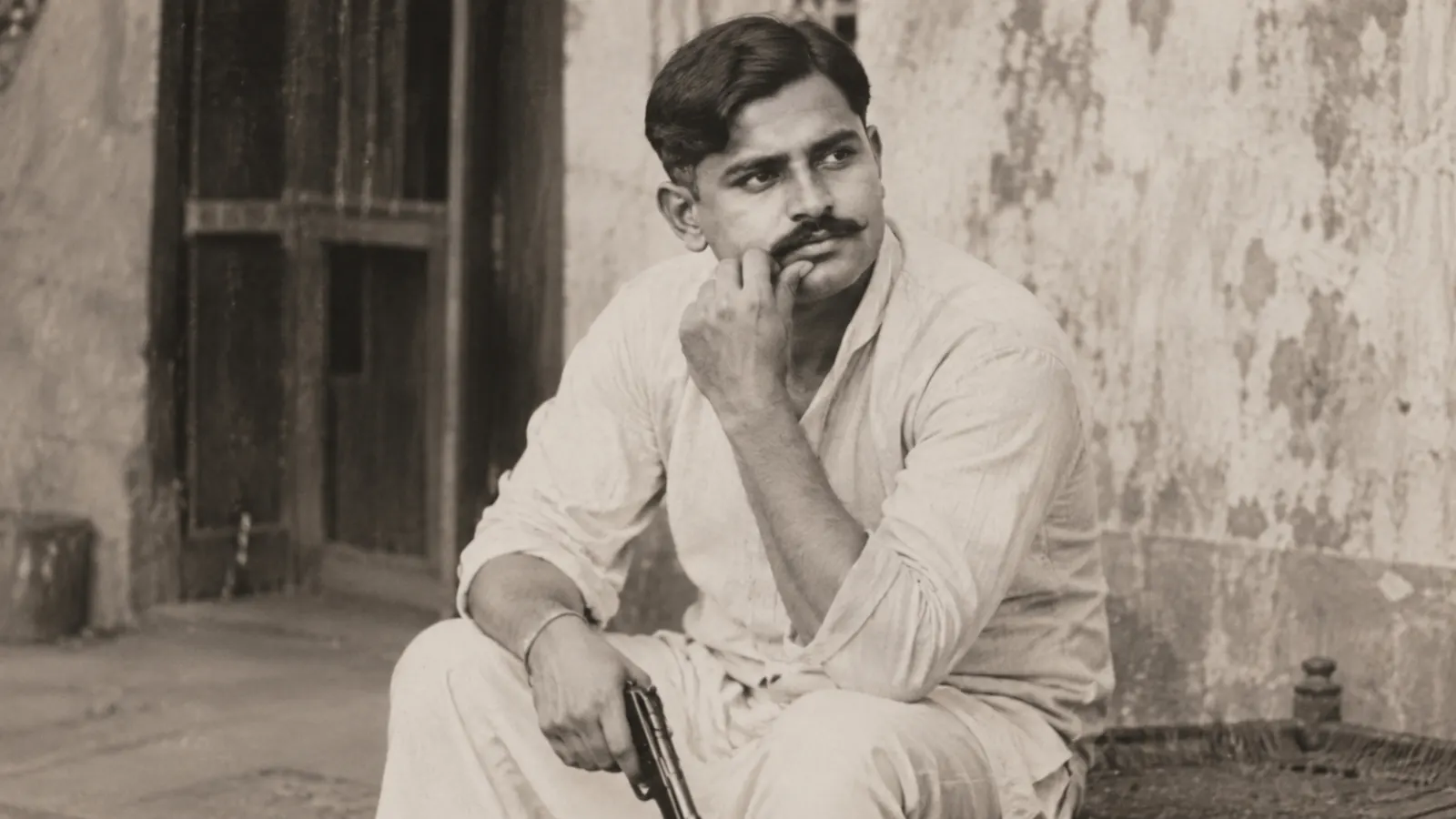
Bhagat Singh is one of the most recognisable figures of India’s freedom struggle. The tilted hat, intense gaze and youthful defiance have become part of popular memory. Streets, student groups, political rallies and films invoke his name whenever courage must be given a face. Yet the familiarity of the image can become a problem. It can turn Bhagat Singh into a poster and hide the thinker behind the martyr. His revolutionary spirit was not merely a willingness to die. It was a willingness to think against fear, against empire, against social injustice and even against comfortable forms of nationalism.
He was executed at the age of twenty-three, along with Rajguru and Sukhdev, on 23 March 1931 in Lahore. Such an early death easily invites romanticisation. A young man embraces the gallows; a nation remembers sacrifice; the story becomes legend. But Bhagat Singh’s importance is deeper than the drama of martyrdom. In his short life he read widely, wrote sharply, organised politically and tried to give revolution an intellectual foundation. He moved from nationalist anger to socialist analysis, from individual revenge to mass politics, from heroic action to ideological clarity.
To understand Bhagat Singh only as a man of violence is to misunderstand him. To understand him only as a martyr is also incomplete. He did participate in armed revolutionary actions, and those actions must be examined honestly. But his later writings show a mind moving beyond the cult of the bomb. He wanted revolution to mean the end of exploitation, not merely the transfer of power from British rulers to Indian elites. That is why his life remains so compelling. He forces India to ask what freedom means after the foreign ruler leaves.
Early life: a family shaped by nationalism
Bhagat Singh was born on 28 September 1907 in Banga village, in Lyallpur district of Punjab, now in Pakistan. He came from a family already involved in anti-colonial politics. His father Kishan Singh and other relatives were connected with nationalist activity, and the atmosphere around him was politically charged. He did not enter the freedom struggle as an isolated rebel. He grew up inside a household where empire was discussed as injustice and resistance was part of family memory.
Punjab in the early twentieth century was a region of intense political ferment. Agrarian discontent, revolutionary networks, the memory of the Ghadar movement, colonial surveillance and nationalist mobilisation shaped the environment. The Jallianwala Bagh massacre of 1919 left a deep mark on the political imagination of young Indians, and Bhagat Singh was among those profoundly affected. The massacre exposed the violence underlying imperial rule. It made clear that colonial authority could abandon all claims of justice when challenged.
The Non-Cooperation Movement also influenced him, but its withdrawal after the Chauri Chaura incident created frustration among many young nationalists. Gandhi’s insistence on non-violence as a moral and strategic principle inspired millions, yet some youth felt that colonial violence required a different response. Bhagat Singh emerged from this generational tension. He respected mass awakening but became dissatisfied with what he saw as retreat and compromise. This dissatisfaction pushed him toward revolutionary organisations.
As a student, he displayed curiosity and seriousness. He read not only nationalist literature but also works on revolution, socialism and world history. This habit matters because it separates him from the stereotype of the impulsive youth. Bhagat Singh’s radicalisation was emotional, but it was not only emotional. It became increasingly intellectual. He wanted to understand why oppression existed and how societies could be transformed.
Naujawan Bharat Sabha and the making of a revolutionary public
In 1926, Bhagat Singh helped establish the Naujawan Bharat Sabha in Lahore. The organisation sought to mobilise youth around anti-imperialism, secularism and social reform. This was a crucial step in his political development. It showed that he was not interested only in secret conspiracies. He understood the need for public political education. Youth had to be organised, not merely excited. They had to be trained to think beyond communal divisions and narrow identities.
The Sabha’s emphasis on communal harmony was significant. The 1920s saw rising Hindu-Muslim tensions in parts of India, and colonial politics often exploited social divisions. Bhagat Singh recognised that communalism could weaken the struggle for freedom and prevent social transformation. His nationalism was therefore not religious majoritarianism. It was anti-colonial, secular and increasingly socialist. He saw the people as workers, peasants, students and oppressed communities, not as religious blocs to be mobilised against one another.
His association with the Hindustan Republican Association, later reorganised as the Hindustan Socialist Republican Association, gave his revolutionary politics a more defined ideological direction. The addition of socialist language was not cosmetic. It indicated a shift from national liberation alone to social revolution. For Bhagat Singh and his comrades, independence had to address class exploitation and economic inequality. Otherwise the old structures of oppression might survive under Indian management.
This is one reason he remains attractive to youth movements across ideological lines, though often selectively. He combined courage with ideas, action with reading, sacrifice with critique. But his secular and socialist commitments are sometimes softened or ignored in popular memory. A serious profile must restore them. Bhagat Singh did not want to be remembered simply as brave. He wanted Indians to think.
Saunders, Lala Lajpat Rai and the politics of retaliation
The death of Lala Lajpat Rai after injuries sustained during protests against the Simon Commission became a turning point. Many nationalists believed that colonial police brutality had caused the death of one of Punjab’s most respected leaders. Bhagat Singh and his comrades decided to retaliate by targeting the police officer they held responsible. In December 1928, Assistant Superintendent of Police J. P. Saunders was killed in Lahore, in a case of mistaken identity linked to the intended target.
This action placed Bhagat Singh firmly within the path of armed revolutionary politics. It also raises the ethical question that surrounds his legacy: how should political violence be judged? Colonial rule itself was violent, and peaceful protest often faced repression. Yet assassination as a method carries moral and political dangers. It can produce cycles of retaliation, justify state repression and reduce politics to heroic acts by small groups. Bhagat Singh’s own later evolution suggests that he did not want revolution to remain trapped in individual acts of violence.
After the Saunders case, he went underground and adopted disguises. The episode contributed to his legend, but it also intensified colonial pursuit. The revolutionary movement operated under severe pressure, with limited resources and high risks. It required secrecy, courage and loyalty, but secrecy also limited mass participation. Bhagat Singh seems to have understood this limitation increasingly clearly.
A balanced view neither sanitises nor dismisses this phase. The Saunders killing was part of a violent anti-colonial struggle, and it cannot be converted into harmless symbolism. But it also cannot be separated from the brutality of empire and the anger generated by repression. Bhagat Singh’s life forces a serious historical question: when institutions deny justice, how do the oppressed respond, and what are the costs of each response?
The Assembly bomb case: making the deaf hear
On 8 April 1929, Bhagat Singh and Batukeshwar Dutt threw bombs in the Central Legislative Assembly in Delhi. The bombs were not intended to cause mass casualties; they were accompanied by leaflets and slogans, and the revolutionaries deliberately courted arrest. The phrase often associated with the action was that it took a loud sound to make the deaf hear. The goal was propaganda by deed - to use a dramatic act to draw attention to repressive laws and revolutionary ideas.
The Assembly bombing marked a strategic shift. Instead of escaping, Bhagat Singh chose the courtroom and prison as political platforms. This decision transformed him from an underground revolutionary into a public figure. It also revealed his understanding of spectacle. He knew that colonial trials could become stages where revolutionaries explained their cause. The state wanted to criminalise them; they wanted to put the state on trial.
During the trial and imprisonment, Bhagat Singh’s intellectual identity became clearer. He read extensively, wrote letters and statements, and participated in hunger strikes demanding better treatment for political prisoners. The hunger strike attracted public attention and sympathy. It exposed the conditions inside colonial jails and challenged the distinction between ordinary criminals and political prisoners. The death of Jatin Das after a prolonged hunger strike intensified public anger.
This phase is essential because it shows Bhagat Singh’s political maturity. He was no longer only acting against specific symbols of colonial power. He was communicating a programme, demanding dignity for prisoners, and addressing the Indian public. He used his own body as an instrument of protest, much as other streams of the freedom movement did, though within a different ideological framework.
The thinker: atheism, socialism and critical reason
Bhagat Singh’s writings reveal a mind that valued reason over inherited belief. His essay Why I Am an Atheist is one of the most important documents for understanding his inner life. It was not a casual rejection of religion, nor was it written merely to provoke. It was a defence of critical inquiry, intellectual honesty and moral courage without dependence on divine reward. He argued that a revolutionary must be willing to face death without illusions. Whether one agrees with his atheism or not, the essay shows his seriousness.
His socialism was also central. He increasingly believed that political freedom without economic justice would be incomplete. He read Marxist and socialist literature and saw imperialism as connected to capitalism and exploitation. For him, revolution meant restructuring society so that workers and peasants were not merely subjects of nationalist speeches but owners of their future. This distinguished him from narrower revolutionary nationalism.
Bhagat Singh also criticised blind faith, hero worship and emotional politics. This is ironic because he himself became a hero figure after death. He warned against the very tendencies that later popular memory sometimes applies to him. He wanted disciplined, educated political workers. In writings addressed to young activists, he emphasised study, organisation and mass contact. Bombs and pistols, he suggested, could not by themselves bring revolution.
This intellectual Bhagat Singh is often less convenient than the martyr Bhagat Singh. A martyr can be invoked without being read. A thinker demands engagement. His ideas on secularism, class, youth politics and rationalism are challenging because they do not fit easily into simplified nationalist storytelling. He belongs to the freedom struggle, but he also questions what kind of freedom was being imagined.
Trial, execution and the making of memory
The Lahore Conspiracy Case became the central legal arena of Bhagat Singh’s final years. The colonial state sought to punish revolutionary violence and deter others. Bhagat Singh and his comrades used the proceedings to project defiance. Their execution on 23 March 1931 produced enormous public emotion. Many Indians, including those who did not support revolutionary violence, admired their courage. The timing, close to major political negotiations, added to the controversy and grief.
The execution turned Bhagat Singh into Shaheed-e-Azam for countless admirers. Martyrdom gave his life symbolic force far beyond the organisational reach of the HSRA. He became a figure through whom youth could imagine sacrifice, fearlessness and uncompromising patriotism. But martyrdom also simplified him. The living Bhagat Singh argued, doubted, read, changed and debated. The martyred Bhagat Singh was easier to convert into a fixed icon.
His relationship to Gandhi is often framed in emotionally charged terms, especially around the question of whether Gandhi could have saved him. Historical debate on this issue is complex and often politicised. What matters for a serious profile is to avoid reducing either figure to caricature. Gandhi opposed political violence and operated through negotiation and mass mobilisation. Bhagat Singh represented a different current of anti-colonial struggle. Their methods diverged sharply, but both shaped the moral drama of the freedom movement.
The grief after Bhagat Singh’s execution revealed how deeply he had entered public imagination. He was young, articulate, fearless and visibly willing to die for a cause. The colonial state executed a revolutionary; it unintentionally enlarged a legend. Yet the most responsible way to remember him is not to freeze him at the gallows. It is to ask what he was thinking before he reached them.
Criticism and historical complexity
Bhagat Singh’s legacy must be examined with honesty. Revolutionary violence can inspire courage, but it can also create dangerous myths. When young people admire only the act of dying or killing, they may miss the harder work of organisation, study and social reform. Bhagat Singh himself understood this danger. His later writings point toward mass politics and ideological preparation rather than isolated heroics.
Critics of revolutionary nationalism argue that armed actions had limited strategic impact compared with mass movements. They also argue that violence gave the colonial state justification for repression. These criticisms cannot be dismissed. The British Empire was not defeated by revolutionary action alone. It was challenged by mass movements, international pressures, economic changes, constitutional negotiations, labour unrest, military shifts and many forms of resistance. Bhagat Singh was one part of a much larger struggle.
At the same time, dismissing revolutionary action as futile misses its psychological impact. Revolutionaries shattered the image of imperial invincibility. They showed that fear could be overcome. They gave youth a language of sacrifice when constitutional reform appeared slow and humiliating. Their trials and executions exposed the coercive nature of colonial justice. Symbolic power matters in freedom struggles, even when it does not directly win state power.
Another complexity is the selective appropriation of Bhagat Singh. Different political groups claim him, often emphasising the parts that suit them and ignoring the rest. Some celebrate his nationalism but neglect his socialism. Some admire his courage but avoid his atheism. Some invoke his youth but ignore his disciplined reading. The real Bhagat Singh resists such easy possession. He was too intellectually restless to belong comfortably to any simplified camp.
Legacy: revolution as unfinished thought
Bhagat Singh’s legacy endures because he connects courage with critique. He represents the refusal to accept injustice as normal. But his deeper relevance lies in his question: what is the purpose of freedom? If independence only changes rulers but leaves exploitation intact, has revolution succeeded? This question remains powerful in a society still marked by inequality, unemployment, communal tension and social hierarchy.
For students and youth, Bhagat Singh offers both inspiration and warning. The inspiration is obvious: courage, commitment, sacrifice and clarity of purpose. The warning is more subtle: do not mistake emotion for politics. Read, organise, think, question and connect personal anger to social analysis. Bhagat Singh’s own life moved in that direction. His revolutionary spirit was not anti-intellectual rage; it was disciplined rebellion.
His secularism is also important. He imagined a political community beyond religious division. In times when communal identities can dominate public life, Bhagat Singh’s example reminds India that anti-colonial nationalism had strong secular and socialist currents. He did not fight for a narrow nation defined by religious pride. He fought for a liberated people.
His rationalism continues to challenge hero worship. The best tribute to him is not blind adoration but critical engagement. He wanted people to think fearlessly. That includes thinking about him fearlessly - acknowledging his courage, examining his methods, reading his writings and refusing to reduce him to a decorative icon.
Relevance today: reading Bhagat Singh seriously
Bhagat Singh remains relevant today because he is both inspiring and inconvenient. He inspires because he represents courage at an age when most people are only beginning to form their lives. He is inconvenient because his writings challenge easy nationalism, religious dogma, social inequality and empty hero worship. He cannot be honestly remembered only through slogans. To remember him seriously is to read him, argue with him and understand the intellectual discipline behind his rebellion.
For young people, his life offers a model of political seriousness. He did not treat anger as enough. He studied history, economics, revolutionary theory and political movements. He connected the immediate injustice of colonial rule to wider structures of exploitation. In an age of rapid outrage and short attention, this is perhaps his most important lesson. Protest without study can become shallow. Study without courage can become sterile. Bhagat Singh tried to bring both together.
His secularism also remains vital. He imagined liberation as a project shared by people across religious identities. He saw communal division as a threat to freedom because it distracted the oppressed from the structures that exploited them. This aspect of his thought is often less celebrated than his martyrdom, but it may be more urgent. If Bhagat Singh is remembered only as a brave nationalist and not as a rational, secular and socialist thinker, the memory becomes incomplete. His revolutionary spirit asks every generation to go beyond symbolic admiration and confront the conditions that make real freedom unfinished.
Conclusion: the young man who refused silence
Bhagat Singh’s revolutionary spirit was born from colonial injustice, sharpened by reading, tested by action and immortalised by sacrifice. He lived only twenty-three years, but those years contained a remarkable journey: from nationalist anger to socialist thought, from secret action to public trial, from youthful defiance to reflective political writing. His death made him a martyr, but his ideas make him more than a martyr.
He remains alive in public memory because he represents a kind of courage that refuses both fear and complacency. But his true legacy asks more of us than admiration. It asks whether society is willing to confront exploitation, communal hatred, intellectual laziness and political cowardice. It asks whether young people will read as intensely as they protest. It asks whether revolution can mean social justice rather than only dramatic rupture.
Bhagat Singh did not live to see India free. Yet he helped expand the meaning of freedom. He insisted, through words and action, that independence must be connected with dignity, equality and fearless thought. That is why the poster still matters - but only if it leads us back to the person behind it. The revolutionary spirit of Bhagat Singh is not simply the courage to die. It is the courage to imagine a freer society and to discipline oneself for its making.
Editors Outlook | Biographies & Profiles | Batch 02