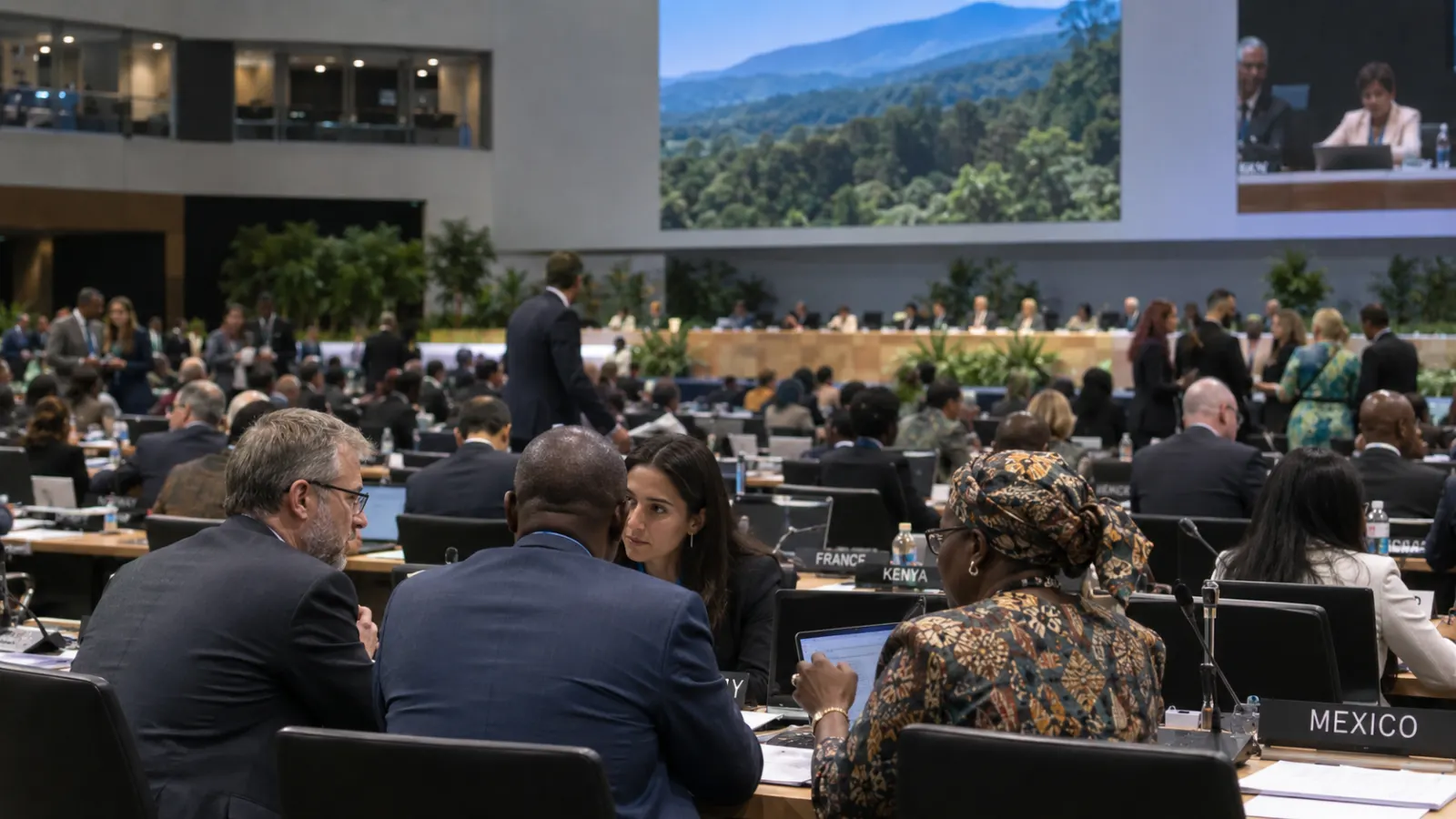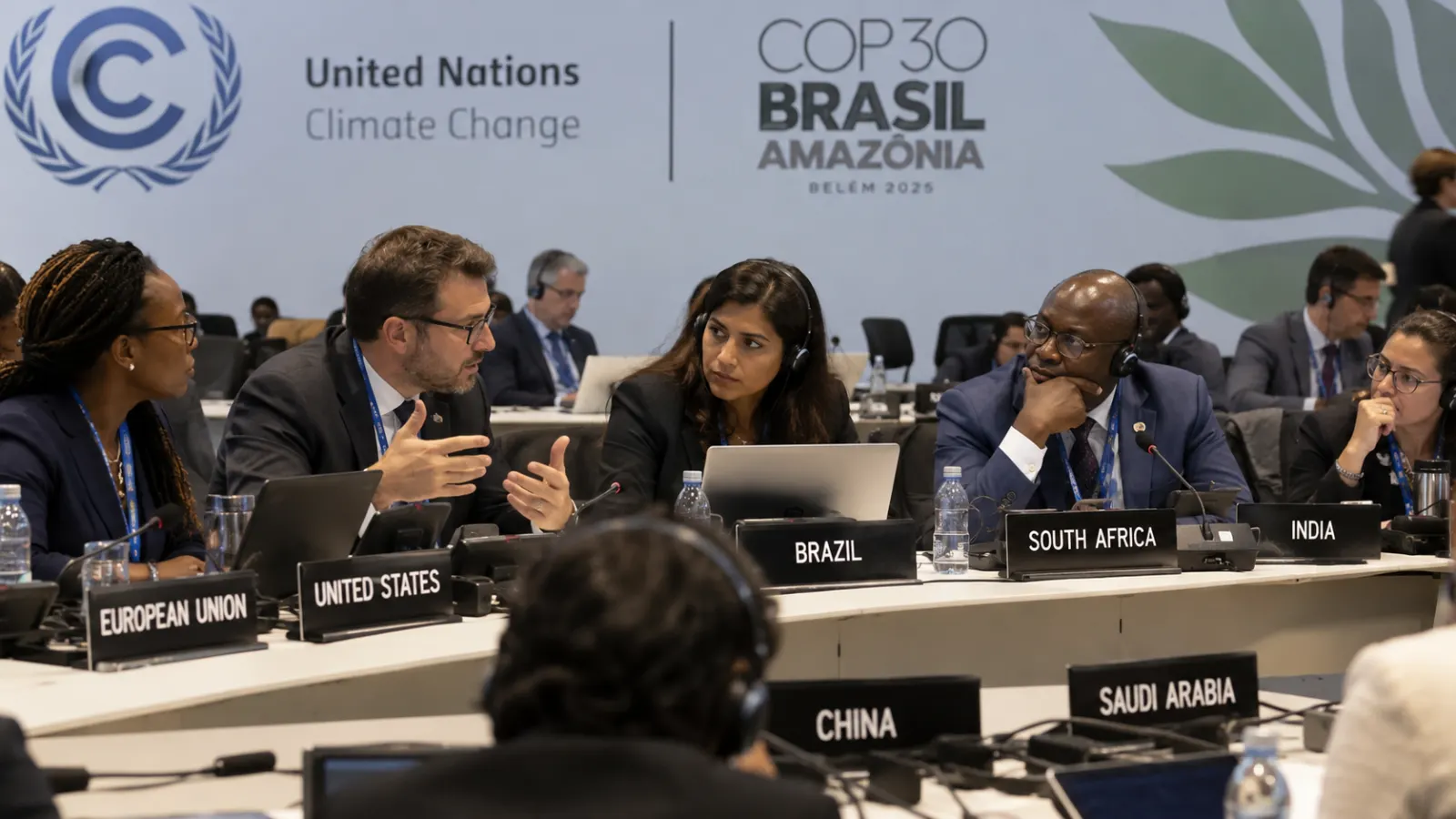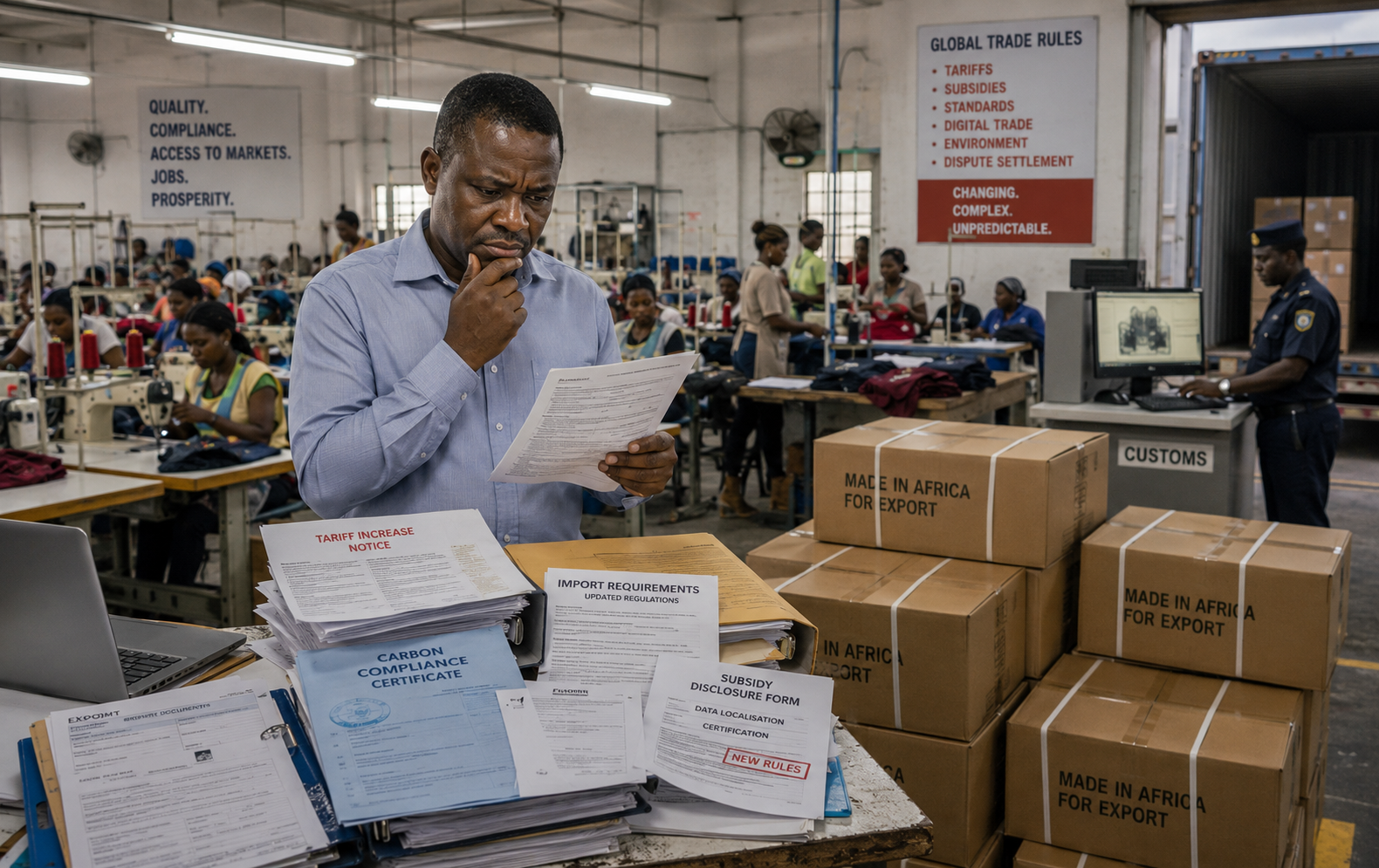
The World Trade Organization was built on a grand promise.
Trade, if governed by common rules, could become more predictable, more open and less vulnerable to raw power politics. Countries would reduce tariffs. Markets would become more accessible. Disputes would be settled through law rather than retaliation. Poorer countries would integrate into global commerce. Consumers would get cheaper goods. Producers would reach wider markets. The world economy would grow because trade would flow “smoothly, predictably and freely,” as the WTO itself describes its core function.
For a time, this belief shaped the language of globalisation.
The late twentieth century and early twenty-first century were marked by confidence in open markets, global value chains, tariff reduction, trade liberalisation and the idea that economic interdependence would reduce political conflict. Trade was not treated merely as commerce. It was treated as a peace project, a development project and a modernisation project.
That consensus has broken.
The WTO’s crisis today is not simply about one blocked court, one failed ministerial conference or one disagreement over tariffs. It reflects something deeper: the old trade consensus no longer commands trust. Major powers now use tariffs as strategic weapons. Governments subsidise industries in the name of security, climate transition and technological leadership. Developing countries worry that trade rules restrict their policy space. Workers in rich economies blame trade for job losses. Poorer countries argue that globalisation did not deliver fair development. Digital trade has opened new conflicts over data, taxation and sovereignty. Climate policy is becoming trade policy. National security is becoming industrial policy.
The WTO was designed for a world that believed trade liberalisation was the direction of history. It now operates in a world where trade is increasingly treated as a battlefield.
The WTO Was Built on Rules, Not Trust Alone
The WTO was created in 1995 as the successor to the General Agreement on Tariffs and Trade. Its purpose was not merely to promote trade, but to discipline trade behaviour through rules. The WTO would provide a forum for negotiations, monitor trade policies and settle disputes between members. Its genius was supposed to be legalisation: countries would not simply bargain through power; they would accept rules and procedures.
This was especially important for smaller and developing countries.
In a world without enforceable trade rules, powerful economies can pressure weaker ones through market access, sanctions, threats and unilateral measures. A rules-based system, at least in theory, gives weaker countries a legal forum. It does not eliminate power inequality, but it reduces the space for arbitrary economic coercion.
That is why the WTO mattered.
It was never perfect. Developing countries often complained that rules were shaped by rich-country interests. Agriculture remained distorted by subsidies. Intellectual-property rules imposed burdens. Services liberalisation benefited those with stronger firms. Special and differential treatment remained contested. Still, the WTO gave the world a common trade language.
Today, that language is fragmenting.
The Dispute Settlement Crisis Is the Clearest Symbol
The most visible sign of the WTO’s crisis is the paralysis of its dispute settlement system.
The WTO’s dispute settlement mechanism was once called the “crown jewel” of the multilateral trading system because it gave members a structured legal process to challenge trade violations. But the Appellate Body, which heard appeals from dispute panel decisions, has been unable to function because of vacancies. The WTO states that the Appellate Body is currently unable to review appeals because of ongoing vacancies, with the term of the last sitting member having expired in 2020.
This has created a legal vacuum.
A country can lose a WTO dispute at the panel stage and then appeal “into the void,” preventing the ruling from becoming final. In practical terms, the system that was supposed to prevent unilateralism has itself become vulnerable to procedural paralysis.
This is not a narrow legal issue. It strikes at the heart of the WTO’s credibility.
If rules cannot be enforced, rules become advice. If rulings can be blocked through procedural emptiness, litigation loses meaning. If powerful states can avoid final judgment, weaker states lose faith in law. The WTO may still have agreements, committees and negotiations, but without a functioning enforcement mechanism, its authority weakens.
A trade organisation without a reliable dispute system is like a court whose doors are open but whose judges cannot sit.
Why the Appellate Body Became Politically Impossible
The Appellate Body crisis did not emerge from nowhere.
The United States had long criticised the system, arguing that the Appellate Body exceeded its mandate, created obligations that members had not agreed to, missed deadlines and constrained legitimate trade-remedy measures. These criticisms grew across administrations and eventually led Washington to block appointments.
Other members disagreed with the US approach, but they could not overcome the appointment blockade because the WTO works heavily through consensus. This means one determined member can obstruct key decisions.
The result is a paradox. The WTO’s consensus culture was meant to protect sovereignty and ensure legitimacy. But in practice, it can also allow institutional paralysis.
The Appellate Body crisis therefore reflects two deeper tensions.
First, major powers do not always want legal constraint when it interferes with domestic politics or strategic policy. Second, the WTO’s decision-making structure makes reform difficult when members’ interests sharply diverge.
The dispute settlement crisis is not only about judges. It is about whether powerful states still accept trade law when law limits their freedom of action.
Trade Policy Has Become Security Policy
The old trade consensus assumed that countries wanted efficiency.
Supply chains would go where costs were lowest. Firms would optimise production globally. Consumers would benefit from cheaper imports. Governments would avoid unnecessary barriers. Economic interdependence would deepen.
That model has been shaken by repeated shocks.
The COVID-19 pandemic exposed dependence on distant suppliers for medical goods, semiconductors, active pharmaceutical ingredients and other critical products. The Russia-Ukraine war exposed energy, food and fertiliser vulnerabilities. US-China rivalry turned semiconductors, rare earths, electric vehicles, batteries, data and artificial intelligence into strategic sectors. Middle East conflict and shipping disruptions reminded the world that trade routes can be threatened by geopolitics.
Suddenly, efficiency was no longer enough.
Countries began speaking of resilience, friend-shoring, near-shoring, strategic autonomy, supply-chain security and economic security. These are not merely new slogans. They represent a major shift in trade thinking.
The WTO was built to reduce discrimination. Today, governments increasingly discriminate in favour of trusted partners. The WTO was built to discipline subsidies. Today, subsidies are central to industrial strategy. The WTO was built to reduce tariffs. Today, tariffs are being used for leverage, retaliation and domestic political signalling.
The trade consensus has changed because governments no longer see trade as separate from national security.
Tariffs Have Returned to the Centre of Politics
For decades, tariffs were treated as old-fashioned instruments.
Trade policy experts focused on services, standards, intellectual property, digital trade, investment and regulatory barriers. Tariffs seemed less central because many had already been reduced through multilateral, regional and bilateral agreements.
That era is over.
Tariffs have returned as visible political weapons. The United States has used tariffs to pressure China and other trading partners. China has responded with its own trade measures. The European Union is expanding trade-defence tools against perceived unfair competition, especially from Chinese overcapacity in strategic sectors. A recent Financial Times report noted that the EU is planning broader import quotas and tariffs against China to protect sectors such as chemicals, metals and clean technologies from what it sees as an existential threat.
UNCTAD warned in January 2026 that global tariffs rose substantially in 2025, especially in manufacturing, driven largely by US measures, and that governments were expected to continue using tariffs in 2026 for industrial and strategic objectives. It also warned that frequent policy shifts increase uncertainty, discourage investment and disrupt supply chains, with smaller and less diversified economies most exposed.
This is precisely the problem.
Tariffs are not only taxes on imports. They are signals of distrust. They tell the world that governments are willing to sacrifice efficiency for leverage, protection or political control. Once major economies normalise tariff escalation, others follow. The system moves from rules to bargaining, from predictability to uncertainty.
The WTO Can Still Measure Trade, but Can It Govern It?
The WTO continues to produce valuable analysis, statistics and forecasts. Its 2026 Global Trade Outlook said world merchandise trade volume grew 4.6% in 2025, supported partly by AI-related goods, but projected a slowdown to 1.9% in 2026 before rising to 2.6% in 2027. The same report warned that high oil prices related to Middle East conflict could shave 0.5 percentage points from 2026 merchandise trade growth, while disruption to transport and travel could affect services trade.
These numbers show that trade is not dead.
Global trade is still enormous. The WTO estimated that the current dollar value of world merchandise exports reached US$26.26 trillion in 2025, while services trade reached US$9.56 trillion. Goods and services trade together came to US$34.65 trillion in 2025, up 7% year-on-year.
But the issue is not whether trade exists. The issue is whether trade remains rule-governed.
Trade can grow even as trust declines. Trade can expand even as rules weaken. Companies can continue shipping goods while governments build parallel blocs. A high trade volume does not automatically mean a healthy trading system.
The WTO’s own 2026 outlook noted that the share of world trade conducted on a most-favoured-nation basis had fallen to 72% after fluctuating through 2025 amid unprecedented policy shifts. This matters because MFN treatment is one of the central principles of the multilateral trading system: members should not normally discriminate among trading partners. A decline in MFN-based trade signals growing fragmentation.
The WTO can still count trade. The harder question is whether it can still govern trade.
The Subsidy Problem Has Become Explosive
Subsidies are now one of the most contentious issues in global trade.
Governments subsidise agriculture, energy, semiconductors, electric vehicles, batteries, renewable energy, steel, shipbuilding, critical minerals and strategic manufacturing. Some subsidies are justified as climate policy. Some are justified as national security. Some are justified as industrial development. Some are protectionist. Many are difficult to classify cleanly.
The problem is that one country’s industrial policy can become another country’s unfair competition.
If a government heavily subsidises electric vehicles, battery production or solar panels, foreign competitors may be priced out. If rich countries subsidise green industries at enormous scale, developing countries may struggle to compete in the very sectors that define the future. If China’s production model creates global overcapacity, other economies face industrial pressure. If the United States and Europe respond with their own subsidies, the world enters a subsidy race.
The WTO’s rules were not designed for this level of strategic industrial policy.
At MC14 in 2026, WTO Director-General Ngozi Okonjo-Iweala warned about the lack of transparency in subsidy reporting, noting that only 64 of 166 members had submitted subsidy notifications for 2025; she argued that opacity creates mistrust and perceptions of unfair competition.
This is a crucial point. A trading system cannot function if members do not know what support others are providing. Without transparency, suspicion replaces evidence. Without evidence, negotiation becomes accusation.
Subsidies may be unavoidable in a world of climate transition and strategic competition. But if they remain opaque and undisciplined, they will continue to erode trade trust.
Agriculture Remains the Old Unfinished Battle
No issue reveals the inequality of global trade rules more clearly than agriculture.
Developing countries have long argued that rich-country agricultural subsidies distort markets and harm farmers in poorer economies. At the same time, developing countries such as India insist on policy space for public stockholding, food security, minimum support prices and protection for small farmers.
This creates a deep divide.
Rich countries want market access and disciplines on developing-country support. Developing countries want recognition of food-security needs and historical subsidy imbalances. Exporters want freer trade. Food-deficit countries want stability. Small farmers want protection. Consumers want affordable food.
The WTO has struggled to resolve these tensions because agriculture is not only trade. It is livelihood, food security, rural politics, nutrition, inflation and sovereignty.
For countries such as India, agriculture cannot be treated like any other commercial sector. Hundreds of millions depend directly or indirectly on farming. Public procurement and food distribution have domestic social functions. A purely liberal trade approach ignores this reality.
For agricultural exporters, however, protection and subsidies block market access.
This is why agriculture remains stuck. The old consensus that trade liberalisation is always beneficial collapses when food security and farmer security enter the debate.
Developing Countries Want Trade, but Not Policy Imprisonment
A common mistake is to assume that developing countries oppose trade.
They do not. Most developing countries want more exports, more investment, more market access, more technology, more logistics capacity and deeper integration into global value chains. The WTO itself notes that developing countries represent about two-thirds of its membership and that supporting their greater integration into global trade is a major priority.
But developing countries also want policy space.
They do not want rules that freeze their industrial structure permanently. They do not want to be told that rich countries could use tariffs, subsidies and industrial policy during their own development, but poorer countries must now follow strict disciplines. They do not want digital trade rules that limit future taxation or data governance. They do not want climate-related trade measures that become disguised protectionism. They do not want intellectual-property rules that restrict access to medicines or technology.
This is the development dilemma at the heart of the WTO.
Trade can help development, but only if countries have the capacity to benefit from it. Opening markets without infrastructure, skills, finance, technology and industrial strategy can expose weak economies to competition without creating transformation.
The Global South’s demand is not isolation. It is fairness.
The E-Commerce Moratorium Shows the New Divide
Digital trade is one of the clearest examples of how the old WTO consensus has fractured.
Since 1998, WTO members had maintained a moratorium on imposing customs duties on electronic transmissions. Supporters argue that the moratorium supports digital trade, reduces costs and promotes innovation. Critics, including some developing countries, argue that it limits future revenue options and benefits digitally advanced economies disproportionately.
At MC14 in 2026, all 166 WTO members failed to reach consensus on extending the long-standing e-commerce tariff moratorium. Reuters reported that a group of 23 WTO members, including the United States, Britain, Japan and Mexico, then agreed independently not to impose customs duties on e-commerce transactions among themselves.
This episode is highly significant.
It shows how the WTO may fragment when consensus fails. Instead of one multilateral rule, a smaller group moves ahead separately. Supporters call this flexibility. Critics call it plurilateral fragmentation. The disagreement is not procedural; it is philosophical.
Should WTO rules move forward only when all members agree?Or should coalitions of willing members be allowed to proceed?Does flexibility modernise the WTO?Or does it weaken the equal voice of developing countries?
Digital trade makes these questions urgent because data, platforms, artificial intelligence, cloud services, taxation and digital sovereignty will define future economic power.
Plurilateralism: Reform or Fragmentation?
One major debate inside the WTO is whether groups of members should be allowed to negotiate agreements among themselves and bring them into the WTO framework.
Supporters argue that consensus among 166 members is too difficult. If every member can block progress, the WTO becomes paralysed. Plurilateral agreements allow willing members to move ahead on issues such as investment facilitation, digital trade, services regulation and environmental goods.
Critics argue that plurilateralism can marginalise developing countries. If powerful members set rules first and others are later pressured to join, the WTO becomes less democratic. The multilateral principle weakens. Smaller and poorer countries may lose negotiating leverage.
The Investment Facilitation for Development Agreement reflects this tension. Reuters reported during MC14 that Turkey lifted its opposition to the agreement’s adoption into the WTO framework, while countries such as India continued to oppose it because of concerns that plurilateral initiatives could weaken the multilateral system and reduce developing-country influence.
This debate goes to the heart of WTO reform.
The WTO needs flexibility, but flexibility cannot become exclusion. It needs modern rules, but modernisation cannot mean bypassing poorer members. It needs efficiency, but efficiency cannot replace legitimacy.
The Consensus Rule Is Both Shield and Cage
The WTO’s consensus-based culture has two faces.
For developing countries, consensus is a shield. It prevents powerful members from easily imposing rules on weaker members. It gives every country, at least formally, a voice. It protects sovereignty and slows down coercive rule-making.
But consensus is also a cage. It allows one or a few members to block progress even when most members agree. It makes reform slow. It encourages lowest-common-denominator outcomes. It can turn ministerial conferences into exercises in survival rather than ambition.
This is why WTO ministerial meetings often produce modest results after intense negotiations. The institution does not lack intelligence or technical expertise. It lacks political convergence.
The 14th Ministerial Conference in Yaoundé in March 2026 ended with adopted decisions and progress on some issues, but WTO reporting also noted that ministers agreed to continue negotiations on fisheries subsidies with recommendations aimed for MC15. In other words, even when progress occurs, many core questions are pushed forward rather than resolved.
This is not because trade officials are lazy. It is because the WTO is trying to negotiate rules in a world where members no longer agree on the purpose of trade rules.
The Fisheries Agreement Shows the WTO Can Still Work
The WTO is not dead. It still has moments of achievement.
The Agreement on Fisheries Subsidies entered into force on September 15, 2025, after two-thirds of WTO members accepted the protocol. The WTO described this as the official integration of the agreement into the WTO legal framework. AP reported that the agreement took effect after support reached 112 of 166 members and described it as the WTO’s first major multilateral deal focused on environmental protection and ocean health.
This matters.
It shows that multilateral trade rules can still be negotiated when the issue is urgent, the moral case is strong and enough members are willing to compromise. Harmful fisheries subsidies contribute to overfishing and damage marine ecosystems. For coastal communities and small island states, this is not abstract trade policy; it is livelihood and environmental survival.
But even this success is incomplete. The agreement addresses some harmful subsidies, but deeper disciplines on overcapacity-inducing subsidies remain under negotiation. The second stage is more difficult because it touches stronger economic interests.
The fisheries agreement therefore shows both the WTO’s remaining value and its limitations.
It can still deliver. But delivery is slow, partial and fragile.
Climate Policy Is Becoming Trade Policy
The climate crisis is reshaping trade rules.
Carbon border measures, green subsidies, renewable-energy supply chains, critical minerals, environmental goods, deforestation rules and sustainability standards are all turning climate policy into trade policy. The European Union’s Carbon Border Adjustment Mechanism, green industrial subsidies in major economies and debates over clean-technology supply chains show how climate and trade are now inseparable.
This creates another divide between developed and developing countries.
Rich countries argue that climate-related trade measures are necessary to prevent carbon leakage and support decarbonisation. Developing countries worry that these measures may become green protectionism. They argue that economies with fewer resources should not face new barriers when they are still industrialising and adapting to climate damage they did not historically cause.
The WTO’s crisis reflects this unresolved climate-trade tension.
If climate policy becomes a new excuse for protectionism, developing countries will resist. If trade rules block climate action, rich countries will bypass them. If green subsidies are unconstrained, subsidy wars will intensify. If carbon measures are designed without equity, they will deepen North-South mistrust.
The WTO must help create rules for climate-compatible trade, but it cannot do so without addressing development fairness.
China Changed the Trade Equation
No discussion of the WTO crisis is complete without China.
China’s entry into the WTO in 2001 was one of the most important events in global economic history. It integrated a massive labour force, manufacturing base and export machine into the global trading system. Consumers around the world benefited from cheaper goods. Companies built supply chains around China. China became the factory of the world.
But China’s rise also transformed the politics of trade.
Many Western economies argue that China benefited from WTO rules while maintaining a state-led economic model, industrial subsidies, state-owned enterprises, technology-transfer pressures and market-access barriers. China argues that it followed its commitments, contributed to global growth and is being targeted because it became too competitive.
This disagreement has become central to the WTO’s crisis.
The WTO’s rules were not designed to easily manage an economy of China’s scale operating with such a powerful state-capitalist model. Nor were they designed for a world where the United States increasingly views Chinese technological rise as a national-security challenge.
The result is not only trade friction. It is systemic rivalry.
When the world’s two largest economies distrust each other’s economic model, the multilateral trade system cannot remain stable.
The United States No Longer Plays the Same Role
The United States was central to building the post-war trading system. It supported GATT, the WTO and trade liberalisation for decades because it believed open trade served American economic and geopolitical interests.
That confidence has weakened.
US domestic politics has become more sceptical of free trade. Workers in industrial regions blame imports and outsourcing for job losses. Strategic thinkers worry about dependence on China. Politicians use tariffs as bargaining tools. Industrial policy has returned through semiconductor subsidies, clean-energy incentives and domestic manufacturing support.
This matters because the WTO cannot function normally if its most powerful founding supporter becomes ambivalent about the system.
The United States has criticised the dispute settlement system, used unilateral tariffs, embraced industrial policy and challenged the idea that trade rules should constrain national economic strategy. Other countries see this and adjust accordingly.
When the system’s architect starts behaving like a revisionist, the architecture weakens.
The European Union Wants Rules, but Also Protection
The European Union remains one of the strongest defenders of rules-based trade, but it too has become more defensive.
The EU supports WTO reform, dispute settlement restoration, sustainability rules and multilateral cooperation. At the same time, it is using trade-defence instruments, carbon border measures, industrial policy and strategic autonomy language more actively. Its concern over Chinese overcapacity in electric vehicles, clean technologies, steel, chemicals and other sectors has pushed Europe toward a more protective posture.
This does not make the EU hypocritical by itself. It reflects the new trade reality: even rule-oriented powers feel compelled to defend domestic industries and strategic sectors.
But it also shows that the old trade consensus is no longer politically sufficient. Open trade must now be balanced against industrial survival, climate transition, supply-chain resilience and voter anger.
The WTO must operate in this new environment, where even its strongest defenders want more policy space.
India’s WTO Position Reflects Development Anxiety
India’s role in the WTO is often controversial because it resists several developed-country priorities. It has raised concerns on agriculture, public stockholding, fisheries subsidies, e-commerce moratorium, investment facilitation and plurilateral rule-making.
Some critics portray India as obstructionist. That is too simplistic.
India’s position reflects development anxiety. It wants to protect food security, preserve digital policy space, defend small fishers and farmers, and resist rule-making that it believes favours advanced economies. It also wants a functioning dispute settlement system because developing countries need enforceable rules against unilateral measures.
At MC14, India pushed for restoration of a fully functional dispute settlement system and called for reviewing the e-commerce duty moratorium, arguing that the moratorium affects developing countries’ revenue and digital policy space.
India’s challenge is to balance defensive and constructive diplomacy. It must protect development space, but it must also help shape workable reforms. A purely blocking strategy can preserve rights in the short term but reduce influence over future rules. A purely accommodating strategy can weaken policy autonomy.
India’s WTO diplomacy must therefore be strategic, not merely resistant.
Trade Fragmentation Hurts the Weakest Most
Rich countries can absorb trade shocks better than poor countries.
They have deeper fiscal capacity, stronger firms, better logistics, reserve currencies, advanced technology and more negotiating power. Smaller and less diversified economies are more exposed to tariff volatility, supply-chain disruption and policy uncertainty. UNCTAD’s 2026 update specifically warned that smaller and less diversified economies are most exposed to rising trade costs and volatility.
This is why WTO decline is dangerous for developing countries.
A fragmented trade world may look attractive to major powers that can build blocs and negotiate from strength. But weaker countries lose when rules weaken. They face competing standards, discriminatory tariffs, supply-chain exclusion, technology controls and pressure to choose sides.
The WTO’s crisis therefore should not be celebrated by the Global South. The WTO is unequal, but a world without WTO rules may be even more unequal.
The right response is not to abandon multilateral trade rules. It is to reform them.
The Old Globalisation Story Failed Politically
The trade consensus did not collapse only because of geopolitics. It collapsed because globalisation failed politically inside many countries.
Economists often argued that trade creates aggregate gains. But aggregate gains do not comfort workers who lose jobs, regions that lose factories or communities that experience long-term decline. The winners from trade were often visible in corporate profits and consumer prices; the losers were concentrated in particular towns, sectors and classes.
Many governments failed to compensate or retrain those who lost from trade. They assumed that markets would adjust smoothly. They underestimated identity, dignity and place-based economic loss.
This produced backlash.
In rich countries, trade became associated with deindustrialisation, inequality and elite indifference. In developing countries, trade became associated with unequal rules, dependence on raw-material exports and limited value addition. Across the world, citizens began asking whether globalisation served them or only mobile capital.
The WTO cannot fix domestic inequality alone. But it cannot ignore the political backlash created by unequal trade outcomes.
Trade rules need social legitimacy. Without it, governments will turn protectionist.
The Future of Trade Will Not Be Free Trade Versus Protectionism
The next phase of trade politics will not be a simple battle between free trade and protectionism.
That old binary is outdated.
The real question is what kind of managed openness the world can build. Countries will not return to naïve hyper-globalisation. They will protect strategic sectors. They will subsidise green industries. They will screen investments. They will worry about data, minerals, semiconductors and supply chains. They will use trade policy for security and climate objectives.
The issue is whether these actions can be disciplined by common rules.
A reformed WTO should not pretend that governments have no industrial strategy. It should create transparency and limits so that industrial policy does not become disguised mercantilism. It should allow climate action but prevent green protectionism. It should protect food security but discipline trade-distorting support fairly. It should enable digital trade but preserve developing-country policy space. It should support resilience without legitimising arbitrary discrimination.
The future is not pure free trade. It is fair, transparent, resilient and development-sensitive trade.
What WTO Reform Must Address
WTO reform must be serious, not cosmetic.
First, dispute settlement must be restored. Members need a system where rulings are enforceable, appeals are functional and concerns about judicial overreach are addressed without destroying the mechanism.
Second, subsidy transparency must improve. Members must notify subsidies accurately and on time. Without transparency, trust cannot return.
Third, agriculture must be addressed honestly. Public stockholding, food security and historical subsidy imbalances need a durable settlement.
Fourth, digital trade rules must respect both innovation and policy sovereignty. The e-commerce moratorium cannot be extended endlessly without addressing developing-country concerns.
Fifth, plurilateral agreements need clearer rules. Flexibility is useful, but it must not become a way for powerful members to write rules outside genuine multilateral consent.
Sixth, climate and trade must be reconciled. The WTO needs frameworks for carbon measures, green subsidies and environmental goods that do not punish developing countries unfairly.
Seventh, special and differential treatment must be modernised. Developing countries are diverse. China, India, small island states, least-developed countries and low-income African economies cannot all be treated as identical. But reform must not become a tool to strip poorer countries of flexibility.
Eighth, the WTO must strengthen capacity-building so that poorer members can participate meaningfully in negotiations and dispute settlement.
Reform must restore both effectiveness and fairness.
The WTO Still Matters
Despite its crisis, the WTO remains essential.
It has 166 members. It remains the only global trade body with near-universal membership. It provides transparency, monitoring, technical assistance, legal frameworks and negotiation platforms. Even when members violate rules, they often justify their actions in WTO language. That itself shows the institution’s continuing normative power.
The WTO’s 2025 World Trade Report argued that AI could reduce trade costs, boost productivity and expand access to global markets, but also warned that unequal access to digital infrastructure, skills and capabilities could widen the digital divide. It stated that WTO rules on goods, services, data, intellectual property and public procurement can shape the availability and diffusion of AI.
This is exactly why the WTO matters in the future.
The next trade conflicts will not only be about steel and wheat. They will be about AI chips, data flows, cloud services, green technology, carbon content, digital taxes, platform regulation, critical minerals and biotechnology. If the WTO cannot modernise, these issues will be governed by power blocs and unilateral rules.
That would be dangerous, especially for developing countries.
Conclusion: The Crisis Is Bigger Than the WTO
The WTO’s crisis reflects the breakdown of trade consensus because the world no longer agrees on what trade is for.
Is trade mainly about efficiency?Is it about development?Is it about national security?Is it about climate transition?Is it about technological dominance?Is it about consumer welfare?Is it about industrial jobs?Is it about strategic autonomy?
The old answer was simple: liberalise trade and growth will follow. The new answer is contested.
Trade still matters. Global commerce remains vast. Supply chains still connect economies. Consumers, firms and workers still depend on cross-border exchange. But the political foundation of trade has changed. Governments want openness, but not vulnerability. They want markets, but not dependence. They want rules, but not constraints on strategic sectors. They want globalisation, but not the domestic backlash it created.
This is the world in which the WTO must survive.
Its dispute settlement system is weakened. Its negotiating function is strained. Its consensus model is under pressure. Its rules struggle to handle subsidies, digital trade, climate measures and state capitalism. Its legitimacy is contested by both rich-country workers and developing-country governments.
Yet abandoning the WTO would be a mistake.
A world without multilateral trade rules would not be fairer. It would be harsher. Power would matter more. Smaller economies would suffer more. Trade wars would become easier. Fragmentation would deepen. Development would become more uncertain.
The WTO does not need nostalgia. It needs reform.
It must move beyond the old free-trade consensus without surrendering to protectionist chaos. It must defend openness while recognising resilience. It must respect development while demanding transparency. It must modernise rules without allowing powerful coalitions to bypass weaker members. It must restore law before trade becomes only leverage.
The WTO’s crisis is therefore a warning.
The world trading system cannot run forever on rules that powerful states no longer fully respect, developing countries no longer fully trust and citizens no longer fully believe will work for them.
Trade consensus has broken.
The task now is not to pretend otherwise.
The task is to build a new consensus before fragmentation becomes the new normal.