Why Historical Monuments Matter—and Why Preserving Them Is Complicated
A historical monument is easy to recognise when it is enormous.
A fortress dominates a hill. A temple survives for centuries. A palace records the ambitions of a dynasty. An archaeological ruin reveals the remains of a civilisation.
But size is not what makes something historically important.
A modest house can matter because an important event happened there. An industrial building can preserve evidence of technological change. A prison can reveal political repression. A battlefield may contain little architecture at all and still carry enormous historical meaning.
Conservation practice therefore treats monuments not simply as impressive old buildings but as material evidence of human history.
They preserve information that written sources cannot always provide. They anchor collective memory to real places. They reveal architecture, engineering, religion, political authority, labour, technology and everyday life. They can become national symbols, religious centres, tourist destinations and sites of controversy.
Their value is also why preserving them is complicated.
Conservation is not merely keeping old walls standing.
It requires decisions about authenticity, restoration, reconstruction, tourism, climate change, urban development, accessibility, community rights, disputed histories and the unavoidable fact that every monument continues to change after the period that originally made it significant.
A monument is more than a large old building
The word monument often suggests something deliberately monumental: a palace, memorial, temple, fortress or giant public structure.
Heritage practice uses the idea more broadly.
The Venice Charter, one of the foundational international texts of modern architectural conservation, treats a historic monument not only as an individual architectural work but also as an urban or rural setting that bears evidence of a civilisation, historical development or significant event.
UNESCO's World Heritage Convention similarly recognises several forms of cultural heritage: individual monuments, groups of buildings and sites whose historical, artistic, scientific, ethnological or anthropological significance extends beyond a single structure.
This matters because historical significance is not determined by architectural grandeur.
A worker's house may tell us something a royal palace cannot.
An abandoned factory can preserve the history of industrialisation.
A railway station may document transformations in technology, mobility and urban life.
A prison cell may become historically important because of the people confined there.
Monumental importance is therefore ultimately about evidence and meaning, not simply scale.
Age alone does not make something historically important
Old things often attract attention simply because they survived.
But age by itself is not sufficient.
A building can be several centuries old and contain relatively little historical significance beyond its age. Another building constructed much more recently may become crucial because it represents an architectural innovation, political event, social movement or technological transformation.
Heritage significance can arise from many sources:
historical events;
architectural achievement;
archaeological evidence;
religious association;
scientific or technological importance;
community memory;
artistic value;
political history;
or association with particular people and movements.
What matters is not merely:
How old is this?
but:
What evidence and meaning does it preserve?
Monuments are primary sources
A historic monument is not simply an illustration of history.
It is part of the evidence from which history can be reconstructed.
Its stones, timber, mortar, foundations, inscriptions, paint layers, repairs and alterations can all contain information.
A medieval wall may reveal building techniques.
Wear on a staircase can indicate patterns of movement.
An ancient reservoir can demonstrate sophisticated water management.
Different phases of masonry may reveal that a building was expanded over generations.
A factory can show how machinery organised workers and production.
A palace can reveal how authority arranged public and private space.
This is one reason conservation professionals care so deeply about original fabric.
If a damaged historic wall is simply demolished and replaced with a convincing replica, the visual appearance may survive while some of the historical evidence disappears.
A replica can reproduce a shape.
It cannot recreate the exact material history carried by the original.
Architecture can preserve political history
Political systems leave physical traces.
Forts show how rulers defended territory.
Palaces reveal ceremonial hierarchy.
Parliament buildings reflect ideas about representation and state authority.
Government complexes reveal how administrations organised themselves spatially.
City walls can show where political communities once defined their boundaries.
Even entrances matter.
Who entered through which gate?
Who could approach the ruler?
Where did officials stand?
Which spaces were public?
Which spaces were restricted?
Architecture can therefore reveal relationships of power that constitutional documents and royal chronicles do not fully capture.
The building becomes evidence not only of what rulers said about authority but of how authority was physically organised.
Religious monuments preserve more than architecture
Temples, mosques, churches, synagogues, monasteries, stupas, gurdwaras and shrines frequently combine several forms of heritage.
There may be architecture, sculpture, painting, calligraphy, music, ritual, pilgrimage, craft traditions and oral memory.
For active religious monuments, significance therefore extends beyond the age or beauty of the structure.
The building may remain part of a living religious community.
This creates conservation questions that museums do not face in the same way.
A monument may need to remain accessible to worshippers.
Ritual practices may affect the building.
Repairs may need to accommodate contemporary religious use.
Sacred communities may understand significance differently from outside conservation professionals.
Protecting such places requires recognising that heritage can be both historical evidence and living practice.
Archaeological monuments preserve worlds that may lack written records
Archaeological sites are especially valuable when written evidence is limited, biased or absent.
Foundations, roads, pottery, drains, workshops, fortifications, burials and domestic structures can reconstruct aspects of societies whose own written voices did not survive.
Material evidence can reveal:
trade networks;
diet;
craft production;
urban planning;
defence;
water systems;
housing patterns;
migration;
religious practice;
and social inequality.
Archaeology can also complicate later written narratives.
Texts may describe an idealised kingdom, legendary founder or dramatic conquest. Excavated evidence may reveal a slower and more complicated history.
That does not automatically make archaeology superior to written evidence.
It makes it a different kind of evidence.
Historical reconstruction becomes stronger when different sources can be compared.
Monuments make memory physical
Historical knowledge can exist without a surviving site.
But place changes the way history is experienced.
Standing inside a prison where political prisoners were held is different from reading the prison's dimensions.
Walking through a battlefield creates a spatial understanding of terrain that a paragraph may not communicate.
Entering an ancient place of worship allows a visitor to understand scale, movement, light and sound in ways difficult to reproduce in a photograph.
Monuments therefore help anchor memory to geography.
They give historical narratives physical coordinates.
This is one reason communities often defend places whose architectural value might appear modest to outsiders.
The place may be important because memory has accumulated there.
Monuments can become national symbols
States frequently use historic architecture to represent national identity.
Monuments appear on currency, stamps, passports, schoolbooks, tourism campaigns and official ceremonies.
A single building can become visual shorthand for an entire country.
That symbolic role can increase public support for preservation.
It can also simplify history.
A palace may become a symbol of national greatness while hiding the labour systems that built it.
An imperial monument may be celebrated as architectural achievement while communities remember conquest.
A battlefield can become part of patriotic mythology while the experiences of civilians or defeated groups receive little attention.
Monuments therefore do more than preserve history.
They participate in how history is narrated.
Not every monument is preserved because society admires it
Preservation and celebration are not the same thing.
Some sites matter precisely because terrible things happened there.
Prisons.
Concentration camps.
Slave-trading sites.
Battlefields.
Massacre locations.
Sites of political repression.
Industrial disasters.
Their importance lies partly in preserving evidence that societies may need to confront rather than honour.
Demolition can sometimes remove a structure.
It cannot necessarily remove the history.
Conversely, preservation does not mean approval.
A difficult site can be preserved to document violence, warn future generations and create space for remembrance.
This distinction becomes particularly important when monuments are politically contested.
Historic sites and commemorative monuments are not the same thing
A building may become historically important because events happened there.
A commemorative monument is intentionally created to communicate a particular memory.
A statue of a political leader, for example, is not simply evidence that the person existed.
Its placement in a prominent civic square usually represents a decision that the person deserves public recognition.
This helps explain why controversies over statues are not identical to debates over demolishing archaeological evidence.
Removing a commemorative statue from a place of honour does not erase the person's existence from history.
It changes the way the community chooses to commemorate that person in public space.
The object can still be documented, stored, relocated or interpreted elsewhere.
The important distinction is between:
preserving evidence of history
and
continuing a public act of honour.
Why monuments become contested
The meaning of monuments is not frozen at the moment they are built.
Societies change.
Values change.
Political systems change.
Historical scholarship changes.
A ruler celebrated in one century may be criticised in another.
A colonial monument may represent architectural achievement to one community and domination to another.
A religious site may become central to competing historical narratives.
Controversy therefore does not automatically prove that a monument lacks value.
Sometimes controversy demonstrates the opposite.
The monument remains important because people still argue about what the past means.
The challenge is deciding how contemporary society should respond.
Should the monument remain unchanged?
Should interpretation be added?
Should a statue move to a museum?
Should new memorials introduce neglected perspectives?
Should the surrounding civic space change?
There is no universal solution.
But productive debate becomes easier when society distinguishes historical evidence from compulsory admiration.
Preservation is not the same as freezing a building in time
Historic buildings change throughout their lives.
A church may acquire a tower centuries after its original construction.
A fort may receive new defensive works.
A palace may become a government building.
A house may undergo generations of repair.
These changes can themselves become historically significant.
The Venice Charter warns against automatically removing later additions merely to produce an artificial stylistic unity.
Trying to return every building to one supposedly perfect moment can destroy evidence of everything that happened afterward.
Conservation therefore often treats historic structures as layered records.
A building can have more than one historically important period.
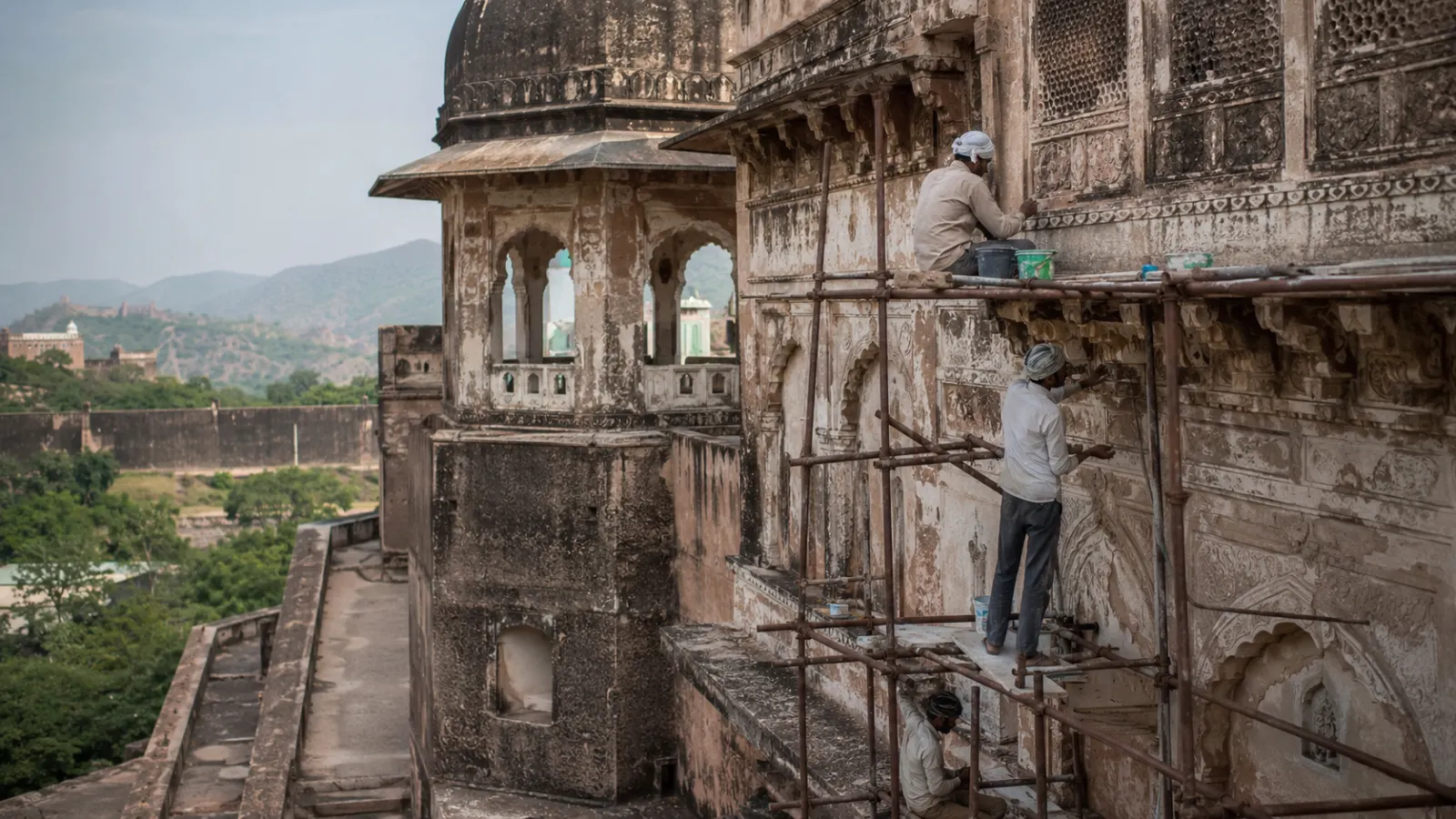
Maintenance is usually more important than dramatic restoration
Restoration attracts attention.
Maintenance rarely does.
Yet routine maintenance may be the most effective conservation strategy available.
Water entering through a damaged roof can destroy timber.
Blocked drainage can saturate masonry.
Vegetation can damage walls.
Small structural movement can become major failure when ignored.
The Venice Charter emphasises permanent maintenance because deterioration does not stop after a restoration project ends.
A spectacular restoration followed by twenty years of neglect can leave a monument in danger again.
Long-term conservation therefore depends on routine inspection, drainage, cleaning, minor repair and institutional continuity.
Stewardship is continuous.
Restoration should stop where guesswork begins
Restoration is sometimes imagined as making an old building look new again.
Professional conservation takes a more cautious approach.
The Venice Charter describes restoration as a specialised operation whose purpose is to preserve and reveal historical and aesthetic value while respecting original material and authentic evidence.
One of its most important principles is that restoration should stop where conjecture begins.
If reliable evidence shows that a missing architectural feature once existed, reconstruction may be defensible under particular circumstances.
If nobody knows what was there, an attractive modern guess should not be presented as historical truth.
Otherwise restoration can quietly become invention.
Reconstruction creates a genuine historical dilemma
What happens when a monument has largely disappeared?
Wars, earthquakes, fires and deliberate destruction have forced societies to confront this question repeatedly.
Reconstruction can restore a familiar skyline, religious space or civic symbol.
It can help communities recover after catastrophe.
But a reconstructed building may contain little original fabric.
That creates tension between different forms of authenticity.
Is authenticity located in original material?
Original design?
Traditional craftsmanship?
Location?
Function?
Community meaning?
There is no simple answer.
A reconstructed monument may be materially new while remaining culturally powerful.
Responsible interpretation should make that reconstruction visible rather than pretending that every part of the building survived continuously from the past.
Documentation makes conservation accountable
Every conservation intervention changes the monument to some degree.
Future researchers need to know which parts are original, which were repaired and which were replaced.
Documentation is therefore part of conservation itself.
Photographs, drawings, surveys, material analyses and intervention reports create a record of what existed before work began and what changed afterward.
Good documentation allows future conservators to distinguish historical fabric from twenty-first-century intervention.
Without it, restoration can blur the very evidence conservation was intended to protect.
Science has become central to conservation
Modern monument conservation is highly interdisciplinary.
Historians may investigate documents.
Archaeologists study physical layers.
Architects analyse design.
Structural engineers monitor movement.
Chemists examine pigments, mortar and stone decay.
Materials scientists investigate corrosion.
Environmental specialists measure humidity, pollution and temperature.
Dendrochronology can help date timber.
Microscopy can identify paint layers.
Three-dimensional scanning can record structures in extraordinary detail.
Recent ICOMOS climate-risk projects also combine modern monitoring technologies with traditional knowledge and historic systems—for example, using photogrammetry to monitor foundations while restoring historically resilient water-management practices at Angkor.
The monument therefore becomes both an object of historical study and a subject of continuing scientific research.
Tourism can preserve monuments—and damage them
Famous heritage sites often benefit economically from visitors.
Tourism can finance conservation, employ local people, support crafts and strengthen political interest in preservation.
But popularity creates its own problems.
Millions of visitors can wear floors and steps.
Humidity inside enclosed sites can change.
Sacred places can become overcrowded.
Tourism infrastructure can alter neighbourhoods.
Housing prices can rise.
Local businesses may be replaced by souvenir economies.
A monument therefore cannot be considered preserved merely because visitor numbers are increasing.
Visitor management is part of conservation.
The aim is to make heritage accessible without allowing access itself to destroy what people came to experience.
Climate change is becoming a major heritage threat
Historic monuments were built for environmental conditions that are now changing.
Rising temperatures, extreme rainfall, flooding, drought, wildfire, sea-level rise, salt intrusion and changing biological growth can accelerate deterioration.
Some risks are gradual.
Others are catastrophic.
ICOMOS has increasingly treated climate change as a central heritage issue and has developed programmes to assess vulnerability and strengthen adaptation planning. Recent assessments at sites including Angkor, Koutammakou and Cartagena document risks ranging from drought and extreme heat to rising seas and intensified rainfall.
Climate adaptation may therefore require improved drainage, environmental monitoring, emergency documentation, changes in visitor management, ecosystem restoration and revival of traditional building or water-management knowledge.
Conservation is no longer concerned only with protecting monuments from age.
It must increasingly prepare them for environmental conditions their builders never encountered.
War and deliberate destruction attack memory as well as material
Cultural monuments are sometimes destroyed accidentally during conflict.
They can also be targeted deliberately because they represent identity.
A religious building may embody the historical presence of a community.
A historic city may symbolise national continuity.
An archaeological site may challenge claims about who belongs to a territory.
Destroying such places can therefore become a political act aimed at damaging collective memory.
This is why international heritage protection is not simply concerned with architectural beauty.
The destruction of cultural heritage can affect identity, historical evidence, community continuity and the ability of future generations to understand what existed.
A monument cannot always be separated from its surroundings
Imagine preserving a medieval temple perfectly while constructing skyscrapers immediately around it.
The building survives.
But does everything important survive with it?
Views may disappear.
Historic approaches may be blocked.
Archaeological surroundings may be destroyed.
The monument's relationship with landscape may become unintelligible.
Conservation therefore often extends beyond the physical footprint of a building.
The Venice Charter emphasises the relationship between monuments and their settings, while UNESCO's Historic Urban Landscape approach treats heritage as part of a broader environment containing tangible, intangible, social, economic and environmental relationships.
This is why buffer zones, height controls, archaeological protection and landscape planning can become conservation tools.
Historic cities cannot become open-air museums
Protecting urban heritage creates another problem.
Cities need to change.
People need housing.
Transport systems expand.
Businesses need infrastructure.
Buildings require electricity, sanitation, fire safety and accessibility.
If preservation attempts to stop all change, historic neighbourhoods can become economically unsustainable or socially artificial.
If development ignores heritage entirely, the historical character can disappear.
UNESCO's Historic Urban Landscape approach addresses this tension by integrating conservation with wider urban development rather than treating historic areas as isolated museum objects. It explicitly incorporates cultural diversity, socioeconomic conditions, environmental factors and community values into planning.
The objective is not to freeze the city.
It is to manage change without destroying what gives the city historical meaning.
Local communities are part of heritage conservation
Conservation has sometimes been practised as though monuments belong mainly to experts.
Architects arrive.
Archaeologists investigate.
Officials regulate.
Residents are told what cannot change.
That approach can fail.
People living around historic sites often possess practical knowledge that outside professionals lack.
Caretakers know where water enters during monsoon seasons.
Craftspeople understand traditional mortar or timber repairs.
Religious communities know how sacred spaces function.
Residents remember earlier changes to buildings and landscapes.
The Historic Urban Landscape approach explicitly recognises community values and social conditions as part of heritage management.
Good conservation does not mean that every local preference automatically overrides technical evidence.
It means local people should not be treated as obstacles to the monument they have often helped sustain.
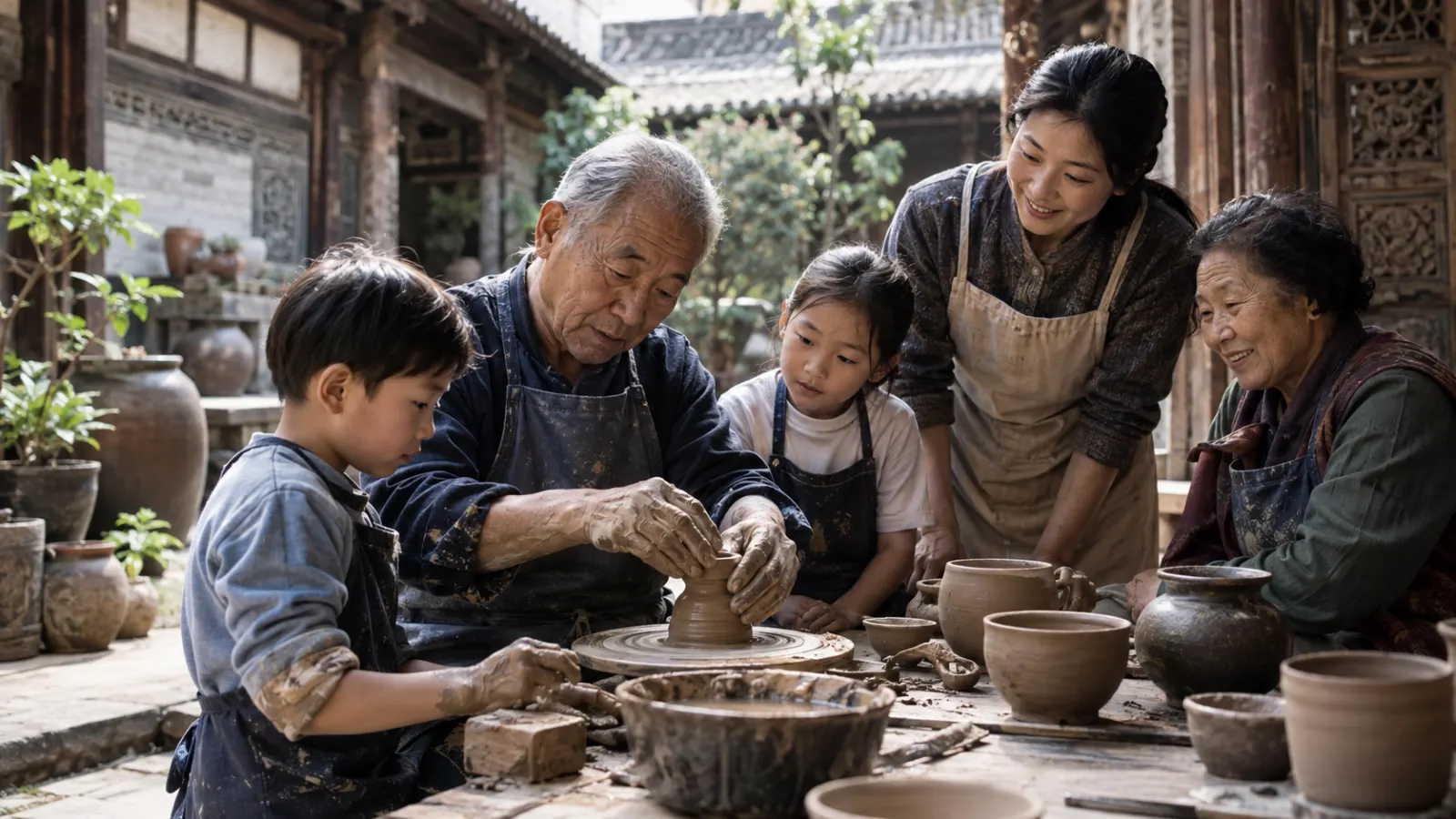
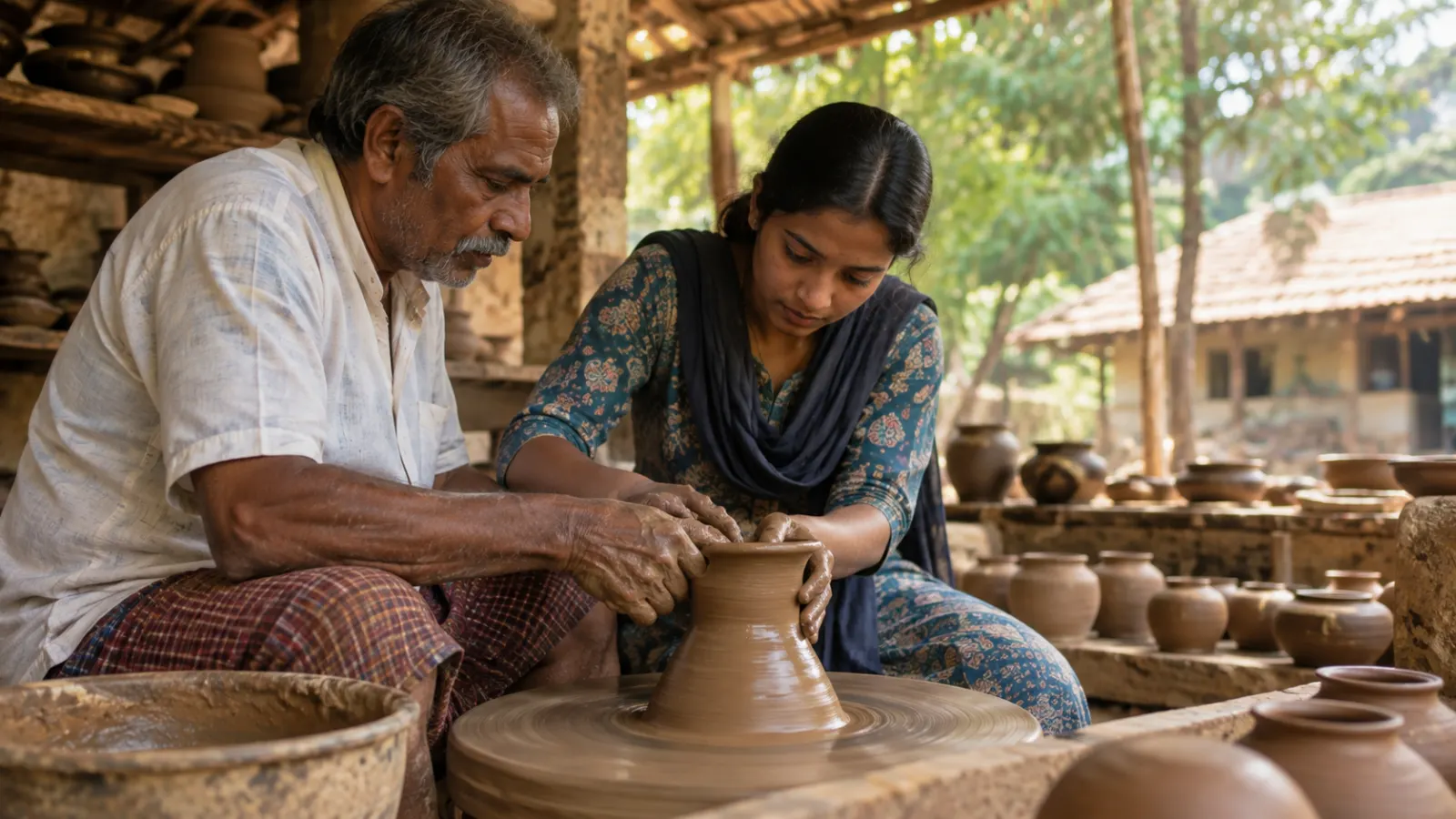
Traditional craft skills are themselves part of preservation
A historic structure cannot always be repaired appropriately using standard modern construction methods.
Old masonry may require lime mortar rather than modern cement.
Historic timber may rely on specialised joinery.
Decorative stonework may require craftspeople capable of reproducing techniques rarely taught in contemporary construction.
Conservation therefore depends on human knowledge as much as physical material.
If the monument survives but the skills required to maintain it disappear, future preservation becomes harder.
Supporting traditional crafts can consequently protect both buildings and knowledge systems.
Accessibility and conservation do not have to be enemies
Many historic monuments were designed long before contemporary expectations of accessibility.
They may contain steep stairs, narrow entrances, uneven surfaces and complex level changes.
Improving access can require physical intervention.
Ramps.
Lifts.
Handrails.
Tactile interpretation.
Lighting.
Digital reconstruction.
The challenge is to provide meaningful access while minimising unnecessary destruction of significant fabric.
Absolute refusal to adapt can exclude large groups of visitors.
Careless adaptation can damage historical evidence.
Good conservation seeks solutions between those extremes.
Economic value matters—but cannot be the only measure
Monuments can create substantial economic value.
They attract tourists.
Support hotels and restaurants.
Create conservation jobs.
Encourage craft industries.
Strengthen local identity.
Contribute to urban regeneration.
These benefits are real.
But market value cannot determine which monuments deserve survival.
Some of the most historically important places may attract few visitors.
An archaeological site can contain extraordinary scientific evidence without becoming commercially popular.
A memorial to political violence may be important precisely because society has an obligation to remember it rather than because it generates revenue.
If preservation followed tourism income alone, heritage would gradually favour whatever is easiest to market.
Historical significance requires a broader standard.
Interpretation determines what monument visitors actually learn
A perfectly preserved building can still communicate bad history.
Imagine a palace whose interpretation discusses only kings, architects and decorative styles.
Who quarried the stone?
Who built it?
Who served inside it?
Where did the wealth come from?
How did women use its spaces?
Who was excluded?
What happened to surrounding communities?
What changed after the dynasty ended?
Interpretation turns surviving material into historical understanding.
When interpretation repeats nationalist mythology, religious legend or tourism slogans without distinguishing them from evidence, conservation can unintentionally preserve misinformation alongside architecture.
Good heritage interpretation therefore distinguishes between:
documented evidence;
reasonable historical interpretation;
community tradition;
and later legend.
All may deserve discussion.
They should not automatically be presented as the same kind of fact.
Preserving monuments does not mean worshipping the past
Heritage debates often become trapped between two extremes.
One assumes old monuments should be protected because everything inherited from the past is sacred.
The other assumes monuments associated with oppression have no legitimate place in the present.
Neither position captures the full purpose of conservation.
Monuments can be beautiful and unjust.
Architecturally brilliant and politically oppressive.
Religiously sacred and historically contested.
Nationally celebrated and painful to particular communities.
Preservation does not require society to approve of everything represented by the monument.
It can preserve the evidence while allowing interpretation to change.
That distinction is essential.
Why historical monuments matter
Historical monuments matter because some forms of evidence cannot be recreated once they disappear.
A photograph of a demolished building is useful.
A drawing is useful.
A digital model may be extraordinarily detailed.
None is identical to the surviving material object and its relationship to place.
Monuments preserve information about technology, labour, architecture, political power, belief, economy, artistic practice and everyday life.
They give memory a physical location.
They support research.
They create opportunities for education.
They can sustain living religious and cultural traditions.
They can also force societies to confront uncomfortable histories.
But preservation should never reduce history to admiration.
The strongest conservation does something more difficult.
It protects enough authentic evidence for future generations to continue asking questions that the present may not even know how to ask.
That is why the most important question about a historical monument is not simply:
Is it beautiful?
Nor:
Do we agree with what it represents?
The deeper question is:
What would humanity lose if the evidence embodied in this place disappeared?
A monument matters when the answer cannot simply be rebuilt later.