Urbanisation: Meaning, Causes, Effects, Advantages, Problems and Sustainable Solutions
Urbanisation is the long-term process through which a growing share of people, economic activity, buildings and infrastructure become concentrated in towns and cities. It is often described simply as migration from villages to cities, but migration is only one part of the process. Cities also grow because their existing populations increase, because built-up areas expand into surrounding settlements and because places previously classified as rural become functionally or statistically urban.
Urbanisation therefore changes much more than where people sleep at night. It changes how people reach jobs, how firms find workers, how housing markets operate, how governments provide water and transport, how families organise care, how land is valued and how societies manage pollution, heat, flooding and public space.
It can produce extraordinary economic benefits. Dense urban areas can connect workers to many employers, firms to specialised suppliers, students to universities and patients to advanced healthcare. Infrastructure can serve large populations more efficiently when people live relatively close together.
But concentration also concentrates problems. If housing, transport, water, sanitation and local government do not expand with population, urban opportunity can turn into unaffordable rent, informal settlements, congestion, pollution and long commutes.
The central question is therefore not whether urbanisation is inherently good or bad.
It is whether cities can expand access to opportunity faster than inequality, exclusion and environmental risk become embedded in their geography.
What Is Urbanisation?
Urbanisation is usually measured as an increase in the proportion of a population living in urban settlements, but that apparently simple definition hides an important difficulty: countries do not all define “urban” in the same way.
One government may classify a settlement as urban once it crosses a population threshold. Another may consider population density, administrative status, employment structure or infrastructure. This makes international comparisons difficult.
The United Nations World Urbanization Prospects 2025 introduced wider use of the harmonised Degree of Urbanization framework to improve comparability. Under this framework, settlements are classified using population size and density rather than relying only on each country's national definition. The UN reports that cities contained about 45% of the world's 8.2 billion people in 2025, more than twice the share recorded in 1950. The dataset covers cities, towns and rural areas across 237 countries or areas and provides projections through 2050.
Other datasets may report a higher global urban share because they group settlements differently. A 2026 World Bank overview, for example, describes approximately 4.7 billion people—about 58% of the global population—as living in urban areas.
These numbers are not necessarily contradictory.
They demonstrate why every urban statistic should be accompanied by its definition.
For practical purposes, urbanisation can be understood through three connected changes: more people live in urban settlements, cities physically expand, and economic and social activity becomes increasingly organised through urban systems.
What Causes Urbanisation?
Urban growth is often associated with rural-to-urban migration, and migration can be extremely important. People move toward cities for employment, education, healthcare, family networks and access to markets or services.
But migration is not the only cause.
Urban populations can increase through natural population growth, meaning births exceed deaths among people already living in towns and cities. Urban boundaries can also expand outward and absorb settlements that were previously classified as rural. Governments may reclassify rapidly growing settlements when they reach population or administrative thresholds.
Economic transformation creates another powerful driver. As economies shift from agriculture toward manufacturing and services, many jobs become concentrated in places where firms, infrastructure and workers are close together. Universities, hospitals, financial services, government administration and cultural industries likewise tend to cluster.
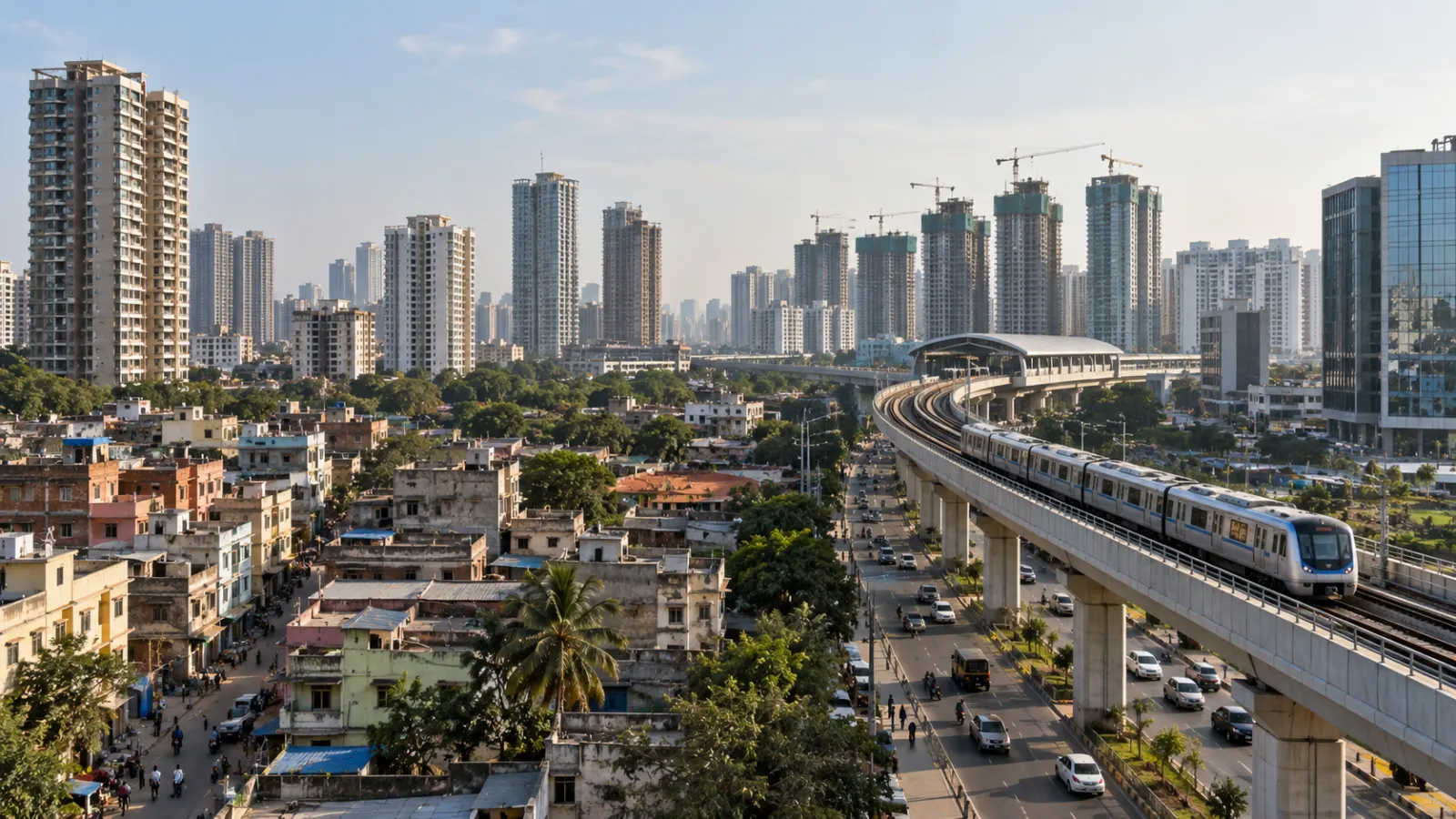
Transport can intensify this process. A new railway, metro line, highway or port can change which land is practically connected to the city and enable metropolitan areas to spread beyond traditional administrative boundaries.
Urbanisation should therefore be understood as the interaction of migration, demographic growth, economic restructuring, infrastructure and changing settlement boundaries.
Why Cities Create Economic Opportunity
Cities are economically powerful partly because proximity changes what becomes possible.
A manufacturer located near multiple suppliers can replace inputs more easily. A technology company located near universities can recruit specialised workers. A worker living inside a large labour market can potentially choose among many employers rather than depend on one local firm.
Economists call many of these benefits agglomeration economies.
The World Bank's 2026 urban-development analysis describes cities as environments where scale, specialisation and innovation can reinforce productivity. Firms benefit from proximity to workers, customers, suppliers and competitors, while workers gain access to thicker labour markets containing more potential employers.
Density can also make specialised services viable. A small settlement may not generate enough demand for a major hospital, research university, mass-transit network or highly specialised professional service. A large metropolitan area can.
Knowledge can spread more easily as well. Workers move among firms, suppliers learn from customers and entrepreneurs encounter ideas through repeated interaction.
These advantages explain why urbanisation has historically accompanied rising national income.
But concentration creates potential, not guaranteed prosperity.
A city divided by poor transport, inadequate housing and unreliable infrastructure can prevent residents and firms from obtaining the very agglomeration benefits density is supposed to create.
Urbanisation and Employment
Urbanisation often accompanies a shift away from predominantly agricultural employment toward industry and services.
Cities can offer employment in manufacturing, construction, logistics, retail, finance, hospitality, healthcare, government, education, technology and many other sectors. Large urban labour markets also allow workers to specialise because firms can recruit from a wider pool.
But simply moving people into cities does not automatically create productive jobs.
Rapidly growing cities can develop enormous informal labour markets when formal job creation cannot absorb the available workforce. Street vending, domestic work, casual construction, informal transport and small household enterprises may provide livelihoods while offering limited income security, legal protection or social insurance.
This distinction is crucial.
A city can have many jobs but poor job quality.
Recent World Bank analysis of cities in the Middle East and North Africa similarly stresses that urban employment outcomes depend on access to land, electricity, water, transport, housing and functioning labour markets rather than population concentration alone.
Urban policy should therefore ask not merely whether investment arrives, but whether residents can actually reach, qualify for and benefit from the jobs it creates.
Housing Is Now One of the Central Urbanisation Problems
People can move to cities much faster than housing systems can produce affordable, serviced homes.
Land has to be made legally available. Roads, sewers, water and electricity must reach new neighbourhoods. Developers need finance. Planning systems need capacity. Existing residents may oppose new construction. Land prices can rise as demand increases.
When formal housing supply cannot respond, rents increase and lower-income households search for cheaper alternatives.
UN-Habitat's SDG 11 Global Report 2026 places housing at the centre of sustainable urban development and concludes that SDG 11 remains off track overall. UN-Habitat reports that more than 3 billion people lack access to adequate housing, including more than 1.1 billion people living in slums and informal settlements. It also reports severe global affordability pressure.
Housing is therefore not merely another urban sector.
Where people can afford to live determines their access to employment, education, transport, safety and environmental quality.
A city cannot plausibly describe itself as inclusive if economically essential workers must live so far from employment centres that commuting consumes several hours and a large share of household income.
Informal Settlements Are Often a Rational Response to an Irrational Housing Market
Informal settlements are frequently presented as though they emerge simply because residents ignore planning rules.
That interpretation overlooks the housing-market problem.
A low-income worker may need access to an urban labour market but be unable to afford formally supplied housing close to employment. Informal accommodation may therefore provide the only combination of price and location available.
This does not mean informal settlements are ideal. Residents may face insecure tenure, unsafe structures, overcrowding, inadequate drainage, poor sanitation and high exposure to floods or landslides.
But eviction alone rarely solves the underlying problem.
If jobs remain in the city and affordable formal housing remains unavailable, displacement may simply move households farther away or produce another informal settlement elsewhere.
Effective policy may involve in-situ upgrading, secure tenure, basic services, affordable housing supply, serviced land and better transport rather than treating low-income residents as the cause of the housing shortage.
UN-Habitat's 2026 work explicitly treats informal-settlement transformation as central to achieving sustainable urban development.
Location Can Matter as Much as Housing Quality
A technically adequate home can still produce exclusion if it is located far from employment, education, healthcare and transport.
This is why UN-Habitat's current spatial-inclusion framework focuses on access, proximity and connectivity rather than simply whether buildings exist.
Imagine two affordable housing projects.
One is connected to employment districts by frequent public transport and surrounded by schools, shops and healthcare.
The other is located on inexpensive peripheral land with few jobs and unreliable transport.
Both may contain structurally adequate housing.
Their effects on opportunity are completely different.
Location affects household finances because distance becomes a recurring expense in both money and time. A cheap home combined with an expensive three-hour commute may not be affordable in any meaningful sense.
Urban housing policy therefore needs to be coordinated with land use and transport, not managed as a separate problem.
Transport Determines How Much of the City People Can Actually Use
Cities may contain millions of jobs, schools and services, but an individual resident can access only the opportunities that can realistically be reached.
Transport therefore changes the effective size of the labour market.
A fast, affordable metro or bus system can dramatically increase the number of employers available within a reasonable commute. Poor transport can make physically nearby opportunities functionally inaccessible.
World Bank transport projects provide concrete examples. Its 2026 analysis reports that São Paulo Metro Line 4 substantially reduced travel times and increased job accessibility, while Dakar's Bus Rapid Transit system has expanded the number of employment opportunities reachable by lower-income residents.
Globally, the problem remains large. UN-Habitat's 2026 SDG 11 assessment reports that four in ten urban residents still lack convenient access to public transport.
Transport should therefore not be evaluated only by kilometres of road or number of buses.
A more useful measure is:
How many useful opportunities can residents reach within a reasonable amount of time and money?
Urbanisation Can Improve Education and Healthcare Access
Population concentration can make specialised educational and medical services economically feasible.
Universities benefit from large pools of students and faculty. Teaching hospitals can support highly specialised departments because they serve large populations. Diagnostic laboratories, specialist clinics and research institutions often cluster in metropolitan areas.
Cities can therefore increase the range of services physically available to residents.
But proximity is not the same as access.
Fees may be unaffordable. Public hospitals may be overloaded. Schools may differ dramatically by neighbourhood. Transport may prevent poorer residents from reaching specialised services.
Urbanisation expands the opportunity set.
Institutions determine how widely that opportunity is distributed.
This distinction appears repeatedly across urban life: having something somewhere in the city does not mean every resident can practically use it.
Urbanisation Changes Family and Household Life
Urbanisation can alter household organisation because city life changes housing costs, employment patterns, mobility and time use.
Smaller dwellings can make very large households less practical. Migrants may move away from extended family networks for work. Long commuting times can change childcare and eldercare arrangements.
Urban employment and education can also influence marriage timing and fertility. In many societies, urban families have fewer children on average than rural families, although the relationship varies with income, culture and public policy.
Extended families do not necessarily disappear.
Digital communication and transport can maintain strong kinship networks across long distances, while relatives may continue sharing money, childcare and other support even when they no longer live together.
Urbanisation therefore tends to reorganise family relationships rather than simply replace one family type with another.
Gender and Urban Opportunity
Cities can create important opportunities for women through access to education, formal employment, healthcare, childcare and political participation.
Dense labour markets can provide a wider range of occupations than many rural economies. Public services can reduce the time required for household tasks. Universities and professional networks can expand economic autonomy.
But those opportunities depend heavily on urban design and institutions.
Unsafe transport can restrict women's mobility. Poor lighting and insecure public space can change when and where women travel. Expensive childcare can make employment economically impossible. Informal work can expose women to insecurity even when urban job opportunities appear large in aggregate.
The World Bank's 2026 analysis of MENA cities, for example, identifies transport, childcare and safety among the factors affecting women's access to urban jobs.
Gender equality is therefore partly a question of urban accessibility.
A job opportunity that someone cannot safely or affordably reach is not a meaningful opportunity.
Urbanisation Changes Culture and Social Relationships
Cities bring together people from different regions, languages, religions and occupational groups.
This proximity can produce new forms of music, cuisine, art, politics and identity. Migrants combine traditions. Businesses adapt products for diverse populations. New cultural scenes emerge because there is enough demand to sustain specialised communities.
Urban life can also increase individual choice.
A person in a large city may form social networks around profession, hobby, politics, religion, sexuality or artistic interest rather than relying primarily on neighbourhood or kinship.
Sociologists have long associated urban life with increased anonymity and weaker direct control by traditional communities.
But diversity does not automatically create integration.
Housing discrimination, labour-market segmentation and economic inequality can produce spatial segregation in which different groups live close geographically while rarely sharing schools, workplaces or public spaces.
Cities can therefore increase both social mixing and social separation.
Urbanisation Can Intensify Inequality
Cities frequently contain extraordinary wealth and extreme poverty within a few kilometres of one another.
High-paying professional sectors may exist alongside insecure informal employment. Luxury housing may rise beside overcrowded settlements. World-class hospitals can coexist with communities lacking basic services.
Urbanisation can make inequality highly visible.
But inequality is not just visible—it can become spatially reproduced.
Housing costs push lower-income households toward certain neighbourhoods. Those areas may have weaker schools, worse transport, higher environmental exposure or fewer employment connections. Children growing up there then face different opportunities, reinforcing the original inequality.
UN-Habitat describes spatial inclusion precisely in terms of overcoming unequal access to housing, services and opportunities.
A city should therefore not be judged only by its average income.
The distribution of access across neighbourhoods may tell us more about whether urban prosperity is actually shared.
Land Markets Shape Who Lives Where
Urban land becomes valuable because location provides access to jobs, infrastructure and social networks.
As cities grow, competing uses bid for desirable locations. Commercial development may displace residential areas. High-income households can pay more for neighbourhoods near employment centres, transport and amenities.
Lower-income residents may then move toward peripheral land where housing is cheaper.
This creates a paradox.
People who can least afford transport may end up living farthest from employment.
Redevelopment can intensify the process. Public investment in parks, transit or streets can improve a neighbourhood while raising land values enough to displace some existing residents.
Urban policy therefore needs to think about land value, tenure, taxation, affordable housing and displacement together.
Physical improvement is not automatically social inclusion if the residents who needed the improvement can no longer afford to remain.
Public Space Is Urban Social Infrastructure
Cities are full of privately controlled spaces: homes, workplaces, shops and commercial entertainment.
Public spaces serve a different function.
Parks, streets, libraries, playgrounds, markets and plazas allow people who do not belong to the same household, company or social group to occupy shared environments.
Good public space can support recreation, physical activity, informal trade, social contact and civic life.
Its design also affects safety and inclusion. Lighting, accessibility, shade, seating and connections to transport influence who can realistically use a place.
When public space becomes heavily privatised or exclusionary, people without purchasing power lose access to part of urban life.
UN-Habitat's 2026 SDG 11 assessment notes continuing pressure on public and green spaces alongside other urban sustainability challenges.
Public space is therefore not empty land waiting for development.
It is part of the social infrastructure of urbanisation.
The Environment: Cities Concentrate Consumption but Can Also Increase Efficiency
Urban populations consume enormous amounts of energy, water, food and materials and generate large quantities of waste.
Poorly planned expansion can destroy farmland and ecosystems, increase vehicle dependence and require long infrastructure networks. Industrial concentration can expose residents to severe air and water pollution.
Yet density itself is not necessarily environmentally harmful.
Compact settlement can reduce the distance between homes, jobs and services. Public transport becomes more viable when enough riders live nearby. Apartment buildings can require less energy per household than dispersed detached housing. Water, sewerage and waste systems can serve many people over shorter distances.
The relevant comparison is therefore not city versus nature.
Environmental performance depends on urban form, energy systems, transport, building efficiency, consumption and governance.
A compact city organised around clean energy and public transport may produce much lower environmental impact per resident than sprawling development dependent on private cars.
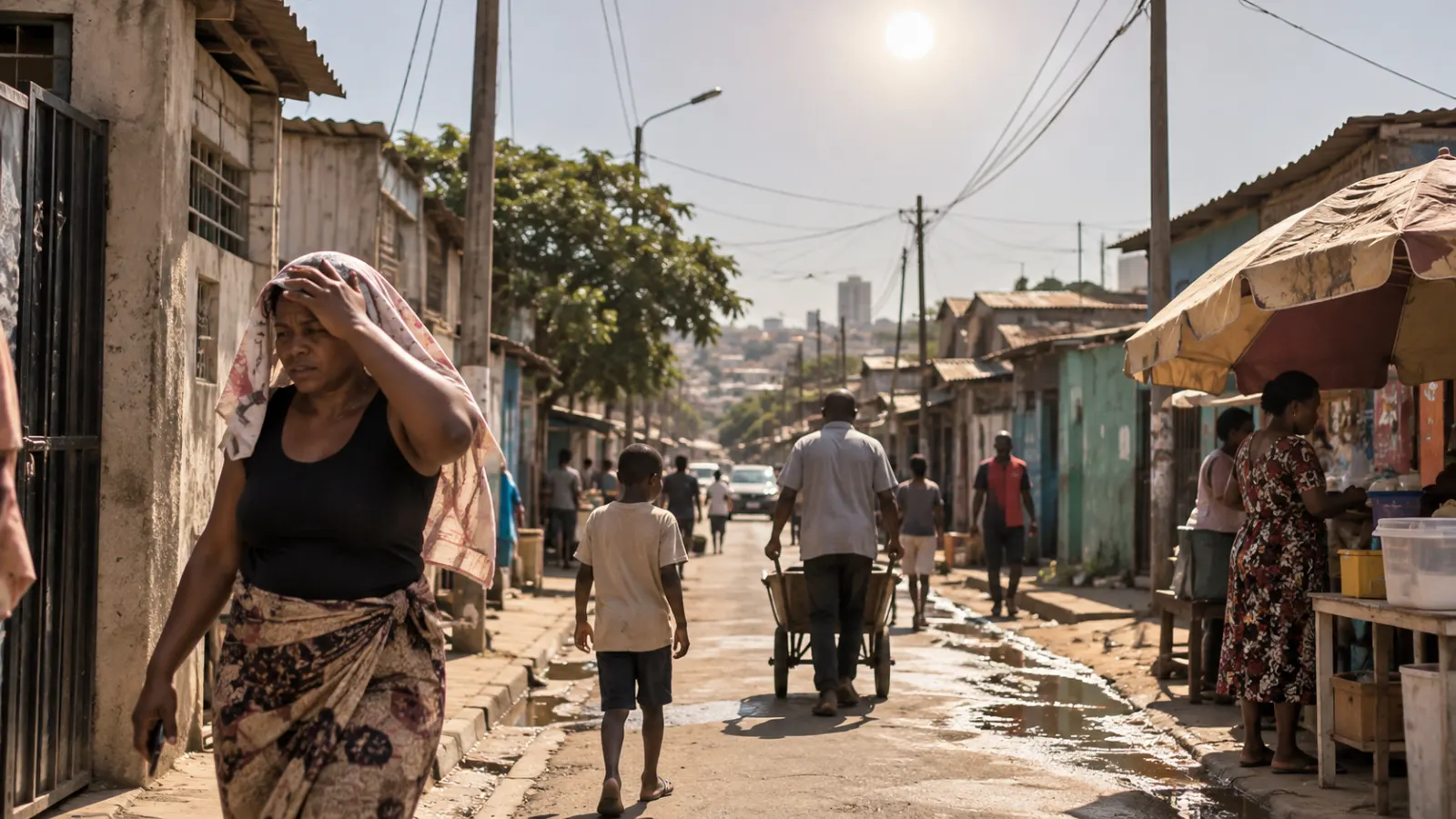
Urban Heat Is Becoming a Major Climate Risk
Cities can be significantly warmer than their surrounding regions because concrete, asphalt and buildings absorb and re-radiate heat while vegetation is often limited.
This urban heat-island effect combines with global warming to create increasingly severe health risks.
Exposure is also socially unequal.
Wealthier neighbourhoods may contain larger homes, air conditioning and abundant tree cover. Lower-income areas can have dense construction, metal roofs, limited shade and residents whose jobs require outdoor work.
India provides a striking example. A 2025 World Bank assessment found that city centres in the Indian cities studied were already experiencing temperatures 3–4°C higher than surrounding areas because of urban heat effects and warned that rapid built-up expansion was also reducing stormwater absorption.
Urban climate adaptation therefore includes trees, reflective surfaces, building design, cooling access, land-use planning and emergency health systems.
Heat is not only a meteorological problem.
It is a housing and inequality problem.
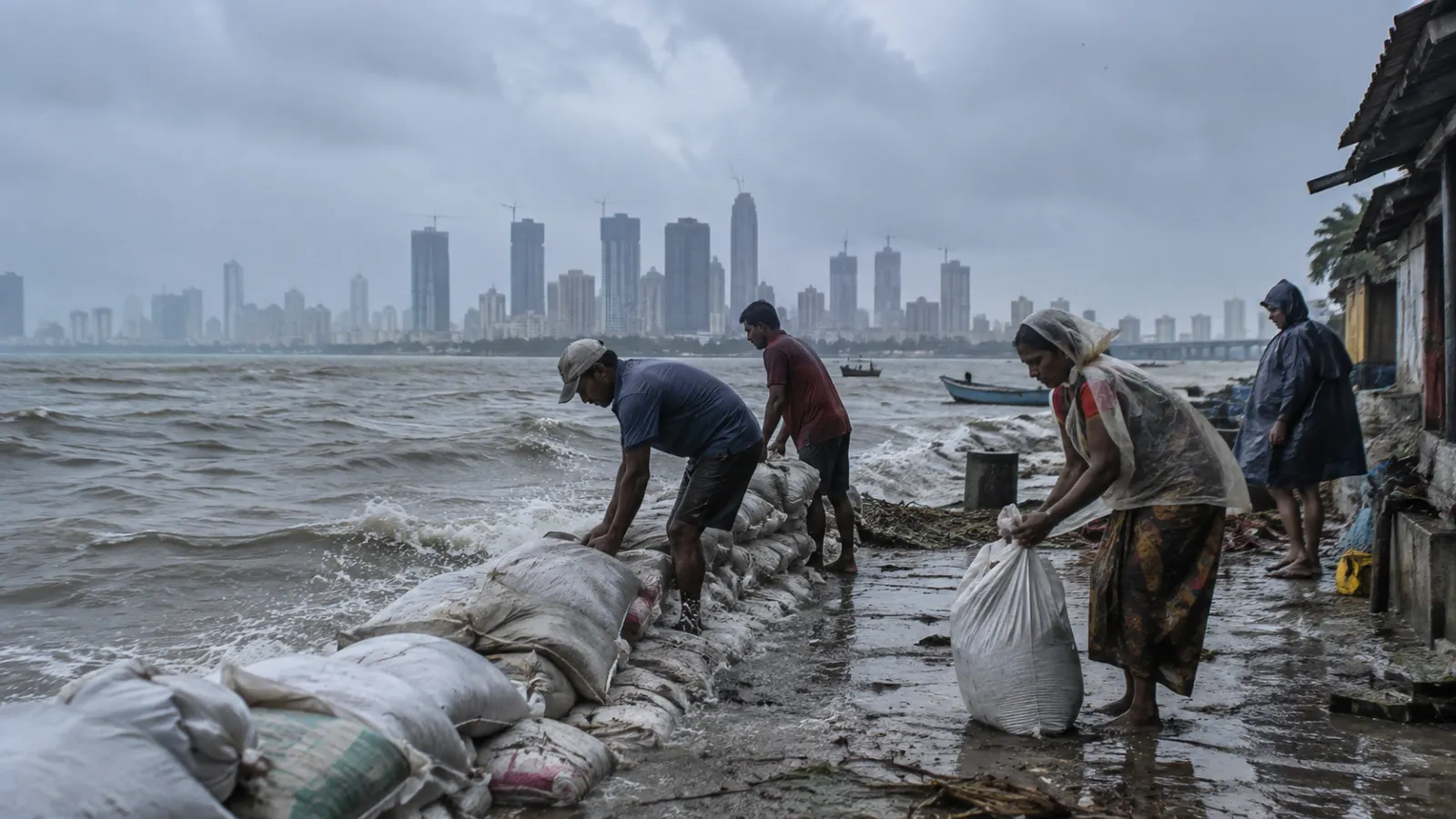
Flooding and Urban Expansion
Cities have historically developed near rivers, coasts and ports because those locations facilitate water supply, transportation and trade.
Those same locations can create exposure to flooding.
Urbanisation intensifies risk when wetlands are filled, natural drainage is blocked and absorbent soil is replaced by roads and buildings. Rainwater then reaches drainage systems more rapidly.
As population and property values grow, the amount that can be damaged in one event also increases.
Climate change adds sea-level rise and more extreme rainfall in many places.
Good urban flood management therefore involves more than building larger drains. It can include protecting floodplains, restoring wetlands, controlling construction in high-risk locations, maintaining drainage systems and using parks or permeable surfaces to manage stormwater.
Resilience is partly a question of where cities choose to grow before the disaster occurs.
Urbanisation Changes Rural Areas Too
Urbanisation should not be understood as a story in which cities grow and rural areas simply disappear.
Cities depend on rural regions for food, water, energy, labour and ecological services. Growing urban demand can transform agricultural markets. Farmers may shift toward higher-value products demanded by urban consumers. Roads and wholesale markets can connect rural producers to larger customer bases.
Migration creates further links. Workers may send remittances from cities to families in rural areas, financing education, housing or agricultural investment.
Some households deliberately maintain both rural and urban economic strategies.
Peri-urban zones blur the distinction even further. Farming, warehouses, housing, industry and transport infrastructure can coexist as metropolitan areas expand outward.
Urbanisation is therefore better understood through a rural–urban continuum rather than a simple opposition between city and countryside.
Small and Intermediate Cities Matter More Than Megacity Headlines Suggest
Urbanisation is often illustrated through megacities such as Jakarta, Dhaka, Tokyo, Mumbai or Lagos.
Megacities matter, but they do not represent the whole urban future.
The UN World Urbanization Prospects 2025 reports that the number of megacities with at least 10 million inhabitants has risen from eight in 1975 to 33 in 2025, with most located in Asia.
Yet a large share of future urban growth will occur in small and intermediate cities, particularly across Africa and Asia. The World Bank's 2026 analysis stresses that many of the most consequential urban-planning decisions will occur in cities that attract much less international attention than megacities.
Smaller cities can play an important economic role by linking rural producers to markets and providing hospitals, colleges, administration and employment without some of the congestion costs of the largest metropolitan areas.
But they may also have weaker municipal finances and planning capacity.
Their size does not make governance easy.
Urbanisation Requires Metropolitan Governance
Modern cities frequently extend beyond one municipal boundary.
Someone may live in one local authority, work in another, use a transport network managed by a regional body and obtain water from a watershed crossing several jurisdictions.
Housing markets operate across the entire metropolitan region.
Traffic does not stop at a municipal border.
Air pollution crosses boundaries.
Yet planning institutions are often fragmented.
One municipality can approve large housing developments while another controls the jobs or transport infrastructure residents depend on. Local governments may compete for tax revenue rather than coordinate land use.
Urbanisation therefore creates a governance problem at a scale larger than the traditional city hall.
Metropolitan transport authorities, shared infrastructure planning, regional land-use coordination and fiscal arrangements can help align decisions with the actual geography of urban life.
A city can be functionally integrated while remaining administratively divided.
Local Government Capacity Determines Whether Plans Become Reality
Urban planning is often discussed as though producing the right master plan solves urban problems.
Implementation requires much more.
Local governments need land records, engineers, planning staff, financial management, tax capacity and institutions capable of coordinating utilities and private development.
They also need political legitimacy and mechanisms for citizen participation.
Two cities growing at similar rates can therefore experience completely different outcomes.
One extends infrastructure ahead of development, preserves transport corridors and enables housing supply.
Another reacts only after informal growth has already occupied land intended for roads or drainage.
The World Bank's 2026 urban-development analysis emphasises precisely this distinction: the benefits of urbanisation are not automatic, and planning how cities grow is as important as the speed of growth itself.
Urbanisation creates opportunity.
Governance determines how much of that opportunity survives implementation.
Digital Technology and the Smart-City Idea
Digital systems can improve aspects of urban management. Sensors can monitor traffic or water networks. Digital payments can simplify transit. Online permitting can reduce administrative time. Mapping can reveal service gaps and rapidly changing settlements.
But the phrase “smart city” can become misleading when technological novelty is treated as the objective.
A sophisticated application does little for residents without connectivity, affordable devices or digital literacy. Extensive surveillance can increase administrative capacity while weakening privacy. Proprietary systems can create dependence on particular vendors.
A smart city should therefore be evaluated by whether technology solves real urban problems inclusively and accountably.
UN-Habitat's recent smart-city work emphasises a people-centred approach, recognising that technology can deepen exclusion when connectivity, data governance and participation are ignored.
Technology can improve governance.
It cannot replace governance.
Advantages and Disadvantages of Urbanisation
Urbanisation produces opportunities and pressures at the same time.
| Potential advantage | Corresponding challenge |
|---|---|
| Larger labour markets | Informal or insecure employment can remain widespread |
| Agglomeration and higher productivity | Congestion and high land costs can offset those benefits |
| Access to specialised healthcare | Services may remain unaffordable or geographically unequal |
| More universities and education | School quality can differ sharply by neighbourhood |
| Public transport becomes viable | Poor transport can isolate peripheral communities |
| Dense infrastructure can be efficient | Infrastructure can collapse if investment lags behind growth |
| Cultural diversity and innovation | Segregation and discrimination can limit interaction |
| Greater economic specialisation | Cost of living can rise faster than wages |
| Potentially lower transport emissions through density | Urban sprawl can increase car dependence |
| Large markets for firms | Housing shortages can prevent workers from reaching those markets |
| Greater individual choice and anonymity | Weak community ties or loneliness can affect some residents |
| Digital service delivery | Digital exclusion and surveillance risks can increase |
The table shows why describing urbanisation as either beneficial or harmful is too simplistic.
The outcome depends on how the city is organised.
What Makes Urbanisation Sustainable?
Sustainable urbanisation begins with housing because people need somewhere affordable and safe to live before they can benefit from the rest of the city. UN-Habitat's 2026 SDG 11 assessment makes this explicit by placing housing at the centre of progress on transport, planning, environmental quality, resilience and public space.
Land-use planning should then connect housing to jobs and services rather than pushing lower-income residents permanently to disconnected peripheral locations.
Transport should maximise access rather than merely vehicle speed. Walking, cycling and reliable public transport can make dense settlement function while reducing congestion and pollution.
Infrastructure needs to expand before growth overwhelms existing networks. Water, sanitation, drainage, energy and waste systems require long-term financing and maintenance, not only one-time construction.
Climate resilience should be built into land use. Cities can preserve floodplains, increase tree cover, reduce heat exposure and strengthen buildings before hazards become disasters.
Governance should also include existing residents. Redevelopment that improves physical infrastructure while displacing lower-income communities can make the city more attractive and less inclusive simultaneously.
The strongest urban policy therefore combines housing, transport, land, infrastructure, resilience and participation rather than treating each as a separate engineering problem.
Common Misunderstandings About Urbanisation
One common misconception is that urbanisation simply means rural people migrating to cities. Migration matters, but natural population growth, settlement expansion and statistical reclassification also contribute.
Another is that urbanisation automatically produces economic development. Cities create conditions that can increase productivity, but poor housing, congestion, weak infrastructure and fragmented governance can prevent those benefits from materialising.
It is also misleading to assume that informal settlements result merely from people refusing to follow planning rules. They frequently arise because formal housing systems fail to provide affordable homes near employment.
Another myth is that density itself is environmentally harmful. Dense settlement can support public transport and efficient infrastructure, while low-density sprawl can increase land consumption and vehicle dependence.
Nor is urbanisation the end of rural society. Cities and rural areas remain economically and environmentally interconnected.
Finally, a technologically advanced “smart city” is not necessarily an inclusive city. Digital systems need to improve actual access and capability rather than simply increase the quantity of urban technology.
Frequently Asked Questions About Urbanisation
What is urbanisation? Urbanisation is the process through which a growing share of population and economic activity becomes concentrated in urban settlements and cities expand physically and institutionally.
What causes urbanisation? Major causes include rural-to-urban migration, natural population growth within cities, economic transformation, expansion of urban boundaries and reclassification of settlements.
What are the main effects of urbanisation? Urbanisation can increase productivity, employment opportunities and access to specialised services while also increasing housing pressure, congestion, inequality, pollution and infrastructure demand.
What are the advantages of urbanisation? Potential advantages include larger labour markets, specialised services, agglomeration economies, innovation, public transport and more efficient infrastructure.
What are the disadvantages of urbanisation? Poorly managed urbanisation can produce housing shortages, informal settlements, congestion, pollution, segregation, environmental risk and overloaded public services.
What percentage of the world lives in cities? Under the harmonised Degree of Urbanization used in the UN World Urbanization Prospects 2025, cities contain about 45% of the world's 8.2 billion people. Broader urban definitions can generate higher shares.
Why do different sources report different urbanisation percentages? Countries and international organisations use different definitions of cities, towns and urban areas. The latest UN framework distinguishes these categories more systematically to improve international comparison.
How does urbanisation affect the economy? Cities can increase productivity through larger labour markets, specialised suppliers, infrastructure sharing and knowledge spillovers, but these gains depend on functioning housing, transport and institutions.
What are agglomeration economies? Agglomeration economies are benefits that firms and workers gain from being physically concentrated near one another, including better labour matching, specialised suppliers and knowledge exchange.
How does urbanisation affect housing? Population can increase faster than formal housing supply, raising rents and encouraging overcrowding or informal settlements.
Why do informal settlements develop? They often develop when lower-income households need access to city jobs but formal housing is unaffordable or insufficient.
How does transport affect urban inequality? Transport determines which jobs and services residents can reach. Poor connectivity can isolate lower-income neighbourhoods even when employment exists elsewhere in the same city.
Does urbanisation improve healthcare and education? It can make specialised services easier to provide, but affordability, quality and physical accessibility determine whether residents can actually use them.
How does urbanisation affect women? Cities can expand access to jobs and education, while unsafe transport, childcare shortages and insecure employment can limit those gains.
Does urbanisation increase inequality? It can. Housing costs, spatial segregation and unequal access to transport or services can translate economic inequality into neighbourhood inequality.
How does urbanisation affect the environment? Cities consume resources and generate waste and pollution, but compact urban forms can also support public transport and more efficient infrastructure.
What is the urban heat-island effect? It is the tendency for built-up urban areas to become warmer than surrounding areas because surfaces such as asphalt and concrete absorb and retain heat.
Why are cities vulnerable to flooding? Many cities are located near coasts and rivers, while extensive paved surfaces can reduce water absorption and increase runoff.
Does urbanisation harm rural areas? Not necessarily. Urban demand and remittances can increase rural income, although land conversion and migration can also create new pressures.
Are megacities responsible for most urban growth? No. Megacities are highly visible, but substantial future growth will occur in small and intermediate cities, particularly in Africa and Asia.
What is sustainable urbanisation? Sustainable urbanisation means managing housing, land, transport, infrastructure, public space and environmental risks so urban growth expands opportunity without creating persistent exclusion or unsustainable resource use.
What is a smart city? A smart city uses digital technology and data to improve urban systems. Technology is useful only when it improves services, access, accountability and quality of life rather than becoming an objective by itself.
Why is urban planning important? Population and buildings can expand faster than infrastructure. Planning can preserve transport corridors, allocate land, prepare services and reduce future environmental and economic costs.
Urbanisation Is Not the Problem—the Quality of Urban Growth Is
The deepest lesson about urbanisation is that concentration changes both opportunity and risk.
When workers and firms come closer together, labour markets become deeper.
When enough people live in one place, universities, hospitals, public transport and specialised businesses become viable.
When infrastructure serves dense populations effectively, each network can reach large numbers of users.
That is why cities have repeatedly become centres of economic growth and cultural innovation.
But density also makes institutional failure highly visible.
If housing supply fails, millions compete for scarce land.
If transport fails, congestion consumes people's time.
If drainage fails, dense neighbourhoods flood.
If waste collection fails, contamination accumulates.
If housing and employment become spatially separated, poverty turns into hours of commuting.
If climate adaptation fails, heat and flooding threaten enormous concentrations of people and assets.
The latest international evidence makes housing particularly difficult to ignore. UN-Habitat's 2026 SDG 11 Global Report says the world remains off track on sustainable cities and identifies inadequate and unaffordable housing as a fundamental constraint, with more than 3 billion people lacking adequate housing and more than 1.1 billion living in informal settlements and slums.
At the same time, urbanisation will continue.
The UN's 2025 population work expects most future population growth to occur in cities and towns, while the World Bank's latest analysis stresses that much of the coming transformation will take place in smaller cities across regions where planning capacity and public finance are often limited.
The practical choice is therefore not between urbanisation and no urbanisation.
It is between different forms of urbanisation.
One path allows housing to become scarce while jobs concentrate elsewhere, pushing poorer workers toward increasingly distant settlements.
Another increases housing supply and connects neighbourhoods to employment.
One path builds roads only after congestion becomes severe.
Another reserves space for public transport and infrastructure before development occupies the land.
One removes informal settlements without addressing why low-income residents could not obtain formal housing.
Another upgrades communities while expanding affordable alternatives.
One adopts smart-city technology because it looks modern.
Another uses technology only where it makes services more accessible, reliable and accountable.
One treats climate resilience as disaster response.
Another decides where and how to build before exposure becomes permanent.
This is why governance ultimately determines the social consequences of urbanisation.
Population density creates possibilities.
Institutions convert them into outcomes.
The best measure of successful urbanisation is therefore not simply how large a city becomes, how many towers appear on its skyline or how quickly its metropolitan GDP grows.
A more demanding test asks:
Can ordinary residents afford somewhere safe to live? Can they reach useful work and public services without sacrificing unreasonable amounts of time and income? Can infrastructure keep functioning as the population expands? Can disadvantaged neighbourhoods gain opportunity rather than becoming permanently disconnected from it? Can growth occur without making climate and environmental risks progressively worse?
When the answer is yes, urbanisation can become one of the strongest engines of productivity, mobility and human development.
When the answer is no, the same concentration that creates opportunity can concentrate exclusion.
Urbanisation does not automatically create a successful city. It creates the density within which good or bad urban institutions become enormously consequential.