Sustainable economic growth is one of the most important ideas of the twenty-first century because it asks a hard question: can an economy keep growing without destroying the conditions that make growth possible? For much of modern history, countries measured progress mainly by output. More factories, more roads, more power, more trade and more consumption meant growth. The environmental and social costs were often treated as side effects. Today that model is under pressure.
The old assumption was that countries could pollute first and clean up later. Rich countries followed that path in different ways during industrialisation. But a world facing climate change, water stress, biodiversity loss, urban congestion and inequality cannot simply repeat the same pattern. Sustainable economic growth means expanding income, jobs and productivity while preserving ecological stability, social resilience and future capacity.
The idea is not anti-growth. Poor and developing countries still need growth urgently. They need jobs, infrastructure, electricity, housing, transport, healthcare, education and industrial capacity. The question is not whether growth is needed. The question is what kind of growth can last.
What Sustainable Economic Growth Means
Sustainable economic growth is growth that can continue over time without producing unacceptable economic, social or environmental damage. It requires three broad conditions. First, the economy must be productive enough to raise incomes and create jobs. Second, the gains of growth must be reasonably broad so that society remains stable and opportunity expands. Third, the growth process must protect natural systems, because air, water, land, climate and biodiversity are not external to the economy; they are foundations of it.
A country can show high GDP growth for a few years by overusing groundwater, burning dirty fuel, cutting forests, expanding debt or ignoring public health. But if those choices create future crises, the growth is not sustainable. It is borrowed prosperity. Sustainable growth asks whether today's expansion strengthens or weakens tomorrow's possibilities.
This makes sustainable growth different from short-term stimulus. Stimulus can raise demand during a downturn. Sustainable growth builds durable capacity: skilled people, efficient firms, resilient infrastructure, clean technology, stable institutions and healthy ecosystems.
Why Sustainability Is an Economic Issue
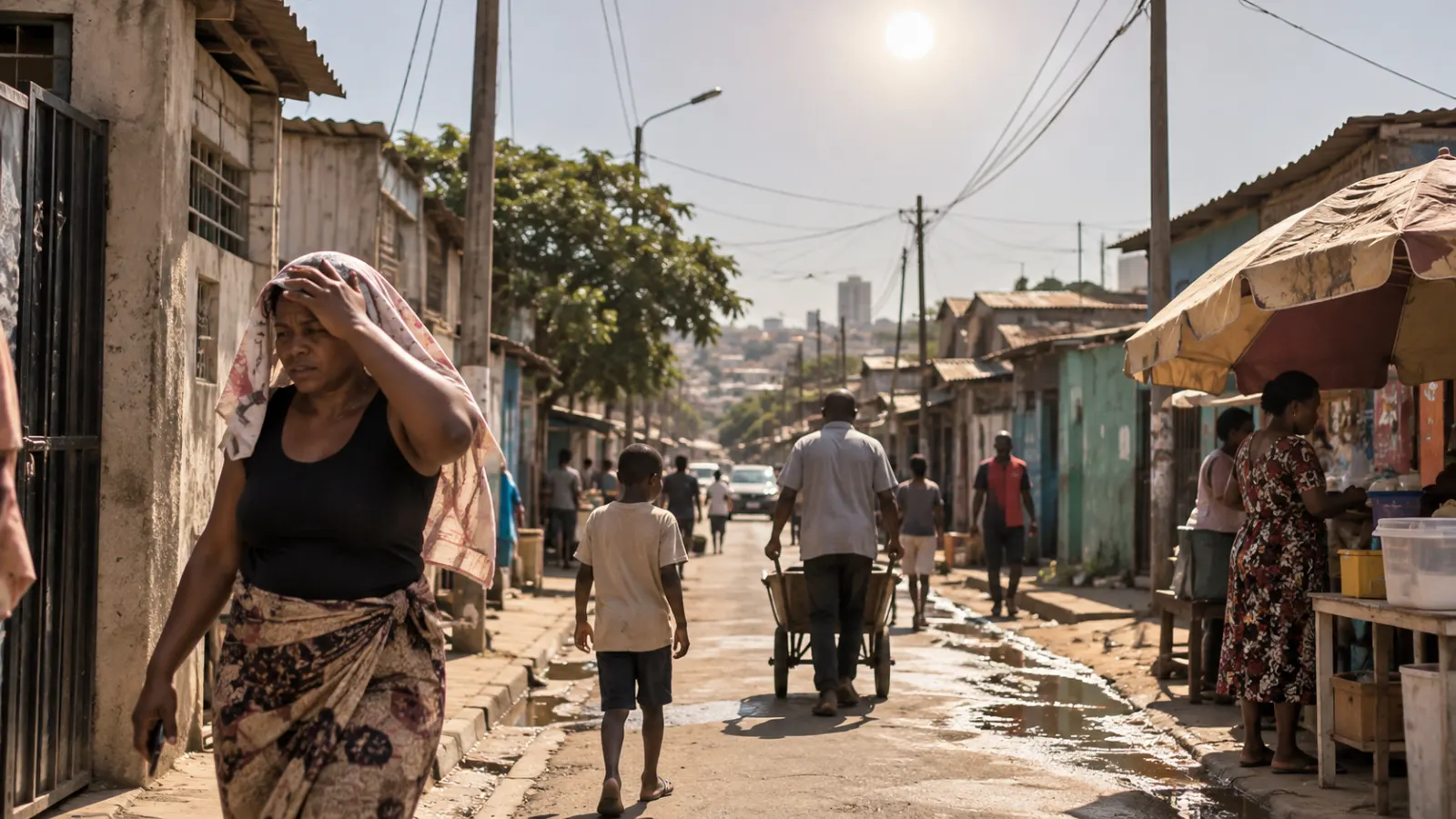
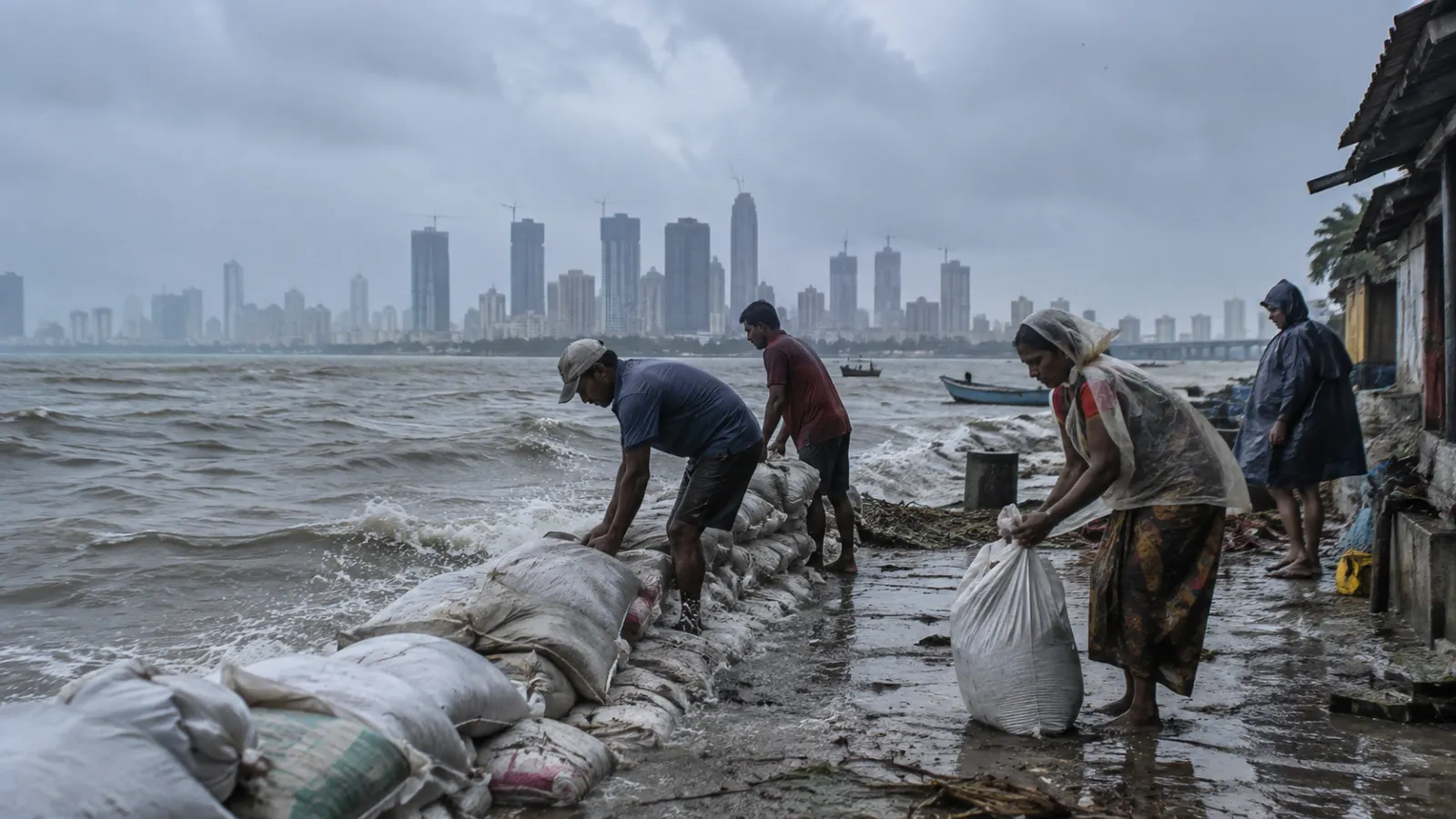
Environmental damage is often wrongly treated as a moral issue separate from economics. In reality, it is deeply economic. Air pollution raises healthcare costs and lowers worker productivity. Heat waves reduce labour capacity and increase power demand. Floods damage roads, homes, crops and factories. Water scarcity raises costs for agriculture and industry. Soil degradation reduces long-term food security. Climate risk affects insurance, investment and public finance.
When these costs are ignored, GDP can look stronger than real welfare. A polluted city may generate output while imposing medical costs on families. A region may extract minerals quickly while leaving behind degraded land and social conflict. An economy may grow through private profit while transferring environmental costs to the public.
Sustainable growth corrects this blind spot. It recognises that nature is not free capital. If economic activity consumes natural systems faster than they regenerate, the bill eventually arrives through disasters, disease, migration, lost productivity and fiscal stress.
The Productivity Dimension
Sustainable growth begins with productivity. An economy cannot become sustainable if it remains trapped in low-productivity work and low incomes. Productivity allows societies to produce more value with fewer inputs. Better technology, efficient logistics, skilled labour, formal firms, research, digital systems and high-quality infrastructure can raise output without simply consuming more land, fuel and raw materials.
This is why sustainability cannot be reduced to planting trees or installing solar panels. Those are important, but a sustainable economy also needs better factories, smarter agriculture, efficient cities, reliable public transport, cleaner supply chains and stronger institutions. Wasteful systems are rarely sustainable systems.
For India, productivity is central. The country must raise incomes for a large population while managing energy demand, urbanisation, water stress and employment needs. The only viable path is not less ambition, but smarter ambition: producing more value per unit of energy, water, land and capital.
The Inclusion Dimension
Growth also has to be socially sustainable. If growth benefits only a small section of society, political trust weakens. Inequality, job insecurity and regional imbalance can create resentment even when headline GDP rises. A growth model that leaves large groups behind may continue statistically for some time, but it becomes socially fragile.
Inclusion means more than redistribution. It means access to productive opportunity: quality education, healthcare, skills, finance, digital tools, transport, markets and fair regulation. It means women, rural workers, informal enterprises and young people are not treated as peripheral to growth. It means small firms can scale, workers can move to better jobs and households can withstand shocks.
A sustainable economy needs social consent. Citizens are more willing to accept transition costs - such as energy reform, urban redevelopment or industrial restructuring - when they believe the system is fair and the benefits are broadly shared.
The Climate Transition
Climate change has made sustainable growth urgent. Countries now face a double challenge: they must reduce emissions while adapting to climate impacts that are already visible. This is especially difficult for developing economies, which need energy and infrastructure to grow but also face pressure to decarbonise.
The transition must therefore be practical. Clean energy expansion, grid modernisation, battery storage, green hydrogen, electric mobility, building efficiency and climate-resilient agriculture can create new industries. But the transition also requires financing, technology transfer, worker reskilling and careful management of regions dependent on fossil-fuel-linked livelihoods.
A simplistic climate debate can become unfair. Rich countries built wealth through carbon-intensive growth and now ask developing countries to move faster with fewer resources. But the answer cannot be to ignore climate risk. The answer is climate justice combined with domestic reform: more finance, better technology, cleaner growth and resilience for vulnerable communities.
India's Sustainable Growth Challenge
India's sustainable growth challenge is unusually complex because of scale. The country must provide jobs for a vast workforce, build infrastructure, expand manufacturing, improve cities, raise farm incomes, reduce poverty, meet energy demand and remain climate-resilient. No single policy can solve this. Sustainable growth has to become the organising principle across sectors.
Energy is the first arena. India needs reliable and affordable power, but also cleaner power. Renewable energy expansion matters, but so do transmission lines, storage, distribution reform and industrial energy efficiency. The second arena is cities. Urban India can become a productivity engine or a congestion trap depending on housing, transport, drainage, air quality and land-use planning.
The third arena is agriculture. Sustainable growth requires higher farm incomes without exhausting soil and groundwater. This means irrigation efficiency, crop diversification, better markets, storage, food processing and climate-resilient practices. The fourth arena is jobs. A green transition must create livelihoods, not only targets. Workers need skills for new industries, and small businesses need access to technology and finance.
The Role of Government
Markets alone will not deliver sustainable growth because many environmental and social costs are externalities. Firms may not pay the full cost of pollution. Developers may not bear the long-term cost of ecological damage. Consumers may not see the hidden carbon or water footprint of goods. Government must therefore set rules, prices and incentives that align private decisions with public interest.
Policy tools include pollution standards, carbon pricing or carbon markets, renewable energy incentives, public transport investment, green public procurement, water regulation, waste management systems, urban planning reform and climate-resilient infrastructure spending. But regulation must be credible and predictable. Unclear rules can deter investment. Weak enforcement can reward bad actors.
The state also has to invest in public goods: research, data systems, disaster preparedness, grid infrastructure, skilling and basic services. Sustainable growth requires capacity, not only slogans.
The Role of Business and Finance
Businesses are central to sustainable growth because they decide how goods are produced, transported, financed and sold. Firms that improve energy efficiency, reduce waste, manage supply-chain risk and innovate in clean technology can gain long-term advantage. Sustainability is no longer only corporate social responsibility; it is becoming core strategy.
Finance also matters. Banks, investors and insurers increasingly need to assess climate risk, stranded assets, resource exposure and governance quality. Green bonds, transition finance and sustainability-linked lending can support change, but only if standards are credible. Otherwise, sustainability becomes marketing rather than transformation.
For India, sustainable finance can help fund renewable energy, electric mobility, resilient infrastructure and efficient manufacturing. But financing must reach beyond large corporations. Micro, small and medium enterprises need practical support to adopt cleaner technologies without losing competitiveness.
The Risk of Greenwashing
One danger in the sustainability debate is greenwashing. Companies, cities or governments may use the language of sustainability without changing underlying practices. A few visible projects can create an image of progress while emissions, pollution or inequality continue elsewhere. This damages trust and slows real reform.
Readers should therefore look for measurable outcomes. Are emissions falling relative to output? Is air quality improving? Are water tables stabilising? Are jobs being created? Are low-income households protected from transition costs? Are public transport systems used, not merely announced? Sustainable growth requires evidence.
The best sustainability policy is not ornamental. It changes incentives, infrastructure and behaviour at scale.
How to Judge Sustainable Growth
A sustainable growth dashboard should include GDP growth, productivity, employment, poverty reduction, inequality, energy intensity, emissions intensity, air and water quality, public health, infrastructure resilience, fiscal stability and institutional quality. No single indicator is enough.
The key question is whether growth increases society's future options. If growth creates skills, savings, infrastructure, healthy citizens and resilient ecosystems, it is strengthening the future. If it creates debt, pollution, inequality and climate vulnerability, it is consuming the future.
Final Takeaway
Sustainable economic growth is not a fashionable phrase. It is the central development challenge of our time. Countries still need growth, especially countries with young populations, infrastructure gaps and poverty. But growth that ignores environment, inclusion and resilience will become unstable.
For India, the task is not to choose between development and sustainability. The task is to make sustainability the method of development. The economy must grow, but it must grow in a way that creates productive jobs, protects natural systems, improves public health, strengthens institutions and leaves future generations with more capacity, not less. That is the difference between growth that merely expands numbers and growth that builds a civilisation capable of lasting.
Editorial Disclaimer
This article is for economic education and editorial analysis only. Climate, growth and sustainability data change across releases and methodologies. Verify current statistics from official sources before publication.