Houthis Target Riyadh Airport as Missile and Drone Attacks Escalate
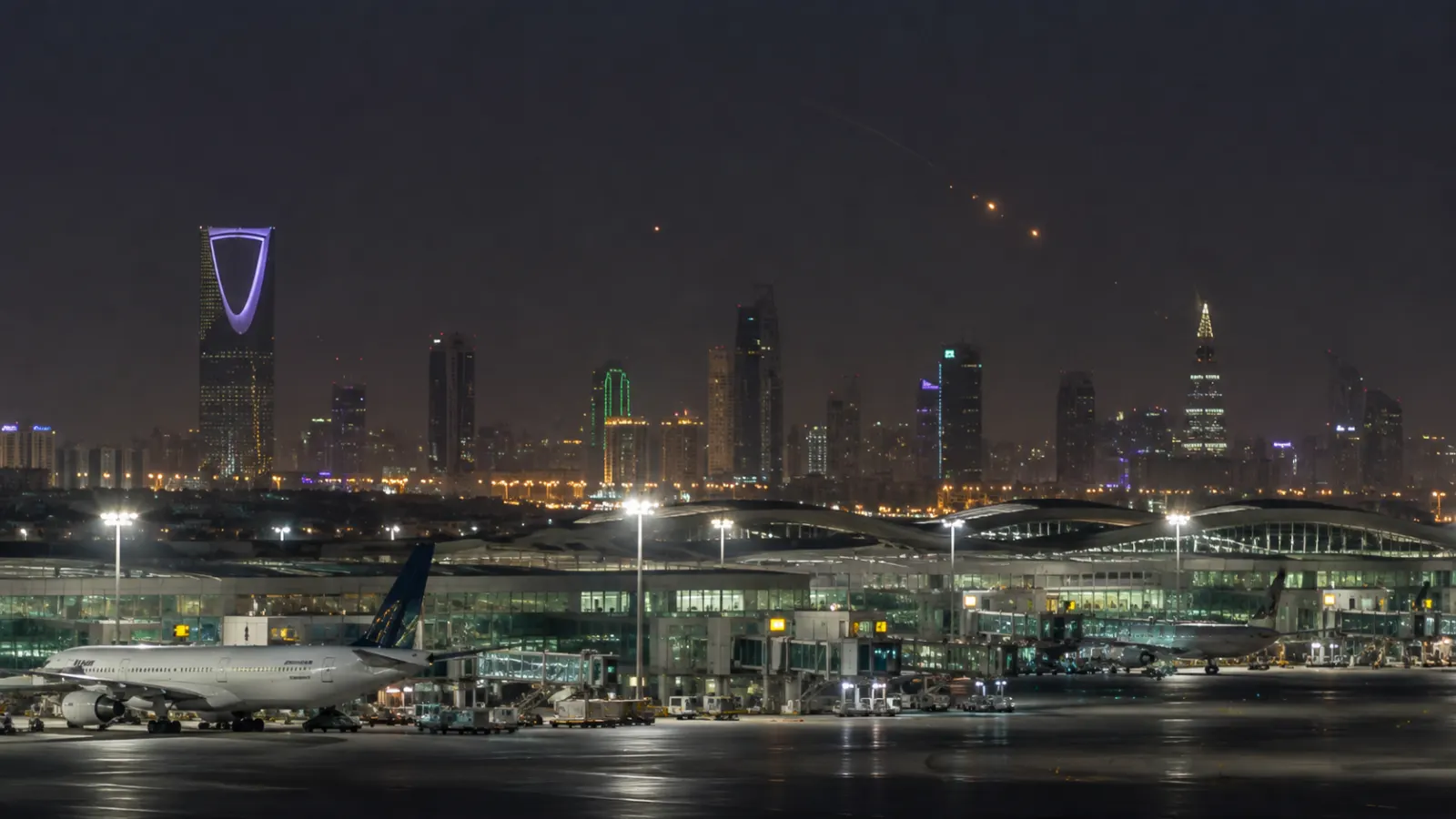
Yemen’s Houthi movement said it targeted King Khalid International Airport in Riyadh with ballistic missiles and drones on Wednesday, October 7, as a widening confrontation in Yemen spilled deeper into Saudi Arabia and raised fresh concerns over civilian aviation and regional security. Flights at Riyadh’s main international airport were briefly disrupted during the attacks, while the Saudi-led coalition said it intercepted and destroyed a ballistic missile north of the capital.
The attack claims came amid some of the sharpest fighting seen in Yemen in years. Houthi forces also claimed operations against other Saudi airports and military installations, while attacks around Aden International Airport in Yemen forced authorities to take emergency measures to protect passengers and aircraft.
Riyadh airport targeted as Saudi defences respond
Houthi military spokesperson Yahya Saree said the group launched an operation against King Khalid International Airport in Riyadh and claimed the attack disrupted air traffic. Independent flight-tracking data indicated that flights to and from the airport experienced a period of disruption, although the full operational impact was not immediately clear.
Saudi-led coalition forces gave a different account of the incident, saying a ballistic missile launched towards the Riyadh area was intercepted and destroyed north of the capital. The competing claims underline the difficulty of determining the exact outcome of individual attacks while military operations are continuing.
The Houthis also claimed attacks involving missiles and drones against Abha International Airport, Khamis Mushait Air Base and military positions in southern Saudi Arabia. These areas are considerably closer to Yemen and have previously been vulnerable to cross-border attacks.
The targeting of Riyadh, however, carries greater strategic significance. Saudi Arabia’s capital is its political and economic centre, and King Khalid International Airport is one of the kingdom’s most important aviation hubs. Even temporary disruption at such infrastructure can have an impact far beyond the immediate military confrontation.
Saudi authorities and coalition forces have strengthened air defences as the confrontation intensifies, while military officials have indicated that launch sites used by the Houthis are being tracked.
Aden airport attack raises concern for civilian flights
Hours around the Saudi attacks also saw a dangerous escalation at Aden International Airport, one of the principal gateways to areas controlled by Yemen’s internationally recognised government.
Yemeni authorities said missiles and drones were launched towards the airport, with at least one missile landing near the runway shortly before an incoming passenger flight from Cairo was expected to arrive. Authorities temporarily diverted the aircraft and evacuated parts of the airport as a precaution.
The Houthis said their intended target was military supplies located near the airport rather than civilian aviation infrastructure.
No major civilian casualties were immediately reported, but the proximity of the strikes to scheduled passenger operations highlighted the growing risks posed by the renewed conflict. Airports are particularly sensitive targets because military facilities, transport infrastructure and civilian passenger operations can sometimes be located within the same broader area.
The Aden incident therefore adds another layer of concern to the escalating conflict: military attacks are increasingly affecting infrastructure used by civilians even when armed groups claim military objectives.
Why the Yemen conflict is escalating again
The latest attacks are part of a much broader struggle for control of Yemen’s western coastline and areas surrounding the Bab el-Mandeb Strait, one of the world’s most strategically important maritime passages.
Saudi-backed Yemeni government forces have launched a major counteroffensive against Houthi positions in western Yemen. Heavy fighting has been reported around Taiz province, Dhubab and areas close to the Red Sea port of Mocha.
Control of this territory matters far beyond Yemen. The Bab el-Mandeb connects the Red Sea with the Gulf of Aden and forms part of the shipping route linking Asia and Europe through the Suez Canal. Disruption in the area can force commercial vessels to reconsider routes, potentially increasing transport times, insurance costs and freight prices.
The Houthis have expanded their military capabilities considerably during Yemen’s long conflict, including the use of drones, cruise missiles and ballistic missiles capable of reaching targets deep inside Saudi territory.
Saudi Arabia, meanwhile, is attempting to prevent Houthi forces from consolidating control over strategically important positions overlooking major shipping routes.
The result is an increasingly dangerous cycle: territorial advances inside Yemen lead to Saudi-led military operations, which are followed by Houthi missile and drone attacks against Saudi targets.
The confrontation could have consequences beyond Yemen
What makes the current escalation particularly significant is that it is occurring within a much wider period of instability across the Middle East.
Saudi Arabia must now protect airports, energy facilities and other strategic infrastructure while simultaneously supporting military operations inside Yemen. Additional regional partners have also become involved in defensive coordination as concerns grow over the ability of the conflict to spread.
Energy markets are watching developments closely. Saudi Arabia remains one of the world’s most important oil producers, while the waters surrounding Yemen sit alongside major global energy and commercial shipping routes. Previous attacks on Saudi energy infrastructure have demonstrated how quickly security developments in the region can affect global markets.
Civil aviation could also face continued disruption if missile and drone operations persist. Airlines routinely adjust routes when risks increase near active conflict zones, particularly when ballistic missiles, drones or air-defence interceptions are occurring close to civilian flight corridors.
Even attacks that cause limited physical damage can therefore produce significant economic consequences through delays, diversions, higher insurance costs and increased security measures.
What happens next will depend on the battlefield in Yemen
The immediate focus is now on whether Saudi-backed forces can maintain their offensive in western Yemen and whether the Houthis respond with further attacks against Saudi infrastructure.
Neither side appears ready to step away from the confrontation. Saudi-led forces are attempting to regain strategically important territory, while the Houthis are demonstrating that they retain the ability to strike targets hundreds of kilometres from Yemen.
Claims from both sides about battlefield advances and successful attacks remain difficult to independently verify in real time, making caution essential as the situation develops.
For Saudi Arabia, the challenge is no longer confined to what happens inside Yemen. Protecting Riyadh, regional airports, military installations and economic infrastructure has become part of the same conflict.
For the wider region, the greater risk is that a renewed Yemen war becomes intertwined with other Middle Eastern confrontations and once again threatens some of the world’s busiest aviation, shipping and energy routes.
The events of October 7 show how quickly that possibility can move from a regional security concern to an international one.