The Science of Why Sleep Is So Important
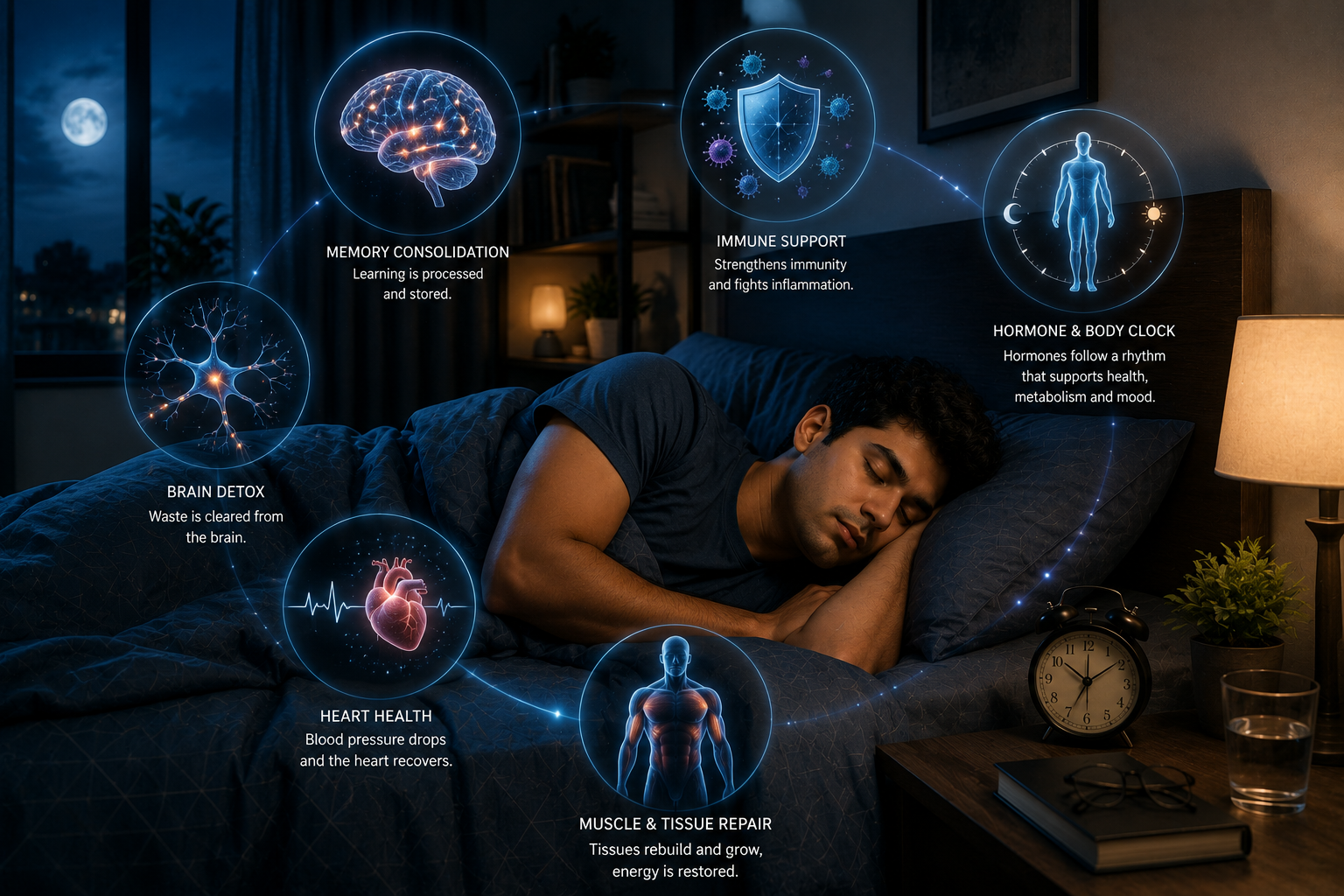
Sleep looks quiet from the outside. A person lies still, eyes closed, disconnected from the visible demands of the day. Because sleep appears inactive, many people treat it as empty time. They cut it first when work increases, exams approach, screens become addictive, business pressure rises, or social life expands late into the night. But biology tells a very different story. Sleep is not the absence of activity. It is a highly organized state in which the brain and body perform essential work that cannot be fully done while awake. Memory is reorganized, emotional circuits are recalibrated, hormones follow timed rhythms, immune functions are supported, tissues recover, metabolic signals are regulated, and the cardiovascular system gets a nightly opportunity to reduce load.
The science of sleep begins with a simple idea: the body is rhythmic. Human beings are not designed to function identically across twenty-four hours. Alertness, temperature, digestion, hormone release, blood pressure, and sleep tendency all follow patterns influenced by internal clocks and environmental signals. Light is the strongest signal. Morning light tells the brain that the active phase has begun. Darkness and routine help the body prepare for sleep. When people fight this rhythm with late-night screens, irregular schedules, caffeine, shift work, or chronic stress, sleep does not simply become shorter. It becomes biologically confused.
Sleep has architecture. It is not one uniform block. During the night, the brain cycles through non-rapid eye movement sleep, also called NREM sleep, and rapid eye movement sleep, or REM sleep. NREM sleep includes lighter stages and deeper slow-wave sleep. REM sleep is the stage most associated with vivid dreaming, although dreaming can occur in other stages too. A typical sleep cycle lasts roughly ninety to one hundred and twenty minutes, and a healthy night’s sleep includes multiple cycles. Early in the night, deep sleep is often more prominent; later in the night, REM periods tend to become longer. This structure matters because different sleep stages support different functions. When someone repeatedly cuts sleep short, they do not just lose hours; they may lose important parts of the night’s architecture.
Deep NREM sleep is often described as physically restorative. During this stage, brain activity slows, the body reduces sympathetic arousal, and recovery processes are supported. It is linked with growth hormone release, tissue repair, immune regulation, and the feeling of being physically refreshed. This does not mean one stage alone is responsible for all recovery, but deep sleep plays a central role in the body’s restoration profile. People who get enough hours but have fragmented sleep may not reach or sustain these deeper stages properly. That is one reason sleep disorders can leave people exhausted despite apparently long time in bed.
REM sleep has a different character. The brain becomes more active, breathing and heart rate become more variable, and most voluntary muscles are temporarily inhibited. This muscle inhibition is protective; it prevents people from acting out dreams. REM sleep appears to contribute to emotional processing, learning, memory integration, and creativity. The brain may use REM sleep to connect new experiences with older knowledge, process emotional tone, and simulate scenarios. That is why sleep can change how a problem feels in the morning. The problem may remain, but the emotional intensity or mental organization may shift.
Memory is one of the clearest examples of why sleep is important. Learning does not end when a person closes the book or leaves the classroom. The brain continues processing information during sleep. Different forms of memory, including facts, skills, emotional learning, and pattern recognition, appear to benefit from sleep in different ways. NREM and REM sleep both contribute to memory consolidation. This is why all-night study sessions often backfire. A student may gain extra reading time but lose the sleep-dependent processing that helps stabilize and organize information. For UPSC aspirants, medical students, professionals, and anyone learning complex material, sleep is not separate from study. It is part of study.
The brain also uses sleep to manage attention. Wakefulness creates a burden: sensory input, decision-making, emotional reactions, social demands, screen exposure, and physical movement continuously stimulate the nervous system. Sleep helps reset networks involved in alertness, focus, and impulse control. After insufficient sleep, the brain may show micro-lapses: tiny moments where attention drops. These lapses are dangerous during driving, machine work, caregiving, medical decisions, or high-stakes professional tasks. The person may not even notice the lapse. That is what makes sleep deprivation so risky. It reduces performance and reduces awareness of reduced performance.
Emotional regulation is another major function. After poor sleep, the emotional brain becomes more reactive and the control systems that normally help interpret and moderate reactions may work less efficiently. Everyday problems feel sharper. Minor criticism feels personal. Hunger feels urgent. Social patience becomes thinner. Anxiety may become louder. This is not weakness. It is neurobiology. Sleep supports the balance between emotional reactivity and rational control. Chronic poor sleep can worsen stress patterns, and stress can worsen sleep, creating a loop. Breaking that loop often requires both better sleep habits and better stress management.
The immune system also depends on sleep. During sleep, immune signaling and inflammatory regulation follow important rhythms. Quality sleep helps the body respond to threats and recover from strain. People often notice that repeated late nights make them feel more vulnerable to illness. The relationship is not simplistic; infection, inflammation, stress, nutrition, and environment all matter. But sleep is part of immune resilience. When the body is fighting an infection, sleepiness itself may increase because the body is redirecting energy toward recovery. Ignoring that signal can extend strain.
Metabolism is deeply connected with sleep. Short or poor-quality sleep can affect appetite regulation, insulin sensitivity, glucose metabolism, and food choices. When sleep is restricted, people often crave energy-dense foods, feel hungrier, and have less motivation to exercise. Late nights also create more opportunities to snack. Over time, insufficient sleep is associated with higher risk of obesity, type 2 diabetes, and other metabolic problems. This does not mean sleep alone determines weight or diabetes risk. Diet, genetics, activity, medicines, stress, and socioeconomic factors matter. But sleep is one of the pillars. Ignoring it while trying to fix metabolism is like repairing a building while leaving a leaking roof untouched.
The cardiovascular system may be one of the greatest beneficiaries of healthy sleep. During normal sleep, blood pressure and heart rate can dip, giving the heart and blood vessels a lower-load period. Poor sleep, sleep apnea, chronic stress, and short sleep can interfere with this pattern. Over time, insufficient sleep has been associated with hypertension, heart disease, stroke, and other chronic conditions. Sleep apnea is especially important because breathing repeatedly stops or becomes shallow during sleep, oxygen levels may drop, and the body experiences repeated stress responses. Many people with sleep apnea are unaware of it. Loud snoring, gasping, morning headache, dry mouth, and daytime sleepiness should not be dismissed.
Hormones also follow sleep-linked timing. Growth hormone, cortisol, melatonin, hunger hormones, reproductive hormones, and many other chemical signals interact with sleep and circadian rhythm. This is why irregular sleep can disturb more than energy. It can affect appetite, stress response, menstrual patterns, training recovery, and general sense of balance. Adolescents are particularly vulnerable because biological changes naturally push their sleep timing later, while school and exam schedules often force early waking. The result is a social structure that often fights teenage biology.
Sleep is also important for detoxification in a more precise sense than internet wellness claims usually suggest. The brain has waste-clearance processes that appear to become more active during sleep. This does not mean that one night of sleep “cleans toxins” in a commercial detox sense, and it does not justify exaggerated claims. But it does support a serious biological point: sleep gives the brain a state in which maintenance processes can occur. The body is not idle. It is performing housekeeping that wakefulness makes harder.
One of the strongest misconceptions is that people can train themselves to need very little sleep. They can train themselves to tolerate sleepiness. That is different. The brain may adapt subjectively, meaning a person feels less aware of impairment, but objective performance often remains affected. Caffeine can temporarily block sleepiness signals, but it cannot replace sleep architecture. Motivation can push through fatigue, but it cannot fully recreate memory consolidation, hormonal rhythm, immune regulation, and deep recovery. Chronic sleep reduction is not discipline; it is biological debt.
Another misconception is that sleep is only about the brain. Sleep is brain-led, but body-wide. Muscles, blood vessels, immune cells, digestive hormones, glucose regulation, reproductive function, and skin repair all participate in the sleep-wake cycle. This is why poor sleep shows up in so many ways: poor concentration, headaches, acidity, cravings, high stress, low workout recovery, irritability, weakened immunity, and worsening chronic disease control. The symptom may appear in one system, but the cause may involve whole-body rhythm disruption.
Sleep also has a social dimension. Modern life rewards availability. People answer messages late at night, watch videos in bed, work across time zones, commute long distances, and celebrate hustle culture. Sleep becomes negotiable because it has no immediate invoice. But the cost appears through errors, burnout, poor decisions, emotional conflict, unsafe driving, metabolic strain, and medical risk. A society that treats sleep as laziness pays for it in productivity and health. Protecting sleep is not anti-work; it is pro-performance.
Practical sleep protection does not require perfection. It requires rhythm. Wake at a consistent time most days. Get morning light. Move during the day. Avoid heavy caffeine late in the day. Keep alcohol away from bedtime if sleep quality matters. Reduce bright screens and emotional stimulation before sleep. Create a wind-down ritual: dim lights, prepare clothes, write tomorrow’s tasks, stretch lightly, pray or meditate, read something calm, and keep the phone away from the pillow. Make the room dark, quiet, and cool. Do not turn the bed into an office, cinema, dining table, and worry chamber. The brain learns associations. Teach it that bed means sleep.
If you cannot sleep, forcing sleep often fails. Lying in bed anxiously watching the clock trains the brain to associate bed with struggle. For persistent insomnia, cognitive behavioral therapy for insomnia, delivered by trained professionals, is often recommended in clinical settings. People should also review medicines, caffeine, pain, anxiety, depression, thyroid issues, breathing problems, and other causes with a clinician. Sleep problems are common, but common does not mean harmless.
It is also important to know when to seek help. Consult a healthcare professional if sleep problems last more than a few weeks, if daytime sleepiness affects driving or work, if someone observes breathing pauses, if snoring is loud and regular, if you wake choking or gasping, if you have morning headaches, if restless legs prevent sleep, if nightmares are severe, or if sleep problems come with depression, anxiety, or thoughts of self-harm. Lifestyle changes help many people, but some sleep problems require diagnosis and treatment.
The science of sleep leads to one conclusion: sleep is not optional recovery. It is a daily biological requirement. It supports memory, emotional balance, immune resilience, metabolic health, cardiovascular regulation, hormonal rhythm, physical restoration, and mental clarity. Cutting sleep may create a temporary illusion of extra time, but it often reduces the quality of the time gained. A well-rested hour can be more productive than three exhausted hours.
The final takeaway is simple but demanding: respect sleep as a health behavior equal to diet and exercise. Do not ask how little sleep you can survive on. Ask how much sleep allows you to become a stable, alert, learning, recovering, emotionally balanced human being. That number is not laziness. It is biology.
For readers building a healthier life, sleep should be treated as the base layer. A good diet is harder to follow when tired. Exercise recovery is weaker when sleep is short. Emotional restraint is harder when the brain is under-rested. Learning becomes less efficient when memory systems do not get enough sleep-stage cycling. This is why sleep improvement often creates indirect benefits across the rest of life. It gives other habits a better chance to work.
The goal is not to become obsessed with perfect sleep scores. Anxiety about sleep can itself disturb sleep. The goal is to create conditions in which sleep can happen naturally most nights: regular timing, morning light, calmer evenings, enough time in bed, and medical attention when symptoms suggest a disorder.
Source and Fact-Check Notes
NINDS/NIH: Brain Basics: Understanding Sleep. https://www.ninds.nih.gov/health-information/public-education/brain-basics/brain-basics-understanding-sleep
NHLBI/NIH: How Sleep Works - Why Is Sleep Important?. https://www.nhlbi.nih.gov/health/sleep/why-sleep-important
CDC: Sleep - Chronic Disease Indicators. https://www.cdc.gov/cdi/indicator-definitions/sleep.html
CDC: About Sleep and Your Heart Health. https://www.cdc.gov/heart-disease/about/sleep-and-heart-health.html
Medical Disclaimer
This article is for general health education only. It is not a substitute for professional medical advice, diagnosis, or treatment. Persistent insomnia, loud snoring, breathing pauses, severe daytime sleepiness, or mood symptoms should be discussed with a qualified clinician.
Editors Outlook | Health & Wellness Batch 1