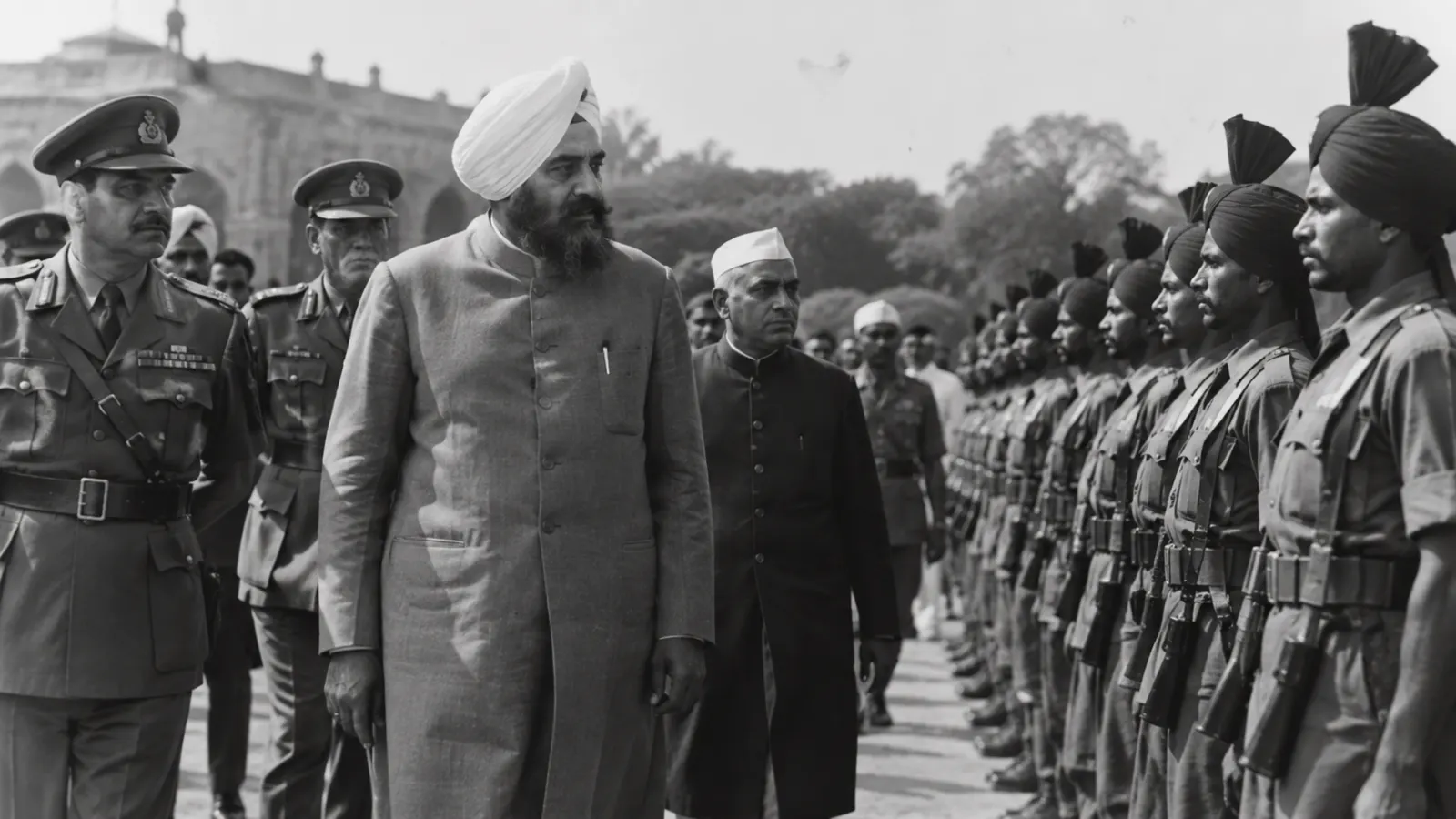
Sardar Vallabhbhai Patel is remembered as the Iron Man of India not because he loved force, but because he understood the value of firmness at moments when hesitation could destroy a nation. His life joined two great tasks: the struggle against British rule and the consolidation of independent India into a functioning political union. Many freedom fighters helped win independence; fewer were placed in a position where they had to prevent freedom from dissolving into fragmentation. Patel’s legacy rests on that decisive transition from movement to state, from protest to administration, from moral mobilisation to territorial integration.
Patel’s reputation is often built around a single achievement: the integration of princely states after independence. That achievement was indeed enormous. At the end of British rule, the subcontinent was not simply divided into British Indian provinces and two new dominions. It also contained hundreds of princely states with varying degrees of autonomy under British paramountcy. If these states had remained independent, acceded unpredictably, or become centres of external influence, India could have emerged as a broken map rather than a coherent union. Patel, working closely with V P Menon and others, used persuasion, pressure, constitutional instruments, and political realism to bring most of these states into India. This required not only patriotism but administrative imagination.
Vallabhbhai Jhaverbhai Patel was born on 31 October 1875 in Nadiad, in present-day Gujarat, and grew up in the rural world of Kheda district. His early life did not have the aristocratic polish of Jawaharlal Nehru or the global moral drama of Gandhi’s South Africa years. Patel’s formation was more local, practical, and self-made. He studied, worked, supported his family, and built a career through discipline rather than inherited privilege. This background shaped his politics. He trusted organisation, personal toughness, and concrete results. His leadership style was not ornamental. It was direct, economical, and unsentimental.
Before becoming a national leader, Patel became a successful lawyer. He trained in law in England at the Middle Temple and returned to India with professional distinction. In Ahmedabad, he built a strong legal practice and earned respect for his precision, self-control, and courtroom ability. Law mattered to Patel not merely as a profession but as a training in evidence, procedure, negotiation, and authority. Unlike leaders who moved directly from youth activism into public life, Patel entered politics after proving himself in the practical world. This gave him a certain hardness. He knew how institutions worked. He knew that emotion without organisation evaporates. He knew that power had to be handled, not merely denounced.
Patel’s transformation into a mass leader came through his association with Mahatma Gandhi. Gandhi’s return to India opened new possibilities for politics in Gujarat. Patel, initially a modern professional with little interest in ascetic symbolism, gradually recognised Gandhi’s ability to mobilise people and convert local grievances into moral campaigns. Their partnership became one of the most important in the freedom movement. Gandhi supplied the method of satyagraha; Patel supplied administrative discipline. Gandhi could awaken conscience; Patel could build the machinery required to sustain action. The combination was powerful because mass politics requires both moral energy and organisational control.
The Kheda Satyagraha of 1918 was an early test of Patel’s political ability. Peasants facing crop failure were expected to pay revenue despite distress. Gandhi supported the campaign, but Patel played a key role in organising villages, collecting information, maintaining unity, and persuading peasants to resist payment collectively. This was not an easy task. Rural society was vulnerable to intimidation, division, and fear of confiscation. Patel’s strength lay in making people trust that collective discipline could protect them. He moved from village to village, listened to grievances, and insisted on firmness. The campaign helped establish his reputation as a leader who could convert suffering into structured resistance.
Bardoli in 1928 made Patel a national figure and gave him the title “Sardar,” meaning leader or chief. The colonial government had increased land revenue in Bardoli taluka despite agrarian hardship. Patel led the peasants in a disciplined refusal to pay the enhanced revenue. The campaign required extraordinary organisation: communication networks, volunteer discipline, social solidarity, legal preparedness, and resistance to government pressure. Property could be seized; villagers could be threatened; informers could divide communities. Patel’s leadership combined empathy with strict discipline. He made it clear that success depended on unity and non-violence. The eventual success of the Bardoli Satyagraha turned him into one of the most respected organisers in the Congress.
Patel’s role in the Indian National Congress was less glamorous than some, but deeply consequential. He became one of the party’s most effective organisers, fundraisers, election managers, and disciplinarians. After the Congress decided to enter electoral politics under the Government of India Act of 1935, Patel played a major part in candidate selection and organisational preparation. He understood that nationalist politics could not survive on speeches alone. It needed committees, funds, cadres, local leadership, legal awareness, and message discipline. In this sense, Patel was one of the architects of Congress as a mass organisation. He helped transform it from a platform of nationalist opinion into a machine capable of contesting power.
Patel was deeply loyal to Gandhi, but he was never a weak follower. He had his own judgement, and his politics carried a strong realist streak. He accepted non-violence as the method of the national movement under Gandhi’s leadership, but he was less inclined to romanticise suffering or ambiguity. He believed in quick decisions, clear authority, and organisational consequences. If Nehru often represented India’s idealist and internationalist imagination, Patel represented its administrative and consolidating instinct. The two were not enemies, though they differed sharply. Together with Gandhi, they formed part of a leadership triangle that carried India through the final decades of the freedom struggle.
Patel endured imprisonment during the national movement, including during major campaigns such as Civil Disobedience and Quit India. Jail was a common experience for the founding generation, but Patel’s prison years did not turn him into a literary figure like Nehru. He was not primarily a political philosopher or autobiographical writer. His legacy lies in action, judgement, and institutional decisions. This can make him harder to understand through texts but easier to see through outcomes. Patel’s political language was often brief; his meaning lay in execution.
The Partition of India in 1947 placed Patel in one of the darkest moments of the subcontinent’s history. Independence arrived with mass violence, displacement, fear, and administrative breakdown. Millions crossed borders. Trains arrived filled with corpses. Cities faced refugee crises. Communal hatred threatened to consume the fragile new state. As India’s first Deputy Prime Minister and Home Minister, Patel had to deal with security, order, relief, and integration. This was not the romantic phase of nationalism. It was the brutal work of preventing collapse. Patel’s firmness during this period won admiration from those who believed the state had to act decisively to protect life and maintain order.
The integration of princely states was Patel’s greatest state-building achievement. Under British rule, princely states were tied to the Crown through paramountcy. When British rule ended, paramountcy lapsed. Many rulers were uncertain, ambitious, fearful, or tempted by independence. Patel and V P Menon worked to secure accession to India, especially on defence, external affairs, and communications. They combined reassurance with pressure. Rulers were offered privy purses and recognition of certain privileges, but they were also made to understand that geographical, political, and popular realities could not be ignored. Patel’s method was not one-dimensional. He could be conciliatory when it served national unity and uncompromising when delay threatened the union.
Junagadh, Hyderabad, and Kashmir revealed the complexity of accession. Junagadh, a Muslim-ruled state with a largely Hindu population and geographical continuity with India, chose accession to Pakistan, creating a crisis. India responded through political pressure and eventually a plebiscite. Hyderabad, a large princely state in the heart of India, sought independence under the Nizam. Its position was strategically impossible for India to accept indefinitely. After failed negotiations and internal disorder, India launched police action in 1948, integrating Hyderabad into the Union. Kashmir followed a different and more complicated trajectory involving invasion, accession, war, and internationalisation. Patel’s role in these crises is often debated, but his broader principle was clear: India could not allow territorial uncertainty to become permanent weakness.
Patel’s iron will was not only about princely states. It also shaped the creation of India’s civil services. He defended the need for an impartial, professional administrative service at a time when many nationalists viewed the old colonial bureaucracy with suspicion. Patel famously regarded the civil services as essential to unity and governance. His argument was practical: a vast, diverse, newly independent country needed continuity, competence, and a steel frame capable of implementing policy. This did not mean preserving colonial attitudes, but it did mean avoiding administrative vacuum. Patel’s defence of the services helped shape the Indian Administrative Service and Indian Police Service as central pillars of governance.
His approach to national unity was deeply connected to order. Patel believed freedom would be endangered if the state lacked authority. This sometimes made him appear stern, conservative, or impatient with ideological experimentation. He was less attracted than Nehru to sweeping global visions and socialist planning. His instincts leaned toward property rights, fiscal caution, local leadership, and administrative stability. Yet it would be simplistic to call him merely conservative. Patel had led peasants against colonial revenue demands, fought for civil liberties during the national movement, and worked under Gandhi’s mass politics. His realism emerged from a belief that ideals survive only when institutions are strong enough to protect them.
Patel’s relationship with Nehru has become one of the most politicised subjects in modern Indian memory. Their differences were real. Nehru was more comfortable with socialism, internationalism, and secular ideological language. Patel was more focused on internal consolidation, security, and practical administration. They differed over issues such as Kashmir, party leadership, and sometimes the handling of minorities and refugees. Yet they worked in the same cabinet and were bound by Gandhi’s belief that India needed both. Gandhi’s assassination in January 1948 was a moment of emotional and political danger. Patel and Nehru understood that rivalry could damage the republic. Their partnership, however tense, helped stabilise the early state.
Patel’s reputation for toughness should not obscure his emotional depth. His daughter Maniben was close to him and preserved many records of his life. He had known personal loss, professional struggle, and the burdens of public duty. But he rarely displayed vulnerability in a theatrical way. His public persona was controlled. He did not seek to charm through elaborate rhetoric. Those who worked with him often remembered his capacity to judge people quickly, cut through confusion, and act. This style made him effective but also intimidating. Leadership of Patel’s kind depends on trust that decisiveness will serve a larger public purpose rather than personal domination.
The question of Patel and minorities remains important. In the aftermath of Partition, his statements and actions are sometimes read as stern toward Muslims, especially in the context of security concerns and refugee anger. But as Home Minister of a secular republic in formation, he also had responsibility to protect all citizens and prevent retaliatory violence. His speeches after independence repeatedly emphasised loyalty to India and national unity. The challenge is to read him in context: a leader operating amid Partition trauma, mass violence, and fears of sabotage, while trying to build a state that could command allegiance. Simplistic portrayals either as communal hardliner or flawless secular statesman fail to capture the pressures of the time.
Patel’s death on 15 December 1950 came early in the life of the republic. He did not live to shape India through the 1950s as Nehru did. This early death contributed to the distinctive nature of his legacy. Nehru’s record can be judged across years of policy successes and failures; Patel’s record is concentrated in foundational acts of integration and consolidation. Because he left the scene early, he also became available for later political imagination. Different ideological groups have claimed him, sometimes selectively. Some elevate Patel to criticise Nehru; others place him firmly within the Congress and Gandhian tradition. The historical Patel is larger than these uses. He was neither a slogan nor a weapon; he was a founder facing hard choices.
The Statue of Unity, public commemorations, National Unity Day, and renewed attention to Patel have made him more visible in public memory. But memory can simplify. The real Patel was not only the man who integrated states; he was also the lawyer who became a satyagrahi, the local organiser who became a national leader, the Gandhian lieutenant who became the republic’s chief consolidator, and the administrator who understood that freedom must be protected from disorder. To remember him only as iron is to miss the discipline, patience, and negotiation behind the firmness.
Patel’s life also teaches a larger lesson about political leadership. Movements often celebrate passion, but states require judgement. Freedom struggles need courage against oppression, but new republics need the capacity to settle borders, manage security, collect revenue, maintain institutions, and prevent fragmentation. Patel moved across these worlds with unusual competence. He could mobilise peasants in Bardoli and negotiate with princes in Delhi. He could submit to Gandhi’s moral leadership and exercise hard authority as Home Minister. He could speak the language of sacrifice and the language of files, maps, instruments of accession, and administrative chains of command.
His legacy remains especially relevant in discussions of federalism and unity. India is a union of immense diversity: linguistic, religious, regional, cultural, and historical. Patel’s integration project made political unity possible, but unity in India cannot mean uniformity. The best reading of Patel is not that he wanted a flattened nation without difference. Rather, he wanted a nation strong enough to contain difference without disintegration. This distinction matters. A weak union could fracture; an overcentralised union could suffocate. Patel’s foundational work gave India a territorial and administrative base from which democratic federalism could evolve.
A balanced assessment of Patel must include critique. His firmness could become impatience. His emphasis on order could make him less attentive to some transformative social questions. Compared with Ambedkar, he did not offer a radical theory of social democracy. Compared with Nehru, he did not elaborate a broad philosophy of science, planning, and internationalism. Compared with Gandhi, he did not become a universal moral symbol. But these comparisons can be unfair if they judge him by tasks he did not claim as his own. Patel’s greatness lay in doing what history demanded from him at a specific moment: holding India together.
Patel’s work in municipal politics also shaped his administrative mind. As a leader in Ahmedabad civic life, he dealt with sanitation, public health, urban services, and local governance. These responsibilities rarely attract romantic attention, but they are crucial to understanding his seriousness. Nationalism for Patel was not only about flags and speeches; it was also about whether institutions could deliver order and public service. Municipal work trained him to think in terms of execution. A city had to be cleaned, managed, financed, and disciplined. This practical training later became visible in his handling of larger national problems.
His leadership in Congress organisation showed another dimension of his iron will: the ability to manage people. Political parties are not held together by ideology alone. They are full of ambition, faction, ego, local rivalries, and resource constraints. Patel understood these realities. He could be stern with colleagues, but he also commanded loyalty because workers believed he would protect the organisation’s interests. He knew when compromise was useful and when it would weaken discipline. This organisational talent was indispensable in a mass movement that had to operate across provinces, languages, classes, and communities.
Patel’s partnership with V P Menon during the integration of states deserves special emphasis. Menon brought administrative expertise, constitutional drafting skill, and intimate knowledge of the transfer of power process. Patel brought political authority, urgency, and national legitimacy. Together, they produced one of the most consequential acts of statecraft in modern history. Integration was not achieved by a single speech or decree. It required instruments of accession, negotiations with rulers, coordination with provinces, assessment of geography, management of public opinion, and readiness to act when persuasion failed. This was statecraft under deadline pressure, and Patel’s temperament suited it.
His health declined under the burden of these responsibilities. The years after independence were physically and emotionally exhausting. Patel had to work through Partition, Gandhi’s assassination, cabinet tensions, refugee crises, and the pressure of integration. He was already in his seventies when India became free. That he accomplished so much in less than four years after independence is remarkable. It also explains why his legacy feels compressed and intense. He did not have decades to build a school of thought around himself. He left behind actions more than manifestos.
Patel’s example remains valuable for public administration today. Democracies need compassion, but they also need capacity. Citizens suffer when the state is absent, confused, corrupt, or indecisive. Patel reminds us that good intentions must be converted into institutions. He also reminds us that unity cannot be taken for granted. It has to be built, negotiated, defended, and renewed. But his legacy should be invoked with responsibility. The iron will he represented was meant to secure a democratic union, not to glorify harshness for its own sake. Firmness becomes statesmanship only when it serves constitutional order and public welfare.