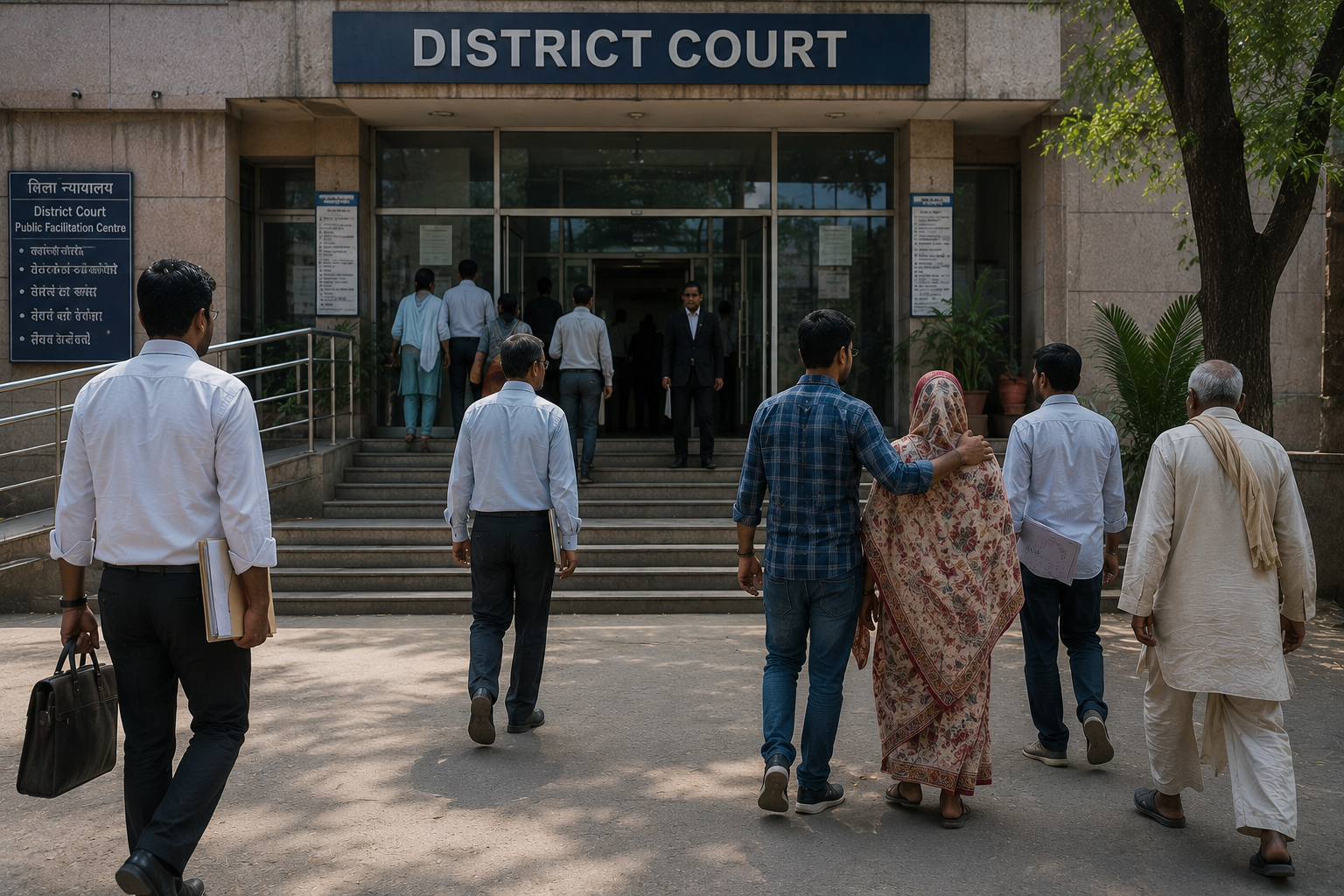
Who Has the Right to Approach a Court?
Courts cannot hear every person on every issue. If anyone could file any case about any matter without connection, courts would be flooded with abstract arguments, political complaints and personal opinions. The legal system therefore asks an important threshold question: does this person have standing to bring the case?
This threshold requirement is called locus standi. The phrase means the legal capacity or standing of a person to approach a court for a remedy.
Locus standi decides whether the petitioner is sufficiently connected with the issue. It is not about whether the petitioner will win. It is about whether the petitioner is entitled to be heard at all.
Meaning of Locus Standi
Locus standi means the right to bring a legal action before a court. A person must usually show that they have suffered a legal injury, that their right has been affected, or that they have a sufficient interest in the matter.
For example, if a person’s property is illegally occupied, that person has locus standi to file a case. If a government authority denies someone a licence unlawfully, that applicant may have locus standi. If a person is illegally detained, they or someone acting on their behalf may approach court.
The concept prevents strangers from interfering in disputes that do not concern them. It also ensures that courts decide real controversies, not hypothetical questions.
Traditional Rule of Standing
Traditionally, courts followed a stricter rule of standing. The person approaching the court had to be directly affected by the legal wrong.
This made sense in ordinary private disputes. A person cannot usually sue over someone else’s contract, someone else’s property claim or someone else’s private injury unless law permits representation.
The strict rule protects judicial discipline. It prevents busybodies, political actors and private rivals from misusing courts.
Problem With Strict Locus Standi
The strict rule creates difficulty when the affected persons are unable to approach court.
Consider bonded labourers, undertrial prisoners, migrant workers, children, persons in illegal detention, people living in extreme poverty or communities affected by environmental harm. They may be directly injured, but unable to file petitions due to poverty, fear, illiteracy, social pressure or lack of legal access.
If courts insisted on strict standing in such cases, many serious constitutional wrongs would remain unaddressed. This is where Public Interest Litigation changed the law.
Relaxation Through PIL
Indian courts relaxed locus standi in appropriate public interest cases. A public-spirited person could approach the court on behalf of those who could not effectively approach it themselves.
This relaxation became especially important under Article 32 and Article 226. Article 32 protects the right to approach the Supreme Court for enforcement of Fundamental Rights. Article 226 gives High Courts wide writ powers for Fundamental Rights and other legal rights.
The Supreme Court has recognised that letters, telegrams, postcards and news reports were sometimes treated as writ petitions in matters that became known as Public Interest Litigation. This reflects a move from strict procedural standing toward access-oriented constitutional justice.
Locus Standi in Constitutional Law
In constitutional law, locus standi serves two purposes.
First, it protects courts from being converted into platforms for every political or ideological grievance. The petitioner must show a real legal issue and sufficient connection.
Second, it prevents denial of justice where vulnerable groups cannot litigate. In genuine public interest cases, courts may allow a broader standing rule.
The challenge is to balance discipline and access.
Locus Standi and Writ Petitions
In writ petitions, locus standi depends on the nature of the writ and the issue.
For Habeas Corpus, courts may allow someone other than the detained person to file because the detained person may not be able to approach the court. For Mandamus, the petitioner usually must show a legal right and a corresponding public duty. For Quo Warranto, standing may be broader because the issue concerns unlawful occupation of public office.
This shows that locus standi is not identical in every writ. It changes with the purpose of the remedy.
Citizen Impact
Locus standi affects citizens directly because it decides whether a court will hear them.
A citizen whose own right is violated generally has standing. A citizen raising another person’s private dispute may not. A citizen raising a genuine public wrong affecting vulnerable groups may sometimes be allowed under PIL principles.
Understanding locus standi helps people choose the correct legal route and avoid filing cases that courts may reject at the threshold.
Misuse of Relaxed Standing
Relaxed locus standi can be misused. Some petitions are filed in the name of public interest but actually serve political publicity, business competition, personal vendetta or ideological harassment.
This misuse weakens genuine PIL and burdens the judiciary.
Courts therefore examine whether the petitioner is acting bona fide, whether the issue is truly public, whether affected persons are unable to approach court, and whether the petition seeks a legitimate legal remedy.
Limits and Misunderstandings
One misunderstanding is that anyone can file any case in the name of public interest. That is incorrect. Public interest must be genuine, and the issue must involve legal or constitutional concern.
Another misunderstanding is that locus standi always requires personal injury. In PIL and some public-law remedies, the rule may be relaxed.
A third misunderstanding is that locus standi decides the merits. It does not. It only decides whether the petitioner can be heard. The case may still fail after hearing.
Final Takeaway
Locus standi is the legal standing required to approach a court. It ensures that courts hear proper parties and real legal disputes.
Indian constitutional law has relaxed this rule in genuine public interest cases to expand access to justice. But relaxed standing must remain disciplined, otherwise public interest litigation can become private misuse.
Disclaimer: This article is for general information and educational understanding only. It is not personal legal advice. For specific legal problems, consult a qualified legal professional.