Community Is Easy to Notice When It Is Missing
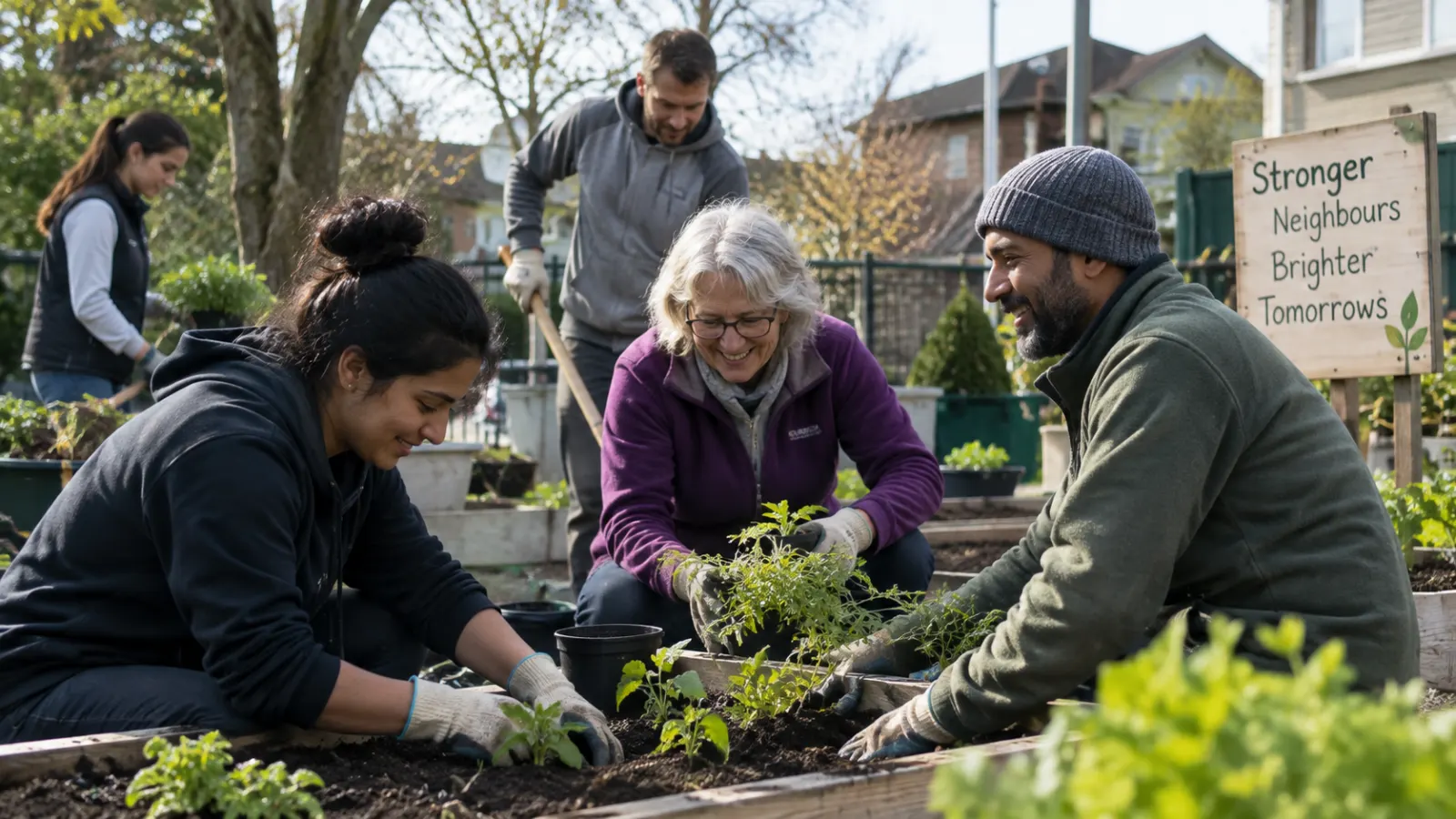
When a storm cuts electricity, a neighbourhood suddenly learns who owns a generator. When a family faces illness, relatives and friends organise meals and transport. When a child needs supervision, a trusted neighbour may become part of the solution. When a newcomer arrives in a city, one introduction can open access to housing, work, language help or friendship.
These acts are not usually recorded as major institutions. Yet they reveal what communities do.
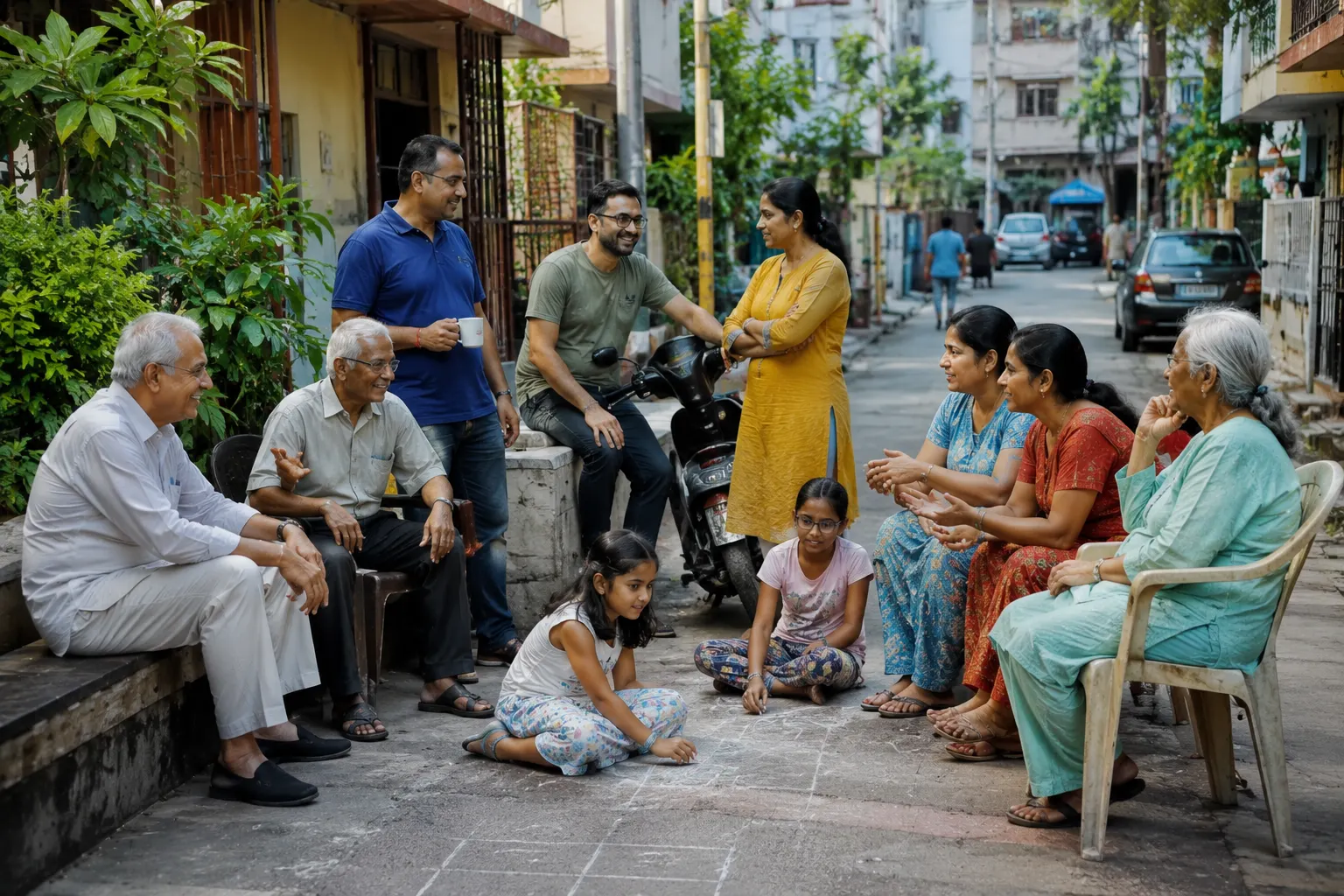
A community is more than a collection of people living near one another. It is a set of relationships, expectations, identities and practices through which people recognise some degree of connection.
That connection can be based on place, religion, occupation, ethnicity, language, interest, disability, political cause, school, online participation or many other forms of shared life.
The importance of community lies not in a romantic idea of togetherness but in the practical consequences of being socially connected.
A Community Is Not Necessarily a Neighbourhood
Geography matters, but it is only one basis of community.
Two people living in the same apartment block may never speak. Meanwhile, people scattered across continents may participate daily in a religious, professional or digital community.
What turns a set of individuals into something more cohesive is repeated interaction, shared expectations and some recognition of membership.
Communities vary enormously in intensity. Some organise nearly every aspect of social life. Others consist of loose networks activated only occasionally.
This variation matters because the word *community* can otherwise become so broad that it means little.
Community Provides Social Support
One of the most direct functions of community is support.
Support can be emotional: somebody listens during grief.
It can be practical: someone drives an older neighbour to a clinic.
It can be informational: a local group explains how to access a public service.
It can be economic: members lend money, share tools or connect someone with work.
WHO's Commission on Social Connection describes social connection through three dimensions: the structure of relationships, the functions or support they provide, and their quality. This is useful because simply having many contacts does not guarantee meaningful support.
A large network can be shallow. A small community can be dependable.
Connection Is Also a Health Issue
Social relationships were once treated mainly as a lifestyle matter. Health research increasingly treats them as part of the conditions that shape well-being.
WHO's 2025 global report on social connection concluded that loneliness and social isolation are widespread and have serious consequences for health and society. The organisation also emphasises that communities with strong social bonds tend to be safer, healthier and more resilient.
This does not mean “joining a community” is a medical treatment. The causal pathways are complex. People in poor health may become isolated, and isolation may also worsen health.
The broader lesson is that human beings are not socially optional creatures. Relationships affect stress, behaviour, access to help and the sense that life is manageable.
Communities Reduce the Cost of Everyday Cooperation
Imagine having to negotiate every interaction from the beginning.
Could you trust the person watching your child? Would a neighbour return a borrowed tool? Could a volunteer be relied upon to show up? Would residents contribute to a shared repair?
Communities develop norms that make some of these decisions easier.
Repeated interaction creates reputation. People learn who is dependable. Informal rules develop. Cooperation can happen without a formal contract for every exchange.
This is one reason community overlaps with the idea of social capital, explored in Article 19. Networks and trust can become resources because they reduce uncertainty and make coordination easier.
Community Transmits Knowledge
Not all useful information flows through schools, governments or search engines.
Communities teach newcomers how things actually work.
A professional community explains unwritten career norms. A farming community shares local knowledge about water and weather. A disability community circulates information about accessibility. A neighbourhood group warns residents about scams. A diaspora network teaches migrants how to navigate institutions in a new country.
This knowledge can be highly efficient because it is contextual.
The risk is that community knowledge can also preserve misinformation or prejudice. Trust increases the speed at which both reliable and unreliable information travels.
Community Creates Identity
People do not define themselves only as isolated individuals.
They are also residents, believers, speakers of languages, alumni, fans, workers, citizens, parents, migrants and members of countless other groups.
Community gives those identities social confirmation.
Calling yourself a musician means something different when other musicians recognise you as one. A language feels more viable when there are people with whom to speak it. A neighbourhood identity becomes real through shared places, memories and routines.
Article 18 examines this identity process in depth. Here the important point is that community provides an audience in which identity is recognised.
Communities Create Collective Capacity
One person can complain about a dangerous crossing. A neighbourhood association can gather evidence, organise residents and negotiate with local government.
One worker may struggle to influence a profession. A professional association can establish standards and represent members.
One parent may find a school problem overwhelming. A parent group can coordinate action.
Community converts individual concerns into collective capacity.
That capacity can be formal, through associations and cooperatives, or informal, through networks of people who know how to mobilise one another.
Crisis Reveals Social Infrastructure
Roads, hospitals and communication networks are forms of physical infrastructure.
Communities possess social infrastructure: relationships and organisations that allow people to respond collectively.
During disasters, formal emergency services are essential, but neighbours often become the first source of information and assistance. They know who lives alone, who needs medication, who has transport and which routes are blocked.
This is one reason international development organisations increasingly examine social cohesion and local networks as part of resilience rather than treating them as decorative social benefits.
Community Is Where Public Institutions Become Real
Government policy is experienced locally.
A health service may exist nationally but be accessed through a clinic staffed by familiar people. A school connects national education policy to families. A local library becomes a place where children study, jobseekers use computers and older people meet.
Community organisations often act as intermediaries between individuals and large institutions.
They translate rules, identify needs, organise feedback and reach people whom central systems struggle to engage.
When those intermediary institutions disappear, individuals can feel that public systems are distant even when services technically exist.
Online Communities Are Real—but Different
Digital communities challenge the assumption that meaningful social life requires physical proximity.
People with rare illnesses can find others with the same condition. Specialists share knowledge internationally. Migrants remain connected with home communities. Young people with uncommon interests find peers they might never encounter locally.
These are genuine forms of social connection.
But online communities have different weaknesses. Platforms can disappear. Algorithms can amplify conflict. Anonymity can reduce accountability. Digital contact may not provide practical help with childcare, illness or local emergencies.
The most resilient social worlds often combine digital and physical relationships rather than replacing one with the other.
Strong Communities Can Also Exclude
Community has a dark side.
Strong internal solidarity may coexist with hostility toward outsiders. Informal norms can become mechanisms of conformity. A community can punish dissent, police gender roles, enforce caste or ethnic boundaries, circulate prejudice or protect powerful members from accountability.
This is why “strong community” should never automatically be treated as morally good.
The question is strong for whom—and at whose expense?
Healthy community life requires both belonging and rights. Individuals need the freedom to participate without surrendering autonomy.
Not Everyone Has Equal Access to Community
Participation requires time, safety, mobility and often money.
A person working two jobs may have little time for local associations. A disabled resident may face inaccessible venues. A migrant may lack language confidence. A person caring for children or an older relative may be unable to attend evening meetings.
Communities can therefore reproduce inequality simply by assuming everyone can participate in the same way.
Inclusive communities deliberately reduce those barriers rather than interpreting absence as lack of interest.
Community Cannot Replace the State
Because community networks can solve problems effectively, governments sometimes romanticise them as substitutes for public services.
That is dangerous.
Neighbours can bring meals, but they cannot replace a health system. Volunteers can support isolated people, but they cannot substitute for adequate long-term care. Mutual aid can help after a disaster, but resilient communities still need infrastructure and professional emergency response.
Community works best as a complement to capable institutions, not as an excuse for their withdrawal.
Why Community Matters
Community matters because human needs are distributed.
No individual possesses all the information, care, emotional support, skills and resources required throughout life. Relationships make those resources shareable.
Communities also provide something harder to measure: the experience of being recognised by others and of participating in a world larger than oneself.
But good communities are not simply close-knit. They combine connection with openness, support with autonomy and shared identity with room for difference.
The strongest form of community is therefore not one in which everyone is the same. It is one in which people can depend on one another without losing the freedom to remain themselves.