Community Service: How Local Action Builds Community Capacity
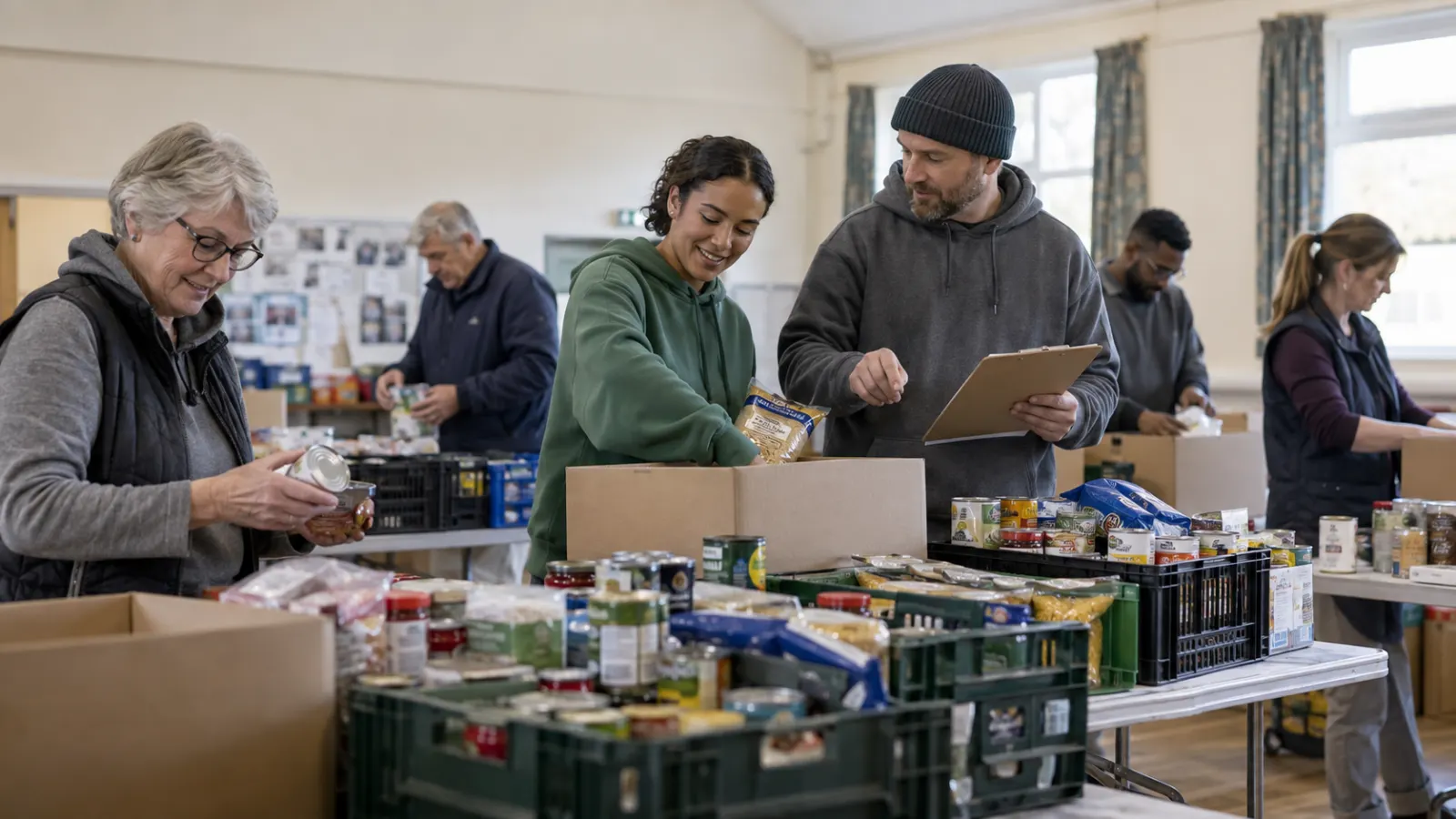
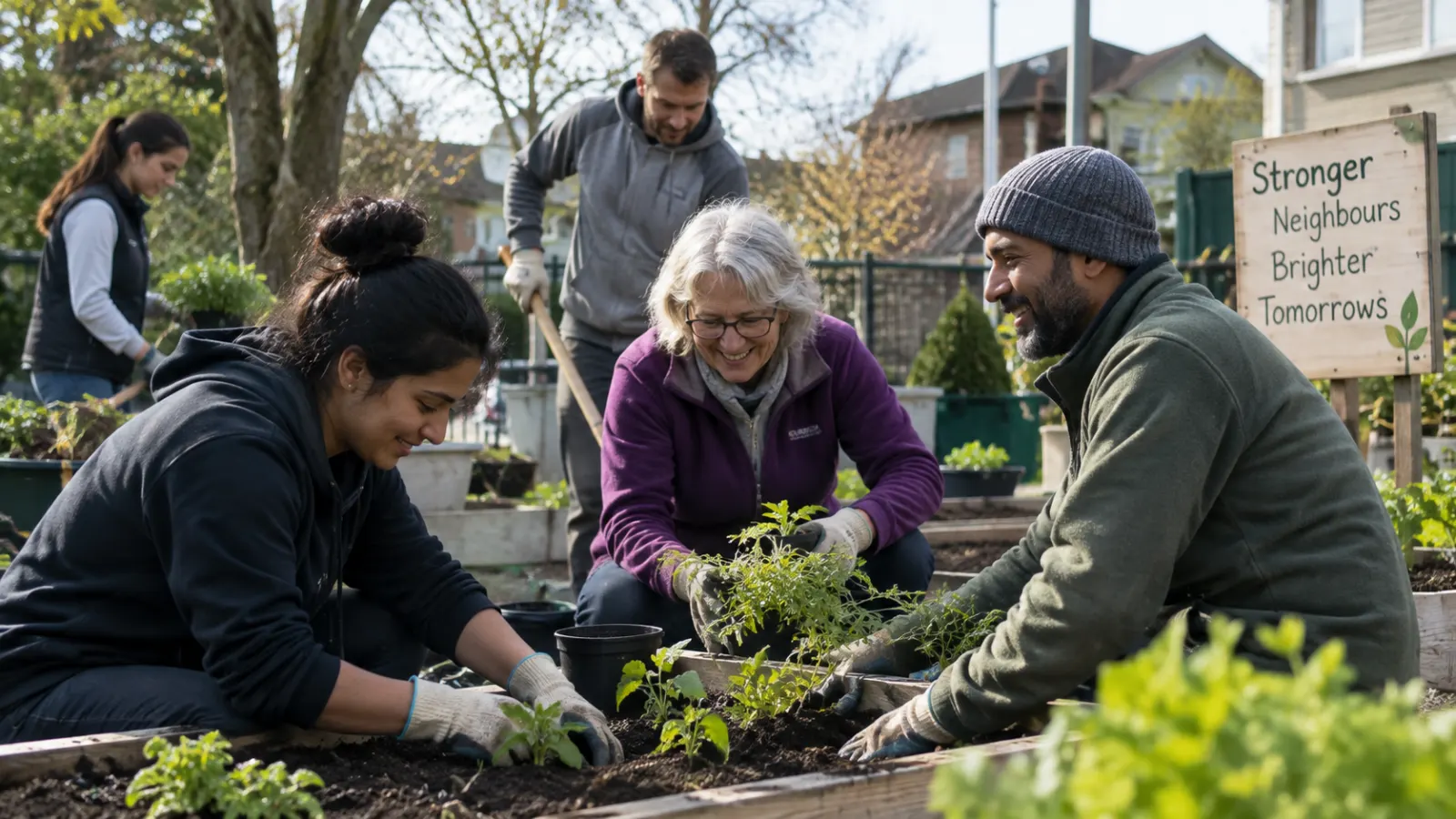
Community service is easy to judge by what can be counted immediately. A neighbourhood cleanup removes rubbish. A tutoring programme delivers lessons. A community kitchen distributes meals. A repair project restores a public space. Those outputs matter, but they do not capture everything the activity can create.
When people work together on a shared problem, they also learn who can organise, which institutions respond, what skills already exist locally, which residents are usually excluded and where trust is weak. They discover which communication channels work, who has useful equipment, which public agency controls a particular service and whether people can cooperate when priorities conflict.
The long-term value of community service can therefore lie partly in the capacity created while solving the immediate problem.
This is what distinguishes a strong community project from one that simply produces a visible event. The strongest projects can leave behind more than a cleaner park, repaired building or successful food distribution. They can leave behind relationships, practical knowledge, leadership, institutional connections and procedures that make the community better able to organise again.
That does not mean all community service is automatically beneficial. Projects can exclude people, waste volunteer effort, replace services that governments should fund, expose participants to unnecessary risk or impose an outside organisation's priorities on residents. A one-day activity can produce good photographs without producing durable change.
Community service is most powerful when it combines useful action with local capacity-building.
Community Service Is About Shared Problems, Not Just Volunteer Hours
Community service overlaps heavily with volunteering, but the terms are not identical.
Volunteering generally describes freely chosen unpaid work for people or organisations beyond one's own household. Community service more often describes organised activity directed toward a community, public good or shared need. It may be organised by residents, schools, civil-society organisations, faith groups, local authorities or national civic-service programmes.
Some community service is voluntary.
Some is not.
A university may require students to complete service-learning. A court may order community service as part of a sentence. A school may require a number of service hours before graduation. These activities can still create public value, but compulsory participation is analytically different from volunteering because voluntariness is missing.
The more important distinction for evaluating a project is not simply whether people were unpaid.
It is what the activity accomplished and what capacity remained afterward.
Imagine two neighbourhood cleanups.
In the first, an outside organisation arrives with volunteers, collects rubbish for one day, takes photographs and leaves. The site becomes dirty again several weeks later because the waste collection problem was never addressed.
In the second, residents participate in identifying why rubbish accumulates, map collection points, meet the local authority, organise temporary cleanup work and establish a process for reporting missed collections. The visible activity may look similar on the first day, but the second project has also changed the community's ability to address the underlying problem.
That is the difference between delivering a service and building collective capacity through service.
The distinction matters because communities rarely face only one problem. Flooding, unsafe public space, school dropout, poor waste collection, disaster preparedness and care for vulnerable residents often require people and institutions to work together repeatedly.
A project becomes more valuable when the knowledge created during one effort can be used during the next.
Shared Work Can Create Social Capital—but Trust Has to Be Earned
One reason community service can have effects beyond the immediate task is that cooperation creates relationships.
The OECD defines social capital in terms of networks together with shared norms, values and understandings that facilitate cooperation within or among groups. Civic engagement, including volunteering and community action, is one component through which those networks and cooperative relationships can develop.
This does not mean that putting people in the same room automatically creates trust.
Trust develops through experience.
Did people show up when they said they would?
Were decisions made fairly?
Was money accounted for transparently?
Did organisers listen when residents raised concerns?
Were some groups expected to provide labour while others controlled the decisions?
Did institutions keep the commitments they made?
Repeated cooperation can provide evidence that other people are reliable. Repeated disappointment can provide the opposite evidence.
Community service can also create bridging relationships between people who live in the same area but rarely interact. A neighbourhood may contain young professionals, older residents, shopkeepers, recent migrants, students, public employees and low-income households whose daily routines barely overlap. A practical project can bring some of those groups into contact around a specific shared objective.
Those connections matter because communities need more than close friendships and family ties when they mobilise resources. Someone may know how to navigate local government. Another person may understand electrical work. Someone else may speak a language used by residents who are usually excluded from meetings. A local business may have storage space. A teacher may know which families need educational support.
A network turns those separate resources into something more useful when people know who has what capability and how to reach them.
The scale of informal volunteer activity reinforces this point. The 2026 State of the World's Volunteerism Report estimates that 2.1 billion working-age people volunteer in an average month and that informal volunteering is more than twice as common as organisation-based volunteering. UNV argues that these community-led networks are important contributors to social cohesion and local resilience.
A separate 2026 UNV study covering more than 8,000 people across eight Global South countries similarly found that informal volunteering accounted for the majority of activity and highlighted community networks as important contributors to resilience and social cohesion.
This means community capacity often exists before a formal organisation notices it.
The task is not always to create a network from nothing.
Sometimes it is to recognise, connect and strengthen relationships that are already doing useful work.
Local Knowledge Matters, but “Community-Led” Should Not Mean Whoever Speaks Loudest
Residents often know things that distant organisations do not.
They know which road floods first during heavy rain, which staircase is inaccessible to an older resident, which household cannot reach the clinic, which public area feels unsafe after dark, which families have stopped sending children to a programme and which messaging group people actually read during an emergency.
This information can improve problem definition.
A technically sophisticated intervention aimed at the wrong problem can still fail.
Community-led design begins by asking what residents think the important problem is, how they experience it and what a useful outcome would look like. External organisations can then add technical knowledge, funding, legal authority or specialist expertise.
But local knowledge should not be romanticised either.
Communities contain unequal power.
The people most confident speaking at meetings may not represent everybody. Landowners may have different priorities from tenants. Adults may speak for young people without asking them. People with disabilities may be absent because the venue is inaccessible. Migrants may avoid public meetings because of language barriers or insecurity. Women may technically be invited while caregiving responsibilities make attendance impossible.
A project can therefore call itself community-led while effectively being controlled by a small group of well-connected residents.
Inclusive participation requires design.
Meetings may need to occur at different times. Transport or childcare barriers may need attention. Information may need translation. Digital participation should have offline alternatives. People affected by a project should have ways to raise objections without depending on permission from local gatekeepers.
The OECD's 2026 Trust Survey offers a wider lesson about participation. Across the countries covered, only 31% of respondents were confident that people like them had a say in what government does. People experiencing financial concerns reported greater barriers to participation, and lower-income respondents were more likely to identify lack of time as a barrier.
Community participation is not identical to political participation, but the underlying problem is similar: an opportunity to participate is not meaningful if only some people possess the time, confidence, money, networks or access needed to use it.
A strong service project therefore asks two questions.
Who is participating?
And who is missing?
Representation should be treated as part of project quality rather than an optional diversity exercise.
Service Can Build Skills, Civic Confidence and Resilience
Community projects create opportunities to practise abilities that are difficult to learn from explanation alone.
Someone organising a local food-distribution programme may learn scheduling, budgeting, procurement and volunteer coordination. A youth group restoring a park may learn how to negotiate with local government, handle disagreements and communicate with residents. A disaster-preparedness project may require mapping, logistics, risk assessment and public communication.
OECD research on youth volunteering and civic-service programmes identifies potential gains in skills, confidence for further civic engagement, solidarity, social inclusion and resilience.
The word potential matters.
Skills do not develop merely because a person accumulated service hours.
Programme design determines what participants actually learn. Someone given meaningful responsibility, mentoring and feedback may develop considerably. Someone asked to perform the same routine task repeatedly with no explanation may gain little beyond familiarity with that task.
Reflection can also matter, particularly in educational service-learning.
Students who tutor children and then examine what they learned about educational inequality, teaching or public policy may gain more than students whose only objective is completing a required number of hours.
Service can also provide a lower-barrier route into civic participation.
Someone who would never attend a formal public consultation may be willing to help organise a sports club, neighbourhood garden or flood-preparedness project. Through that activity, they may learn how local institutions work, meet people involved in decision-making and become more confident raising concerns.
That does not mean community service should be treated as a substitute for democratic participation.
Repairing a playground does not replace the right to demand competent public maintenance.
Serving meals does not eliminate the need to ask why food insecurity exists.
The value is that practical cooperation can sometimes give people experience of collective efficacy—the understanding that coordinated action can alter conditions around them.
This becomes especially important during crises.
Relationships built before an emergency can reduce the amount of coordination required during one. Residents may already know who has medical training, who owns a vehicle, which households contain older people living alone and which community leaders can communicate quickly across different groups.
UNV's 2026 report emphasises volunteerism's contribution to crisis response, solidarity and community resilience, while also stressing that these effects vary with context and should not be assumed automatically.
Resilience is not simply the ability to endure hardship without assistance.
A resilient community is better able to organise information, relationships and resources under pressure while connecting effectively with formal institutions.
That is why informal networks and professional emergency systems should reinforce one another rather than compete.
Communities Need Institutions, and Institutions Need Communities
There is a dangerous version of community-service rhetoric that celebrates communities precisely when governments or organisations have stopped providing what they should.
Residents clean an area because municipal waste collection repeatedly fails.
Parents volunteer to perform tasks because a school lacks enough staff.
Community members finance basic infrastructure because public investment never arrives.
Volunteers fill essential care gaps indefinitely because professional services are unavailable.
The activity can be admirable while the underlying institutional situation remains unacceptable.
Community service should not become a convenient way to transfer structural responsibilities onto unpaid residents.
The stronger model is partnership rather than substitution.
Community members provide local knowledge, relationships, priorities and voluntary effort. Governments or professional organisations contribute funding, authority, specialist expertise, safeguarding, equipment and continuity.
UNV research on volunteer-state partnerships describes this more collaborative model as co-production, where volunteers and public authorities can participate across different stages of service design and delivery rather than volunteers simply acting as an inexpensive extension of the state. Such partnerships can also allow volunteers to serve as information brokers between institutions and communities.
This arrangement can improve institutional feedback.
Suppose volunteers repeatedly find that older residents cannot access a public service because an online form is confusing. The immediate response may be helping residents complete the form.
A stronger system also reports the recurring problem to the agency responsible for the form.
Otherwise volunteers may spend years solving the same avoidable administrative failure one person at a time.
Community service becomes more powerful when frontline observations travel back into institutional decision-making.
Partnership also requires accountability.
When local government, businesses, nonprofits and resident groups collaborate, it can become unclear who is responsible when something goes wrong. Written roles, transparent budgets, named decision-makers and public reporting can prevent cooperation from becoming an excuse for powerful institutions to avoid responsibility.
Communities should know which commitments are voluntary and which institution has a formal obligation to deliver.
Capacity Includes Safety, Inclusion, Data Protection and the Ability to Say No
Good intentions do not eliminate risk.
Projects involving children, older people, displaced populations or people in crisis may require safeguarding, confidentiality rules, background checks and clear professional boundaries.
A volunteer who wants to help is not automatically qualified to provide medical treatment, legal advice or specialist psychological support.
Hazardous tasks require even greater caution.
Disaster response, electrical repair, construction and some environmental work can expose volunteers to physical danger. Appropriate equipment, training, supervision and insurance are not bureaucratic extras. They are part of responsible programme design.
Digital tools create another set of opportunities and risks.
Messaging platforms can mobilise residents quickly. Online forms can match volunteers with needs. Mapping tools can identify hazards or accessible services. Shared databases can preserve institutional memory.
But digital-first participation can exclude people without reliable internet access, smartphones or digital skills.
Community projects can also collect sensitive information.
A volunteer needs assessment may record disability, health status, migration information, household location or income. A community map created to identify vulnerable residents during a flood can become a privacy risk if distributed carelessly.
Information collected for service should therefore be treated as a responsibility rather than as free data.
Ask why the information is needed, who can access it, how long it will be kept and whether the people providing it understand how it will be used.
Strong communities also need the ability to refuse projects.
Capacity is sometimes described only as the ability to mobilise people.
But a community that can organise labour while having no influence over priorities is not fully empowered.
Residents may need to reject an externally designed project that creates risk, demands unreasonable unpaid labour or solves a problem they do not consider important.
Community capacity includes bargaining power, not merely willingness to cooperate.
That principle becomes especially important when outside organisations arrive with funding and predetermined solutions. Money can distort participation if accepting the project becomes easier than challenging its assumptions.
A genuinely community-led process leaves room for residents to say:
This is not our priority.
Strong Projects Build Systems That Survive the Original Organisers
Many community initiatives depend heavily on one unusually energetic person.
That person knows the government contacts, remembers every donor, holds the keys, manages the messaging groups and understands how the project works.
The arrangement can function extremely well—until that person leaves.
Durable community capacity requires institutional memory.
Contacts, procedures, budgets, lessons, risks and decision rules should be documented sufficiently for others to continue the work. Responsibilities can rotate. New organisers can be mentored. More than one person should know how essential processes work.
Resource mapping can help before a project even begins.
Instead of assuming the community has no capacity, organisers can identify existing associations, informal leaders, meeting spaces, tools, local businesses, public agencies and specialist skills. This can prevent duplication and reveal dependencies.
Perhaps three local groups are separately trying to solve the same issue.
Perhaps the only person with access to a critical resource is about to move away.
Perhaps a school has unused meeting space while a community group is paying commercial rent.
Mapping turns hidden resources into shared knowledge.
Small amounts of money can also determine whether local capacity becomes usable.
A project may not require a major grant. It may need tools, printing, transport, venue hire, internet data or protective equipment.
Transparent micro-grants can unlock local initiative without expecting volunteers to finance public activity themselves.
But funding should be accompanied by basic accountability. Who controls the money? What may it be spent on? Who reports what happened?
The point is not to bury small groups in paperwork.
It is to ensure that trust does not depend entirely on personal reputation.
Measure Whether the Community Became More Capable, Not Just How Busy Everyone Was
Community service is easy to count in ways that may reveal very little.
Two hundred volunteers.
Three thousand hours.
Five hundred bags of rubbish.
Six events.
Numbers can demonstrate scale.
They do not necessarily demonstrate impact.
The 2026 UNV report explicitly argues that volunteer measurement should move beyond volunteer counts, hours and economic replacement value. Its Global Index of Volunteer Engagement considers individual value, societal value, economic value and the environment enabling volunteer participation.
Community-service evaluation can apply the same logic.
Did the immediate problem improve?
Did residents who were previously excluded gain a meaningful role?
Did participants develop usable skills?
Did new relationships form between groups?
Did the project improve cooperation with public institutions?
Is there a process for maintaining what was created?
Would the community respond more effectively if a similar problem appeared next year?
These questions explain why one-day projects can be misleading.
A highly visible event may be worthwhile. A single cleanup can genuinely improve a public place. A one-day repair effort can solve a specific problem.
The weakness appears when visibility is mistaken for durability.
A project designed around photographs, certificates or annual reports may generate activity without learning why the problem keeps returning.
Repeated work, maintenance and follow-up are often less visible but more important.
Exit planning should therefore begin before the project ends.
Who waters the garden when the original volunteers stop coming?
Who maintains equipment purchased through a grant?
What happens to the tutoring programme when student volunteers graduate?
Who keeps emergency contact information updated?
What happens when funding expires?
Leaving without answering these questions can turn a successful project into another burden for residents.
Failure should also be documented.
A community that describes every initiative as successful loses valuable information. Perhaps residents did not attend because the timing was wrong. Perhaps the external partner controlled too many decisions. Perhaps a tool was too complicated. Perhaps one neighbourhood received disproportionate resources.
Public debriefs and simple outcome records can prevent the same mistakes from being repeated.
Learning from failure is itself a form of community capacity.
The Power of Community Service Is What Remains After the Project Ends
The immediate value of community service is often easy to see.
A child receives tutoring.
A public space is repaired.
Food reaches a household.
A neighbourhood becomes better prepared for flooding.
Those outcomes matter and should not be dismissed simply because they are immediate.
But the deeper potential lies in what the project leaves behind.
Do more people now know how to organise a meeting?
Do residents know whom to contact inside local government?
Have people from different groups built relationships?
Are procedures documented?
Did new organisers gain experience?
Can the community identify its own priorities more clearly?
Did institutions learn something from residents?
Would the next emergency or local problem be easier to address because this project happened?
If the answer is yes, community service has produced more than a service.
It has created capacity.
That is why local ownership, inclusive participation, safeguarding, institutional partnership and honest evaluation matter. They determine whether community action strengthens residents or simply extracts their labour.
Strong communities are not communities that solve every problem themselves.
They still need functioning governments, professional services, infrastructure and rights.
Nor are strong communities defined by permanent harmony. People disagree. Priorities compete. Resources are limited.
Capacity includes the ability to handle those disagreements, negotiate with institutions, organise resources, challenge poor decisions and preserve knowledge after individual leaders leave.
The strongest community service therefore does two things simultaneously:
it improves something that matters today and makes collective action easier tomorrow.
That is the difference between completing a helpful task and strengthening a community.