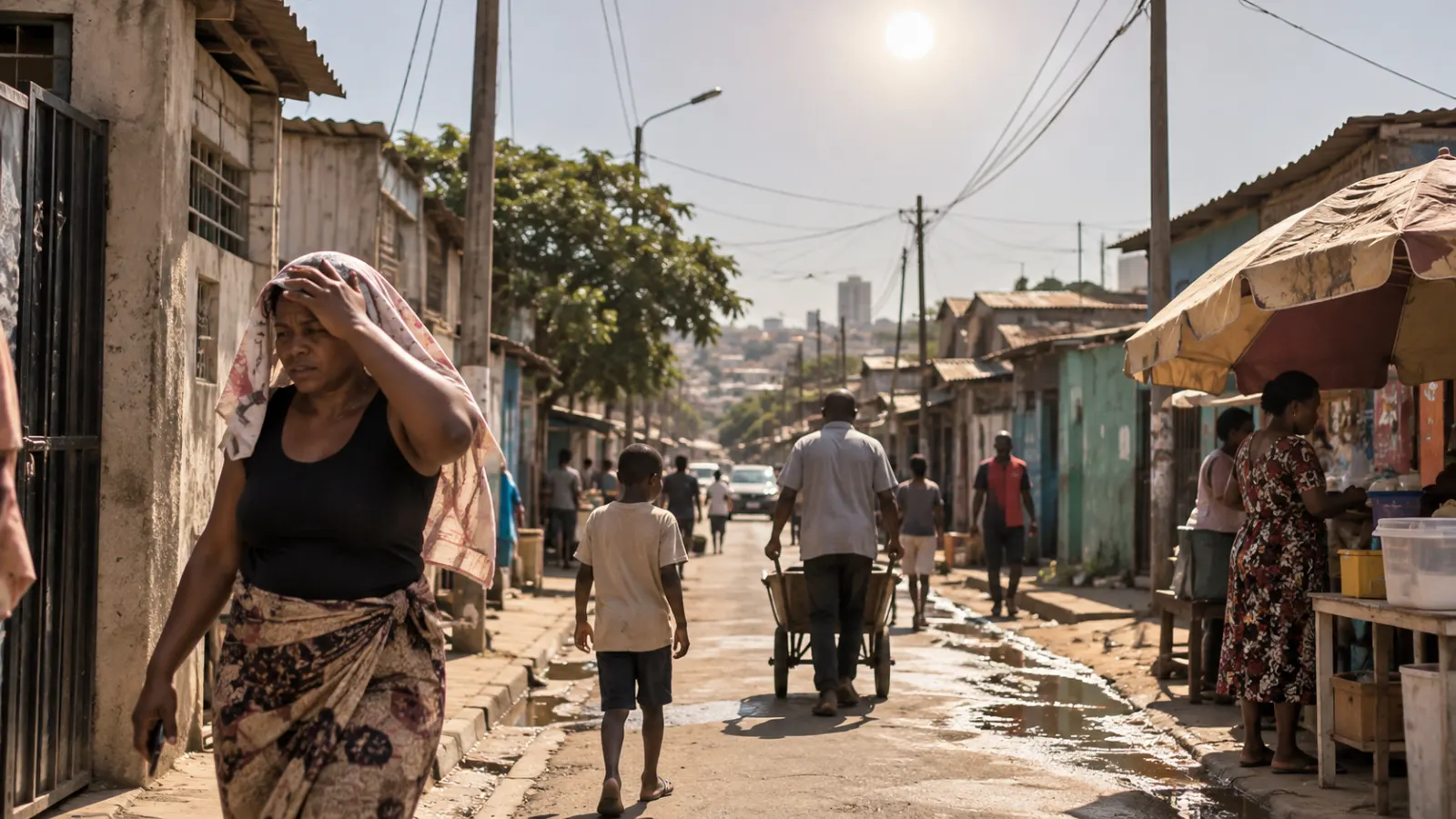
A country can grow richer without its people necessarily living better. Its stock market may rise, its exports may expand, its cities may build towers and its GDP may increase, but if children remain poorly educated, citizens die early, healthcare is weak and ordinary workers cannot build secure lives, then growth has not fully become development. The Human Development Index, or HDI, was created to challenge the habit of judging national progress only through income.
HDI asks a more humane question: do people live long and healthy lives, do they have access to knowledge, and do they command a decent standard of living? It does not reject economics. Income matters because resources expand choices. But HDI insists that money is a means, not the final purpose of public policy. Development is not only about what an economy produces; it is about what people are able to become.
This is why the Human Development Index remains one of the most influential development indicators in the world. It gives policymakers, citizens, journalists and students a compact way to compare countries across three basic dimensions of wellbeing: health, education and income. It is not perfect. No single index can describe the full human condition. But HDI changed the language of development by moving the debate beyond GDP.
What HDI Measures
The Human Development Index combines three dimensions. The first is a long and healthy life, commonly measured through life expectancy at birth. The second is access to knowledge, measured through education indicators such as mean years of schooling and expected years of schooling. The third is a decent standard of living, measured through gross national income per capita in purchasing-power-parity terms.
These dimensions are converted into indices and combined into a single HDI value. The use of PPP-adjusted income is important because it allows income to be compared by purchasing power rather than only exchange rates. A dollar converted at market rates does not buy the same life everywhere. HDI therefore uses income in a way that is closer to real living standards.
The final HDI score is a number between 0 and 1. Countries are then grouped into human development categories such as very high, high, medium and low human development. These rankings receive public attention, but the real value of HDI lies not in national pride or embarrassment. Its value lies in asking whether economic policy is improving human capabilities.
Why GDP Alone Is Not Enough
GDP measures the total value of goods and services produced in an economy. It is essential for macroeconomic analysis, tax planning, investment decisions and public finance. But GDP does not tell us who benefits from growth, whether citizens are healthy, whether children learn, whether women participate fully, whether rural communities access services, or whether people enjoy security and dignity.
A country may have high GDP because of natural resources, financial services or industrial output, while large sections of its population face weak education and health outcomes. Another country may have moderate income but strong public health, literacy and social protection. GDP alone would miss that difference. HDI tries to restore balance by placing people at the centre of development.
This does not mean GDP is irrelevant. A poor country cannot easily finance hospitals, schools, sanitation, research or social protection without economic growth. But growth must be converted into human outcomes. The conversion is not automatic. It depends on governance, public spending, social policy, gender equality, institutional capacity and political priorities.
The Health Dimension
The health dimension of HDI uses life expectancy because survival is the most basic human capability. A society where people live longer generally reflects better nutrition, public health, sanitation, medical access, disease control, maternal care and social conditions. Life expectancy is not only a medical statistic; it is a summary signal of how well a society protects life.
However, life expectancy also hides internal differences. Rich citizens may live much longer than poor citizens. Urban residents may have better healthcare access than rural communities. Women, migrants, informal workers and marginalised groups may face different health risks. HDI captures the national average, but serious analysis should look beneath that average.
For India, the health dimension is especially significant because development is not only about building hospitals, but also about preventive care, nutrition, clean air, safe water, sanitation, primary healthcare and affordability. A higher income economy with weak public health can still leave citizens vulnerable. Human development therefore requires health systems that are accessible before crisis, not only hospitals that treat illness after it arrives.
The Education Dimension
Education is included in HDI because knowledge expands freedom. A literate and skilled citizen can access better work, understand rights, participate in public life, use technology, protect health, manage money and improve family outcomes. Education is not merely a route to employment; it is a route to agency.
HDI uses schooling indicators because they are measurable across countries. Mean years of schooling reflect the education already received by adults. Expected years of schooling reflect the likely educational pathway of children entering school. Together, they combine past achievement with future promise.
But again, years of schooling do not automatically equal learning. A child may spend years in school without acquiring strong reading, numeracy, reasoning or digital skills. A university graduate may still lack employability if quality is weak. This is one of the major limitations of HDI. It measures access and duration better than quality. For policy, the next step is to connect schooling with learning outcomes, teacher quality, vocational skills and equitable access.
The Income Dimension
The income dimension uses gross national income per capita adjusted for purchasing power parity. This matters because income expands choices. People with higher real income can access better housing, food, transport, education, healthcare, savings and security. Governments with higher national income can invest more in infrastructure and public services.
But HDI also recognises that income has diminishing returns. An increase in income matters greatly when it lifts a family out of deprivation. The same increase matters less when a society is already wealthy. This is why HDI’s income treatment is designed to avoid making money dominate the entire index. The point is not to deny income, but to prevent it from crowding out health and education.
For India, this balance is vital. High GDP growth can create opportunity, but human development depends on whether growth reaches people through jobs, schools, health access, nutrition, infrastructure and social mobility. A country cannot become genuinely developed if income rises while human capability remains uneven.
What HDI Reveals About Policy
HDI is useful because it shows that public policy must be integrated. Health, education and income reinforce one another. A healthy child learns better. An educated worker earns more. Higher income allows families and governments to invest in health and education. Weakness in one dimension can limit progress in the others.
This is why development strategy cannot be reduced to one department or one budget line. Education policy affects labour markets. Health policy affects productivity. Income policy affects nutrition and social stability. Infrastructure affects access to schools and hospitals. Women’s empowerment affects health, education and income across generations. HDI encourages a multidimensional view of progress.
It also creates accountability. A government that celebrates GDP growth can be asked whether life expectancy is improving, whether schooling is meaningful, whether real income is broad-based, and whether inequality is weakening the national average. HDI gives citizens a language for demanding human outcomes, not just economic headlines.
The Limitations of HDI
HDI has limitations. First, it is an average. It can hide inequality across gender, caste, class, region, ethnicity and urban-rural location. A country may have a decent national HDI while some communities remain far behind. This is why inequality-adjusted measures are important.
Second, HDI does not directly measure political freedom, environmental quality, safety, mental health, job quality, digital access or social trust. These factors deeply affect human life. Third, the education dimension captures years more easily than quality. Fourth, the income dimension cannot fully capture wealth distribution, debt burden or economic insecurity.
Fifth, HDI rankings can create a scoreboard mentality. Countries may focus on moving a few ranks rather than solving deep structural problems. The right use of HDI is diagnostic, not decorative. It should prompt questions, not end debate.
The India Angle
For India, HDI matters because the country’s development challenge is massive and uneven. India has world-class technology firms, a large domestic market, growing infrastructure and rising global influence. At the same time, it must continue improving nutrition, public health, school quality, women’s workforce participation, skill development and regional equity. HDI forces these realities to be discussed together.
India’s ambition to become a major economic power will be judged not only by GDP size, but by how many citizens gain real capability. A young population can become a demographic dividend only if it is healthy, educated and productively employed. Otherwise, demographic potential can turn into frustration. HDI is therefore not a soft indicator. It is central to economic strategy.
A strong human development agenda is also good economics. Healthy and educated citizens are more productive, more innovative, more adaptable and more resilient. Human development is not charity added after growth. It is one of the foundations of sustainable growth.
Final Takeaway
The Human Development Index changed the way the world talks about progress. It reminded economists and governments that income is important, but life is larger than income. Development must be measured by whether people live longer, learn more and command the resources needed for a dignified life.
For readers, the lesson is clear. A country’s success should not be judged only by the size of its economy, the level of its stock market or the number of billionaires it produces. The deeper question is whether ordinary people are healthier, better educated, more secure and more capable than before. That is the true test of development.
Editorial Disclaimer
This article is for economic and public policy education only. HDI rankings, country scores and methodology details should be verified from the latest UNDP Human Development Report before publication.