How to Reduce Plastic Use: 25 Practical Ways That Make the Biggest Difference
How to reduce plastic use becomes much easier once the goal changes from trying to live a perfectly “plastic-free” life to reducing the plastic that is unnecessary, short-lived and repeatedly thrown away.
Plastic is useful in medicine, food safety, electronics, transport, construction and many other applications. The problem is not that every piece of plastic is inherently unnecessary. It is that enormous quantities are designed for brief use, difficult to reuse or recycle, and increasingly likely to become waste.
That distinction changes the order of action.
Recycling matters, but it comes relatively late. The strongest approach is usually to avoid unnecessary products, reduce material use, reuse products and packaging repeatedly, refill or repair where possible, recycle according to real local systems and safely manage what remains.
This is also consistent with current international evidence. UNEP's Turning off the Tap framework starts by reducing problematic and unnecessary plastic use and then expanding reuse, recycling and wider circular-economy changes. OECD modelling likewise concludes that downstream waste management alone cannot solve plastic pollution; action is required across the whole plastic lifecycle.
How to Reduce Plastic Use at a Glance
| Priority | What to do | Why it matters |
|---|---|---|
| 1. Avoid | Do not take products or packaging you do not need | Prevents waste before it exists |
| 2. Reduce | Use less material for necessary functions | Cuts production and waste |
| 3. Reuse | Keep containers, bags and products in circulation | Spreads manufacturing impact over many uses |
| 4. Refill and repair | Extend product and packaging life | Reduces repeated replacement |
| 5. Recycle correctly | Follow the actual local recycling system | Recovers some material |
| 6. Dispose safely | Prevent littering, dumping and open burning | Reduces environmental leakage |
| 7. Change systems | Improve design, procurement, collection and policy | Changes plastic use at much larger scale |
The key idea is simple: the earlier plastic is removed from the lifecycle, the less waste has to be managed later.
Why Reducing Plastic Matters
Plastic became enormously successful because it is lightweight, durable, versatile and often inexpensive.
Those same characteristics create problems after use.
OECD modelling estimates that under business as usual global plastic production and use could increase from about 435 million tonnes in 2020 to 736 million tonnes by 2040, an increase of roughly 70%. Without stronger policies, mismanaged plastic waste and environmental leakage are also projected to increase substantially.
This is why the plastic problem cannot be solved simply by improving litter collection.
If the quantity entering the economy keeps rising rapidly, collection and recycling systems have to keep chasing an expanding waste stream.
Reducing unnecessary plastic upstream makes every later stage easier.
1. Ask Whether You Need the Item at All
The most effective replacement for unnecessary plastic is often nothing.
Before asking, “What material should replace this plastic?”, ask:
“Do I need this product, package or accessory?”
A takeaway order eaten at home may not need disposable cutlery. A hotel does not necessarily need thousands of miniature shampoo bottles if refillable dispensers can provide the same service. A retailer may not need several decorative packaging layers around one product.
This is called source reduction.
It prevents material from being manufactured, transported, purchased and eventually discarded.
That is generally more robust than producing another disposable product from a different material.
2. Target High-Frequency Single-Use Items First
Trying to eliminate every plastic object in your life creates a huge amount of effort for relatively little gain.
Instead, identify things that combine two characteristics:
you use them frequently, and you throw them away quickly.
Common examples include shopping bags, bottled drinks, takeaway containers, disposable cutlery, sachets, coffee lids and heavily packaged everyday products.
Replacing one plastic item used once every five years matters less than changing something you discard several times every week.
Plastic reduction works best when you think in terms of annual material flow, not symbolic visibility.
3. Carry a Reusable Shopping Bag
Reusable bags are one of the easiest habits to maintain because shopping is repetitive.
The important part is actually reusing the same bag.
Buying several new “eco-friendly” bags and repeatedly forgetting them defeats much of the purpose. A reusable product creates value when its longer manufacturing life is spread across many uses.
Keep bags somewhere they are easy to remember: in a handbag, vehicle, bicycle basket or beside whatever you normally take shopping.
The environmental principle extends beyond bags:
use what you already own before buying a supposedly greener replacement.
4. Use a Refillable Water Bottle
Disposable beverage bottles are another high-frequency target.
Where drinking water is safe and refill infrastructure is available, a durable bottle can replace many single-use bottles.
Again, the benefit comes from repeated use.
Buying a new reusable bottle every few months because another design looks better converts a reuse strategy back into consumption.
The most sustainable bottle is often the durable one you already have and consistently refill.
5. Use Reusable Cups When the System Supports Them
Coffee cups and takeaway drink packaging can produce large waste streams in busy workplaces and cities.
A reusable cup can reduce disposable packaging when cafes accept it and when the cup is actually reused many times.
Even better are systems that allow a customer to borrow a standardised cup, return it at another participating location and have it professionally washed for another customer.
That model solves one of the weaknesses of individual reuse: people do not always remember to carry their own container.
This illustrates an important principle.
A reusable product is useful. A functioning reuse system can be much more powerful.
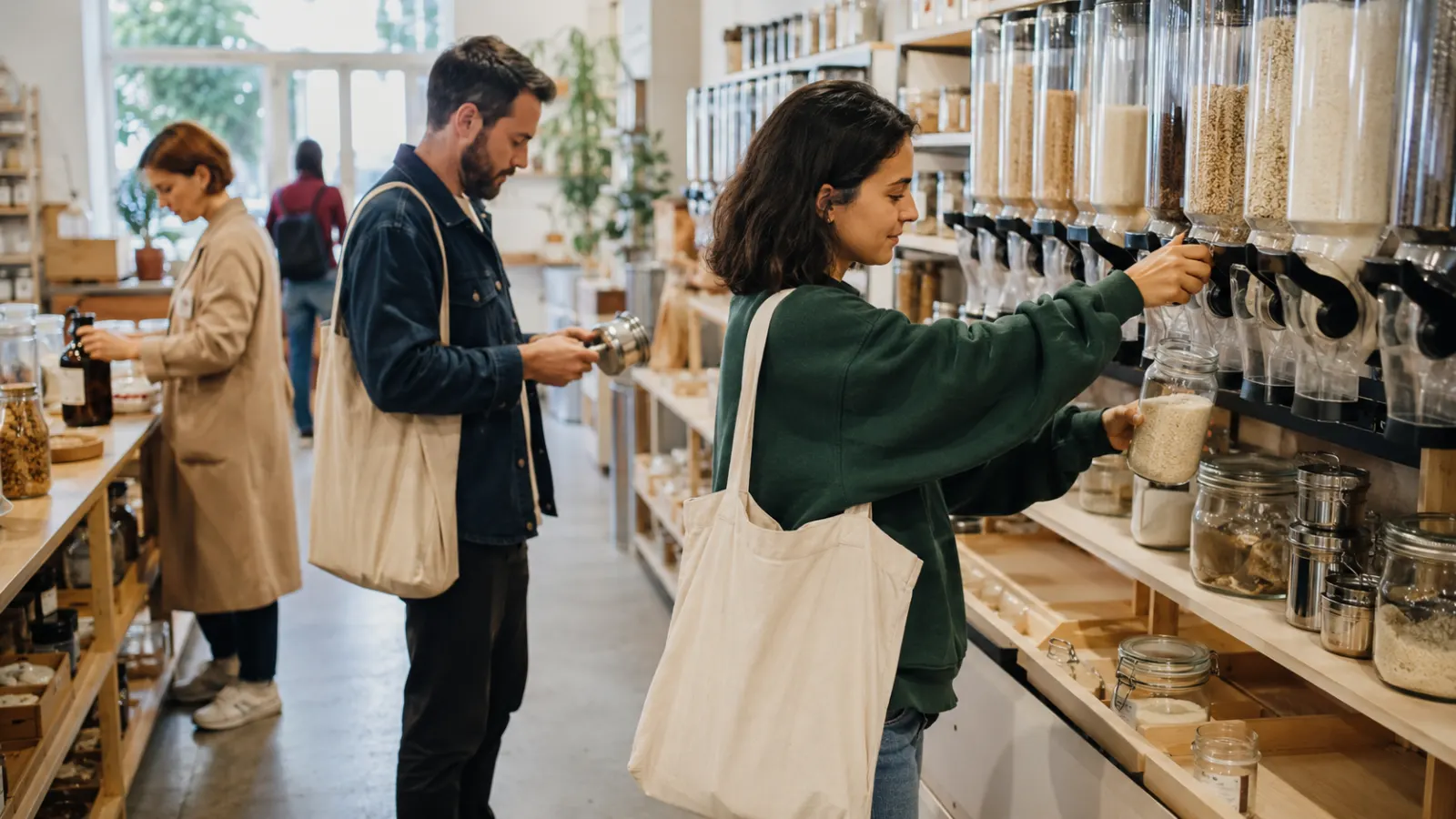
6. Choose Refill Systems Over Repeated Packaging
Many products are primarily delivery systems for liquids or powders.
Soap, cleaning products, shampoo and some foods can sometimes be sold through refill stations or returnable containers rather than a new package every time.
UNEP's plastics strategy places major emphasis on reuse because packaging can remain in circulation instead of continually moving through production and disposal.
Refill works best when it is convenient, affordable and standardised.
If the consumer has to travel a long distance, buy expensive specialist containers and follow a complicated process, adoption will remain limited.
Good reuse systems make the low-waste option easier, not heroic.
7. Buy Products With Less Packaging
Plastic reduction does not necessarily require choosing a product labelled “plastic-free.”
Start by comparing the amount of packaging.
One product may have a plastic bottle inside a plastic tray inside a cardboard box wrapped in film. Another may deliver the same quantity in one simple container.
Concentrated products can also reduce packaging because less material and water need to be transported.
Bulk purchasing can reduce packaging per unit where the larger container genuinely replaces several smaller ones and the product will actually be used before it expires.
The goal is less material per useful service.
8. Avoid Unnecessary Miniature and Single-Portion Packaging
Small sachets and miniature products can be convenient, but they create a high packaging-to-product ratio.
Where practical, larger refillable or shared formats may substantially reduce material.
Examples include toiletries, sauces, condiments, cleaning products and individually wrapped household items.
However, context matters.
Single-dose or individually packaged products can serve important hygiene, medical, accessibility or food-safety functions.
Plastic reduction should target unnecessary single-use packaging rather than assuming every small package serves no legitimate purpose.
9. Reuse Containers You Already Have
You do not need to purchase a matching set of fashionable storage containers to begin reusing packaging.
Many durable containers can be reused appropriately for storage or organisation.
The key word is appropriately.
Not every disposable food package is designed for repeated heating, long-term reuse or uses outside its intended purpose. Follow product safety guidance where food contact, chemicals or heat are involved.
The broader lesson is still valuable:
before buying another storage product, ask whether something already available can safely do the job.
10. Replace Disposable Food-Service Items Where Practical
Restaurants, offices, schools and events can generate large amounts of short-lived packaging.
Reusable plates, cups and cutlery can substantially reduce disposable material when washing infrastructure is available.
For takeaway systems, reusable container programmes can go further by allowing customers to borrow and return packaging.
This turns packaging from something sold with every meal into infrastructure that circulates through many transactions.
The environmental benefit depends on reuse frequency, washing, transport and breakage, so the solution needs to be designed as a system rather than simply changing the material.
11. Do Not Assume Paper, Glass or Metal Is Automatically Better
Plastic substitution can solve one problem while increasing another environmental burden.
Glass is durable and highly recyclable in suitable systems but is heavier to transport. Aluminium production is energy-intensive, although aluminium can circulate effectively when recovery rates are high. Paper can use renewable fibre but still requires land, water, energy and processing.
The correct question is therefore not:
“Which material is always greenest?”
There is no universal answer.
Ask instead about the whole lifecycle: how much material is used, how often the product is reused, how far it travels, how it is manufactured and what actually happens after disposal.
This is one reason preventing unnecessary packaging is often safer than repeatedly replacing one disposable format with another.
12. Understand What “Recyclable” Really Means
A package may be technically recyclable while having little chance of actually being recycled.
Real recovery depends on whether the local system:
collects that material;
can sort it;
has facilities capable of processing it;
can produce usable recycled material;
and has a market for the output.
Colours, labels, adhesives, coatings and multilayer combinations can all complicate recovery.
This is why recycling claims should be evaluated against real infrastructure, not only theoretical chemistry.
13. Recycle According to Your Local Rules
Recycling rules vary between cities and countries.
One municipality may accept a particular polymer or container while another does not.
Check what your local system actually collects.
Where required, remove excessive food contamination, separate components and follow instructions about lids or labels.
Putting unsuitable materials into recycling can contaminate loads or increase sorting costs.
This behaviour is sometimes called wishcycling: placing something in the recycling bin because we hope it is recyclable rather than because the system accepts it.
Good intentions do not make incompatible material recyclable.
14. Remember That Recycling Comes After Reduction and Reuse
Recycling remains important, but it cannot support indefinitely growing disposable consumption.
OECD's 2040 modelling makes this limitation particularly clear. If stronger global policies are not introduced, plastic production and waste continue rising rapidly. A strategy concentrated mainly on downstream waste management cannot eliminate plastic leakage.
Under OECD's most ambitious modelled scenario, policies working across the entire lifecycle—including reducing production and demand, improving design, expanding recycling and preventing leakage—could reduce plastic leakage by around 96% compared with business as usual by 2040.
The conclusion is not that recycling is useless.
It is that recycling works better when society generates less unnecessary plastic to recycle.
15. Reduce Synthetic Clothing Purchases by Buying Fewer, Better Garments
Plastic use is not limited to packaging.
Polyester, nylon, acrylic and several other synthetic fibres are plastics.
Synthetic textiles can release microfibres during manufacturing, use and washing.
A practical response does not require discarding an existing synthetic wardrobe and immediately buying new natural-fibre clothing. That would create another large material flow.
Instead, extend garment life.
Buy fewer items, choose durable construction, repair clothing when practical, purchase second-hand where appropriate and avoid unnecessary replacement.
Keeping clothing in use longer reduces demand for new material regardless of fibre type.
16. Wash Clothes Only When Needed
Repeated washing contributes to garment wear and can release fibres.
Clothing should obviously be washed when hygiene requires it, but not every item needs laundering after every brief use.
Following garment-care instructions, using full loads where appropriate and maintaining washing machines properly can reduce unnecessary resource use.
Some filters and devices are designed to capture synthetic microfibres, although effectiveness and infrastructure vary.
The more fundamental intervention remains reducing excessive textile throughput.
17. Remember Tyres Are Part of the Plastic Pollution Problem
Some plastic pollution is invisible during ordinary shopping.
Tyres contain synthetic polymers and release particles as they wear against road surfaces.
OECD's plastics work specifically identifies tyres, textiles, paints and other sources as important areas requiring targeted microplastic interventions.
This matters because it changes how we assign responsibility.
A consumer can avoid straws yet still participate in systems that generate polymer pollution through transportation, clothing and infrastructure.
Solutions therefore include material engineering, public transport, vehicle design, road management and better capture systems—not simply individual purchasing decisions.
18. Repair Instead of Replacing Where Possible
Plastic components exist throughout electronics, furniture, appliances and household products.
Extending product life reduces the need to manufacture replacements and their accompanying packaging.
Repairability therefore belongs in plastic reduction even when the object itself is not usually described as “plastic waste.”
Choose repair when it is technically safe, economically sensible and likely to extend useful life.
Businesses can support this by providing spare parts, repair information and modular designs.
A durable product repaired twice can create a very different material footprint from three disposable replacements.
19. Buy Second-Hand
Second-hand markets extend the useful life of products already manufactured.
Furniture, clothing, toys, tools and many household items can continue serving their intended purpose without requiring equivalent new production.
This does not eliminate all environmental impact. Transport, refurbishment and eventual disposal still matter.
But reuse delays the point at which another new product has to be manufactured.
Circular systems become more effective when products remain useful for longer before becoming waste.
20. Avoid Disposable Products When a Durable Alternative Fits the Job
Common examples can include disposable razors, pens, food containers and certain household products.
But the phrase “when a durable alternative fits the job” is important.
Medical devices, sanitation products and accessibility tools can have legitimate single-use functions.
An environmentally responsible system does not impose blanket substitution without considering health, accessibility and safety.
The best targets are products that are high-volume, short-lived and genuinely avoidable.
21. Reduce Plastic Waste at Work, Not Only at Home
Many people focus on household waste while businesses use far greater amounts of material through procurement and logistics.
Workplace opportunities may include:
reusable food-service items;
refillable cleaning systems;
bulk procurement;
reusable shipping crates;
reduced protective film;
returnable transport packaging;
repairable equipment;
better separation of clean industrial plastic streams.
A business should begin with a plastic audit.
Measure which items are purchased most frequently, which categories create the greatest waste volume and where reusable systems could work.
What gets measured can be redesigned.
22. Businesses Should Redesign Packaging Before Asking Consumers to Recycle Better
Consumers cannot recycle their way around packaging that was never designed for effective recovery.
Manufacturers control many important variables upstream:
material choice;
number of packaging layers;
colour;
labels;
adhesives;
size;
refillability;
recycled content;
compatibility with local recycling systems.
Businesses therefore hold a different level of responsibility from the individual customer receiving the finished package.
Circular design attempts to make waste prevention a product-development issue rather than a cleanup problem.
23. Use Reusable Packaging in Supply Chains
Large quantities of plastic never appear on shop shelves.
Pallet wrap, industrial film, transport containers, protective packaging and shipping materials move between factories, warehouses and retailers.
Closed business-to-business systems can sometimes be particularly suitable for reuse because the same suppliers and destinations interact repeatedly.
Reusable pallets, crates, totes or containers can circulate through established logistics networks.
That is often easier to manage than expecting millions of consumers to return incompatible packaging independently.
24. Support Deposit-Return Systems
Deposit-return programmes attach financial value to returning a container.
The customer pays a small deposit when buying the product and receives it back when the container is returned.
This can support either high-quality recycling or reuse depending on the system design.
The broader advantage is behavioural: the package stops being treated as valueless waste.
Good circular systems make returning material economically and logistically normal.
25. Support Extended Producer Responsibility
Extended Producer Responsibility, or EPR, shifts some financial or operational responsibility for post-consumer products and packaging toward producers.
The principle is that companies making packaging decisions should also bear some responsibility for what happens after use.
OECD specifically identifies EPR schemes as an important policy instrument that can help finance separated collection, sorting and recycling and create incentives for better design.
Poorly designed EPR can become merely another fee.
Well-designed systems can make difficult-to-manage packaging more expensive and reward formats compatible with circular systems.
Why Plastic Reduction Is a Government Issue Too
Individuals choose among products that markets and public policy make available.
If every nearby shop sells water only in disposable bottles, consumer choice is constrained.
Governments can change those defaults through measures including:
product standards;
targeted restrictions on unnecessary single-use items;
deposit-return schemes;
public procurement;
recycled-content requirements;
waste-collection infrastructure;
reuse standards;
producer responsibility;
anti-litter enforcement;
design requirements.
OECD's modelling shows why scale matters. Comprehensive global action across production, demand, circular design, recycling and leakage prevention performs dramatically better than concentrating on waste management alone.
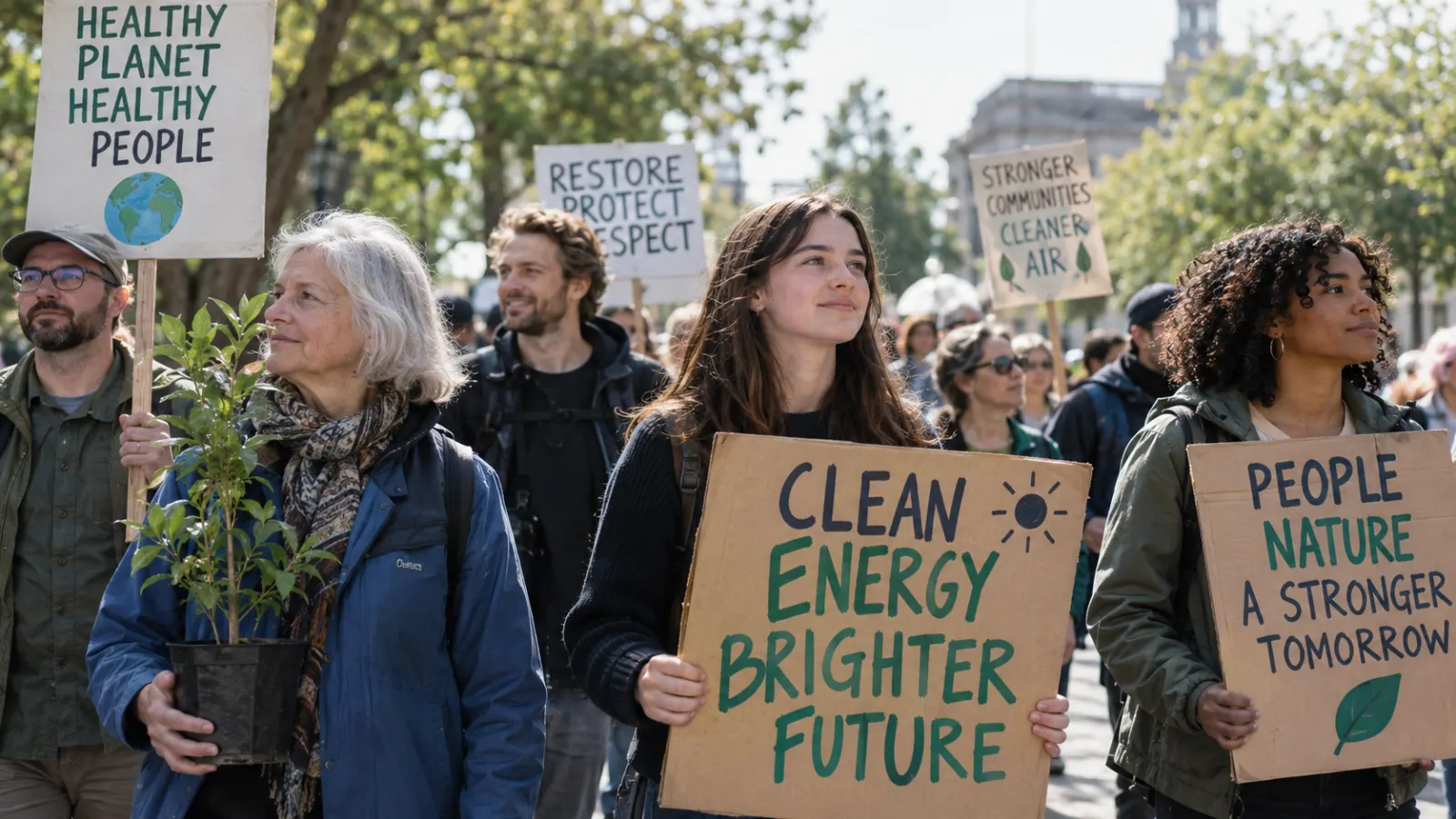
One person's choice changes one transaction.
A rule affecting an entire product category can change millions.
Both levels matter, but they operate at different scales.
The Best Plastic Policy Starts Upstream
Waste policy has traditionally focused heavily on what happens after disposal.
Collect it.
Sort it.
Recycle it.
Landfill it.
Clean it from rivers.
Those interventions remain necessary.
But plastic pollution becomes easier to control if less unnecessary material enters the waste system in the first place.
OECD groups the strongest interventions into several linked areas: reducing production and demand, designing for circularity, strengthening recycling and closing leakage pathways.
That is why an effective plastic strategy starts at product design rather than at the bin.
What About Single-Use Plastic Bans?
Targeted bans can be effective when they focus on products that are unnecessary, frequently littered and have practical alternatives.
But bans require good design.
If a banned lightweight plastic item is automatically replaced with a much heavier disposable alternative and consumer behaviour does not change, some environmental burdens may simply move elsewhere.
A stronger policy can combine restrictions with:
reuse;
pricing signals;
product standards;
collection systems;
consumer information;
producer responsibility.
The objective should be to reduce unnecessary single-use consumption, not merely make one material disappear from view.
Reuse Systems Are Stronger Than Reusable Products Alone
Individual reusable products depend on memory and motivation.
A systemic approach makes reuse part of normal commerce.
Imagine a city in which takeaway containers use several standard formats. Customers can return them to multiple restaurants. Businesses send them to central washing facilities. Containers are inspected, redistributed and tracked through repeated cycles.
The consumer does not need to own twenty containers.
The system owns the packaging.
This transition from product ownership to service infrastructure is one of the most important ideas in circular design.
Reuse Still Has Environmental Costs
Reusable packaging is not impact-free.
It requires material to manufacture, transport for return and resources for washing.
A heavy reusable container used only twice may perform poorly compared with a lighter option used appropriately.
The critical variable is number of uses.
A reuse programme succeeds environmentally when products remain in circulation long enough to justify the resources required to manufacture and maintain them.
This is why reuse needs durable design, high return rates and efficient logistics.
Compostable Plastic Is Not a Universal Solution
Products marketed as compostable or biodegradable can be useful in specific systems.
But the labels are frequently misunderstood.
Some materials require industrial composting conditions that ordinary soil, oceans or home compost systems do not provide.
If local waste infrastructure cannot identify and process the material correctly, compostable packaging may end up in landfill or contaminate conventional recycling streams.
The relevant question is therefore:
“Compostable where, under what conditions and through which collection system?”
A label is not an end-of-life system.
“Biodegradable” Does Not Mean “Safe to Litter”
A biodegradable product should never be treated as permission to discard waste into the environment.
Degradation depends on temperature, sunlight, moisture, oxygen and microbial conditions.
Material designed to break down under controlled industrial conditions may persist much longer in a river or ocean.
Safe disposal and effective collection remain essential.
What About Bioplastics?
Bioplastic is a broad category, not one environmental guarantee.
Some plastics are partly or wholly made from biological feedstocks. Some are biodegradable under particular conditions. Some are both. Others are neither in the way consumers assume.
Environmental performance depends on feedstock production, land use, manufacturing, product lifetime and end-of-life infrastructure.
Replacing fossil-based disposable plastic with bio-based disposable plastic without changing consumption patterns may leave important waste problems unresolved.
Again, reducing unnecessary material comes first.
Microplastics Change the Plastic-Reduction Conversation
Plastic waste is not limited to visible bottles and bags.
Microplastics are small plastic particles produced intentionally in some applications or formed through the breakdown and abrasion of larger materials.
Sources can include:
tyres;
synthetic textiles;
paints;
plastic pellets;
larger litter.
OECD notes that controlling plastic pollution requires targeted measures for microplastic sources in addition to the policies used for packaging and macroplastic waste.
This is another reason a plastic strategy centred solely on household packaging is incomplete.
Clean-Ups Still Matter
Beach, river and neighbourhood clean-ups provide real benefits.
They remove material before it fragments further, protect wildlife and improve public spaces.
They can also collect useful information.
If volunteers find the same product type repeatedly after every storm, that pattern can identify failures in packaging design, collection or local infrastructure.
Clean-ups are therefore both remediation and potential data collection.
But they remain downstream.
A beach can be cleaned today and covered again next month if the source continues.
Use Cleanup Data to Move Upstream
The most valuable question after a cleanup is not simply:
“How much did we collect?”
Ask:
What brands or product categories appear repeatedly?
Where is the waste entering the environment?
Is a drain, market, tourist area or transport route responsible for disproportionate leakage?
Could collection be improved?
Could packaging be redesigned?
Could a deposit system reduce loss?
Could the item be avoided entirely?
The objective is to move from removing waste to preventing recurrence.
Avoid Plastic Burning
Where formal waste collection is poor, households or businesses may burn plastic waste.
Open burning can release harmful pollutants and should not be treated as a safe disposal method.
The correct solution is not simply instructing individuals to stop if no alternative waste system exists.
Governments need reliable collection and environmentally sound treatment options.
This again illustrates why environmental responsibility is shared between personal behaviour and infrastructure.
Plastic Reduction Should Not Become a Luxury Lifestyle
Some zero-waste advice assumes access to specialist stores, expensive reusable products, bulk shopping and extra storage space.
Many people do not have those options.
A low-income household buying a product in a sachet because that is the affordable quantity should not carry the same responsibility as the company deciding that sachet packaging is the default distribution system.
Effective environmental policy changes the market so lower-waste choices are affordable and available.
Sustainability works better when people do not need exceptional time, money or expertise to participate.
Do Not Aim for Plastic-Free Perfection
Plastic performs legitimate functions.
Sterile medical equipment, electrical insulation, lightweight transport components, food protection and many safety applications may provide benefits that are difficult to replace.
The objective should therefore be less unnecessary and problematic plastic, not eliminating every polymer regardless of purpose.
Perfection can also create counterproductive behaviour.
Throwing away every plastic container in your home and immediately buying replacements is not automatically environmentally responsible.
Use durable items safely for their useful life.
Change purchasing patterns gradually.
Focus first on repeated waste.
A Practical Household Plastic-Reduction Plan
You can make the process manageable by working through one area at a time.
Start with your waste for one week.
Do not overanalyse every item. Identify the categories appearing repeatedly.
If bottled drinks dominate, build a refill habit. If takeaway packaging dominates, change ordering or container behaviour. If grocery packaging is the main source, compare loose, bulk or refill options where they exist.
Then choose two or three changes that can become routine.
A small habit repeated for years usually matters more than an ambitious zero-waste experiment abandoned after two weeks.
A Practical Plastic Audit for Businesses
Businesses should begin with data.
Record how much plastic enters the organisation through:
retail packaging;
transport packaging;
industrial film;
food service;
procurement;
components;
customer deliveries.
Then rank categories according to volume, cost and ability to redesign.
Ask four questions:
Can we eliminate it?
Can we reduce it?
Can it become reusable or returnable?
If not, can it be designed for effective recovery?
Only after those questions should the business concentrate on disposal.
That sequence shifts waste management into material management.
Plastic Reduction at Schools and Events
Schools, conferences, exhibitions, festivals and sporting venues can generate large quantities of disposable material over a short period.
Useful interventions can include water refill stations, reusable food-service systems, clearly designed collection points and procurement rules that prevent unnecessary giveaways and packaging.
Events are particularly well suited to systems thinking because organisers control much of the environment.
Instead of asking thousands of visitors to make independent low-waste decisions, the organiser can design waste prevention into the event itself.
Plastic Reduction in Offices
Office waste may include bottled drinks, disposable cups, takeaway food packaging, delivery materials, stationery and equipment packaging.
Companies can reduce these through refill points, reusable kitchenware, procurement rules, centralised food-service systems and supplier agreements.
The largest impact may not always be visible in employee bins.
Purchasing teams should also examine incoming shipping materials, protective packaging and supplier logistics.
Common Plastic-Reduction Mistakes
Mistake 1: Starting With Recycling
Recycling matters, but prevention and reuse usually belong earlier in the hierarchy.
Mistake 2: Replacing Every Plastic Product Immediately
Using existing durable products can be better than discarding them to purchase new alternatives.
Mistake 3: Assuming Plastic-Free Means Impact-Free
Paper, glass, aluminium and other materials have their own environmental impacts.
Mistake 4: Buying Reusables Without Reusing Them
The environmental benefit depends heavily on repeated use.
Mistake 5: Ignoring Business and Industrial Plastic
Consumer packaging is only one part of total plastic use.
Mistake 6: Wishcycling
Putting unsuitable materials in recycling does not create recycling capacity.
Mistake 7: Treating Compostable Packaging as Ordinary Litter
Compostability depends on specific conditions and infrastructure.
Mistake 8: Blaming Consumers for Packaging They Cannot Avoid
Product design and policy determine much of what enters households.
Mistake 9: Treating Cleanups as the Complete Solution
Cleanup removes existing pollution but does not automatically prevent more material entering the environment.
Mistake 10: Chasing Perfection
Prioritising high-volume avoidable plastic is more practical than trying to eliminate every polymer from modern life.
Frequently Asked Questions About How to Reduce Plastic Use
How can I reduce plastic use?
Start by avoiding unnecessary single-use products, choosing products with less packaging, reusing durable items, using refill systems, repairing products and recycling according to your local rules.
What is the easiest way to reduce plastic use?
Focus on frequently discarded items. Reusable shopping bags, refillable water bottles, avoiding unnecessary takeaway accessories and buying less heavily packaged products are practical starting points.
What is the most effective way to reduce plastic waste?
Preventing unnecessary plastic before it becomes waste generally provides greater leverage than managing it after disposal. At larger scale, product redesign, reuse systems and policies affecting production and packaging are particularly important.
Should I stop using all plastic?
No. Plastic has valuable uses, including medical, safety and infrastructure applications. The priority should be reducing unnecessary, problematic and short-lived use.
Is recycling enough to solve plastic pollution?
No. OECD modelling shows that strategies focusing mainly on waste management cannot eliminate plastic leakage while plastic production and waste continue growing.
Is reusable packaging always better?
Not automatically. Reusable products need to remain in circulation long enough to compensate for manufacturing, washing and transport impacts.
Are paper bags better than plastic bags?
It depends on production, weight, number of uses, transport and end-of-life management. Reusing a durable bag repeatedly is generally a stronger strategy than repeatedly taking new disposable bags of any material.
Are glass bottles better than plastic bottles?
Not in every situation. Glass can be reused and recycled effectively but is heavier. Returnable systems and number of reuse cycles strongly affect the comparison.
Are compostable plastics environmentally friendly?
They can be useful in systems designed to collect and process them, but some require industrial composting conditions and should not be assumed to break down harmlessly anywhere.
Does biodegradable plastic disappear in nature?
Not necessarily. Degradation depends on environmental conditions and material design.
What are the biggest single-use plastics to avoid?
The highest-priority items vary by location and consumption, but commonly targeted categories include disposable bags, bottles, food-service packaging, cutlery and other high-volume short-lived products.
How can I reduce plastic in the kitchen?
Use durable food containers, avoid unnecessary disposable cutlery, choose refill or bulk options where practical, reuse suitable containers and reduce heavily packaged products.
How can I reduce plastic in the bathroom?
Consider refillable toiletries, durable personal-care products and less heavily packaged alternatives where safe, affordable and practical.
How can I reduce plastic when shopping?
Carry reusable bags, compare packaging amounts, choose loose products where available, avoid unnecessary packaging and select durable products rather than disposable versions.
How can businesses reduce plastic?
Businesses can audit plastic flows, eliminate unnecessary packaging, redesign products, introduce reusable transport packaging, work with suppliers and support take-back or refill systems.
What is Extended Producer Responsibility?
Extended Producer Responsibility is a policy approach that makes producers financially or operationally responsible for parts of the post-use management of their products or packaging.
What is a deposit-return scheme?
It is a system in which consumers pay a deposit on a container and receive the money back when it is returned for reuse or recycling.
Why is reuse better than single-use?
A reusable product can perform the same function many times, reducing the number of new products that need to be manufactured and discarded.
Why is reducing better than recycling?
Reduction prevents material, manufacturing and waste from being created in the first place. Recycling deals with material after it already exists.
What is wishcycling?
Wishcycling means putting an item into recycling without knowing whether the local system accepts it, often in the hope that it will somehow be recycled.
Do clothes contribute to plastic pollution?
Yes. Polyester, nylon, acrylic and other synthetic fibres are polymers and can release microfibres.
Do tyres create plastic pollution?
Tyre wear releases polymer-containing particles, making road transport an important source of microplastic pollution.
Do beach cleanups help?
Yes. They remove existing pollution and can protect ecosystems, but they work best when the information collected is also used to address sources upstream.
Can plastic pollution be eliminated by 2040?
OECD modelling suggests ambitious coordinated global policies across the plastics lifecycle could reduce macroplastic leakage to the environment by roughly 96% compared with business as usual by 2040. That is a modelled policy scenario, not a prediction that current policies will automatically achieve it.
Reducing Plastic Means Changing the Flow, Not Just the Bin
The most important lesson in how to reduce plastic use is that plastic pollution begins long before anyone reaches a recycling bin.
A product is designed.
A material is selected.
Packaging is specified.
Factories manufacture it.
Retailers distribute it.
Consumers use it.
Only then does waste management begin.
If environmental action concentrates entirely on the final stage, society is trying to manage the consequences of decisions already made upstream.
That is why the strongest plastic strategy works in the opposite direction.
Ask whether the product is necessary. Reduce the material required to deliver the function. Keep products and packaging in circulation through reuse and repair. Design what remains so it can realistically be recovered. Build collection systems that prevent leakage. Make producers responsible for difficult waste. Use policy to shift entire markets.
Individuals still matter within that system.
A reusable bottle used for years matters more than hundreds of disposable bottles. Declining unnecessary packaging matters. Buying fewer clothes and keeping them longer matters. Correct recycling matters.
But personal action becomes far more powerful when the surrounding system supports it.
A refill bottle works better when refill stations are everywhere. A reusable takeaway box works better when many restaurants accept the same container. Recycling works better when manufacturers design compatible packaging. Avoiding single-use material becomes easier when shops offer alternatives at comparable prices.
Plastic reduction should therefore not become a competition over who can live the most perfectly plastic-free life.
The more useful question is:
Where is plastic being used repeatedly for a short-lived function that could be eliminated, reduced or delivered through reuse instead?
Find those high-volume flows and intervene as early as possible.
That is where the biggest difference begins.