The Body as the First Archive
Before people built libraries, printed books, or recorded songs, the body carried memory. Dance belongs to that early human world in which movement, rhythm, gesture and communal energy preserved ideas that words could not yet fix. A group circling a fire, a priestess moving before a shrine, a warrior stamping before battle, a bride entering a ceremony, a farmer celebrating the rains: each scene reminds us that dance was never merely entertainment. It was a social language. It allowed communities to translate fear, gratitude, fertility, grief, courage and belonging into visible form.
Origins in Ritual, Survival and Community
The earliest dance cannot be dated with the precision of a written inscription, because it existed before writing. Yet archaeology, anthropology and the study of surviving ritual forms suggest that rhythmic movement was deeply connected with prehistoric social life. Painted figures in rock art, masks, drums, ceremonial objects and burial practices point to a world in which bodily performance helped communities face uncertainty. Hunting dances may have rehearsed the pursuit of animals, fertility dances may have expressed hopes for crops and childbirth, and funerary dances may have helped the living negotiate the mystery of death.
Dance in these early societies was not separate from music, religion, costume, storytelling or healing. The specialist figure of the shaman, healer, priest or ritual performer often moved between visible and invisible worlds. Through trance, gesture, repetition and rhythm, dance could create the sensation that ordinary reality had been crossed. This explains why many traditions treated dance as powerful rather than decorative. To move in a prescribed way was to invite rain, honour ancestors, embody spirits, secure protection or restore balance. The dancing body became a bridge between the community and the cosmos.
This ritual origin gave dance a collective character. Unlike later stage forms that separate performer and audience, many early dance cultures blurred the distinction. The community did not merely watch the dance; it participated in it. The circle, procession and line were social forms as much as choreographic designs. They turned isolated individuals into a visible group. In that sense, dance helped create society itself: it taught bodies how to belong together.
Dance in Ancient Civilisations
As complex civilisations emerged, dance entered temples, palaces and public festivals. In ancient Egypt, images on tomb walls and temple reliefs show dancers, musicians and acrobatic performers linked with ritual, celebration and royal ceremony. Dance accompanied funerary rites, religious festivals and courtly occasions. The dancer’s body expressed order, beauty and devotion within a civilisation that saw cosmic harmony as central to political and religious life.
In Mesopotamia, Greece, Rome, India, China and Mesoamerica, dance took varied forms but remained closely connected with religion and public spectacle. Greek culture associated dance with drama, chorus and civic festival. The Greek chorus did not simply recite; it moved, sang and shaped the emotional architecture of tragedy and comedy. In Rome, dance appeared in religious rites, banquets, pantomime and theatrical performance, though elite moralists sometimes regarded it with suspicion. The ambivalence itself is revealing: dance was admired for its power and feared for its capacity to stir emotion, sensuality and mass attention.
In India, dance developed one of the world’s most sophisticated aesthetic traditions. Texts, temple sculpture and performance lineages point to an intricate relationship between gesture, rhythm, narrative, devotion and emotion. Classical traditions such as Bharatanatyam, Kathak, Odissi, Kathakali, Manipuri, Kuchipudi, Mohiniyattam and Sattriya emerged through different regional, devotional, courtly and theatrical histories. They demonstrate that dance could function as philosophy in motion: the body did not merely decorate a story; it interpreted rasa, bhava, myth, ethics and metaphysical longing.
Sacred Dance and Temple Traditions
Across the world, sacred dance has often been treated as an offering. In Hindu, Buddhist, Christian, Islamic, indigenous and syncretic environments, the body has moved in relation to the divine, although each tradition has negotiated dance differently. Some traditions embraced movement as worship; others restricted it, fearing excess or bodily distraction. The result was not a single religious history of dance but a continuing debate about the body’s place in spiritual life.
Temple traditions are especially important because they show how dance can become institutionalised. A temple dancer was not merely an artist in the modern sense; she or he could be part of a ritual economy involving patronage, land grants, training, music, costume and religious authority. Sacred dance also shaped visual culture. Sculptures of dancing figures in Indian temples, for instance, are not random ornamentation. They express ideas of rhythm, cosmic energy, beauty, fertility and divine play. The dancing Shiva, Nataraja, remains one of the most powerful images in world art because it condenses creation, destruction, time and grace into a single moving form.
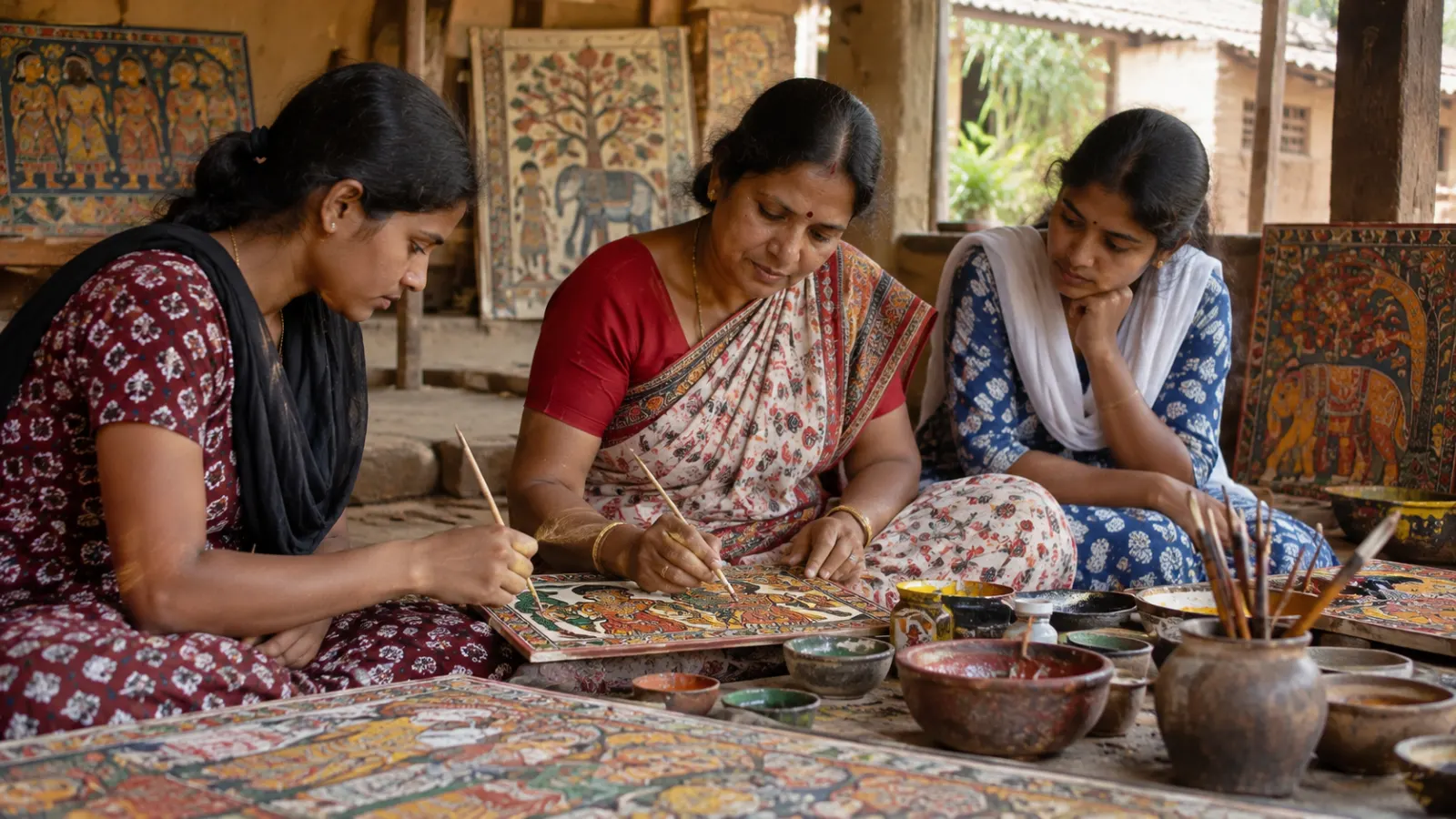
Sacred dance also survived outside major temple complexes in local festivals, processions and seasonal rituals. These forms remind us that religious dance is not confined to elite texts. It lives in community memory: in annual performances, village deities, masks, drums, oral songs and inherited steps. Even when modernity changes the context, the ritual charge often remains. A dance performed on a stage may still carry the echo of a shrine, a harvest field, a funeral ground or an ancestral courtyard.
Courtly Dance, Power and Refinement
As monarchies and aristocratic cultures expanded, dance became a marker of refinement and hierarchy. Courts used dance to discipline the body, display rank and enact political order. To know the correct steps, posture and gestures was to belong to the cultivated world. Court dance transformed movement into etiquette. It showed who had access to leisure, training, costume and patronage. In many societies, the ability to dance properly was part of elite identity.
The European court ballet offers a famous example. Emerging from Renaissance and early modern court spectacles, ballet linked dance with monarchy, geometry and controlled elegance. Under Louis XIV of France, who himself performed and supported the institutionalisation of ballet, dance became a political art of order and splendour. The vertical body, turned-out leg, codified positions and disciplined technique reflected not only aesthetic choices but also a broader court culture of control. Ballet made power appear graceful.
Courtly traditions in Asia, the Middle East and Africa developed their own systems of refinement. Japanese court dance, Southeast Asian royal dance-drama, Persianate and Mughal performance cultures, and African royal ceremonies all demonstrate how dance could carry political symbolism. The court elevated certain forms, patronised specialists and preserved repertoires. Yet it also separated elite dance from everyday communal dance, creating a tension that would later shape nationalist revivals and modern reforms.
Folk Dance and Collective Memory
If court dance represented refinement from above, folk dance preserved memory from below. Folk forms emerged from agricultural rhythms, marriage customs, seasonal festivals, regional identities, occupational communities and local mythologies. They often used accessible patterns: circles, lines, paired steps, repeated gestures and group formations. Their strength lay not in individual virtuosity alone but in participation. A folk dance allowed a community to see itself moving together.
Folk dance became an archive of everyday civilisation. It preserved costumes, musical patterns, gender roles, courtship rituals, humour, social tensions and memories of migration. Many forms changed as communities moved, traded, converted, suffered conquest or entered modern nation-states. A dance that began as a local harvest celebration could become a symbol of regional pride; a community ritual could become a national performance; a village form could be re-choreographed for schools, tourism and state festivals.
Modern nationalism often turned to folk dance because it seemed authentic, rooted and collective. Governments and cultural organisations collected, standardised and staged folk forms to represent the nation. This process helped preserve many traditions but also changed them. Improvised community dances became fixed stage repertoires; local variations were simplified; living practices were turned into heritage. The history of folk dance therefore raises a difficult question: when a tradition is preserved by institutions, is it protected from disappearance or transformed into something new?
Theatre Dance, Ballet and the Professional Stage
The emergence of professional theatres and urban audiences changed dance profoundly. Dance could now be rehearsed, ticketed, reviewed and consumed by strangers. It became part of the marketplace as well as the court and temple. Professionalisation created new standards of technique and spectacle. It also produced new inequalities: dancers depended on patrons, managers, audiences and institutions that could both elevate and exploit them.
Ballet’s development from court entertainment to theatrical art gave Europe a model of disciplined stage dance. Romantic ballet in the nineteenth century created images of ethereal femininity, supernatural longing and technical lightness. The ballerina became an icon of grace, but the history behind the icon included intense training, strict hierarchies and gendered expectations. Ballet’s beauty cannot be separated from the institutional structures that produced it.
Outside ballet, stage dance took multiple directions: opera dance, vaudeville, musical theatre, cabaret, classical Indian dance recitals, Chinese opera movement, Japanese Noh and Kabuki physicality, and many hybrid forms. The stage made dance visible across class and regional boundaries. It also created a new kind of spectatorship. Audiences were no longer only participants; they became observers, critics and consumers of embodied skill.
Modern Dance and the Revolt Against Formalism
Modern dance emerged partly as a rebellion against rigid academic form. Dancers and choreographers such as Isadora Duncan, Ruth St. Denis, Ted Shawn, Martha Graham, Doris Humphrey and later Merce Cunningham challenged inherited assumptions about what dance should look like. They turned toward natural movement, breath, contraction, psychological intensity, abstraction and personal expression. The dancing body no longer had to pretend effortlessness. It could show weight, pain, fracture and inner conflict.
This shift reflected wider modern anxieties. Industrialisation, urban life, war, psychoanalysis, feminism and political revolution changed how artists understood the body. Dance became a way to explore alienation, desire, collective struggle and existential freedom. Modern dance also opened space for women choreographers to become major artistic thinkers, though not without institutional obstacles. The choreographer became not merely a maker of steps but an author of bodily philosophy.
In the twentieth century, dance absorbed jazz, African diasporic movement, social dance, cinema, street culture, postmodern experimentation and global exchange. Tap, jazz dance, flamenco, tango, salsa, hip-hop, contemporary dance and numerous regional forms entered new circuits of visibility. Each carried distinct histories of race, migration, class, urban space and identity. Modernity did not produce one universal dance language; it multiplied the languages available.
Cinema, Popular Culture and the Digital Body
Cinema transformed dance by freeing it from the limits of the stage. The camera could frame feet, faces, crowds and landscapes; editing could change rhythm; close-ups could intensify emotion. Hollywood musicals, Indian cinema, music videos and television dance competitions made dance central to mass culture. In India especially, film dance created a vast hybrid vocabulary, drawing from classical, folk, cabaret, disco, hip-hop and global pop forms. Dance became a national habit of spectatorship.
Popular dance often travels faster than formal tradition. Social dances move through clubs, weddings, schools, streets, television and now short-video platforms. They can become symbols of youth identity and collective mood. Yet popular circulation also raises questions of appropriation, credit and commodification. Movements born in marginalised communities may be repackaged by commercial media without acknowledging their origins. The dancing body enters markets that may celebrate it while erasing the communities that created it.
The digital age has made dance both more democratic and more fragmented. A person can learn choreography from a video, join a global trend, archive a local tradition, or build a career without a traditional institution. At the same time, algorithmic culture rewards speed, repetition and visibility. Dance now lives in studios and temples, but also in feeds, reels and viral challenges. The body remains ancient; the platform is new.
Historical Debates and the Legacy of Dance
The history of dance is filled with debates: sacred versus secular, tradition versus innovation, preservation versus reinvention, discipline versus freedom, elite art versus popular culture. These debates are not problems to be solved once and for all. They are evidence that dance remains alive. A dead tradition can be catalogued; a living tradition argues with itself.
Dance matters because it records what societies do with the body. It reveals how they imagine gender, power, beauty, spirituality, labour, pleasure and community. It can uphold authority, but it can also resist it. It can become propaganda, prayer, protest, therapy, memory or celebration. The same movement may mean different things in a shrine, palace, theatre, street march or online video.
In the long history of civilisation, dance reminds us that culture is not only written, built or spoken. It is also moved. The body is a historian. Every inherited step carries the pressure of forgotten ancestors, changing societies and future possibilities. When people dance, they do more than entertain themselves. They rehearse belonging, embody memory and prove that history is not only something we read; it is something we carry in muscle, rhythm and breath.