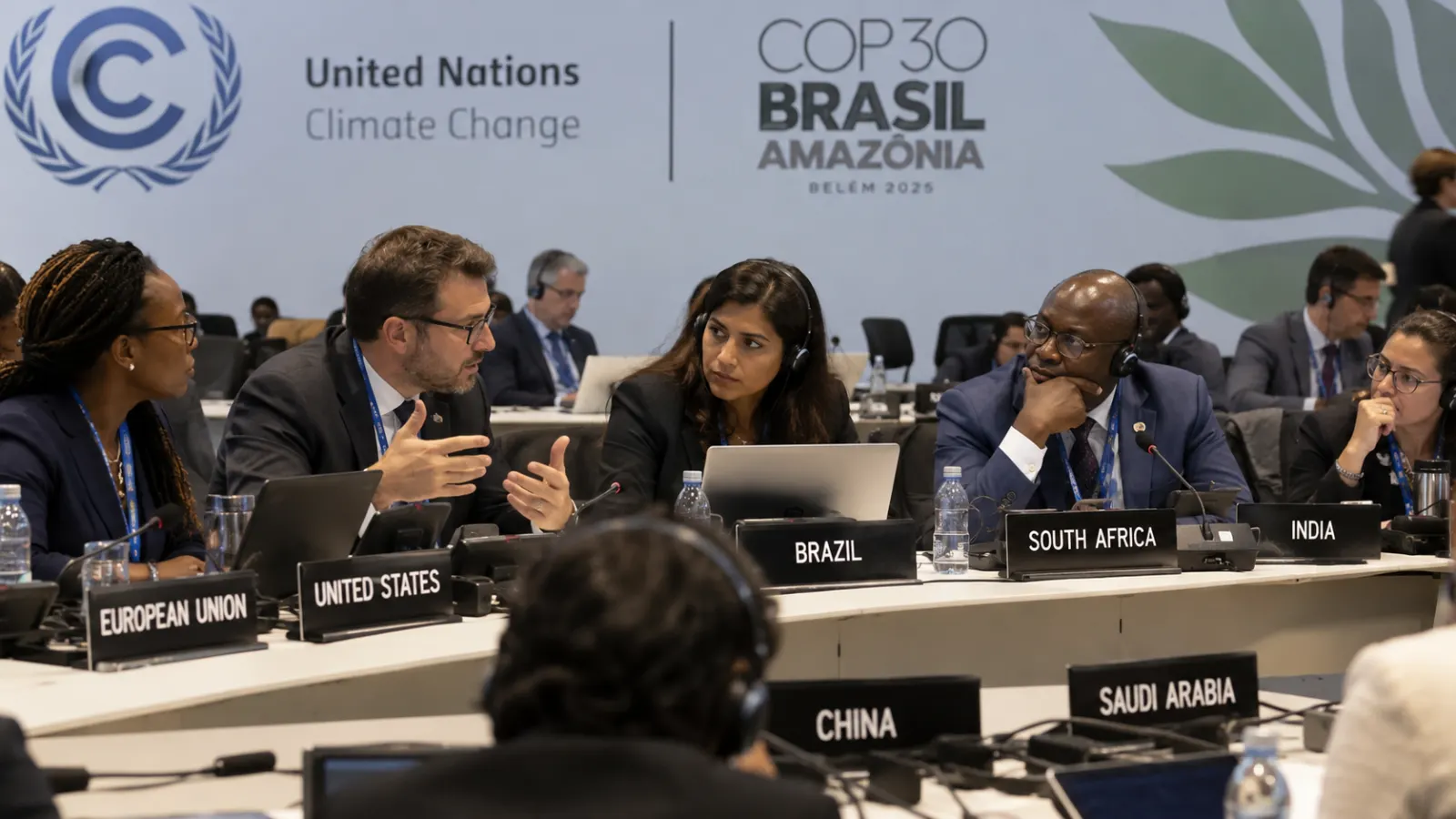
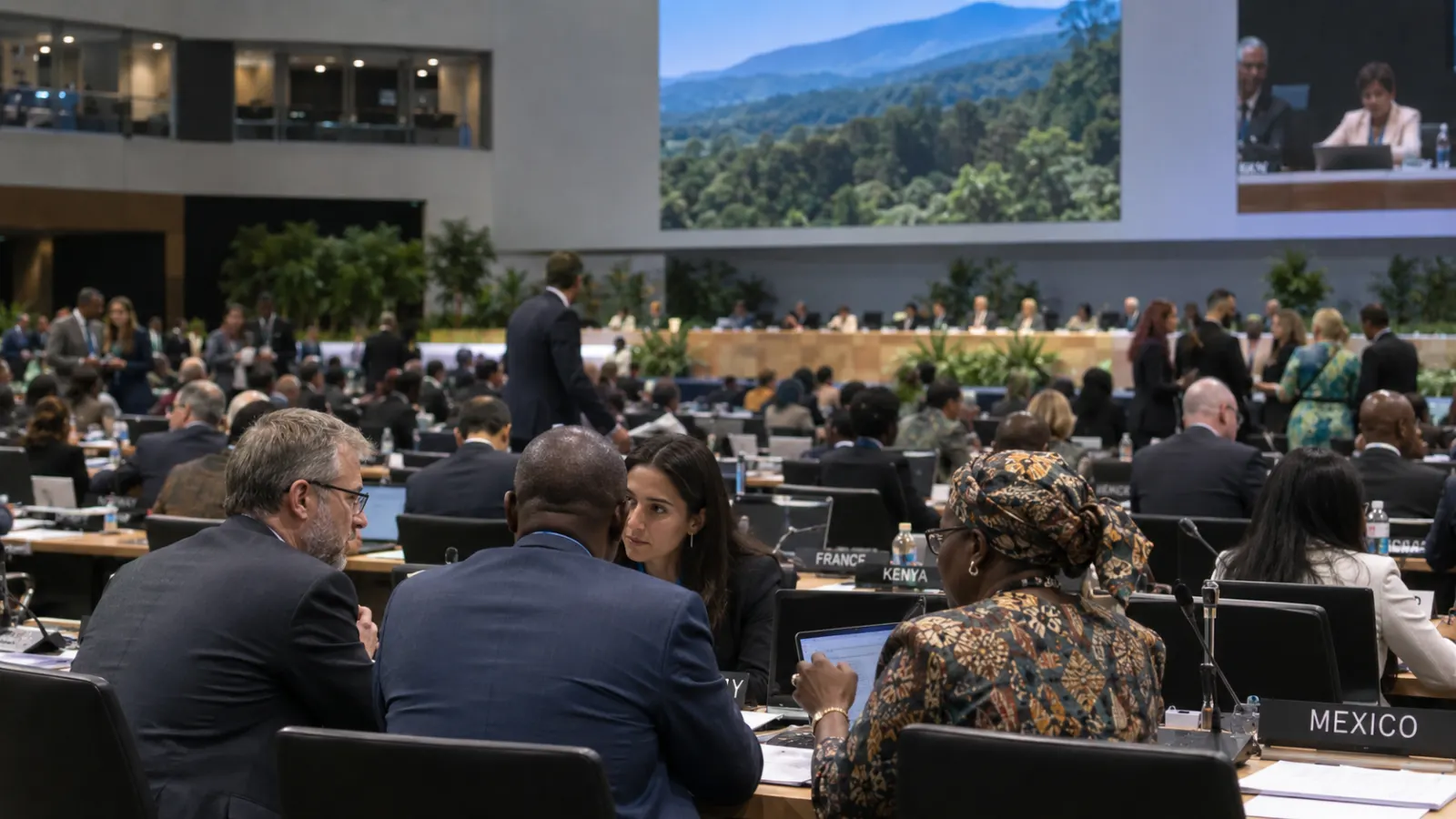
The Global South's demand for a fairer world order is no longer a rhetorical complaint. It is a demand to rewrite rules on debt, climate, trade, data, technology and representation at a time when old institutions are struggling to manage new crises.
A new grammar of fairness
The demand for a fairer world order is often misunderstood as an emotional appeal from poorer countries. In reality, it is a structural argument. Developing economies are saying that the rules of the global economy were not designed around their vulnerabilities: volatile capital flows, expensive borrowing, commodity dependence, climate exposure, weak health systems and limited voice in decision-making institutions.
The Global South does not want a world without rules. It wants rules that are not written after the powerful have already secured their advantage. That distinction matters. A fairer order is not a rejection of globalisation; it is a demand for a different distribution of risk and responsibility within globalisation.
The trigger is visible in the combined pressures of the 2020s. Pandemic shocks, food price inflation, energy volatility, debt distress, war, sanctions, protectionism, climate disasters and technology controls have created a perception that the international system protects the strong first and disciplines the weak later. That perception now shapes diplomacy.
From political independence to economic voice
The twentieth-century struggle of many Global South countries was for political independence. The twenty-first-century struggle is for economic agency. Flags, armies and parliaments are not enough if a country's budget can be broken by interest rates set elsewhere, if its food security depends on distant wars, or if its digital future depends on platforms it does not regulate.
This is why the fairness debate has moved beyond aid. Aid is too small, too conditional and too politically fragile to solve the structural problems of development. The larger issues are debt restructuring, concessional climate finance, technology transfer, fair taxation, trade access, resilient supply chains and a voice in institutions where rules are made.
The Global South is also more diverse than before. It includes major economies like India, Indonesia, Brazil and South Africa; energy exporters in the Gulf; manufacturing hubs in Asia; mineral-rich African states; vulnerable island nations; and debt-stressed low-income countries. Their priorities differ, but the shared complaint is that existing systems do not adequately reflect their weight, needs or risks.
The five fairness questions
Debt
UNCTAD has warned that developing countries' external debt reached 11.4 trillion dollars, while public debt in developing economies has grown rapidly since 2010. The issue is not whether countries should repay. It is whether the current system forces them to choose between creditors and citizens.
Climate
Many developing countries contributed least to historical emissions but face severe adaptation costs. They are told to decarbonise, but often without affordable finance, technology access or policy space. The result is a legitimacy crisis in climate diplomacy.
Trade
The Global South wants access to markets but faces tariffs, non-tariff barriers, carbon border measures, agricultural subsidies and standards that can become disguised protectionism. Fair trade cannot mean free access for capital and restricted access for developing-country goods.
Technology
Artificial intelligence, chips, cloud infrastructure, data standards and digital identity are becoming the new infrastructure of power. If developing countries remain only users of technologies governed elsewhere, digital dependency will replace old industrial dependency.
Representation
The UN Security Council, Bretton Woods institutions and global standard-setting bodies still reflect old power distributions. Without reform, these bodies risk becoming procedurally legitimate but politically unconvincing.
India angle
India's role in this debate is complex because it is both a beneficiary and a critic of the current order. It has gained from globalisation, diaspora networks, technology services, trade and multilateral engagement. But it also faces development constraints, climate pressure, energy dependence, border insecurity and technology vulnerabilities.
This dual position gives India credibility with both sides. New Delhi can tell the West that reform is necessary without sounding like a revolutionary power. It can tell developing countries that sovereignty must be matched with delivery. This is why India's diplomacy under the G20 and Voice of Global South platforms focused on practical priorities: debt, health, digital public infrastructure, food security, climate finance and institutional inclusion.
The African Union's admission as a permanent G20 member during India's presidency was the clearest example. It showed that fairness can be translated into institutional design. It also strengthened India's case that the Global South agenda need not be anti-Western to be transformative.
India's next challenge is to extend this logic into technology governance. If AI, data and digital public infrastructure become the new sources of inequality, India must push for open, interoperable and development-friendly models that avoid both digital colonialism and authoritarian control.
Global implications
A fairer order would reshape alliances. Countries would increasingly organise around issue-based coalitions: debt reform, climate finance, critical minerals, food security, digital rules and health preparedness. Traditional blocs would matter, but flexible development coalitions would matter more.
It would also reshape markets. Investors and companies would have to account for debt sustainability, local value addition, labour standards, digital sovereignty and climate adaptation. Development would no longer be treated as charity or risk management; it would become central to global stability.
There is a moral implication as well. A world that allows countries to spend more on interest than on health or education cannot claim neutrality. The architecture of finance becomes a political decision, even when it is described as technocratic.
The danger is that fairness becomes a slogan used by rival powers for influence. China can use it to attack the West while protecting its own strategic interests. Western powers can use reform language without changing institutional power. Middle powers can use Global South rhetoric while pursuing narrow national advantage.
Counter-view and future scenarios
The counter-view is that global institutions are imperfect but still necessary. Critics argue that many development failures also come from domestic governance, corruption, weak tax systems, bad project selection and political instability. A fairer world order cannot become an excuse for avoiding domestic reform.
That criticism is valid. But it is incomplete. Domestic responsibility and global fairness are not opposites. A country can need better governance while also facing unfair borrowing costs, climate exposure and unequal technology access. Serious analysis must hold both truths together.
The best future scenario is negotiated reform: stronger debt mechanisms, larger concessional finance, responsible technology sharing, wider representation and practical Global South coalitions. The worst scenario is competitive fragmentation, where countries move between China, the West and regional blocs without solving structural vulnerability.
The Global South is not asking to overturn the world. It is asking the world to stop pretending that rules are neutral when power is not. That demand will define the next decade of diplomacy.
Five analytical dimensions to develop fully
1: Debt restructuring and fiscal space.
This dimension should be treated as a core analytical layer in the final article because it shows how global south moves beyond a headline and becomes a structural force. Editors should connect it to institutions, markets, domestic politics and strategic bargaining. The strongest version of the article will not merely describe events; it will explain who gains leverage, who carries risk, and how the issue changes the choices available to governments in the Global South.
2: Climate responsibility and concessional finance.
This dimension should be treated as a core analytical layer in the final article because it shows how global south moves beyond a headline and becomes a structural force. Editors should connect it to institutions, markets, domestic politics and strategic bargaining. The strongest version of the article will not merely describe events; it will explain who gains leverage, who carries risk, and how the issue changes the choices available to governments in the Global South.
3: Trade rules and industrial policy space.
This dimension should be treated as a core analytical layer in the final article because it shows how global south moves beyond a headline and becomes a structural force. Editors should connect it to institutions, markets, domestic politics and strategic bargaining. The strongest version of the article will not merely describe events; it will explain who gains leverage, who carries risk, and how the issue changes the choices available to governments in the Global South.
4: Technology access and digital sovereignty.
This dimension should be treated as a core analytical layer in the final article because it shows how global south moves beyond a headline and becomes a structural force. Editors should connect it to institutions, markets, domestic politics and strategic bargaining. The strongest version of the article will not merely describe events; it will explain who gains leverage, who carries risk, and how the issue changes the choices available to governments in the Global South.
5: Institutional representation and voting power.
This dimension should be treated as a core analytical layer in the final article because it shows how global south moves beyond a headline and becomes a structural force. Editors should connect it to institutions, markets, domestic politics and strategic bargaining. The strongest version of the article will not merely describe events; it will explain who gains leverage, who carries risk, and how the issue changes the choices available to governments in the Global South.
Policy agenda and practical recommendations
1: Push for faster sovereign debt restructuring timelines. This priority gives the article a constructive direction instead of leaving it as commentary. The issue must be examined through implementation: financing, institutions, timelines, accountability and local ownership. For an Indian readership, the key question is whether New Delhi can convert diplomatic language into instruments that partners can actually use. For a global readership, the question is whether this priority can reduce dependence, widen choice and improve bargaining power for developing countries.
2: Defend policy space for green industrialisation. This priority gives the article a constructive direction instead of leaving it as commentary. The issue must be examined through implementation: financing, institutions, timelines, accountability and local ownership. For an Indian readership, the key question is whether New Delhi can convert diplomatic language into instruments that partners can actually use. For a global readership, the question is whether this priority can reduce dependence, widen choice and improve bargaining power for developing countries.
3: Support open standards for ai and digital infrastructure. This priority gives the article a constructive direction instead of leaving it as commentary. The issue must be examined through implementation: financing, institutions, timelines, accountability and local ownership. For an Indian readership, the key question is whether New Delhi can convert diplomatic language into instruments that partners can actually use. For a global readership, the question is whether this priority can reduce dependence, widen choice and improve bargaining power for developing countries.
4: Coordinate tax cooperation against illicit financial flows. This priority gives the article a constructive direction instead of leaving it as commentary. The issue must be examined through implementation: financing, institutions, timelines, accountability and local ownership. For an Indian readership, the key question is whether New Delhi can convert diplomatic language into instruments that partners can actually use. For a global readership, the question is whether this priority can reduce dependence, widen choice and improve bargaining power for developing countries.
5: Build issue-based coalitions instead of vague bloc rhetoric. This priority gives the article a constructive direction instead of leaving it as commentary. The issue must be examined through implementation: financing, institutions, timelines, accountability and local ownership. For an Indian readership, the key question is whether New Delhi can convert diplomatic language into instruments that partners can actually use. For a global readership, the question is whether this priority can reduce dependence, widen choice and improve bargaining power for developing countries.
Risks, blind spots and newsroom questions
Risk 1: Fairness can become a slogan without implementation. This is the kind of complexity that prevents the article from becoming propaganda. Every serious editorial must acknowledge that power is uneven, institutions are slow, domestic governance matters and external partners act from self-interest. The argument should therefore avoid easy hero-villain framing. It should show how a reasonable policy can fail if capacity, trust, money, politics or timing are misread.
Risk 2: Domestic governance failures can weaken the moral case. This is the kind of complexity that prevents the article from becoming propaganda. Every serious editorial must acknowledge that power is uneven, institutions are slow, domestic governance matters and external partners act from self-interest. The argument should therefore avoid easy hero-villain framing. It should show how a reasonable policy can fail if capacity, trust, money, politics or timing are misread.
Risk 3: Rich-country fatigue can reduce development finance. This is the kind of complexity that prevents the article from becoming propaganda. Every serious editorial must acknowledge that power is uneven, institutions are slow, domestic governance matters and external partners act from self-interest. The argument should therefore avoid easy hero-villain framing. It should show how a reasonable policy can fail if capacity, trust, money, politics or timing are misread.
Risk 4: Technology restrictions can widen dependence. This is the kind of complexity that prevents the article from becoming propaganda. Every serious editorial must acknowledge that power is uneven, institutions are slow, domestic governance matters and external partners act from self-interest. The argument should therefore avoid easy hero-villain framing. It should show how a reasonable policy can fail if capacity, trust, money, politics or timing are misread.
Risk 5: Global south diversity can prevent common bargaining. This is the kind of complexity that prevents the article from becoming propaganda. Every serious editorial must acknowledge that power is uneven, institutions are slow, domestic governance matters and external partners act from self-interest. The argument should therefore avoid easy hero-villain framing. It should show how a reasonable policy can fail if capacity, trust, money, politics or timing are misread.
India-specific policy compass
India-specific compass: India must frame fairness as stability, not charity. This section should be written with strategic restraint. India’s role should neither be inflated into automatic leadership nor reduced to helplessness. The article should ask what India can realistically deliver, which partnerships it must build, where it should avoid overreach, and how domestic credibility affects external influence.
India-specific compass: The argument should combine reform of external systems with responsibility for domestic governance. This section should be written with strategic restraint. India’s role should neither be inflated into automatic leadership nor reduced to helplessness. The article should ask what India can realistically deliver, which partnerships it must build, where it should avoid overreach, and how domestic credibility affects external influence.