The world keeps demanding reform of global institutions, but the institutions most in need of reform are often controlled by the states with the least incentive to change them. That is the central contradiction of global governance. Everyone agrees that the world has changed. Few powerful states are willing to let institutional power change with it.
The United Nations Security Council still reflects the power settlement of 1945 more than the geopolitical reality of the twenty-first century. The Bretton Woods institutions still struggle with representation questions that do not match the weight of emerging economies. The World Trade Organization has faced paralysis in dispute settlement. Climate negotiations carry the burden of historical responsibility, present development needs and future survival. Global health governance learned hard lessons from the pandemic, but vaccine inequality exposed the limits of solidarity.
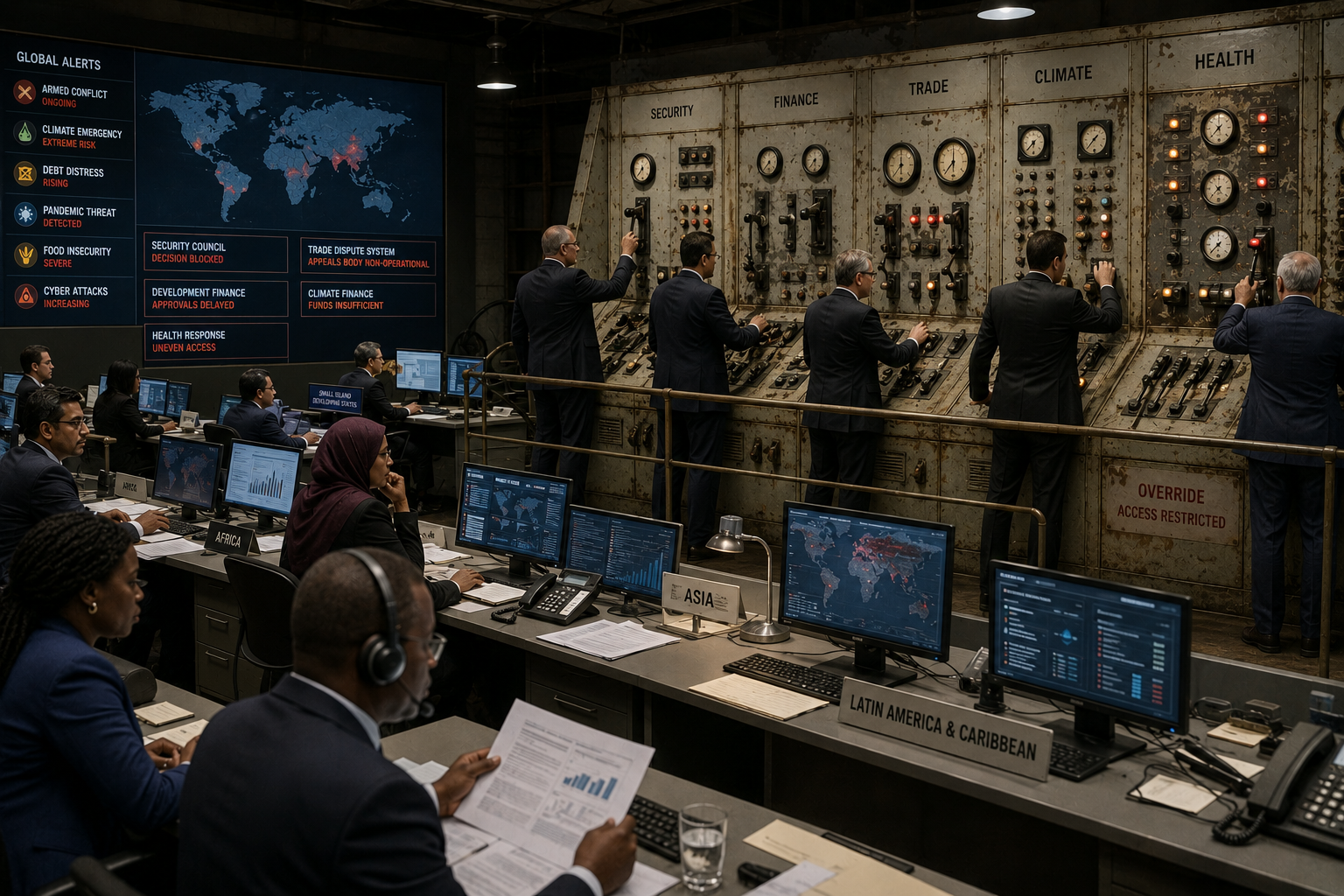
Reform is therefore not blocked because the case for reform is weak. It is blocked because institutions are not neutral machines. They are distributions of privilege. To reform them is to redistribute voice, veto, agenda-setting power and legitimacy.
Why the Issue Matters Now
Institutional reform has become urgent because the gap between global problems and global decision-making is widening. Wars, climate shocks, debt crises, cyber threats, pandemics, AI governance, migration and supply-chain disruptions do not respect borders. Yet the institutions designed to manage collective action often move slowly, selectively or symbolically.
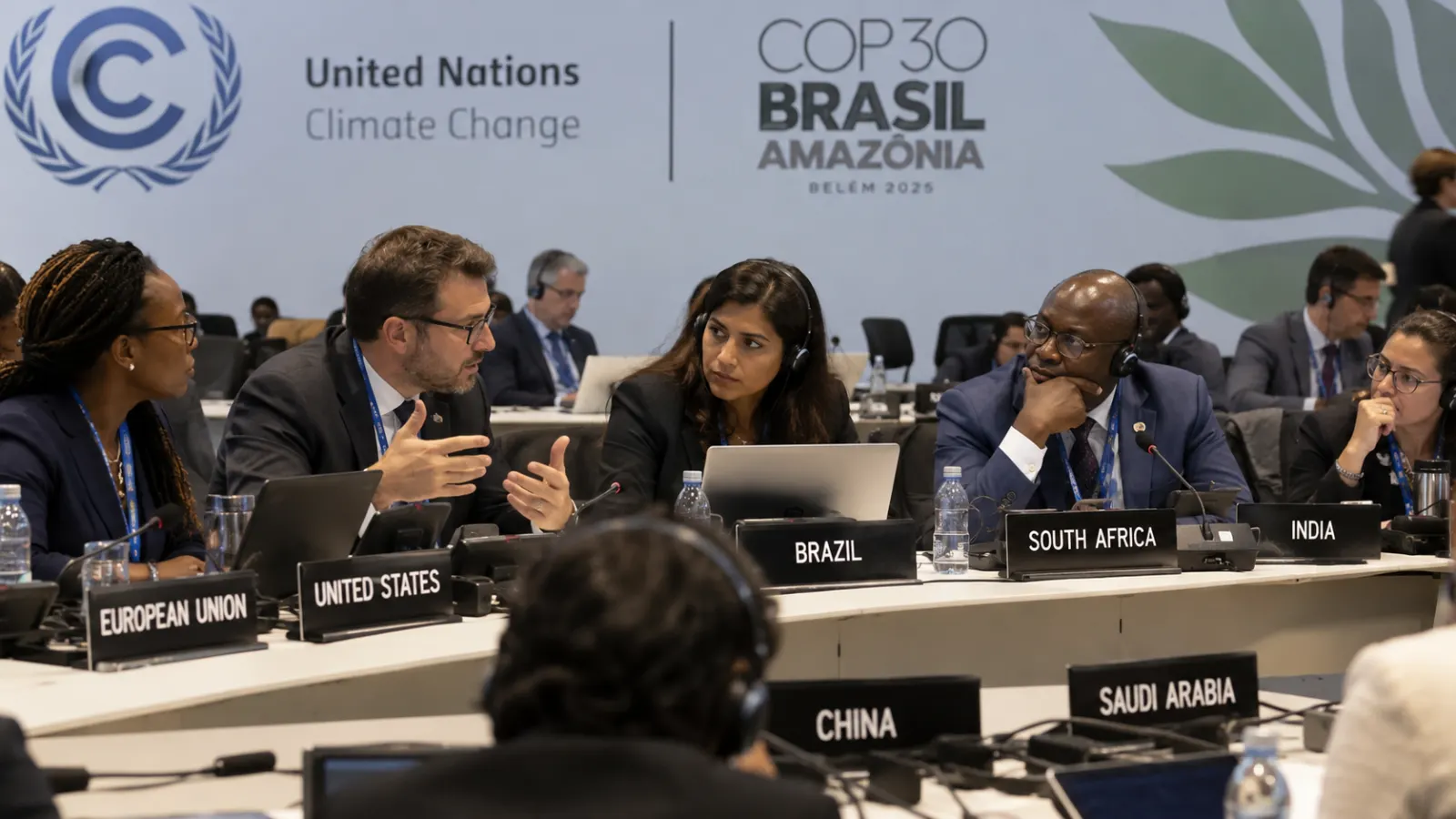
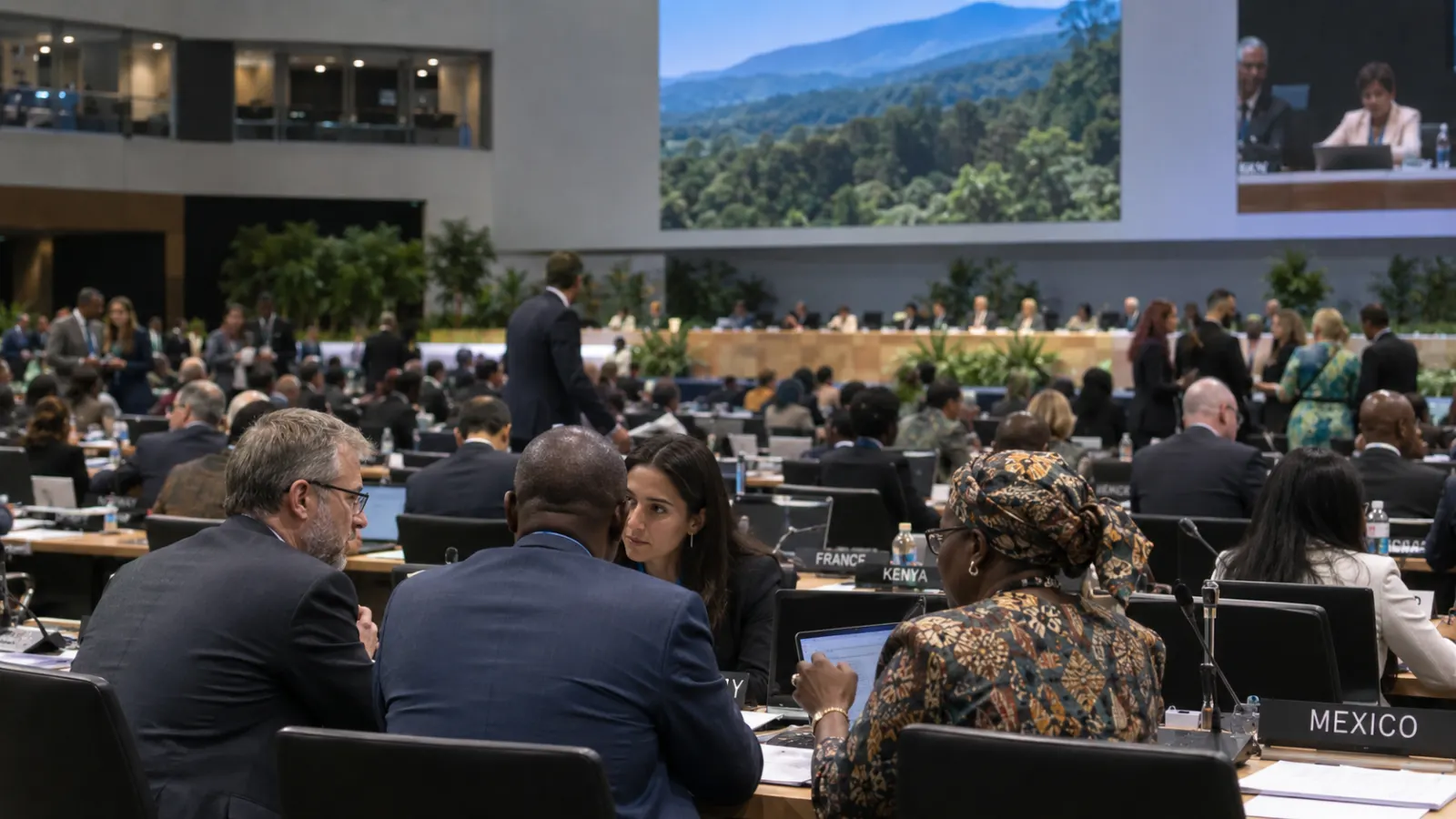
This produces a dangerous legitimacy crisis. When global institutions fail to act on wars, states question the value of law. When they fail to finance development fairly, countries search for parallel arrangements. When they fail to settle trade disputes, unilateral tariffs and industrial policy return. When they fail to manage climate justice, negotiations become arenas of resentment rather than cooperation.
The world does not suffer from a shortage of summits. It suffers from a shortage of enforceable consensus. Reform is the word governments use when they want legitimacy; resistance is what they practice when reform threatens their advantage.
Historical Context
The major institutions of the post-war order were created after catastrophe. Their design reflected both idealism and power. The UN promised collective security, but gave veto power to five permanent members of the Security Council. The IMF and World Bank promised financial stability and development, but voting power reflected economic weight and contribution. The trade system promised rules, but enforcement depended on state consent and institutional capacity.
For decades, this order produced real gains: decolonisation forums, development lending, dispute mechanisms, humanitarian agencies, peacekeeping, trade expansion and technical cooperation. But success did not erase hierarchy. As Asia, Africa and Latin America gained population weight, economic importance and political confidence, the old institutional distribution began to look increasingly outdated.
Analytical Dimension 1: Representation Without Power Is Not Reform
Many reform proposals increase consultation, create advisory groups or add symbolic language about inclusiveness. These steps matter, but they do not change the core question: who decides? Representation without decision power can become diplomatic theatre. A seat without influence is not reform; it is decoration.
This is especially visible in Security Council reform. Expanding membership without addressing veto power may improve representation but not effectiveness. Yet removing or diluting veto power is precisely what permanent members resist. The result is a reform debate that is morally persuasive but structurally trapped.
Analytical Dimension 2: The Veto Problem
The veto was designed to keep great powers inside the UN system by ensuring that collective security decisions would not be taken against their vital interests. In that sense, it was a realist compromise. But the same mechanism now often prevents action when great powers or their allies are involved.
The veto problem is not only procedural. It shapes perceptions of justice. If international law appears strong against weak states and weak against powerful states, the legitimacy of the system declines. The Council's authority depends not simply on legal design but on whether the world believes it can act with consistency.
Analytical Dimension 3: Bretton Woods and the Voice of the Global South
The IMF and World Bank face a different but related challenge. Emerging economies and developing countries want governance structures that better reflect their weight and needs. Quota reform, voting power, leadership selection and policy conditionality all feed into the legitimacy debate.
The question is not whether advanced economies should lose all influence. They provide major capital and remain central to the system. The question is whether an institution can claim universal legitimacy if its governance moves slower than the world economy. A global institution that does not adapt representation eventually loses intellectual authority, even if it keeps legal authority.
Analytical Dimension 4: Trade Rules in an Industrial Policy Age
The WTO's crisis shows another face of institutional stress. The era of simple globalisation has given way to subsidies, export controls, friendshoring, sanctions, security exceptions and green industrial policy. States still want access to markets, but they also want strategic control over technology, critical minerals, food and energy.
This makes trade reform harder. The old bargain of liberalisation is now filtered through security and resilience. The WTO can remain relevant only if it can handle disputes in a world where national security claims are no longer rare exceptions but recurring instruments of policy.
Analytical Dimension 5: Informal Clubs and Fragmentation
As formal institutions struggle, informal clubs gain importance: G20, BRICS, Quad, G7, regional forums, minilateral partnerships and issue-based coalitions. These platforms can be flexible and practical. They can move faster than universal bodies. But they also risk fragmenting governance into competing circles of influence.
The danger is not that minilateralism exists. It is that minilateralism becomes a substitute for universal legitimacy. The world may need smaller groups to act, but it still needs broader institutions to define norms and protect weaker states from exclusion.
India Angle
India's demand for institutional reform is rooted in both status and substance. As the world's largest democracy, a major economy and a central voice of the Global South, India argues that decision-making bodies must reflect contemporary realities. Its case for a permanent seat at the Security Council is part of that wider claim.
But India's interest goes beyond prestige. Global rules affect development finance, technology access, climate obligations, maritime security, sanctions, trade disputes and crisis management. A more representative order would give India more room to shape rules rather than merely adjust to them.
Global Implications
If reform remains blocked, the world may not witness the collapse of global institutions. It may witness something more subtle: hollowing out. Institutions will continue to hold meetings, issue statements and maintain secretariats, but states will increasingly solve problems outside them. Norms will become selective, compliance will become transactional, and legitimacy will erode.
The alternative is not revolutionary redesign overnight. It is incremental but real reform: better representation, restraint in veto use, quota adjustment, faster development finance, restored trade dispute mechanisms, and stronger accountability. The system does not need perfection to survive. It needs credible movement.
Counter-view and Complexity
Powerful states resist reform partly out of self-interest, but not only out of self-interest. They also fear that reform could make institutions larger, slower and less effective. Expanding membership may improve legitimacy while complicating decision-making. Reducing veto privilege may make powerful states ignore the institution altogether. Governance reform is therefore a balance between justice and functionality.
This complexity should not become an excuse for paralysis. Institutions designed for stability must still evolve. An order that refuses peaceful reform may eventually face disorderly correction.
What Happens Next
The next phase of reform politics will be shaped by crisis. Major wars, debt shocks, climate disasters and technological disruption will keep exposing institutional gaps. Each crisis will create pressure for change, but also incentives for powerful states to protect control.
The choice is not between the old order and chaos. It is between managed adaptation and unmanaged fragmentation. Global institutions do not fail only when they close. They fail when the world stops believing that they can deliver fairness, voice and restraint.
Deeper Editorial Lens: Why This Is Not a Single-Issue Story
The first mistake in reading global institutional reform is to treat it as a narrow file. It is not. It is a pressure point where economics, security, legitimacy and institutional design meet. The central tension is the demand for fairer representation against the desire of incumbents to retain privilege. That tension makes the subject larger than a headline and more durable than a news cycle.
Every serious assessment has to follow at least five moving parts: veto power, quota reform, dispute settlement, agenda control and leadership selection. None of these works in isolation. A change in one can alter the political meaning of another. This is why simple explanations often fail; they describe the event but miss the operating system underneath it.
The deeper story is about confidence. Citizens need confidence that national leaders have not lost control. Markets need confidence that rules are predictable. Partners need confidence that commitments will be honoured. Rivals watch for loss of confidence because it creates strategic openings. In that sense, global institutional reform is a test of authority as much as policy.
Domestic Political Economy
International issues become decisive when they enter domestic life. In this case, the pressure can be felt through national prestige, taxpayer politics, security narratives, development expectations and public faith in rules. These are not abstract variables. They affect household budgets, political narratives, elite bargaining and the credibility of governments.
Domestic politics also determines how much room leaders have to compromise. A technically rational agreement can become politically impossible if citizens see it as surrender, elites see it as a loss of privilege, or opposition forces convert it into a symbol of weakness. Good statecraft is therefore not only about choosing the correct policy; it is about creating the consent required to sustain it.
This is why the public language around global institutional reform matters. Governments often prefer strategic ambiguity, but citizens tend to demand clarity. The gap between what diplomacy requires and what domestic politics rewards can become the space in which miscalculation grows.
Institutional Choices and the Credibility Gap
The relevant institutions - UN Security Council, IMF, World Bank, WTO and G20 - can reduce uncertainty, but only if they are seen as legitimate. Institutions do not work merely because charters exist. They work when powerful actors accept restraint and weaker actors believe the process is not rigged.
A credibility gap emerges when rules are invoked selectively. States then comply when convenient, delay when costly, and reinterpret obligations when power allows. This is not always dramatic. Often it appears as procedural delay, vague communiques, underfunded commitments or carefully worded statements that preserve unity while avoiding difficult choices.
For global institutional reform, institutional credibility will depend on whether rules produce behaviour change. Declarations, scorecards and summits are useful only if they alter incentives. Otherwise, the process becomes performative governance: visible enough to claim action, weak enough to avoid transformation.
India's Strategic Calculation
India cannot look at global institutional reform only as a distant global issue. It connects with permanent UNSC claim, Bretton Woods reform, WTO relevance and Global South voice. These are central to India's foreign policy because New Delhi is trying to expand influence without losing autonomy, deepen partnerships without entering rigid blocs, and defend development space while accepting global responsibilities.
India's approach therefore tends to combine principle with prudence. It supports rules, but resists rules written without developing-country participation. It supports stability, but does not want stability to become a code word for preserving old hierarchies. It supports reform, but prefers reform that expands strategic options rather than replacing one dependency with another.
The Indian lens also brings a neighbourhood test. If global institutional reform produces instability around India, the cost will not remain diplomatic. It can affect trade, technology flows, migration, energy prices, security planning and domestic political debate. For a rising power, external shocks increasingly become internal governance questions.
Risk Map for 2026 and Beyond
The immediate risk map includes institutional hollowing, minilateral fragmentation, selective legality and norm erosion. These risks are not equal in probability, but they are connected. A small procedural failure can produce political mistrust; mistrust can produce harder bargaining; harder bargaining can make a crisis more likely.
The medium-term risk is normalisation. The world can become used to dysfunction. Repeated crises, repeated warnings and repeated emergency meetings can create fatigue. Once fatigue sets in, even serious risks begin to look routine until a shock proves they were not routine at all.
The long-term question is whether global institutional reform becomes a case study in adaptation or drift. Adaptation would mean clearer rules, better financing, stronger deterrence, more credible institutions and wider participation. Drift would mean symbolic language, selective enforcement and rising costs postponed to the next crisis. The choice between these paths will define the strategic value of the issue.
What Serious Readers Should Track
First, track the financial base behind every promise linked to global institutional reform. Announcements are easy; budget lines, lending windows, enforceable timelines and operational capacity reveal seriousness. A policy without resources is often a press release disguised as strategy.
Second, track who controls information. In global institutional reform, data, inspections, disclosures, intelligence, market signals and official statements can all become instruments of power. The actor that defines the facts often shapes the political choices available to everyone else.
Third, track the behaviour of middle powers. Great powers dominate headlines, but middle powers often determine whether global institutional reform becomes polarised or manageable. Their hedging, coalition-building and refusal to accept binary choices can slow escalation and preserve diplomatic space.
Fourth, track the cost distribution. Every settlement around global institutional reform creates winners and losers. If costs fall mainly on weaker states, poorer citizens, smaller firms or politically excluded groups, the settlement may appear stable in documents but unstable in society.
Fifth, track whether crisis language becomes permanent. Emergency logic can justify extraordinary policies, but when emergency tools become routine, accountability weakens. The line between necessary urgency and institutional overreach must remain visible.
Sixth, track the India connection. Even when global institutional reform appears geographically distant, it can affect Indian trade, technology, energy, diplomacy, security planning and the larger debate over strategic autonomy. India's rise makes external shocks harder to treat as external.
Seventh, track narrative competition. Countries do not only fight over territory, money or rules; they fight over interpretation. Whoever frames global institutional reform as fairness, sovereignty, security, development or coercion gains political advantage.
Finally, track implementation after public attention shifts elsewhere. Many international issues look dramatic during summits and silent between them. The real story often happens in the quiet phase: regulations written, budgets released, inspections scheduled, projects delayed, ships deployed, or creditors called back to the table.
Publishing Angle for Editors Outlook
For an Editors Outlook audience, the value of this article lies in making global institutional reform understandable without making it simplistic. The article should not read like a policy brief alone. It should read like a map of power: who has leverage, who is exposed, who pays, who delays and who benefits from ambiguity.
The strongest headline treatment should connect global institutional reform with a wider question of sovereignty, security, development or institutional fairness. This helps the reader see why the subject belongs in a serious international section rather than a narrow explainer box.
The article should use facts carefully but not drown the reader in numbers. Figures are useful when they prove scale, reveal imbalance or challenge a popular assumption. A number without interpretation is decoration; interpretation without evidence is opinion. The article needs both.
The best visual treatment would avoid literal cliches. For global institutional reform, the image should show pressure, networks, institutions and strategic geography rather than a simple flag collage. Editorial visuals should help readers feel the structure of the issue before they read the full argument.
The concluding social-media caption should be framed around a question: what does global institutional reform reveal about the world we are entering? This encourages engagement without reducing the subject to outrage or slogan.
Editorial Conclusion
The most important conclusion is that global institutional reform cannot be solved by one speech, one summit or one technical adjustment. It requires political patience and institutional seriousness. Leaders must stop treating structural problems as temporary disturbances.
For readers, the key is to watch implementation rather than announcement. Who funds the promise? Who changes behaviour? Who bears the cost? Who gains leverage? Who remains excluded? These questions reveal more than diplomatic language ever will.
In the end, the story of global institutional reform is the story of a world struggling to update its rules under pressure. The old order is not fully gone, and the new order is not fully born. That unstable middle is where the most important strategic stories now unfold.
Internal Links to Add
• World Bank Reform Becomes Urgent in the Age of Climate and Debt
• Quad Evolves From Security Dialogue to Strategic Partnership
• ASEAN's Centrality Is Being Tested by China's Rise
• The United Nations Faces a Crisis of Authority and Reform
Premium editorial feature image for Global Institutions Need Reform: geopolitical map, diplomatic table, flags, corridors and strategic pressure lines. Dark navy, muted gold and deep red palette, realistic magazine style, no text, no cartoon.
Source Notes / Fact-checking References
Use these sources to verify figures, institutional positions and latest developments before publishing:
• United Nations Charter and Security Council information: https://www.un.org
• IMF governance and quota resources: https://www.imf.org
• World Bank governance resources: https://www.worldbank.org
• WTO dispute settlement and reform resources: https://www.wto.org
• Excel source priority: https://www.un.org; https://www.imf.org; https://www.wto.org