The G20 has emerged as the main forum for managing global economic stress because it brings together advanced powers, emerging economies and regional blocs at a time when older institutions are too narrow or too paralysed to manage overlapping crises.
The crisis manager of an untidy world
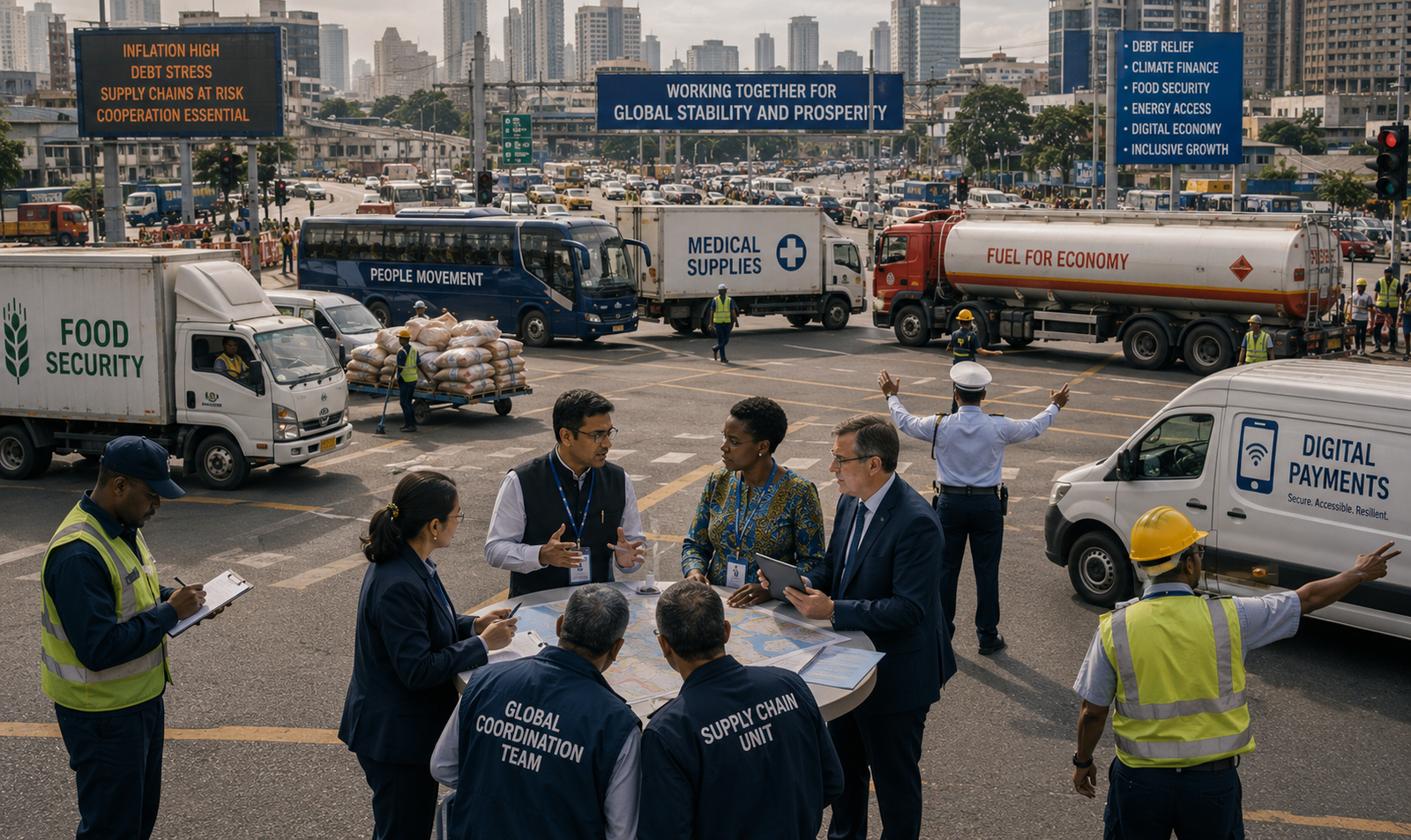
The G20 was born from crisis logic. It became central after financial shocks showed that the global economy could not be managed by the old G7 alone. Today, that logic is stronger. Debt distress, inflation, climate finance, food insecurity, tax cooperation, digital rules, supply chains and geopolitical conflict all affect the global economy at once.
The G20 matters because it is not universal like the UN and not narrow like the G7. It is a steering forum for systemically important economies. Its members represent around 85 percent of global GDP, more than 75 percent of global trade and about two-thirds of the world population, according to India's G20 portal. That gives it weight, even when consensus is difficult.
The African Union's admission as a permanent member during India's presidency strengthened the G20's legitimacy. It signalled that global economic governance could not exclude a continent central to demographics, minerals, climate vulnerability and development finance.
Why the G20 has become more important
The first reason is institutional mismatch. The UN has universal legitimacy but struggles with enforcement and great-power division. The IMF and World Bank are essential but face reform demands. The WTO is weakened by trade disputes and appellate paralysis. The G20 cannot replace these bodies, but it can create political direction across them.
The second reason is crisis overlap. A debt issue is also a climate issue, a food issue, a migration issue and a geopolitical issue. The G20 is one of the few forums where finance ministers, central banks, leaders and sherpas can connect these dots.
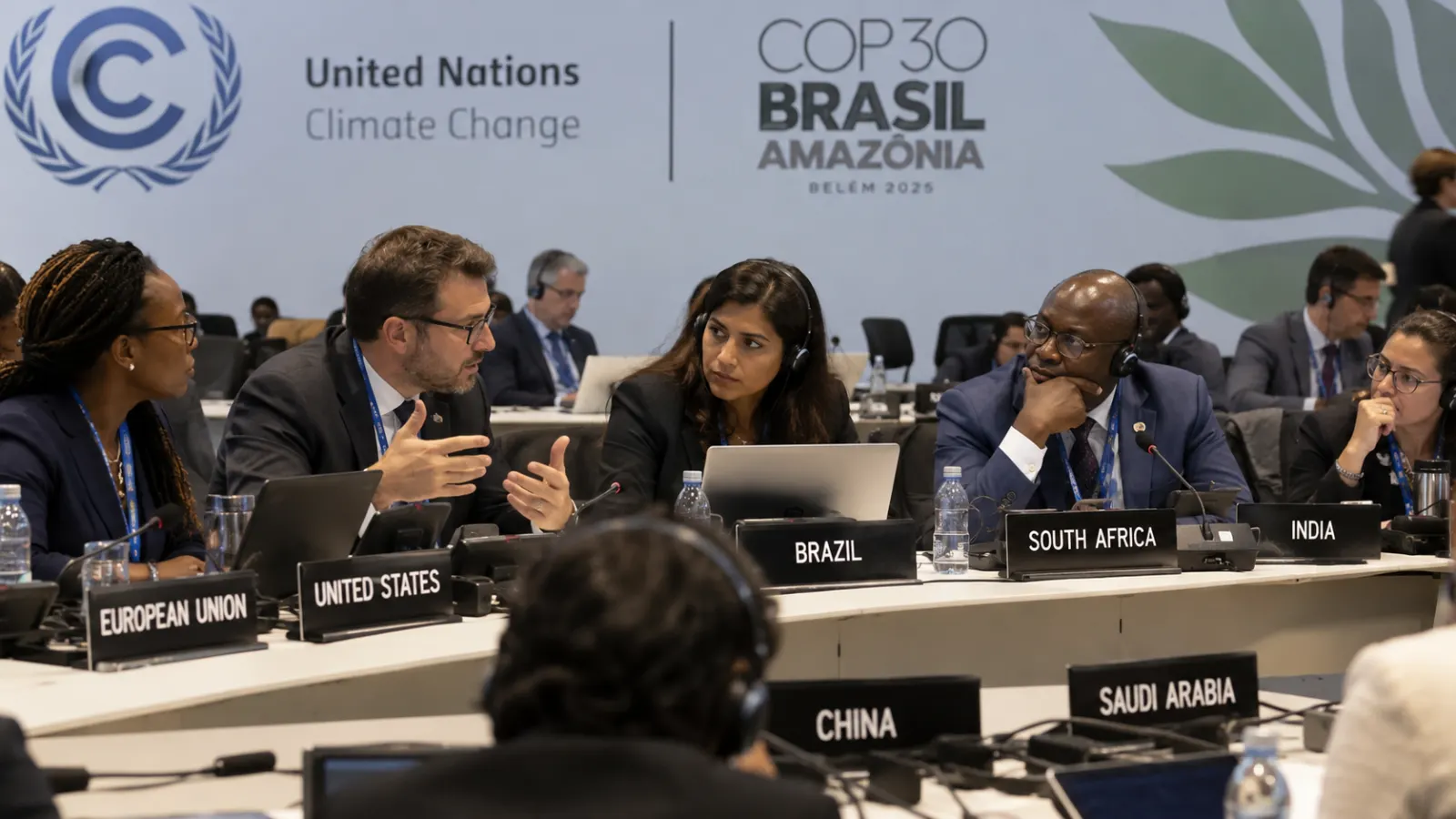
The third reason is the presence of rivals in the same room. The United States, China, India, Russia, the European Union, Japan, Brazil, South Africa, Indonesia, Saudi Arabia and others sit within one process. That does not guarantee harmony, but it creates a channel when other channels narrow.
The fourth reason is agenda flexibility. The G20 can take up financial stability, digital public infrastructure, health, climate finance, sustainable development, taxation and supply-chain resilience without needing a treaty structure.
India's G20 moment
India's 2023 presidency was important because it connected domestic political confidence with global agenda-setting. The New Delhi Leaders' Declaration produced consensus despite geopolitical divisions and highlighted issues such as SDGs, climate finance, digital public infrastructure and the Global South.
The African Union's permanent membership was the most visible institutional outcome. For India, it became proof that its Global South diplomacy could change the composition of a major forum. For Africa, it created a formal seat in a process that shapes economic governance.
India also used the presidency to project DPI as a development tool and to push for inclusive growth. This helped India move beyond traditional non-alignment language toward practical agenda-setting.
The India angle after the presidency is continuity. India must keep using the G20 to push debt reform, climate finance, food security, digital public infrastructure and multilateral development bank reform, even when it is not chairing the forum.
Limits of the forum
The G20's greatest strength is also its weakness: diversity. It includes countries with conflicting interests on war, sanctions, trade, climate, currency, technology and debt. Consensus language can become diluted.
The G20 also lacks enforcement power. It can set direction but cannot force implementation. Declarations matter only when followed by finance, regulation, institutional reform or national policy changes.
Another limitation is representational. Even with the African Union included, many small states are not directly present. The G20 must therefore avoid becoming a club that speaks about the world without listening to those outside it.
Finally, the G20 can be affected by domestic politics of the chair. The 2026 US presidency has signalled a return to core economic growth and innovation priorities. That may sharpen focus, but it could also narrow some development and climate agendas depending on political choices.
Global implications
The G20 will increasingly shape how the world handles debt. With global public debt at record levels, coordination among creditor and debtor powers is essential. Without political pressure from the G20, technical institutions may move too slowly.
It will also shape climate finance. Moving from billions to trillions requires the participation of finance ministries, multilateral banks, private capital and major emitters. The G20 is where those actors intersect.
Digital governance is another emerging area. AI, data, digital public infrastructure, cross-border payments and cybersecurity have economic consequences. The G20 can become a site for standards, principles and interoperability debates.
Food and energy shocks will keep the G20 relevant. The forum's ability to discourage panic restrictions and coordinate supply responses may become critical during future crises.
Counter-view and future scenarios
The counter-view is that the G20 is overvalued. Critics say it produces statements, not transformation; that great-power rivalry blocks action; and that real power remains with national governments, markets and institutions such as the IMF.
This critique is partly true. The G20 is not a world government. But expecting it to be one misses the point. Its value lies in agenda-setting, crisis signalling, coalition building and political coordination across institutions.
The best future is a focused G20 that drives debt restructuring reform, MDB reform, climate finance pathways, digital public infrastructure standards and food-security coordination. The weak future is annual summitry with limited implementation. The worst future is geopolitical breakdown that turns the G20 into another theatre of accusation.
The G20 matters because the world economy is too connected for isolated management and too divided for universal consensus. It is imperfect, but in an age of stress, imperfect forums can still be indispensable.
Five analytical dimensions to develop fully
Dimension 1: Financial stability and sovereign debt. This dimension should be treated as a core analytical layer in the final article because it shows how g20 global governance moves beyond a headline and becomes a structural force. Editors should connect it to institutions, markets, domestic politics and strategic bargaining. The strongest version of the article will not merely describe events; it will explain who gains leverage, who carries risk, and how the issue changes the choices available to governments in the Global South.
Dimension 2: Climate finance and mdb reform. This dimension should be treated as a core analytical layer in the final article because it shows how g20 global governance moves beyond a headline and becomes a structural force. Editors should connect it to institutions, markets, domestic politics and strategic bargaining. The strongest version of the article will not merely describe events; it will explain who gains leverage, who carries risk, and how the issue changes the choices available to governments in the Global South.
Dimension 3: Food and energy shock coordination. This dimension should be treated as a core analytical layer in the final article because it shows how g20 global governance moves beyond a headline and becomes a structural force. Editors should connect it to institutions, markets, domestic politics and strategic bargaining. The strongest version of the article will not merely describe events; it will explain who gains leverage, who carries risk, and how the issue changes the choices available to governments in the Global South.
Dimension 4: Digital economy and cross-border payments. This dimension should be treated as a core analytical layer in the final article because it shows how g20 global governance moves beyond a headline and becomes a structural force. Editors should connect it to institutions, markets, domestic politics and strategic bargaining. The strongest version of the article will not merely describe events; it will explain who gains leverage, who carries risk, and how the issue changes the choices available to governments in the Global South.
Dimension 5: The g20 as a bridge between g7 and global south. This dimension should be treated as a core analytical layer in the final article because it shows how g20 global governance moves beyond a headline and becomes a structural force. Editors should connect it to institutions, markets, domestic politics and strategic bargaining. The strongest version of the article will not merely describe events; it will explain who gains leverage, who carries risk, and how the issue changes the choices available to governments in the Global South.
Policy agenda and practical recommendations
Policy priority 1: Keep debt reform high on the agenda. This priority gives the article a constructive direction instead of leaving it as commentary. The issue must be examined through implementation: financing, institutions, timelines, accountability and local ownership. For an Indian readership, the key question is whether New Delhi can convert diplomatic language into instruments that partners can actually use. For a global readership, the question is whether this priority can reduce dependence, widen choice and improve bargaining power for developing countries.
Policy priority 2: Push implementation tracking after declarations. This priority gives the article a constructive direction instead of leaving it as commentary. The issue must be examined through implementation: financing, institutions, timelines, accountability and local ownership. For an Indian readership, the key question is whether New Delhi can convert diplomatic language into instruments that partners can actually use. For a global readership, the question is whether this priority can reduce dependence, widen choice and improve bargaining power for developing countries.
Policy priority 3: Protect the african union’s new role from symbolism. This priority gives the article a constructive direction instead of leaving it as commentary. The issue must be examined through implementation: financing, institutions, timelines, accountability and local ownership. For an Indian readership, the key question is whether New Delhi can convert diplomatic language into instruments that partners can actually use. For a global readership, the question is whether this priority can reduce dependence, widen choice and improve bargaining power for developing countries.
Policy priority 4: Connect dpi standards with inclusion safeguards. This priority gives the article a constructive direction instead of leaving it as commentary. The issue must be examined through implementation: financing, institutions, timelines, accountability and local ownership. For an Indian readership, the key question is whether New Delhi can convert diplomatic language into instruments that partners can actually use. For a global readership, the question is whether this priority can reduce dependence, widen choice and improve bargaining power for developing countries.
Policy priority 5: Use the g20 to coordinate food and fertiliser resilience. This priority gives the article a constructive direction instead of leaving it as commentary. The issue must be examined through implementation: financing, institutions, timelines, accountability and local ownership. For an Indian readership, the key question is whether New Delhi can convert diplomatic language into instruments that partners can actually use. For a global readership, the question is whether this priority can reduce dependence, widen choice and improve bargaining power for developing countries.
Risks, blind spots and newsroom questions
Risk 1: Consensus language may become vague. This is the kind of complexity that prevents the article from becoming propaganda. Every serious editorial must acknowledge that power is uneven, institutions are slow, domestic governance matters and external partners act from self-interest. The argument should therefore avoid easy hero-villain framing. It should show how a reasonable policy can fail if capacity, trust, money, politics or timing are misread.
Risk 2: Geopolitics can paralyse outcomes. This is the kind of complexity that prevents the article from becoming propaganda. Every serious editorial must acknowledge that power is uneven, institutions are slow, domestic governance matters and external partners act from self-interest. The argument should therefore avoid easy hero-villain framing. It should show how a reasonable policy can fail if capacity, trust, money, politics or timing are misread.
Risk 3: Chairs may narrow the agenda. This is the kind of complexity that prevents the article from becoming propaganda. Every serious editorial must acknowledge that power is uneven, institutions are slow, domestic governance matters and external partners act from self-interest. The argument should therefore avoid easy hero-villain framing. It should show how a reasonable policy can fail if capacity, trust, money, politics or timing are misread.
Risk 4: Non-members may see exclusion. This is the kind of complexity that prevents the article from becoming propaganda. Every serious editorial must acknowledge that power is uneven, institutions are slow, domestic governance matters and external partners act from self-interest. The argument should therefore avoid easy hero-villain framing. It should show how a reasonable policy can fail if capacity, trust, money, politics or timing are misread.
Risk 5: Implementation may lag behind declarations. This is the kind of complexity that prevents the article from becoming propaganda. Every serious editorial must acknowledge that power is uneven, institutions are slow, domestic governance matters and external partners act from self-interest. The argument should therefore avoid easy hero-villain framing. It should show how a reasonable policy can fail if capacity, trust, money, politics or timing are misread.
India-specific policy compass
India-specific compass: India should remain active in G20 agenda coalitions even outside its presidency. This section should be written with strategic restraint. India’s role should neither be inflated into automatic leadership nor reduced to helplessness. The article should ask what India can realistically deliver, which partnerships it must build, where it should avoid overreach, and how domestic credibility affects external influence.
India-specific compass: The G20 is a platform for India to align major-power engagement with Global South credibility. This section should be written with strategic restraint. India’s role should neither be inflated into automatic leadership nor reduced to helplessness. The article should ask what India can realistically deliver, which partnerships it must build, where it should avoid overreach, and how domestic credibility affects external influence.
India-specific compass: New Delhi’s task is to convert summit capital into institutional follow-through. This section should be written with strategic restraint. India’s role should neither be inflated into automatic leadership nor reduced to helplessness. The article should ask what India can realistically deliver, which partnerships it must build, where it should avoid overreach, and how domestic credibility affects external influence.
Additional publishing depth for long-form treatment
For a full 2,500-plus word publishing version, the article should also add one ground-level example. This may be a country case, a recent summit, a debt negotiation, a health delivery episode, a digital governance pilot or a food-security shock depending on the theme. The purpose of the example is to stop g20 global governance from remaining abstract. Readers stay engaged when a large international issue is tied to a visible decision, a budget line, a port, a farmer, a ministry, a payment system or a hospital supply chain.
The article should also include a short explanatory box titled 'Why this matters to India'. That box should translate geopolitics into domestic stakes: prices, jobs, exports, energy security, neighbourhood stability, technology access, diaspora interests and India’s bargaining power. The stronger the connection between G20 Emerges as the Main Forum for Managing Global Economic Stress and ordinary economic life, the more persuasive the editorial will become for a serious Indian readership.