Grassroots Environmental Movements: How Local Action Changes Environmental Policy
Environmental politics is often described from the top down. Governments write regulations, scientists measure pollution, courts interpret environmental law, companies apply for permits and international organisations negotiate global agreements. Yet many environmental problems first become politically visible in the opposite direction: people living beside a polluted river notice that the water has changed, villagers see commercial logging affecting forests they depend on, fishers observe declining catches, residents experience repeated flooding, or Indigenous communities find that a road, mine or dam threatens land carrying both economic and cultural importance.
Grassroots environmental movements begin from this local experience and organise upward. Their defining feature is not that they are small, informal or permanently opposed to institutions. A campaign can grow into a national movement, employ lawyers, work with universities and receive international funding while retaining grassroots character. The more important question is whether people directly affected by the issue retain meaningful influence over what the movement demands, how it represents the problem and who speaks on its behalf.
This local origin gives grassroots environmentalism a distinctive source of knowledge. Residents may know which wells fail first during drought, where floodwater enters a settlement, which forest areas provide fodder or medicinal plants, when an industrial smell began appearing, or how access to a river has changed. Such observations are not automatically scientifically correct, but they can reveal patterns that formal monitoring systems have not yet captured.
The strongest grassroots movements combine that lived knowledge with evidence, organisation, rights and access to institutions. Their power lies not in assuming local people are always right, but in ensuring that people closest to environmental costs are able to test official assumptions and influence decisions that affect them.
Local knowledge can reveal environmental problems before formal systems do
Environmental governance depends heavily on measurement. Water samples, satellite imagery, air-quality monitors, ecological surveys and environmental-impact assessments provide information that community experience alone cannot replace.
But official monitoring has limits.
Inspectors cannot observe every discharge pipe or forest path. National statistics can conceal highly localised harms. Satellite images may show that vegetation declined without explaining how the change affects livestock, household water collection or access to culturally important sites. An environmental assessment may contain technically sophisticated models while missing how people actually use the landscape being assessed.
Communities provide continuous observation.
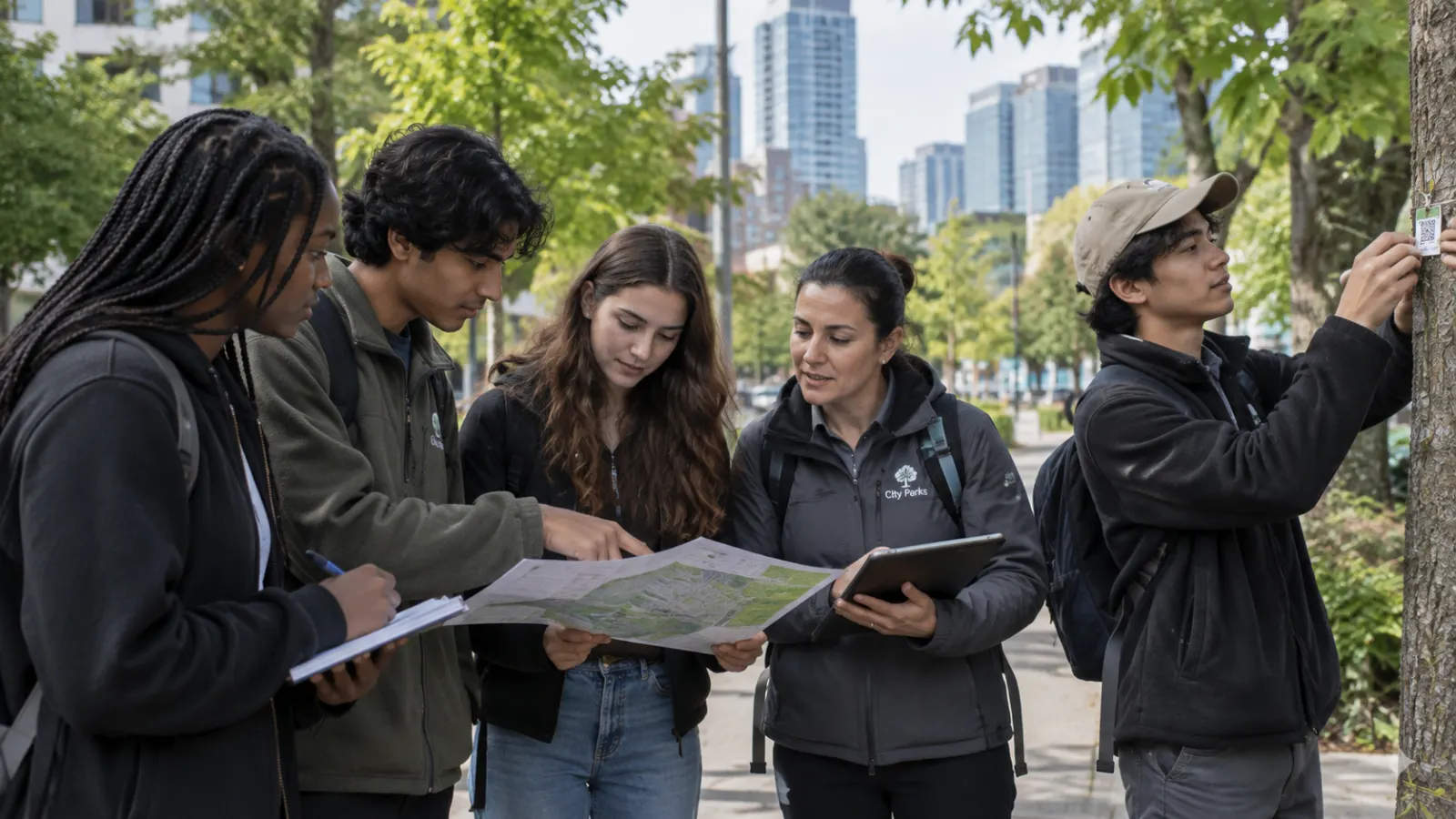
Residents notice unusual dust on windows, odours at particular times of day, falling groundwater levels, fish deaths, disappearing springs, altered animal behaviour, changing crop performance and restrictions on land they previously used. When those observations are documented carefully, they can help scientists identify where to sample and help regulators determine which questions deserve investigation.
The appropriate relationship is therefore not local knowledge versus science.
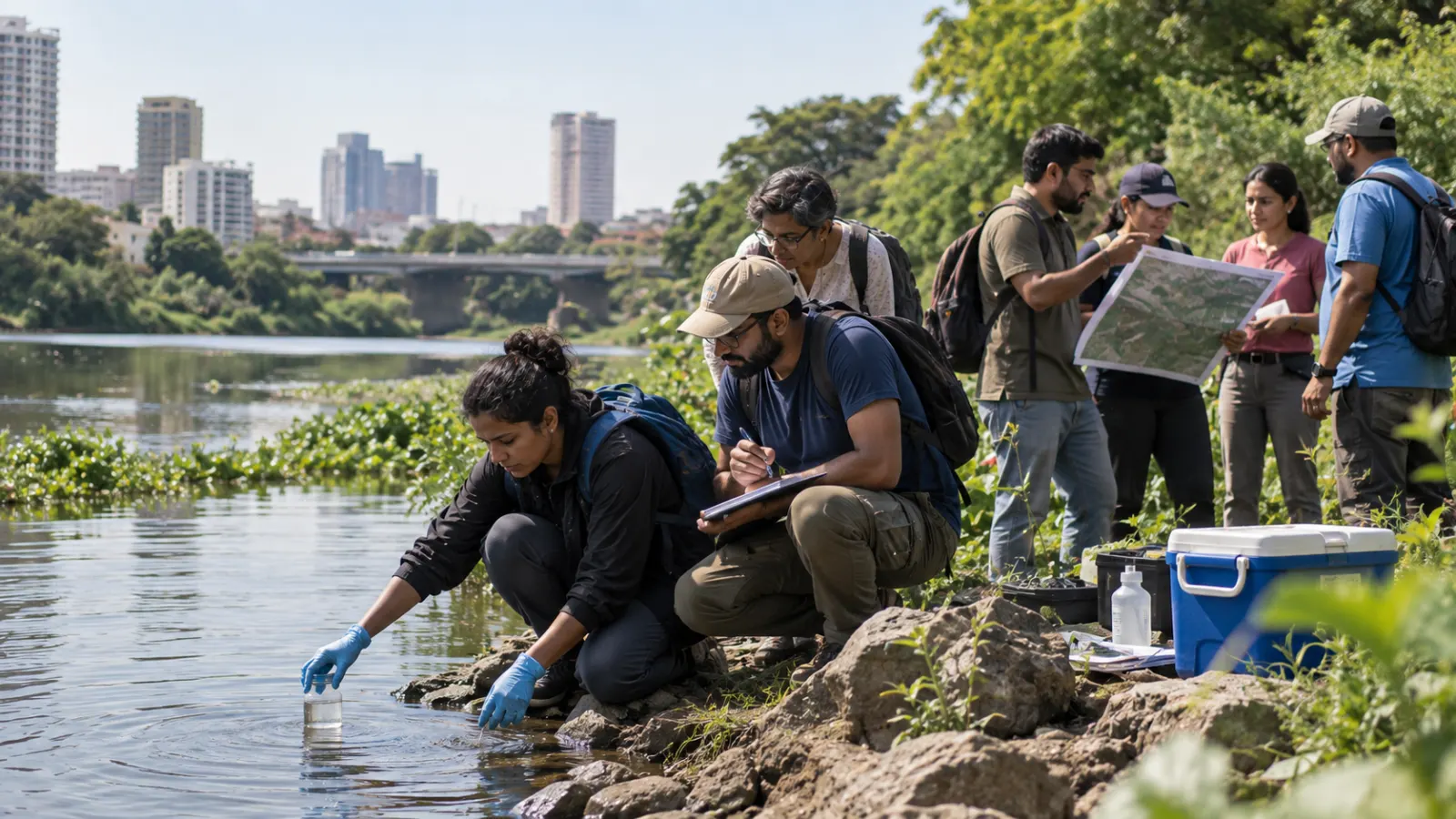
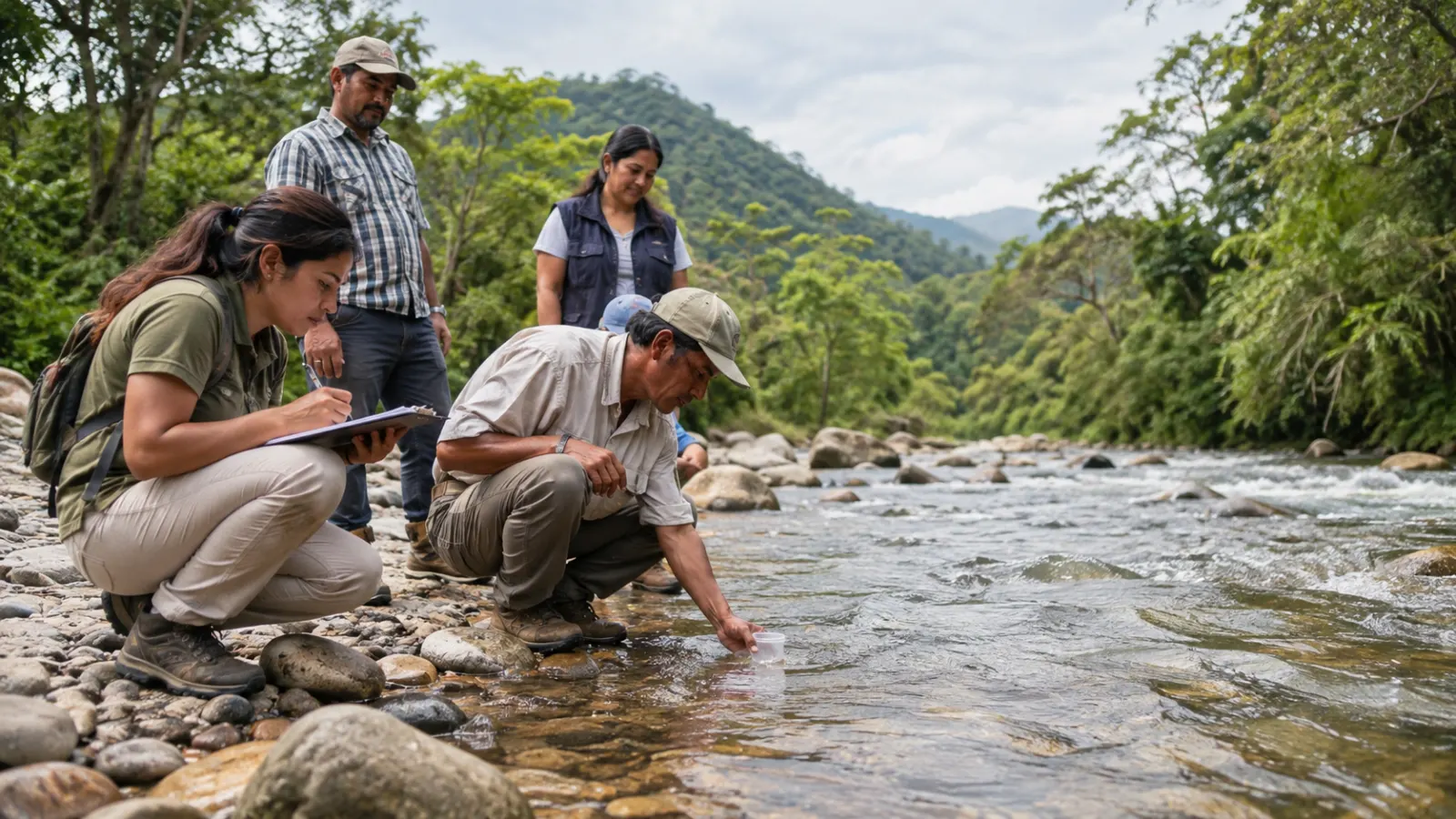
Local knowledge can generate hypotheses and reveal exposure pathways. Scientific measurement can test, quantify and compare those observations. Administrative records can establish legal responsibility. Historical evidence can show whether change is recent or long-term.
Combining these forms of information can produce a more accurate environmental picture than any one source alone.
This logic is particularly visible in forest governance. FAO describes community-based forestry as management in which local people participate in governing forest resources, with the degree of empowerment depending partly on the rights communities hold over planning, implementation and benefit sharing. FAO also emphasises that people directly affected by forest management should have a meaningful role in setting objectives rather than simply receiving decisions made elsewhere.
The principle extends beyond forests. People living with environmental consequences often possess information that is difficult to acquire from a distant administrative centre.
Organisation converts shared experience into political capacity
Experiencing the same environmental problem does not automatically create a movement.
Residents may agree that a river is polluted yet disagree about what to demand. Some people may depend economically on the factory being challenged. Others may fear retaliation. Farmers, landless households, business owners and local officials may experience the same environmental change differently.
Grassroots action therefore requires organisation.
Existing institutions often provide the first infrastructure: women's groups, farmer cooperatives, neighbourhood associations, Indigenous councils, trade unions, religious networks, fishing associations or village organisations. These groups already possess relationships through which information can travel and meetings can be organised.
Trust becomes especially important because participation can have real costs. People may lose work time by attending meetings. Public opposition can damage relationships with employers or local officials. Campaign leaders may face intimidation or legal expense. Families can disagree over whether confrontation is worth the risk.
Durable movements therefore need more than enthusiasm. They need ways to make decisions, resolve internal disagreements, manage money, preserve records, train new participants and determine who is authorised to negotiate.
These organisational details receive far less public attention than protests, but they often determine whether a campaign survives after the first burst of publicity.
Funding creates similar challenges. Money can pay for legal advice, water testing, travel, communication and technical expertise. It can also reshape priorities if donors begin determining which issues receive attention. A local movement can gradually become accountable upward to funders rather than downward to the people whose struggle produced it.
Representation matters for the same reason.
As campaigns grow, one or two spokespeople may become visible to journalists and government officials. Their access can help the movement, but it can also create distance between representatives and the communities they claim to represent.
Strong grassroots organisations therefore develop mechanisms for reporting decisions back, disclosing finances, rotating leadership where appropriate and ensuring that groups with less local power are not excluded.
Grassroots does not mean structureless.
In many cases, organisation is precisely what allows local experience to become durable political power.
Chipko shows how a local resource conflict can become a wider environmental symbol
India's Chipko movement demonstrates how this process can occur.
Chipko emerged in the Himalayan region of present-day Uttarakhand during the early 1970s from disputes over forest use, local livelihoods and commercial logging. The movement became famous for the tactic of embracing trees to prevent their felling, but the image can oversimplify the conflict if separated from the underlying question of who should control and benefit from forests.
One important dispute involved local demands for access to ash trees used for agricultural implements while commercial rights were granted to an outside sports-goods contractor. Village organisations and activists challenged this arrangement. In March 1974, women in Reni village, led by Gaura Devi, confronted loggers and helped make the movement internationally recognisable. A 2024 Nature commentary marking fifty years since the Reni action emphasised both the importance of women and the movement's roots in local dependence on forests for food, fodder, fuel and water.
The image of people physically embracing trees translated a complicated governance dispute into something immediately understandable.
That symbolic power helped Chipko travel beyond the villages where it originated.
Journalists could explain the action visually. Environmentalists could connect it to broader concerns about deforestation. Researchers could analyse forest policy. Activists elsewhere could adapt the tactic and language.
But scaling also changed how the movement was interpreted.
A campaign rooted partly in local rights over forest use could be retold simply as a story about preventing all tree cutting. Those are not necessarily the same objective. Communities dependent on forests may support conservation while still demanding controlled access to forest products and local decision-making.
This illustrates a recurring problem in grassroots environmentalism: the story most attractive to national or international audiences may not perfectly match the original local grievance.
Scaling creates influence, but simplification can distort representation.
Grassroots environmentalism can build alternatives as well as resist projects
Environmental activism is often pictured as opposition: stop the mine, block the road, prevent logging or challenge the factory.
Grassroots environmentalism can also be constructive.
The Green Belt Movement in Kenya is an important example. Wangari Maathai founded the movement in 1977, initially encouraging rural women to plant trees in response to problems including declining firewood availability, water stress and environmental degradation. UNEP has described Maathai as a leading figure in grassroots environmental activism and notes that the Green Belt Movement eventually planted tens of millions of trees.
Tree planting was practical environmental restoration, but the movement developed a wider social dimension.
Women organised locally, gained skills, created networks and engaged questions involving land, public accountability and civic participation. Environmental work therefore became linked with livelihoods and political agency.
This illustrates why grassroots environmental issues frequently resist neat categories.
A forest campaign can simultaneously concern biodiversity, employment and land rights. A water struggle can involve public health, infrastructure and inequality. A restoration project can become a vehicle for women's organisation. An Indigenous land campaign can protect ecosystems while also defending sovereignty and cultural continuity.
Environmental problems are experienced socially.
The people affected usually do not encounter “the environment” as an abstract policy sector. They experience water, forests, fisheries, land and climate through food, income, health, identity and everyday work.
Protest matters, but institutional access often determines whether gains last
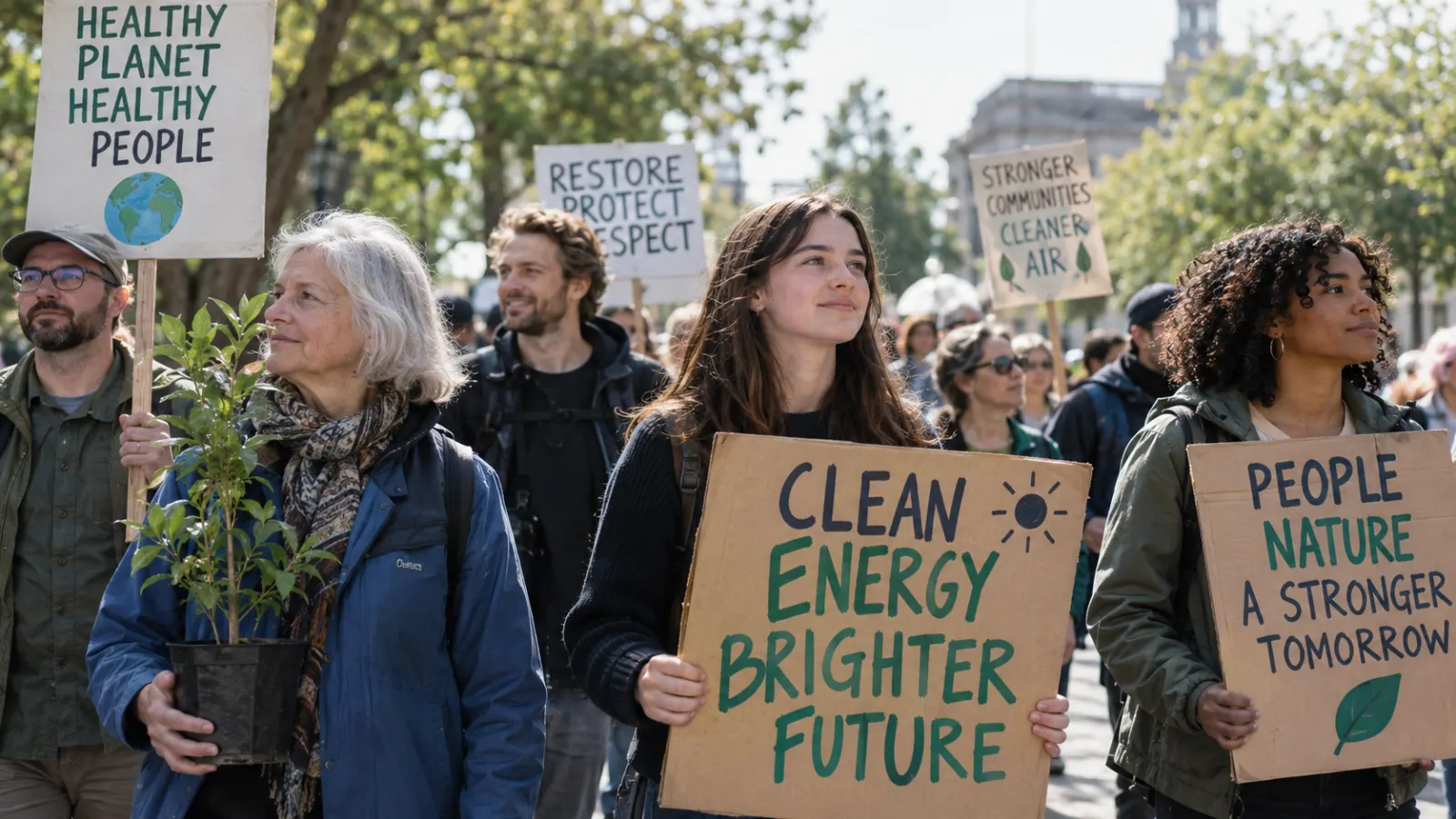
Grassroots action is sometimes treated as synonymous with street protest.
Protest is one tool.
It can attract attention when administrative channels have failed, raise political costs for decision-makers and create solidarity among participants. But many environmental movements operate through formal institutions as much as through demonstrations.
Communities may file objections to environmental assessments, petition courts, seek recognition of customary land rights, negotiate community-benefit agreements, participate in forest-management committees, collect environmental data or demand access to planning processes.
These institutional routes can produce less dramatic but highly durable results.
A project might proceed while stronger monitoring requirements are imposed. A community may secure compensation, formal consultation rights or access to environmental information. A forest-management system may recognise community rights that were previously informal. Local representatives may gain a permanent role in planning.
Such procedural outcomes are easy to underestimate because they do not resemble a clear protest victory.
Yet changing who is allowed to participate can influence many future decisions rather than only one dispute.
FAO's work on community-based forestry repeatedly emphasises this institutional dimension. Community forestry is most effective when local communities possess meaningful tenure or management rights and participate in planning and benefit sharing rather than merely providing labour for programmes designed elsewhere.
This supports a broader lesson: protest may open the door, but rights, rules, budgets and decision procedures often determine whether the result remains after public attention fades.
Grassroots environmentalism can therefore be understood partly as a struggle over environmental decision-making authority.
The question is not only what happens to a forest, river or neighbourhood.
It is who gets to decide.
Partnerships can increase local power or quietly replace it
Grassroots groups rarely possess every resource required for a major environmental dispute.
A community may understand the local problem but lack access to laboratory testing. It may need lawyers to interpret permits, scientists to analyse health risks, journalists to attract attention or funding to attend government hearings.
Partnerships with universities, environmental organisations, public agencies and international institutions can therefore be extremely valuable.
The key question is how those relationships are structured.
A partnership strengthens grassroots action when external organisations respond to locally defined priorities and transfer useful capacity. Scientists can train residents in monitoring. Lawyers can help communities understand procedures. NGOs can provide communications support while local organisations continue determining the campaign's demands.
The relationship becomes more extractive when outsiders control the money, data and public narrative while local people provide stories, photographs or unpaid labour.
The same problem appears in conservation finance.
UNEP has highlighted examples of financing models designed to give Indigenous communities more direct control over conservation resources rather than routing nearly all decisions through distant institutions. Such approaches reflect growing recognition that local environmental stewardship is weakened when communities are expected to protect landscapes without meaningful control over either funding or decisions.
Outside support and grassroots legitimacy are therefore compatible.
Outside control and grassroots legitimacy are much harder to reconcile.
Local action should not be romanticised
Grassroots environmentalism is often portrayed as morally pure because it comes from communities rather than governments or corporations.
That assumption is dangerous.
Communities contain inequalities. Landowners and landless households may have different interests. Women may depend heavily on a forest while being excluded from committees governing it. Indigenous or minority households can be marginalised even within apparently local institutions. Age, caste, class and political connections can affect who speaks.
A village meeting does not automatically represent every resident.
Local elites can capture environmental benefits just as national elites can.
Communities can also overuse resources. Poverty, population pressure, insecure tenure or strong market demand may create incentives for short-term extraction. A traditional management system that worked under one population size or market environment may become unsustainable after conditions change.
This is why effective community environmental governance needs ecological evidence, transparent rules and accountability rather than romantic claims that local knowledge is automatically superior.
FAO's contemporary assessment of community-based forestry reflects this nuance. It describes community forestry as having substantial potential for forest conservation and livelihoods while also noting that many regimes perform below expectations because the conditions required for effective governance are missing.
“Local” therefore describes where governance happens.
It does not certify the quality of governance.
This distinction is especially important when external organisations seek a convenient community representative. The loudest local leader may not represent women, tenants, migrants, younger residents or households with fewer assets.
Participation has to be designed, not merely declared.
Digital tools amplify organisation but cannot substitute for it
Digital technology has changed what a small local campaign can do.
A phone can record visible pollution, document tree cutting, map flooding and distribute evidence rapidly. Messaging platforms make meetings easier to organise. Social media can connect a village dispute with journalists, researchers and supporters hundreds of kilometres away. Low-cost sensors and open satellite imagery can provide forms of environmental evidence that were previously available mainly to governments and universities.
These tools dramatically reduce communication costs.
They can also create the illusion that attention equals organisation.
A viral video may generate millions of views without producing a negotiating team, legal standing, reliable evidence or a plan for what happens after the first government response.
Online supporters may disappear when the news cycle changes.
Residents cannot.
Digital technology is therefore best understood as a multiplier. It can amplify existing organisation, accelerate evidence sharing and broaden a campaign's audience. It cannot replace the relationships that allow people to sustain collective action across months or years.
The same applies to online petitions and hashtag campaigns. They can demonstrate interest and create reputational pressure, but durable environmental change often requires somebody to attend hearings, read documents, maintain records, negotiate, monitor implementation and return when promises are not fulfilled.
The least visible work may be the most important.
Success often means changing the rules of future decisions
Environmental movements are easiest to describe when they clearly stop something.
A forest is saved. A mine is cancelled. A dam is abandoned.
Real outcomes are often less binary.
A grassroots campaign may fail to stop a project but secure stronger pollution monitoring. Residents may gain access to environmental data. Compensation rules may improve. A government may recognise customary tenure. Communities may obtain representation on a management body. A new environmental assessment may become mandatory.
These outcomes change the process by which later decisions are made.
That can matter more than a single campaign victory.
Once communities possess information rights, legal standing or permanent representation, future projects become more difficult to decide entirely behind closed doors. Once monitoring systems exist, violations become easier to detect. Once local organisations acquire technical and legal knowledge, they can apply it to later disputes.
Grassroots environmentalism can therefore produce institutional learning from below.
Environmental agencies learn that official monitoring missed something. Scientists learn which exposure pathways matter locally. Courts encounter new claims about rights. Governments create new procedures. Communities learn how permitting and regulation actually work.
The movement itself learns too.
It builds organisational memory.
This is why record keeping, transparent accounts, locally controlled data and leadership development matter so much. Environmental disputes can last longer than individual leaders, grants or political administrations. A movement dependent entirely on one charismatic person may collapse when that person leaves.
A movement with shared knowledge and institutions can survive setbacks.
Grassroots power is strongest when local knowledge connects with institutional power
The strongest case for grassroots environmentalism is not that communities should replace scientists, regulators or governments.
Environmental problems often require expertise, national coordination and enforcement powers that local organisations cannot provide alone.
Nor should every local objection automatically override wider environmental or social needs. Infrastructure, renewable energy, conservation areas and other projects can produce conflicts between local costs and wider public benefits that require difficult trade-offs.
The contribution of grassroots movements is different.
They reduce the distance between environmental decisions and the people who live with their consequences.
They reveal information that centralised systems can miss. They challenge assumptions about who benefits from resource use. They create political pressure when formal channels fail. They can also build practical alternatives, monitor implementation and push institutions to create more durable forms of participation.
The original draft captures this well: the most important contribution of grassroots movements is not that local people are always correct, but that those closest to environmental costs can identify problems and test whether policies work in practice.
Their power becomes greatest when four things connect.
Local knowledge identifies the problem.
Scientific and technical evidence helps establish what is happening.
Rights and organisation give communities the capacity to act collectively.
Institutional access creates a route through which evidence and pressure can alter decisions.
Without local knowledge, policy can become detached from lived conditions. Without scientific evidence, genuine concerns can be difficult to distinguish from mistaken explanations. Without organisation, shared grievances remain fragmented. Without institutional access, mobilisation may generate attention without lasting governance change.
Grassroots environmentalism works best when these elements reinforce one another.
Its deepest contribution is therefore not simply protecting one forest, river or neighbourhood.
It is demonstrating that environmental governance becomes more accurate and accountable when the people closest to environmental change are not treated merely as populations to be consulted after decisions have already been made, but as participants capable of producing knowledge, defining priorities and helping shape the rules themselves.