Eye Exam Explained: What It Checks, How Often You Need One and Why It Matters
An eye exam is about more than deciding whether you need glasses. Clear vision tells you how well your eyes are performing one particular task, but it does not prove that the retina, optic nerve, cornea or other structures are healthy. Several important eye diseases can develop gradually without causing obvious symptoms, which is why preventive eye care matters even when a person believes their sight is normal.
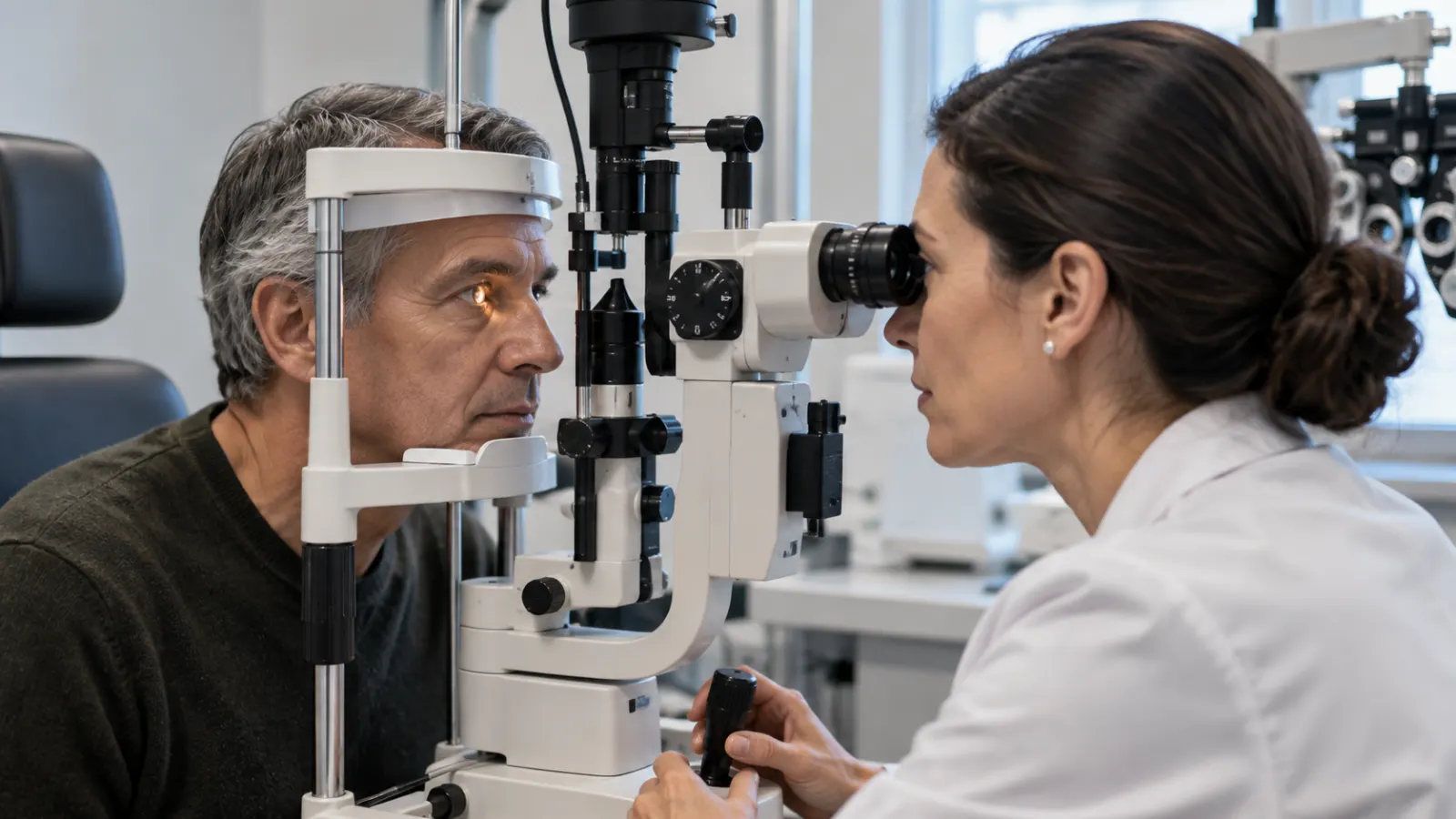
The National Eye Institute describes a comprehensive dilated eye exam as an important way to detect conditions early, before they cause vision loss and while treatment may be more effective. During the examination, an eye-care professional can assess visual acuity, peripheral vision, eye movements, pupil responses and eye pressure, while dilation allows a wider view of structures inside the eye.
This distinction is the central reason routine eye care matters. A person can read the smallest line on an eye chart and still have early glaucoma. Diabetic retinopathy can begin before blur develops. Some retinal abnormalities can also be discovered before the person notices anything unusual. A glasses prescription and an eye-health assessment can therefore happen during the same visit, but they answer different questions.
What a Comprehensive Eye Exam Actually Checks
The familiar eye chart measures visual acuity: how clearly a person can distinguish detail at a particular distance. This is useful for identifying refractive errors such as myopia, hyperopia and astigmatism, but visual acuity alone provides only a limited picture of eye health. A comprehensive examination can also assess peripheral vision, pupil responses, eye-muscle function and pressure inside the eye, with additional testing selected according to age, symptoms, medical history and findings.
Tonometry, for example, measures intraocular pressure. Elevated pressure is an important risk factor for glaucoma, but one pressure reading cannot diagnose or exclude the disease. Some people develop glaucoma despite pressure readings within the usual statistical range, while others have elevated pressure without detectable optic-nerve damage. Glaucoma assessment therefore considers the optic nerve and, where indicated, the visual field and other characteristics in addition to pressure.
Eye examination also creates something less dramatic but clinically valuable: a baseline. If today's optic-nerve appearance, retinal findings, eye pressure and visual field are documented, future examinations can be compared against them. This can become increasingly useful as someone ages or develops conditions such as diabetes or hypertension. Preventive care is therefore not limited to finding disease at one visit; it can also establish what is normal for that person so that later changes are easier to recognise.
A comprehensive examination may also reveal findings relevant to health beyond the eye. Retinal blood vessels can show changes associated with conditions such as diabetes and high blood pressure, and some neurological or inflammatory diseases can affect the eyes. This should not be exaggerated into the claim that an eye examination is a universal whole-body diagnostic test, but unexpected ocular findings can sometimes justify communication with a primary-care clinician or another specialist. The CDC includes eye care within broader health maintenance for this reason.
Why Dilation Matters Even When Vision Seems Normal
Dilating drops temporarily widen the pupil, allowing more light into the eye and giving the clinician a broader view of the retina, optic nerve and other internal structures. The National Eye Institute specifically identifies dilation as useful for detecting conditions including glaucoma, diabetic retinopathy and age-related macular degeneration.
The effect is temporary. Near vision can become blurry and the eyes may be more sensitive to bright light for several hours after the drops are administered. Sunglasses can make the light sensitivity more comfortable, and patients should follow the clinic's advice about driving or other activities until their vision is sufficiently clear.
Dilation is not necessarily required in exactly the same way during every eye-related appointment. Whether it is needed can depend on age, health, symptoms, previous findings and the purpose of the visit. Mayo Clinic's current guidance similarly notes that the decision should be individualised according to risk rather than assuming every encounter requires identical testing.
This is also why a quick vision screening should not automatically be treated as equivalent to a comprehensive dilated examination. Screening can identify people who may need further evaluation, but it is designed to detect selected problems rather than examine the full range of ocular structures and risks.
Glaucoma and Diabetes Show Why Symptom-Based Eye Care Is Not Enough
Glaucoma is one of the clearest examples of disease developing before a person realises anything is wrong. The most common forms can damage the optic nerve gradually, with peripheral vision often affected before central vision. Because the changes can begin slowly, people may not recognise the loss until the disease has advanced. The National Eye Institute states that early glaucoma commonly has no symptoms and that a comprehensive dilated eye examination with appropriate testing is how it is detected.
This matters because vision already lost from optic-nerve damage generally cannot simply be restored. Treatment can lower eye pressure and slow or stop further damage in many patients, making earlier diagnosis valuable even when the person feels that vision is still excellent.
Risk is not identical for everyone. Current NEI guidance advises dilated examination every one to two years for people at higher glaucoma risk, including adults over 60, African American adults over 40 and people with a family history of glaucoma. Individual eye-care professionals may recommend different intervals according to additional risk factors or previous findings.
Diabetic retinopathy provides another important example. Diabetes can damage small blood vessels in the retina, and the earliest stages may produce no symptoms at all. NEI recommends at least annual comprehensive dilated eye examinations for people with diabetes, although patients with existing retinopathy may need follow-up much more frequently.
Timing also depends on the type of diabetes. CDC guidance states that people diagnosed with type 2 diabetes should receive an eye examination for diabetic retinopathy at diagnosis, while people with type 1 diabetes generally begin screening within five years of diagnosis. Pregnancy changes the situation further: people with pre-existing diabetes who become pregnant need prompt ophthalmic assessment because pregnancy can affect retinopathy risk.
High blood pressure and cholesterol can further increase the risk of diabetic eye complications, so retinal care belongs within overall diabetes management rather than functioning as a completely separate problem.
Age, Family History, Children and Contact Lenses Change the Schedule
There is no single scientifically meaningful rule that says every person needs exactly one eye exam every twelve months. Appropriate frequency depends on age, symptoms, medical conditions, family history, previous findings, medications, contact-lens use and other risk factors. NEI explicitly recommends discussing the interval with an eye-care professional rather than relying on one universal timetable.
Age matters because different eye problems become more likely at different stages of life. Presbyopia, the increasing difficulty focusing on near objects that usually appears in middle age, is primarily an optical change and commonly leads people to seek reading glasses. At the same time, risks of cataract, glaucoma and age-related macular degeneration rise later in life. Someone may therefore need an examination for both refractive correction and disease detection, and receiving a new glasses prescription should not be assumed to substitute automatically for examination of the internal structures of the eye.
Family history can alter risk as well. Glaucoma and several other eye conditions can cluster within families, so knowing that a parent or sibling has experienced glaucoma, retinal disease or another inherited eye disorder is clinically useful information. Family history does not mean the same disease will inevitably develop, but it can influence when screening begins and how closely someone is followed.
Children present a different problem because they may not realise that their vision is abnormal. A child who has always seen poorly may assume everybody sees the same way. Squinting, closing one eye, tilting the head, eye rubbing, headaches during close work, difficulty reading or problems seeing classroom material can justify assessment. Some childhood conditions may be difficult for parents to detect without formal screening; NEI notes, for example, that amblyopia can go unnoticed and recommends that all children receive vision screening at least once between ages three and five.
Vision screening is valuable but should not be confused with comprehensive examination when a child has symptoms, fails screening or has particular risk factors. The purpose of screening is to identify children who may need a fuller assessment rather than to rule out every possible ocular or visual disorder.
Contact-lens users have another reason for regular professional follow-up because contact lenses sit directly on the cornea and change its surface environment. An eye-care professional can check lens fit, vision and corneal health and reinforce safe wear and cleaning practices. CDC guidance states that contact lenses are medical devices and that poor wear or hygiene can increase the risk of microbial keratitis, a potentially serious corneal infection.
Pain, significant redness, light sensitivity, discharge or sudden blurred vision in a contact-lens wearer should not be saved for the next routine appointment. CDC advises removing the lenses and contacting an eye doctor promptly when these symptoms develop because untreated microbial keratitis can threaten vision.
Routine Eye Care and Eye Emergencies Are Different
One of the most useful things an eye-health article can do is separate preventive examination from symptoms requiring urgent care. Routine appointments are designed to identify risk, update visual correction and detect slowly developing disease. Some symptoms, however, should not wait for the next scheduled checkup.
A sudden appearance of many new floaters, flashes of light or a dark curtain or shadow across part of the visual field can indicate a retinal tear or retinal detachment. The National Eye Institute classifies retinal detachment as a medical emergency because delay can increase the risk of permanent vision loss.
Severe eye pain, sudden changes in vision, very red or watery eyes, an object stuck in the eye or significant trauma also deserve prompt professional assessment. Sudden intense eye pain accompanied by a red eye, blurry vision and nausea can occur with acute angle-closure glaucoma and requires emergency care.
Chemical exposure requires immediate action rather than waiting for an appointment. The eye should be irrigated promptly with water, followed by urgent medical evaluation according to the exposure and local emergency advice. NEI's first-aid guidance specifically emphasises immediate flushing after chemical splashes.
New double vision, sudden loss of vision or neurological symptoms can also signal problems that extend beyond the eye itself and require urgent assessment. The general rule is straightforward: routine care is for prevention and gradual problems; abrupt, severe or rapidly changing symptoms require a different level of response.
What Eye Exams Can and Cannot Tell You
Eye examinations are powerful partly because clinicians can directly inspect structures that are otherwise hidden inside the body, but their value should not be overstated. An eye exam can detect or raise suspicion of many ocular conditions and occasionally reveal findings suggesting systemic disease. It does not replace primary-care screening, blood tests, neurological assessment or other medical evaluations.
Likewise, no single measurement can summarise eye health. A normal pressure reading does not exclude glaucoma. A good eye-chart score does not exclude retinal disease. A normal examination today cannot guarantee that disease will never develop. Preventive care works by combining multiple findings with risk factors and repeating assessment at appropriate intervals.
This is why the concept of a comprehensive eye exam matters. Different tests answer different questions. Visual acuity evaluates clarity of sight. Refraction determines whether optical correction improves vision. Tonometry measures pressure. Visual-field testing assesses peripheral vision. Examination of the optic nerve and retina looks for structural abnormalities. Additional imaging or testing may be added when findings or risk factors justify it.
The correct combination depends on the individual rather than a fixed package sold to everyone.
A Practical Risk-Based Guide to Eye Examinations
The following framework is more useful than claiming that one schedule applies universally:
| Situation | Why eye examination matters |
|---|---|
| No symptoms and no known risk factors | Establishes vision and eye-health baseline; future interval should be based on age and clinician advice |
| Age over 60 | Risk of glaucoma, cataract and macular disease increases; NEI recommends dilated examination every 1–2 years for glaucoma-risk screening |
| Family history of glaucoma | Raises glaucoma risk and may justify closer monitoring |
| Diabetes | Diabetic retinopathy can begin before symptoms; regular dilated retinal examinations are necessary |
| High blood pressure | Can affect retinal vessels and may influence recommended examination frequency |
| Contact-lens wear | Allows assessment of cornea, lens fit, vision and complications |
| Child with visual symptoms or failed screening | Comprehensive evaluation may identify refractive, binocular or developmental problems |
| Previous eye disease or surgery | Follow-up interval depends on condition, treatment and previous findings |
| Sudden flashes, new floaters, curtain-like shadow or sudden vision loss | Requires urgent assessment rather than routine scheduling |
This risk-based approach reflects the way eye care actually works. Preventive schedules are useful, but they should never override new symptoms or individual clinical findings.
Frequently Asked Questions About Eye Exams
What is an eye exam? An eye exam is an assessment of vision and eye health performed by an eye-care professional. A comprehensive examination can include visual acuity, refraction, peripheral-vision testing, eye movements, pupil responses, pressure measurement and examination of internal eye structures.
Is an eye exam the same as a vision test? No. A vision test or screening may measure selected aspects such as visual acuity, while a comprehensive eye exam evaluates both vision and ocular health.
Can I have healthy-looking vision and still have eye disease? Yes. Glaucoma and diabetic retinopathy can develop without noticeable early symptoms.
Why are eyes dilated during an exam? Dilating the pupil provides a wider view of the retina, optic nerve and other internal structures and can help identify conditions such as glaucoma, diabetic retinopathy and macular degeneration.
Does every eye exam require dilation? Not necessarily. The need for dilation depends on the purpose of the examination, age, health, symptoms, previous eye findings and risk factors.
How long does blurry vision last after dilation? Dilation commonly causes light sensitivity and blurred near vision for several hours, although duration varies among people and according to the drops used.
Can eye pressure alone diagnose glaucoma? No. Pressure is an important risk measurement, but glaucoma is an optic-nerve disease and can occur with apparently normal pressure. Diagnosis requires consideration of additional findings.
How often should adults get an eye exam? There is no single interval appropriate for every adult. Age, family history, diabetes, hypertension, existing eye disease, contact-lens wear and other factors can all change the schedule. NEI recommends discussing an individual interval with an eye-care professional.
How often should people with diabetes get their eyes checked? NEI advises at least annual comprehensive dilated eye examinations for people with diabetes, with more frequent follow-up in some patients who already have retinal disease.
When should someone with type 2 diabetes have the first retinal exam? CDC guidance recommends examination for diabetic retinopathy when type 2 diabetes is diagnosed.
Do children need eye exams if they do not complain about vision? Children may not recognise abnormal vision. Vision screening is important, and symptoms, failed screening or risk factors can require comprehensive evaluation. NEI recommends at least one vision screening between ages three and five to help identify amblyopia and related problems.
Do contact-lens wearers need regular eye care? Yes. Contact lenses require proper fitting and follow-up because poor wear and hygiene can lead to corneal complications and infection.
Which eye symptoms are emergencies? Sudden vision loss, a sudden shower of floaters, flashes with a curtain-like shadow, severe eye pain, significant trauma and certain acute red-eye presentations require urgent assessment. Retinal detachment in particular is a medical emergency.
The Best Eye Exam May Be the One That Finds Nothing Wrong
The most important reason to have an eye exam is not that vision always feels abnormal before disease appears. It is precisely the opposite. Important eye conditions can begin while the person is still reading, driving and functioning normally.
That makes preventive eye care different from symptom-driven care. Someone seeking new glasses wants clearer sight, but the same visit may provide an opportunity to examine eye structures that cannot be evaluated by an eye chart alone. A healthy examination can also establish a baseline against which future changes can be compared.
The most useful outcome may therefore be uneventful: vision is stable, the optic nerves and retinas appear healthy, eye pressure is appropriate in context and no concerning disease is found. Preventive medicine often works this way. The absence of a dramatic diagnosis does not mean the examination lacked value.
At the same time, eye examinations should not be reduced to a ritual performed according to one calendar rule. Risk varies. A person with diabetes, strong family history of glaucoma, previous retinal disease or contact-lens complications may require closer follow-up than a healthy low-risk adult. Children have different needs from older adults, and sudden symptoms require urgent care regardless of when the last routine appointment occurred.
The most accurate principle is therefore simple: seeing clearly is one measure of vision, but maintaining healthy eyes requires attention to the structures and diseases that may change before vision itself gives a warning.
A regular comprehensive eye examination, scheduled according to individual risk, creates an opportunity to identify those changes early enough to protect sight rather than waiting until the loss becomes impossible to ignore.
Medical Note
This article provides general educational information and is not a substitute for individual medical or eye-care advice. Sudden vision loss, severe eye pain, significant trauma, chemical exposure, new flashes or many new floaters, a curtain-like visual shadow or other rapidly developing symptoms require prompt professional assessment.