Dadasaheb Phalke and the Birth of Indian Cinema
Dadasaheb Phalke is usually introduced as the “father of Indian cinema”, but the title can make his achievement sound simpler than it was. Phalke did not invent motion pictures, nor was he the first person to show films in India. Foreign films had already reached Indian audiences, exhibitors were building a market for moving pictures, and other early experimenters were working with the medium. What Phalke demonstrated was something more consequential: that a feature-length film could be conceived, financed, photographed, processed, performed, promoted and exhibited as an Indian production.
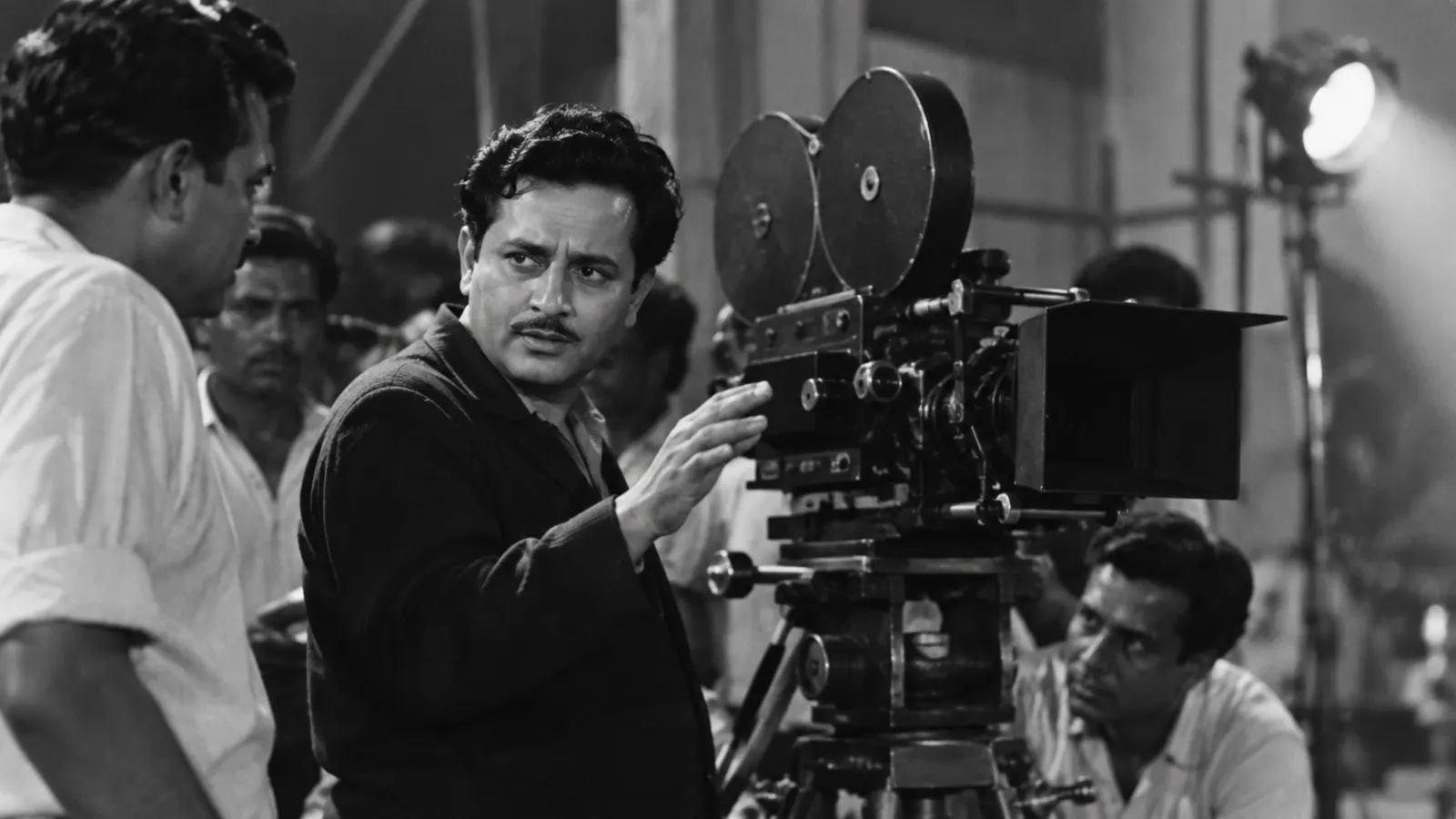
When Raja Harishchandra reached audiences in Bombay in 1913, it was therefore more than the release of a new entertainment. It was evidence that filmmaking could become a repeatable local activity rather than an imported spectacle. Phalke had to solve problems that later generations would divide among cinematographers, laboratory technicians, art directors, editors, producers, casting departments and publicity teams. At a moment when almost none of that infrastructure existed around him, he treated cinema as an entire system that had to be learned.
That is the more useful meaning of his pioneering status. His achievement was not simply directing India's celebrated first full-length indigenous feature. It was helping establish the practical knowledge, audience confidence and production culture from which an industry could grow. Government accounts continue to recognise Raja Harishchandra as India's first full-length feature film and Phalke as the pioneering figure with whom the organised history of Indian feature filmmaking begins.
Before Cinema, Phalke Learned How Images Are Made
Dhundiraj Govind Phalke was born on 30 April 1870 in Trimbakeshwar near Nashik. Long before he entered filmmaking, his education and working life had already moved across several forms of visual production. He studied art, including at the Sir J. J. School of Art in Bombay and Kala Bhavan in Baroda, and developed experience in drawing, photography, modelling and printing. Biographical records also place him in photographic and archaeological work before he established himself in commercial printing. (encyclopedia.com)
These experiences mattered because early cinema was not yet a neatly separated profession. Motion pictures combined photography, chemistry, mechanical equipment, staging, painted environments, performance and reproduction. Someone who understood only storytelling would still have been dependent on a technical infrastructure that India scarcely possessed. Phalke's background gave him familiarity with several of the technologies that cinema brought together.
Printing was especially important. Reproducing an image for mass circulation requires more than artistic skill: materials must behave predictably, colour and contrast must be controlled, machinery must work consistently and the final object must reach paying customers. Phalke also operated in a visual environment shaped by lithographic prints and by popular religious imagery associated with artists such as Raja Ravi Varma. Gods, kings and mythological scenes were already familiar through theatre, painting and cheap prints. Cinema created the possibility of turning such images into movement.
His eventual transition to filmmaking is commonly linked to watching The Life of Christ. Later accounts describe Phalke imagining Indian gods such as Krishna and Rama appearing on screen in the same way biblical subjects had been animated through European cinema. The National Museum of Indian Cinema similarly identifies the screening as the major turning point that led him toward film production. (nmicindia.com)
The significance of the episode lies less in the romance of sudden inspiration than in the question it produced. If European filmmakers could use a new visual technology to represent stories familiar to their own audiences, why could Indian producers not do the same with Indian narratives?
Phalke's answer was not to reject the foreign technology. It was to learn it.
He travelled to Britain in 1912, studied aspects of filmmaking, examined studio practices and acquired equipment before returning to India to establish production. Accounts of the journey describe his encounter with British filmmaker Cecil Hepworth and his purchase of a Williamson camera and film-related equipment. (wikipedia.org) Imported machinery remained necessary, but Phalke's ambition was to make the knowledge of using it productive in India.
That distinction would shape his career: technological dependence did not have to mean cultural dependence.
Raja Harishchandra Was a Film—and an Industrial Experiment
Before committing scarce resources to a full feature, Phalke experimented. One of the best-known episodes involves his filming the growth of a pea plant over time. The short experiment has survived in memory partly because it captures his working method so neatly. He was not simply imagining films; he was testing cameras, exposure, processing and projection and demonstrating that he could make the machinery produce a reliable result.
This experimental mindset was necessary because early film stock was unforgiving. Exposure mistakes could ruin material. Processing had to be controlled. Equipment required maintenance, raw stock was expensive, and there was no large domestic network of specialist businesses waiting to solve technical problems. Filmmaking involved laboratory discipline as much as artistic inspiration.
Phalke then turned to the story of Harishchandra, the legendary king celebrated for maintaining his commitment to truth despite extreme personal suffering. Mythological material was particularly suitable to silent cinema. Audiences already knew the characters and moral structure, so the film did not have to establish its world entirely through intertitles and visual action. Familiarity reduced the storytelling burden while leaving cinema free to provide the novelty of movement and spectacle.
Casting presented a different challenge. Film acting did not yet possess the social respectability that later stardom would give it. Women from many socially respectable backgrounds were unwilling to appear before the camera, and the role of Queen Taramati was consequently played by Anna Salunke. Dattatraya Dabke played Harishchandra, while Phalke's son Bhalchandra appeared in the production. The difficulty of finding a female performer reveals something important about the emerging medium: before cinema could create celebrities, it first had to create a socially accepted profession.
Phalke and the people around him also had to create the conditions of production. Sets, costumes, lighting arrangements, cameras and laboratory work all had to be coordinated. Daylight was crucial, and later family recollections describe the improvisation required when modern film-production equipment was unavailable. Phalke's grandson has also emphasised the extensive role of Saraswatibai Phalke, who supported the enterprise financially and domestically and learned practical film-related tasks including handling and processing film.
This matters because the traditional “great man” version of the story can make Raja Harishchandra look like the isolated creation of one extraordinary individual. Phalke was unquestionably the driving force, but pioneering production depended on family labour, performers and assistants learning unfamiliar work simultaneously. His household and production unit overlapped because there was not yet an established industry from which he could simply hire every specialised department.
The film was shown publicly at Bombay's Coronation Theatre on 3 May 1913 and became commercially successful. Government and museum histories treat the event as a decisive starting point for the Indian feature-film industry.
Success was important because technical achievement alone could not create an industry. Phalke also had to prove that audiences would pay to see an Indian-made film.
Why the “First Indian Film” Claim Needs One Qualification
National film history frequently calls Raja Harishchandra the first Indian feature film, and this remains the Government of India's official position. But the history is more interesting when one qualification is preserved.
Dadasaheb Torne's Shree Pundalik had been released in Bombay in May 1912, almost a year earlier. Some historians and writers have therefore argued that it deserves recognition as an earlier Indian film. The conventional distinction is that Shree Pundalik was essentially a filmed theatrical performance, used a British cameraman and had its material processed in Britain, whereas Raja Harishchandra represented a more complete indigenous feature-production process.
This does not diminish Phalke. In fact, being precise makes his contribution easier to understand.
Historical “firsts” are often created by definitions. Was the first Indian film the first moving-picture production involving Indian creators? The first filmed Indian dramatic performance? The first full-length narrative feature? The first film whose production process was substantially organised in India? Different criteria can produce different answers.
The strongest claim for Phalke is therefore not that nobody in India had ever pointed a camera toward a dramatic performance before him. It is that Raja Harishchandra became the decisive proof that an Indian feature-film production system could work commercially and be repeated.
That is a more historically meaningful achievement than winning a technical argument over one date.
Mythology Helped Indian Audiences Learn the Language of Cinema
Phalke did not stop after one successful production. He went on to make films including Mohini Bhasmasur, Satyavan Savitri, Lanka Dahan, Shri Krishna Janma and Kaliya Mardan. Government accounts attribute to him roughly 95 feature films and more than two dozen short films over his career, although exact totals vary slightly among published sources.
The repeated use of mythology was not merely conservatism or lack of alternative subject matter. It solved several problems at once.
The stories were already culturally legible. Audiences knew the major characters and conflicts. Stage traditions had established visual conventions, while religious prints had helped standardise popular representations of gods and epic scenes. Silent cinema could therefore introduce a new technology through an old narrative vocabulary.
At the same time, film could do things those older forms could not.
Phalke experimented with trick photography and visual transformations that allowed supernatural actions to become moving spectacles. Characters could disappear, multiply or appear transformed. Stop-camera effects, multiple exposures and other forms of photographic manipulation turned mythology into an ideal testing ground for cinema's distinctive powers. The National Museum of Indian Cinema credits Phalke with early experimentation in trick photography and special effects as part of this developing visual language. (nmicindia.com)
These techniques should not be dismissed as crude ancestors of digital effects. Their meaning was different for early spectators. The novelty lay partly in seeing the supposedly impossible appear reproducibly before an audience. Film could make a miracle occur at the same moment in exactly the same sequence every time the reel was projected.
Mythological wonder and technological wonder therefore reinforced one another.
Phalke's cinema also demonstrates how new media often become socially acceptable. Revolutionary technology does not always require revolutionary content. Sometimes audiences enter an unfamiliar medium through stories they already understand. Once the technology becomes familiar, the range of possible stories expands.
Indian cinema would eventually produce social dramas, historical spectacles, romances, comedies, realist films and numerous regional traditions. The mythological film was not the endpoint. It was one of the bridges through which audiences learned what cinema could be.
The Workshop Became a School for an Industry
The industrial importance of Phalke's filmmaking is easiest to see in the people who learned around him.
When an industry does not exist, specialised skills cannot simply be purchased from an established labour market. Camera operators, laboratory workers, set designers, performers and production assistants need to acquire knowledge through practice. Early film production therefore doubled as training.
This is one of the least glamorous but most significant parts of Phalke's legacy. A successful film can be an isolated event. A production environment that teaches people how to make the next film creates capability.
As output expanded, production also required standardisation. The first film might justify improvising every problem from scratch, but the tenth could not. Film stock had to be handled through repeatable procedures. Costumes and sets had to be prepared predictably. Performers required rehearsal. Cameras and laboratories needed routines. Production schedules had to coordinate people who were gradually developing separate specialities.
Tacit knowledge accumulated: how to use available light, how to expose stock under Indian conditions, how to process film reliably, how to stage action for a silent camera and how to present a new production to audiences.
That knowledge is infrastructure even though it is invisible in photographs of studios.
Phalke's production operation thus mattered not only because of the titles it released but because it helped move Indian filmmaking from experiment toward routine. An industry exists when successful production no longer depends entirely on one person's ability to improvise everything.
Publicity Was as Important as Production
Making a film was only half of Phalke's problem. He also had to convince exhibitors and audiences that an Indian-produced picture was worth their money.
Cinema already had spectators in India, but those spectators were accustomed to a marketplace in which foreign films circulated. An indigenous producer needed not only technical capability but demand. Advertising, demonstrations and promotional ingenuity therefore became part of Phalke's work.
Family recollections preserved by the Press Information Bureau describe him as innovative in promotion as well as production. His grandson recalled promotional methods designed to attract audiences and emphasised that Phalke understood the need to encourage people to experience locally made cinema.
This completes the entrepreneurial picture.
A pioneer who makes a technically functional film but cannot persuade anybody to screen or watch it has built a prototype. A filmmaker who can repeatedly attract audiences has begun building a market.
Mythological subjects again served this commercial objective. They were recognisable enough to advertise easily and spectacular enough to promise something worth seeing. Familiar narrative reduced risk for spectators encountering a new Indian-made medium.
The history of Raja Harishchandra is therefore partly a history of demand creation. Phalke had to convince people not only that Indians could produce films but that Indian films deserved to be watched.
Success Brought Capital—and Conflict Over Control
Once filmmaking showed commercial potential, the relationship between artistic experimentation and investment inevitably changed.
Phalke became associated with the Hindustan Film Company, formed with business partners who could supply the capital needed for expanded production. The arrangement helped move filmmaking further away from the small family-workshop model, but it also created tensions over money, working methods and control. Contemporary and later accounts record disagreements that led Phalke to withdraw for a period before returning. (ddinews.gov.in)
The conflict was not an accidental distraction from the history of cinema. It was part of the industry's maturation.
Film is expensive, collaborative and commercially uncertain. The person directing a production may want additional time, experimentation or technical refinement. Investors want predictable budgets, schedules and returns. Those pressures existed in Phalke's era and remain central to filmmaking today.
His experience therefore reveals the transition from invention to industry. When Phalke was developing his earliest work, his ability to control multiple processes was a strength because virtually everything needed invention. As production became larger and more capital-intensive, the same model encountered limits. Investors, managers and increasingly specialised workers entered the system.
The cinema Phalke had helped make possible was beginning to develop structures that no single pioneer could completely control.
Sound Changed the Industry Faster Than the Pioneer Could Change With It
The arrival of synchronised sound transformed Indian cinema in the early 1930s. Alam Ara, released in 1931, is widely recognised as India's first talkie, and sound quickly changed both the technical infrastructure and commercial logic of filmmaking.
A silent film could travel relatively easily across linguistic regions by altering intertitles or providing local accompaniment. Sound made spoken language central. Studios now needed microphones, sound-recording expertise and more controlled environments. Actors had to possess voices suitable for dialogue and song. Music became still more important to popular film, and linguistic markets acquired new commercial significance.
For Phalke, the transformation was profound.
He had helped master the technical ecology of silent filmmaking, but the industry's centre of gravity was shifting toward larger studios, specialised sound production and new forms of star performance. His late silent film Setubandhan appeared in the early 1930s and was subsequently adapted with sound. Gangavataran, released in 1937, became his only sound feature and his final film. Government sources likewise identify Setubandhan as his last silent production and Gangavataran as his sole talkie.
There is an irony in this trajectory.
Phalke became important because he had been unusually willing to adopt an unfamiliar technology. Two decades later, another technological transition helped marginalise the production system with which he was most closely identified.
That is not evidence that he had failed. It is characteristic of technological pioneering. The industry created by early innovators eventually develops faster, becomes more specialised and requires more capital than the world in which those innovators first succeeded.
Phalke's later career was therefore less dominant than his beginnings. The workshop pioneer belonged to an era being replaced by studio cinema.
Lost Films Make the History Harder to Reconstruct
One of the greatest difficulties in assessing India's silent era is that so little of it survives.
Early cinema was recorded on nitrate stock that was chemically unstable, highly flammable and difficult to preserve without controlled archival conditions. Films were damaged, discarded, recycled or lost before institutions developed the resources and awareness required for long-term preservation.
Raja Harishchandra itself does not survive intact. Material traditionally associated with it remains incomplete, and historians have even debated the exact identity of some surviving fragments. That uncertainty is a reminder that national film history is being reconstructed from an incomplete record rather than from an untouched archive.
Advertisements, photographs, programmes, newspaper accounts, family memories, catalogues and later oral histories therefore become unusually important.
The National Film Archive of India and other public institutions have attempted to preserve surviving silent-era materials and recollections, while Films Division documentaries have returned repeatedly to Phalke's career and his family's memories. In 2021, Films Division marked his death anniversary by screening documentary and animated works including Dream Takes Wings, Phalke Children, The Pea Plant Legacy and Rangbhoomi.
The fragmentary archive should make modern writers cautious.
Popular histories of pioneers naturally accumulate memorable stories. Some are strongly documented; others become polished through repetition. The less primary material survives, the more important it is to distinguish between contemporary evidence, family recollection and later commemorative legend.
Phalke does not need mythology added to his biography. The documented achievement is extraordinary enough.
“Father of Indian Cinema” Is Most Useful as an Institutional Title
Dadasaheb Phalke died in Nashik on 16 February 1944. He did not live to see the scale the Indian film industry would achieve after independence. By then, however, filmmaking had already expanded beyond anything one individual could dominate. Studios, producers, stars and regional industries had established their own production cultures.
This is precisely why the conventional title “father of Indian cinema” needs careful interpretation.
If it means that Phalke single-handedly created every strand of Indian cinema, it is historically misleading. Indian filmmaking emerged through many pioneers, exhibition networks, theatre traditions, technicians, financiers and regional centres. Bombay was not the only place in which cinema developed, and Phalke's mythological production model was not the only path the medium followed.
But if the title means that he played a catalytic role in demonstrating that Indians could organise feature-film production themselves, develop technical knowledge, train workers, market films and establish a repeatable production practice, the description becomes much more meaningful.
His achievement was industrial as much as artistic.
The Government of India institutionalised this memory in 1969 by establishing the Dadasaheb Phalke Award. First presented to Devika Rani, it remains India's highest official recognition for an individual's outstanding contribution to the growth and development of Indian cinema.
It is fitting that the award recognises a lifetime's contribution rather than directing alone. Phalke's historical significance cannot be contained within the modern job description of a director. He produced, photographed, experimented, advertised, trained, managed and solved technical problems. His work belonged to the entire ecology of filmmaking.
Phalke's Larger Legacy Is About Who Controls a New Medium
Phalke belongs not only to film history but to the broader history of media and technology in India.
He moved from photography and printing into cinema at a moment when reproduction technologies were changing how images circulated. Print could multiply pictures; photography could mechanically record appearances; cinema added time and movement. Each technology altered the relationship between artist, machine and audience.
Phalke's response to the new medium remains strikingly modern.
He did not respond to imported cinema by insisting that foreign technology should be rejected. Nor did he conclude that Indian filmmaking should simply imitate foreign subject matter. He attempted to master the machinery and use it to represent stories already embedded in Indian cultural life.
This strategy gave filmmaking cultural as well as industrial significance. Under colonial conditions, audiences were not only seeing Indian stories on screen; they were seeing evidence that the apparatus of modern mass representation did not have to remain exclusively in foreign hands.
That does not mean every mythological film should be interpreted as coded anti-colonial propaganda. The evidence is stronger when the claim remains narrower. Phalke clearly valued Indian production and local capability, but industrial self-representation is not identical to explicit political nationalism.
Its significance was nevertheless substantial.
The ability to manufacture images of oneself is a form of cultural agency.
New media continue to produce versions of the same problem. Countries encounter technologies whose hardware, platforms or business models were developed elsewhere and must decide whether they will remain primarily consumers or develop the capacity to produce within them. Phalke's solution was practical rather than theoretical: learn the system thoroughly enough to make it carry local stories.
The Pioneer Succeeded Because Indian Cinema Eventually No Longer Needed Him
There is a paradox at the centre of Phalke's legacy.
The filmmaker who helped demonstrate how Indian films could be made eventually found himself working in an industry that had moved beyond his original production model. Sound changed filmmaking. Studios became larger. Labour became more specialised. New genres emerged. Regional industries developed distinctive identities. Other producers and directors created systems Phalke neither controlled nor originated.
It can look like displacement.
It is also evidence of success.
A pioneer has truly altered a field when the field no longer depends upon the pioneer. If Indian filmmaking had remained a personal craft practised mainly by Phalke and his immediate circle, his achievement would have been remarkable but historically limited. Instead, technical knowledge spread, capital entered the business, audiences expanded and later filmmakers treated motion pictures as an established cultural possibility rather than an experiment requiring justification.
The decisive achievement of Raja Harishchandra was therefore not simply that audiences watched one Indian feature film in 1913.
It was that there could be another one after it.
Then another.
And eventually an industry so large, linguistically diverse and technically complex that its earliest workshop would appear almost impossibly small by comparison.
Dadasaheb Phalke matters because he stood near the point where that transformation became imaginable. He combined art, photography, printing, mechanics, storytelling, finance and promotion because early cinema required one person and a small team to understand almost all of them. He experimented because no established workflow could tell him exactly what to do. He trained others because an industry cannot exist without transferable knowledge. He promoted his films because a production system cannot survive without an audience.
Calling him the father of Indian cinema is therefore most useful not as a claim that cinema began from one man alone, but as recognition of the larger thing he helped prove.
India could do more than watch moving pictures made elsewhere.
It could make cinema of its own.