Cultural Appreciation vs Cultural Appropriation: How Can You Tell the Difference?
Human cultures have never developed in isolation. Foods travel. Musical styles cross borders. Languages borrow words. Clothing changes through trade and migration. Religious and artistic traditions influence one another, sometimes over centuries.
That exchange is a normal part of cultural life.
Yet cultural borrowing can also become exploitative. A sacred symbol may be reduced to decoration. A traditional design may be copied commercially while the community that created it receives neither recognition nor benefit. An expression for which members of a minority were once mocked or discriminated against may suddenly become fashionable when adopted by outsiders.
This is why debates over cultural appreciation and cultural appropriation cannot be solved by a simple rule saying that borrowing from another culture is either always acceptable or always offensive.
The better question is not simply, “Am I allowed to use this?”
It is: What am I using, what does it mean, who does it come from, how am I using it, and what relationship am I creating with the people whose culture made it possible?
What Is Cultural Appreciation?
Cultural appreciation means engaging with another culture in a way that seeks to understand, respect and accurately represent it.
That might involve studying another language, learning a musical tradition from practitioners, attending a festival to which the public is invited, cooking food from another region, purchasing work directly from traditional artisans or learning about the religious significance of a symbol before using it.
Appreciation does not require cultures to remain separate. In fact, meaningful cultural exchange often depends on people learning from one another.
What distinguishes appreciation is usually the quality of the relationship: knowledge rather than ignorance, attribution rather than erasure, participation rather than caricature, and reciprocity rather than extraction.
What Is Cultural Appropriation?
Cultural appropriation generally describes situations in which elements associated with one culture are taken and reused by people outside that culture in ways considered exploitative, disrespectful, misleading or harmful.
It is important, however, not to confuse an ethical concept with a single legal rule.
There is no universal international law declaring every instance of “cultural appropriation” unlawful. Copyright, trademarks, design rights, heritage law, customary rules, Indigenous rights and other legal protections may apply to particular cultural expressions, but many cultural borrowing disputes occur primarily in the ethical and social sphere.
The World Intellectual Property Organization, or WIPO, has highlighted this complexity in its work on traditional cultural expressions. Traditional music, dance, designs, symbols, ceremonies, handicrafts and other forms of cultural expression may carry deep connections to a community's identity even where conventional intellectual-property law does not provide straightforward protection.
That makes context essential.
There Is No Cultural Traffic Light
People understandably want a simple test: appreciation is green, appropriation is red, so which category does this hairstyle, dish, dance, costume, tattoo or design belong to?
Culture rarely works that cleanly.
The same act may be welcomed in one setting and viewed as disrespectful in another. Wearing traditional clothing after being invited to do so at a wedding, for example, creates a different relationship from wearing sacred ceremonial dress as a party costume.
Cooking another culture's food at home is different from building a commercial brand around it while falsely claiming to have invented the tradition.
Learning a dance from recognised practitioners is different from copying sacred movements stripped of their meaning.
The object may look the same. The context changes the ethical relationship.
A 10-Question Test for Cultural Appreciation
Rather than asking whether all cultural borrowing is acceptable, consider ten questions.
| Question | What to examine |
|---|---|
| 1. Why am I using it? | Learning, participation, profit, fashion, humour, status or shock value |
| 2. Is it public or restricted? | Whether the practice is openly shared or limited by ritual, initiation, status or customary rules |
| 3. Do I know what it means? | Religious, historical, political or social significance |
| 4. Who am I learning from? | Source-community practitioners versus decontextualised copies |
| 5. Is permission relevant? | Whether recognised community rules govern access or use |
| 6. Am I crediting the source accurately? | Specific tradition, community, artist or maker rather than vague labels |
| 7. Who benefits? | Whether recognition, money and opportunity reach source practitioners |
| 8. Is there a power imbalance? | Whether insiders have been penalised for the same expression outsiders now profit from |
| 9. Am I stereotyping or claiming invention? | Caricature, distortion, erasure or false originality |
| 10. Am I willing to listen and change? | How you respond when credible concerns are raised |
None of these questions functions as an automatic verdict. Together, however, they provide a much more useful framework than resemblance alone.
1. Start With the Purpose
Intent is not everything, but it matters.
Learning Japanese calligraphy because you are interested in its history begins differently from copying a religious inscription because it looks “exotic.” Studying a musical form seriously creates a different relationship from exaggerating it for comedy.
Commercial use raises additional questions because money, reputation and market access become part of the transaction.
Someone can still cause harm despite good intentions. But purpose reveals whether the engagement begins primarily with curiosity, participation, status, mockery or extraction.
2. Is the Cultural Element Public or Restricted?
Some cultural expressions are deliberately open.
Festivals invite visitors. Musicians release recordings. Craftspeople sell their work. Teachers offer classes. Restaurants introduce people to culinary traditions. Dance schools transmit forms across generations and national borders.
Other practices may be restricted by religious role, kinship, initiation, sacred status, gender, age or customary law.
Visibility should therefore not automatically be interpreted as permission.
A sacred ceremony can be publicly photographed without becoming available for outsiders to reproduce. A ceremonial object displayed in a museum may still carry restrictions within the community from which it originated.
The more sacred or restricted an expression appears to be, the stronger the case for caution and consultation.
3. Have You Learned What It Means?
Research is one of the simplest differences between appreciation and careless borrowing.
A garment may communicate marital status, religious affiliation, mourning, rank or political identity. A hairstyle may have historical meaning. A dance may belong to a ceremony rather than entertainment. A symbol that appears decorative to an outsider may be sacred to believers.
Removing those meanings can turn cultural expression into costume.
Research cannot eliminate disagreement, but it substantially reduces the risk of accidental distortion.
4. Who Is Teaching You?
Source matters.
Learning directly from practitioners, recognised teachers, community institutions, artists or credible scholars usually provides more context than copying another outsider who has already removed the tradition from its origins.
This is particularly important online. Cultural material can pass through multiple stages of copying before reaching millions of people.
By then, the original community, language, meaning and maker may have disappeared entirely from the description.
When possible, move closer to the source.
5. When Does Permission Matter?
Not every interaction with another culture requires permission.
It would make little sense to ask an entire national population whether you may cook one of its common dishes or listen to its music.
Permission becomes much more important where a cultural community maintains recognised restrictions over who may perform, reproduce or commercialise a particular expression.
This issue is especially significant for Indigenous cultural heritage.
The United Nations Declaration on the Rights of Indigenous Peoples recognises Indigenous peoples' rights to maintain, control, protect and develop their cultural heritage, traditional knowledge and traditional cultural expressions.
That does not mean every cultural dispute can be reduced to a universal permission form. It means community authority deserves serious attention where traditions contain established rules of access, ownership, stewardship or transmission.
6. Give Accurate Credit
Attribution is more meaningful when it teaches people something.
Describing an identifiable design simply as a “tribal print” may erase the community that developed it. Calling a specific tradition merely “Asian-inspired” or “African-inspired” can collapse enormous cultural differences into a marketing category.
Where the source is known, name it accurately.
Credit may belong to a people, region, artistic tradition, individual practitioner or contemporary maker depending on the circumstances.
The principle is simple: do not make the source disappear.
7. Follow the Money
Commercialisation changes the ethical stakes.
Imagine a company copying a traditional textile pattern, producing thousands of products and making substantial revenue while the artisans whose communities sustained that design receive no attribution, compensation or market access.
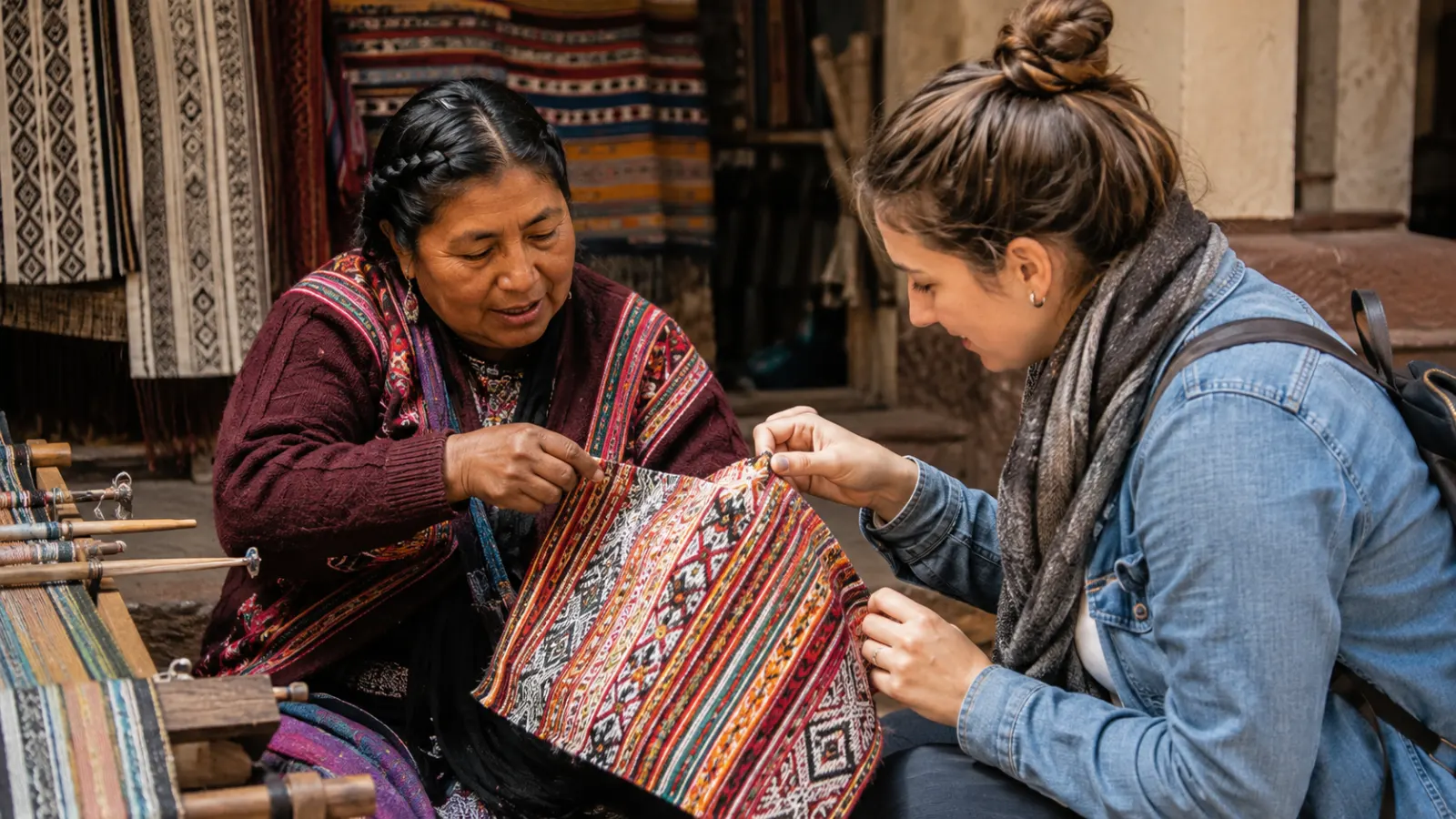
That relationship is different from a traveller buying the textile directly from its makers.
Recognition alone may not always be sufficient either. A brand can prominently name a community in an advertising campaign while excluding that community from decisions and revenue.
More reciprocal arrangements can include direct sourcing, paid consultation, licensing, co-design, shared authorship, commissions, long-term partnerships and benefit-sharing where appropriate.
The exact model will depend on the cultural expression and the people involved.
8. Ask Who Was Penalised and Who Is Rewarded
Power is one of the most important parts of appropriation debates.
An expression may have exposed members of a minority community to ridicule, exclusion or discrimination while outsiders later receive attention or prestige for adopting the same expression.
In such cases, the concern is not simply that one person copied another.
It is the unequal distribution of social reward.
Historical power does not automatically determine whether every act of borrowing is wrong, but ignoring that history can produce a misleading analysis.
9. Avoid Stereotypes and False Claims of Invention
Cultural engagement becomes especially problematic when it turns people into caricatures.
Costumes that combine unrelated religious, ethnic or Indigenous symbols into a generic stereotype are one example. Performances that exaggerate accents, rituals or behaviour for humour can do something similar.
Erasure can also occur without mockery.
A chef, designer, musician, wellness entrepreneur or influencer may present a longstanding cultural practice as a personal invention or newly discovered trend.
Innovation is possible within cultural exchange. But innovation should not require pretending that predecessors never existed.
10. Be Willing to Be Corrected
No amount of research guarantees that everyone will agree with your interpretation.
That is partly because communities themselves are not monolithic.
One artist may welcome experimentation while another considers the same use disrespectful. Generations may disagree. Religious and secular members may interpret symbols differently. Diaspora communities may develop different attitudes from people living in a tradition's place of origin.
Consultation therefore cannot mean finding one convenient person who agrees with you and declaring the matter settled.
The more useful attitude is intellectual humility: listen to objections, examine their basis, seek additional evidence and change course when the criticism reveals something you missed.
Appreciation Is a Relationship, Not a Compliment
Saying “I love this culture” does not by itself establish respectful engagement.
Someone can admire a tradition aesthetically while ignoring its practitioners, historical context or restrictions.
A stronger definition of appreciation focuses on conduct:
Learn. Attribute. Participate respectfully. Support practitioners. Preserve context. Share benefits when commercial value is created.
That turns admiration into a relationship.
Buying Directly From Source Communities Can Help
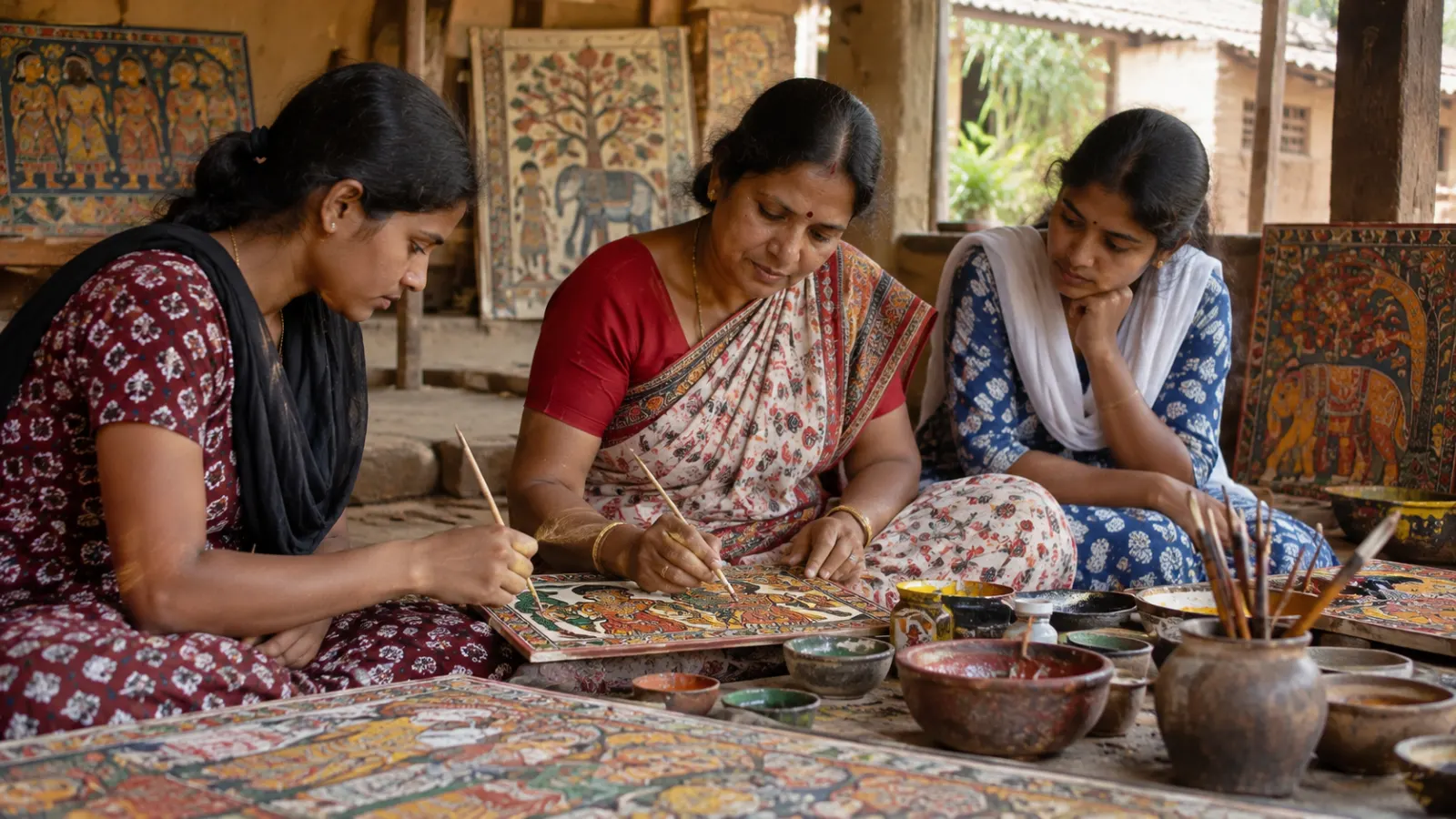
One practical way to engage more responsibly is to purchase cultural goods directly from artisans, cooperatives and community-owned businesses where possible.
Doing so can return economic value to people who continue to practise and transmit the tradition.
It can also provide access to information that mass-produced copies often erase: the object's actual name, materials, maker, history, regional origin and intended use.
Authenticity itself can be complicated—especially where communities adapt traditions for modern markets—but direct relationships usually provide more cultural context than anonymous imitation.
Collaboration Is Stronger Than Extraction
Creators do not need to stop being influenced by cultures other than their own.
The alternative to extraction is often collaboration.
Fashion designers can work with traditional artisans. Museums can co-curate exhibitions with source communities. Musicians can collaborate with practitioners instead of sampling traditions without acknowledgement. Publishers can seek knowledgeable readers and researchers. Companies can commission rather than copy.
WIPO's work concerning Indigenous traditional cultural expressions has increasingly emphasised dialogue and fair engagement between Indigenous peoples and industries that draw inspiration from their cultural heritage.
Collaboration will not eliminate every disagreement. It does, however, shift the relationship from taking cultural material to working with people.
What About Wearing Traditional Clothing?
Traditional clothing is one of the most visible areas of cultural-appropriation debate, yet context makes enormous differences.
Wearing clothing when invited to participate in a wedding, festival or cultural celebration may be welcomed. Purchasing from authentic makers can also support the communities maintaining the craft.
Problems become more likely when sacred or status-specific clothing is treated as a novelty, sexualised, mocked or used to impersonate an identity the wearer does not hold.
Before wearing an unfamiliar garment, learn what it signifies.
What About Cooking Food From Another Culture?
Food may be humanity's most widespread form of cultural exchange.
Ingredients, techniques and dishes have travelled through migration, trade, empire, religion, intermarriage and commerce for thousands of years. Most food traditions do not require outsiders to obtain permission before preparing them.
Problems are more likely to arise from erasure, stereotyping or false claims of originality than from cooking itself.
A restaurant may legitimately adapt a cuisine while still acknowledging where its techniques originated. Innovation and attribution can coexist.
What About Music and Dance?
Many musical and dance traditions are explicitly designed to be taught.
Learning from knowledgeable practitioners, understanding a form's history and acknowledging its origins can represent meaningful appreciation.
Greater caution is appropriate where styles contain sacred, ceremonial or restricted elements.
Commercial success also increases the importance of attribution and opportunity. If artists build profitable careers from traditions developed by communities historically excluded from those same markets, questions of collaboration, credit and access become difficult to ignore.
For readers interested in how cultural forms travel, Folk Dance Explained provides another useful example of tradition evolving through community transmission rather than remaining permanently frozen.
What About Religious Symbols?
Religious symbols deserve particular care because believers may regard them as sacred rather than decorative.
A symbol can move between devotional, artistic, historical and commercial contexts, and different believers may disagree about appropriate use.
Nevertheless, using sacred imagery solely because it looks exotic—without learning even its basic meaning—is a weak basis for cultural appreciation.
Understanding is the minimum.
What About Art, Fashion and Design?
Fashion makes the tension between inspiration and appropriation especially visible.
Designers have borrowed across cultures for centuries. Cultural exchange has contributed enormously to artistic development.
But copying a distinctive traditional expression without understanding its meaning, misidentifying its origin or commercially exploiting it while excluding source practitioners can produce genuine cultural and economic harm.
WIPO has specifically examined these questions in relation to traditional cultural expressions and fashion.
The lesson is not that designers must work only within their own cultural background. It is that creative freedom and cultural responsibility can coexist.
Museums Face Their Own Version of the Problem
Museums may possess objects legally while facing deeper ethical questions about how those objects were acquired.
Colonial collecting, wartime seizure, archaeological extraction, sacred restrictions and unequal transactions can all complicate ownership.
Responsible museum practice may therefore involve provenance research, source-community consultation, revised interpretation, restrictions on the display of sensitive material, improved community access, long-term loans or restitution.
Cultural appreciation is not merely an individual matter. Institutions can appropriate, misrepresent and repair relationships too.
For a broader discussion of how societies decide what deserves preservation, see What Heritage Really Means.
The Internet Makes Cultural Appropriation Easier
Digital media can strip cultural material of its origins with extraordinary speed.
A traditional pattern may be copied onto an inspiration board, reposted through several social-media accounts, reproduced by a retailer and eventually appear as a generic “bohemian” design.
At every stage, information about the original maker or community can disappear.
Artificial intelligence and large-scale digital reproduction may make questions of provenance even more important because images and styles can now be imitated and recombined at unprecedented scale.
But the Internet Also Makes Better Research Possible
The same technology that accelerates decontextualisation can make responsible research easier.
Community organisations, Indigenous creators, museums, universities, historians, religious institutions and individual practitioners increasingly publish material directly online.
Someone considering using an unfamiliar cultural expression may therefore have access to more contextual information than previous generations ever did.
Not knowing everything is unavoidable.
Making no effort to learn is increasingly harder to justify.
Fear of Cultural Appropriation Can Also Go Too Far
There is another danger: treating cultural boundaries as so rigid that people become afraid to engage meaningfully with anyone else's traditions.
That approach can undermine the very intercultural exchange that helps societies learn from one another.
UNESCO's framework on cultural diversity explicitly recognises interaction among cultures, dialogue and mutually beneficial exchange as positive goals.
Respect therefore should not mean cultural isolation.
Understanding multiculturalism requires recognising both principles simultaneously: cultural differences deserve protection, while interaction across those differences can create new forms of expression and mutual understanding.
Cultures influence one another. They always have.
The ethical challenge is not to eliminate influence. It is to make influence more informed, equitable and respectful.
A Spectrum Is More Useful Than a Binary
Instead of imagining appreciation and appropriation as two boxes, think of cultural engagement as a spectrum.
At one end is informed participation: invitation, research, correct attribution, support for practitioners, collaboration, consent where relevant and reciprocal benefit.
At the other end is extraction: sacred or restricted material taken without regard to community rules, traditions distorted into stereotypes, origins deliberately erased or cultural expressions commercially exploited while the communities that sustained them receive nothing.
Many real situations fall somewhere between those extremes.
That is why context is more informative than resemblance alone.
A Five-Part Test for Brands, Museums, Schools and Media
Institutions need a more systematic standard because their decisions can reach much larger audiences.
A useful framework contains five questions:
Provenance
Where did the cultural expression originate, and how confidently do we know its history?
Authority
Are there community rules, intellectual-property rights, customary restrictions, religious authorities or Indigenous rights that affect its use?
Context
Will audiences understand what the expression actually means, or will it be separated from its history and function?
Benefit
Who receives money, recognition, opportunity and decision-making power?
Representation
Does the final result present a credible account of the culture or reduce people to a stereotype?
For commercial projects, these questions should be asked before a product or campaign launches—not after controversy begins.
When the Source Community Is Not Obvious
Not every cultural expression has one identifiable owner.
Some traditions developed through centuries of migration, trade and interaction among neighbouring peoples. Foods may have several legitimate regional histories. Musical forms may combine multiple traditions. Clothing techniques may be shared across modern national borders that did not exist when those practices developed.
Forcing such expressions into a single-owner model can itself distort history.
In these situations, responsible attribution should acknowledge layered or contested origins rather than inventing certainty.
Accuracy matters more than finding one convenient label.
This becomes particularly important when discussing the globalisation of culture, because many contemporary cultural forms are already products of repeated exchange.
Sacred Practices Deserve Greater Caution
If there is one area where additional restraint is usually justified, it is sacred or clearly restricted material.
Outsiders may not understand rules that appear obvious to community members. Some objects may be visible but not reproducible. Some ceremonies may permit observers but not performers. Some clothing may identify a religious role, achievement or status.
When reliable information remains uncertain, declining to use sacred material commercially or for comedy is generally more responsible than assuming that visibility equals unrestricted permission.
Frequently Asked Questions
Is wearing clothes from another culture cultural appropriation?
Not automatically. Context, meaning, invitation, sourcing and whether the clothing represents a sacred or restricted status all matter. Wearing traditional clothing respectfully at an invited cultural event is very different from using ceremonial clothing as a costume.
Is cooking another culture's food cultural appropriation?
Usually, simply cooking another culture's food is a normal form of cultural exchange. Ethical concerns are more likely when people erase the cuisine's origins, stereotype the culture or commercially present longstanding traditions as their own inventions.
Do I need permission to participate in another culture?
Not for every cultural activity. Many cultural forms are openly shared. Permission becomes more important where specific communities maintain religious, ceremonial, customary or Indigenous rules governing access and use.
Is cultural appropriation illegal?
Not necessarily. Cultural appropriation is not a single universally defined legal offence. Particular cases may involve copyright, trademark, design, heritage, Indigenous-rights or other laws, but many appropriation debates concern ethics, representation and power rather than legal liability alone.
Can someone appreciate a culture and still make a mistake?
Yes. Positive intentions do not guarantee respectful outcomes. Appreciation includes being willing to learn more, correct inaccurate assumptions and change behaviour when credible concerns are raised.
Can artists create characters or art from cultures other than their own?
Yes. Cultural respect should not require artists to depict only people identical to themselves. Research, accurate representation, artistic skill, consultation where appropriate and openness to criticism provide a stronger standard than cultural segregation.
Is every cultural influence a form of appropriation?
No. Cultural exchange has always occurred through migration, trade, travel, intermarriage, religion, artistic collaboration and ordinary human contact. The important questions concern context, power, attribution, restrictions and benefit.
The Most Useful Rule: Move Closer to the Source
There may never be a universal cultural traffic light capable of deciding every case.
But there is a useful direction of travel.
When uncertain, move closer to the source rather than farther away from it.
Learn from practitioners. Understand what an expression means. Identify its origins as accurately as possible. Buy from authentic makers where appropriate. Credit people clearly. Pay collaborators fairly. Respect sacred or restricted uses. Avoid stereotypes. Do not claim invention where a tradition already exists. Listen when people with relevant knowledge correct you.
Cultural appreciation does not require humanity to stop influencing one another.
It requires us to recognise that cultural influence has histories, creators, communities and consequences.
The goal is therefore not cultural separation.
It is cultural exchange with memory, respect and accountability.