Citizenship Education: How Schools Shape Citizens Beyond the Classroom
Citizenship education begins long before most people are old enough to vote. By the time a young person reaches adulthood, they have already spent years observing rules, authority, disagreement, punishment, representation, fairness and participation. Schools are one of the main institutions in which these experiences become routine.
Some of this learning is deliberate. Students study constitutions, elections, rights, political institutions and public problems. But schools also teach citizenship indirectly. A student notices whether rules are explained, whether teachers tolerate disagreement, whether complaints can be reviewed, whether elections have real consequences and whether some students are consistently given more voice than others.
This distinction matters because a school can teach democratic principles in a textbook while operating in ways that contradict them. A civics lesson may explain due process while disciplinary decisions appear arbitrary. Students may be told that participation matters while a student council has no authority over anything consequential. A curriculum may praise freedom of expression while disagreement with authority is punished.
The strongest citizenship education therefore combines knowledge with lived institutional experience. Students need to understand how governments and rights work, but they also need opportunities to practise evidence-based disagreement, representation, responsibility, negotiation and accountability.
International evidence gives this task increasing urgency. OECD’s 2025 review of civic education describes changing patterns of civic engagement among younger generations, including weaker performance on some traditional indicators such as trust and conventional participation alongside increasing online civic engagement. It also identifies persistent participation gaps associated with socioeconomic background, education and other characteristics.
Citizenship education is therefore not simply about preparing students to vote correctly.
It is about preparing people to understand institutions, evaluate evidence, participate without abandoning disagreement, recognise legitimate limits on authority and know how institutions can be challenged when they fail.
What Is Citizenship Education?
Citizenship education is the process through which learners acquire the knowledge, skills, values and practical experience needed to participate in civic and political life.
The term overlaps with civic education, although usage differs between countries. Some systems use civic education primarily for knowledge about government and political institutions, while citizenship education is treated more broadly to include participation, identity, values, rights, responsibilities and social engagement.
The International Association for the Evaluation of Educational Achievement describes its International Civic and Citizenship Education Study, or ICCS, as an investigation of how young people are prepared to undertake their roles as citizens. It examines not only civic knowledge but also students’ beliefs, attitudes and behaviours.
That breadth is important.
Knowing which institution passes a law is civic knowledge.
Knowing how to evaluate an argument about that law is a civic skill.
Believing that political opponents retain legitimate rights is a civic disposition.
Knowing how to contact a representative, organise a petition or participate in a school council is civic capability.
Citizenship therefore cannot be reduced to one examination subject.
Civic Knowledge Still Matters
The argument for experiential citizenship education should not become an argument against knowledge.
Institutions are complicated.
Voting rules, constitutions, courts, legislatures, local government, taxation and public administration all involve procedures that citizens cannot evaluate intelligently if they do not know what the institutions are supposed to do.
A citizen who does not understand the difference between a court and a legislature is more vulnerable to misleading claims about what each can legally accomplish. Someone unfamiliar with basic electoral procedures may become dependent on partisan intermediaries for information that should be independently understandable.
ICCS 2022 remains the largest dedicated international assessment of civic and citizenship education. Approximately 82,000 students from about 3,400 schools participated, alongside roughly 40,000 teachers. The study found that civic knowledge had not increased overall among countries participating in both the 2016 and 2022 cycles. It also found that students from higher socioeconomic backgrounds demonstrated higher average civic knowledge than students from less advantaged homes.
That inequality matters because civic knowledge affects people's capacity to participate independently.
Political inequality is not only about who formally possesses the right to vote.
It can also arise because some citizens understand institutions and information systems much better than others.
Schools Teach a Hidden Civic Curriculum
Formal civics is only one part of what students learn.
Schools contain rules, hierarchies, sanctions, rewards and decision-making procedures. Students observe these systems every day.
Sociologists use the idea of the hidden curriculum to describe lessons students learn through institutional routines rather than explicit subject content.
In civic terms, that hidden curriculum can be powerful.
If teachers explain rules and apply them consistently, students experience one model of authority.
If decisions appear arbitrary and nobody is required to explain them, students experience another.
If students can question a decision respectfully and receive a reasoned answer, authority appears accountable.
If asking why is treated as insubordination, authority appears personal and unquestionable.
Neither lesson requires a civics textbook.
Institutional practice teaches it directly.
Authority Is One of the First Civic Lessons
For many children, school is their first sustained encounter with formal authority outside the family.
Teachers and administrators possess legitimate powers students do not possess. They determine schedules, approve activities, impose rules and evaluate performance.
Authority itself is not incompatible with democracy. Schools could not function if every decision required a referendum.
The civic question is how authority is exercised.
Democratic systems are built partly on the idea that legitimate power has limits. Officials act under rules. Decisions can require reasons. Some decisions are reviewable. Different offices possess different powers.
Schools can model the same logic at an age-appropriate level.
A rule against dangerous behaviour may not be negotiable.
A school timetable cannot be redesigned individually for every student.
But students can still be told what the rule is, why it exists and who has authority to apply it.
Learning that authority can be legitimate without being unlimited is a foundational civic concept.
Discipline Policies Teach Equality Before Civics Classes Do
Students are highly attentive to perceived unfairness.
If two students commit similar offences and receive dramatically different consequences, they notice.
If certain groups appear more likely to be suspected, punished or publicly humiliated, students notice that too.
Disciplinary systems therefore teach implicit lessons about equality.
A school can formally teach that laws should apply equally while appearing to operate through favouritism. The contradiction may be more memorable than the lesson.
Good discipline does not require identical treatment in every circumstance. Context matters, and different situations may justify different responses.
What matters is that differences can be explained through legitimate reasons rather than status, prejudice or arbitrary preference.
Consistency and transparency turn discipline into an institutional lesson:
rules apply through reasons, not merely through power.
Complaint and Appeal Procedures Teach Due Process
One of the most important democratic concepts is the ability to challenge a decision through legitimate procedures.
Citizens can appeal some administrative decisions.
Courts review legal disputes.
Journalists investigate officials.
Legislatures question governments.
Elections remove officeholders.
Students can learn a basic version of the same principle when schools provide meaningful complaint and review mechanisms.
If a student believes a grade, disciplinary decision or administrative action is wrong, they should know where to ask for an explanation and when review is possible.
Not every appeal should succeed.
That is not the lesson.
The lesson is that asking for reasons is different from refusing all authority.
An institution can maintain order while allowing appropriate review.
Student Voice Turns Participation Into Experience
Students can memorise that democracy involves participation without ever experiencing meaningful participation themselves.
Student councils, assemblies, classroom decision-making, consultations and participatory projects can make representation concrete.
OECD’s review of child participation in decision-making notes that meaningful involvement is associated with outcomes including communication, cooperation, empowerment and belonging, while also emphasising that education systems continue to face significant barriers to genuine participation.
The word meaningful is crucial.
Students do not need control over every institutional decision.
Schools carry legal duties regarding safeguarding, curriculum, finance and staffing that cannot simply be delegated to children.
Participation works best when the boundaries are explicit.
Students might genuinely influence recreational spaces, aspects of school events, environmental projects or particular school policies while being told clearly which decisions are constrained by law, safety or budgets.
Learning where authority begins and ends is itself citizenship education.
Token Participation Can Teach Cynicism
A badly designed student council may teach the opposite of what educators intend.
Students campaign.
They vote.
Representatives meet.
Nothing consequential ever changes.
Nobody explains why proposals are rejected.
The institution can then communicate an unintended lesson:
leaders ask for participation because it looks democratic, not because participation affects decisions.
That experience can produce cynicism rather than civic confidence.
Meaningful participation does not require accepting every proposal. Democratic governments reject citizen demands constantly.
The stronger institutional lesson is transparency.
“This cannot be changed because of safeguarding law.”
“This proposal would exceed the budget.”
“We can do A, but not B.”
A reasoned rejection can teach more about democratic institutions than a meaningless yes.
School Elections Teach Representation
School elections can provide practical experience with campaigning, persuasion and accountability.
Candidates learn that leadership requires convincing peers rather than simply wanting the position.
Voters learn to compare promises.
Representatives learn that occupying an office creates obligations beyond personal preference.
But the lesson becomes weak when offices are entirely ceremonial.
A school president who has no defined responsibilities does not provide much experience of representative government.
Student institutions work better when responsibilities are real but appropriately bounded.
The objective is not to turn schools into miniature parliaments.
It is to make representation something experienced rather than merely defined.
Classroom Discussion Teaches Democratic Disagreement
Democracies require citizens who can disagree without treating disagreement itself as illegitimate.
Schools are one of the few institutions capable of teaching this skill deliberately.
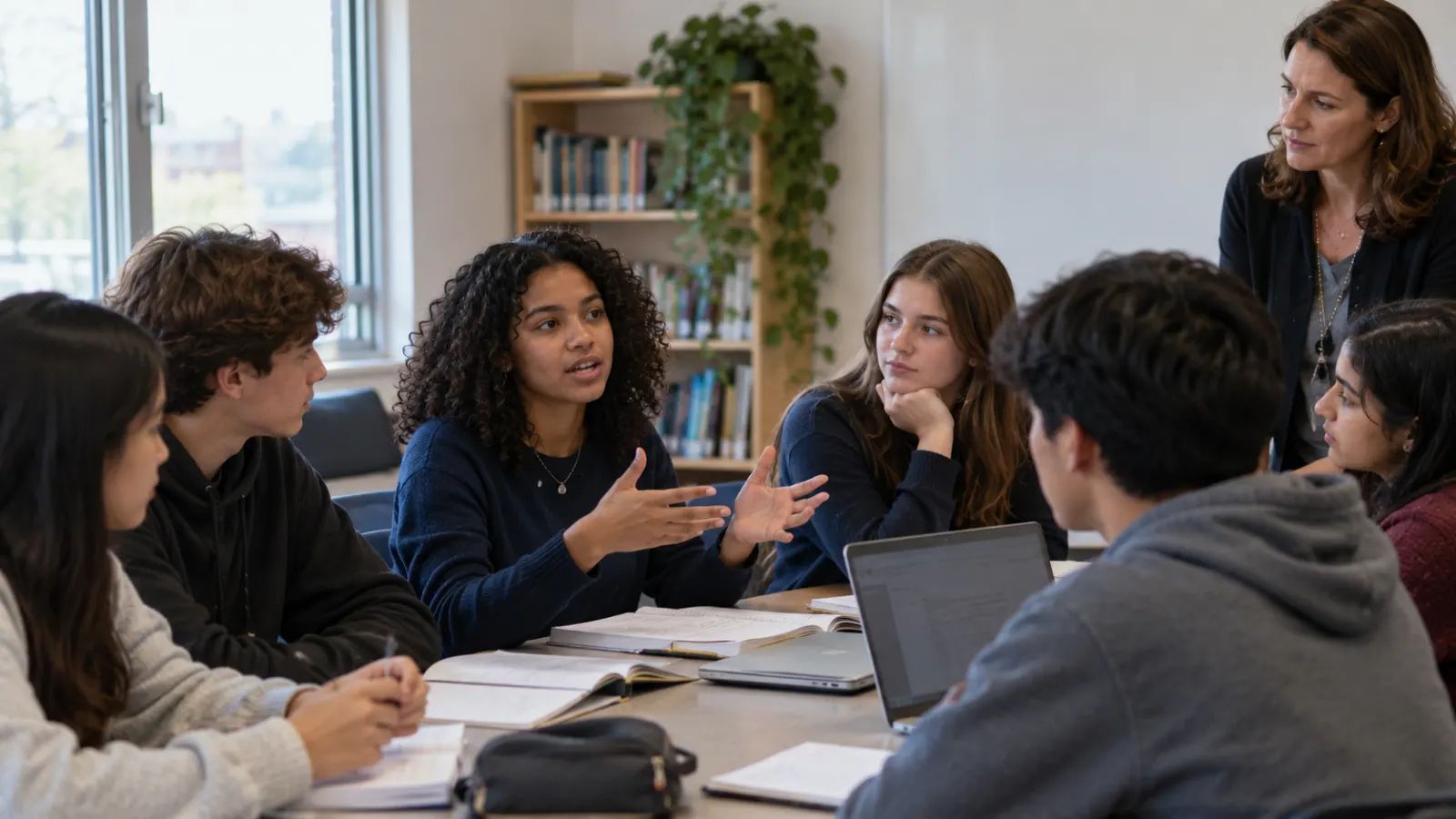
Students can examine competing explanations of historical events, environmental policies, economic choices or ethical questions. They can learn to support claims with evidence, distinguish factual disagreement from value disagreement and revise a position when new evidence appears.
IEA's ICCS framework explicitly examines opportunities for open classroom discussion as part of the wider environment through which young people develop civic knowledge and engagement.
The educational goal is not permanent neutrality.
Some claims are simply false.
Human rights are not improved by pretending every proposition has equal evidentiary standing.
The democratic skill is being able to ask:
What is the claim?
What evidence supports it?
What values are involved?
Which part do we actually disagree about?
Debate Teaches the Difference Between a Person and an Argument
Political disagreement becomes dangerous when criticism of an argument is interpreted as denying the legitimacy of the person making it.
Structured debate can help separate the two.
A student can argue that another student's conclusion is unsupported without declaring the student unintelligent or immoral.
They can learn to summarise an opposing argument accurately before criticising it.
They can practise responding to evidence rather than merely to identity.
These habits matter far beyond competitive school debating.
Democratic societies require people who remain members of the same political community even when they disagree about taxes, immigration, climate policy, education or social values.
Citizenship education should therefore teach not simply how to argue.
It should teach how to remain in civic relationship while arguing.
Teachers Need Space to Teach Controversial Issues
Civic topics are often politically sensitive.
Teachers may discuss elections, inequality, religion, war, climate change, migration or historical injustice. These subjects can generate genuine disagreement among students and families.
Teachers therefore need professional preparation and institutional protection sufficient to facilitate discussion without turning the classroom into personal partisan advocacy.
The distinction matters.
A teacher should be able to correct false claims.
They should be able to explain constitutional principles and established historical evidence.
But citizenship education should not aim to manufacture students who reproduce the teacher's political preferences.
The objective is intellectual independence within democratic rules.
Students should leave better able to evaluate political arguments, not merely better trained to repeat approved ones.
Citizenship Education Is Not Indoctrination
Because schools influence identity and political understanding, citizenship education carries an obvious risk.
Authoritarian governments also teach citizenship.
They may teach obedience, leader worship, militarised nationalism or selective history while calling the subject civic education.
The existence of a citizenship curriculum therefore does not automatically make education democratic.
The decisive question is what kind of citizen the system is trying to produce.
Democratic citizenship education should provide knowledge about institutions and rights while protecting the ability to question authorities and examine evidence.
Indoctrination moves in the opposite direction.
It begins with a conclusion that must not be questioned and uses education primarily to secure adherence.
A democratic society can legitimately teach commitment to constitutional rights and the dignity of citizens without requiring agreement on every political dispute.
History Education Shapes Civic Memory
Citizens inherit political communities partly through stories about the past.
Schools therefore influence which events, people and conflicts become part of shared public memory.
The problem is unavoidable because no curriculum can include every historical event.
Selection is necessary.
But selection creates responsibility.
A history curriculum that hides wrongdoing may encourage loyalty while preventing students from understanding why current conflicts exist.
A curriculum that presents national history only as a catalogue of crimes can also prevent students from understanding institutional development, achievement and continuity.
The objective should be neither national mythology nor compulsory national self-condemnation.
It should be historically disciplined understanding.
A political community becomes intellectually stronger when its attachment to institutions can survive accurate knowledge about their failures.
Democratic Loyalty Should Be Able to Survive Criticism
This principle deserves emphasis.
Weak civic education assumes that criticism threatens national or institutional loyalty.
Strong civic education recognises that institutions claiming legitimacy should be capable of surviving evidence.
Students can learn that a constitution may embody important rights while having been imperfectly applied.
A democracy can achieve substantial progress while still containing discrimination or corruption.
A court can be legitimate while occasionally deciding wrongly.
This produces a more durable form of civic attachment because loyalty is not dependent on believing institutions have never failed.
Citizens then gain another crucial insight:
democratic institutions contain mechanisms intended to correct democratic institutions.
Knowing How Institutions Fail Is Part of Citizenship
Students should understand elections.
They should also understand how elections can fail.
They should know what courts do.
They should also know why judicial independence matters.
They should learn about freedom of expression.
They should also learn how intimidation can silence speech without formally banning it.
Citizenship education becomes stronger when students study not only ideal constitutional structures but the ways corruption, misinformation, discrimination, concentrated power or institutional weakness can undermine them.
This is not teaching distrust.
It is teaching the difference between institutional loyalty and institutional blindness.
Civic Learning Includes Methods of Correction
When institutions fail, democratic citizenship offers mechanisms for reform.
These can include elections, petitions, journalism, public consultation, courts, peaceful protest, trade unions, civic associations and direct communication with representatives.
Students should learn that criticism and protest are not necessarily signs that a political system has collapsed.
They can be methods through which citizens attempt to repair it.
The same logic can be demonstrated in school.
A complaint procedure need not threaten school authority.
A student petition does not make the school ungovernable.
A council raising concerns can improve administration.
Democratic institutions remain legitimate partly because they permit structured correction.
Media Literacy Is Now Citizenship Education
Citizens increasingly encounter politics through digital platforms rather than newspapers, public meetings or official broadcasts.
A student may see political claims through short videos, memes, messaging groups, influencers, recommendation algorithms or AI-generated content.
Citizenship education therefore requires media and information literacy.
UNESCO’s Recommendation on Education for Peace, Human Rights and Sustainable Development explicitly identifies media and information literacy and digital skills as necessary capabilities in an environment shaped by abundant information, misinformation, hate speech, privacy risks and digital technologies.
Students need practical questions:
Who created this?
What evidence is provided?
Is the image authentic?
Is the statistic being represented accurately?
What important information is missing?
Is the claim being promoted because it is reliable or because an algorithm predicts engagement?
This is no longer an optional digital-safety module.
It is a basic component of modern citizenship.
Algorithms Change What Citizens See
Traditional civic education often assumed a relatively shared information environment.
Digital platforms complicate that assumption.
Two citizens can live in the same town and receive radically different political information because recommendation systems personalise what they see.
Algorithms can amplify emotionally engaging material because engagement keeps users active.
That does not mean algorithms mechanically determine political beliefs.
It does mean citizens need to understand that their information environment is selected rather than neutral.
Media literacy should therefore move beyond detecting obvious fake news.
Students should understand recommendation systems, advertising incentives, data collection and why repeated exposure can make a claim feel familiar even when its evidence remains weak.
AI Adds a New Civic Verification Problem
Generative AI makes producing convincing text, images, audio and video easier.
This increases the importance of source verification.
A fluent answer is not automatically accurate.
A realistic image is not automatically documentary evidence.
An audio recording may no longer prove that a person actually said what appears to be heard.
Citizenship education therefore increasingly requires epistemic discipline: knowing when evidence is strong enough to justify confidence.
The educational response should not be panic about technology.
Students can use AI productively.
But they also need to know how to locate original sources, compare independent evidence and identify situations where uncertainty should remain uncertainty.
Global Citizenship Extends Civic Understanding Beyond Borders
Citizens belong to particular political communities, but many major problems are not confined within national borders.
Climate change, pandemics, migration, trade, conflict and digital networks create interdependence among societies.
UNESCO's global citizenship framework therefore emphasises knowledge, values, attitudes and skills that help learners understand connections among communities and participate responsibly in an interdependent world. More than 90% of teachers surveyed in UNESCO material said global citizenship education was important, while over 40% identified lack of relevant teaching tools as their largest barrier.
Global citizenship should not replace national civic education.
Students still need to understand the constitution, institutions and laws of the political community in which they actually live.
The strongest approach adds another scale:
local, national and global responsibilities can coexist.
Climate Change Has Become a Civic Issue
Climate change illustrates why scientific and civic education increasingly overlap.
Students need enough science to understand greenhouse gases, risk and uncertainty.
They also need civic knowledge to understand how governments make decisions about energy, transport, taxation, adaptation and international cooperation.
Scientific facts do not automatically determine one political policy.
People can agree about physical climate mechanisms while disagreeing about the costs and design of particular interventions.
Citizenship education can therefore teach students to distinguish:
What does the evidence tell us?
from
What should society do about it?
The first is primarily empirical.
The second also contains questions about values, costs, rights and distribution.
That distinction improves public reasoning.
Service Learning Can Connect Civic Knowledge to Community Life
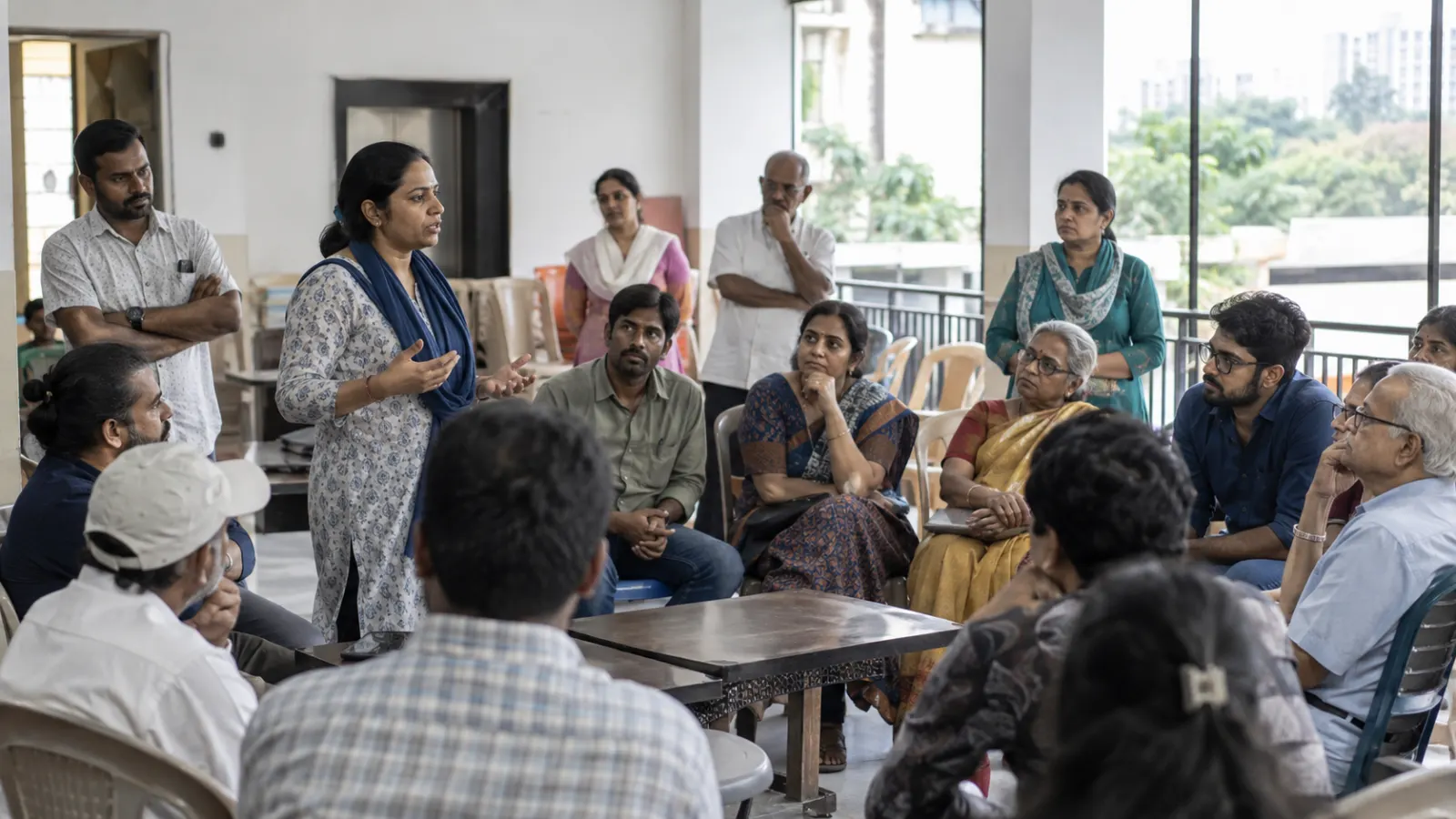
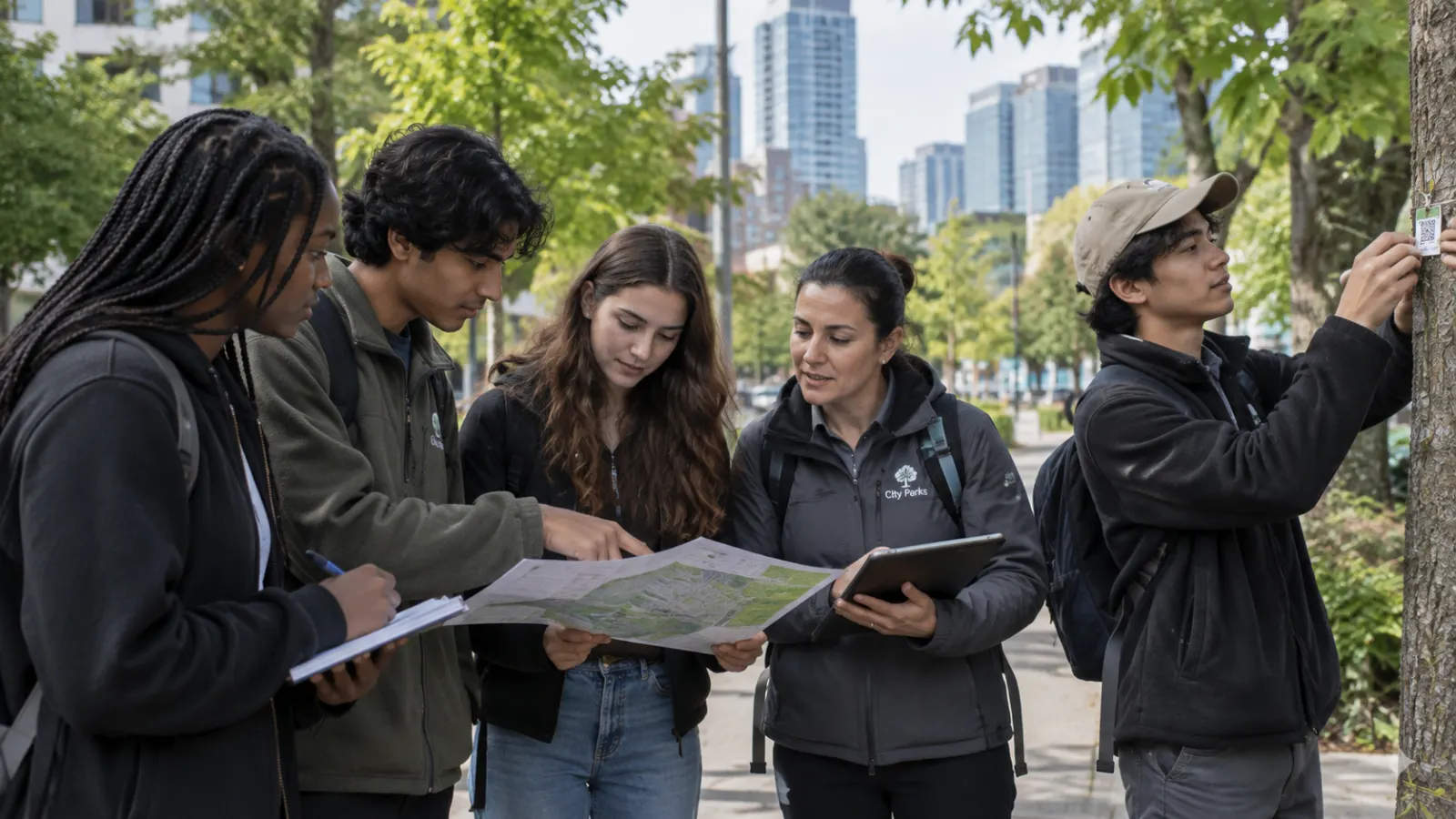
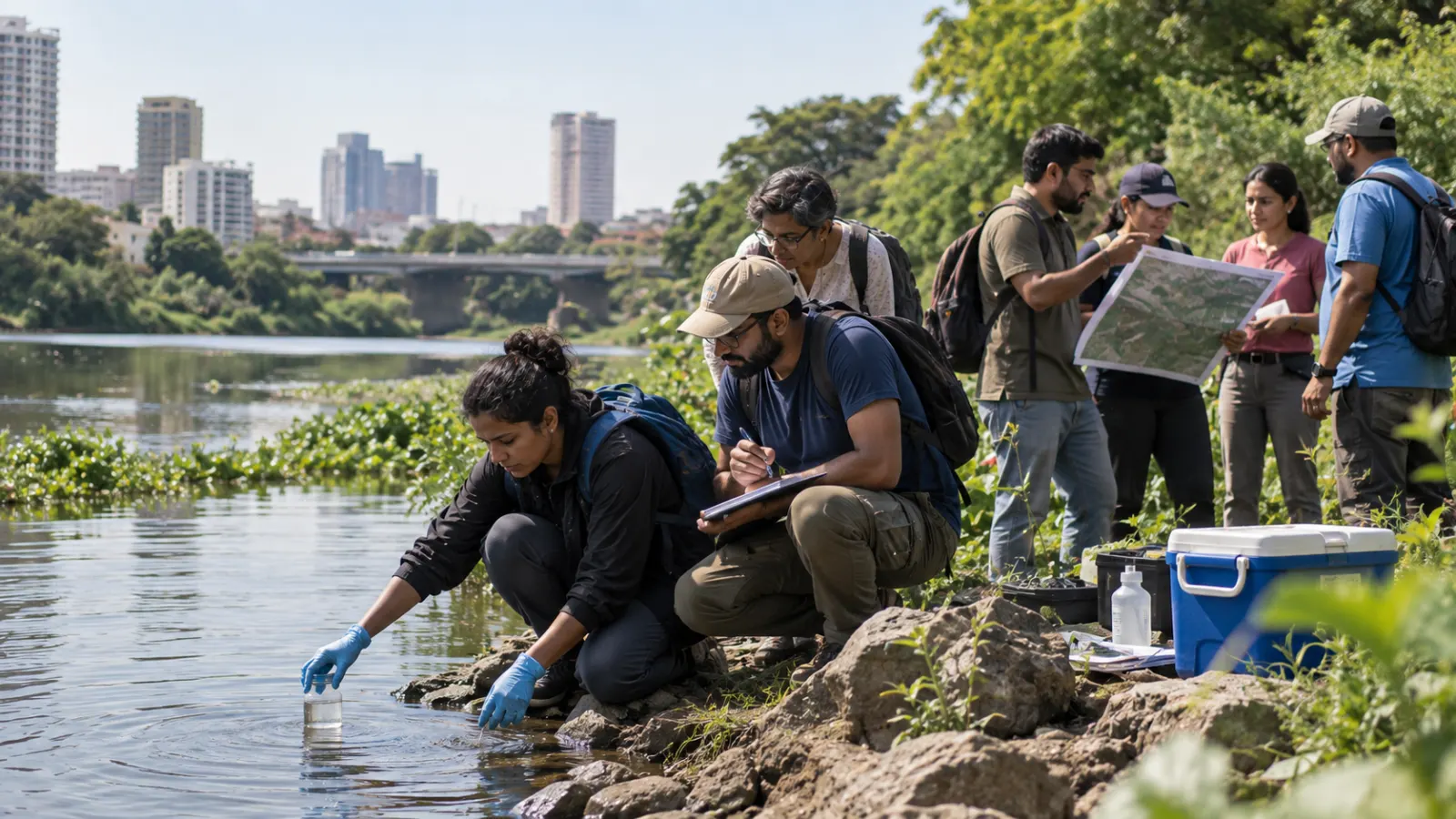
Community projects can help students see public problems as things citizens can investigate and influence rather than simply subjects to memorise.
Students might work with a local environmental organisation, study accessibility around the school, document neighbourhood history or participate in a community-health initiative.
OECD’s 2023 review of civic-education practices highlights experiential approaches that place learners at the centre of the process and can strengthen links between schools and surrounding communities.
But volunteering alone is not necessarily citizenship education.
Collecting food for a charity can be worthwhile.
The educational value becomes deeper when students also ask why food insecurity exists, which institutions respond to it and what different policy approaches might change the problem.
Reflection converts activity into civic learning.
School Belonging Has Civic Consequences
A student can learn every constitutional article and still absorb a powerful civic lesson if they repeatedly feel that public institutions do not include people like them.
Belonging therefore matters.
Students interpret whether teachers know them, whether peers respect them, whether their language or identity appears in school life and whether they are treated as legitimate members of the community.
The school is not the state.
But it may be the public institution with which a young person interacts most intensively.
If that institution consistently communicates dignity and membership, students encounter one model of public belonging.
If it communicates exclusion, they encounter another.
The civic implication is straightforward:
people learn what membership means partly by experiencing whether institutions treat them as members.
Diversity Can Teach Citizenship—or Reproduce Separation
Schools can bring students from different religious, ethnic, linguistic and socioeconomic backgrounds into sustained contact.
That creates potential for relationships that might not form elsewhere.
But simply placing diverse students inside one building does not guarantee integration.
Students may remain separated through academic tracking, social groups or unequal treatment.
Contact is more meaningful when students share genuine tasks and institutional status.
Schools therefore have an opportunity to teach that diversity does not make common citizenship impossible.
People can possess different identities while still belonging to the same civic institution.
Language Policy Sends a Message About Membership
The language of schooling has obvious educational consequences.
It also communicates civic meaning.
A shared instructional language can create common participation across diverse populations.
At the same time, treating minority languages as inferior or illegitimate can communicate that some students' cultural identities belong only in private life.
The balance differs across societies.
The important civic principle is recognising that language policy is not merely technical.
It shapes who feels naturally represented in public institutions.
Disability Inclusion Is Also Citizenship Education
A school may teach equal rights while remaining physically inaccessible to disabled students.
Again, institutional practice speaks more loudly than the textbook.
Accessible buildings, learning materials and participation structures communicate that students with disabilities are full members of the institution.
Exclusion communicates the opposite.
Citizenship education therefore includes the ordinary design of schools.
Rights become credible when institutions embody them.
Examinations Teach Ideas About Merit and Fairness
Students spend years being ranked, graded and admitted to opportunities.
These processes influence how they understand social allocation.
When assessment criteria are transparent and preparation genuinely matters, students may experience a system in which effort and competence influence outcomes.
When outcomes appear heavily dependent on wealth, favouritism or arbitrary treatment, students may learn a very different lesson about merit.
Schools cannot eliminate every inequality originating outside them.
But credible assessment requires procedures that are sufficiently consistent for students to understand why different outcomes occurred.
Education is therefore not only teaching ideas about fairness.
It is performing fairness under observation.
Peer Life Is Part of Civic Education
Teachers are not the only people shaping citizenship.
Students learn cooperation, solidarity, exclusion, leadership and status through peers.
Bullying teaches lessons about what happens when power is used against vulnerable people.
Bystander behaviour teaches whether communities protect members who are targeted.
Friendship across social boundaries can change stereotypes.
Group projects reveal the problem of free riding and the need to distribute responsibility.
Much of citizenship consists precisely of these everyday questions.
How much responsibility do I have toward people who are not my friends?
What do I do when a group mistreats someone?
When should individual preference yield to a collective task?
Schools provide repeated opportunities to practise answers.
Responsibility Matters Alongside Rights
Citizenship education sometimes becomes a list of rights.
Rights are essential, but functioning political communities also require responsibility.
Students can practise responsibility by looking after shared spaces, mentoring younger learners, completing representative duties or contributing to collective projects.
The key is explaining why responsibility exists.
Compulsory service performed only for appearances can teach compliance.
A meaningful responsibility tied to an understood public purpose teaches stewardship.
The civic principle is that membership involves both claims on institutions and obligations toward other members.
Schools Can Teach Institutional Patience
Democratic decision-making can be frustratingly slow.
Consultation takes time.
Evidence has to be examined.
Budgets constrain choices.
People disagree.
Decisions can be reviewed.
An individual acting alone could often move faster.
Schools can give students experience with the reason for some of this delay.
A council proposal may require consultation with teachers, administrators and safety staff.
A rule change may affect groups not represented in the room.
Students can learn that institutional delay is sometimes bureaucratic waste—but sometimes the cost of considering other people's rights and interests.
That is a sophisticated civic lesson.
Schools Are Only One Source of Political Socialisation
Schools influence citizenship but do not control it.
Families communicate political beliefs and social identities.
Religious institutions shape moral frameworks.
Peers influence attitudes.
News organisations frame public issues.
Social media exposes young people to political content continuously.
Political parties, influencers and entertainment also contribute.
Citizenship education should therefore not assume that students enter school politically empty.
They arrive with views and identities already forming.
The role of school is partly to provide a space where those beliefs can be examined through shared standards of evidence and respectful discussion.
Citizenship Education Has an Equality Problem
Civic education itself can be distributed unequally.
ICCS 2022 found substantial socioeconomic differences in civic knowledge. Higher socioeconomic status was associated with higher average civic knowledge across participating systems.
This matters because participatory opportunities may also differ.
Students in highly resourced schools may have debate clubs, student newspapers, Model United Nations, councils, volunteering programmes and teachers trained to discuss controversial issues.
Other students may receive citizenship largely through textbook memorisation.
A democracy then risks producing unequal civic capital.
Some young people learn how institutions work and how to influence them.
Others possess the same formal political rights but much less practical preparation for using them.
What ICCS 2022 Tells Us About Civic Education
The ICCS 2022 results provide one of the strongest comparative snapshots available.
| Finding | Why it matters |
|---|---|
| About 82,000 students participated internationally | Citizenship education can be compared systematically across different education systems |
| Civic knowledge did not generally increase between 2016 and 2022 among countries participating in both cycles | Formal expansion of civic discussion does not automatically produce stronger knowledge |
| Higher socioeconomic status was associated with higher civic knowledge | Civic capability is distributed unequally |
| Female students had higher average civic knowledge than male students | Civic learning patterns differ across groups |
| Civic knowledge was associated with several attitudes and engagement indicators | Knowledge and civic dispositions are related, although causation is more complicated |
| Students reported participation in school councils, debates and other civic activities | Schools provide practical civic experiences beyond formal instruction |
The study should not be interpreted as proving one universal teaching method.
Education systems differ substantially.
But it reinforces the central argument of this article:
citizenship involves knowledge, attitudes, experience and institutional context together.
A Strong Citizenship-Education System Needs Several Layers
Citizenship education works best as an ecosystem rather than one weekly subject.
| Layer | What students learn |
|---|---|
| Formal curriculum | Institutions, rights, laws, history, elections and public policy |
| Classroom discussion | Evidence, disagreement, listening and argument |
| School governance | Representation, authority, limits and accountability |
| Discipline and appeals | Equality, reasons, procedural fairness and review |
| Student organisations | Leadership, collective action and responsibility |
| Media literacy | Source evaluation, digital manipulation and information systems |
| Community engagement | How institutions and public problems operate outside school |
| School climate | Whether dignity, belonging and rights are experienced in practice |
A weakness in one layer can undermine another.
A brilliant civics curriculum cannot fully compensate for arbitrary institutional behaviour.
Likewise, a friendly school climate cannot substitute for students never learning how legislatures, elections or courts work.
Frequently Asked Questions About Citizenship Education
What is citizenship education? Citizenship education develops the knowledge, skills, values and experiences people need to participate responsibly in civic and political life.
What is the difference between civic education and citizenship education? The terms often overlap. Civic education is sometimes used more narrowly for knowledge about government and institutions, while citizenship education can include participation, identity, rights, responsibilities and community life.
Why is citizenship education important? Citizens need institutional knowledge, media literacy, reasoning and participation skills to use political rights effectively and evaluate public claims.
How do schools shape citizens? Schools shape citizens through formal lessons and through everyday experiences of authority, rules, discipline, student voice, disagreement, belonging and representation.
What is the hidden curriculum in citizenship education? It refers to civic lessons students learn from how the school operates rather than from the written curriculum.
Does civic knowledge matter? Yes. Understanding institutions allows citizens to participate more independently and evaluate political claims more accurately. ICCS 2022 found civic knowledge associated with several civic attitudes and engagement indicators.
What is student voice? Student voice refers to opportunities for learners to express views and influence matters affecting their education. Meaningful participation requires clarity about what students can actually influence.
Do student councils teach democracy? They can, particularly when responsibilities are real and students can see how proposals affect decisions. Purely ceremonial councils may instead encourage cynicism.
Why is classroom discussion important for citizenship? It provides practice evaluating competing claims, supporting arguments with evidence and disagreeing without treating opponents as enemies.
Should teachers discuss controversial political issues? Where educationally relevant and age appropriate, structured discussion can develop civic reasoning. Teachers should facilitate evidence-based inquiry rather than use classrooms for personal partisan recruitment.
Is citizenship education indoctrination? It can become indoctrination if students are required to accept unquestionable political conclusions. Democratic citizenship education instead develops knowledge, rights awareness, evidence evaluation and capacity for independent judgment.
What role does history play in citizenship education? History provides knowledge of how institutions developed, including both achievements and failures. This helps students understand current political conflicts without relying on national myths.
Why is media literacy part of citizenship education? Citizens increasingly encounter politics online. Evaluating sources, algorithms, manipulated content and AI-generated information is therefore necessary for informed participation. UNESCO explicitly includes media and information literacy in its contemporary educational framework.
What is global citizenship education? It extends civic learning toward human rights, global interdependence, diversity and problems crossing national borders while complementing local and national civic knowledge.
How does school belonging affect citizenship? Repeated experiences of inclusion or exclusion shape how students understand membership in public institutions.
How does school discipline teach citizenship? Discipline teaches whether rules are predictable, equal, explainable and subject to appropriate review.
What is civic participation? Civic participation includes activities through which people contribute to public or community life, from voting and contacting representatives to volunteering, advocacy and participation in associations.
What is service learning? Service learning combines community activity with structured academic reflection so students connect practical experience with wider social and institutional questions.
Can schools create democratic citizens by teaching civics alone? No. Formal civic knowledge is necessary but school climate, participation, discussion and institutional practice also shape civic learning.
What did ICCS 2022 find? Among its major findings, civic knowledge did not increase overall between 2016 and 2022 in countries participating in both cycles, and students from higher socioeconomic backgrounds demonstrated greater average civic knowledge.
How can schools improve citizenship education? Combine strong civic knowledge with open discussion, meaningful student participation, transparent rules, media literacy, inclusive school culture and community engagement.
Citizenship Is Practised Before It Is Exercised at the Ballot Box
The deepest purpose of citizenship education is not teaching students to reproduce the correct political opinions.
Democratic societies should expect political disagreement.
The purpose is to make disagreement governable.
Citizens need to understand institutions well enough to know who possesses which powers.
They need enough historical knowledge to recognise how those institutions developed.
They need enough media literacy to distinguish evidence from manipulation.
They need the confidence to question authority without assuming every authority is illegitimate.
They need experience listening to people whose conclusions differ from their own.
And they need to understand that rights and responsibilities exist together.
Schools can teach all of this formally.
But students also judge institutions through experience.
A school tells them what fairness means every time it disciplines someone.
It teaches representation every time a student council is heard or ignored.
It teaches constitutional thinking whenever a rule has defined limits and procedures.
It teaches belonging through who is treated as a full member.
It teaches due process through whether decisions can be questioned.
It teaches democracy through whether disagreement is tolerated when disagreement becomes inconvenient.
This is why the whole-school environment matters more than one civics textbook.
A school cannot plausibly teach that citizens should demand evidence while administrators refuse to explain important decisions.
It cannot teach meaningful participation while every participatory body is ceremonial.
It cannot teach equal citizenship while particular groups repeatedly experience exclusion.
It cannot teach democratic disagreement while teachers or students treat opponents as enemies.
The reverse is also true.
Schools do not need to imitate parliaments or allow children to decide every question.
Democracy itself contains offices, responsibilities and limits.
Students can learn that some decisions belong to teachers, some to administrators and some can genuinely be shared.
Understanding the limits of one's authority is itself democratic education.
The most current international research strengthens this broader interpretation. OECD's 2025 review argues that civic education should respond to changing forms of participation and persistent inequalities, while IEA data show that civic knowledge remains unevenly distributed and that participation in school-based civic activities forms part of young people's preparation for citizenship. UNESCO now places media literacy, human rights, global citizenship, sustainability and dialogue inside the same educational framework and in 2026 began its first Member State reporting cycle on implementation of the revised Recommendation.
That broadening makes sense because citizenship itself has changed.
A modern citizen does not encounter public life only at a polling station.
Political information appears on a phone.
Algorithms select what becomes visible.
Artificial intelligence can manufacture convincing evidence.
Climate decisions cross national boundaries.
Citizens participate through courts, protests, community organisations, public consultation and digital platforms as well as elections.
The educational task has therefore become more demanding, not less.
But its underlying principle remains simple.
By the time students become formal voters, they should already have experienced knowledge, evidence, voice, limits, responsibility and accountability often enough that these ideas are more than vocabulary.
That is how schools shape citizens.
Not by deciding what every future citizen must think.
By giving future citizens enough understanding and practice to think, disagree, participate and hold institutions accountable without abandoning the shared rules that make collective life possible.