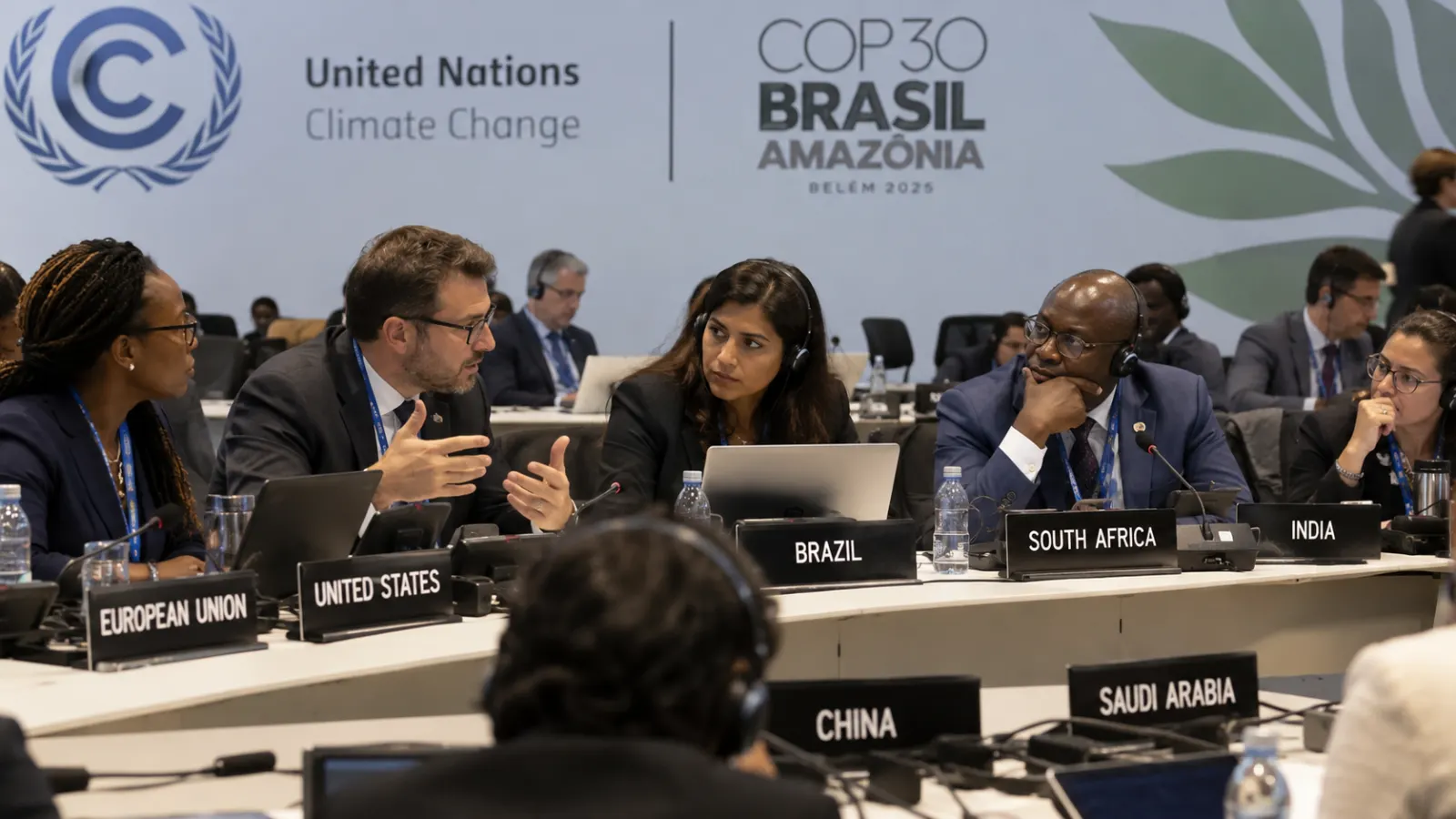
BRICS expansion signals a more assertive Global South because emerging powers are no longer satisfied with symbolic consultation. They want institutions, finance, bargaining platforms and a greater voice in global governance - but expansion also brings contradictions.
From acronym to platform
BRICS began as a market acronym and became a political platform. Its expansion marks another shift: from a compact grouping of five major emerging economies to a wider coalition that claims to represent a more multipolar world. The official BRICS 2026 India website lists eleven members: Brazil, China, Egypt, Ethiopia, India, Indonesia, Iran, Russia, Saudi Arabia, South Africa and the United Arab Emirates.
This expansion matters because it reflects dissatisfaction with Western-led governance. Countries are not joining BRICS only for ideology. They are looking for bargaining space, development finance, trade diversification, energy cooperation, diplomatic visibility and alternatives to institutions where they feel underrepresented.
The 2025 Rio de Janeiro BRICS Declaration framed the summit around strengthening Global South cooperation for more inclusive and sustainable governance. That language captures the political mood: not necessarily a unified anti-Western bloc, but a more confident demand for voice.
What expansion changes
The first change is representation. With members from Latin America, Africa, West Asia, South Asia, Southeast Asia and Eurasia, BRICS now looks less like a small emerging-market club and more like a cross-regional political platform.
The second change is energy weight. The inclusion of major energy producers and consumers gives BRICS greater relevance in oil, gas, energy transition and strategic commodity discussions.
The third change is demographic and market scale. The addition of Indonesia, confirmed by Brazil in 2025, brings Southeast Asia's largest economy and one of the world's most populous countries into the grouping. That strengthens BRICS' claim to speak for a larger share of humanity.
The fourth change is institutional ambition. The New Development Bank remains a key symbol of BRICS' desire to create alternative development finance capacity, though its membership and lending remain more limited than the rhetoric around BRICS sometimes suggests.
India's balancing act inside BRICS
For India, BRICS is useful but complicated. It gives India a platform to engage China, Russia, Brazil, South Africa and newer members outside Western-dominated formats. It supports India's Global South narrative and multilateral reform agenda.
At the same time, India does not want BRICS to become an explicitly anti-Western bloc dominated by China. New Delhi's foreign policy depends on multi-alignment: deepening ties with the United States, Europe and Japan while preserving relations with Russia, engaging China cautiously, and speaking for developing countries.
This means India's role inside BRICS is partly defensive and partly constructive. Defensive because it must prevent the platform from becoming a vehicle for Chinese strategic preferences. Constructive because it can push practical cooperation on development finance, health, digital public infrastructure, food security and climate adaptation.
India's 2026 BRICS presidency increases the stakes. It gives New Delhi a chance to shape the expanded grouping's agenda around reform and development rather than confrontation.
The contradictions of an expanded Global South bloc
BRICS expansion brings diversity, but diversity can weaken coherence. The grouping includes democracies and authoritarian systems, energy exporters and importers, countries under Western sanctions and countries deeply linked to Western markets, rivals and partners, regional competitors and civilisational powers.
The Middle East alone shows the difficulty. Iran, Saudi Arabia and the UAE do not always share strategic interests. India and China have a major unresolved boundary and strategic rivalry. Russia's conflict with the West affects BRICS perceptions. These contradictions make sweeping unity unlikely.
The currency debate is another example. BRICS members often criticise dollar dominance, but creating a credible common currency or large-scale alternative payments system is extremely difficult. Trade structures, financial depth, trust, capital controls and geopolitical risk all matter.
Therefore, BRICS should be understood as a bargaining platform rather than an integrated alliance. Its power lies in agenda pressure, not automatic unity.
Global implications
The expansion signals that developing countries want more platforms where Western powers are not the default agenda-setters. This does not mean they all reject the West. Many want better terms from everyone.
It will put pressure on the G7, IMF, World Bank and UN system to take reform more seriously. If mainstream institutions do not adapt, alternative forums gain political appeal even if their practical capacity remains limited.
It may also accelerate South-South cooperation in payments, development finance, trade settlement, infrastructure, health, agriculture and technology standards. Even limited cooperation can matter if it creates bargaining leverage.
However, expansion can also intensify geopolitical suspicion. Western governments may see BRICS as a challenge to the existing order, especially when members criticise sanctions or dollar dominance. The risk is that reform politics becomes bloc politics.
Counter-view and future scenarios
The counter-view is that BRICS expansion is more symbolic than substantive. Critics point out that the grouping has limited enforcement power, internal contradictions, uneven economic interests and no shared security doctrine.
That criticism is valid, but symbolism itself can be geopolitical. When many countries seek association with BRICS, it reveals dissatisfaction with the existing order. The question is whether that dissatisfaction can be turned into institutions and policy coordination.
The best future is a pragmatic BRICS focused on development finance, institutional reform, climate adaptation, food security and technology access. The weak future is rhetorical summitry. The worst future is polarisation, where BRICS becomes a mirror image of bloc politics and loses appeal among countries that want options, not camps.
BRICS expansion is not the end of Western dominance by itself. It is a warning that the old order is no longer persuasive enough. The Global South is becoming more assertive because consultation without power is no longer enough.
Five analytical dimensions to develop fully
Dimension 1: Membership expansion and legitimacy. This dimension should be treated as a core analytical layer in the final article because it shows how brics expansion moves beyond a headline and becomes a structural force. Editors should connect it to institutions, markets, domestic politics and strategic bargaining. The strongest version of the article will not merely describe events; it will explain who gains leverage, who carries risk, and how the issue changes the choices available to governments in the Global South.
Dimension 2: Energy and commodity weight. This dimension should be treated as a core analytical layer in the final article because it shows how brics expansion moves beyond a headline and becomes a structural force. Editors should connect it to institutions, markets, domestic politics and strategic bargaining. The strongest version of the article will not merely describe events; it will explain who gains leverage, who carries risk, and how the issue changes the choices available to governments in the Global South.
Dimension 3: Development finance through ndb. This dimension should be treated as a core analytical layer in the final article because it shows how brics expansion moves beyond a headline and becomes a structural force. Editors should connect it to institutions, markets, domestic politics and strategic bargaining. The strongest version of the article will not merely describe events; it will explain who gains leverage, who carries risk, and how the issue changes the choices available to governments in the Global South.
Dimension 4: Dedollarisation debate and practical limits. This dimension should be treated as a core analytical layer in the final article because it shows how brics expansion moves beyond a headline and becomes a structural force. Editors should connect it to institutions, markets, domestic politics and strategic bargaining. The strongest version of the article will not merely describe events; it will explain who gains leverage, who carries risk, and how the issue changes the choices available to governments in the Global South.
Dimension 5: India-china rivalry within the same platform. This dimension should be treated as a core analytical layer in the final article because it shows how brics expansion moves beyond a headline and becomes a structural force. Editors should connect it to institutions, markets, domestic politics and strategic bargaining. The strongest version of the article will not merely describe events; it will explain who gains leverage, who carries risk, and how the issue changes the choices available to governments in the Global South.
Policy agenda and practical recommendations
Policy priority 1: Steer brics toward practical development cooperation. This priority gives the article a constructive direction instead of leaving it as commentary. The issue must be examined through implementation: financing, institutions, timelines, accountability and local ownership. For an Indian readership, the key question is whether New Delhi can convert diplomatic language into instruments that partners can actually use. For a global readership, the question is whether this priority can reduce dependence, widen choice and improve bargaining power for developing countries.
Policy priority 2: Avoid anti-western over-identification. This priority gives the article a constructive direction instead of leaving it as commentary. The issue must be examined through implementation: financing, institutions, timelines, accountability and local ownership. For an Indian readership, the key question is whether New Delhi can convert diplomatic language into instruments that partners can actually use. For a global readership, the question is whether this priority can reduce dependence, widen choice and improve bargaining power for developing countries.
Policy priority 3: Strengthen ndb project quality and transparency. This priority gives the article a constructive direction instead of leaving it as commentary. The issue must be examined through implementation: financing, institutions, timelines, accountability and local ownership. For an Indian readership, the key question is whether New Delhi can convert diplomatic language into instruments that partners can actually use. For a global readership, the question is whether this priority can reduce dependence, widen choice and improve bargaining power for developing countries.
Policy priority 4: Use india’s presidency to prioritise food, health, dpi and climate adaptation. This priority gives the article a constructive direction instead of leaving it as commentary. The issue must be examined through implementation: financing, institutions, timelines, accountability and local ownership. For an Indian readership, the key question is whether New Delhi can convert diplomatic language into instruments that partners can actually use. For a global readership, the question is whether this priority can reduce dependence, widen choice and improve bargaining power for developing countries.
Policy priority 5: Build consensus where interests overlap rather than forcing ideological unity. This priority gives the article a constructive direction instead of leaving it as commentary. The issue must be examined through implementation: financing, institutions, timelines, accountability and local ownership. For an Indian readership, the key question is whether New Delhi can convert diplomatic language into instruments that partners can actually use. For a global readership, the question is whether this priority can reduce dependence, widen choice and improve bargaining power for developing countries.
Risks, blind spots and newsroom questions
Risk 1: Brics diversity can block coherence. This is the kind of complexity that prevents the article from becoming propaganda. Every serious editorial must acknowledge that power is uneven, institutions are slow, domestic governance matters and external partners act from self-interest. The argument should therefore avoid easy hero-villain framing. It should show how a reasonable policy can fail if capacity, trust, money, politics or timing are misread.
Risk 2: China may dominate the narrative. This is the kind of complexity that prevents the article from becoming propaganda. Every serious editorial must acknowledge that power is uneven, institutions are slow, domestic governance matters and external partners act from self-interest. The argument should therefore avoid easy hero-villain framing. It should show how a reasonable policy can fail if capacity, trust, money, politics or timing are misread.
Risk 3: Sanctions politics can polarise the platform. This is the kind of complexity that prevents the article from becoming propaganda. Every serious editorial must acknowledge that power is uneven, institutions are slow, domestic governance matters and external partners act from self-interest. The argument should therefore avoid easy hero-villain framing. It should show how a reasonable policy can fail if capacity, trust, money, politics or timing are misread.
Risk 4: Currency ambition may exceed institutional capacity. This is the kind of complexity that prevents the article from becoming propaganda. Every serious editorial must acknowledge that power is uneven, institutions are slow, domestic governance matters and external partners act from self-interest. The argument should therefore avoid easy hero-villain framing. It should show how a reasonable policy can fail if capacity, trust, money, politics or timing are misread.
Risk 5: Regional rivalries among members can weaken trust. This is the kind of complexity that prevents the article from becoming propaganda. Every serious editorial must acknowledge that power is uneven, institutions are slow, domestic governance matters and external partners act from self-interest. The argument should therefore avoid easy hero-villain framing. It should show how a reasonable policy can fail if capacity, trust, money, politics or timing are misread.
India-specific policy compass
India-specific compass: India should use BRICS as a reform platform, not an alliance cage. This section should be written with strategic restraint. India’s role should neither be inflated into automatic leadership nor reduced to helplessness. The article should ask what India can realistically deliver, which partnerships it must build, where it should avoid overreach, and how domestic credibility affects external influence.
India-specific compass: The grouping is useful when it widens India’s options and harmful if it narrows them. This section should be written with strategic restraint. India’s role should neither be inflated into automatic leadership nor reduced to helplessness. The article should ask what India can realistically deliver, which partnerships it must build, where it should avoid overreach, and how domestic credibility affects external influence.
India-specific compass: India’s presidency should emphasise practical Global South cooperation over theatrical confrontation. This section should be written with strategic restraint. India’s role should neither be inflated into automatic leadership nor reduced to helplessness. The article should ask what India can realistically deliver, which partnerships it must build, where it should avoid overreach, and how domestic credibility affects external influence.
Additional publishing depth for long-form treatment
For a full 2,500-plus word publishing version, the article should also add one ground-level example. This may be a country case, a recent summit, a debt negotiation, a health delivery episode, a digital governance pilot or a food-security shock depending on the theme. The purpose of the example is to stop brics expansion from remaining abstract. Readers stay engaged when a large international issue is tied to a visible decision, a budget line, a port, a farmer, a ministry, a payment system or a hospital supply chain.
The article should also include a short explanatory box titled 'Why this matters to India'. That box should translate geopolitics into domestic stakes: prices, jobs, exports, energy security, neighbourhood stability, technology access, diaspora interests and India’s bargaining power. The stronger the connection between BRICS Expansion Signals the Rise of a More Assertive Global South and ordinary economic life, the more persuasive the editorial will become for a serious Indian readership.
Finally, editors should update the article before publication with the latest summit communique, institutional report or government figure. These subjects change quickly. A strong article must therefore separate durable analysis from time-sensitive numbers. The durable point is the structural shift in global power; the time-sensitive layer is the latest evidence that proves how the shift is playing out now.