A healthy diet is best understood as a long-term pattern, not a single perfect meal.
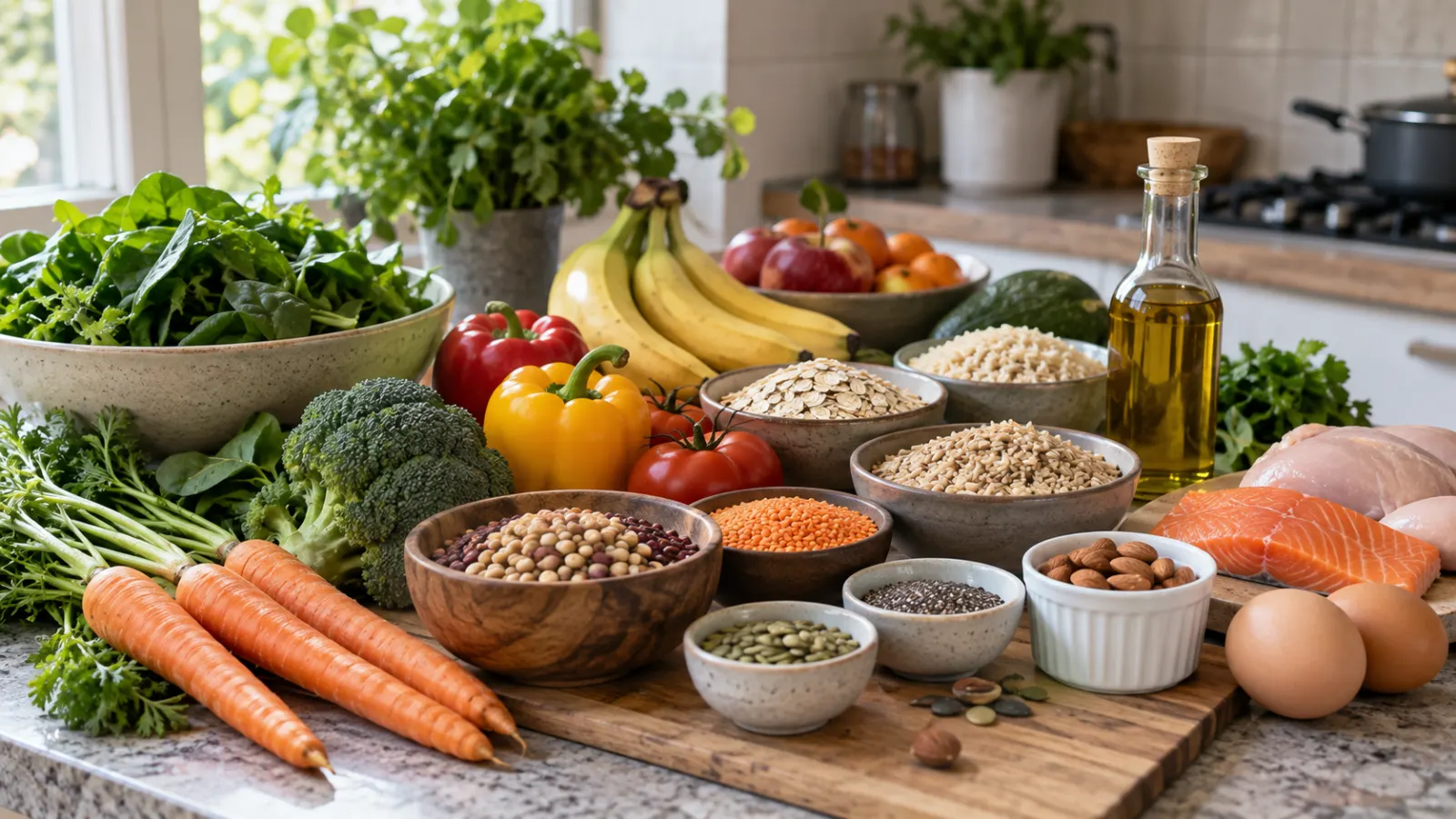
Public-health guidance repeatedly emphasizes vegetables, fruits, whole grains, legumes, nuts, nutrient-dense proteins, healthy fats, water and moderation in salt, free sugars and saturated/trans fats.
Balanced nutrition must be personalized for age, pregnancy, illness, activity level, cultural food habits, budget and medical conditions.
The safest evergreen message is food quality, variety, portion awareness and consistency, not extreme restriction.
Balanced nutrition sounds like a simple phrase, but for many people it has become one of the most confusing ideas in health. One person says carbohydrates are bad. Another says fat is the real problem. A fitness influencer says everyone needs more protein. A family elder says traditional food is enough. A diet advertisement says the answer is a detox, a powder, or a strict meal plan. In the middle of all this, the ordinary reader is left with a practical question: what does it actually mean to eat in a balanced way?
The simplest answer is this: balanced nutrition means giving the body enough energy, enough essential nutrients, and enough variety to function well over time, without regularly overloading it with excess sugar, salt, unhealthy fats, or ultra-processed foods. It is not a perfect plate. It is not a luxury diet. It is not the same for every person. It is a daily pattern of food choices that supports growth, repair, energy, immunity, digestion, mental clarity, metabolic health, and long-term disease prevention.
A balanced diet does not ask you to fear food. It asks you to understand food. That difference matters. Fear-based dieting usually begins with a ban: no rice, no roti, no oil, no fruit, no dinner, no carbs after sunset. Understanding-based nutrition begins with a better question: what does my body need, what am I already getting too much of, what am I not getting enough of, and how can my meals become more complete without becoming unrealistic? This is where balanced nutrition becomes simple.
Why the body needs balance, not just calories
Every meal has two jobs. The first is to provide energy. The second is to provide the raw materials the body needs to run its systems. Calories describe energy, but they do not describe the full nutritional value of food. A sugary drink and a bowl of dal with rice may both provide calories, but they do not behave the same way inside the body. The dal-rice meal can provide carbohydrates, protein, minerals, fiber depending on the grain and preparation, and more satiety. The sugary drink provides quick energy but little structural nutrition.
The body needs carbohydrates for readily available energy, especially for the brain, muscles, and daily activity. It needs protein for repair, enzymes, hormones, immune function and maintenance of muscles and tissues. It needs fats for cell membranes, hormone production, absorption of fat-soluble vitamins and long-lasting energy. It needs vitamins and minerals for thousands of small but essential processes, from iron carrying oxygen to calcium helping bones and nerves. It needs fiber for gut function, satiety and metabolic health. It needs water for circulation, temperature regulation, digestion and waste removal.
Balanced nutrition is the art of combining these needs. A meal that is only refined starch may fill the stomach but may leave the body short of protein, fiber and micronutrients. A meal that is only protein may ignore the need for energy, fiber and plant nutrients. A meal that is very high in fat may become calorie-dense without providing enough volume or fiber. A meal that is only raw salad may look healthy but may not provide enough energy or protein for many people. Balance is not about worshipping one nutrient. It is about respecting the whole system.
The plate method: a simple way to see balance
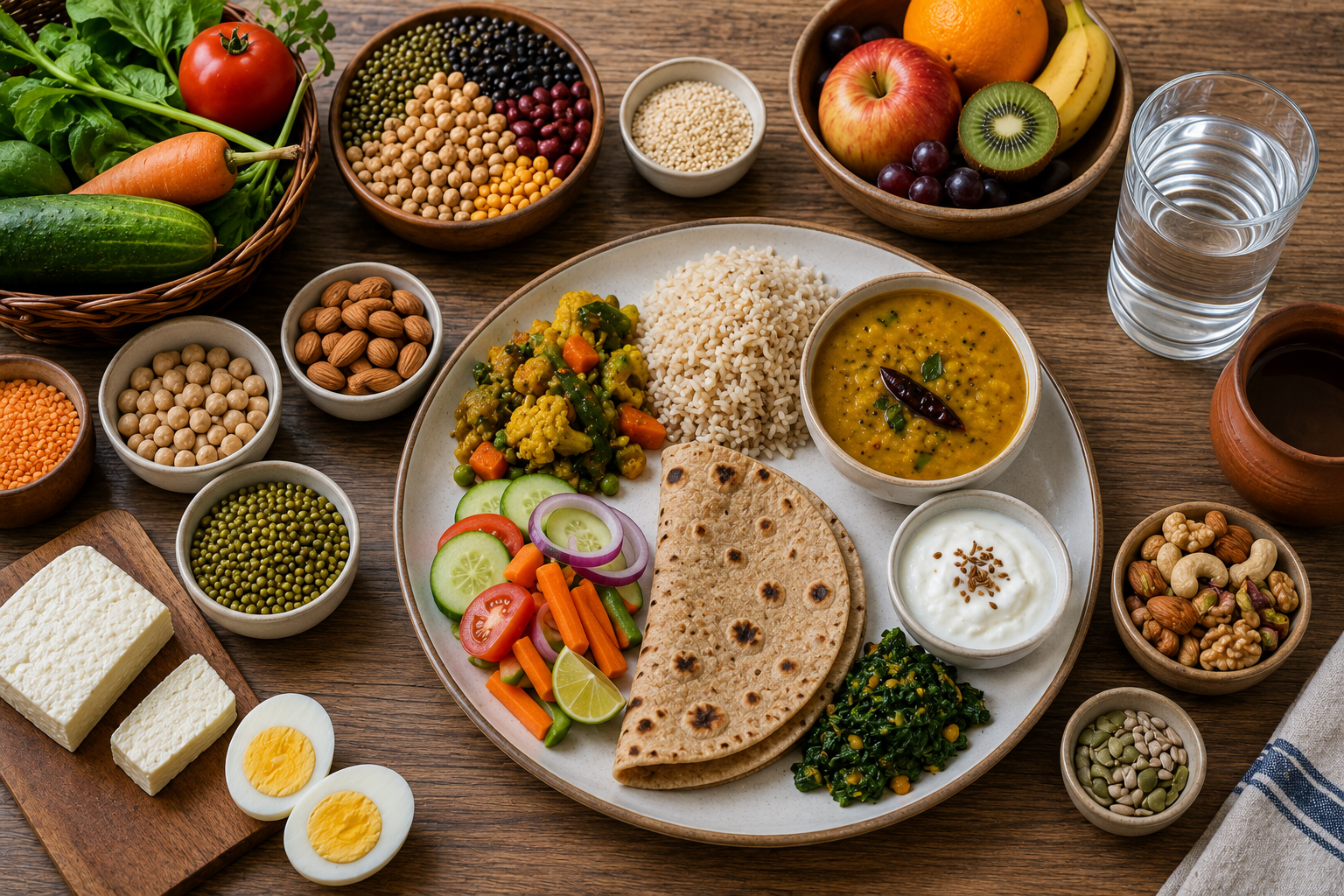
One practical way to understand balanced nutrition is to visualize the plate. A healthy plate usually includes a large share of vegetables and/or fruit, a portion of whole or minimally processed grains or starchy foods, a meaningful protein source, a small amount of healthy fat, and water as the default drink. The exact form can change by culture. For an Indian meal, this could be roti, dal, sabzi, curd and salad. For another person, it could be brown rice, fish, vegetables and lentils. For someone else, it could be oats, nuts, milk and fruit. The principle matters more than the cuisine.
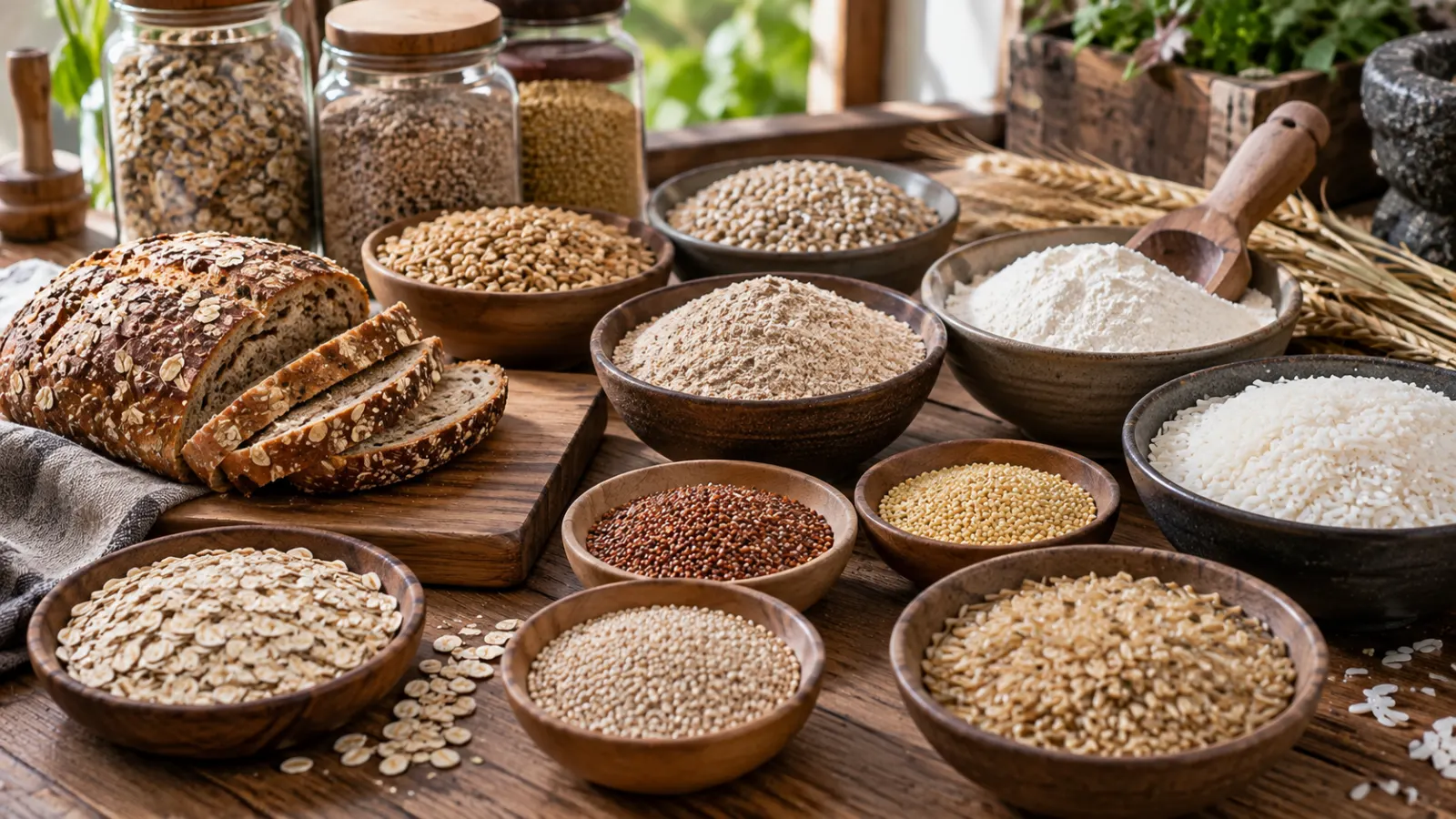
Vegetables and fruits add vitamins, minerals, fiber, water and protective plant compounds. Whole grains and millets provide energy, fiber and B vitamins. Pulses, beans, eggs, dairy, fish, poultry, soy, nuts and seeds can provide protein and other nutrients. Healthy fats from nuts, seeds, fish, and suitable cooking oils support essential functions, but still need moderation because all fats are calorie-dense. Water supports the body’s basic operations without adding sugar.
The plate method is useful because it prevents two common mistakes. The first is building meals almost entirely around refined carbohydrates: for example, a large serving of white rice or refined flour bread with very little dal, vegetables or curd. The second is copying extreme diets that remove staple foods completely and become difficult to sustain. A balanced plate does not require abandoning tradition; it usually requires improving proportion, quality and variety.
Food quality matters more than food labels
People often divide food into good and bad categories. In reality, food quality exists on a spectrum. Carbohydrates can come from lentils, fruit, oats, millets, whole wheat, brown rice, potatoes, sugar, sweets, biscuits or soft drinks. These are not nutritionally equal simply because all contain carbohydrates. Fats can come from nuts, seeds, fish, fried snacks, processed bakery items or repeatedly heated oils. Proteins can come from dal, beans, eggs, curd, fish, poultry, soy, nuts or highly processed meat. The source changes the effect.
This is why balanced nutrition focuses on patterns. A diet rich in whole grains, vegetables, fruit, legumes, nuts, seeds and suitable protein sources is very different from a diet rich in refined grains, sugary drinks, packaged snacks and deep-fried foods, even if the calorie count looks similar. The body does not read marketing labels. It responds to digestion speed, fiber content, nutrient density, food processing, total energy intake and the overall pattern repeated over weeks and years.
A useful rule is to ask what the food brings with it. Does it bring fiber? Does it bring protein? Does it bring vitamins and minerals? Does it keep you full? Does it fit into your usual meal pattern without pushing out better foods? Or does it bring mostly sugar, refined starch, salt and fat with little satiety? This question is more helpful than chasing fashionable labels such as superfood, detox, fat-burning or guilt-free.
The role of carbohydrates in a balanced diet
Carbohydrates are often misunderstood. They are not automatically harmful. The body breaks many carbohydrates into glucose, which is an important energy source. The problem is not carbohydrates as a category; the problem is quality, quantity and context. Whole grains, pulses, fruits, vegetables and starchy foods eaten in balanced portions behave differently from sugary beverages, sweets and refined flour snacks.
In many households, carbohydrates become excessive not because rice or roti is evil, but because the meal lacks proportion. A plate may have three or four servings of refined starch but only a small spoon of dal and a token vegetable. That pattern can be improved without creating fear: increase dal or beans, add vegetables, choose more whole grains or millets where suitable, include curd or another protein source, and reduce sugary drinks or frequent sweets. Carbohydrates are best judged by their company. A carbohydrate-rich food eaten with protein, fiber and healthy fats usually creates a more balanced meal than refined starch eaten alone.
The role of protein in a balanced diet
Protein has become a popular nutrient, and for good reason: it supports muscle, repair, immune function and satiety. But balanced nutrition does not mean turning every meal into a protein contest. Most people need regular protein across the day from accessible food sources. Pulses, beans, chickpeas, soy, milk, curd, paneer in moderation, eggs, fish, chicken, nuts and seeds can all contribute depending on preference and culture.
The common mistake is not that people eat zero protein, but that protein is often too small in relation to the rest of the meal. A spoon of dal diluted heavily with water may not contribute much protein. A breakfast of tea and biscuits is not a protein-rich start. A dinner of only refined starch can leave the body under-supplied. Improving protein may be as simple as adding a bowl of dal, curd, sprouts, eggs, paneer in sensible amounts, soy, chana or fish, depending on the person’s dietary pattern.
At the same time, protein supplements are not automatically necessary. People with illness, poor appetite, older age, intense training, pregnancy or special medical needs may require professional guidance. For the average person, the first step should usually be improving normal meals before buying powders.
The role of fats in a balanced diet
Fats are essential, but fat quality matters. The body needs fat for hormones, cell structure and absorption of vitamins A, D, E and K. Nuts, seeds, fish and appropriate oils can contribute healthy fats. But deep-fried foods, high-fat packaged snacks, bakery items and foods rich in trans fats or excess saturated fats can push the diet in an unhealthy direction.
The practical issue with fat is density. A small amount provides many calories. This does not make fat bad; it means portion awareness is important. A balanced diet can include oil, ghee, nuts and seeds, but not in unlimited amounts. A food can be traditional and still need moderation. A food can be modern and still be nutritious. Balance is not about old versus new; it is about the total effect on the body.
Micronutrients: the invisible side of nutrition
Balanced nutrition is not complete without vitamins and minerals. Iron, calcium, iodine, zinc, folate, vitamin B12, vitamin D and many other micronutrients play critical roles. Deficiencies may develop quietly and affect energy, immunity, bone health, pregnancy outcomes, cognition or general wellbeing. A person can eat enough calories and still be poorly nourished if the diet lacks diversity.
This is why variety matters. Different foods provide different nutrients. Green leafy vegetables, legumes, dairy, eggs, fish, nuts, seeds, fruits, whole grains and fortified foods may all contribute. People who follow vegetarian, vegan, very restrictive or medically limited diets may need special attention to nutrients such as vitamin B12, iron, calcium, vitamin D or omega-3 fats. This should not be handled through guesswork. Testing and professional advice may be needed when symptoms, risk factors or medical conditions exist.
Balanced nutrition and disease prevention
No diet can guarantee protection from disease, and health claims should be made carefully. But strong public-health guidance links healthy dietary patterns with lower risk of several chronic conditions. Diets high in vegetables, fruits, whole grains, legumes and nuts, and lower in excess salt, free sugars, saturated fats and trans fats, support better long-term health. They also help manage weight, blood pressure, blood sugar and cholesterol when combined with physical activity, sleep and appropriate medical care.
The important word is pattern. One festival meal does not destroy health. One salad does not create health. What matters is what happens most days. If most meals are built around nutrient-dense foods, occasional treats can fit into life. If most meals are ultra-processed, high-sugar, high-salt and low-fiber, occasional healthy meals cannot fully compensate. Balanced nutrition is a long-term vote repeated daily.
Common misconceptions about balanced nutrition
The first misconception is that balanced nutrition is expensive. It can be, if someone believes it requires imported berries, powders, seeds and packaged health foods. But many balanced diets can be built from ordinary staples: dal, chana, rajma, eggs, curd, seasonal vegetables, fruit, peanuts, millets, rice, roti, oats, fish where available, and home-cooked meals. The goal is not luxury. The goal is nutrient density within real life.
The second misconception is that balance means eating everything equally. The body does not need equal quantities of all food groups. It needs appropriate amounts. Vegetables may occupy a large part of the plate. Fats may be important but small in volume. Protein may be moderate but consistent. Sugar and fried snacks may be occasional rather than daily staples.
The third misconception is that one diet works for everyone. A growing teenager, a pregnant woman, a sedentary office worker, a manual labourer, a person with diabetes, an athlete and an elderly person do not have identical needs. Balanced nutrition must adapt to life stage, health status and activity level. This is especially important for people with diabetes, kidney disease, liver disease, food allergies, eating disorders, gastrointestinal disorders or those taking medications.
The fourth misconception is that healthy eating must be strict. In practice, strict diets often fail because they fight culture, appetite, schedule and budget. A better approach is gradual improvement: add one vegetable serving, replace sugary drinks with water more often, improve breakfast protein, reduce packaged snacks, choose whole grains when possible, and keep portions sensible. Small changes repeated consistently can be more powerful than dramatic changes abandoned quickly.
How to build a balanced day of eating
A balanced day starts by looking at the whole day, not just one meal. Breakfast may include protein and fiber instead of only refined starch and sweet tea. Lunch may include grain, dal or another protein, vegetables, curd and salad. Snacks may shift from biscuits and fried foods to fruit, nuts in small amounts, roasted chana, sprouts, curd or other suitable options. Dinner may be lighter for some people but should still be nutritionally meaningful. Water should be the main drink. Sugary beverages should be occasional.
A simple checklist can help. Did I eat vegetables today? Did I include a protein source in more than one meal? Did I get some whole grains, pulses or fiber-rich foods? Did I drink enough water? Did I limit sugary drinks, frequent sweets and high-salt snacks? Did I eat in a way I can repeat tomorrow? This checklist is not perfect science, but it is practical.
The emotional side of balance
Food is not only biology. It is family, memory, culture, comfort, celebration and identity. Any nutrition advice that ignores this will fail. Balanced nutrition should reduce confusion, not increase guilt. It should help people make better choices without turning every meal into an exam. A person who eats traditional food can improve balance. A person who eats modern food can improve balance. A person who has made mistakes can restart at the next meal.
The final takeaway is simple: balanced nutrition is not a secret formula. It is the steady practice of eating enough, choosing variety, improving food quality, respecting portions, limiting excess sugar, salt and unhealthy fats, and adapting the diet to real health needs. The best diet is not the one that looks perfect online. It is the one that nourishes the body, fits real life, and can be sustained with confidence.
Source / Fact-Check References
WHO healthy diet fact sheet: https://www.who.int/news-room/fact-sheets/detail/healthy-diet
MedlinePlus nutrition overview: https://medlineplus.gov/nutrition.html
MedlinePlus carbohydrates: https://medlineplus.gov/carbohydrates.html
NIH News in Health - Breaking Down Food: https://newsinhealth.nih.gov/2023/08/breaking-down-food
Harvard T.H. Chan Healthy Eating Plate: https://nutritionsource.hsph.harvard.edu/healthy-eating-plate/
NHS Eatwell Guide: https://www.nhs.uk/live-well/eat-well/food-guidelines-and-food-labels/the-eatwell-guide/
USDA National Agricultural Library - Macronutrients: https://www.nal.usda.gov/human-nutrition-and-food-safety/food-composition/macronutrients
American Heart Association - Carbohydrates: https://www.heart.org/en/healthy-living/healthy-eating/eat-smart/nutrition-basics/carbohydrates
Medical Disclaimer
This article is for general educational purposes only and is not a substitute for professional medical advice, diagnosis, or treatment. Readers with medical conditions, pregnancy, diabetes, kidney disease, eating disorders, digestive disorders, food allergies, unexplained symptoms, or those taking medication should consult a qualified healthcare professional or registered dietitian before making major dietary changes. Expert medical review is recommended before publication.