Why Literature Matters: How Stories Shape Culture, Memory and Society
A society writes more than it realises it is writing. Novels, poems, plays, essays, memoirs and oral narratives may belong to the world of imagination, but they also preserve how people speak, what communities fear, which relationships they value, what forms of authority they accept and what kinds of futures they can imagine. Literature is not a census, court record or documentary archive. It invents characters and rearranges events. Yet precisely because it can move beyond literal documentation, literature records dimensions of human experience that official records often struggle to capture: interior thought, emotional contradiction, private memory, ambiguity and possibility.
UNESCO describes books as bridges between generations and cultures, while its work on publishing connects books and literary culture with literacy, linguistic diversity, freedom of expression and the ability of authors, publishers and editors to sustain creative work. Literature therefore matters for more than entertainment or education. It helps societies preserve language, contest memory, imagine alternatives, carry experience across borders and decide whose stories become visible enough to enter public culture.
Literature Is Not History, but It Becomes Part of Historical Memory
One of literature's most important functions is preservation, but literary preservation differs from archival preservation. A government archive may record laws, correspondence, budgets and administrative decisions. A novel can preserve the atmosphere surrounding those institutions: how citizens experienced bureaucracy, what social distinctions felt like in everyday life, how families spoke about political events or what people were afraid to say publicly.
That does not make fiction factual evidence in the same sense as a government document. An invented character cannot prove that a particular historical event occurred. A novelist can compress chronology, invent dialogue or deliberately distort reality.
The responsible reader therefore keeps two questions separate: What does this work reveal about the society that produced or received it? And what historical claims require independent verification?
Keeping those questions distinct allows literature to contribute to historical understanding without being mistaken for documentary proof.
Literature Preserves Cultural Memory
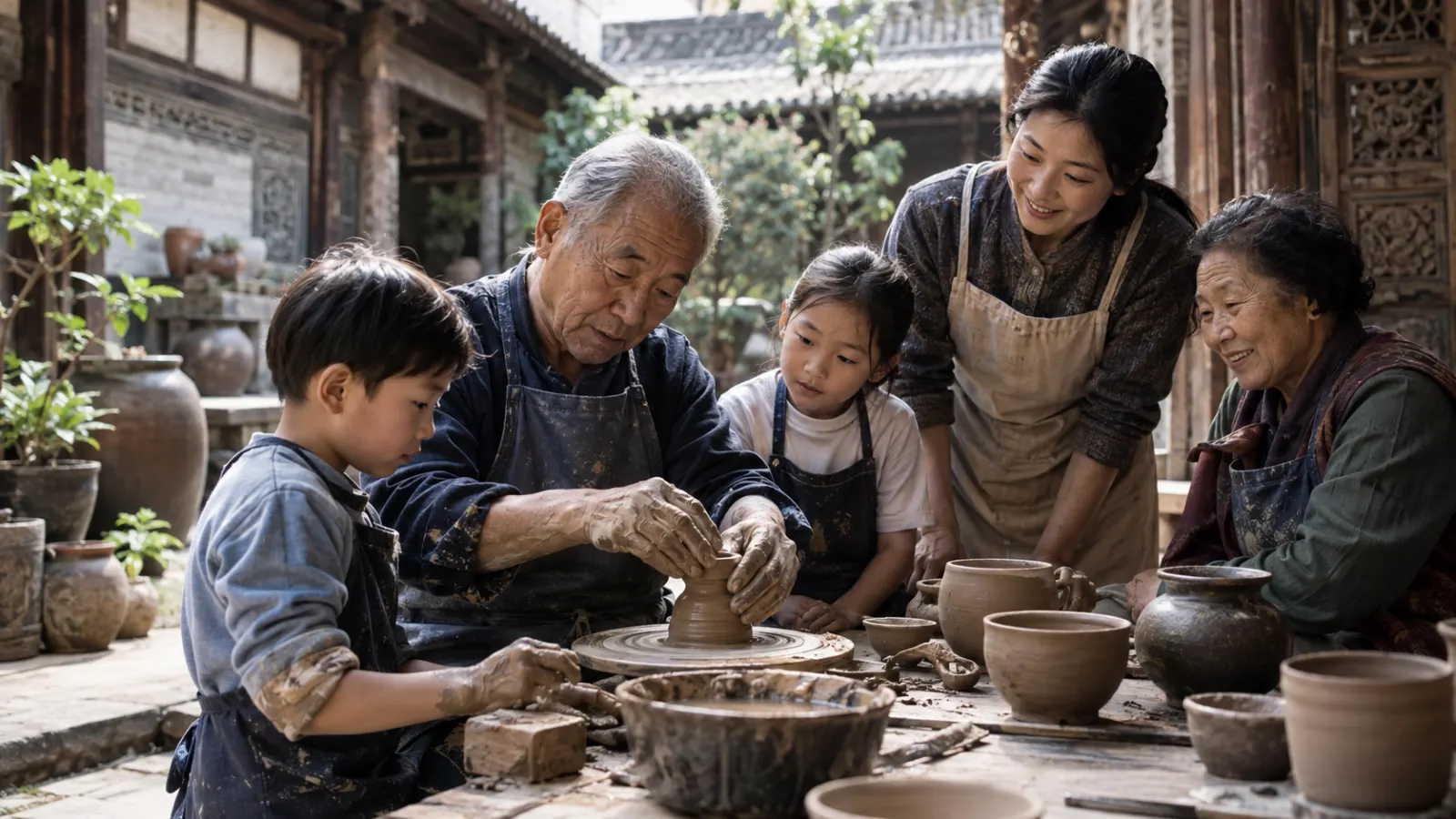
Stories carry names, landscapes, customs, occupations, rituals, humour, conflicts and values across generations. A novel can preserve the social geography of a neighbourhood long after redevelopment changes the streets. A poem may retain descriptions of landscapes that later disappear. A family saga can preserve migration memories that formal records reduce to dates and numbers.
Literature can also preserve competing memories of the same event. Wars, political movements and social transformations rarely have only one remembered meaning. Different authors can turn the same historical moment into tragedy, liberation, betrayal, nostalgia or unresolved trauma.
Cultural memory is therefore not one stable story stored intact through literature.
Literature helps preserve the argument over what should be remembered and what that memory means.
Literature Gives Language a Long Memory
Languages change continually. Vocabulary appears and disappears. Grammar shifts. Pronunciation changes. Slang becomes ordinary speech and then sounds archaic to later generations.
Literature slows some of this disappearance by preserving language in durable forms. Old poems retain metaphors and rhythms no longer used in everyday conversation. Novels preserve dialect, regional vocabulary and social registers. Plays preserve forms of spoken interaction as writers imagined them for different classes and communities.
UNESCO's current publishing framework explicitly connects the sector with literacy, linguistic diversity and freedom of expression. This becomes particularly important for minority and regional languages. Publishing creates materials that can be read, taught, translated, archived and rediscovered later.
A language does not survive simply because books exist in it—living transmission still requires speakers—but literature expands the cultural spaces in which that language can continue to matter.
Oral Literature Reminds Us That Literature Began Before Books
Literature should not be reduced to printed novels.
Epic recitation, storytelling, song, oral poetry, folktales, myths and dramatic narration existed long before mass publishing. In oral traditions, memory is carried through performance as well as words. The storyteller's voice, rhythm, gesture and relationship with listeners become part of the literary event.
Writing can stabilise one version of an oral tradition, but it can also change it. Once a story becomes fixed on a page, later readers may begin treating that version as definitive even when the oral tradition previously allowed considerable variation.
The history of literature is therefore also the history of movement between voice, memory, manuscript, print and digital media.
Literature Can Preserve Experiences Official Records Ignore
Institutions naturally document what institutions consider important. Governments preserve laws and administrative decisions. Companies preserve contracts and accounts. Courts preserve cases.
Everyday life can leave a thinner formal record.
Literature can preserve the emotional and social dimensions of domestic work, poverty, migration, childhood, disability, discrimination, illness, relationships and ordinary labour. Such writing does not become factual simply because it describes marginalised experiences, but it can make historically neglected forms of life visible.
This is one reason autobiographical writing, prison literature, testimony, diaries and letters can become culturally powerful. They preserve perspectives that official history may have excluded, simplified or actively suppressed.
Fiction Creates Interior Access
A report can tell readers what someone did. Literature can construct what it might feel like to inhabit that person's consciousness.
Narrative gives writers unusual freedom to represent hesitation, memory, conflicting motives, self-deception, shame, desire, fear and thoughts that characters never say aloud. Readers can therefore encounter not only actions but imagined interior worlds.
This capacity is often linked to claims that fiction builds empathy. That claim should be made cautiously. A 2026 systematic review and meta-analysis found a small, context-sensitive association between literary or prosocial reading and aspects of social cognition such as perspective-taking and theory of mind, while also finding mixed or null results across a substantial portion of the underlying studies. The authors explicitly rejected the idea that literary reading uniformly transforms empathy.
The stronger argument is therefore not that reading automatically makes someone compassionate.
Literature creates opportunities for perspective-taking.
What readers do with those opportunities remains another question.
Readers Can Misunderstand Literature
A novel does not control its reader completely.
Two people can read the same work and reach opposite conclusions. A character intended as criticism can become admired. Satire can be mistaken for endorsement. A politically radical work can be absorbed into conservative cultural institutions, while a traditional work can later receive radical reinterpretation.
This uncertainty is part of literature's cultural power.
A political manifesto usually tries to make its desired conclusion clear. Literature can sustain competing meanings.
That makes it less reliable as direct instruction and more valuable as a space in which readers have to interpret.
Literature Makes Abstract Social Systems Personal
Terms such as class, caste, racism, bureaucracy, patriarchy, migration and colonialism describe large social structures. Theory can explain how those systems function.
Literature can show how a structure enters one person's ordinary decisions.
Who can marry whom? Which entrance does someone use? What language do they speak to a supervisor and what language at home? Which surname opens a door? Which accent becomes embarrassing in a classroom? Which law becomes frightening at a kitchen table?
Literature does not replace sociology, economics or history.
It gives structural analysis human scale.
The strongest understanding often comes when evidence about institutions is read alongside accounts of how people imagined and experienced those institutions.
Literature Can Challenge Official Memory
Every state produces narratives about itself. School curricula, monuments, anniversaries, speeches and government archives help establish official versions of national history.
Literature can cooperate with those narratives.
It can also contradict them.
Writers in exile, dissidents, minority communities and survivors of political violence may preserve memories that official institutions prefer to minimise. Fiction can expose contradictions in patriotic narratives. Memoirs can challenge state accounts. Poetry can circulate grief that official ceremonies cannot accommodate.
Literature therefore becomes one arena in which societies argue about who is entitled to remember publicly.
Censorship Reveals the Political Importance of Literature
Books are censored because authorities recognise that narratives can circulate ideas, identities and interpretations beyond institutional control.
Censorship may target political criticism, religious dissent, sexuality, racial representation, historical interpretation or material considered threatening to prevailing moral norms. The precise legal context differs greatly between societies.
UNESCO's 2005 Convention on the Diversity of Cultural Expressions links cultural diversity explicitly with fundamental freedoms including freedom of expression, information and communication, while also emphasising people's ability to choose cultural expressions.
This does not mean every publication is beyond legitimate legal limitation. Laws concerning threats, defamation, child sexual-abuse material and other harms raise separate legal questions.
But a literary culture capable of challenging power requires substantial freedom to publish, read, criticise and disagree.
Satire Creates Political Speech Through Indirection
Direct criticism says what is wrong.
Satire often constructs a ridiculous world and allows audiences to notice what resembles their own.
Writers have long used humour, allegory, imaginary countries and exaggerated characters to criticise authority indirectly. The fictional distance can create ambiguity: perhaps the writer is discussing another society, another era or an invented situation.
That ambiguity sometimes gives writers room to speak under censorship.
Authorities frequently understand the implication anyway.
Satire's importance lies partly in this ability to make political interpretation depend on readers connecting what appears on the page with what exists outside it.
Literature Can Also Serve Power
The ability to shape imagination is not inherently democratic or humane.
States, political movements, religious organisations and commercial institutions have all used stories, poems, children's books and heroic narratives to legitimise authority, glorify warfare, normalise prejudice or construct national myths.
A technically impressive literary work can communicate morally objectionable ideas.
Literary quality and political virtue are therefore separate judgments.
Recognising literature's social power requires examining both directions: it can challenge dominant narratives, but it can also help build them.
Literature Expands the Range of Possible Worlds
Not all literature responds to what already exists.
Speculative fiction, utopian writing, dystopia, fantasy and science fiction allow authors to change a social rule and ask what follows.
What if reproduction worked differently? What if artificial intelligence controlled political decision-making? What if climate conditions made existing cities uninhabitable? What if privacy disappeared? What if money no longer existed?
These fictional societies become thought experiments.
They do not predict the future reliably.
They expand the range of futures that can be discussed before those futures exist.
This capacity makes literature particularly significant during technological and social change. It allows public imagination to move ahead of regulation and lived experience.
Dystopia Is Powerful Because It Exaggerates Tendencies
A dystopian novel does not need to prove that society will develop exactly as described.
Its cultural function often lies in exaggerating a tendency already visible: surveillance, censorship, inequality, environmental destruction, technological dependency or political conformity.
Readers can then ask whether the fictional exaggeration reveals something about the present.
This distinguishes literary warning from policy forecasting.
A dystopia can be socially valuable even when its prediction is wrong.
Literature Helps Form National Identity
Nations do not simply inherit literature.
They build literary canons.
Certain authors are taught repeatedly in schools. Poems become part of public ceremonies. Quotations enter political speeches. Novels are presented as representing a national character or historical experience.
Over time, these institutional choices create cultural familiarity across generations.
That can generate continuity.
It can also create exclusion.
Which language counts as national literature? Which region dominates? Which social groups appear mainly as characters written by outsiders? Which writers disappear from school curricula?
Arguments about literary canons are therefore rarely only about literary taste.
They concern who gets included in the cultural story a society tells about itself.
School Reading Lists Are Cultural Infrastructure
Texts taught repeatedly in schools acquire unusual durability.
Millions of people may encounter the same play, poem or novel not because they independently chose it but because an education system selected it. Decades later, characters and quotations remain familiar even among adults who have rarely reread the work.
Changing a curriculum therefore changes long-term cultural memory.
Adding neglected writers does more than diversify a classroom reading list. It alters which voices future citizens are most likely to recognise as part of shared culture.
This explains why curriculum debates can become politically intense.
They are arguments about inheritance.
Regional Literature Resists Cultural Centralisation
National literary culture can become dominated by metropolitan publishing, standard languages and nationally recognised authors.
Regional literature preserves another scale of experience.
It can retain local geography, dialect, humour, folk memory and social conflicts that disappear when one central cultural narrative claims to represent the entire country.
This matters because cultural homogenisation can occur within nations as well as internationally.
A society can speak proudly of national literary diversity while publishing industries and curricula gradually narrow attention toward one dominant language or region.
Regional publishing therefore contributes to cultural plurality.
Diaspora Literature Creates More Than One Home
Migration complicates the relationship between literature and place.
Diaspora writers may describe a homeland remembered through parents, a new country experienced directly and identities that fit neither category perfectly. Their writing may move between languages, cultural codes and historical memories.
Literature becomes a space in which mixed identity does not have to be resolved into one nationality.
A person can belong to more than one cultural history at once.
These works can also reveal how migration changes cultures on both sides. The receiving society changes, but memories and practices in the diaspora can also influence how the homeland understands itself.
Literature Gives Marginalised Writers Narrative Agency
There is a difference between appearing in someone else's story and being able to produce one's own.
When women, Indigenous writers, racial or ethnic minorities, working-class authors, disabled writers and LGBTQ writers gain greater access to publication, the change is not simply that more demographic categories become visible.
Narrative authority changes.
Experiences previously interpreted mainly from outside can be narrated from within.
No writer should be expected to represent an entire group. Internal differences remain enormous.
The cultural gain lies in expanding the range of people authorised to say: this is how the world looks from here.
Children's Literature Helps Construct Social Categories
Children encounter stories while they are still learning what counts as a normal family, a hero, a villain, a stranger, a leader or a community.
The worlds presented in children's books therefore matter.
A child repeatedly encountering only one type of family, profession, body or cultural identity may absorb a narrower imaginative map than a child encountering many. Conversely, representation handled simplistically can produce stereotypes rather than meaningful diversity.
This is one reason political arguments about children's books become unusually intense.
Adults understand that early stories participate in defining what children learn to regard as ordinary.
Literature Does Not Automatically Teach Morality
Schools often use literature to discuss moral questions.
That can be valuable.
But reducing every novel to “the lesson of the story” misunderstands what literature can do.
Some of the strongest works resist easy conclusions. Characters behave badly for understandable reasons. Political causes contain contradictions. Families can be loving and destructive simultaneously. Justice may remain incomplete.
Literary education becomes more intellectually valuable when students learn to justify interpretations with evidence, notice form and tolerate unresolved questions rather than extracting one approved moral.
Ambiguity Is One of Literature's Social Strengths
Public debate often rewards certainty. Political messages become slogans. Advertising simplifies. Social media can encourage immediate judgment.
Literature can preserve contradiction for hundreds of pages.
A character may be generous and cruel.
A revolution may be necessary and destructive.
A family may protect and control its members.
A technological innovation can create freedom and dependency simultaneously.
This capacity to hold conflicting truths together matters because many historical and moral problems do not become understandable merely by choosing the correct slogan.
Literature gives ambiguity somewhere to remain visible.
Translation Allows Literature to Cross Cultural Boundaries
Books travel unusually well compared with many cultural practices because texts can be translated.
Translation dramatically expands literary circulation, but it is not simple copying. The translator makes decisions about tone, rhythm, humour, historical references, idiom, dialect and vocabulary.
Some meanings travel relatively easily.
Others do not.
A joke based on wordplay may need to be reinvented. A dialect associated with one regional class structure may have no direct equivalent in another language. A culturally specific form of address can contain social information that translation must explain or approximate.
The translator therefore becomes a cultural interpreter as well as a linguistic one.
Translation Determines Which World Literature Becomes Visible
The existence of literature in one language does not mean readers elsewhere will encounter it.
Translation requires skilled translators, publishers willing to invest, editors, marketing, distribution and readers able to discover the final work.
Only a fraction of the world's books crosses into any given language.
That means “world literature” is partly the product of institutional selection.
Some languages become major exporters of books. Others depend heavily on translation grants or specialist publishers.
Cultural exchange therefore depends on infrastructure, not simply the theoretical possibility that texts can be translated.
UNESCO Treats Books as Bridges Across Cultures
UNESCO's World Book and Copyright Day explicitly describes books as bridges between generations and across cultures. Its World Book Capital programme asks designated cities to promote books and reading across age groups and society; Rabat holds the World Book Capital title for 2026.
The language is useful because it highlights that literary culture includes circulation.
A manuscript that nobody can access has a different social role from one that can move through libraries, schools, translations, bookshops and public discussion.
The cultural importance of literature therefore depends partly on institutions that connect writers and readers.
Libraries Turn Literature Into a Public Resource
Books cost money.
Libraries alter that equation by allowing many readers to share access to the same collection.
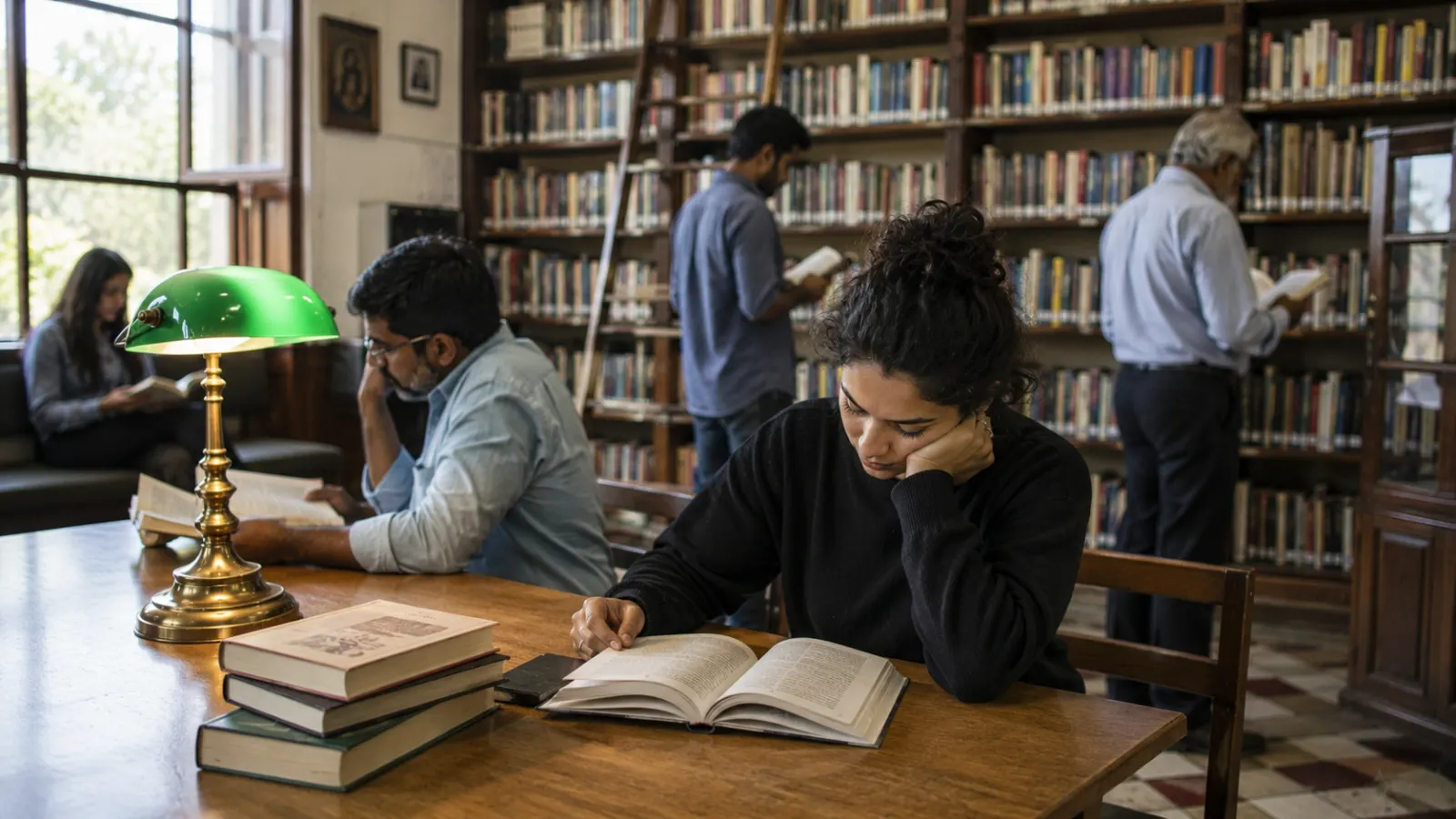
Their importance goes beyond lending. Libraries preserve local publications, maintain collections, offer study environments, host readings and provide access for people who may not have private space or resources to purchase books.
Literary culture therefore depends partly on whether reading is accessible.
A society can celebrate authors symbolically while restricting meaningful participation if books remain unaffordable or unavailable to large sections of the population.
Literary Publics Turn Private Reading Into Social Life
Reading is often solitary.
Literary culture is not.
Book clubs, festivals, libraries, readings, classrooms, journals, reviews, online communities and literary prizes create publics around texts.
Readers recommend books, argue about interpretations, defend favourite authors and challenge canons.
These conversations become part of the cultural life of the work.
A novel published a century ago can acquire new meanings because another generation begins discussing it through new political, ecological or social questions.
Literature survives not only because books remain physically intact.
It survives because people continue to talk about them.
Literary Criticism Keeps Old Works Open
A canon can become intellectually dead if readers are expected only to admire it.
Criticism keeps literature alive by asking new questions.
What assumptions about class structure does an old novel take for granted? How are women allowed to speak? What does a colonial-era text reveal about empire? How does landscape function in the story? What does translation change?
These approaches do not necessarily invalidate earlier interpretations.
They demonstrate that literature can produce more meaning than one generation extracts from it.
Preserving a classic work therefore means preserving the right to criticise it as well as celebrate it.
Literature Can Become an Archive of Crisis
Periods of crisis generate writing quickly.
Wars produce diaries, poems and testimony. Migration generates memoirs and fiction. Pandemics produce journals, essays and narratives of isolation. Political repression generates prison writing and underground publication.
These materials preserve dimensions that statistics cannot.
Official records may show how many people migrated.
A memoir can preserve what departure felt like.
A public-health report can document restrictions.
A diary can record how those restrictions entered ordinary relationships.
Historians need to use such sources critically, but literature often preserves the emotional vocabulary through which people understood events while those events were happening.
Censorship Can Become Part of a Book's History
A banned work can acquire a cultural life partly because it was banned.
Later readers may study not only the text but why an earlier government, school system, religious institution or political movement considered it dangerous.
Suppression therefore creates additional historical evidence about the society doing the suppressing.
A censorship order tells future researchers something about the boundaries of permitted speech.
This helps explain why banned literature can outlive the political conditions that attempted to remove it.
Literature Does Not Need to Be Politically Useful
There is a danger in defending literature only by listing social benefits.
If literature must always improve empathy, strengthen democracy, preserve culture, teach history or reform injustice to justify its existence, writers acquire another set of external obligations.
Literary freedom includes the right to write comedy, fantasy, romance, experimental prose, private reflection or work with no obvious social programme.
UNESCO's Convention on cultural expressions recognises cultural activities, goods and services as carriers of identity, values and meaning irrespective of their commercial value and supports conditions in which diverse cultural expressions can be created, produced and accessed.
Artistic value does not always need to prove another policy benefit.
Sometimes literature matters because human beings value making and encountering language imaginatively.
Publishing Markets Decide What Readers Can Discover
Writing does not reach readers automatically.
Editors decide which manuscripts to acquire. Publishers allocate budgets. Distributors determine availability. Retailers decide what receives shelf space. Reviewers and influencers shape attention. Literary prizes can dramatically expand visibility.
Markets can support extraordinary creativity.
They can also favour genres, languages and authors that already have proven audiences.
This creates an important distinction between what literature exists and what literature becomes visible.
A manuscript may be excellent and remain unread because no institution successfully connects it with readers.
Digital Publishing Has Lowered Some Gates and Created Others
Self-publishing and digital platforms allow writers to reach audiences without traditional printing and distribution.
That can broaden participation substantially.
But digital culture does not eliminate gatekeeping.
Algorithms determine recommendation. Platforms set rules. Advertising affects discoverability. Large catalogues make attention scarce.
A writer may no longer need access to a printing press.
They still need to be found.
UNESCO's contemporary work on cultural-expression policy specifically identifies the digital environment and artificial intelligence among the major issues reshaping cultural and creative sectors.
The literary ecosystem is therefore changing rather than becoming gatekeeper-free.
Artificial Intelligence Raises New Questions for Literary Culture
Generative AI adds another layer to debates about authorship, copyright, creativity, translation and publishing economics.
AI systems can assist writers with research, language and editing, while publishers and creators are debating questions about training data, attribution, compensation, authenticity and the economics of large-scale automated content.
The technology does not eliminate the older literary questions.
It intensifies them.
Who receives credit for cultural production? What does originality mean? How should writers be compensated? How will readers distinguish abundant generated text from human-authored work they wish to seek out?
These issues belong to the future of literature because literary culture has always depended on technologies of production—from manuscript copying to printing presses to e-books.
Copyright Protects Creators but Also Shapes Access
Literary production requires labour.
Authors, translators, editors, illustrators and publishers need economic systems capable of supporting that labour. Copyright gives creators and rights-holders certain controls over reproduction and use for limited periods, though exact rules vary by jurisdiction.
At the same time, societies benefit when books circulate through libraries, educational exceptions, licensing arrangements and eventually public-domain status.
UNESCO's decision to combine World Book and Copyright Day in one observance reflects this dual concern: encouraging reading while recognising authorship and the systems that make book production sustainable.
The policy problem is therefore not simply protection versus access.
It is finding workable conditions for both creation and circulation.
Authors Are Cultural Workers
The romantic image of the writer emphasises inspiration.
Literary production also involves rent, time, contracts, editing, translation, marketing and distribution.
Writers need enough economic stability to write. Translators need payment. Independent publishers need sustainable markets. Booksellers need customers. Libraries require funding.
A society can praise literature symbolically while making long-term literary work economically difficult.
UNESCO's publishing-sector framework explicitly treats publishing as part of the cultural and creative economy and emphasises conditions that allow authors, editors and publishers to sustain their work.
Literary freedom therefore has a material dimension as well as a legal one.
Literary Prizes Shape Cultural Memory
Readers face more books than anyone can evaluate personally.
Prizes act as filters.
Winning or being shortlisted can dramatically increase sales, translation opportunities, teaching and long-term visibility.
That can help new authors reach audiences.
It also concentrates cultural authority in juries and institutions.
Prize history therefore becomes part of literary history because awards influence which works remain visible long enough to enter canons.
Festivals Shape Literature as a Public Event
Literary festivals bring writers, publishers, translators and readers together. They transform books from private objects into public conversation.
Festivals can broaden access to authors and create markets for books.
They can also reproduce existing hierarchies if invitations repeatedly concentrate on already famous writers or dominant languages.
Like literary prizes, festivals do not merely celebrate literature.
They help decide what becomes culturally prominent.
Reading Requires Time as Well as Books
Access to literature is usually discussed through literacy and price.
Time matters too.
People working very long hours, juggling multiple jobs or carrying intensive caregiving responsibilities may theoretically have access to libraries and inexpensive digital books while having little uninterrupted time to read.
A reading culture therefore depends partly on social conditions that make sustained attention possible.
This complicates claims that declining reading is simply evidence of individual laziness or technological distraction.
The environment in which readers live matters.
Long-Form Reading Creates a Distinct Kind of Attention
Literature can require sustained attention to language, structure, character and ambiguity over extended periods.
That mode differs from rapid switching among short pieces of digital information.
The difference should not be confused with print versus screen. A novel read deeply on an e-reader still requires sustained engagement, while a printed page can be skimmed inattentively.
The important distinction is the quality and duration of attention.
Literature provides one cultural space in which readers can practise staying with complexity rather than immediately moving to the next stimulus.
Literature and Education Should Not Become Identical
Literature is extraordinarily useful in education because it can teach language, interpretation, argument, historical context and textual analysis.
But literature becomes narrower when every reading experience is converted into an examination exercise.
Students can learn to identify symbols while losing the desire to read.
The challenge for literary education is therefore to teach analytical skill without reducing every work to a puzzle designed for assessment.
Research on literature education has long noted the danger that curriculum pressures can crowd out deeper reasons for reading in the first place.
A healthy literary culture requires readers as well as students.
A Society Can Produce Books Without Producing Readers
Publishing statistics alone do not establish a strong literary culture.
Books need readers.
That requires literacy, affordable access, schools, libraries, translation, distribution, time and institutions that make reading socially visible.
UNESCO's World Book Capital programme reflects this ecosystem approach by asking selected cities to promote books and reading across age groups and communities rather than simply celebrate famous authors.
Literary culture is therefore not one industry.
It is a network connecting writers, readers, educators, publishers, translators, librarians, booksellers, critics and institutions.
Frequently Asked Questions
Why is literature important? Literature preserves language and cultural memory, represents interior experience, carries ideas across generations and cultures, provides spaces for political and moral imagination and creates public debate around competing interpretations.
How does literature reflect society? Literary works can preserve language, values, conflicts, social hierarchies, anxieties and imagined possibilities from the societies that produce and receive them, although fiction should not be treated as straightforward documentary evidence.
Can literature teach us history? Yes, but carefully. Literature can illuminate social experience and historical memory, while factual claims about events should be verified using appropriate historical evidence.
Does reading fiction increase empathy? Research suggests possible small and context-dependent effects on perspective-taking and related social cognition, but fiction does not automatically make readers more empathetic or morally better.
Why does literature preserve culture? Stories can transmit language, landscapes, customs, social memory and values across generations, particularly when works continue to be read, taught, performed and translated.
How does literature preserve language? Written and oral literature retains vocabulary, dialects, idioms, metaphors and styles that may decline in ordinary speech.
Why is translation important to literature? Translation allows stories to cross linguistic boundaries and enables cultural exchange, while translators interpret elements such as humour, rhythm, dialect and culturally specific references.
Can literature influence politics? Yes. Literature can criticise authority, build national narratives, circulate dissident ideas, reinforce ideology or imagine alternative political systems.
Why are books censored? Authorities and institutions may restrict books because of political, religious, moral or social concerns. The history of censorship demonstrates that literature can be perceived as politically and culturally consequential.
Can literature be propaganda? Yes. Stories and poetry can be used to legitimise authority, glorify groups, normalise prejudice or promote political ideology.
Why is children's literature important? Children's books participate in shaping early ideas about families, heroes, communities, identity and social difference.
Why do literary canons matter? Canons influence which writers generations repeatedly encounter and therefore which texts become part of shared cultural memory.
Why are libraries important for literature? Libraries expand access to books, preserve collections and create public spaces for reading and literary participation.
Does digital publishing make literature more democratic? It lowers some barriers to publishing, but algorithms, platform rules, marketing and discoverability create new forms of gatekeeping.
Why is copyright important to literature? Copyright can help authors and publishers earn from creative work, while exceptions, libraries and eventual public-domain status also contribute to cultural access.
Does literature have to teach a lesson to be valuable? No. Literature can entertain, experiment, explore language or pursue aesthetic goals without having to provide a clear moral or political message.
Why is ambiguity valuable in literature? Ambiguity allows works to preserve competing interpretations and contradictions rather than reducing complex human problems to one predetermined conclusion.
How does literature build national identity? School curricula, public ceremonies, publishing and cultural institutions can turn selected authors and works into shared national reference points.
Can literature preserve minority cultures? It can support minority and regional languages, stories and memories, particularly when communities retain the institutions needed to create, publish and read such works.
What is the difference between literature and historical evidence? Historical evidence is used to establish claims about what happened. Literature can itself be historical evidence about language, representation and cultural attitudes, but fictional events and characters cannot automatically establish factual claims.
Literature Does Not Preserve a Society Exactly as It Was
No book captures an entire culture.
Writers select.
Publishers select.
Schools select.
Readers interpret.
Some voices receive enormous attention while others remain difficult to find.
Literature is therefore not a transparent mirror held up to society.
It is better understood as one of the places where society constructs, contests and preserves versions of itself.
That makes literary institutions important because the question is not only what gets written.
It is what survives.
Literature Matters Because It Keeps Meaning Contested
Statistics can tell societies how many people migrated.
Law can record what governments permitted.
Archives can preserve what institutions decided.
Literature adds another layer: what could migration feel like, how did ordinary people imagine the law, what did a political event mean inside a family, and what alternative future could someone imagine before anyone knew whether it was possible?
Those questions do not replace factual inquiry.
They expand it.
The Central Idea
Literature matters because societies need more than records of events.
They need language capable of expressing what those events meant.
They need stories through which memory can survive beyond the people who experienced it. They need translation that carries ideas between cultures. They need fictional worlds where political and technological possibilities can be tested before they exist. They need satire capable of mocking authority, testimony capable of challenging official memory and criticism capable of reopening works that earlier generations treated as settled.
But literature's value should not be romanticised.
Reading does not automatically create empathy.
Fiction can misrepresent history.
Stories can spread prejudice and propaganda.
National canons can silence minority voices.
Publishing markets can favour commercially safe work.
Digital platforms can replace traditional gatekeepers with algorithmic ones.
These limitations do not weaken the case for literature.
They explain why literary freedom, criticism, translation, libraries, diverse publishing and access to books matter alongside writing itself. UNESCO's cultural-diversity framework stresses not only creation but production, dissemination, distribution and access to cultural expressions.
A healthy literary culture therefore does not require everyone to agree about which books are great or which interpretation is correct.
Quite the opposite.
Its strength lies partly in allowing different memories, languages, identities and imagined futures to remain in circulation.
A society with literature can remember what institutions forgot.
It can hear voices beyond its borders.
It can recover language from previous centuries.
It can give marginalised experience narrative form.
It can imagine political systems that have never existed.
And it can preserve contradictions that public debate is often too impatient to tolerate.
Literature matters not because stories always make societies better.
It matters because societies need somewhere to argue about who they were, who they are and who they might still become.
A free literary culture keeps that argument open.
And keeping the argument open is one of the ways culture remains alive.