Why Clean Water Matters: Health, Dignity and Daily Life
Clean water is easy to take for granted when it arrives every day through a tap. The infrastructure behind it becomes visible mainly when something goes wrong: supply stops, pressure falls, contamination is detected, a pump breaks or families suddenly have to search for enough water to drink, cook and wash.
That invisibility can make the phrase clean water sound simpler than it really is. Water that looks clear is not necessarily safe. A household may have a pipe connection but receive water only twice a week. A protected well may contain naturally occurring arsenic. A municipal supply may be safe when it leaves a treatment plant but become contaminated through damaged pipes or unsafe household storage.
Modern public-health definitions therefore focus on the service, not merely the source. Safely managed drinking water should come from an improved source, be available on the premises, be available when needed and be free from relevant contamination.
Those requirements explain why clean water sits beneath so many parts of ordinary life. It prevents disease, makes hygiene possible, allows hospitals and schools to function, supports nutrition and livelihoods, saves time and protects dignity. Water is not simply something people drink. It is infrastructure on which an enormous amount of social life depends.
Billions Still Do Not Have Safely Managed Drinking Water
The global gap remains enormous. The WHO strategy cited in your source reports that around 2.1 billion people still lack safely managed drinking-water services, while approximately 106 million people continue to drink directly from untreated surface-water sources.
Those figures describe very different circumstances. Some households may use improved wells but still face contamination. Others depend on piped networks that operate only intermittently. Some may collect water from distant communal sources, while others rely directly on rivers, ponds or lakes.
This distinction matters because simply counting infrastructure can exaggerate progress. A tap installed outside a household does not automatically provide reliable service. A borehole is not necessarily safe because it is underground. A connection that functions only occasionally may push families toward unsafe storage or emergency sources.
Water access therefore has to be measured by what people actually receive: safe water, close enough to use, available when needed and reliable over time.
Clean Water Interrupts Disease Transmission
The most immediate reason clean water matters is public health. Water contaminated with human or animal faeces can carry microorganisms capable of spreading diarrhoeal disease, cholera, dysentery, typhoid and other infections.
The transmission chain can begin in many places. Sewage may enter rivers used for drinking-water supply. Floods can overwhelm sanitation systems. Poorly protected wells can be contaminated by nearby latrines. Broken water pipes can allow polluted external water into the network when pressure drops.
Providing safe drinking water interrupts one of the routes through which these pathogens reach people.
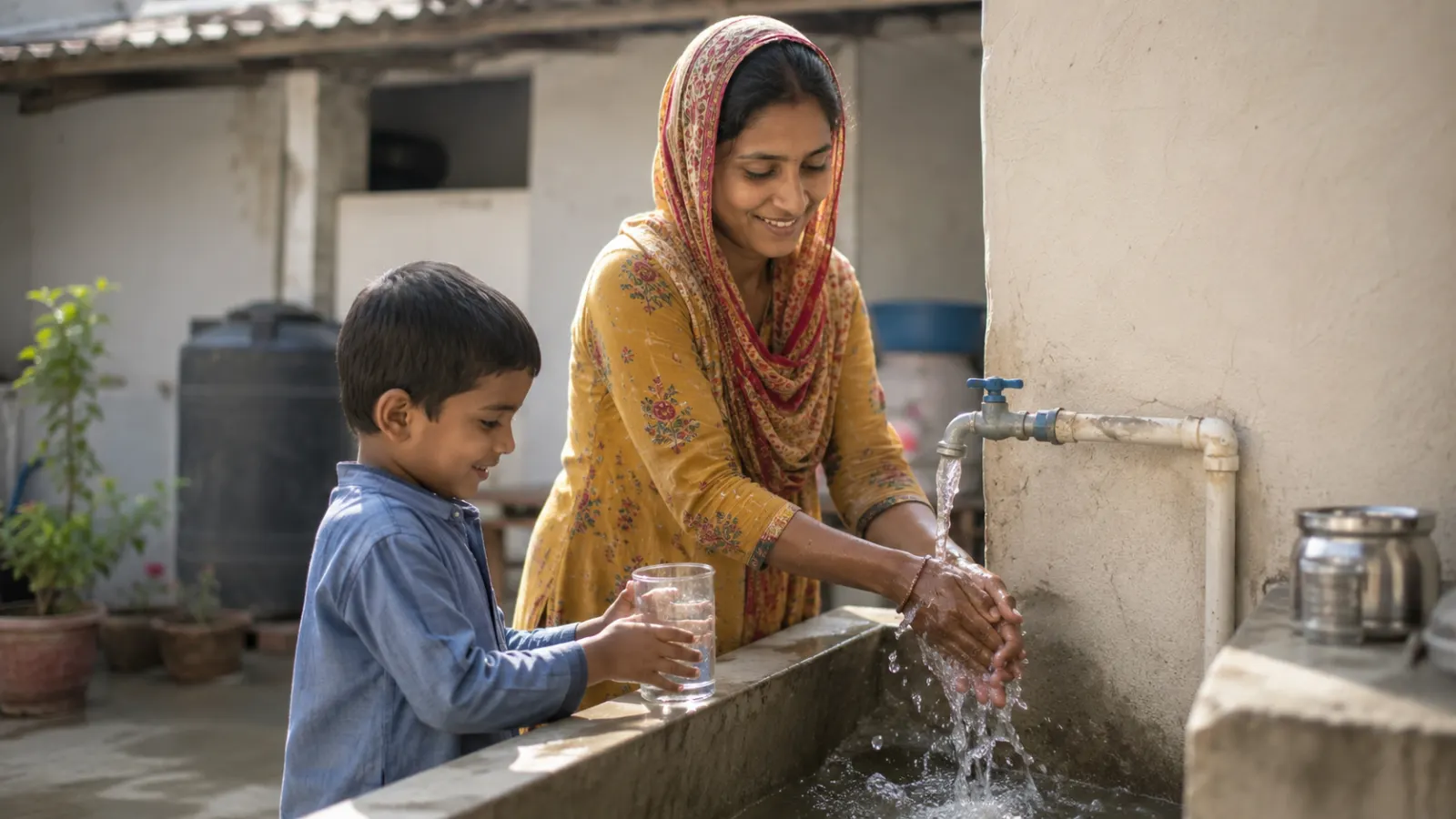
But drinking is only part of the story. Water is also necessary for washing hands, preparing food, cleaning utensils, bathing and maintaining toilets. A household with enough safe water to drink but not enough for basic hygiene can remain exposed to preventable infection.
This is why public-health agencies usually discuss water, sanitation and hygiene together as WASH rather than treating each as a completely separate service.
Sanitation and Safe Water Depend on Each Other
Water systems cannot remain safe at population scale if human waste is poorly managed.
A city may invest heavily in drinking-water treatment, yet if untreated sewage continually enters the river supplying that treatment plant, the system becomes more difficult and expensive to operate. A rural community may install groundwater wells but still experience contamination if sanitation facilities are located too close to shallow aquifers.
Toilets also need water or another effective system for safe waste management. Handwashing campaigns are much harder to implement where water is unreliable. Wastewater must be collected and treated so that one household's sanitation does not become another household's drinking-water contamination.
The health value of clean water therefore depends partly on what happens after water has been used.
Safe supply and safe sanitation belong to the same cycle.
Unsafe WASH Still Causes Preventable Deaths
The consequences of inadequate water and sanitation remain severe. WHO estimates cited in the supplied article attribute at least 1.4 million preventable deaths each year to unsafe water, sanitation and hygiene.
Mortality captures only the most visible part of the burden. Repeated diarrhoeal illness can affect nutrition, especially in young children. Families may lose income because adults miss work or must care for sick relatives. Clinics treat infections that stronger prevention could have reduced. Children miss school.
Water insecurity therefore creates a cascade.
A contaminated source becomes illness. Illness becomes missed education or employment. Medical treatment creates costs. Household income falls. The ability to invest in safer living conditions may decline further.
Clean water breaks parts of this cycle before disease develops.
Hospitals Cannot Function Safely Without Water
The importance of water becomes even clearer inside healthcare facilities.
Hand hygiene depends on it. Surfaces and instruments need cleaning. Toilets need to function. Laundry must be washed. Food preparation requires safe water. Many procedures require reliable supplies directly or indirectly.
A hospital cannot maintain strong infection-prevention standards if water is unavailable for hours at a time.
This makes WASH infrastructure a core component of healthcare rather than an environmental service located outside medicine. A clinic may possess trained doctors, medicines and sophisticated equipment, but basic patient safety becomes harder to maintain when water and sanitation fail.
The people most affected are often those already vulnerable: newborns, surgical patients, people with weakened immune systems and those requiring prolonged care.
Reliable clean water therefore belongs to the foundation of a resilient health system.
Clean Water and Nutrition Are Connected
Water and nutrition are often discussed as separate development issues, but they interact closely.
Repeated intestinal infections can interfere with nutrient absorption. A child may receive food but still struggle nutritionally when illness repeatedly prevents the body from using those nutrients effectively.
Water is also needed to prepare food safely. Contaminated water used in cooking or infant feeding can undermine the nutritional value of otherwise adequate food.
At a larger scale, agriculture depends heavily on freshwater. Irrigation supports food production in many regions, while drought and unreliable rainfall can affect harvests and food prices.
Clean household water and sustainable agricultural water management therefore belong to the same broader question: whether people have the conditions needed to remain healthy and adequately nourished.
Collecting Water Has a Major Time Cost
For households without water on the premises, water access becomes daily labour.
The 2026 United Nations World Water Development Report cited in your draft estimates that women and girls spend around 250 million hours every day collecting water.
That figure represents an enormous opportunity cost.
Time spent walking to a water source cannot simultaneously be spent in school, paid employment, rest or other household activities. Carrying heavy containers also creates physical strain, especially where people must walk long distances.
The burden is not distributed equally. Women and girls frequently perform a disproportionate share of water collection in communities without household supply.
Improving water access therefore changes far more than where somebody fills a container.
It changes how time itself can be used.
Water Access Can Affect Girls’ Education
Water and sanitation also matter inside schools.
A school without dependable water struggles to maintain clean toilets and functional handwashing facilities. These problems affect all students but can create particular difficulties for girls when menstrual hygiene facilities are inadequate.
At home, children may also contribute to water collection. When the journey is long, the task can compete directly with school attendance or study time.
Clean water therefore supports education in two different ways. It reduces illness and household collection burdens, while also enabling schools to maintain safe and usable facilities.
A classroom is not fully functional infrastructure if students cannot safely use the toilet or wash their hands.
Water Is Economic Infrastructure
Water is embedded in almost every part of an economy.
Restaurants require safe water for cooking and cleaning. Construction needs water. Manufacturing uses it in many processes. Offices and markets depend on sanitation. Agriculture is one of the world's largest users of freshwater.
Reliable water systems also save households money indirectly. People may spend less on emergency tanker supplies, bottled water or treatment of preventable disease when public services work properly.
At city scale, water reliability affects investment and productivity. A factory cannot operate normally if supply fails unpredictably. A restaurant cannot maintain hygiene without sufficient water. Hospitals and schools face disruption.
Clean water should therefore be understood as economic infrastructure in the same broad sense as electricity, roads and telecommunications.
Leaking Systems Waste Water and Money
A city can capture, treat and pump water successfully and still lose a large share before receiving payment for it.
The 2026 GLAAS update cited in the article reports average non-revenue water of about 39 per cent among participating countries with relevant data.
Non-revenue water does not consist only of physical leaks. It can include inaccurate meters, unauthorised consumption and other commercial losses. But major physical leakage remains an important problem in many networks.
This has two consequences.
First, scarce water is wasted after money and energy have already been spent treating and pumping it. Second, utilities lose revenue needed for maintenance and expansion.
Repairing a distribution system can therefore provide a double benefit: more effective water supply and stronger utility finances.
A Tap Is Only the Visible End of a Much Larger System
Household water infrastructure is usually judged from the consumer end.
People see the tap.
Behind it may be a reservoir or aquifer, intake system, treatment plant, pumping stations, storage tanks, kilometres of pipes, valves, laboratories, monitoring equipment and teams of operators and maintenance workers.
Every stage has to function.
The source must remain usable. Treatment must match the contaminants present. Pumps need power. Storage tanks need maintenance. Pipes must maintain appropriate pressure. Water quality needs to be monitored.
The value of the household tap therefore depends on an enormous system the consumer rarely sees.
This is why clean-water policy cannot be reduced to installing more taps.
Reliability Is Part of Safety
A supply can be microbiologically safe when it operates and still leave households water-insecure if it operates only intermittently.
When piped supply fails, families adapt.
They store water.
They purchase water from vendors.
They use private wells.
They reduce hygiene.
They may switch to lower-quality sources.
Storage itself can become a contamination pathway if containers are uncovered, dirty or repeatedly accessed with hands and utensils.
Intermittent networks can also create risks when pipe pressure falls. Damaged sections of the network may become more vulnerable to external contamination.
Reliability is therefore not merely about convenience.
It is part of drinking-water safety.
Clean-Looking Water Can Still Be Unsafe
One of the most persistent misunderstandings surrounding clean water is that people can recognise safety through appearance.
They cannot.
Water with visible sediment or a strong odour may indeed indicate a quality problem. But the reverse is not reliable. Clear, odourless water can still contain microorganisms or dissolved contaminants.
Arsenic can occur naturally in groundwater without making the water look dirty. Lead can enter through plumbing. Nitrates and many chemical pollutants may be invisible.
This is why water safety depends on source assessment, treatment and testing rather than ordinary sensory inspection.
“Clean” in public-health terms means much more than visually clear.
Clean Water Is a Matter of Dignity
Health statistics explain part of the importance of water but not all of it.
People need water to wash themselves, clean clothing, maintain toilets, prepare food and keep homes hygienic. These are basic parts of human dignity.
In 2010, the United Nations General Assembly explicitly recognised the human right to safe and clean drinking water and sanitation.
The rights-based approach matters because it asks more than whether water exists somewhere nearby. Water for personal and domestic use should be sufficient, safe, acceptable, physically accessible and affordable.
This shifts attention toward people who may otherwise disappear inside national averages.
A country can report high overall water coverage while informal settlements, remote communities or displaced populations remain poorly served.
Universal access means reaching the people who are hardest and often most expensive to serve.
Affordability Determines Whether Infrastructure Becomes Real Access
A pipe connection does not create meaningful access if a household cannot afford to use it.
Water utilities still need money. Treatment costs money. Electricity costs money. Pipes need repair. Staff need salaries. Laboratories require equipment.
The policy challenge is therefore not to pretend that safe water has no cost.
It is to design financing so that essential household use remains affordable while the system receives enough revenue to operate safely.
This may involve tariffs, public investment, targeted subsidies or cross-subsidies between user groups.
The failure to provide formal affordable services can produce a particularly unfair result: low-income households may end up buying water from private vendors at a much higher price per litre than wealthier households connected to the municipal network.
Water poverty can therefore include paying more for a worse service.
Maintenance Matters as Much as Construction
New infrastructure is politically attractive because it is visible.
A new treatment plant can be inaugurated. A new borehole can be photographed. A new pipeline can be announced.
Maintenance is less dramatic.
Yet maintenance often determines whether the investment still works five or ten years later.
Pumps break. Pipes corrode. Filters need replacement. Treatment chemicals must be purchased continuously. Storage tanks require cleaning. Skilled operators need to remain employed.
A water project funded only for construction may slowly fail after the initial investment ends.
Clean-water policy therefore needs to finance services over time, not simply physical assets.
Monitoring Turns Infrastructure Into a Continuing Service
Water safety cannot be certified permanently on the day a system opens.
Conditions change.
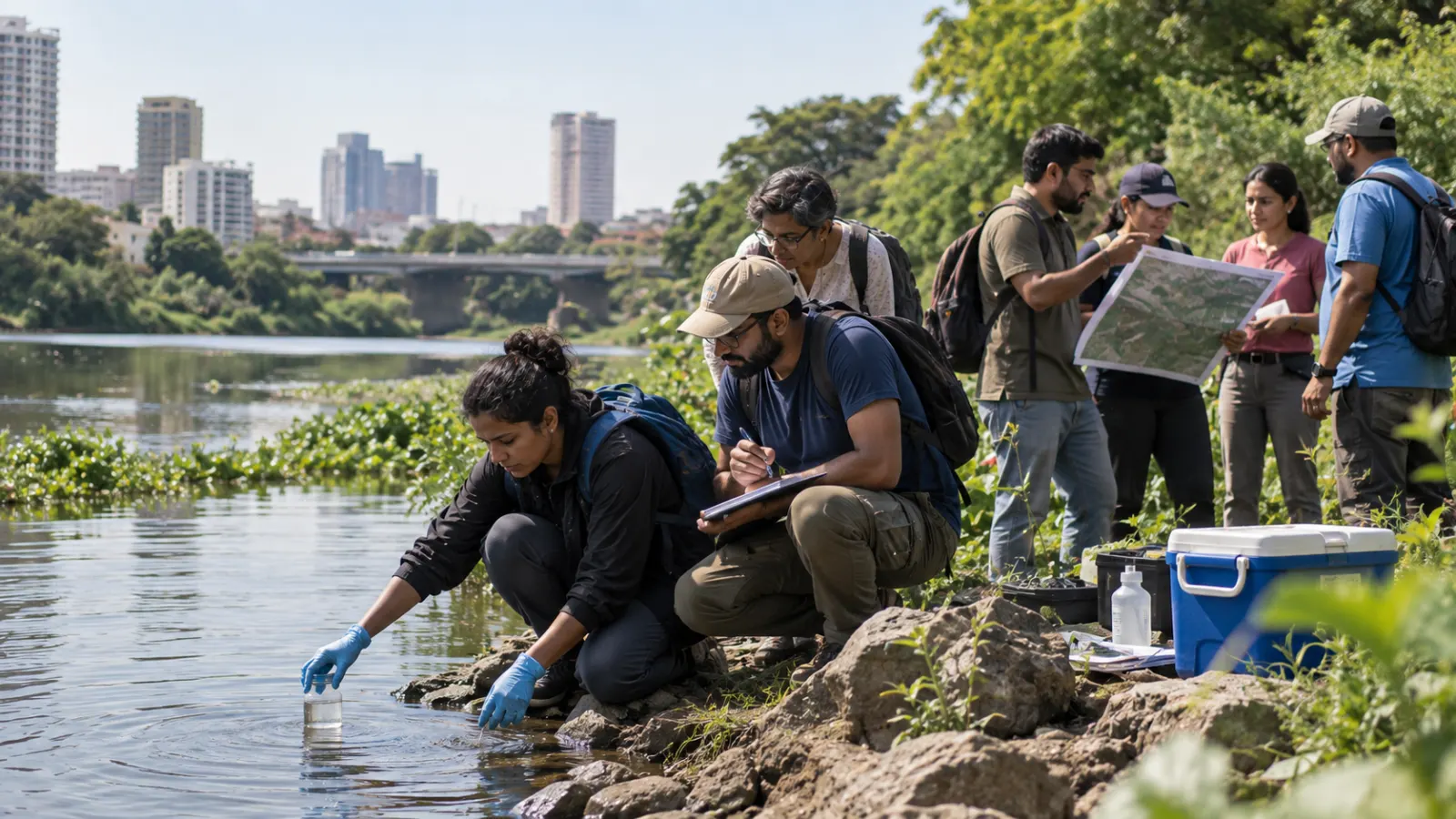
Sources can become polluted. Floods can introduce contamination. Pipes can break. Treatment equipment can fail. Water chemistry can change seasonally.
This makes monitoring essential.
Utilities need operational data showing whether treatment processes are functioning. Laboratories need to test water quality. Regulators need surveillance systems capable of identifying failures. Consumers need timely information when problems occur.
Your supplied article correctly argues that this monitoring is what turns an infrastructure project into an actual long-term service.
Building the system is only the beginning.
Public Trust Is Part of Water Safety
A technically safe supply can still fail socially when users do not trust it.
If utilities do not explain contamination events, interruptions or test results, households may abandon public supply for bottled water, tanker water or private filtration systems.
Some alternatives may be unnecessary or more expensive. Others may actually be less reliable than the public system.
Trust therefore depends on transparency.
When a contamination incident occurs, authorities need to explain what happened, what consumers should do, what testing shows and when normal use can safely resume.
Silence encourages rumours.
Clear communication turns monitoring into public accountability.
Climate Change Raises the Standard for Reliable Water Systems
Water infrastructure was often designed using historical assumptions about rainfall, river flow, drought and flooding.
Climate change makes those assumptions less dependable.
Drought can reduce reservoir storage and groundwater recharge. Extreme rainfall can overwhelm drainage and sanitation systems. Floodwater can contaminate wells. Heat can increase demand and evaporation. Sea-level rise can contribute to salinity problems in some coastal aquifers.
The WHO strategy cited in your source identifies climate shocks and ageing infrastructure among major challenges facing WASH systems.
A water service that performs well under average historical conditions may therefore still be vulnerable to future extremes.
Resilience increasingly requires planning for variability rather than assuming that the past will repeat itself.
Floods Can Create Water Shortages in the Middle of Too Much Water
Flooding illustrates how misleading the idea of “water abundance” can be.
A community can be surrounded by water and still lack safe drinking water.
Floodwater can enter wells, damage treatment plants, break distribution lines and overwhelm sewage systems. Electricity needed for pumping may fail.
The result is a crisis caused not by too little water but by too little safe water.
This distinction shows why quantity and quality cannot be separated in water policy.
Drought Can Reduce Both Quantity and Quality
Drought produces the opposite physical condition but similar service problems.
Reservoirs shrink.
River flows decline.
Groundwater pumping increases.
Communities may begin using alternative sources with poorer quality or weaker treatment.
Lower water volumes can also increase the concentration of some pollutants.
A resilient water system therefore needs more than one dependable source where feasible, along with planning for emergency treatment, storage and distribution.
Climate resilience is ultimately service resilience.
Clean Water Requires Source Protection
Treatment plants are important but should not be expected to compensate indefinitely for uncontrolled pollution.
Protecting catchments can reduce the amount of contamination entering reservoirs and rivers. Groundwater wells need protection from nearby sanitation, industrial releases and agricultural pollution.
The logic is straightforward.
A contaminant prevented from entering a water source does not need to be removed later.
Source protection can therefore reduce health risk and treatment cost simultaneously.
This is one reason modern drinking-water management increasingly emphasises the entire catchment-to-consumer chain rather than relying only on testing the final tap water.
Treatment Has to Match the Hazard
There is no universal technology that turns every source into safe drinking water.
Microbial contamination may require effective filtration and disinfection.
Groundwater with arsenic needs treatment capable of removing arsenic.
Saline water requires a completely different process.
Turbid surface water creates different operational challenges from a protected deep aquifer.
The correct system depends on the water.
This sounds obvious, but it is an important correction to technological solutionism. Installing a fashionable filter or treatment unit does not guarantee safety if the technology was never designed for the contaminants actually present.
Good water management begins with understanding the source.
Rural and Urban Systems Need Different Solutions
There is no single infrastructure model capable of providing clean water everywhere.
A major city may depend on dams, reservoirs, treatment plants, pumping stations and extensive distribution networks.
A rural community may rely on a protected spring, borehole, small piped system or rainwater harvesting.
Dense informal settlements create another challenge because conventional network expansion may be physically and legally difficult.
The technology should fit population density, source conditions, local skills, financing and maintenance capacity.
A highly sophisticated treatment plant that cannot be repaired locally may perform worse over time than a simpler system that operators understand and can maintain.
Sustainability includes institutional and technical realism.
Household Treatment Has a Role—but Cannot Replace Public Systems
Filters, boiling and other point-of-use treatments can reduce certain risks and may be particularly valuable during emergencies or where public supply is unsafe.
But household treatment should not become an excuse for governments or utilities to avoid providing safe services.
Not every household can purchase equipment consistently. Different technologies remove different contaminants. Filters require maintenance and replacement. Boiling requires fuel or electricity.
Public water systems create population-scale protection.
Household treatment is best understood as an additional barrier where needed, not the permanent substitute for functional water infrastructure.
Schools Need Water to Function as Schools
Educational infrastructure discussions often focus on classrooms, teachers and textbooks.
Water and sanitation belong on the same list.
Children need drinking water during the day. Toilets need water or another safe sanitation system. Handwashing facilities need reliable supply. Cleaning requires water.
When these services fail, the educational environment deteriorates.
The problem is particularly significant where girls lack safe and private menstrual-hygiene facilities.
Clean water therefore supports education not merely by preventing illness at home but by making the school itself functional.
Water Access Can Reduce Inequality
The benefits of improved water supply are often largest among people who previously carried the greatest burden.
A household already receiving safe continuous piped water gains relatively little from another infrastructure project.
A family walking several kilometres to collect uncertain water may gain hours of time each week when a safe supply reaches the home.
That difference is why universal access has distributional importance.
Water infrastructure can reduce inequality directly by delivering services that wealthier households are already able to purchase privately.
Water Security Requires Competent Institutions
Technology alone cannot operate itself.
Utilities need trained technicians. Laboratories require staff. Regulators need authority. Maintenance teams need spare parts and budgets. Financial systems need to collect and allocate revenue.
Weak institutions can turn good infrastructure into unreliable service.
This is one of the most important lessons from global WASH assessments.
The hardest part of universal water access is increasingly not simply knowing how to build a well or treatment plant.
It is building systems capable of keeping them safe and functional for decades.
Frequently Asked Questions
Why is clean water important?
Clean water prevents disease, enables hygiene and sanitation, supports nutrition, schools, hospitals and economic activity, and protects basic human dignity.
What is safely managed drinking water?
Safely managed drinking water comes from an improved source, is accessible on the premises, is available when needed and is free from relevant contamination.
How many people lack safely managed drinking water?
The WHO strategy cited in this article reports that about 2.1 billion people still lack safely managed drinking-water services.
Can clear water still be unsafe?
Yes. Many microorganisms and chemical contaminants cannot be detected simply by looking at water.
Why are water and sanitation discussed together?
Poor sanitation can contaminate drinking-water sources, while hygiene and many sanitation systems also require reliable water.
How does clean water prevent disease?
Safe water reduces exposure to pathogens that can spread through contaminated drinking water, food preparation and poor hygiene.
Why do hospitals need reliable water?
Healthcare facilities need water for hand hygiene, cleaning, sterilisation, toilets, laundry, food preparation and many medical activities.
How does water access affect education?
Reliable water reduces illness and collection time at home while helping schools maintain safe toilets, handwashing and hygiene facilities.
Why does water collection affect women and girls disproportionately?
In many communities, women and girls perform much of the unpaid work of collecting household water.
Is having a tap enough to guarantee clean water?
No. The supply must also be reliable, sufficiently available and safe from contamination.
Why does affordability matter?
A household may technically have access to infrastructure but still be unable to use sufficient water if tariffs or connection costs are unaffordable.
Why do water systems need continuous monitoring?
Sources, treatment equipment and distribution networks can change or fail over time. Monitoring identifies problems before or when they create health risks.
Does climate change affect drinking-water safety?
Yes. Drought, flooding, changing rainfall and sea-level rise can affect both water availability and water quality.
Can household filters guarantee safe water?
Not automatically. Filters differ in what they remove and must be matched to the contaminants present and maintained properly.
Why is maintaining water infrastructure so important?
Pumps, pipes, treatment systems and storage facilities deteriorate. Without continuing finance and skilled maintenance, previously safe systems can become unreliable.
Clean Water Is Really a Service
The most useful shift in understanding clean water is to stop thinking only about the source.
A river is not a service.
A borehole is not a service.
A pipe is not a service.
A tap is not a service.
A functioning water service connects all of them.
The source is protected. Treatment addresses the relevant hazards. Infrastructure carries the water reliably. Operators maintain pressure and equipment. Laboratories monitor safety. Regulators provide oversight. Households can afford the service.
The consumer experiences all of that complexity through one ordinary action:
turning on the tap.
The Central Idea
Clean water matters because it supports far more than hydration.
It interrupts disease transmission, enables handwashing and sanitation, allows hospitals to control infection, supports safe food preparation, protects nutrition and makes schools usable. Reliable household access can save enormous amounts of unpaid labour and expand opportunities for education and employment.
Your supplied article makes the crucial distinction that safe water is not defined only by whether a source has been improved; accessibility, reliability and freedom from contamination all matter.
That distinction changes how progress should be measured.
Installing infrastructure is important.
Keeping it working is more important.
A borehole that fails after three years does not provide durable water security. A treatment plant without chemicals or trained operators is not a functioning service. A municipal network that loses pressure repeatedly can push families toward storage and unsafe alternative supplies. A tariff structure that excludes poor households leaves formal infrastructure without universal access.
Clean water therefore depends upon a chain extending from source protection to treatment, distribution, affordability, monitoring and household use.
Climate change makes that chain more demanding. Future systems need to function through drought, flooding and greater variability rather than only under historically average conditions.
The global objective should therefore move beyond building water infrastructure toward providing safe water services continuously.
A household should not need to understand treatment chemistry, pipeline pressure or microbial testing every morning before drinking a glass of water.
That uncertainty is precisely what a functioning public water system is designed to remove.
The greatest achievement of clean-water infrastructure is therefore also the easiest to overlook:
it allows ordinary people to use water without having to think constantly about whether the water will make them sick.