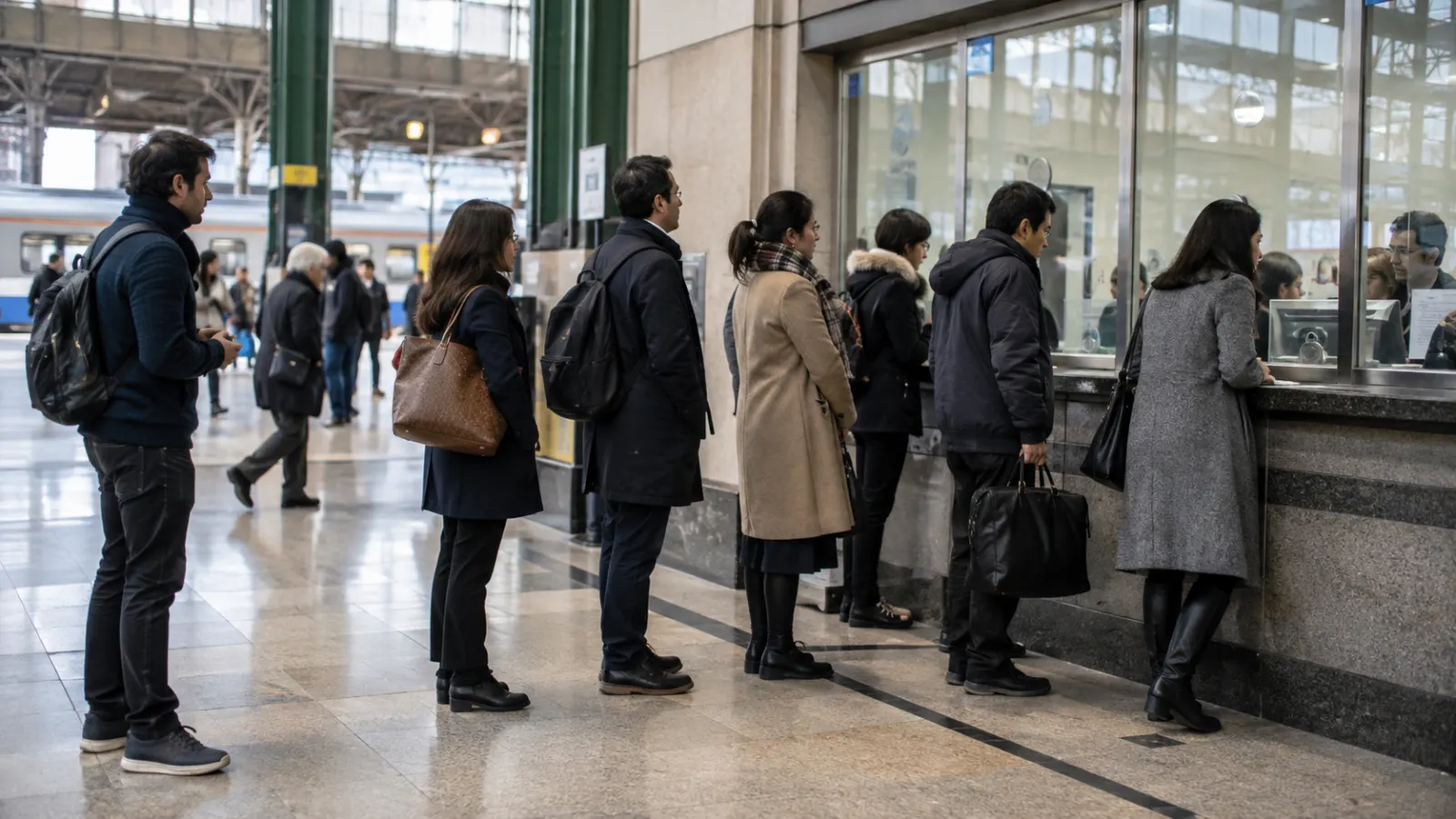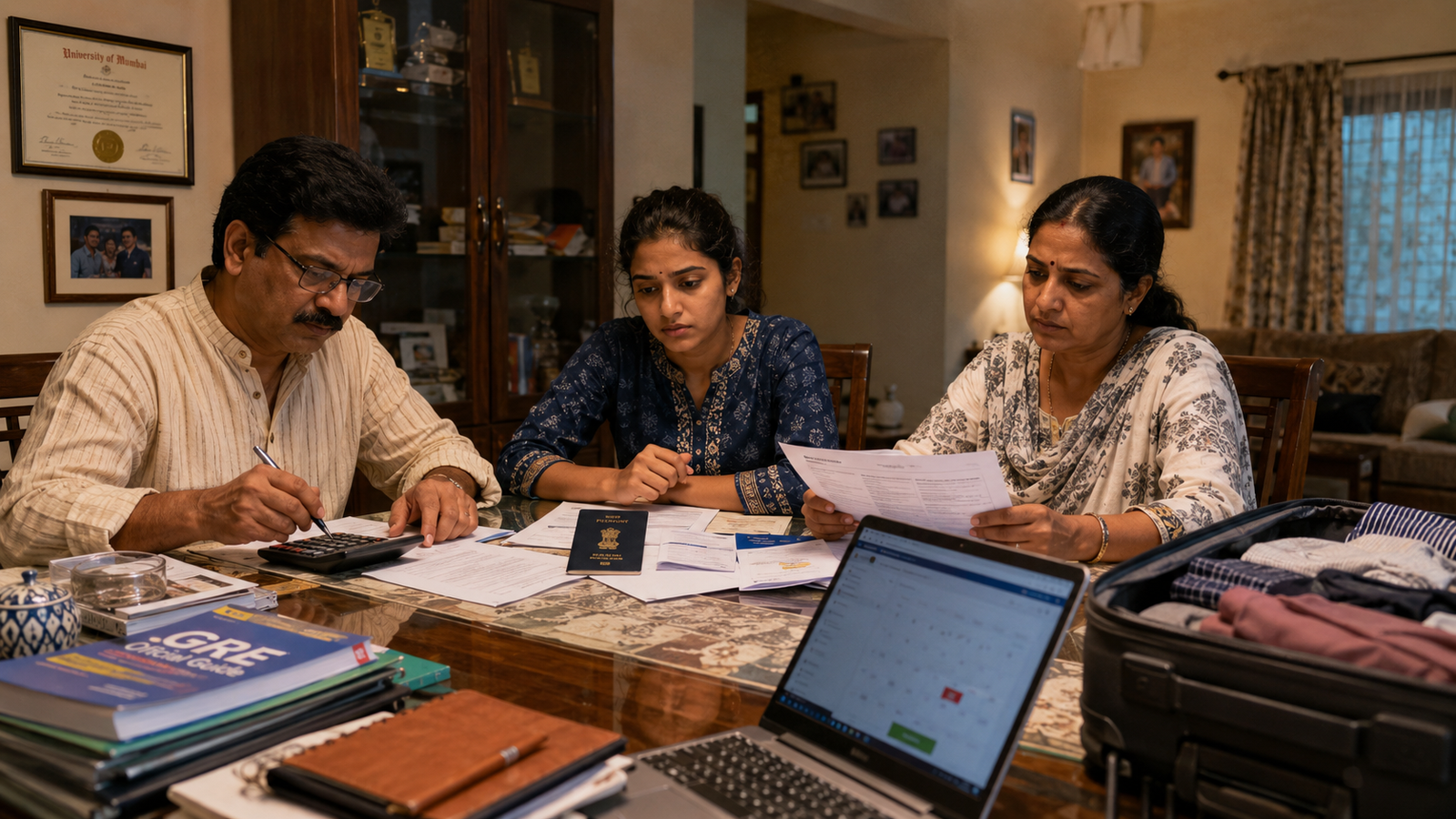
For India’s middle class, a visa is no longer just a document.
It is a dream, a risk, a family investment, a social status marker, a career strategy and sometimes the difference between upward mobility and financial stress. A visa stamped on a passport can decide whether a student studies in Toronto, whether an engineer works in California, whether a nurse moves to the UK, whether a family visits Europe, whether a worker reaches Dubai, or whether parents see their children after years of separation.
In modern India, foreign visa rules shape domestic aspiration.
The Indian middle class does not look at the world only through maps. It looks at the world through visa categories: F-1, H-1B, PR, PGWP, Graduate Route, Schengen, Skilled Worker, Subclass 500, Subclass 485, visitor visa, spouse visa, dependent visa and work permit. These are not technical labels for immigration lawyers alone. They are now part of household conversation.
A father in Lucknow asks whether Canada is still safe for study.A mother in Kochi asks whether her daughter can take dependants to the UK.A student in Hyderabad asks whether the US H-1B lottery is worth the risk.A nurse in Kerala compares Britain, Ireland and the Gulf.A family in Punjab worries about Canadian study-permit rejection.A couple in Mumbai plans a Schengen honeymoon around appointment slots and refusal rates.A software engineer in Bengaluru calculates whether an overseas job offer can lead to permanent residency.
This is why visa policy abroad has become a social force inside India.
A rule changed in Ottawa, London, Washington, Canberra or Brussels does not remain foreign news. It enters Indian homes, WhatsApp groups, coaching centres, education consultancies, loan offices, IELTS classrooms and family meetings. It changes where people apply, how much they borrow, what they study, whom they marry, when they have children and whether they return to India.
The Indian middle-class dream has globalised. But that dream now depends heavily on the immigration politics of other countries.
The Visa Has Become a Middle-Class Asset
The Indian middle class has always valued education, secure employment and social mobility. Earlier, the path was often domestic: engineering college, government job, bank job, MBA, civil services, private-sector job, family business or professional practice.
Now, for many families, the path extends abroad.
A foreign degree, work permit or permanent residency possibility is seen as a form of social insurance. It can offer higher wages, cleaner cities, better public systems, global exposure, stronger currency earnings and a possible route to citizenship. Even where the reality is harder than the dream, the perception remains powerful.
This is why families are willing to take major financial risks. They sell land, mortgage property, liquidate savings, take education loans or borrow from relatives to send children abroad. The calculation is simple: if the visa leads to a job and settlement, the investment is justified. If the visa pathway closes, the family can be badly hurt.
That is the central fragility of India’s global aspiration.
The middle class is not merely buying education or travel. It is often buying a pathway. When that pathway changes, the dream shakes.
Student Visas Have Become Migration Gateways
Nowhere is this more visible than in overseas education.
Studying abroad was once associated with elite students going to the US or UK for advanced degrees. Today, it is a mass industry. Indian students are spread across North America, Europe, Australia, the Gulf, Central Asia and East Asia.
A December 2025 Ministry of External Affairs parliamentary answer listed Indian students across 153 countries and showed more than 1.25 million Indian students in universities or tertiary institutions abroad as of January 1, 2025, with large student populations in Canada, the US, Australia, the UK, the UAE and Germany. The annexed table also listed school-level Indian students abroad, taking the broader overseas student count far higher.
But students do not choose countries only by university ranking. They choose by visa logic.
The key questions are practical: Can I work part-time? Can I stay after graduation? Can I bring my spouse? Can my spouse work? Can I apply for permanent residency? Can I repay my loan? Can I get a job before my permit expires?
This is why student visas are no longer only education instruments. They are migration instruments.
Destination countries know this. They use student visas to attract talent, fund universities and fill labour gaps. But when housing pressure, immigration politics or fraud concerns rise, they tighten the same pathways. Indian students then feel the shock immediately.
Canada Shows the Risk of Policy Reversal
Canada is the clearest example of how quickly a dream destination can become uncertain.
For years, Canada attracted Indian students because it offered a powerful combination: English-language education, post-study work options, immigration pathways, large Indian-origin communities and a multicultural brand. The result was a huge flow of Indian applicants.
Then the system came under pressure. Housing shortages, public-service strain, institutional-quality concerns, fake admission letters and domestic political backlash pushed Canada to restrict international student intake.
IRCC’s 2026 plan says Canada expects to issue up to 408,000 study permits, including 155,000 for newly arriving international students and 253,000 extensions. That is 7% lower than the 2025 target of 437,000 and 16% lower than the 2024 target of 485,000.
This matters enormously for Indian families. A lower cap means more competition, more uncertainty and greater pressure to choose institutions carefully. The old assumption that Canada was an easy education-to-PR route has weakened.
Reuters reported in November 2025 that Canada rejected 74% of Indian study-permit applications in August 2025, compared with 32% in August 2023, while Indian applications in that month fell sharply. That statistic shows how quickly visa tightening can alter middle-class behaviour.
For India, the Canada lesson is clear: families should not build life plans on outdated visa assumptions.
The UK: Attractive, But More Selective
The UK has regained importance for Indian students and professionals, but it too has tightened parts of the system.
The Graduate Route remains attractive because it allows eligible international graduates to stay and work, or look for work, for up to two years after completing a qualifying degree, and up to three years for PhD or doctoral graduates.
That keeps Britain competitive.
But dependent rules have changed. UK government guidance says that students can bring dependants only in limited cases, including government-sponsored students on courses longer than six months and certain postgraduate research-level students; for postgraduate courses starting on or after January 1, 2024, the course generally must be a PhD, doctorate or research-based higher degree for dependants to qualify.
This affects Indian families directly.
Earlier, a married student could imagine moving with spouse and children, with the spouse sometimes working to support household expenses. Now many taught master’s students must consider studying alone. That changes the emotional and financial calculation.
For a 24-year-old single student, the UK may still look attractive. For a married 31-year-old professional planning a master’s with family, the rule change can make the UK far less viable.
This is how one visa rule reshapes thousands of household decisions.
The United States Remains the Prize — and the Gamble
The US remains the most powerful magnet for Indian ambition.
American universities, STEM programmes, technology firms, research ecosystems and salaries make the US uniquely attractive. The Open Doors 2025 report said US institutions hosted 1.17 million international students in 2024/25, and India remained the top country of origin.
But the US pathway is also risky because the student-to-work transition often depends on uncertain immigration mechanisms.
The H-1B visa is central to this story. Indian nationals are the dominant beneficiaries of the H-1B system. Migration Policy Institute data from April 2026 says Indian nationals received 71% of approved H-1B petitions in FY2024, or 283,400 of 399,400 approvals.
That dominance is both strength and vulnerability.
It shows that Indian talent is deeply embedded in the US skilled-worker economy. But it also means any change to H-1B selection, wage rules, employer sponsorship, visa processing or green-card backlogs affects Indians disproportionately.
USCIS has also changed the H-1B registration process. Its 2026 guidance says a final rule effective February 27, 2026, will be in place for the FY2027 H-1B cap registration season, and USCIS describes the process as implementing a weighted selection approach favouring higher-skilled and higher-paid workers.
For Indian students, this means the US dream is not just about admission. It is about surviving multiple gates: F-1 visa, university performance, internships, OPT, employer sponsorship, H-1B selection, green-card backlog and job-market cycles.
The US offers the highest upside, but also one of the most uncertain pathways.
Australia Is Managing Growth More Carefully
Australia remains a major destination for Indian students, especially because of English-language education, post-study work options, vocational pathways and a large Indian community.
But Australia too has moved toward managed intake.
Study Australia said the 2026 National Planning Level includes 25,000 more new student commencements than in 2025, and frames the policy as a commitment to welcoming international students while managing the system.
This is important because Australia is trying to balance two pressures: it wants international students, but it also faces domestic concerns about housing, migration levels, institutional quality and labour-market outcomes.
For Indian students, the message is clear. Australia is not closed, but it is becoming more selective. Course quality, genuine student intent, financial capacity, English proficiency and employability matter more.
The old idea that any foreign admission is enough is no longer safe.
Europe Is Opening, But Not Equally
Europe is increasingly attractive to Indian students, workers and tourists.
Germany, France, Ireland, the Netherlands, Italy, Finland and other countries are competing for talent. Some offer lower tuition than Anglo-American destinations. Some need skilled workers in engineering, healthcare, IT and research. Some have post-study or job-seeker pathways.
But Europe is not one market. Each country has different language needs, work rules, residence pathways, labour-market conditions and visa processing systems.
For Indian tourists and business travellers, Schengen visas have become a major mobility issue. Indian demand is rising sharply, but refusal rates and appointment bottlenecks remain real concerns. Recent reporting based on European Commission data said India had more than 1.15 million Schengen visa applications in 2025 and remained the third-largest applicant country, with a rejection rate around 15.8%.
This matters beyond tourism.
A rejected Schengen visa can spoil a honeymoon, business meeting, student trip, conference visit or family vacation. The Indian middle class increasingly travels abroad, but visa uncertainty remains a psychological barrier.
For Indian travellers, Europe is desirable. For European countries, Indian travellers are economically valuable. Yet the visa process often remains slow, expensive and unpredictable.
This gap is now a diplomatic issue.
Visitor Visas Also Shape Social Life
The visa debate is not only about students and workers.
Visitor visas shape family life.
Indian families are now spread across continents. Parents want to visit children in Canada, the US, Australia or the UK. Grandparents want to attend childbirth, graduation ceremonies and weddings. Siblings want to attend family functions. Couples plan vacations abroad. Business owners travel for exhibitions and meetings.
When visitor visas are delayed or rejected, families suffer.
A parent may miss a daughter’s delivery. A brother may miss a wedding. A businessperson may miss a trade fair. A tourist may lose hotel bookings and flight money. A middle-class family may feel humiliated after submitting financial proofs, employment documents, travel history and invitation letters.
This is why visa regimes are emotional systems, not only administrative systems.
Every refusal carries a bureaucratic reason, but also a human consequence.
The Middle Class Is Learning the Language of Immigration
A striking feature of modern India is how deeply immigration vocabulary has entered middle-class life.
People casually discuss CRS scores, LMIA, SOPs, CAS letters, I-20 forms, DS-160, OPT, CPT, H-1B, EB-2, EB-3, Schengen slots, biometrics, VFS appointments, GTE, genuine student criteria, sponsorship, dependent rules and proof of funds.
This is a social transformation.
The earlier middle class discussed school admissions, government exams, bank jobs, engineering cutoffs and marriage proposals. Today, it discusses IELTS bands, GRE scores, visa refusal letters, work permits, PR points and foreign credential recognition.
This does not mean everyone wants to leave India permanently. Many want options. A foreign visa is seen as insurance in an uncertain world.
For the Indian middle class, mobility has become security.
Visa Rules Create an Industry — and a Risk Market
The rise of foreign aspiration has produced a massive ecosystem: education consultants, immigration lawyers, IELTS coaching centres, loan providers, foreign university agents, document-preparation firms, SOP writers, travel agents, forex dealers and settlement advisors.
Some are professional and ethical. Many are not.
When visa rules are complex, middle-class families seek intermediaries. That creates opportunity for fraud. Families may be sold false promises: “Guaranteed visa,” “easy PR,” “no IELTS required,” “work while studying,” “spouse can earn enough,” “100% job placement,” “settlement assured.”
Such claims can destroy families financially.
The visa economy is therefore also a misinformation economy.
India needs stronger regulation of overseas education and immigration agents. A family investing ₹20 lakh, ₹40 lakh or ₹80 lakh in a foreign plan deserves transparent information. False claims about visa pathways should be treated as financial deception, not harmless marketing.
Visa Rules Are Becoming Labour Policy
For receiving countries, visa policy is labour policy.
The US uses H-1B to attract skilled workers. Canada uses study and work pathways to feed immigration targets. The UK uses Skilled Worker routes to meet labour shortages in health, technology and other sectors. Australia uses student and skilled migration systems to support universities and labour markets. Gulf countries use work visas to staff construction, services, logistics, healthcare and domestic labour.
This means Indian migration is shaped by the labour needs of other economies.
When Canada needs workers, it opens pathways. When housing pressure rises, it restricts students. When the UK needs nurses, Indian healthcare workers benefit. When US tech hiring slows, H-1B prospects become weaker. When Gulf states localise jobs, Indian workers feel the effect.
Indian middle-class dreams are therefore dependent not only on personal merit, but on foreign labour-market politics.
That is why India must build its own mobility diplomacy. It should negotiate not only trade in goods and services, but also fair movement of people.
Family Migration Is Becoming Harder
One major shift across countries is the tightening of family-linked migration.
Dependants are politically sensitive because they increase population numbers, housing demand, schooling needs and public-service pressure. Countries may welcome students or workers, but become more cautious when dependants arrive in large numbers.
The UK’s student dependent restrictions show this clearly. Canada has also tightened parts of its student and work-permit ecosystem. Australia has increased scrutiny around genuine student intent and financial capacity.
For Indian families, this changes the migration decision.
Earlier, a married person might study abroad with spouse and child, hoping the spouse would work. Now that plan may not be feasible. A student may have to go alone. A couple may delay children. A family may choose a different country. A professional may postpone migration.
Visa rules enter private life in very direct ways.
They shape marriage timing, childbirth, caregiving and family separation.
Permanent Residency Is the Real Magnet
For many Indians, the final dream is not the visa. It is permanent residency or citizenship.
A student visa is attractive because it may lead to work. A work permit is attractive because it may lead to PR. PR is attractive because it offers stability, rights, public services and a sense of long-term security.
This is why countries with clearer PR pathways attract Indian applicants.
Canada became attractive partly because of this logic. Australia has long attracted skilled migrants because of settlement possibilities. The US remains attractive despite backlogs because the job-market upside is high. The UK is attractive where Skilled Worker and settlement pathways appear viable. Europe is gaining attention where job-seeker and skilled-worker pathways are clearer.
The Indian middle class increasingly thinks in migration ladders.
Admission is step one.Post-study work is step two.Skilled work is step three.Permanent residency is step four.Citizenship is step five.
If any step becomes uncertain, the whole plan weakens.
Visa Uncertainty Can Distort Education Choices
Visa rules can also distort what students study.
A student may choose a course not because of intellectual interest, but because it offers better visa prospects. STEM courses become attractive because they provide longer work opportunities in some countries. Healthcare becomes attractive because it is tied to labour shortages. Vocational programmes become popular if they appear to lead to PR. Some students choose remote campuses or low-ranked institutions because they believe the location improves settlement chances.
This is dangerous.
Education should build capability. But when immigration pathways dominate decision-making, students may choose poor-quality institutions or unsuitable courses.
The result can be debt without employability.
India’s overseas education conversation must shift from “Which country is easy?” to “Which course gives genuine long-term value?”
A visa can open a door. It cannot compensate for weak skills.
The Inequality Problem: Mobility Is Not Equal
Foreign mobility is becoming a new form of inequality.
A wealthy family can afford better universities, stronger documentation, legal advice, international travel history and financial proof. A lower-middle-class family may depend on loans, agents and risky institutions. A student with English fluency, urban confidence and professional networks has an advantage over a student from a small town with limited guidance.
Visa systems often claim to be neutral, but they reward financial capacity, documentation quality and social capital.
This means global mobility is easier for the already privileged.
The Indian middle class sees foreign migration as a route to equality, but access to that route is itself unequal. Those who need mobility most may be most vulnerable to rejection, fraud or poor outcomes.
This is why India needs better public information systems. Families should not have to depend entirely on agents to understand foreign pathways.
India Cannot Control Foreign Visa Rules — But It Can Prepare Citizens Better
India cannot decide Canada’s study caps, America’s H-1B rules, Britain’s dependent policy, Australia’s intake system or Schengen refusal standards.
But India can do five things.
First, it can negotiate mobility partnerships with key countries. These should include student protection, worker mobility, qualification recognition, social security coordination and faster visa processing for legitimate applicants.
Second, it can regulate agents. Overseas education and migration counselling should not be a free-for-all market.
Third, it can create official country-wise mobility dashboards. Students and workers should be able to see visa rules, costs, risks, employment prospects, PR pathways and fraud warnings in one place.
Fourth, it can improve domestic education and employment. The strongest way to reduce desperate migration is to create better opportunity at home.
Fifth, it can strengthen consular support. Once Indians go abroad, they need credible protection systems.
The goal is not to stop migration. The goal is to make migration informed, legal, safe and dignified.
The Counter-View: Should India Worry If Its Citizens Want to Leave?
A serious counter-view asks: is this really a problem? If Indians want to study, work and settle abroad, is that not simply individual freedom?
Yes, migration is a right and an opportunity. No country should shame its citizens for seeking a better life. Overseas Indians send remittances, build networks, strengthen India’s global image and create bridges with powerful economies.
But the concern is not migration itself.
The concern is dependence on uncertain foreign systems. When a large section of the middle class builds life plans around visa rules controlled by other countries, national vulnerability appears. If those countries tighten entry, families suffer. If pathways become exploitative, students suffer. If migration becomes compulsion rather than choice, India loses confidence in its own domestic opportunity structure.
A healthy India should allow global mobility, but not force aspiration to leave.
That is the difference.
What Happens Next
Visa rules abroad will shape India’s middle class in six major ways.
First, students will become more cautious. They will compare countries not only by university ranking but by visa stability, work rights, PR pathways and cost of living.
Second, Canada’s appeal may decline from its peak unless policy clarity improves. The country will remain important, but it will no longer look as automatic as before.
Third, the US will remain the high-risk, high-reward destination. It will attract top talent, but H-1B and green-card uncertainty will continue to shape decisions.
Fourth, the UK and Australia will remain attractive but more selective. Students will need stronger documentation, better course choices and realistic financial planning.
Fifth, Europe will gain ground, but language and labour-market integration will decide outcomes.
Sixth, visa anxiety will become a permanent feature of middle-class life. Families will increasingly plan education, marriage, employment and finance around mobility rules.
The deeper lesson is clear: India’s middle class has become globally ambitious, but global ambition now depends on foreign bureaucracy.
A visa officer in another country may not know the emotional weight of the file in front of them. But that file may contain a family’s savings, a student’s future, a parent’s hope and a household’s strategy for upward mobility.
That is why visa rules abroad shape Indian dreams so deeply.
They decide who gets to move, who waits, who borrows, who returns, who settles, who separates from family and who rebuilds life elsewhere.
For India, the answer is not to discourage mobility. It is to make mobility smarter.
The Indian middle-class dream should not be built on rumours, agent promises and outdated visa assumptions. It should be built on information, skills, financial discipline and realistic planning.
Because in today’s world, ambition needs a passport.
But survival needs policy clarity.