Strait of Hormuz Traffic Plunges After Tanker Attacks
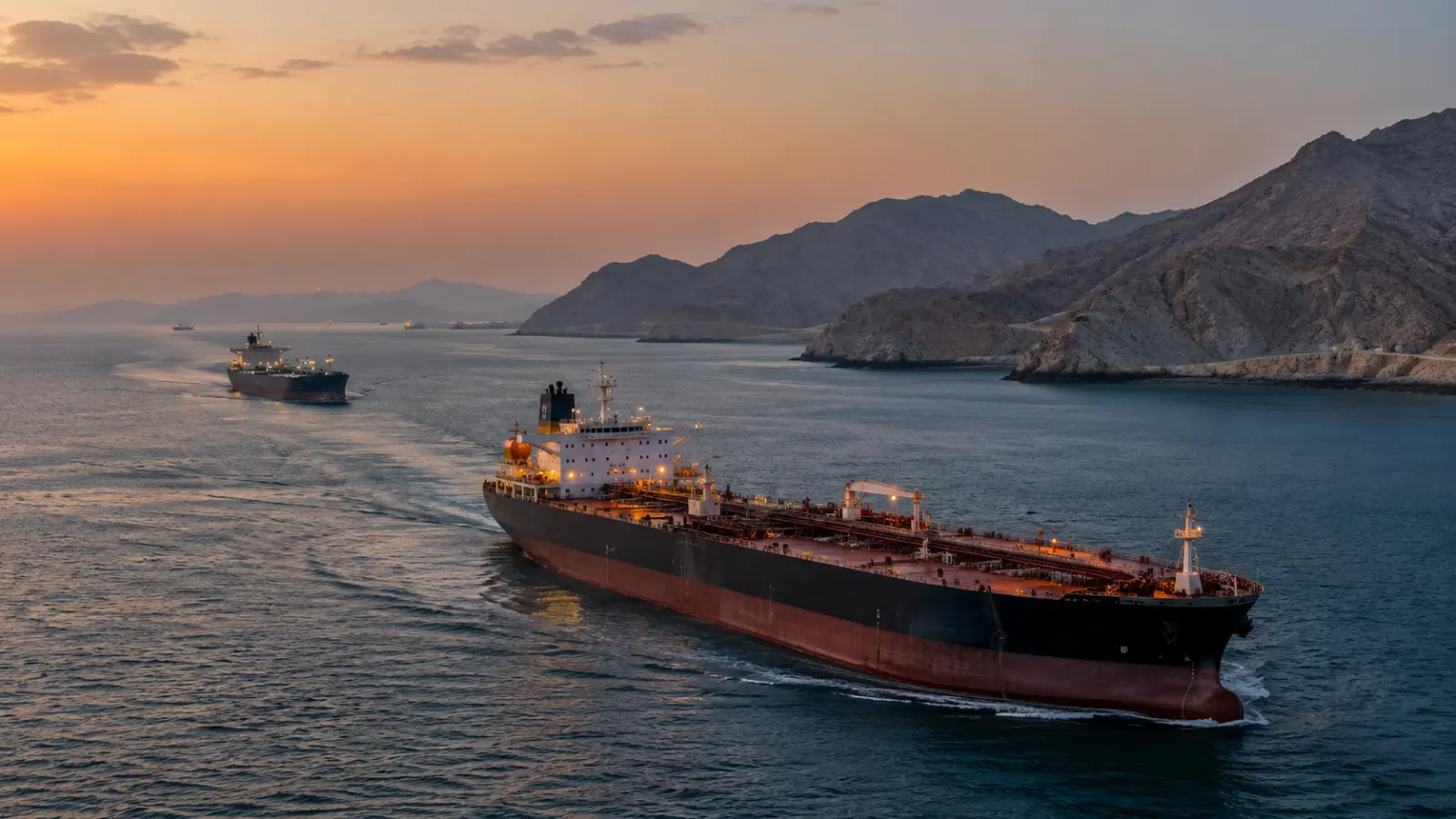
Shipping traffic through the Strait of Hormuz has fallen to its lowest level in more than two months after a sharp increase in attacks on tankers, adding fresh pressure to one of the world’s most important energy corridors. The decline comes as the number of attacks, attempted attacks and harassment incidents in and around the strait reached the highest weekly level since the Iran war began earlier this year.
Only seven commodity vessels passed through the strait on Tuesday, the lowest figure since July 23, according to shipping data cited by Reuters. Traffic edged up to 10 vessels on Wednesday, but that was still well below the more than 20 daily crossings recorded earlier in the week. Before the war began on February 28, about 125 large commercial vessels typically crossed the strait each day.
The disruption matters far beyond the Gulf. Before the conflict, cargoes moving through the Strait of Hormuz accounted for roughly one-fifth of global crude-oil and liquefied-natural-gas supplies, making even a partial slowdown a major risk for global energy markets.
Tanker attacks reach wartime high
Maritime security sources said there were at least 12 attacks, attempted attacks or harassment incidents involving oil, LNG and LPG tankers between September 28 and October 5. That was the highest weekly total since the Iran war began. The United Nations’ International Maritime Organization separately recorded nine incidents over the same period, although its verification process is typically slower.
The incidents have included projectiles, drone activity, surveillance and aggressive radio communications directed at vessels transiting the waterway. The US Navy-led Joint Maritime Information Center has said the pattern indicates continued Iranian efforts to assert pressure along key shipping lanes.
In one of the latest incidents, a tanker was struck by multiple projectiles roughly 51 nautical miles north of Qatar’s Madinat ash Shamal, with casualties reported. The attack reinforced concerns among shipowners and insurers about the growing risks of operating in the area.
India has also been directly affected. Twelve crew members were injured after an unidentified projectile struck the Panama-flagged tanker On Peace while it was transiting the Strait of Hormuz.
Crude flows through Hormuz fall sharply
The decline in vessel traffic has already affected crude-oil movements.
Crude crossing the strait fell by about 27% from the previous wartime high to at least 10.1 million barrels per day, equivalent to roughly 74% of pre-war levels. Much of the decline was linked to fewer ship-to-ship transfers in the Gulf of Oman.
However, Gulf producers have been adapting by increasing exports through alternative routes. Oil exports from the Gulf of Oman coast and Red Sea terminals climbed to about 6.7 million barrels per day, more than double pre-war volumes through those routes. That helped keep overall Middle Eastern crude exports near pre-conflict levels despite the decline in direct Hormuz traffic.
The result is an unusual situation: physical traffic through the world’s most important oil chokepoint has fallen sharply, but regional producers have so far managed to prevent an equivalent collapse in total export volumes.
That does not eliminate the risk. Alternative pipelines and terminals have limited capacity, and sustained attacks could eventually overwhelm the region’s ability to reroute exports.
Oil prices jump as supply fears return
Energy markets have reacted quickly to the renewed shipping risks.
Brent crude rose more than 4% on Thursday to above $102 a barrel, while US West Texas Intermediate crude climbed to nearly $92. The latest tanker attacks, broader Middle East tensions and hurricane-related production shutdowns in the Gulf of Mexico all contributed to the increase.
The Strait of Hormuz remains particularly important because Saudi Arabia, the United Arab Emirates, Kuwait, Iraq and Qatar depend heavily on Gulf shipping routes to reach international markets.
Any sustained reduction in shipping capacity can increase tanker rates, insurance costs and delivery times even before actual oil production is disrupted.
That means consumers can feel the impact through higher crude prices even when enough oil continues to reach global markets.
Iran claims control as pressure on shipping grows
The security situation is becoming more complicated because Iran has continued asserting control over the strait.
An adviser to Iran’s Revolutionary Guards said Tehran plans to close what it considers “illegal routes” near Oman’s coastline and claimed Iranian forces have full control of the strategic waterway. Iran has disputed claims that Gulf oil exports are recovering because of US naval assistance.
The United States, meanwhile, has also asserted a stronger role in securing transit through Hormuz, creating competing claims over who effectively controls passage through the corridor. The strait is internationally regarded as a key maritime route, but the war has turned freedom of navigation into a central strategic dispute.
This tension raises the risk of miscalculation. A confrontation involving a commercial tanker, Iranian forces and US naval assets could escalate rapidly and affect shipping well beyond the immediate incident.
Why the Strait of Hormuz matters so much
The Strait of Hormuz is only about 33 kilometres wide at its narrowest point, but it connects the Persian Gulf to the Gulf of Oman and the Arabian Sea.
For decades, it has served as the principal export route for some of the world’s largest oil and gas producers.
Its importance is not simply about the volume of crude moving through it. Qatar relies heavily on the route for LNG exports, while Gulf economies depend on secure shipping for trade, investment and government revenues.
A prolonged disruption would therefore affect energy markets, freight rates, inflation and financial markets simultaneously.
Countries heavily dependent on imported energy, including India, Japan, South Korea and several European economies, are especially exposed to sustained supply disruptions.
Gulf stock markets also come under pressure
The surge in tanker attacks has affected investor sentiment across the Gulf.
Saudi Arabia’s benchmark stock index fell about 0.9% in early trading on Thursday, while markets in Abu Dhabi and Dubai also declined by roughly 0.9%. Qatar’s market fell about 0.6%. Investors are increasingly concerned that repeated attacks could undermine export revenues, infrastructure investment and regional economic stability.
The market reaction shows how quickly maritime security incidents can spread into broader financial concerns.
For Gulf economies, the main risk is not simply that a tanker is damaged. It is that persistent insecurity forces shipping companies to reduce voyages, insurers to raise premiums and buyers to demand discounts for crude exposed to greater logistical risk.
Can alternative routes prevent a global supply shock?
So far, alternative export routes have prevented the fall in Hormuz traffic from becoming a full-scale supply crisis.
Saudi Arabia can move some crude westward through pipelines to the Red Sea, while the UAE has infrastructure that allows some exports to bypass the strait entirely. Producers have also increased transfers and shipments from terminals outside the most dangerous areas.
These adjustments have helped total Middle Eastern crude exports recover close to pre-war levels. In recent weeks, Hormuz crude flows had also risen to around 80% of their pre-war level before the latest attacks pushed traffic lower again.
The weakness is that these alternatives cannot replace the Strait of Hormuz indefinitely at full scale.
If attacks intensify further or insurers and shipowners begin refusing voyages, the gap between available export capacity and normal Gulf output could widen quickly.
What happens next
The immediate question is whether tanker traffic rebounds after the latest attacks or whether shipowners continue reducing transits.
A sustained fall in daily crossings would increase pressure on oil prices and force Gulf producers to rely even more heavily on alternative infrastructure.
Another key issue is whether attacks remain sporadic or become a sustained campaign against commercial shipping. The latter would create a much more serious threat to global energy security.
For now, oil continues to flow, but the margin for error is shrinking.
The fall in Strait of Hormuz traffic shows that even without a complete closure, repeated attacks can significantly alter global shipping behaviour. If security deteriorates further, the economic impact could extend rapidly from the Gulf to fuel prices, inflation and financial markets around the world.