UPI Merchant Fee Rollout Nears October 15 as Businesses Prepare for New MDR
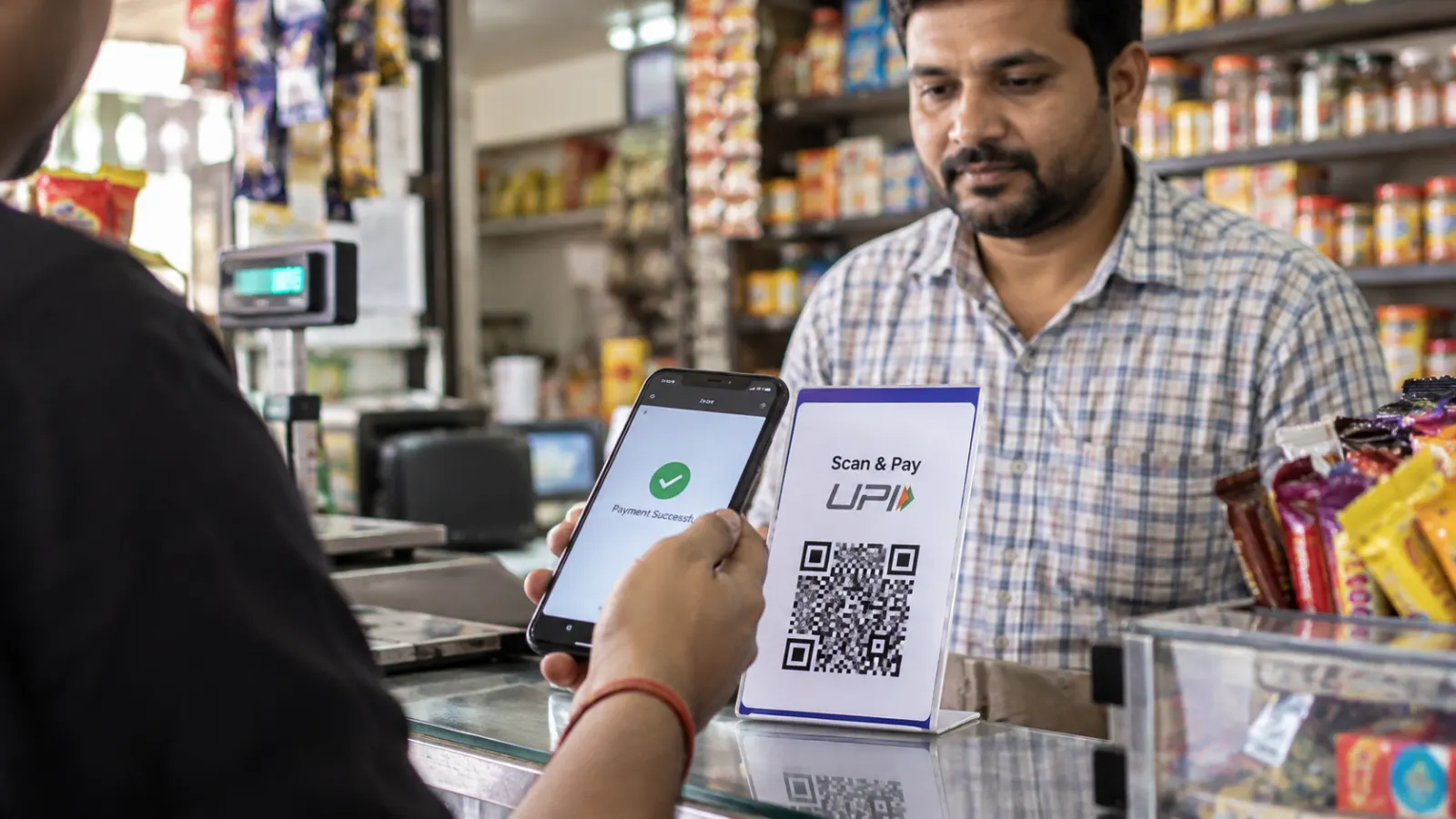
India’s new merchant-fee framework for Unified Payments Interface transactions is currently scheduled to take effect on October 15, 2026, bringing a major change to the country’s long-standing zero-MDR regime for selected merchant payments. Under the new structure, eligible person-to-merchant UPI transactions above ₹2,000 will attract a merchant discount rate of 0.4%, while ordinary consumers will continue to use UPI without paying a direct transaction fee.
Recent discussion around a possible delay has created confusion, but the latest publicly available framework still points to an October 15 implementation. Banks, payment aggregators, fintech companies and merchants are therefore preparing their systems for the change unless the government or the National Payments Corporation of India announces otherwise.
The new policy is significant because UPI has become the dominant digital-payment system in India, supported for years by a zero-MDR model that encouraged rapid merchant adoption. Introducing even a limited merchant charge changes the economics of accepting UPI, especially for businesses operating on thin margins.
What changes from October 15?
The biggest change is the introduction of a 0.4% Merchant Discount Rate on specified UPI person-to-merchant transactions above ₹2,000.
The charge is levied within the merchant-payment ecosystem rather than directly on the person making the payment. That means a consumer paying a shopkeeper through UPI should not see a separate UPI fee added simply because the transaction crosses ₹2,000.
Person-to-person transfers remain outside the MDR structure, while merchant payments of ₹2,000 or less are also expected to remain free under the new framework.
Government estimates suggest that the vast majority of everyday merchant UPI payments will continue to remain unaffected because most transactions fall below the threshold or qualify for exemptions.
The change therefore does not mean that UPI itself is becoming a paid service for consumers.
How much will merchants actually pay?
For merchants covered by the standard rate, a ₹5,000 eligible UPI transaction would result in an MDR of about ₹20. A ₹10,000 transaction would attract approximately ₹40, while a ₹50,000 payment would result in a charge of around ₹200.
The standard MDR is capped at ₹300 for transactions of ₹75,000 and above.
Certain sectors receive significantly lower treatment. Essential or thin-margin categories such as railways, fuel, telecommunications, insurance and agricultural inputs are expected to have a much lower fixed charge, reducing the impact on sectors where even a small percentage fee could be material.
Capital-market related payments, including certain transactions involving securities and mutual funds, also have a lower rate structure.
The differentiated framework is designed to avoid applying the same cost to every type of business.
Why introduce a fee after years of free UPI?
UPI's explosive growth has required substantial investment in banking infrastructure, payment processing, cybersecurity, fraud prevention and network capacity.
The zero-MDR model helped India rapidly build one of the world's largest instant-payment ecosystems, but banks and payment companies have repeatedly argued that permanently processing enormous volumes without transaction revenue makes investment in the infrastructure more difficult.
The new framework attempts to create a more sustainable payment model without imposing a direct fee on ordinary users.
From the government's perspective, the challenge is balancing two competing objectives: maintaining the low-cost simplicity that made UPI successful while also ensuring that the companies and institutions supporting the network have enough revenue to keep improving it.
The relatively low 0.4% rate and multiple exemptions appear designed to achieve that balance.
Why some merchants are concerned
Even a small percentage charge can matter for companies operating on very low margins.
For a business earning only a small commission on each transaction, an MDR calculated on the entire customer payment may consume a meaningful portion of the business's revenue.
This concern is particularly relevant to marketplaces, travel companies, distributors and other businesses that process large-value transactions but retain only a small percentage as their own income.
Some merchants have already questioned whether accepting UPI will remain economically attractive for certain high-value transactions.
However, UPI would still generally remain cheaper than many card-payment options, where merchant charges can be considerably higher.
That means the new fee may reduce UPI's cost advantage without eliminating it.
Will customers eventually end up paying more?
Officially, the MDR is a merchant-side cost rather than a consumer transaction fee.
Merchants should therefore not simply add a separate UPI surcharge to customers.
The more difficult question is whether businesses eventually recover these costs indirectly through product prices, service charges or changes in discounts.
Large retailers may be able to absorb a small MDR because of their scale. Smaller or low-margin businesses may have less flexibility.
This is why implementation will be important. Regulators will need to ensure that the fee does not encourage merchants to discourage UPI payments, impose unauthorised surcharges or push customers towards cash for larger transactions.
Could merchants split transactions below ₹2,000?
One obvious concern is whether merchants could divide a larger bill into several smaller UPI payments to remain below the ₹2,000 threshold.
In practice, deliberately restructuring payments simply to avoid MDR could create accounting, reconciliation and compliance complications.
Payment networks and acquiring institutions can also analyse transaction patterns, making systematic fee avoidance easier to identify if it becomes widespread.
For consumers, there is little reason to request split payments because the MDR is not directly charged to them.
Businesses would therefore need to weigh any potential savings against operational complexity and regulatory risk.
Is the October 15 rollout being delayed?
As of the latest publicly available information, October 15 remains the stated implementation date.
That is important because reports or social-media posts suggesting that UPI merchant charges have already been postponed could mislead businesses preparing their payment systems.
A formal delay would normally require an announcement from the government, NPCI, RBI or another relevant authority.
Until such confirmation emerges, merchants and payment companies should prepare on the assumption that the new structure will begin on October 15.
The situation can still change, however, because the final days before implementation may bring additional operational clarification or exemptions.
What this means for ordinary UPI users
For most consumers, very little changes.
Sending money to friends and family through UPI remains free. Small merchant payments remain outside the new MDR structure, and customers are not supposed to pay the merchant fee directly.
The biggest impact will therefore be felt behind the scenes by businesses, banks and payment companies rather than by ordinary UPI users.
That distinction is important because headlines describing a "UPI fee" can create the impression that every individual transaction will suddenly become chargeable.
That is not what the current framework provides.
Why the change matters for India’s digital-payment model
UPI has become a central part of India's financial infrastructure because it combined speed, interoperability and almost zero visible cost for users and merchants.
Moving away from a completely free merchant-payment model marks a new stage in that development.
If the new MDR generates enough revenue to support infrastructure without discouraging merchants from accepting UPI, it could make the system more financially sustainable.
If merchant resistance grows, however, policymakers may face pressure to modify rates, thresholds or exemptions.
For now, the key date remains October 15, 2026. Consumers can continue using UPI normally, while merchants should understand whether their transactions fall within the new MDR framework and how much the change could cost their business.