Sensex Crash: Why Indian Stock Market Is Falling Today
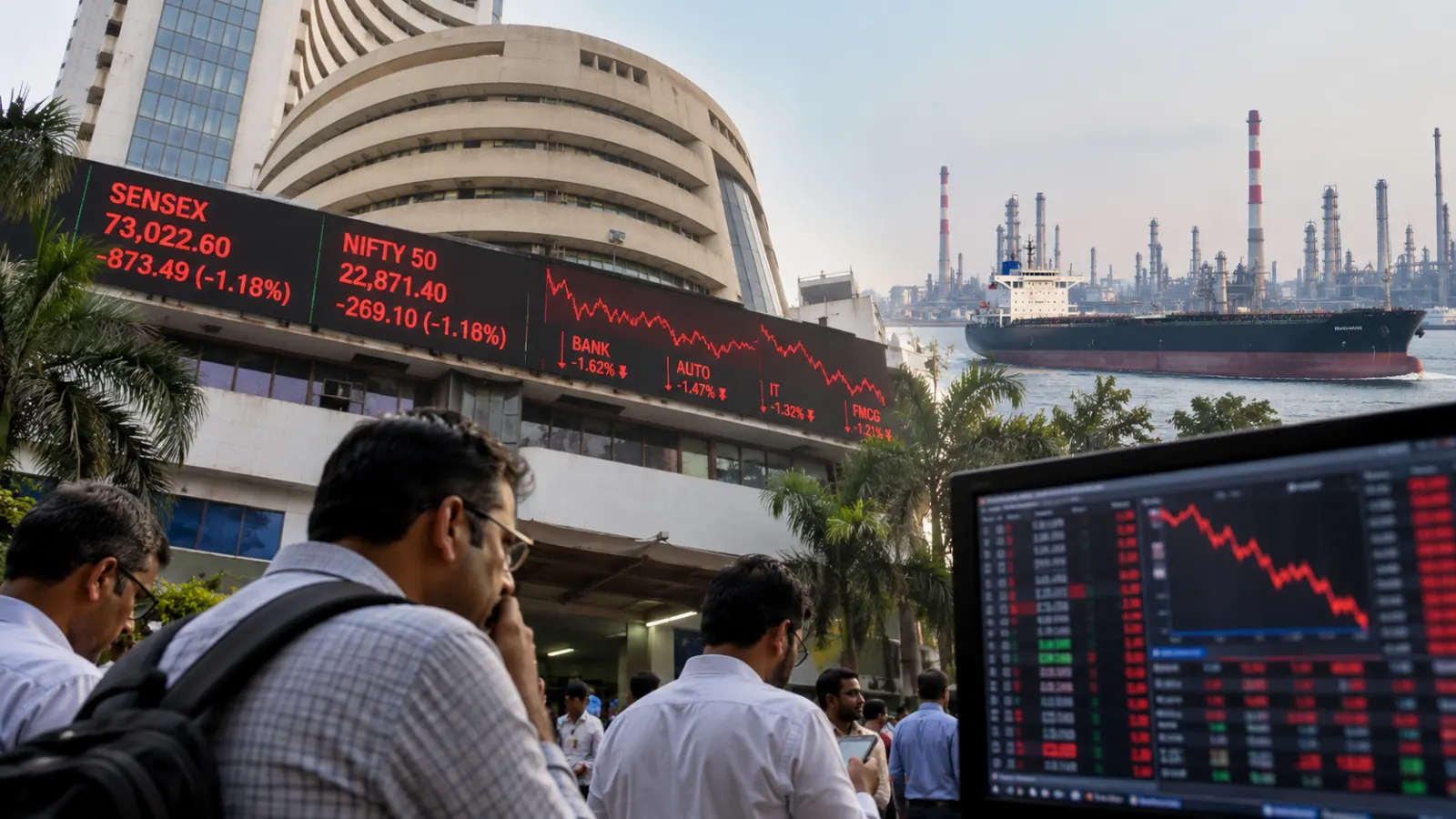
Indian stock markets came under heavy selling pressure on Thursday, October 8, with the Sensex tumbling more than 800 points intraday and the Nifty slipping below the 22,400 mark as investors reacted to a combination of higher interest rates, rising crude oil prices, foreign investor selling and weak global cues.
The latest Sensex crash extends an already difficult phase for Indian equities. The Reserve Bank of India’s decision to raise the repo rate by 25 basis points to 5.50% has increased concerns over borrowing costs, while Brent crude trading above $100 a barrel has revived fears of higher inflation and pressure on corporate margins. Foreign institutional investors have also continued to pull money out of Indian equities, adding to the downward momentum.
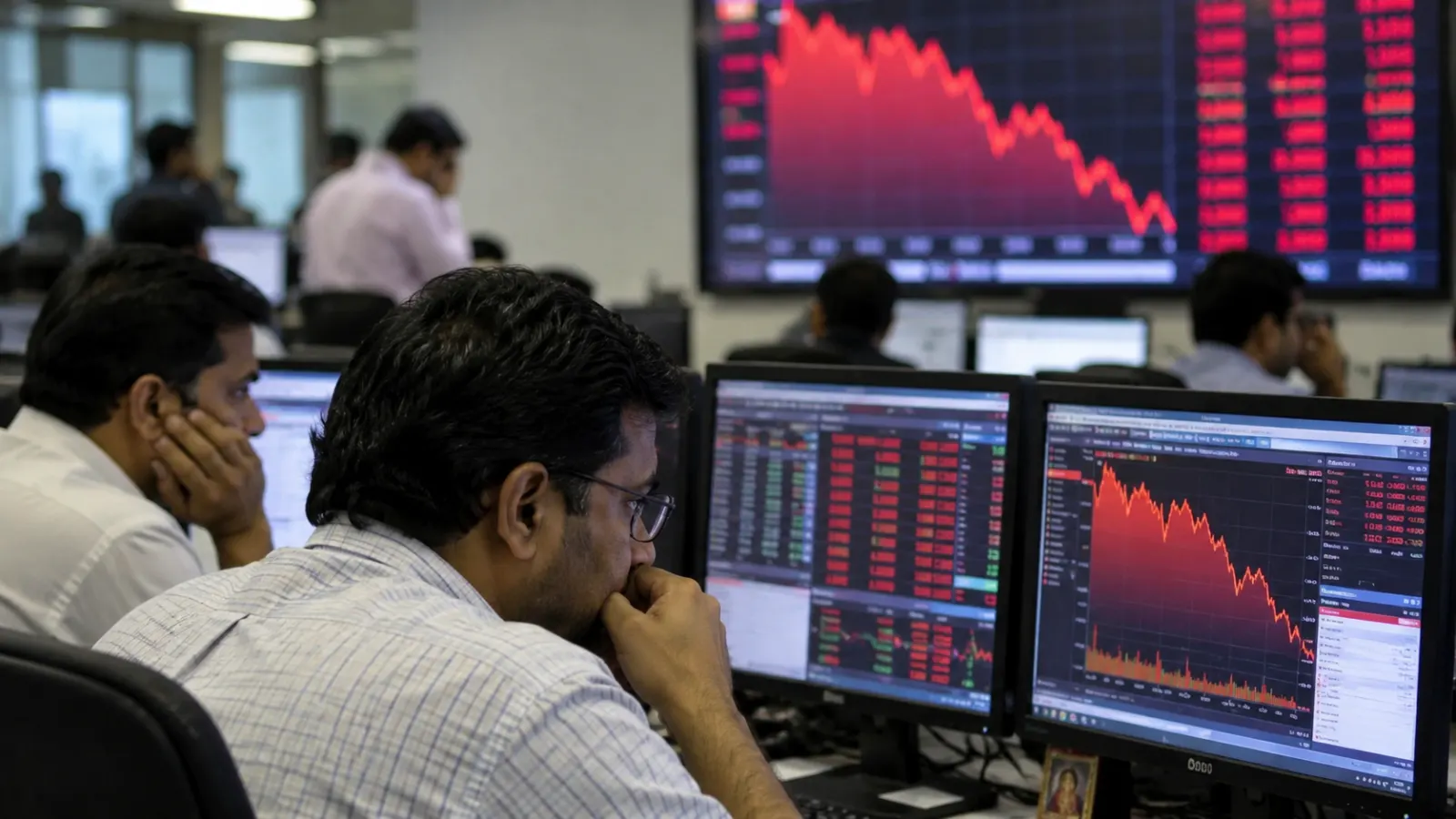
By midday, losses were broad-based, with several sectors trading in the red and small- and mid-cap stocks also under pressure. Investor wealth fell sharply as the sell-off intensified, while volatility increased across Dalal Street.
Why is the Sensex falling today?
The biggest immediate trigger is the RBI’s unexpected shift towards tighter monetary policy.
On October 7, the central bank increased the repo rate from 5.25% to 5.50%, marking its first rate hike in nearly four years. More importantly, the RBI changed its monetary-policy stance from neutral to calibrated tightening, signalling that further increases remain possible if inflation stays elevated.
Higher interest rates tend to pressure equity markets because borrowing becomes more expensive for companies and consumers. Rate-sensitive sectors such as real estate, automobiles and consumer-oriented businesses can face particular pressure as financing costs rise and demand potentially weakens.
The impact is not limited to companies. Higher interest rates also make bonds and other fixed-income investments relatively more attractive, which can reduce investor appetite for equities.
Crude oil above $100 adds another major risk
Rising crude oil prices are another major reason behind the market decline.
Brent crude climbed above $102 a barrel as geopolitical tensions in the Middle East raised concerns over global energy supplies. India imports the majority of the crude oil it consumes, meaning sustained high oil prices can worsen inflation, increase the import bill and put additional pressure on the rupee.
Higher fuel and transportation costs can eventually affect companies across multiple sectors, from aviation and logistics to consumer goods and manufacturing.
For the RBI, expensive crude creates an additional challenge because higher energy costs can keep inflation elevated even as interest rates rise.
That combination—higher oil prices and tighter monetary policy—is particularly uncomfortable for equity investors because it raises the possibility of slower growth alongside persistent inflation.
Foreign investors continue selling Indian stocks
Persistent foreign institutional investor selling has also weighed heavily on the market.
Foreign investors sold more than ₹6,000 crore worth of Indian equities on October 7, continuing a broader period of outflows. Global investors have become more cautious towards emerging markets as international bond yields remain high and uncertainty over interest rates in major economies persists.
When foreign institutional investors sell aggressively, large-cap stocks often come under pressure because these investors hold significant positions in benchmark companies.
Domestic institutional investors have been buying during parts of the decline, providing some support, but that has not been enough to fully offset sustained foreign selling.
The pressure has become particularly important because Indian markets were already going through an extended correction before the latest RBI decision.
Global bond yields and US rate concerns hit sentiment
Indian markets are also being affected by developments outside India.
Global bond yields have climbed sharply, with long-dated US Treasury yields reaching their highest levels in decades. Higher bond yields increase the return investors can earn from relatively safer assets, reducing the attractiveness of equities.
Concerns have also grown that the US Federal Reserve could maintain a tighter monetary stance if inflation remains persistent.
Higher US rates can strengthen the dollar and encourage investors to move capital away from emerging markets such as India. That can simultaneously pressure Indian equities, bond markets and the rupee.
Asian equity markets also traded weakly, reinforcing the risk-off mood across Indian markets.
Is this a crash or a correction?
The word “crash” is being widely used because of the sharp intraday fall, but investors should distinguish between a severe correction and a systemic market crash.
A stock-market crash usually refers to an unusually rapid and deep decline accompanied by extreme panic, liquidity problems or broader financial instability.
The current decline is significant, but it is being driven primarily by identifiable macroeconomic factors: RBI tightening, crude oil prices, foreign outflows, elevated global yields and geopolitical uncertainty.
That means the market is under substantial pressure, but the current move does not automatically indicate a financial-system crisis.
However, the broader trend deserves attention. Indian benchmark indices have experienced several consecutive weeks of losses, suggesting that the weakness is more persistent than a single bad trading session.
Which sectors are under the most pressure?
Rate-sensitive and domestically focused sectors are particularly vulnerable when interest rates rise.
Real-estate companies can face weaker demand as home loans become more expensive. Auto companies may also be affected if vehicle-financing costs rise, while consumer-discretionary businesses can suffer if households cut spending.
Financial stocks face a more complex impact. Banks can sometimes benefit from higher lending rates, but aggressive rate increases can eventually slow credit demand and increase repayment stress.
Oil-sensitive sectors such as airlines, paints, chemicals and logistics companies may experience additional pressure if crude remains above $100 for an extended period.
Information technology stocks, however, showed relative strength during parts of Thursday’s session, helped by company-specific earnings expectations and their exposure to overseas revenues.
What should investors watch now?
The first factor to watch is whether crude oil remains above the psychologically important $100-per-barrel level.
A sustained rise could increase inflation expectations and strengthen the case for additional RBI rate hikes. A decline in oil prices, on the other hand, could provide meaningful relief to Indian markets.
Investors will also closely track upcoming corporate earnings. Strong profit growth could help restore confidence, particularly if companies demonstrate that margins remain resilient despite higher input and borrowing costs.
Foreign institutional investor flows are another critical indicator. A slowdown in foreign selling could help stabilise benchmark indices, while continued heavy outflows could keep the market under pressure.
Technical levels will also matter. Once major support levels are breached, algorithmic trading and stop-loss selling can accelerate declines even when the original trigger is fundamental.
Should retail investors panic?
A sharp market fall can be unsettling, particularly for investors who entered equities near recent highs, but reacting purely to daily index movements can lead to poor decisions.
Long-term investors should distinguish between changes in the fundamental outlook of the companies they own and broader market volatility.
Investors using leverage or holding highly speculative stocks face greater risk during periods of sharp volatility because losses can accelerate quickly.
For systematic-investment-plan investors with long horizons, market corrections can also result in more units being purchased at lower prices. However, that does not mean every falling stock is automatically a buying opportunity.
Asset allocation, emergency liquidity and investment horizon remain more important than attempting to predict the exact bottom of the Sensex.
The immediate outlook for Indian markets remains challenging. The combination of RBI tightening, crude above $100, foreign investor selling and elevated global yields means volatility could remain high.
Whether Thursday’s Sensex crash develops into a deeper correction will depend on how quickly these pressures ease—and whether corporate earnings can give investors a reason to return to risk.