Nana Patekar Dies at 75 After Cardiac Arrest in Goa
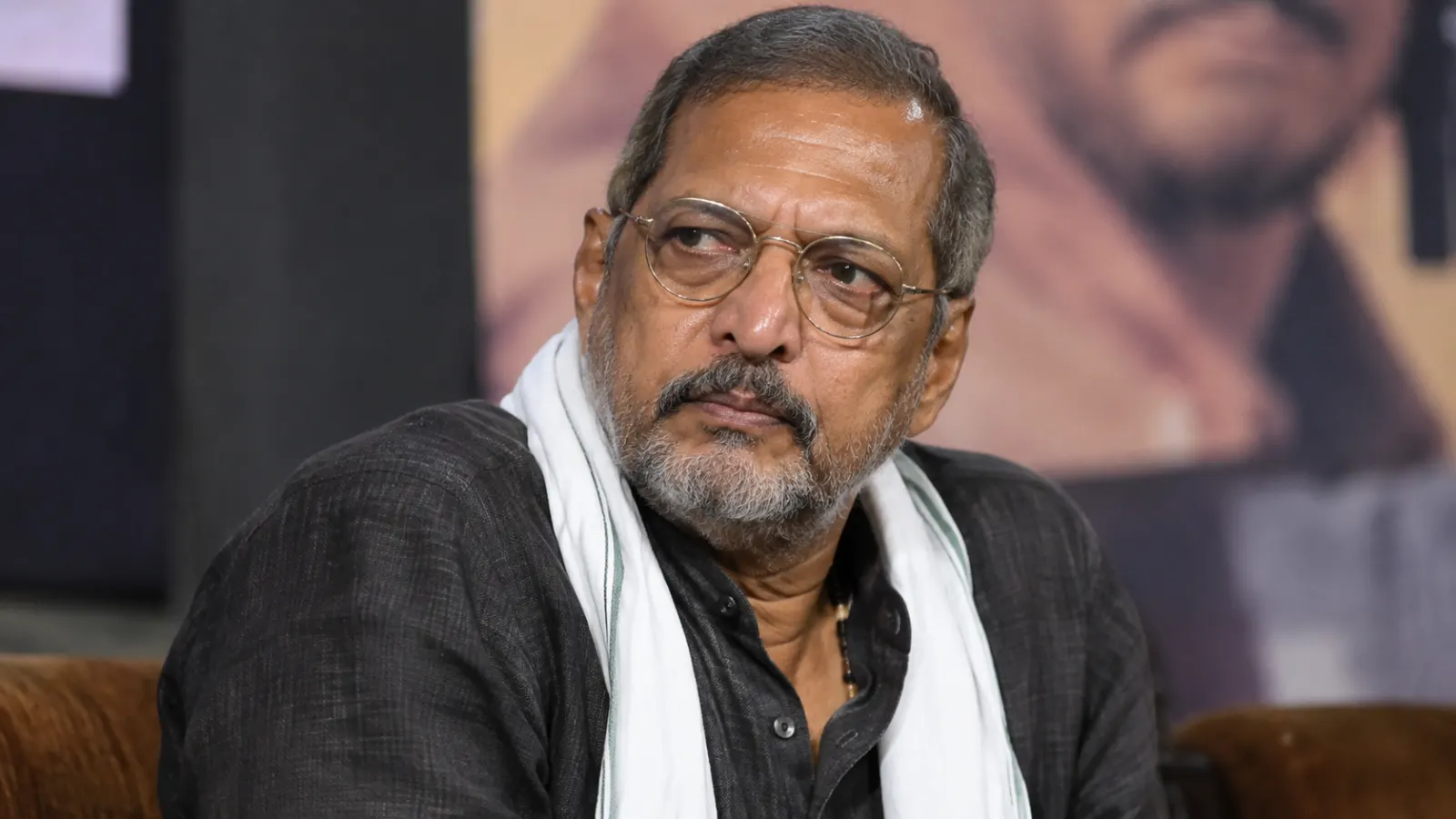
Veteran actor and filmmaker Nana Patekar died on Thursday, October 8, 2026, at the age of 75, after suffering a cardiac arrest at his residence in Goa. He was found unconscious at his home in Dona Paula near Panaji and was rushed to a private hospital, where doctors were unable to revive him despite prolonged resuscitation efforts.
Patekar’s death has triggered an outpouring of grief across the Indian film industry and among fans who followed his career for nearly five decades. Known for his intense screen presence, distinctive dialogue delivery and ability to move between serious drama, satire and comedy, he remained one of the most recognisable performers in Hindi and Marathi cinema.
Found unconscious at Goa residence
According to reports citing doctors, Patekar was found unconscious at his Goa residence in the early hours of Thursday. He was taken to hospital, where medical teams attempted to revive him for around 45 minutes before he was declared dead. A suspected cardiac arrest was identified as the cause, although the exact trigger was not immediately clear.
Hours before his death, Patekar had reportedly messaged a friend saying he was not feeling well. The message, sent around 3:30 am, has added a deeply personal detail to the final hours of an actor whose public image was often associated with strength, intensity and blunt honesty.
His son Malhar confirmed the news as tributes began pouring in from political leaders, fellow actors, filmmakers and admirers.
A career that spanned nearly five decades
Born Vishwanath Patekar in Maharashtra in 1951, Nana Patekar began his career in Marathi theatre before moving into cinema. His early years included performances in arthouse and parallel cinema before he became a major presence in mainstream Bollywood.
He made his film debut in Gaman in 1978 and later appeared in films that established his reputation as an actor capable of portraying deeply conflicted and unconventional characters.
His performance in Parinda became one of the defining roles of his career, while Krantiveer turned him into a household name. He also received international recognition through Mira Nair’s Salaam Bombay!, which was nominated for an Academy Award for Best Foreign Language Film.
Over the years, Patekar worked across genres, appearing in intense dramas, crime films, social commentaries and comedies. His later comic performances, particularly in films such as Welcome, introduced him to a younger generation and eventually became part of Indian internet and meme culture.
Three National Film Awards and a Padma Shri
Patekar’s work earned him some of Indian cinema’s highest honours.
He won three National Film Awards, reflecting the critical recognition he received across different stages of his career. He was also awarded the Padma Shri, one of India’s highest civilian honours, for his contribution to the arts.
His appeal came partly from the fact that he rarely fit the conventional image of a Hindi-film leading man. His performances were often built around voice, expression, unpredictability and emotional intensity rather than traditional glamour.
That individuality allowed him to play a wide range of roles, from violent gangsters and police officers to comic characters and vulnerable older men.
Film industry remembers a distinctive performer
Prime Minister Narendra Modi paid tribute to Patekar, praising his intensity, individuality and unmistakable screen presence. He said the actor brought versatility and creativity to his roles and created characters that would be remembered for generations.
Actor Akshay Kumar, who worked with Patekar in several films, remembered him as a rare performer whose voice, intensity and honesty immediately commanded attention.
Tributes also came from political leaders in Maharashtra, filmmakers and actors who described his death as the end of a distinctive era in Indian cinema.
For many audiences, Patekar stood apart because he did not appear interchangeable with other stars. His dialogue delivery, body language and emotional volatility made even supporting roles memorable.
His difficult childhood shaped his personality
Patekar often spoke openly about his financially difficult childhood.
After his father suffered major business losses, Patekar began working at around 13 years of age to help support his family. He later recalled earning ₹35 a month, walking long distances and sometimes receiving only one meal a day.
Those experiences had a lasting influence on him. He frequently linked his early exposure to poverty and hunger with his attitudes towards money, food and social responsibility.
Unlike many actors whose public identities revolve primarily around cinema, Patekar also became associated with social work, particularly support for farmers and rural communities through charitable initiatives.
Beyond cinema: social work and public life
Patekar co-founded the Naam Foundation, which became known for working with drought-affected farmers and financially distressed rural families in Maharashtra.
His involvement in social causes strengthened his image as someone whose public life extended beyond acting.
He was also vocal about civic responsibility. During the 2026 Mumbai civic elections, he reportedly travelled for several hours to cast his vote and urged citizens to participate in elections, describing voting as an expression of one’s existence as a citizen.
That public engagement often mirrored the themes of accountability and social responsibility that appeared in some of his most famous film roles.
Final public appearance carried an eerie reflection on mortality
Patekar’s final public appearance came only days before his death.
During that appearance, he reportedly spoke casually about mortality, remarking that no one knows whether they will be here tomorrow. The comment has drawn renewed attention following his sudden death, though at the time it was part of a broader reflection rather than an indication of any known medical emergency.
The timing has nevertheless made the appearance especially poignant for fans.
Why Nana Patekar’s legacy will endure
Nana Patekar leaves behind a body of work that is difficult to reduce to a single genre or image.
For one generation, he was the volatile and intimidating performer of films such as Parinda and Krantiveer. For another, he was a comic presence whose timing and expressions became instantly recognisable. For Marathi audiences, his theatre and regional-film work gave him an equally important identity outside mainstream Bollywood.
His performances were often intense, sometimes abrasive and rarely conventional. That distinctiveness made him memorable even when he was not playing the central role.
Patekar is survived by his estranged wife and son.
His death at 75 brings to an end one of the most unusual and recognisable acting careers in modern Indian cinema, but the characters, dialogue and performances that defined his work are likely to remain embedded in popular culture for years to come.