Solar Energy Explained: How Solar Panels Work and Why Solar Power Is Growing So Fast
A solar panel has no visible flame, no fuel tank and, in the panel itself, no rotating generator. Sunlight falls on a dark surface, electrical current leaves through wires, and electricity becomes available to a building or power grid.
That apparent simplicity hides an unusually sophisticated chain of physics, materials science, power electronics and electricity-system engineering.
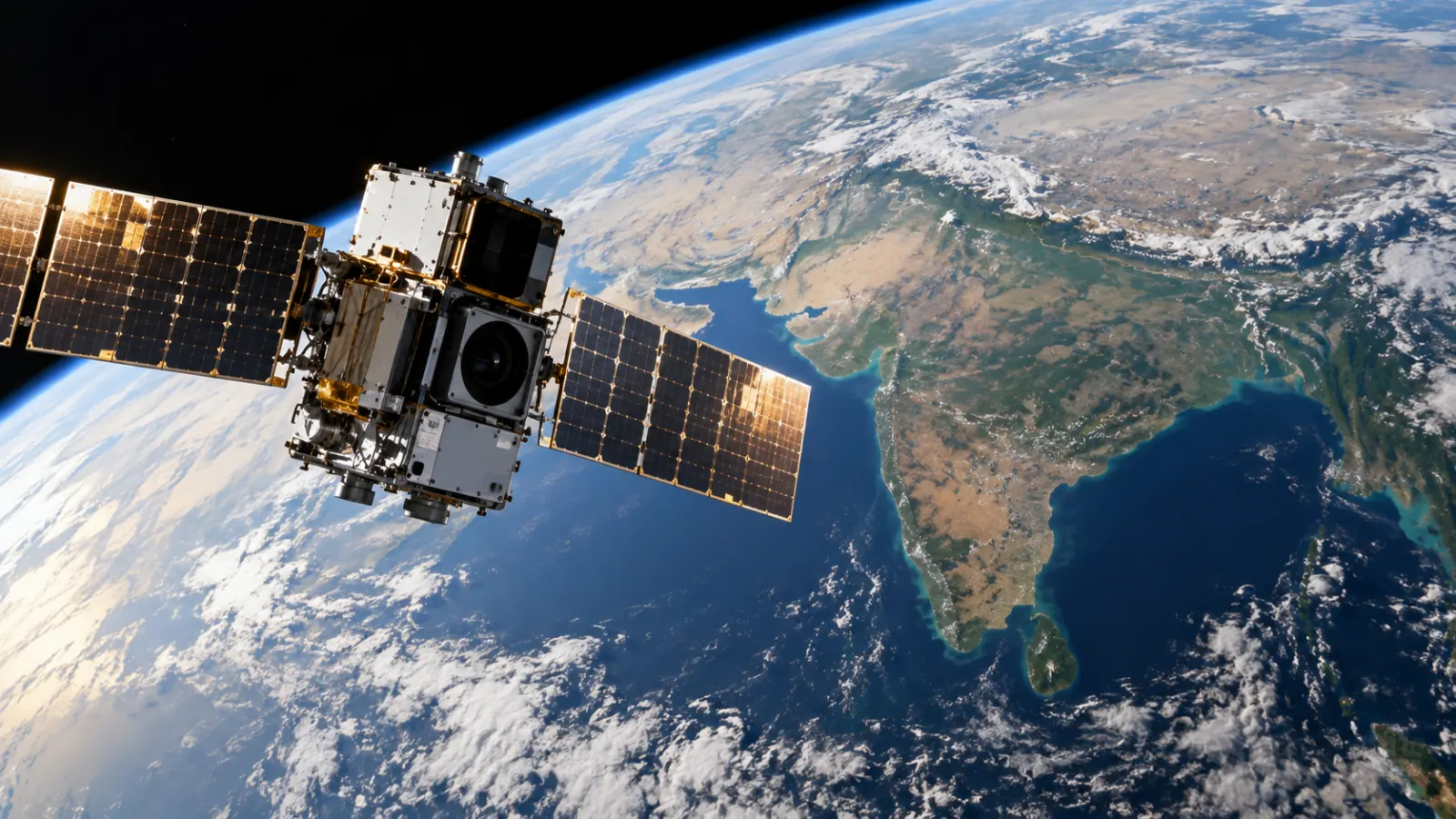
Most solar electricity today comes from photovoltaic, or PV, technology. Photovoltaic cells use semiconductor materials to convert energy in sunlight directly into electrical energy. A second family of technologies, concentrating solar-thermal power, or CSP, uses mirrors to concentrate sunlight as heat, which can then drive a conventional power cycle and, in some designs, be stored thermally for later electricity production. The U.S. Department of Energy identifies PV and CSP as the two principal technologies used to convert solar energy into electricity.
The difference matters because solar energy is not really one machine.
A rooftop panel, a million-panel desert solar farm and a concentrating solar plant with thermal storage all use sunlight, but they interact with the electricity system in different ways.
Understanding solar energy therefore requires looking at two scales at once: the semiconductor cell where photons begin the conversion process, and the power system that must turn variable sunlight into reliable electricity every hour of the year.
How sunlight becomes electricity
The basic photovoltaic device is a semiconductor cell.
Semiconductors occupy an unusual electrical position. They do not conduct current as freely as metals, but their electrical behaviour can be engineered so that incoming energy changes how charges move through the material.
When sunlight reaches a photovoltaic cell, photons can transfer energy to electrons in the semiconductor. The cell is designed with an internal electrical structure that helps separate charge and drive that charge in a useful direction. Metal contacts then collect the resulting electrical current. DOE describes the process in similar terms: absorbed light transfers energy to electrons, the device structure extracts the resulting current, and that current moves through contacts toward the rest of the electrical system.
A single cell produces only a modest amount of electrical power.
Manufacturers connect many cells together to form a module, commonly called a solar panel. Panels are then connected into strings and arrays. The same fundamental architecture can therefore be used for a small residential installation containing only a few kilowatts of capacity or for a utility-scale project containing hundreds of megawatts.
The panel is only the most visible component.
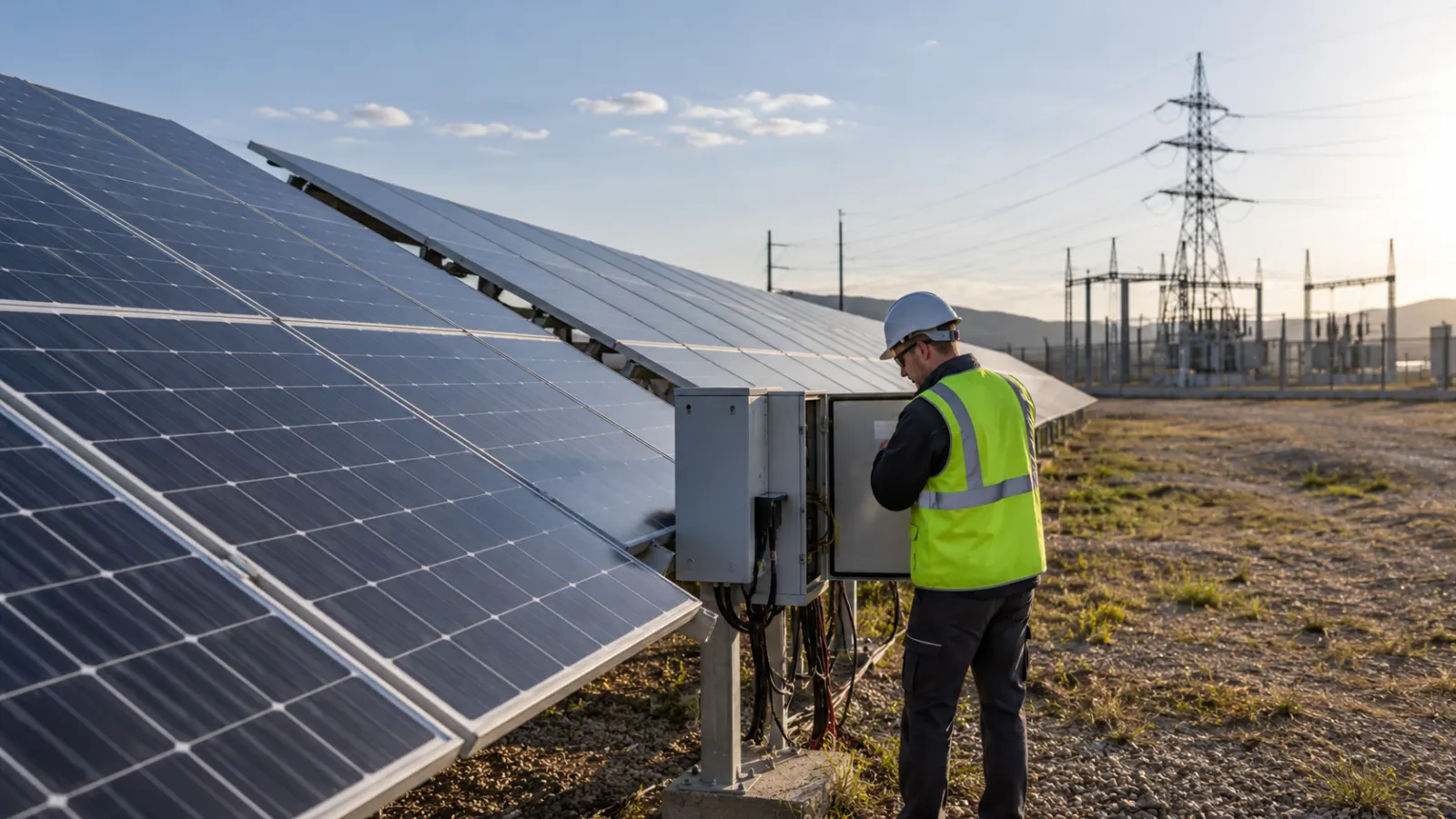
A working PV installation also needs mounting structures, cables, disconnects, protection equipment, monitoring systems and one or more inverters. Depending on the project, it may also include batteries, tracking systems, transformers and an entirely new grid connection.
The inverter is particularly important because solar cells produce direct current, or DC, while conventional electricity grids and most building circuits operate using alternating current, or AC. The inverter performs that conversion. Modern systems can do much more: smart inverters can respond to voltage and frequency conditions, communicate with grid operators and provide services that help stabilise increasingly inverter-based electricity networks.
This is one reason modern solar should be understood partly as a power-electronics technology.
A large solar farm contains no spinning turbine synchronised mechanically with the grid. Traditional thermal and hydroelectric generators naturally contribute rotational inertia because large physical machines are spinning. Solar PV interfaces electronically with the grid instead. As more electricity comes from inverter-based resources, engineers increasingly rely on sophisticated inverter controls—including emerging grid-forming capabilities—to provide some of the voltage, frequency and stability functions that conventional generators historically supplied.
The panels themselves also behave differently from a common misconception about solar energy.
Solar panels use light, not heat.
Higher solar irradiance generally means more available solar energy, but hotter panels are not automatically better panels. DOE notes that photovoltaic cells generally perform more efficiently at lower temperatures; as cell temperature increases, voltage tends to fall enough to reduce overall conversion efficiency. A bright, cool day can therefore produce excellent PV performance even though it feels less “solar” than a scorching afternoon.
Actual output also depends on orientation, shading, cloud cover, dust, snow, latitude and season. Fixed installations are angled to capture useful sunlight over the year, while many utility-scale plants use tracking systems that rotate modules during the day to increase energy production. Clouds reduce direct sunlight but do not normally reduce PV output to zero because panels can still use diffuse solar radiation.
This combination makes solar generation unusual: its broad daily and seasonal patterns are highly predictable, but short-term output still changes with weather.
Why solar became one of the fastest-growing power technologies
The physics of photovoltaics is not new.
The economics are.
Solar PV spent decades as an expensive technology used where its particular advantages justified the cost. Manufacturing improvements, huge increases in production volume, better cell designs, declining silicon use, larger factories and more efficient installation eventually transformed the economics.
By the mid-2020s, utility-scale solar had become one of the lowest-cost sources of new electricity in many parts of the world.
IRENA's Renewable Power Generation Costs in 2025, published in July 2026, reports that the global weighted-average levelised cost of electricity from newly commissioned utility-scale solar PV remained about USD 44 per megawatt-hour in 2025, essentially unchanged from 2024 after more than a decade of steep declines. More than 90% of new utility-scale renewable projects commissioned that year generated electricity at a lower cost than the cheapest new fossil-fuel alternative in their respective markets.
That USD 44/MWh figure requires context.
It is a global weighted-average levelised generation cost for new utility-scale PV projects. It is not the electricity price that every household pays and it does not mean a solar project costs the same everywhere.
Financing costs can dominate project economics.
Land prices vary.
Labour varies.
Import duties and local-content requirements matter.
Permitting can take months in one market and years in another.
Grid interconnection can be cheap when a strong transmission line is nearby and extremely expensive when an entirely new substation or transmission corridor is required.
Solar modules may be globally traded manufactured products.
Solar electricity remains local infrastructure.
That distinction helps explain why deployment can explode in one country while progressing much more slowly in another despite similar sunlight.
The scale of current installation is remarkable.
IRENA reports that the world added 692 GW of renewable generating capacity during 2025. Solar accounted for approximately 511 GW, or about three-quarters of that increase, and photovoltaic systems represented 510.3 GW of the 511.2 GW of total solar additions. Global renewable capacity reached 5,149 GW by the end of 2025.
Solar's modularity is one reason growth can occur so quickly.
A power station based around a very large reactor, dam or thermal generator usually has to be developed as one major project. PV can be deployed in pieces. A household installs several kilowatts. A factory covers a roof. A developer builds a 50 MW project and later another beside it. A national market can therefore scale through thousands or millions of separate investment decisions.
Construction can also be relatively fast once permits, land and grid access are secured.
And after installation, a photovoltaic plant does not require a continuous stream of purchased fuel. There is no daily train of coal, pipeline of gas or shipment of uranium necessary for the panel to receive sunlight.
That absence of fuel cost is economically powerful.
It also changes how electricity markets behave.
A solar plant has most of its cost concentrated in construction, financing and infrastructure. Once operating, the marginal cost of producing another unit of available solar electricity is very low. At high penetration, that can push wholesale prices down during sunny hours—which benefits consumers and challenges generators whose business models depend on selling electricity precisely during those periods.
Solar therefore changes electricity economics not merely because it is cheaper.
It changes when electricity is abundant and what that electricity costs at different times of day.
The biggest solar limitation is not the panel—it is time
The central physical limitation of solar electricity is obvious and unavoidable:
the Sun sets every day.
Solar output follows a strong daily pattern. Generation rises after sunrise, becomes large around midday and falls toward evening. Electricity demand follows a different pattern and often remains high after solar production has already declined.
When solar supplies only a small fraction of electricity, conventional power plants can usually absorb this variation relatively easily.
At much higher shares, the electricity system itself has to become more flexible.
That flexibility can come from batteries, transmission, demand response, hydropower, other dispatchable generators, stronger connections between regions, better forecasting and the ability to shift some electricity consumption into periods of abundant solar generation.
Battery storage has become one of the most visible solutions because batteries can absorb part of the midday solar surplus and return it to the grid later. In homes, batteries can allow rooftop solar produced during the day to be used at night. At utility scale, storage can also respond extremely quickly to changing grid conditions and provide frequency, capacity and other system services.
But batteries do not make sunlight continuous.
Storage has a finite duration.
A battery designed to shift afternoon electricity into the evening solves a different problem from a system attempting to supply electricity through several cloudy days or compensate for large seasonal differences between summer and winter.
This is why a reliable high-solar electricity system is an integration problem, not simply a panel-counting problem.
DOE's grid-integration work makes the same point from an engineering perspective: as variable and inverter-based generation becomes a larger part of electricity supply, operators need new ways to maintain reliable voltage, frequency, power balance and resilience.
Transmission becomes important for the same reason.
Weather is regional rather than perfectly uniform. A cloudy area may be connected to another region with abundant sunshine, wind or hydroelectric generation. Larger and better-connected grids can therefore smooth some local variability and allow low-cost solar electricity to travel from resource-rich areas to major demand centres.
Demand can become flexible too.
Electric vehicles do not always need to begin charging immediately when plugged in.
Water heaters can store thermal energy.
Industrial processes can sometimes shift operating hours.
Commercial cooling systems can pre-cool buildings before evening peaks.
Electricity systems historically treated supply as something that had to follow demand nearly instantaneously.
Large quantities of solar encourage a more reciprocal model in which some demand also learns to follow periods of abundant supply.
Curtailment adds another dimension.
Sometimes a grid has more solar electricity available than it can economically use or transport. Operators may intentionally reduce solar output rather than trying to consume every possible kilowatt-hour. That can sound wasteful, but electricity systems routinely make economic trade-offs. Building enough storage to capture the final unit of surplus generation may cost more than occasionally allowing that unit to go unused.
The objective is not to extract 100% of every photon.
It is to design the lowest-cost reliable electricity system around a variable energy resource.
Rooftop solar, solar farms and concentrating solar power serve different roles
The words “solar power” can conceal several very different infrastructure models.
Rooftop solar generates electricity close to where it is consumed. A household or business can reduce grid purchases during sunny hours, and the system uses roof area that already exists rather than requiring a separate large land parcel.
Distributed PV can also reduce some electricity flows through the wider transmission system because generation and consumption occur close together.
But rooftop solar has its own economics.
Small installations generally cost more per unit of capacity than giant solar farms because labour, permitting, customer acquisition and electrical work cannot be spread across hundreds of megawatts. Roof orientation, shading, structural condition and ownership can constrain what is possible. Apartment residents and renters may not control the roof at all.
Utility-scale solar operates differently.
Large projects can choose locations with excellent solar resources, flat land and easier construction. Developers can buy modules and inverters in enormous quantities, use tracking systems economically and operate the project as professional generating infrastructure.
The trade-off is geographical.
Very large solar farms may be far from the cities consuming their electricity, creating requirements for transmission lines, substations and land. Poor siting can also create habitat conflicts or competition with agriculture and other land uses.
There is therefore no universal answer to the question:
“Is rooftop or utility solar better?”
They solve different problems.
Modern power systems can use residential PV, commercial rooftops, community solar, utility-scale projects and batteries together.
Concentrating solar power adds another model entirely.
CSP systems use mirrors to concentrate direct sunlight onto a receiver. The concentrated solar radiation produces high-temperature heat, which can be used to create electricity through a thermal power cycle. Unlike PV, CSP can also store energy naturally in thermal form, for example in hot molten salts, and later use that heat to generate electricity after the Sun has gone down. DOE specifically identifies thermal storage as one of CSP's capabilities.
This can provide dispatchability that ordinary PV does not have on its own.
But CSP has disadvantages.
It generally requires strong direct solar radiation, large centralised sites and much more mechanical and thermal equipment. PV can use both direct and diffuse light and can be deployed practically anywhere from a calculator to a warehouse roof to a giant solar farm.
The economics have reflected that difference.
IRENA reports that the global weighted-average cost of newly commissioned concentrating solar power rose to approximately USD 115/MWh in 2025, considerably above the USD 44/MWh average for utility-scale PV.
That does not make CSP useless.
Its storage and high-temperature characteristics can be valuable in appropriate regions and applications.
But PV's extraordinary modularity, manufacturing scale and cost reductions explain why photovoltaics now dominate global solar additions.
Solar is low-emission electricity, not impact-free electricity
A solar panel creates electricity without burning fuel during operation.
That eliminates the direct combustion emissions associated with coal- and gas-fired generation.
But “renewable” does not mean material-free.
A photovoltaic system requires glass, aluminium, silicon, copper, polymers, electronics, steel and other materials. Those materials have to be mined, refined, manufactured and transported. Factories consume energy. Utility projects use land. Mounting systems and grid connections require additional infrastructure.
The appropriate environmental comparison is therefore lifecycle-based, not based only on what comes out of the power plant while operating.
Solar's material footprint also creates an end-of-life question.
Panels last a long time, but they do not last forever. DOE's current end-of-life guidance cites a Berkeley Lab survey showing that the expected operational lifespan of solar panels increased from about 20 years in 2007 to roughly 25–35 years in 2025. Most of today's installed solar fleet is therefore still far from retirement because a large majority was installed relatively recently.
This delay is both reassuring and challenging.
Solar waste will not arrive all at once tomorrow.
But enormous installation volumes today mean that much larger quantities of old modules will eventually enter the waste stream.
Many of their bulk materials can technically be recovered. Glass and aluminium make up much of a conventional module. Recycling processes also exist for major PV technologies.
The economic problem is harder.
DOE notes that in the United States, the cost of recycling a photovoltaic module is still generally higher than simply disposing of it in landfill.
That is an example of a broader clean-technology challenge.
Technically recyclable does not automatically mean economically recycled.
Collection systems, transport, regulation, valuable-material recovery and recycling technology therefore need to develop before large waves of modules reach retirement.
Durability matters for the same reason.
Higher efficiency often receives the headlines because it tells us what percentage of incoming solar energy becomes electricity. But a commercially valuable module has to balance efficiency with manufacturing cost, degradation, reliability, temperature performance and years of exposure to rain, ultraviolet radiation, wind, dust and temperature cycles.
DOE notes that deployed PV module output typically degrades gradually over time and that system performance depends on many variables beyond laboratory conversion efficiency.
A spectacular laboratory cell is scientifically important.
It is not automatically the best power plant.
The electricity system ultimately cares about how much reliable energy a complete installation delivers across decades relative to the money, land and materials invested in it.
Solar changes the architecture of electricity
Traditional power systems were largely designed around stored energy.
Coal can sit in a pile.
Natural gas can remain in a pipeline or underground storage site.
Water can remain behind a dam.
Operators can then decide when to convert much of that stored energy into electricity.
Solar works differently.
Its primary energy arrives continuously as a flow controlled by astronomy and weather.
Humans can choose where to place the panels and how much capacity to install, but they cannot move sunset to 10 p.m. because electricity demand is high.
This appears to be a weakness.
It is also the reason solar has unusual economics.
No supplier owns the sunlight.
No fuel has to be continuously extracted.
Once the system exists, the resource keeps arriving.
The challenge shifts from securing fuel toward building systems capable of managing abundant but time-dependent electricity.
That change affects almost every layer of the grid.
Power electronics become more important because inverters replace spinning generators.
Transmission becomes more valuable because solar resources and demand centres are geographically separated.
Storage becomes more valuable because production and consumption occur at different times.
Forecasting becomes more important because clouds affect short-term generation.
Flexible demand becomes more valuable because consuming electricity when it is abundant can be cheaper than storing it.
Market rules may need to change because midday electricity can become extremely inexpensive while evening flexibility becomes more valuable.
The remarkable deployment figures of 2025 show how far that transition has already progressed. Solar supplied approximately three-quarters of all net renewable generating-capacity additions worldwide that year, with PV responsible for virtually the entire solar increase.
But installed capacity alone is not the final measure of success.
Electricity systems exist to provide power when people need it.
A grid containing enormous amounts of inexpensive solar generation but inadequate transmission, storage, flexibility or inverter control can still experience congestion, curtailment and reliability challenges.
This is why understanding solar power requires moving beyond the panel.
At the device level, the story is beautifully simple:
a semiconductor absorbs light and produces electrical current.
At the system level, the story is much larger:
millions of those devices must be financed, installed, connected, controlled, balanced, maintained and eventually recycled while the rest of the electricity system adapts to when sunlight is available.
Solar's rise is therefore not simply the story of a cheaper panel.
It is the beginning of a different kind of power system—one in which much of the primary energy arrives for free, while increasing amounts of engineering and economic value come from deciding when, where and how that energy becomes useful electricity.